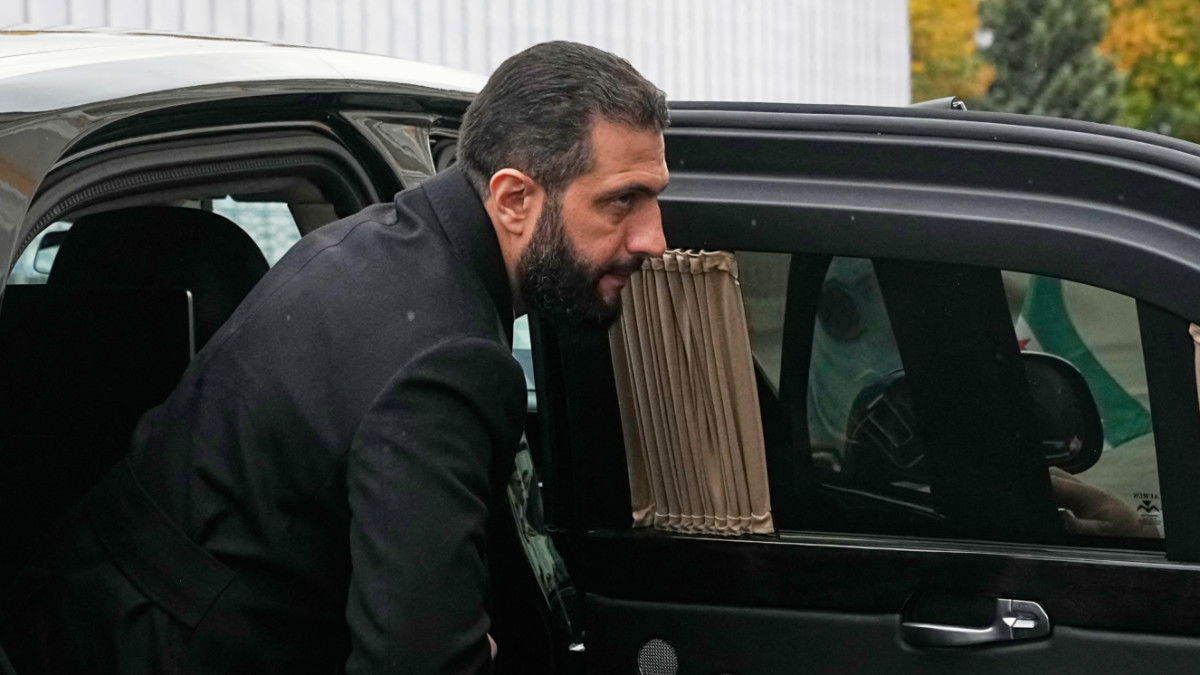
In a historic turn of events, Syrian President Ahmed al-Sharaa, once labeled a terrorist by the United States, is set to visit the White House. This visit underscores a significant realignment in U.S.-Syria relations, as Sharaa prepares to join a U.S.-led coalition against the Islamic State (IS). The move comes amid Syria’s complex challenges, including Israeli occupation in the south, tensions with Kurdish factions in the north, and a struggling economy under sanctions. While these issues are unlikely to be resolved during the visit, the symbolic image of Sharaa in the Oval Office carries profound implications. Former U.S. Ambassador to Syria Robert Ford noted the unprecedented nature of the meeting, likening it to past visits by leaders such as Nelson Mandela and Yasser Arafat. Sharaa’s ability to navigate international skepticism about his past has been a key achievement, even as Syria grapples with internal corruption and sectarian violence. Ahead of the visit, the Trump administration lifted sanctions on Sharaa and his interior minister, signaling a thaw in relations. Sharaa’s government is also strengthening ties with NATO-member Turkey and seeking financial support from Gulf states like Qatar and Saudi Arabia. However, Israel remains a significant threat, with its occupation of southern Syria and strategic moves on Mount Hermon. Experts suggest that while a security agreement between Syria and Israel is possible, a broader peace deal remains unlikely. The visit also highlights the U.S.’s shifting role in the Middle East, as it seeks to reduce its military footprint while deepening security cooperation with Syria. Sharaa’s alignment with the U.S. could marginalize the Kurdish-led Syrian Democratic Forces (SDF), long a U.S. ally in the fight against IS. As Sharaa’s visit unfolds, it is being closely watched by Syrians seeking reintegration into the region and by international stakeholders wary of the geopolitical shifts it may trigger.
博客
-

The case for abandoning Taiwan is still weak
The escalating military pressure from China on Taiwan has reignited debates within the United States about whether to intervene militarily if China decides to attack the island. Analysts have long argued that the US should distance itself from Taiwan to preserve its relationship with China. This argument has gained traction as China’s strength and assertiveness grow, raising the potential costs of continued US support for Taipei. Lyle Goldstein, Director of the Asia Program at Defense Priorities, recently highlighted these concerns in an article published in Time magazine, warning of the risks posed by Taiwan’s current president, Lai Ching-te, whom he labels as ‘reckless.’ Goldstein argues that Lai’s rhetoric and actions could inadvertently drag the US into a conflict with China. However, critics note that Lai’s policies largely mirror those of his predecessor, Tsai Ing-wen, and that his statements on Taiwanese sovereignty are consistent with the Democratic Progressive Party’s long-standing position. China’s aggressive posture toward Taiwan is driven not solely by Lai’s leadership but also by its growing military capabilities and the perception of a wavering US commitment to Taiwan’s defense. While some argue that defending Taiwan is not in America’s vital interest, others emphasize Taiwan’s strategic and economic importance, particularly as a global hub for semiconductor manufacturing and a key player in the First Island Chain. The debate underscores the complex dynamics of US-China-Taiwan relations and the high stakes involved in any potential conflict.
-

Etihad Airways, Hong Kong Airlines launch codeshare programme
Etihad Airways and Hong Kong Airlines have unveiled a groundbreaking codeshare partnership, coupled with a reciprocal loyalty agreement, marking a significant step in enhancing global connectivity. The announcement was made during a ceremony in Hong Kong, timed with the arrival of Etihad’s inaugural flight from Abu Dhabi to Hong Kong International Airport. This collaboration allows passengers to book Hong Kong Airlines flights between Hong Kong and Abu Dhabi under Etihad’s ‘EY’ code, while Etihad travelers can access Japanese destinations such as Fukuoka, Hokkaido-Sapporo, Osaka, and Okinawa via Hong Kong Airlines’ ‘HX’ code. The partnership ensures seamless travel with a single ticket, unified check-in, and automatic baggage transfer, positioning Abu Dhabi as a pivotal hub linking Greater China, Japan, the Middle East, Europe, and Africa. Additionally, members of Hong Kong Airlines’ Fortune Wings Club and Etihad Guest will enjoy reciprocal earn-and-redeem benefits across both networks, further enriching their travel experiences. Arik De, Chief Revenue and Commercial Officer of Etihad Airways, emphasized the partnership’s value in offering flexibility, expanded reach, and superior rewards to loyal customers. Louis Li, Executive Vice President of Hong Kong Airlines, highlighted the collaboration as a milestone in the airline’s resurgence in the international market, fostering trade, tourism, and connectivity between Hong Kong and the Middle East.
-

Ukrainians would like to watch comedies – but for now their culture is defined by war
In the heart of Kyiv, the arts are making a powerful comeback, deeply intertwined with the ongoing war. The Kyiv Opera’s latest production, ‘Patriots,’ is a rock opera that resonates with the spirit of Ukrainian independence, featuring popular anthems that stir the soul. Meanwhile, the documentary ‘2000 Metres to Andriivka’ by Mstyslav Chernov offers a raw, unfiltered look at the frontlines, immersing viewers in the harrowing experiences of soldiers. This film, selected as Ukraine’s entry for the Best International Feature Film at the 98th Academy Awards, has left audiences in stunned silence, a testament to its gripping intensity.
Since Russia’s full-scale invasion in 2022, Ukraine’s cultural landscape has been irrevocably altered. Venues were repurposed or destroyed, and artists became refugees or soldiers. Yet, nearly four years later, the arts have re-emerged, permeated by the war’s influence. The city’s walls are adorned with posters promoting fundraisers for the frontline and war-themed films, plays, and exhibitions. The Ukrainian House, once the Lenin Museum, now hosts a retrospective by documentary photographer Oleksandr Glyadelov, capturing Ukraine’s 35-year struggle for independence.
The impact of these artistic expressions is profound. While some Ukrainians shy away from the relentless reminders of war, others are drawn to them, finding solace and solidarity in shared experiences. The rock opera ‘Patriots’ and the documentary ‘Kuba and Alyaska’ are just two examples of how the arts are addressing the war’s realities. These works serve as both a tribute to those who have sacrificed and a call to action for continued support.
Director Petro Kachanov, who refused to give ‘Patriots’ a happy ending, emphasizes the importance of honesty in art. ‘This play is a tribute to those who died in this war,’ he stated. ‘We cannot think about our own comfort when the best sons of Ukraine are dying.’ This ethos drives the current surge in documentaries, which aim to reveal the truth and honor the sacrifices made. As one filmgoer, Natalia, remarked, ‘Of course I don’t want to watch these movies, but I have to, like everyone else. Because it’s our history and it’s our present day.’
-
Thousands of US flights cancelled or delayed over government shutdown cuts
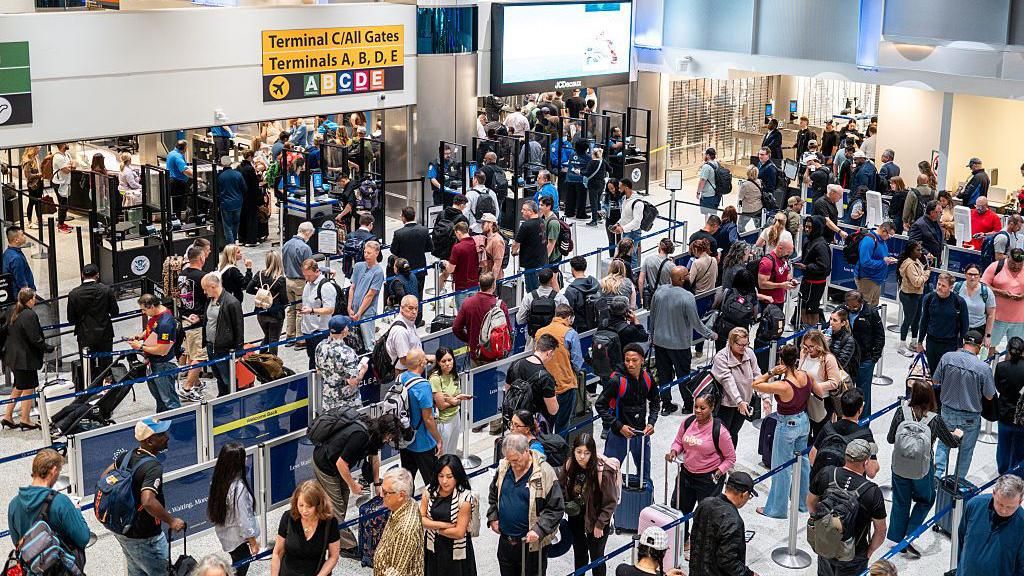
The ongoing US government shutdown has triggered widespread disruptions in air travel, with over 5,000 flights canceled or delayed on Friday as new mandates forced airlines to reduce operations. The Federal Aviation Administration (FAA) implemented emergency measures, cutting flights by 4% initially, with plans to increase reductions to 10% by next week. These measures aim to alleviate pressure on air traffic controllers and other federal employees who have been working without pay since the shutdown began last month. The staffing crisis has led to fatigue among controllers, raising safety concerns and prompting unions to voice their frustrations. Transportation Secretary Sean Duffy warned that flight cuts could escalate to 20% if the shutdown persists. Meanwhile, travelers faced significant inconveniences, with many rebooking flights or seeking alternative transportation. The shutdown has also impacted federal workers, including air traffic controllers, who are struggling to make ends meet. On Capitol Hill, negotiations between Republicans and Democrats remain deadlocked, with no clear resolution in sight. President Donald Trump has suggested ending the Senate filibuster to pass a funding bill, but this proposal lacks bipartisan support. The shutdown, now the longest in US history, continues to strain essential services and workers across the nation.
-
US judge says Trump cannot deploy National Guard to Portland
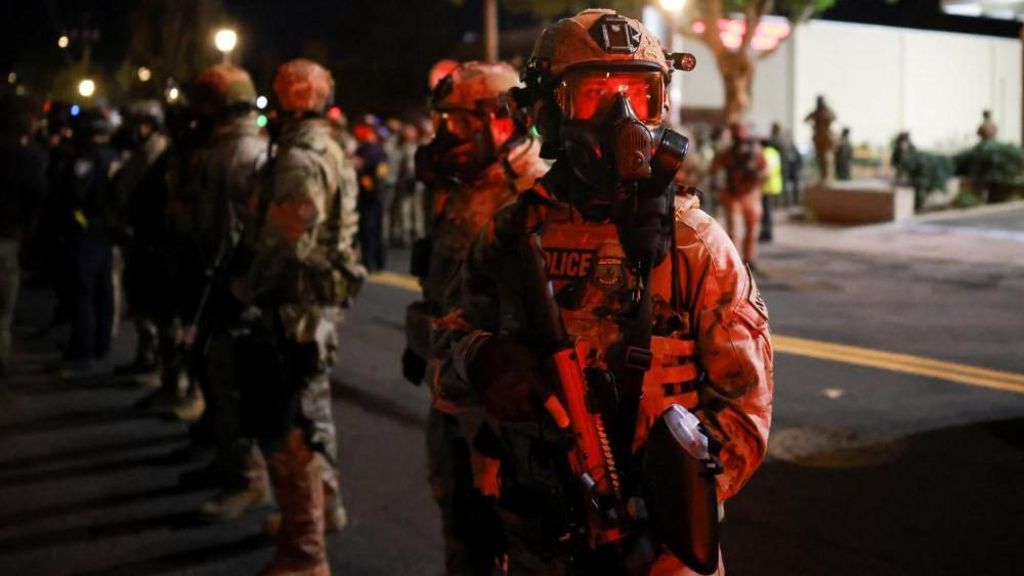
In a landmark decision, U.S. District Judge Karin Immergut has permanently barred President Donald Trump from deploying National Guard troops to Portland, Oregon. This ruling marks the first instance where the Trump administration has been definitively prevented from sending military personnel to U.S. cities. The decision follows a protracted legal battle over whether Trump violated federal law by dispatching troops despite objections from local officials.
Judge Immergut, a Trump appointee, emphasized that the president lacked a lawful basis to federalize the National Guard in Portland. She clarified that her ruling does not preclude the president from ever using National Guard forces but stressed that in this specific case, there was neither a rebellion nor an imminent threat justifying such action. She also noted that Trump had overstepped his authority under the 10th Amendment, which reserves powers not explicitly granted to the federal government for the states.
The ruling comes amid a broader effort by Trump to quell protests against federal immigration policies in Democrat-led cities, including Chicago, Los Angeles, and Washington, D.C. Earlier this month, Judge Immergut issued temporary restraining orders to halt the deployment of troops from Oregon, California, and Texas. In her 106-page decision, she stated that the administration failed to meet the legal threshold for deploying military forces in American cities.
The Trump administration is expected to appeal the decision, potentially escalating the issue to the Supreme Court. The case has highlighted the ongoing tension between federal and local authorities, with Portland officials and residents disputing the administration’s characterization of the city as ‘war-ravaged.’ Local leaders argue that the violence is limited and effectively managed by Portland police.
Portland’s attorney, Caroline Turco, framed the case as a pivotal test of constitutional governance, stating, ‘This case is about whether we are a nation of constitutional law or martial law.’ The ruling underscores the broader debate over federal overreach and the balance of power between state and federal governments.
-

Look: UAE experts bring centuries-old Quran back to life at Sharjah book fair
At the Sharjah International Book Fair (SIBF), visitors are witnessing a remarkable process: the meticulous restoration of a centuries-old Quran by experts from the UAE National Archives. Working under bright lamps, conservators don gloves and magnifying lenses, using brushes, tweezers, and delicate Japanese paper to breathe new life into the fragile manuscript. ‘We are not rewriting history; we are preserving it,’ emphasized a senior restorer at the UAE National Library and Archives booth. The Quran, riddled with holes, missing pages, and faded ink, is being carefully repaired with natural adhesives and fine tissue, ensuring its longevity without altering its historical integrity. The restoration process, which can take days or weeks, involves flattening warped pages with controlled warm air and drying them under special sheets to prevent curling. Once restored, the Quran will be stored in a temperature-controlled archive, its age-old stains and tears preserved as testaments to its history. This live demonstration not only showcases the UAE’s commitment to preserving Islamic heritage but also educates visitors on the delicate art of manuscript conservation.
-

Indian ambassador Dr Deepak Mittal visits Guru Nanak Darbar Dubai on Guru Nanak Dev Ji’s Prakash Purab
In a spiritually significant start to his diplomatic mission in the UAE, Dr Deepak Mittal, the newly appointed Indian Ambassador, visited the Guru Nanak Darbar Gurudwara in Dubai to mark Guru Nanak Dev Ji’s Prakash Purab. Accompanied by his wife, Dr Alpna Mittal, the Ambassador participated in special prayers and sought blessings on the auspicious occasion of the birth anniversary of the first Sikh Guru. The visit underscored the values of unity, faith, and the enduring teachings of Guru Nanak Dev Ji. Dr Mittal was warmly received by Dr Surender Singh Kandhari, Chairman, and Dr Bubbles Kandhari, Vice Chairperson of the Gurudwara, along with members of the management committee and the Sikh community. As a gesture of respect and blessing, the couple was presented with a Saropa, a traditional robe of honour. Addressing the gathering, Dr Mittal expressed his gratitude for commencing his tenure with divine blessings and praised the unity and devotion of the congregation. He highlighted the importance of Guru Nanak Dev Ji’s teachings and India’s cultural heritage, which are upheld with pride. The Ambassador also commended the UAE’s leadership for fostering an environment of tolerance and freedom, allowing people of all faiths to practice their beliefs harmoniously. Dr Surender Singh Kandhari emphasized the profound significance of the Ambassador’s visit on such a holy day, noting that the Gurudwara symbolizes peace, service, and unity. The event concluded with the traditional Ardas (prayer) and Langar (community meal), embodying Sikh values of equality, humility, and service. The atmosphere was filled with devotion, music, and a spirit of togetherness, resonating with Guru Nanak Dev Ji’s timeless message: ‘Recognise all mankind as one.’
-

Dubai RTA announces temporary closure on Airport Road near DXB
The Dubai Roads and Transport Authority (RTA) has announced a temporary closure of Airport Road near Dubai International Airport (DXB) to facilitate expansion works at Terminal 1. The closure, effective from 2:30 AM on Saturday, November 8, 2025, will impact traffic heading to Deira, while traffic to Al Khawaneej will be affected from 2:30 AM on Sunday, November 9, 2025. Motorists are advised to plan their trips in advance, adhere to traffic signs, and use alternative routes via Al Garhoud to ensure smooth travel and timely arrival at the airport. The RTA emphasized the importance of these measures to minimize disruptions during the construction phase. Commuters are encouraged to stay updated with the latest traffic advisories through official channels. This temporary closure is part of ongoing efforts to enhance infrastructure and accommodate the growing passenger traffic at DXB, one of the world’s busiest airports.
-

Why tech giants are offering premium AI tools to millions of Indians for free
In a strategic move to capture India’s burgeoning digital market, leading artificial intelligence (AI) companies such as OpenAI, Google, and Perplexity AI have partnered with Indian telecom giants to offer free or subsidized access to their AI tools. Starting this week, millions of Indian users will gain one year of complimentary access to ChatGPT’s new low-cost ‘Go’ chatbot. Similarly, Perplexity AI has teamed up with Airtel, India’s second-largest mobile network provider, while Google has partnered with Reliance Jio, the country’s largest telecom operator, to bundle AI services with monthly data plans. Analysts view these initiatives not as acts of generosity but as calculated investments aimed at securing a foothold in India’s rapidly expanding digital ecosystem. Tarun Pathak, an analyst at Counterpoint Research, emphasized that the strategy is to familiarize Indians with generative AI before transitioning to paid models. India’s vast and youthful internet user base, exceeding 900 million, presents a unique opportunity for AI companies to gather diverse data and refine their models. However, this approach raises concerns about data privacy and the lack of robust AI-specific regulations in India. While the Digital Personal Data Protection Act (DPDP) 2023 offers broad protections, its implementation remains pending, leaving gaps in addressing AI accountability. Experts argue that India must strike a balance between fostering innovation and safeguarding user data, especially as global AI companies leverage the country’s flexible regulatory environment to scale their offerings. As the AI landscape evolves, the focus will be on ensuring that India’s digital growth aligns with ethical and transparent practices.