博客

  • Israeli raids stoke renewed takeover fears at West Bank’s Joseph’s Tomb

    Israeli raids stoke renewed takeover fears at West Bank’s Joseph’s Tomb

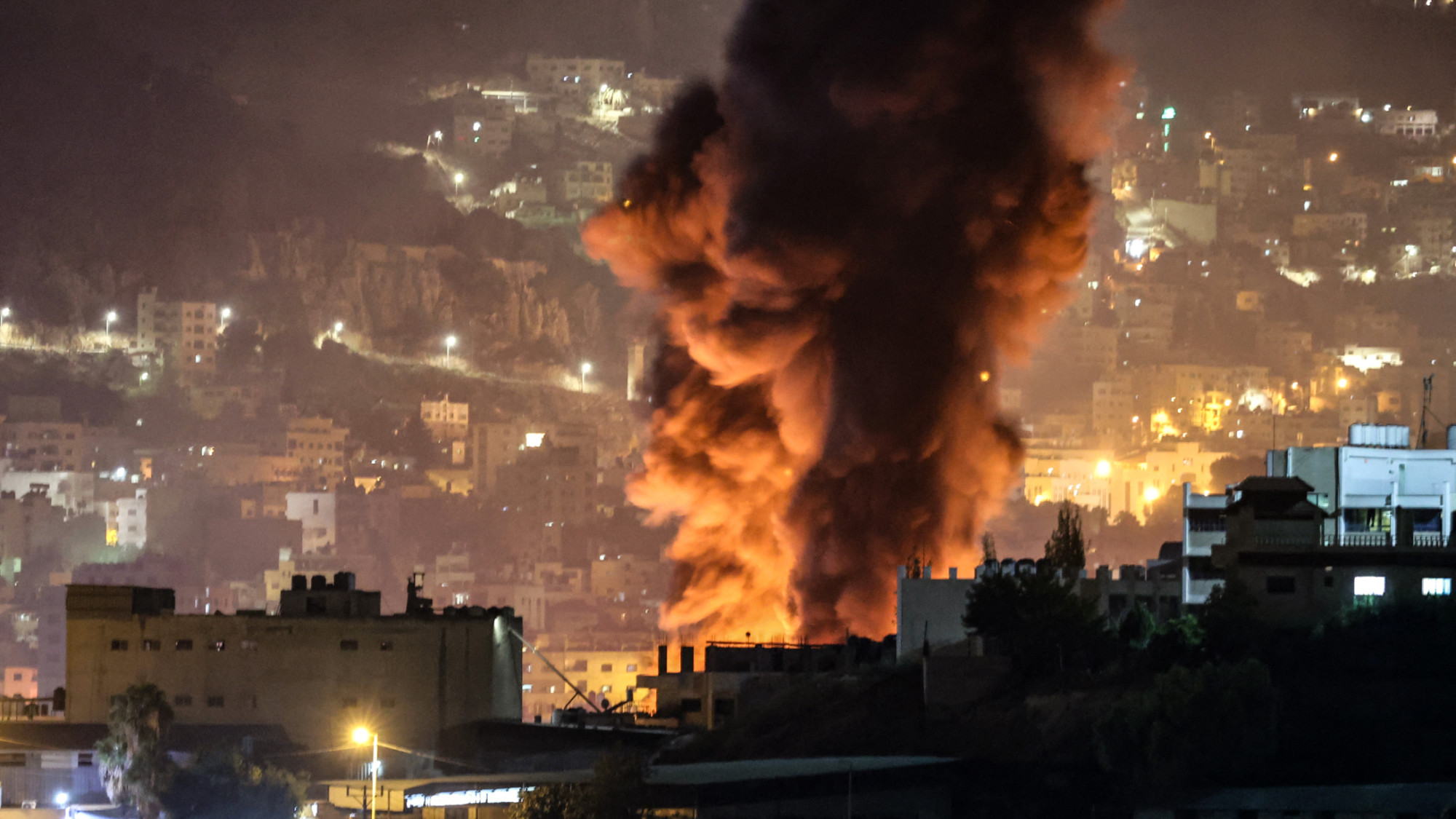
    The ancient site of Joseph’s Tomb near Nablus has become the epicenter of intensified Israeli military and settler activities since October 2023, with recent developments seeing unprecedented international political participation. Last week’s incursion marked a significant escalation when twenty US lawmakers from the National Association of Christian Lawmakers joined settlers and Israeli forces in a heavily guarded visit to the contested religious site.

    Arkansas Senator Jason Rapert, founder of NACL, explicitly endorsed Israeli sovereignty claims during the military-escorted tour, stating: ‘Israel and the Jewish people are the rightful heirs and sovereigns of all these areas.’ The delegation publicly praised the Israeli Defense Forces for their protection during the visit.

    Palestinian analysts interpret these developments as part of a systematic strategy to reassert Israeli control. Veteran journalist Nawaf al-Amer, who has extensively documented the tomb’s contentious history, told Middle East Eye: ‘Since 7 October, the situation has completely shifted. Israel has been carrying out large, scheduled incursions involving significant numbers of settlers, religious figures, political leaders and influential parliamentarians.’

    The site embodies the competing historical narratives that fuel the conflict. Palestinians identify it as the burial place of Sheikh Youssef Dweikat, a local cleric from the early 20th century, while Israelis venerate it as the tomb of the Prophet Joseph, a figure sacred to both Islamic and Jewish traditions.

    This religious significance has been weaponized for political objectives, according to al-Amer: ‘The occupation has attempted to construct a fabricated historical narrative to claim ancient roots in the land, using religious symbolism to serve political aims. Joseph’s Tomb is one example.’

    The current escalation occurs within the broader context of surging settler violence across the West Bank. United Nations data indicates that 2,200 Palestinians have been forcibly displaced from their homes due to settler activities and access restrictions over the past two years, with an additional 40,000 displaced from northern West Bank refugee camps during military operations. Tragically, settlers have killed 21 Palestinians during this period, contributing to the over 1,000 fatalities caused by Israeli forces in the West Bank.

    Historical context reveals that Israel established a yeshiva at the site in the 1980s, maintaining heavy military protection until abandoning its permanent post in 2000. However, monthly settler visits continued under military escort, frequently sparking confrontations with Palestinian residents who view these incursions as pretexts for extending Israeli control.

    The current push to reintroduce the yeshiva, coupled with increased settler activism and international political support, signals a potentially permanent transformation of the status quo at one of the region’s most symbolically charged locations.
  • Israeli press review: Rebuilding challenges persist months after Iran war

    Israeli press review: Rebuilding challenges persist months after Iran war

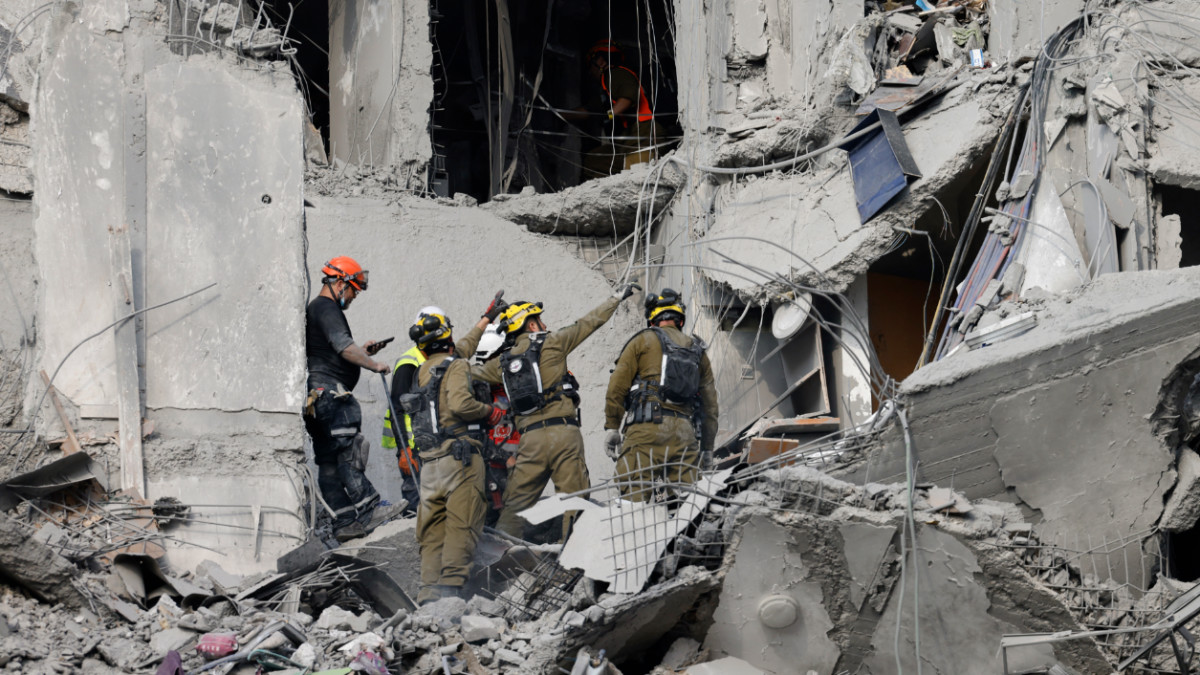
    Five months following the cessation of hostilities with Iran, Israel continues to confront the severe aftermath of a 12-day conflict that left substantial destruction in its wake. Current reports indicate approximately 700 Israeli citizens have been rendered homeless due to structural damage from Iranian missile strikes, with governmental authorities experiencing significant challenges in formulating effective restoration strategies for devastated properties.

    In early June, the Israeli government proposed a comprehensive initiative mandating the demolition and subsequent reconstruction of impaired residential buildings. This program would enable affected inhabitants to either occupy newly constructed apartments or divest their properties at current market valuations. Nevertheless, the plan’s ratification remains precarious due to intense political friction between the governing coalition and ultra-Orthodox factions. These groups exited the coalition earlier this year amid contentious debates regarding the conscription of Haredi youth into national service.

    Affected residents report deteriorating conditions in damaged zones. A Haifa local, whose residence suffered a direct missile impact, disclosed to economic publication Calcalist that reconstruction efforts have stagnated, with incidents of looting exacerbating the situation. He emphasized that the detrimental effects extend beyond the initial attack, creating ongoing hardship. Similarly, occupants of partially damaged dwellings face paralysing uncertainty; a Ramat Gan resident noted that while the Property Tax Authority classifies their building as habitable, practical living conditions remain untenable, forcing families into a prolonged state of limbo.

    Official statistics reveal that nearly 50,000 damage claims have been submitted to the Property Tax Authority, with 39,000 pertaining specifically to residential property damage. Israeli media assessments estimate the total economic impact of Iranian missile assaults to approach five billion shekels (approximately $1.53 billion).

    Concurrently, a separate political controversy has emerged surrounding Israeli Social Equality Minister May Golan’s proposition to reallocate funds originally designated for Palestinian communities within Israel. During a parliamentary session held Wednesday, Minister Golan, a prominent member of Prime Minister Benjamin Netanyahu’s party and ally of National Security Minister Itamar Ben Gvir, announced intentions to cancel a three billion shekel ($918 million) program aimed at mitigating social disparities between Palestinian citizens and the broader Jewish population.

    Instead, the revised strategy proposes diverting the majority of these resources to law enforcement agencies, ostensibly to address escalating crime rates in Palestinian localities. This reallocation would redirect hundreds of millions of shekels initially committed to educational facilities, public transportation, infrastructure development, housing projects, and vocational training toward the establishment of new police stations and related security operations within Palestinian towns.

    The Association for Civil Rights in Israel has vehemently condemned this initiative, labelling it a direct violation of equality principles and fundamental rights for Arab citizens. The organization contends that pitting welfare programs against crime prevention creates a false dichotomy destined to ensure the failure of both objectives.

    Further compounding Israel’s challenges, recent demographic studies conducted by Tel Aviv University researchers reveal an accelerating emigration trend. Since the outbreak of the Gaza conflict in October 2023, nearly 200,000 individuals have departed the country, with a disproportionate number representing young, highly educated professionals from upper socio-economic tiers. Over the past year, this exodus includes nearly 900 medical doctors, over 19,000 degree holders, and more than 3,000 engineers, with 75% of emigrants being under age 40.

    Calcalist reports that this trend signifies a worrying drain of human capital, particularly noting the departure of hi-tech specialists, corporate managers, and other high-income professionals. The study calculates that the state has forfeited approximately 1.5 billion shekels ($459 million) in personal tax revenue within the past year due to this emigration, excluding additional economic losses. A specialized analysis of Israel’s technology sector corroborates these findings, indicating that over 8,000 tech workers have relocated abroad in the last year alone, primarily to the United States, Canada, and Germany. Experts warn that continuation of this trajectory could precipitate severe macroeconomic consequences for the nation, jeopardizing its position as a global innovation hub.

  • Dubai: Why this entrepreneur deletes social media for four hours every day

    Dubai: Why this entrepreneur deletes social media for four hours every day

    At the inaugural KT+150 Summit in Dubai, a gathering of young innovators and entrepreneurs highlighted an unconventional strategy for combating digital distraction: scheduled digital abstinence. Stephan Muller, GCC Director of wearable tech company Whoop, revealed his daily practice of completely deleting social media applications from his phone for two dedicated 90-minute blocks, totaling four hours each day.

    “It sounds kind of stupid, but I delete social media for four hours just because otherwise I’ll grab my phone and just unconsciously check,” Muller explained during a panel discussion on entrepreneurial balance. His approach involves creating an environment of pure focus: “I just have my laptop in front of me, all the programmes closed, and just that presentation or whatever I need to work on. It just allows you to be very present.”

    The summit, held at the Helipad by Frozen Cherry near Dubai Festival City, brought together boundary-pushers and changemakers for a day of discussions that extended to networking opportunities and an afterparty featuring the Rolling Stone MENA music festival.

    Panelist Tatum Greig echoed Muller’s concerns about digital distractions, identifying social media as a “silent time stealer” that she has actively removed from her life. Greig now prioritizes reading, exercise, breathwork, and meditation. She emphasized the cognitive cost of task-switching, noting that “it takes 15 minutes on average to be able to go from one to the other,” resulting in significant productivity loss throughout the day.

    Restaurateur Tarek Roumie expanded the definition of productivity beyond professional achievements, advocating for its application in personal life. “I measure productivity and success by the ability to have family time,” Roumie stated. “In the same way I ask as a business, about do I make money, in the family I ask have I given my parents, my partner and my sister enough time.”

    All panelists stressed the importance of establishing systems to prevent burnout. Roumie drew a parallel to physical endurance: “If you ask someone to wake up at 3am and run every day until they can’t run any more, they will burn out. It is the same with productivity.”

    Greig offered additional advice for aspiring entrepreneurs, emphasizing the psychological preparation needed for the entrepreneurial journey: “Learn how to be by yourself for at least five months before starting your company. You will spend much of your time by yourself while you’re starting it up.” She also highlighted the importance of building a support network of individuals who have undergone similar experiences.

  • UAE offers condolences as Hong Kong fire claims at least 65 lives

    UAE offers condolences as Hong Kong fire claims at least 65 lives

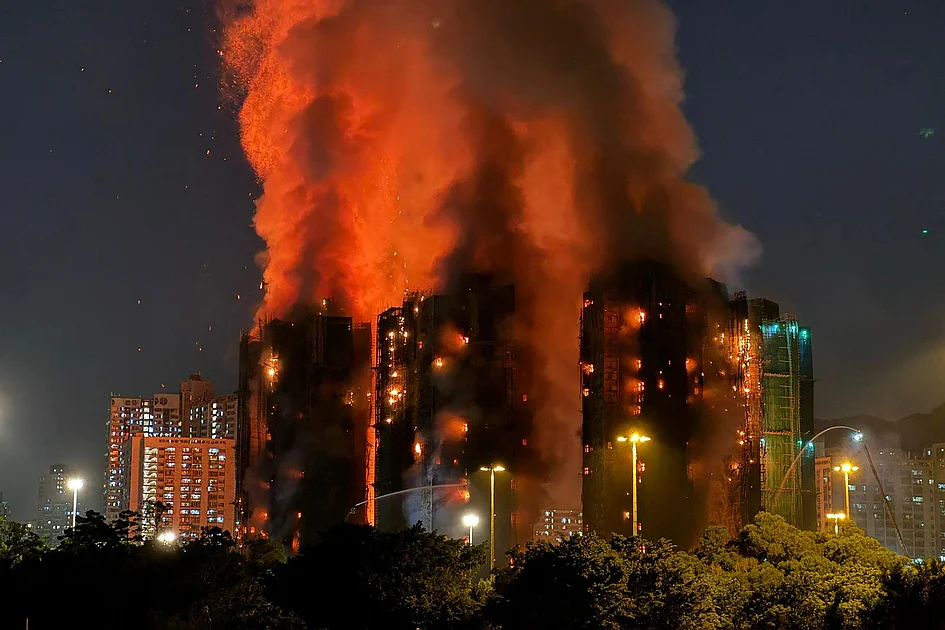
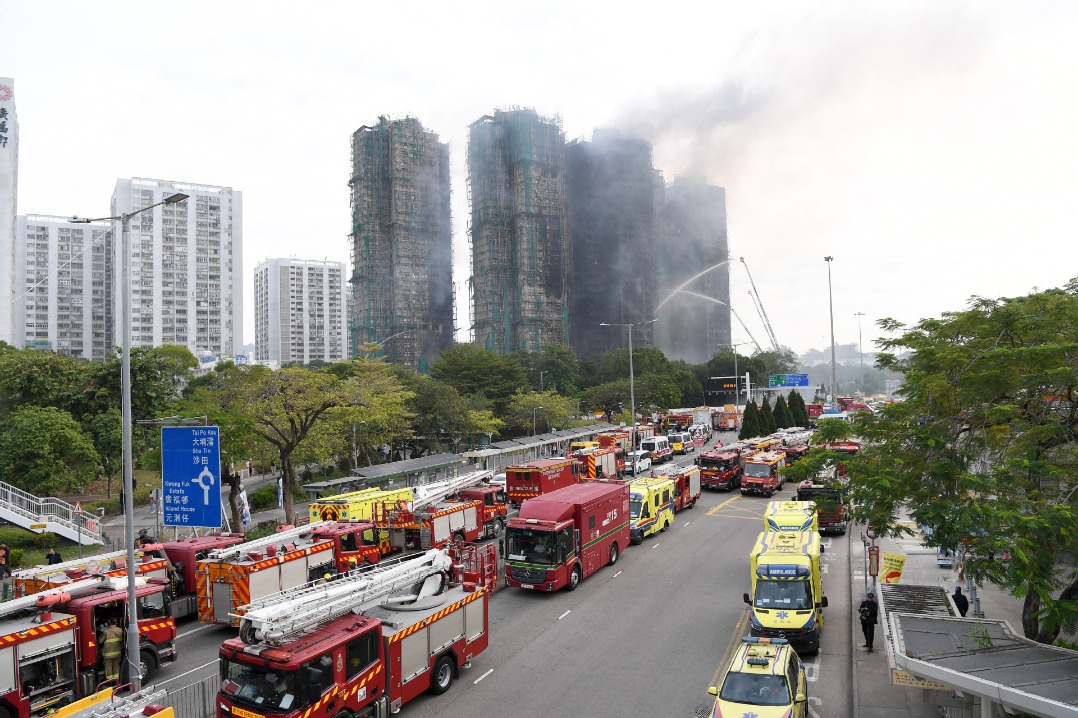
    The United Arab Emirates has formally expressed its profound condolences to the People’s Republic of China in the wake of a severe residential fire in Hong Kong’s Tai Po district that resulted in extensive casualties. Through an official statement released by its Ministry of Foreign Affairs, the UAE government conveyed its deepest sympathies to the families who lost loved ones, as well as to the Chinese government and its citizens. The ministry further extended sincere wishes for a swift and complete recovery to all individuals injured in the tragic incident. This gesture underscores the UAE’s stance of international solidarity and compassion during times of crisis, reinforcing diplomatic bonds between the two nations. The fire, which is reported to have claimed at least 65 lives, marks one of the deadliest such incidents in Hong Kong’s recent history, drawing global attention and responses from various international communities.

  • China warns Japan on rising militarism

    China warns Japan on rising militarism

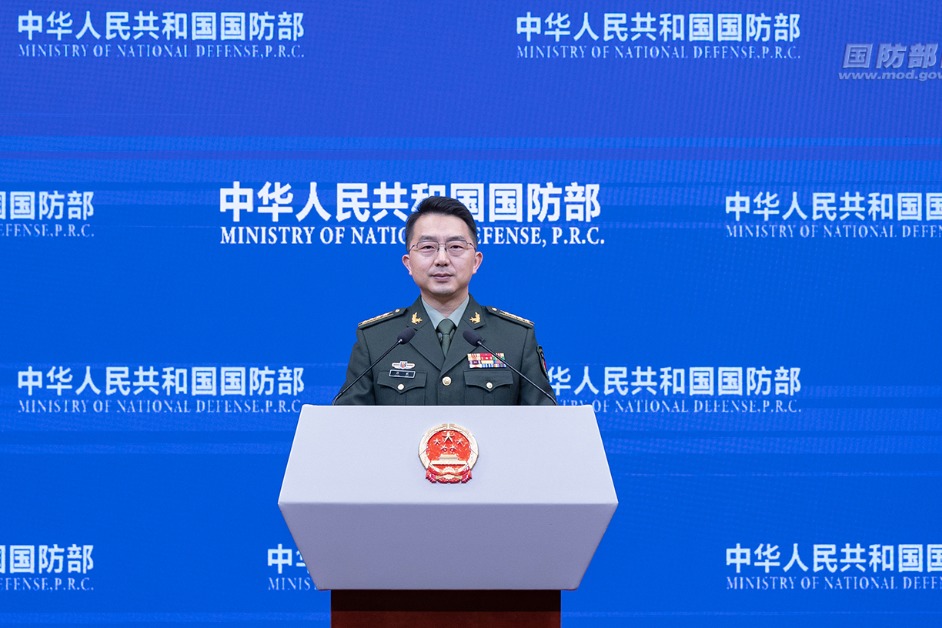
    In a strongly worded statement during Thursday’s regular press briefing in Beijing, Chinese Defense Ministry spokesman Jiang Bin confronted Japan over what Beijing characterizes as dangerous militaristic resurgence. The official demanded Japan demonstrate genuine repentance for historical wartime atrocities while immediately ceasing efforts to modify its pacifist Constitution and expand military capabilities.

    The remarks came in response to recent Japanese security developments, including last week’s landmark export of domestically manufactured Patriot missile interceptors to the United States—marking Tokyo’s first transfer of lethal weapons since relaxing arms export restrictions. Additionally, Japan’s ruling Liberal Democratic Party has initiated discussions about potentially revising the National Security Strategy and associated documents, which may include reconsidering the longstanding Three Non-Nuclear Principles and increasing defense expenditure.

    Jiang emphasized the immutable historical reality of Japan’s WWII defeat, citing international instruments including the Cairo Declaration, Potsdam Proclamation, and Japanese Instrument of Surrender that explicitly prohibit Japanese rearmament. “Any attempt to repeat the evil path of aggression and expansion and undermine the post-WWII international order will not succeed,” the spokesman declared.

    The defense official expressed particular concern about Japan’s alleged military interference in Taiwan affairs, characterizing such moves as serious threats to regional stability. Jiang’s statements coincided with the 80th anniversary commemorations of victory in both the Chinese People’s War of Resistance Against Japanese Aggression and the World Anti-Fascist War.

    Concluding with a powerful historical warning, Jiang stated: “People around the world, especially those from China and other victimized countries in Asia, will never forget the catastrophe brought by Japanese fascists. The specter of Japanese militarism must never be allowed to haunt the world again.”

  • Man rescued 28 hours after start of fire

    Man rescued 28 hours after start of fire

    In a remarkable display of resilience and emergency response, a male survivor was successfully extracted from a fire-ravaged residential complex in Hong Kong after enduring 28 hours trapped within the smoldering structure. The dramatic rescue occurred at 6:45 pm on Thursday from the 16th-floor staircase of Wang Tao House, one of seven affected blocks within the Wang Fuk Court development.

    The extensive rescue operation unfolded as emergency crews battled both time and structural challenges to reach the victim. The prolonged nature of the operation highlighted both the severity of the blaze and the determination of rescue teams working under extremely hazardous conditions.

    Chinese President Xi Jinping has extended official condolences regarding the tragic incident while urging authorities to maximize rescue efforts and minimize casualties. The building fire represents one of Hong Kong’s most significant residential emergencies in recent memory, raising questions about fire safety protocols in high-density urban environments.

    The timing of the rescue—occurring nearly a full day after the fire initially erupted—demonstrates the critical importance of sustained search operations even beyond conventional survival windows. Emergency medical teams were standing by to immediately transport the rescued individual to specialized care facilities following his extraction from the compromised structure.

    As investigation into the fire’s cause commences, attention turns to both the response effectiveness and potential preventive measures that could mitigate similar tragedies in densely populated urban centers where high-rise living presents unique emergency challenges.

  • Beijing institute plans to build space data centers

    Beijing institute plans to build space data centers

    The Beijing Astro-future Institute of Space Technology is spearheading an innovative project to launch high-computing-power experimental satellites by late 2025 or early 2026. This initiative aims to address the escalating global demand for computing power, exacerbated by the rapid expansion of artificial intelligence and the limitations of traditional data centers. Zhang Shancong, the institute’s director and chief scientist at Beijing Orbit Twilight Technology Co., highlighted the challenges faced by terrestrial data centers, including excessive land use, skyrocketing energy consumption, and environmental cooling constraints. Space-based solutions, leveraging the abundant solar energy and the stable minus 270°C cosmic environment, offer a promising alternative. These satellites will enable continuous solar power generation and highly efficient passive radiation cooling, potentially revolutionizing the way computational needs are met in the future. This groundbreaking approach underscores China’s commitment to technological innovation and sustainable development.

  • Trump administration will re-examine green card holders from 19 countries

    Trump administration will re-examine green card holders from 19 countries

    The Trump administration has initiated a comprehensive re-examination of green cards issued to immigrants from 19 nations deemed security risks, following a recent shooting incident involving an Afghan national in Washington DC. U.S. Citizenship and Immigration Services (USCIS) Director Joseph Edlow announced the policy shift, stating President Trump had directed “a full scale, rigorous re-examination of every green card for every alien from every country of concern.”

    The review targets countries previously identified in a June White House proclamation, including Afghanistan, Cuba, Haiti, Iran, Somalia, Venezuela, Burma, Chad, Republic of Congo and Libya. The administration cited security concerns and high visa overstay rates as primary factors for inclusion on the list.

    The policy announcement comes days after Rahmanullah Lakanwal, an Afghan national who entered the U.S. in 2021 through special immigration programs following America’s withdrawal from Afghanistan, allegedly shot and gravely injured two National Guard troops. While Edlow’s social media announcement did not explicitly reference the attack, he emphasized that “the protection of this country and of the American people remains paramount.”

    President Trump characterized the shooting as underscoring “the greatest national security threat facing our nation,” criticizing previous administration policies that he claimed admitted “20 million unknown and unvetted foreigners from all over the world.”

    The June proclamation highlighted by USCIS to the BBC specifically noted Afghanistan’s Taliban control, lack of competent central authority for document issuance, and inadequate screening measures as justification for enhanced scrutiny. This move follows last week’s announcement of a review of all refugees admitted under former President Biden, signaling a broader immigration policy reassessment.

  • India’s equity markets scale new highs after 14 months on growth optimism, easing valuations

    India’s equity markets scale new highs after 14 months on growth optimism, easing valuations

    Indian stock benchmarks achieved unprecedented heights on Thursday, marking their first record peaks in over a year. The resurgence was fueled by cooling valuations, anticipations of corporate earnings recovery, and a resilient economic framework supported by favorable fiscal and monetary policies.

    The Nifty 50 index ascended 0.40% to reach 26,310.45 during trading, while the BSE Sensex advanced 0.52% to 86,055.86. Both indices surpassed their previous all-time highs established in September 2024, though they closed marginally lower due to profit-taking activities.

    This market breakthrough follows a 14-15 month consolidation phase that effectively narrowed the disparity between corporate earnings and stock valuations. Asia’s third-largest economy demonstrates remarkable vigor, with projections indicating nearly 7% growth for the July-September quarter and an anticipated 6.8% expansion for the current financial year ending March 2026.

    Financial institutions express robust optimism regarding market prospects. J.P. Morgan analysts project the Nifty could reach 30,000 by late 2026, suggesting approximately 15% upside potential. The September quarter witnessed India’s strongest corporate earnings revival in over a year, driven by consumption recovery, benign inflation, tax reductions, and reduced borrowing costs.

    Market valuations have moderated significantly from previous levels, with the Nifty currently trading at 22.7x 12-month forward price-to-earnings ratios, down from 23x-25x multiples observed 14 months prior. This valuation adjustment, combined with strengthened earnings outlook, has attracted renewed foreign investor interest while sustaining domestic participation.

    Notably, equity mutual funds have demonstrated consistent inflows since February 2021, with systematic investment plan contributions reaching record levels despite market volatility. Domestic institutions have purchased shares worth 2.92 trillion rupees ($32.94 billion) in 2025, substantially offsetting foreign outflows of $16.9 billion during the same period.

    Analysts highlight that India’s relatively limited artificial intelligence exposure provides global investors with a natural hedge against technology sector volatility. Furthermore, India’s significant underperformance compared to Asian and emerging market peers over the past year may catalyze foreign capital回流, potentially accelerated by a prospective India-U.S. trade agreement.

  • Deeper global cooperation key for green transition and climate resilience, global leaders say

    Deeper global cooperation key for green transition and climate resilience, global leaders say

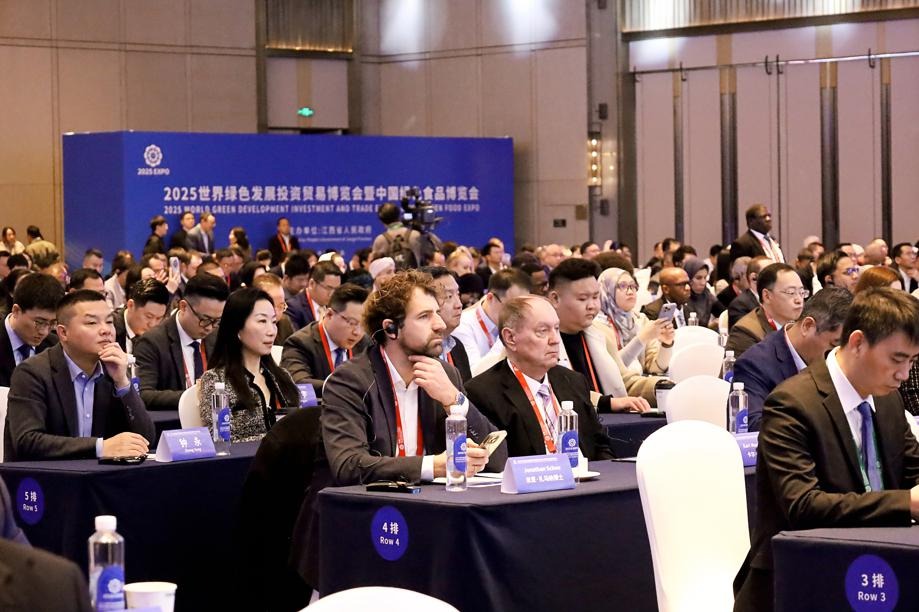
    International leaders convened at the 2025 World Green Development Investment and Trade Expo in Nanchang, Jiangxi Province, to underscore the critical importance of deeper global cooperation in accelerating the green transition and bolstering climate resilience. The four-day event, which also hosted the China Green Food Expo, attracted senior officials, ambassadors, business leaders, and experts to explore new opportunities in green industries and the emerging green-food economy. Zambia’s Vice-President Mutale Nalumango praised China’s significant role in global climate governance, noting the visible results of China’s green transition, which have led to a more livable ecological environment and tangible benefits for ordinary citizens. Nalumango expressed Africa’s readiness to deepen cooperation with China and other partners to expand green investment and low-carbon development. Allex Seah Shoo Chin, a member of the Malacca State Executive Council of Malaysia, highlighted the historical ties between China and Malaysia, emphasizing the strengthening cooperation in green development and technological innovation. He drew parallels to the voyages of Zheng He, which enhanced trade and cultural exchanges between China, Malaysia, and Southeast Asia during the Ming Dynasty. The expo, running until Sunday, serves as a platform for fostering international collaboration in sustainable development and climate resilience.