博客

  • Sharjah announces fines for vehicles still displaying National Day stickers

    Sharjah announces fines for vehicles still displaying National Day stickers

    Sharjah Police have issued a definitive Saturday deadline for motorists to remove all National Day celebration decals from their vehicles, with violations announced for non-compliance following recent traffic safety enforcement actions. The directive comes as authorities revealed they impounded 106 vehicles and nine motorcycles during the 54th Eid Al Etihad celebrations due to serious traffic offenses that jeopardized public safety.

    According to the official advisory from Sharjah Police General Command, vehicles found displaying National Day stickers beyond the December 6 deadline will face financial penalties. This regulatory measure follows a documented pattern of traffic violations during the national celebrations, including excessive noise generation, public disturbance, and reckless driving maneuvers that endangered road users. Police reports additionally indicated that some apprehended motorists were operating vehicles without valid driving licenses.

    The enforcement initiative aligns with observed changes in National Day celebration patterns, as earlier reported by Khaleej Times. Vehicle decorators noted a growing preference among residents for more sophisticated and minimalist car designs during the recent celebrations, with customization shops experiencing increased demand for creative yet tasteful expressions of national pride.

    This coordinated approach to traffic regulation demonstrates Sharjah authorities’ balanced strategy of encouraging patriotic expression while maintaining strict road safety standards and public order considerations.

  • The ‘Gyrfalcon’ mounted police team safeguards grasslands in northern borderland of China

    The ‘Gyrfalcon’ mounted police team safeguards grasslands in northern borderland of China

    In the snow-covered expanses of China’s northern borderlands, an elite mounted police unit known as the ‘Gyrfalcon’ maintains vigilant watch over the Chenbarhu Banner Grassland. Established in 2015 as Hulun Buir’s first specialized equestrian police force in Inner Mongolia Autonomous Region, this dedicated team patrols an immense 18,600 square kilometers of terrain regardless of extreme weather conditions.

    The unit’s specially trained horses, each undergoing rigorous six-month preparation programs, enable officers to navigate challenging landscapes inaccessible to conventional vehicles. Throughout their decade of service, these officers have endured both scorching summer ultraviolet exposure and winter temperatures plunging to minus 40 degrees Celsius while maintaining their protective duties.

    Beyond their primary security functions, the Gyrfalcon team has expanded their community service to include traffic management near local schools and safely escorting children through snowbound streets. Their remarkable patrol mileage has surpassed 140,000 kilometers—equivalent to circling the Earth more than three times—while providing critical assistance to approximately 700 residents in emergency situations.

    From remote grasslands to adjacent townships, this mounted police force has evolved into both a practical security solution and a powerful symbol of safety for the region’s herdsmen and communities throughout the year.

  • German president to visit WWII bombing site as Europe seeks to bolster united front against Russia

    German president to visit WWII bombing site as Europe seeks to bolster united front against Russia

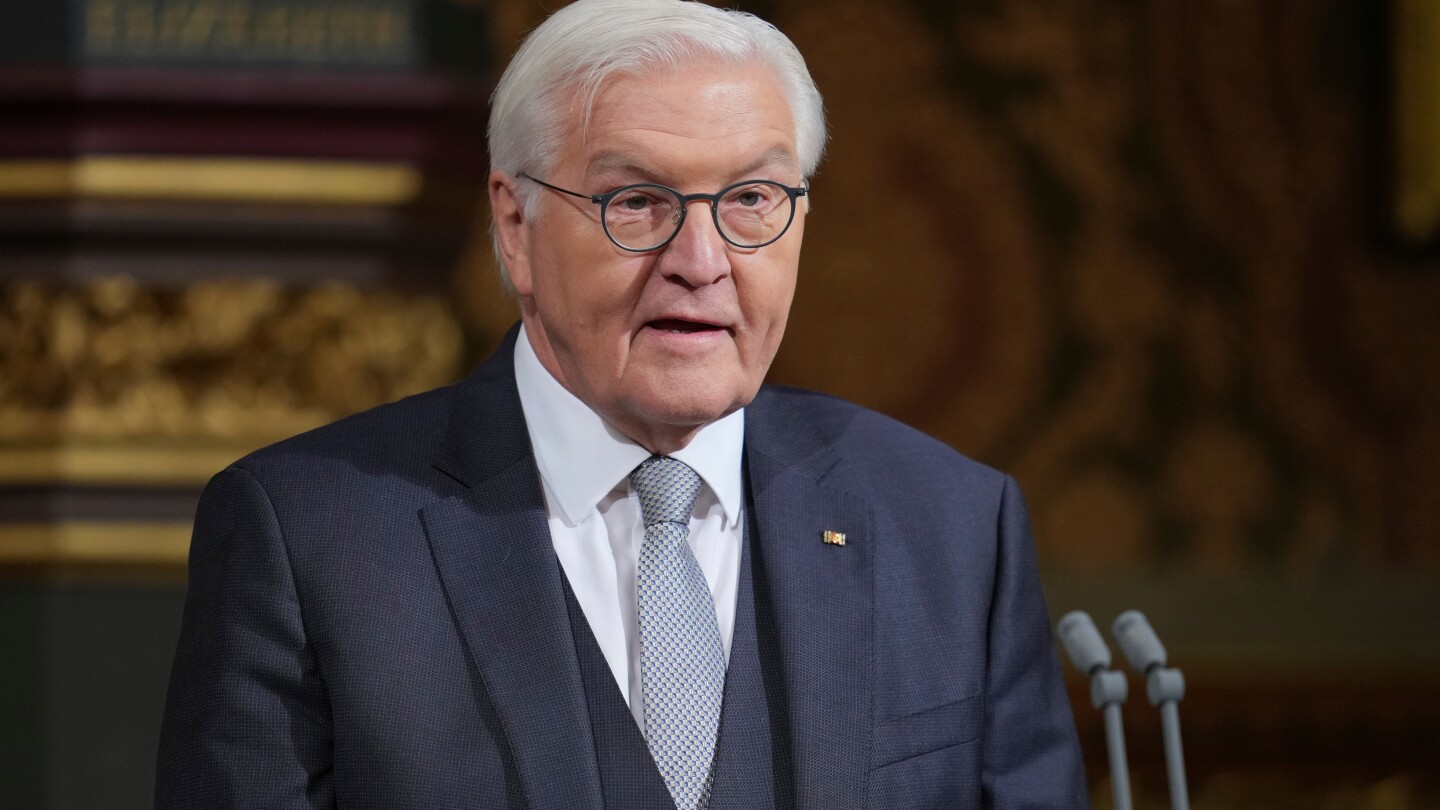
    In a profound gesture of historical reconciliation, German President Frank-Walter Steinmeier concluded his landmark three-day state visit to Britain with a solemn ceremony at Coventry Cathedral on Friday. This visit, the first by a German head of state in 27 years, carried significant symbolic weight as Steinmeier laid a wreath at the site devastated by Nazi bombing in November 1940.

    The Coventry bombing, which killed at least 568 people and destroyed the medieval cathedral, represented one of the most concentrated attacks on Britain during World War II. The preserved ruins now stand as a permanent memorial to war’s devastation. Britain was represented at the ceremony by the Duke of Kent, a longstanding advocate for British-German reconciliation who previously served as royal patron of the Dresden Trust, dedicated to healing wounds from the Allied bombing that devastated the German city in 1945.

    Steinmeier’s visit culminated in extensive diplomatic engagements, including meetings with King Charles III and Prime Minister Keir Starmer. The ceremonial highlight featured an elaborate state banquet at Windsor Castle where both leaders emphasized the transformation from wartime enemies to modern allies. ‘Flourishing cities grew out of the ashes. Enemies became friends,’ Steinmeier declared in his toast. ‘That is our common history—and it shows what is possible when people have the courage to pursue reconciliation.’

    The visit occurs against the backdrop of renewed European unity in response to Russia’s invasion of Ukraine. Steinmeier addressed Parliament, characterizing the conflict as an attack on the rules-based international order established after World War II. ‘We are seeing the resurgence of imperial ambitions, the attempt by destabilizing forces to divide us and pit us against one another,’ he warned. ‘That is precisely why we must stand united.’

    Historical experts note the visit’s profound symbolism. Martin Farr, modern British history specialist at Newcastle University, observed that European nations are collaborating more closely than at any time since the 1815 Concert of Europe, with current security concerns driving this renewed cooperation.

    The extensive ceremonial aspects—including carriage processions, military honors, and royal banquets attended by Queen Camilla and the Princess of Wales in formal attire—demonstrated Britain’s use of soft power to strengthen international partnerships. This diplomatic effort follows the recent UK-Germany treaty deepening cooperation on defense, migration, and climate policy, reflecting European nations’ increased military spending and enhanced coordination amid concerns about international reliability.

  • Liaoning launches first province-level online book lending platform

    Liaoning launches first province-level online book lending platform

    Northeast China’s Liaoning Province has unveiled a groundbreaking digital initiative in public cultural services with the launch of ‘Wanjuanfudi’ (meaning ‘Abundant Books’), marking China’s first province-level coordinated online library lending platform. This innovative system represents a significant advancement in making literary resources more accessible to the public through digital integration.

    The platform debuted with an impressive collection of 500,000 volumes pooled from the Liaoning Provincial Library and 14 municipal libraries across the province. The service operates through a user-friendly mobile application that allows residents to browse, select, and order books for home delivery via courier services. Each registered user receives one complimentary shipping service per quarter, significantly reducing barriers to access.

    Developed through a collaboration between the Liaoning Provincial Department of Culture and Tourism and the Provincial Public Cultural Service Center, ‘Wanjuanfudi’ directly addresses longstanding challenges in public library services. The platform specifically targets issues such as slow collection updates in community libraries and the difficulties faced by residents in remote areas who previously encountered limited access and high costs associated with obtaining books.

    This initiative has been designated as a key cultural benefit project in Liaoning’s 2025 Provincial Government Work Report, highlighting its importance in the region’s public service agenda. Future expansion plans include integrating all 127 public libraries across the province while additionally incorporating resources from university libraries and urban reading spaces. This comprehensive approach aims to create an extensive network for resource sharing and significantly extend the program’s reach and impact throughout the region.

  • Annual Fairy’s Day marked in Xizang

    Annual Fairy’s Day marked in Xizang

    The ancient streets of Lhasa came alive with vibrant cultural celebrations on Thursday as the Tibetan Autonomous Region observed its annual Fairy’s Day, a traditional event dedicated to honoring women and Tibetan Buddhist heritage. Corresponding with the 15th day of the tenth month in the Tibetan calendar, this year’s festivities brought thousands of participants to the sacred grounds of Jokhang Temple.

    Women adorned in elaborate traditional costumes formed processions through the city, carrying ceremonial hada scarves—white silk khata symbols of purity and goodwill—and vessels of barley wine. The celebratory atmosphere filled the air as communities gathered to pay homage to Palden Lhamo, the revered female protector deity in Tibetan Buddhism known as the guardian of the Dharma.

    The temple precincts echoed with rhythmic movements as participants performed Guozhuang, the traditional Tibetan circle dance characterized by synchronized steps and colorful attire. This cultural expression, deeply rooted in Tibetan heritage, served as both spiritual devotion and community bonding experience.

    Local authorities noted the significance of preserving such cultural traditions that have been maintained for centuries. The festival not only reinforces cultural identity but also highlights the respected status of women in Tibetan society, where the feminine divine occupies a central role in spiritual practices.

    The celebrations demonstrated the continuing vitality of Tibetan cultural traditions within contemporary society, showcasing how ancient customs adapt and thrive in modern times while maintaining their spiritual significance and community functions.

  • Russian drone strike kills 12-year-old boy in Ukraine as peace talks kept under wraps

    Russian drone strike kills 12-year-old boy in Ukraine as peace talks kept under wraps

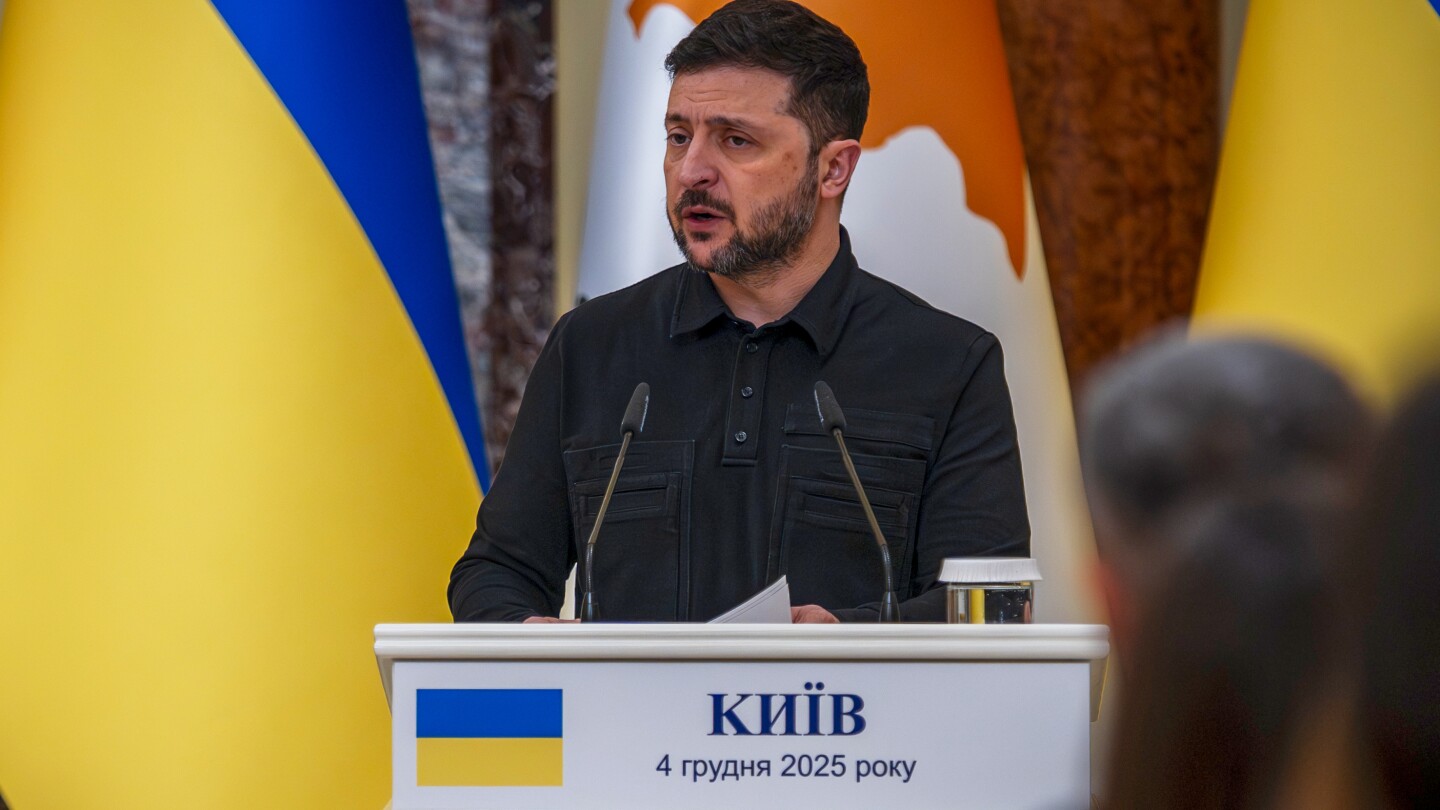
    Amid ongoing covert diplomatic efforts to broker peace, the Russo-Ukrainian conflict witnessed significant military escalation with cross-border attacks claiming civilian lives and targeting energy infrastructure. In central Ukraine’s Dnipropetrovsk region, Russian drone strikes demolished a residential building, resulting in the tragic death of a 12-year-old boy and injuring two women. Regional military administration head Vladyslav Haivanenko confirmed the assault occurred Thursday night, with Ukrainian air force reports indicating Russia launched 137 drones of various types overnight.

    Simultaneously, Ukrainian forces executed long-range strikes targeting Russian territory. Attacks hit the Temryuk sea port in Krasnodar region near the Ukrainian border, causing substantial fires and damaging port infrastructure. Ukrainian drones penetrated deeper into Russian territory, striking the city of Syzran approximately 800 kilometers east of the border. While Syzran Mayor Sergei Volodchenkov confirmed the attack without elaboration, unverified media reports indicated Ukrainian drones successfully hit a strategic oil refinery in the Volga river city.

    The Russian Defense Ministry claimed successful interception of 85 Ukrainian drones over Russian regions and illegally annexed Crimea overnight.

    These developments unfolded against a backdrop of discreet diplomatic maneuvering. U.S. President Donald Trump’s special envoy Steve Witkoff and senior advisor Jared Kushner were scheduled to meet with Ukrainian delegates in Miami on Thursday, though official confirmation of the meeting remained pending. This followed Tuesday’s discussions between President Vladimir Putin and U.S. envoys at the Kremlin, marking the latest attempt to break the nearly four-year conflict stalemate.

    Ukrainian President Volodymyr Zelenskyy emphasized his delegation sought clarity regarding the Kremlin discussions, expressing concerns about Russian pretexts to prolong hostilities. European allies supporting Kyiv simultaneously worry about potential Russian aggression beyond Ukraine and advocate for robust security guarantees in any prospective peace agreement.

    Kremlin foreign affairs adviser Yuri Ushakov, accompanying Putin on his India visit, criticized European nations for allegedly presenting ‘unacceptable demands’ that complicate Washington and Moscow’s settlement efforts on Ukrainian issues.

  • Survivors plead for urgent aid after catastrophic floods and landslides killed over 1,500 in Asia

    Survivors plead for urgent aid after catastrophic floods and landslides killed over 1,500 in Asia

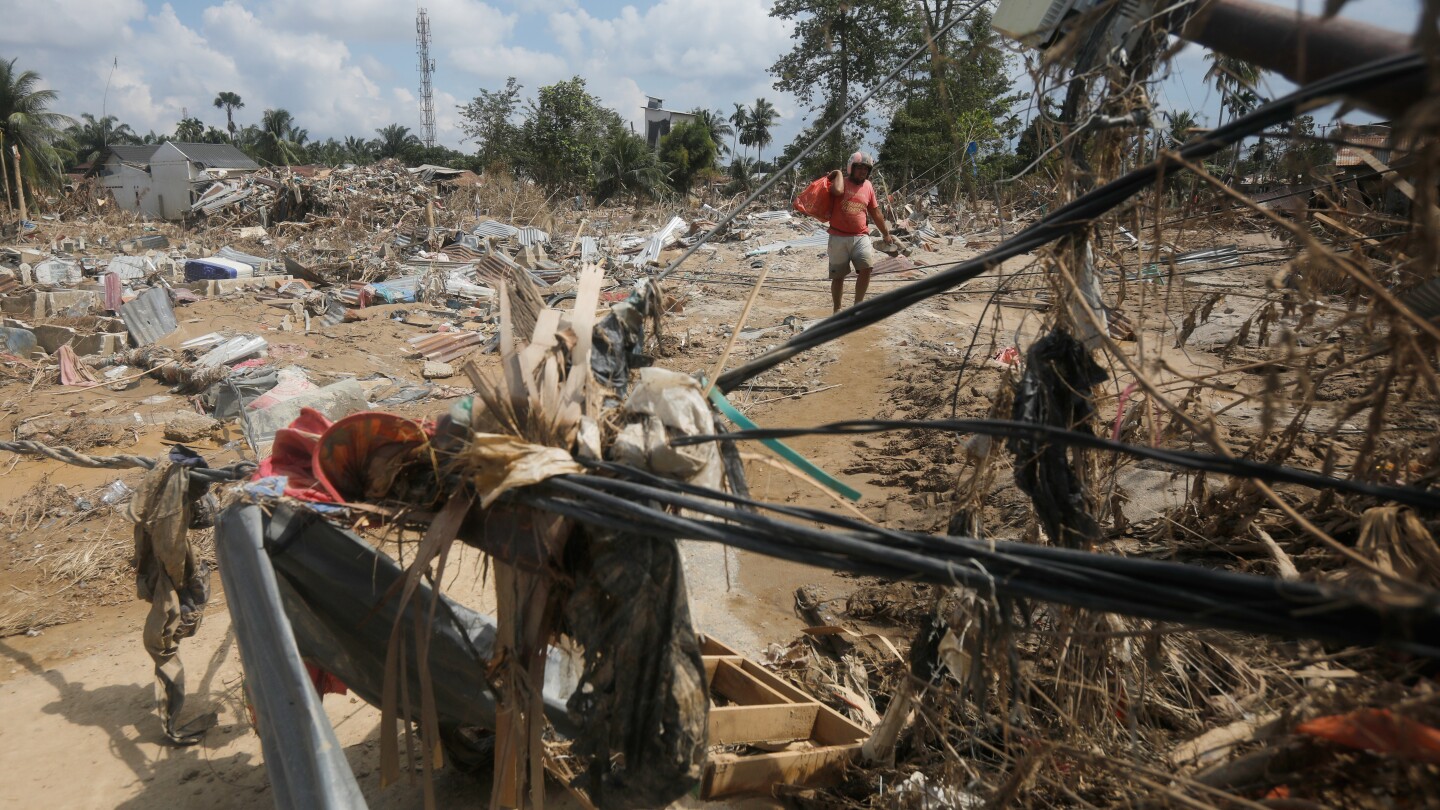
    Rescue operations across Southeast Asia are battling immense logistical challenges one week after catastrophic flooding and landslides claimed over 1,500 lives. The regional disaster has left a trail of unprecedented destruction, with Indonesia bearing the heaviest burden at 883 confirmed fatalities, followed by Sri Lanka with 486, and Thailand with 185.

    The hardest-hit region, Aceh Tamiang in Indonesia’s Aceh province, presents a landscape of utter devastation. Entire villages have been entombed under layers of mud and debris, severing critical infrastructure. Roads have been washed away, rendering many areas accessible only by helicopter. The collapse of transmission towers has plunged communities into darkness and severed communication lines.

    For the more than 260,000 displaced residents, survival hinges on the rapid delivery of aid. Clean water, sanitation, and shelter have become urgent priorities. Relief trucks from Medan city are navigating debris-clogged roads that only recently reopened, significantly slowing distribution efforts according to National Disaster Management Agency spokesperson Abdul Muhari.

    Survivors describe harrowing escapes from torrents of water filled with logs that demolished entire neighborhoods. On the battered bridge over the swollen Tamiang River, families have sought refuge under makeshift tents fashioned from bedsheets. Ibrahim bin Usman, a survivor who lost six family homes, described the event as ‘a tsunami from the hills,’ noting many bodies remain buried beneath the mud.

    The humanitarian crisis is compounded by severe water contamination. With wells polluted and pipes destroyed, residents report being forced to drink sediment-laden floodwater after minimal purification, leading to illness among children.

    Frustration is mounting among survivors who accuse local officials of corruption and blame deforestation for exacerbating the disaster. Hadi Akher, a bare-chested survivor in a crowd awaiting aid, voiced the community’s anger: ‘This deadly flood happened because too many officials here are corrupt.’

    The catastrophe has evoked traumatic memories of the 2004 Indian Ocean tsunami that claimed approximately 160,000 lives in Aceh alone, adding psychological trauma to the physical devastation.

  • Germany votes to bring back voluntary military service programme for 18-year-olds

    Germany votes to bring back voluntary military service programme for 18-year-olds

    In a landmark decision reflecting Europe’s shifting security landscape, Germany’s Bundestag has approved the reintroduction of voluntary military service. The move represents a strategic reversal from the country’s 2011 abolition of compulsory conscription and forms part of Chancellor Friedrich Merz’s ambitious plan to develop Europe’s most formidable conventional army.

    Starting January 2026, all German 18-year-olds will receive mandatory questionnaires assessing their interest in military service. While completion is compulsory for men and optional for women, the program remains voluntary in its current form. The government has outlined that by July 2027, all male citizens will undergo mandatory medical examinations to determine operational capability.

    Defense Minister Boris Pistorius emphasized the necessity of universal medical assessments, stating they would eliminate delays in identifying capable personnel during national emergencies. The Bundeswehr, currently numbering approximately 182,000 troops, aims to expand by 20,000 personnel within the next year. Long-term objectives target 260,000 active soldiers supplemented by 200,000 reservists by the early 2030s.

    The legislative change encountered immediate opposition from Germany’s youth. Protest organizers coordinated strikes across 90 cities, with Hamburg alone anticipating 1,500 participants. Demonstrators outside the Bundestag displayed banners proclaiming “No to military service,” while student organizers criticized the program as promoting obedience training and violence.

    This development aligns with broader European trends, following France’s recent announcement of a 10-month voluntary military training program for youth. Both initiatives respond to heightened security concerns following Russia’s invasion of Ukraine and pressure from NATO allies to increase defense spending. Financial incentives appear substantial, with Germany offering approximately €2,600 monthly compensation compared to France’s €800.

    The parliamentary vote passed 323-272 amid simultaneous deliberations on contentious pension reforms. The governing coalition narrowly avoided crisis when opposition left-wing parties announced abstention, reducing the required majority threshold.

  • Kenya signs landmark health deal with US despite data fears

    Kenya signs landmark health deal with US despite data fears

    In a significant departure from traditional aid models, the United States and Kenya have formalized a groundbreaking five-year health agreement valued at $2.5 billion. This pact represents the inaugural implementation of the Trump administration’s restructured foreign assistance approach, which prioritizes direct government-to-government partnerships over conventional channels.

    The comprehensive health initiative allocates $1.7 billion from US contributions alongside Kenya’s $850 million commitment, establishing a framework where Nairobi will progressively assume greater financial responsibility. The collaboration specifically targets HIV/AIDS, malaria, tuberculosis prevention and treatment, alongside maternal healthcare, polio eradication, and infectious disease outbreak preparedness.

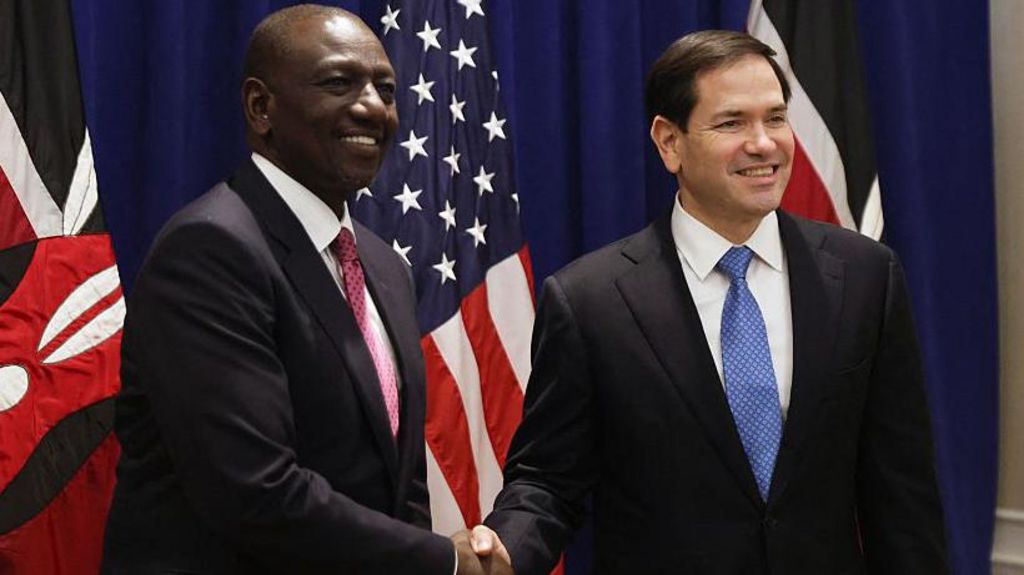
    US Secretary of State Marco Rubio, during the signing ceremony with Kenyan President William Ruto, emphasized the strategic nature of the partnership, acknowledging Kenya as a “longstanding American ally” and praising its international contributions, particularly regarding peacekeeping operations in Haiti. The agreement forms part of the broader “America First Global Health Strategy” introduced in September, which conditions assistance on bilateral negotiations aimed at reducing perceived inefficiencies in traditional aid distribution.

    Despite official assurances, the arrangement has generated substantial debate regarding data privacy protections. Concerns have emerged that the partnership might grant US authorities access to sensitive Kenyan health databases containing patient information. Health Minister Aden Duale has actively addressed these apprehensions, clarifying that only de-identified, aggregated data would be shared under strict adherence to Kenyan legal protections.

    The agreement emerges against the backdrop of substantial reductions in US foreign aid, including the dismantling of USAID and billions in assistance cuts to developing nations initiated during Trump’s first presidential day. These reductions have previously triggered medication shortages across multiple recipient countries.

    US officials indicate this Kenya arrangement serves as a prototype for similar health partnerships with other African nations aligned with US foreign policy objectives, with additional agreements anticipated before year’s end.

  • Flying Tigers legacy honoured in California

    Flying Tigers legacy honoured in California

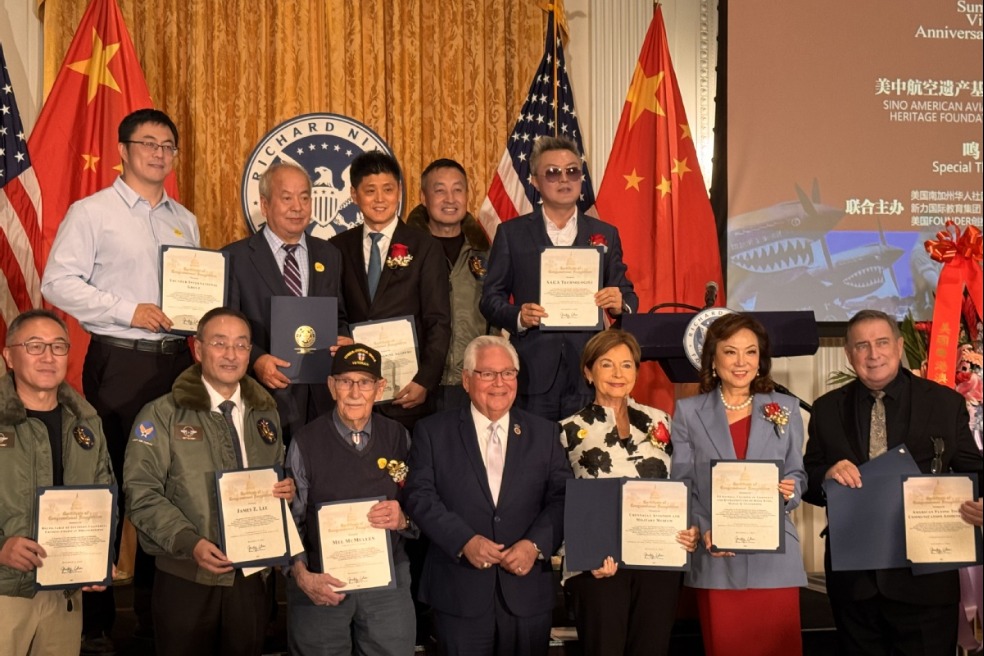
    YORBA LINDA, California — A significant gathering at the Richard Nixon Presidential Library and Museum this week paid tribute to the legendary Flying Tigers, commemorating the 80th anniversary of World War II’s conclusion and reflecting on pivotal moments in Sino-American relations. The event brought together descendants of veterans, community leaders, and officials who emphasized the enduring relevance of wartime cooperation between the nations.

    Nell Chennault Calloway, granddaughter of Flying Tigers commander General Claire Lee Chennault, addressed attendees with a powerful message about historical guidance. “History is our best guide. It records our past and offers inspiration for the future,” she stated, connecting the Flying Tigers’ legacy to President Nixon’s groundbreaking 1972 China visit and the subsequent normalization of relations under President Carter.

    Calloway highlighted Nixon’s famous toast to Premier Zhou Enlai, noting that despite differences, common interests continue to transcend divisions. “The relationship between our two countries remains the most important bilateral relationship in our world today,” she asserted, urging remembrance of sacrifices made by soldiers, civilians, and diplomats during WWII.

    Jeffrey Greene, chairman of the Sino-American Aviation Heritage Foundation, elaborated on the historical significance of the Flying Tigers’ campaign. “What happened in China 80 years ago brought the two nations close together in a way that no other event could,” Greene told the assembly. He recounted the bravery of American volunteer pilots and Chinese civilians who rescued downed airmen despite facing deadly retaliation.

    California State Senator Bob Archuleta framed the Flying Tigers’ story as a contemporary lesson for global challenges. “History proves that we can accomplish more through cooperation than conflict, and through mutual respect rather than division,” he stated, emphasizing the importance of people-to-people diplomacy.

    The commemoration also honored centenarian Flying Tigers veteran Mel McMullen and Zhang Sujiu, daughter of China’s “Peace General” Zhang Zhizhong, recognizing them as living connections between historical cooperation and present possibilities.

    The event was jointly organized by the American Flying Tigers Communication Association, the Sino-American Aviation Heritage Foundation, and the Chennault Aviation and Military Museum, serving as a poignant reminder of what bilateral cooperation can achieve when nations choose partnership over confrontation.