博客

  • Houses searched as part of fire murder inquiry

    Houses searched as part of fire murder inquiry

    Irish law enforcement authorities have launched an intensive murder investigation following a deliberately set house fire that claimed two lives in County Offaly. The tragic incident occurred at a residential property in Castleview Park, Edenderry, resulting in the deaths of 60-year-old Mary Holt and her four-year-old grandnephew Tadhg Farrell.

    An Garda Síochána confirmed the execution of coordinated search operations across three separate residences in Counties Kildare and Offaly as part of their expanding criminal investigation. The targeted police action comes in response to what authorities have characterized as a ‘premeditated, reckless and callous attack’ on a family home.

    Official reports indicate that both victims were discovered in the front room of the property where the arsonist initially ignited the blaze. Tadhg Farrell had been visiting his grandmother at the time of the fatal incident. The grandmother herself sustained serious burn injuries and remains hospitalized under medical supervision.

    Investigators have released critical CCTV footage documenting the attack, hoping to gather additional evidence from public sources. According to RTÉ, Ireland’s national broadcaster, the same residence had been previously targeted in earlier incidents, suggesting possible premeditation.

    The local community prepares to mourn the victims with separate funeral arrangements: Tadhg Farrell’s service will convene Friday at noon, followed by Mary Holt’s memorial on Sunday afternoon. Gardaí continue to appeal for any information regarding this violent fatal incident, urging witnesses to come forward immediately.

  • Moment of truth

    Moment of truth

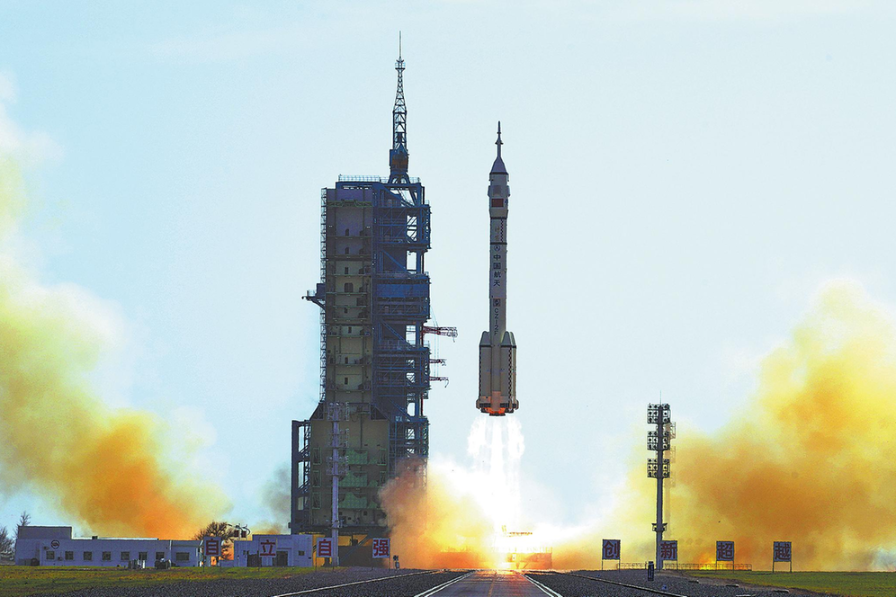
    In an unprecedented display of spaceflight agility, China successfully conducted its first emergency orbital rescue mission with the rapid deployment of the Shenzhou XXII spacecraft on November 25. The remarkable operation commenced at 12:11 pm Beijing time when a Long March 2F Y22 rocket launched from the Jiuquan Satellite Launch Center in Northwest China, carrying the replacement spacecraft to address a critical situation in orbit.

    The emergency response was triggered on November 5 when the Shenzhou XX spacecraft, originally scheduled to return to Earth, sustained damage from suspected space debris impact. Mission controllers detected minute fissures on the return capsule’s viewport window, rendering the vehicle unsuitable for safe re-entry operations.

    Facing this orbital emergency, China’s space program demonstrated extraordinary coordination and technical prowess. Mission command centers immediately activated contingency protocols, mobilizing engineers and scientists across the spaceflight program. The team worked with exceptional efficiency and composure, completing a comprehensive risk assessment and implementing a solution within an astonishing 20-day timeframe.

    The operation involved complex logistical coordination of personnel and equipment, culminating in the successful transfer of crew members from the compromised Shenzhou XX to the newly launched Shenzhou XXII spacecraft. The replacement vehicle successfully separated from its carrier rocket approximately ten minutes after launch, achieving its designated orbit and marking a historic achievement in China’s manned spaceflight capabilities.

    This emergency deployment represents a significant advancement in space mission responsiveness and underscores China’s growing proficiency in handling complex orbital scenarios. The successful execution of such a rapid launch sequence demonstrates remarkable progress in space infrastructure readiness and emergency preparedness, setting a new benchmark for rapid response capabilities in human spaceflight operations.

  • Chileans are divided in a presidential runoff tilted toward the far right

    Chileans are divided in a presidential runoff tilted toward the far right

    SANTIAGO, Chile — Chile stands at a political crossroads as voters prepare to elect their next president in a runoff election that pits two ideological extremes against each other. The Sunday vote features José Antonio Kast, a 59-year-old former lawmaker representing the most right-wing platform since Chile’s military dictatorship, against Jeannette Jara, a 51-year-old communist candidate who would become the most left-wing president since the country’s return to democracy in 1990.

    The election reveals a nation deeply divided in its perception of reality. Many Chileans describe their country as descending into disaster, citing surging crime rates attributed to Venezuelan gangs crossing porous borders, unprecedented kidnappings, contract killings, and economic stagnation in what was once considered one of Latin America’s safest nations. These voters see Kast as the solution to restore stability and security.

    Conversely, other Chileans point to significant social progress including a shorter workweek, higher minimum wage, improved pension systems, and a declining homicide rate according to official figures. They view Jara as the necessary bulwark against far-right populism sweeping across the globe.

    Kast’s campaign has gained momentum by focusing on security concerns and immigration, promising mass deportations of an estimated 337,000 migrants without legal status—mostly Venezuelans. He has drawn inspiration from Trump’s immigration policies, Bukele’s crime-fighting tactics in El Salvador, and Milei’s libertarian economic approach in Argentina, proposing to slash $6 billion in public spending within 18 months.

    Jara, despite her record as labor minister implementing significant welfare measures and her humble origins, faces substantial challenges. Her communist affiliation frightens moderate voters despite her proposals promoting foreign investment and fiscal restraint. She represents a government with only 30% approval rating in a country that has voted out incumbent leaders in every election since 2005.

    Political analysts consider Kast the likely victor after right-leaning parties secured 70% of votes in the first round. The outcome will determine whether Chile joins the regional trend of right-wing ascendance or maintains its left-leaning trajectory that began with current President Gabriel Boric’s victory four years ago.

  • Taylor Swift shown breaking down in tears after she met Southport attack families

    Taylor Swift shown breaking down in tears after she met Southport attack families

    Newly released documentary footage exposes the profound emotional burden carried by Taylor Swift during her record-breaking Eras Tour, particularly following two devastating security incidents. The six-part Disney+ series “The End of an Era” reveals heartbreaking backstage moments where Swift broke down after privately meeting survivors and families of the Southport stabbing attack that claimed three young girls’ lives at a Swift-themed dance workshop in July 2024.

    The documentary captures raw footage of Swift sobbing in her dressing room as her mother Andrea comforted her, with the pop star having to immediately compose herself for a three-and-a-half hour performance at London’s Wembley Stadium. Adding to the psychological pressure, the Wembley show marked Swift’s return after canceling three Vienna concerts due to a CIA-identified terrorist plot that nearly resulted in a “massacre situation” at her performance.

    Swift reveals in the documentary that after two decades of performing, “being afraid that something is going to happen to your fans is new.” She describes creating “some form of escape” for audiences while privately grappling with overwhelming emotions. The series examines the exhausting process behind the monumental tour—149 shows across five continents that grossed over $2 billion and sold more than 10 million tickets.

    Beyond the trauma, the documentary highlights the tour’s transformative impact on everyone involved. It showcases the intense camaraderie among crew members, the emergence of breakout stars like dancer Kameron Saunders, and the palpable joy that made audiences compare the atmosphere to “Woodstock without the drugs.” Swift explains her philosophy of making immense effort appear “accidental” while acknowledging the unexplained “magic and destiny” behind the tour’s unprecedented success.

    The series presents Swift as both a meticulous professional obsessed with perfecting large-scale entertainment and an emotional conduit for fans who see themselves in her navigation of love, heartbreak, and finding one’s place in the world. It ultimately frames the Eras Tour as a safe space for exploring femininity and emotional expression without shame, creating a lifetime’s worth of experiences within its two-year duration.

  • Beijing man sentenced to 4 years for poisoning dogs

    Beijing man sentenced to 4 years for poisoning dogs

    In a groundbreaking legal ruling, a Beijing court has sentenced a 65-year-old man to four years imprisonment for deliberately poisoning multiple dogs in a residential community. The Chaoyang District People’s Court delivered the verdict on Thursday, marking the first criminal prosecution in Beijing’s history specifically addressing pet-related violence.

    The defendant, identified only by his surname Zhang, admitted to dispersing sodium fluoroacetate—an extremely toxic compound commonly used in rodenticides—throughout public areas of the neighborhood in September 2022. The dangerous substance resulted in the poisoning of eleven dogs, nine of which tragically succumbed to the effects.

    Among the victims was a 13-year-old West Highland white terrier belonging to a resident surnamed Li. The pet owner described her profound emotional devastation following the incident, revealing to Red Star News that she ultimately resigned from her employment to pursue justice for her companion. “From my 20s to 30s, this dog accompanied me through the most important years of my life,” Li expressed. “It was my closest and dearest companion, a pillar of emotional support.

    Police investigation commenced on September 16, 2022, with authorities eventually identifying Zhang as the primary suspect. He faced formal charges of using hazardous substances in public spaces. The case proceeded to trial in October 2023, where Li represented both herself and fellow affected dog owners.

    During court proceedings, Zhang acknowledged his role in the poisonings but provided ambiguous explanations for his actions. While expressing a general dislike for dogs, he notably denied direct responsibility for the animals’ deaths despite admitting to deploying the toxic substance.

    The court determined that Zhang’s actions constituted a serious criminal offense, emphasizing the grave danger posed by introducing such hazardous materials into communal environments. Despite the conviction, CCTV reports indicate Zhang intends to appeal the decision to a higher court.

  • 2-ton cargo drone ready for takeoff

    2-ton cargo drone ready for takeoff

    China’s aviation sector has achieved a significant technological breakthrough with the successful production of the SUNNY-T2000, a heavy-payload unmanned cargo aircraft capable of carrying two metric tons. This development marks a substantial advancement in the country’s capabilities for long-haul transportation, regional distribution, and last-mile delivery solutions.

    Manufactured by Shenyang Sunny Aeronautics and Space Adventure Company, the drone officially rolled off production lines in Shenyang, Liaoning Province, on December 12, 2025. The aircraft features a substantial 15-cubic-meter rectangular cargo bay designed to accommodate diverse freight including emergency supplies, industrial components, and agricultural products.

    According to Professor He Jun, Chairman of Shenyang Sunny Aeronautics and Space Adventure and academic at Shenyang Aerospace University, the SUNNY-T2000 boasts an operational range exceeding 1,000 kilometers when fully loaded. The aircraft requires only an 800-meter runway for takeoff and landing operations, making it particularly suitable for reaching remote locations and navigating challenging terrain.

    Beyond conventional cargo transport, the drone’s design incorporates aerial cargo drop capabilities, expanding its potential applications to emergency rescue missions and forest firefighting operations. This multifunctional approach addresses limitations in existing cargo aircraft regarding payload capacity, internal space, and range efficiency.

    The development represents part of a broader strategic initiative in Shenbei New District, which has designated the low-altitude economy as a priority emerging industry during China’s 14th Five-Year Plan period (2021-2025). The district has attracted over thirty enterprises specializing in low-altitude technologies, creating a comprehensive manufacturing ecosystem.

    Infrastructure development has kept pace with technological advancements, with authorities approving fourteen airspaces and two dedicated drone logistics test routes—the largest and highest-quality airspace resources in Liaoning Province. The district has also established twenty-one temporary takeoff and landing points alongside ongoing construction of key facilities including Shenbei General Airport and the second phase of the Aifeike flight camp.

    Looking forward, the company is already advancing more ambitious projects including 6-ton and 7-ton cargo drone models, with the 6-ton variant designed to accommodate space equivalent to a 40GP standard container (approximately 67 cubic meters). Development is also underway for a 10-ton commercial cargo aircraft targeting cross-regional heavy cargo transportation.

    These developments collectively contribute to forming a multi-tiered logistics network that integrates with existing transportation infrastructure while expanding capabilities for specialized applications across multiple industries.

  • Novel system tracks sandstorms precisely

    Novel system tracks sandstorms precisely

    China has initiated trial operations for an innovative artificial intelligence system that dramatically enhances sand and dust storm forecasting capabilities. Developed by researchers at the Chinese Academy of Meteorological Sciences’ Lanzhou Institute of Arid Meteorology, the advanced model commenced testing in Gansu province during late November 2025.

    The groundbreaking system represents a quantum leap in meteorological technology, improving spatial resolution from 50 kilometers to just 5 kilometers through sophisticated downscaling techniques. This enhancement addresses critical limitations in previous AI models that, while effective for large-scale regional tracking, lacked the precision necessary for localized forecasting and public safety applications in Northwest China’s vulnerable regions.

    Beyond precision, the system delivers unprecedented processing speed. Unlike traditional physics-based models that require supercomputers and extensive processing times, this AI-powered solution operates on standard GPU hardware, generating comprehensive global five-day predictions in under sixty seconds. With eight daily updates, meteorologists now possess significantly more opportunities to monitor and respond to developing storm events.

    Dr. Che Huizheng, a researcher at the academy, emphasized the transformative nature of this development: “This represents a paradigm shift not merely in velocity but in accessibility. We can now execute sophisticated dust forecasts using conventional desktop computing equipment.”

    The system’s capabilities were demonstrated during a late November dust event originating in the southern Xinjiang basin. The AI model successfully detected warning signals two to three days in advance and provided near real-time updates on November 22nd that closely correlated with ground observations as the plume expanded across Ningxia Hui Autonomous Region, Qinghai, Gansu, and other northern territories.

    According to researcher Yue Ping, spring remains the most active period for sandstorm formation due to exposed soil conditions and frequent cold-air activity. Summer and autumn events, primarily driven by long-range transport, present continued forecasting challenges that the new system aims to address through higher-resolution optical data, mass concentration metrics for multiple aerosol types, and dozens of continuously refreshed environmental indicators.

    Meteorological experts suggest the technology could establish a template for international cooperation in regions where dust storms regularly cross national boundaries. The reduced hardware requirements may enable meteorological agencies across Central Asia, North Africa, and the Middle East to implement similar early-warning systems, potentially transforming regional environmental monitoring capabilities.

  • Large, unmanned jet makes maiden flight

    Large, unmanned jet makes maiden flight

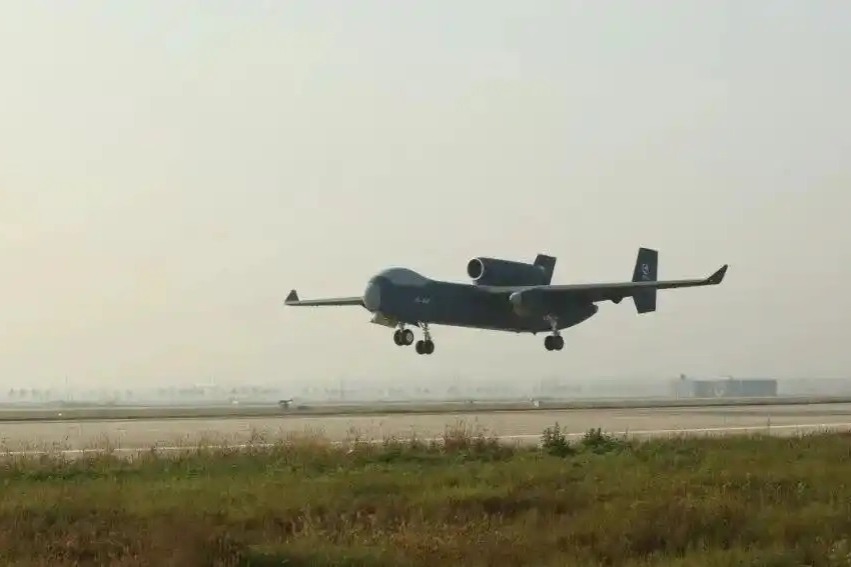
    China’s aviation sector achieved a significant technological milestone on Thursday, December 12, 2025, with the successful maiden flight of the Jiutian (High Sky), a large multifunctional unmanned jet aircraft. The prototype conducted its inaugural flight from an airport in Pucheng, Shaanxi Province, completing a brief aerial demonstration before returning safely to its departure point.

    Developed by the AVIC First Aircraft Institute for State-owned Shaanxi Unmanned Equipment Technology, the Jiutian represents a sophisticated advancement in unmanned aerial systems. The aircraft measures 16.4 meters in length with an impressive 25-meter wingspan, boasting a maximum takeoff weight of 16 metric tons and a payload capacity of up to 6 tons. With an operational ceiling of 15 kilometers and an endurance of 12 hours or 7,000 kilometers per mission, the platform demonstrates remarkable range and altitude capabilities.

    The Jiutian’s modular design architecture enables exceptional mission flexibility, allowing for various payload configurations including guided munitions, air-to-air missiles, cruise missiles, and loitering munitions. A distinctive feature is its compartmentalized internal bay, capable of housing over 100 loitering munitions or small attack drones, effectively functioning as a ‘mothership’ for drone swarm operations.

    Beyond military applications, the unmanned jet excels in civilian roles including heavy cargo transportation to remote mountainous regions and offshore islands, emergency communications restoration, disaster relief operations, geographic mapping, mineral surveys, cultural relic documentation, maritime patrol, and forest fire suppression.

    According to Wang Yanan, Chief Editor of Aerospace Knowledge magazine, the Jiutian’s substantial size and payload capacity enable extended operations behind enemy air defenses. The platform can perform long-range detection and tracking of naval targets followed by anti-ship missile engagements, or deploy drone swarms to overwhelm defensive systems in asymmetric warfare scenarios. Multiple Jiutian aircraft can operate collaboratively in fleet formations for enhanced mission effectiveness.

    The Jiutian was initially unveiled to the international community at the 15th China International Aviation and Aerospace Exhibition in Zhuhai, Guangdong Province, in November 2024. Aviation Industry Corp of China (AVIC), the nation’s premier aircraft manufacturer, confirmed that the maiden flight successfully validated the drone’s fundamental design parameters and basic flight performance characteristics.

  • New method devised to save Xizang’s poplar trees from canker

    New method devised to save Xizang’s poplar trees from canker

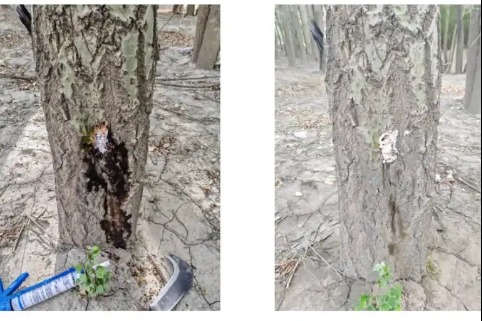
    Scientists from the Chinese Academy of Sciences have pioneered an innovative ecological defense system to protect the Qinghai-Tibet Plateau’s crucial poplar populations from devastating canker disease. Their integrated biocontrol strategy has demonstrated remarkable effectiveness, achieving sustained disease suppression rates exceeding 80% in year-long field trials across Tibet Autonomous Region.

    The research initiative, spanning three years and approximately 35 hectares of poplar plantations, addressed a critical threat to the region’s ecological restoration efforts. Poplars constitute 45% of Tibet’s planted forest area and serve as fundamental components in sand stabilization and carbon sequestration programs. Research confirms these plantations along the Yarlung Zangbo River capture 20-30 metric tons of carbon per hectare, matching national averages despite extreme high-altitude conditions.

    Professor Zhang Gengxin of the Institute of Tibetan Plateau Research explained the environmental challenges: “The combination of low temperatures, drought conditions and intense ultraviolet radiation creates exceptional vulnerability to fungal pathogens that cause bark necrosis, branch failure and complete tree mortality.”

    The scientific breakthrough emerged from meticulous study of diseased tree bark, where researchers isolated antagonistic bacteria with both disease-resistant properties and growth-promoting capabilities. This biological control agent proved highly effective in laboratory and field inoculation experiments. The team discovered optimal results emerged when combining the biocontrol treatment with physical interventions including trunk whitewashing using calcium carbonate and strategic pruning of infected sections.

    Professor Zhang Sheng of Sichuan University’s College of Life Sciences emphasized the importance of ecological diversity: “Mixed-species stands create more diverse soil microbiomes that enhance nitrogen and phosphorus availability through resource complementarity and niche differentiation.”

    Project leader Liang Eryuan highlighted the solution’s environmental advantages: “Our biocontrol agent is not only cost-effective compared to chemical alternatives but poses minimal risk to the plateau’s fragile ecosystems. The methodologies developed provide sustainable models for green plantation management that could benefit forest health globally.”

    The technology’s impending industrialization promises significant enhancements to plantation forest development, potentially strengthening ecological resilience and carbon sink capacity throughout high-altitude regions.

  • Famous crocodile wrangler jailed for evidence tampering

    Famous crocodile wrangler jailed for evidence tampering

    Renowned crocodile wrangler and television personality Matt Wright has been sentenced to five months imprisonment for evidence tampering following a tragic helicopter crash that resulted in the death of his co-star and left the pilot permanently disabled. The Northern Territory Supreme Court delivered the verdict on Friday, concluding a high-profile case that has captivated Australian media.

    Acting Justice Alan Blow imposed a 10-month prison term, with half suspended, and levied an additional A$5,000 fine against the former Netflix star. The sentence comes after Wright’s August conviction for providing false statements to law enforcement and attempting to influence a hospitalized witness regarding the February 2022 incident in Arnhem Land.

    The judicial proceedings revealed disturbing details about aviation practices within the Northern Territory’s helicopter community. Evidence presented during the month-long trial included covert recordings demonstrating Wright’s attempts to manipulate flight records and fuel documentation. Prosecutors successfully argued that Wright engaged in systematic falsification of maintenance logs to avoid regulatory requirements.

    The catastrophic accident claimed the life of Chris ‘Willow’ Wilson, Wright’s co-star on ‘Outback Wrangler,’ who fell 25 meters to his death after being suspended in a sling during crocodile egg collection. Pilot Sebastian Robinson sustained severe injuries including punctured lungs and traumatic brain damage, leaving him paralyzed from the waist down.

    Justice Blow noted the absence of remorse in Wright’s conduct while acknowledging his low likelihood of reoffending. The court received numerous character references describing Wright’s community contributions, which the judge characterized as ‘the most impressive I’ve ever seen.’

    The case exposed widespread industry misconduct, with testimony indicating that disconnecting flight hour recorders—known as ‘popping the clock’—was commonplace among Northern Territory helicopter operators. While the defense acknowledged this practice was prevalent, they maintained Wright’s actions did not constitute perversion of justice.

    Wright’s legal team has indicated plans to appeal the conviction, arguing that his initial statements about fuel levels were intended to ‘protect a mate’ rather than obstruct investigation. The third charge regarding alleged destruction of maintenance records resulted in a hung jury and remains under judicial consideration.

    The sentencing concludes a case that examined not just the actions of one individual but revealed systemic issues within specialized aviation operations, while emphasizing that the proceedings did not determine the actual cause of the fatal crash itself.