博客

  • Japan court orders compensation for migrants lured to North Korea

    Japan court orders compensation for migrants lured to North Korea

    In a landmark judicial decision, the Tokyo District Court has mandated North Korea to provide 88 million Japanese yen (approximately $570,000) in compensation to four individuals deceived by Pyongyang’s propaganda campaign decades ago. The plaintiffs, including 83-year-old Eiko Kawasaki who spent over four decades in North Korea after relocating at age 17, were lured by promises of an earthly paradise featuring free healthcare, education, and employment opportunities.

    Instead of the promised utopia, the victims encountered severe living conditions involving forced labor in agricultural and industrial facilities, coupled with severe movement restrictions. Kawasaki, who eventually escaped in 2003, represents the thousands of ethnic Koreans who migrated to North Korea under the resettlement initiative between 1959 and 1984.

    The ruling culminates a protracted legal battle that previously saw setbacks. In 2022, a lower court dismissed the case citing jurisdictional issues and expiration of the statute of limitations. However, the Tokyo High Court overturned this decision in 2023, asserting Japan’s jurisdictional authority and recognizing North Korea’s violation of the plaintiffs’ fundamental rights.

    Presiding Judge Taiichi Kamino emphasized the profound impact on victims’ lives, stating that North Korea effectively ruined most of their existence. While the judgment carries significant symbolic weight, enforcement remains practically challenging given North Korea’s consistent disregard for the litigation process and refusal to acknowledge Japanese court summons.

    Legal representatives acknowledged the historic nature of the verdict while recognizing the difficulties in actual compensation collection. The case represents the first instance of Japanese judiciary exercising sovereignty over North Korea to condemn its malpractice in the controversial resettlement program.

  • Australian Open 2026: Aryna Sabalenka wasted no time in advancing through to the semi finals

    Australian Open 2026: Aryna Sabalenka wasted no time in advancing through to the semi finals

    Defending champion Aryna Sabalenka delivered a masterclass performance under scorching Melbourne conditions, advancing to the Australian Open semifinals with an emphatic 6-3, 6-0 victory over American teenager Iva Jovic. The world No. 1 showcased her formidable power and precision, firing 31 winners while demonstrating tactical intelligence by using the full width of the court to minimize extended rallies in the extreme heat.

    The match, played during the tournament’s hottest day, saw Sabalenka establish immediate dominance with a 3-0 lead within the opening 21 minutes. Despite a marathon 11-minute service game that prolonged the first set, the Belarusian maintained exceptional serving statistics, losing just one point off her first serve during crucial stages of the opening set.

    Sabalenka’s performance intensified in the second set as she executed what commentators described as her finest tennis of the championship, completing the match in just 59 minutes of court time. The victory sets up a highly anticipated semifinal clash against either fourth-seeded Coco Gauff or Ukrainian veteran Elina Svitolina.

    In her post-match interview, Sabalenka offered respectful assessment of her opponent: ‘These teenagers are testing me in the last couple rounds. Don’t look at the score—it wasn’t easy at all. I’m super happy with the win; it was a tough battle.’ The statement underscored her professional approach despite the seemingly one-sided scoreline.

  • US immigration agents face backlash after Minneapolis killings

    US immigration agents face backlash after Minneapolis killings

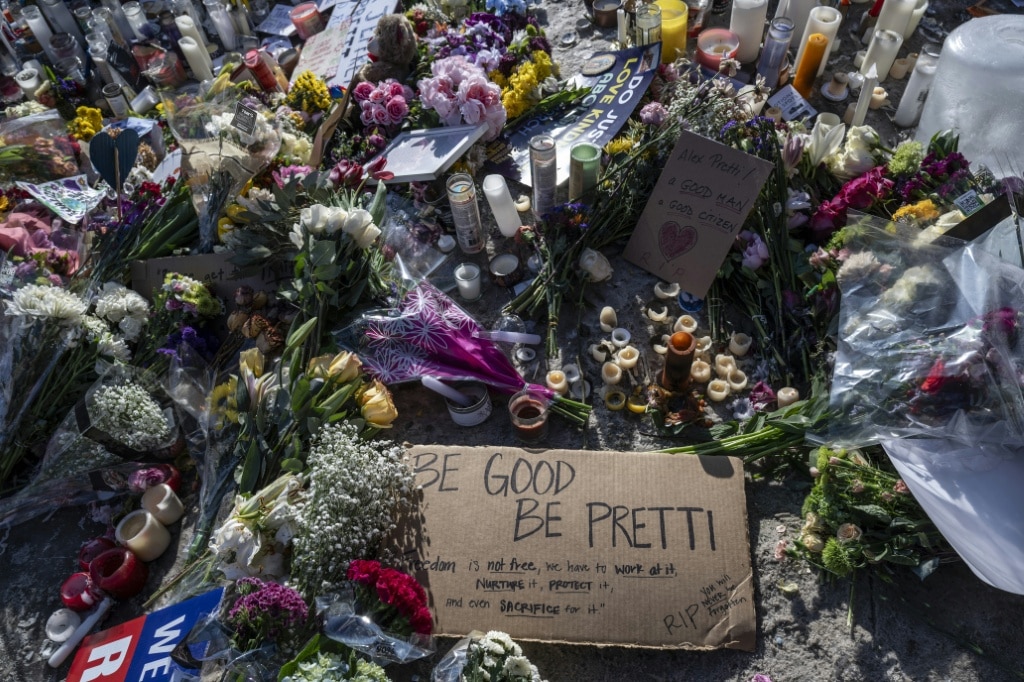
    Minneapolis has become the focal point of a heated national debate regarding federal immigration enforcement tactics following the fatal shooting of two civilians by federal agents. The deaths of Renee Good and Alex Pretti, both 37-year-old U.S. citizens, have triggered widespread condemnation and intensified scrutiny of agent training protocols and operational procedures.

    Political leaders across party lines have expressed grave concerns. Alaska Republican Senator Lisa Murkowski stated the incident raises serious questions about training adequacy within immigration enforcement. Minnesota’s Democratic Governor Tim Walz demanded the immediate withdrawal of approximately 3,000 federal agents from the state, asserting they lack proper training for urban operations.

    The controversy emerges amid a massive expansion of Immigration and Customs Enforcement (ICE) and Customs and Border Patrol (CBP) forces. Department of Homeland Security figures indicate agent numbers have more than doubled from 10,000 to 22,000, fueled by Congressional funding increases and recruitment incentives including $50,000 signing bonuses.

    This rapid expansion has prompted significant training modifications. The standard preparation course has been reduced from five months to just 42 days through what DHS describes as ‘streamlined training’ eliminating redundancy while incorporating technological advancements. The agency maintains the condensed program covers essential components including arrest techniques, defensive tactics, conflict management, de-escalation methods, firearms proficiency, and use-of-force policies.

    Critics argue the abbreviated training leaves agents unprepared for complex urban environments. A report in The Atlantic suggested many recently hired agents might not have met standards under traditional hiring processes, with some appearing physically unsuited for demanding field operations.

    Despite training concerns, authorities confirmed the agents involved in the Minneapolis shootings were experienced personnel with multiple years of service. This contradiction highlights deeper systemic issues according to former acting ICE director John Sandweg, who served under the Obama administration. Sandweg noted that deploying border patrol agents accustomed to remote desert operations into urban protest environments creates high-risk situations where distinguishing between protected First Amendment activities and illegal obstruction becomes critically challenging.

    The ongoing presence of masked federal agents conducting patrols and raids in Minneapolis continues despite protests from local officials and residents who describe the tactics as constituting occupation rather than effective law enforcement.

  • Dubai Metro, Tram riders urged to follow basic travel rules in new RTA etiquette campaign

    Dubai Metro, Tram riders urged to follow basic travel rules in new RTA etiquette campaign

    Dubai’s Roads and Transport Authority (RTA) has initiated a comprehensive public transport etiquette campaign targeting behavioral improvements across the city’s Metro and Tram networks. Developed in partnership with system operator Keolis-MHI, this initiative addresses growing concerns about passenger conduct during peak travel periods.

    The campaign emphasizes fundamental courtesy principles including appropriate cabin selection, priority seating for senior citizens and people of determination, maintaining clear doorways for passenger flow, and respecting fellow commuters’ privacy and rights. Hassan Al Mutawa, Director of Rail Operations at RTA’s Rail Agency, stated the program aims to cultivate a culture of responsible behavior through targeted awareness of essential practices.

    Implementation strategies include multi-channel communication through in-carriage guidance materials, digital screens, station signage, and social media platforms to ensure message penetration across all demographic segments. Frontline personnel including Customer Happiness teams, ticket inspectors, and station staff will provide real-time guidance and reinforcement of etiquette standards.

    Al Mutawa emphasized that the campaign represents more than mere reminders—it reinforces the culture of respect that characterizes Dubai’s world-class transport system. The initiative supports RTA’s broader objectives of enhancing public transportation infrastructure, advancing smart mobility goals, and fostering shared responsibility among the commuting public. As one of the world’s most advanced transit systems, Dubai’s Metro and Tram networks seek to maintain global standards of safety, comfort, and operational efficiency through improved passenger behavior.

  • Montreal ice dance academy churns out Olympic champions

    Montreal ice dance academy churns out Olympic champions

    In an unassuming Montreal sports complex, a revolutionary training ground is reshaping the landscape of Olympic ice dancing. The Ice Academy of Montreal (I.AM), nestled within the Gadbois facility in a formerly working-class neighborhood, has become the epicenter for world-class ice dancers who will soon compete as rivals at the upcoming Winter Games in Italy.

    Founded in 2014 by head coach Romain Haguenauer, the academy has developed an unprecedented training environment where future Olympic competitors from different nations share coaches, ice surfaces, and training methodologies. The facility’s extraordinary success is demonstrated by its remarkable track record: the last three Olympic champions have all trained at I.AM, and the academy anticipates sending approximately a dozen couples to the 2026 Milan-Cortina Games—a number Haguenauer describes as “unheard-of in skating, and across all sports.”

    British skater Lilah Fear, who relocated to Montreal a decade ago with partner Lewis Gibson, attributes their success—including ending Britain’s 40-year medal drought with a World Championship bronze—to the academy’s unique approach. “We came here not really knowing anyone, so everything that we learned is from the people here,” Fear noted, describing the environment as “nurturing and loving.”

    The academy’s philosophy represents a deliberate departure from the rigid training structures that traditionally defined elite ice dance. French Olympic champion Guillaume Cizeron, a five-time world champion who has trained at I.AM for over a decade, emphasizes the “healthy” environment that keeps elite athletes returning to the Canadian city. “There’s a skating culture here—figure skating as well as ice hockey—that enables high-level athletes to thrive,” said Cizeron, who is now pursuing another gold medal with new partner Laurence Fournier Beaudry.

    The training dynamics at I.AM create a unique paradox: athletes who will soon compete against each other for Olympic medals routinely share coaching expertise and even ice time during critical pre-Games preparation. Fournier Beaudry describes the atmosphere as “a bit like a team sport here, but at the same time, everyone remains an individual,” noting that many athletes socialize together away from the rink.

    Despite these off-ice friendships, training sessions remain intensely focused, with athletes maintaining laser concentration during meticulously choreographed routines under coaches’ watchful eyes. The academy’s open-door policy allows enthusiasts like octogenarian Anne Belcourt-Lafleur, who attends practices multiple times weekly, to witness what she describes as “more fascinating than a show.”

    The Montreal model has proven so effective that international competitions have occasionally featured entirely I.AM-trained podiums, demonstrating the academy’s dominant position in shaping the future of Olympic ice dancing.

  • Looming Fed rate pause nudges bond investors back into risk

    Looming Fed rate pause nudges bond investors back into risk

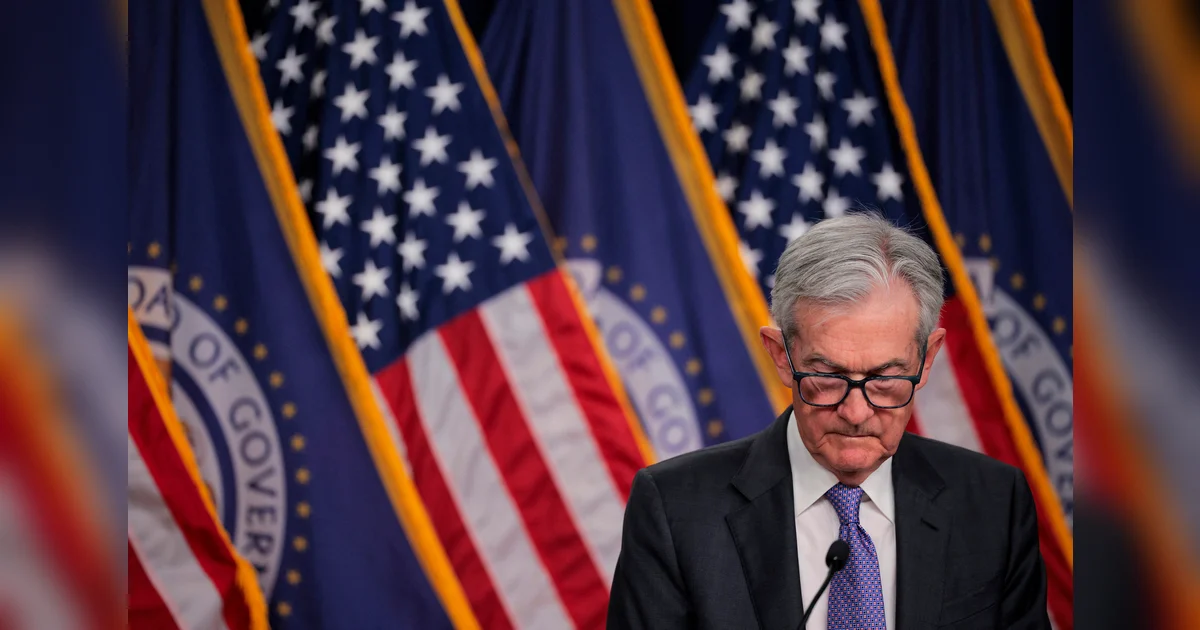
    With the Federal Reserve poised to maintain its current benchmark interest rate at 3.50%-3.75% during Wednesday’s policy meeting, bond investors are strategically reallocating portfolios toward slightly riskier assets. This anticipated pause follows three consecutive quarter-point reductions in September, October, and December 2025, marking a significant shift in the central bank’s approach to monetary policy.

    Driving this strategic repositioning are two fundamental factors: a surprisingly resilient U.S. economy and newly proposed fiscal stimulus measures expected to bolster consumer spending throughout 2026. Rather than pursuing aggressive credit investments, portfolio managers are primarily extending duration exposure—purchasing longer-dated Treasury securities that demonstrate heightened sensitivity to interest rate fluctuations.

    Market indicators reveal substantially tempered expectations for monetary easing, with rate futures pricing in approximately 44 basis points of cuts for the year, notably reduced from the 53 basis points anticipated just two weeks prior. This recalibration reflects stabilizing labor market conditions, peaking inflation trends, and the federal funds rate approaching a theoretically neutral level that neither restricts nor stimulates economic activity.

    According to Tony Rodriguez, Nuveen’s head of fixed income strategy, ‘When incorporating anticipated policy implementations including new tax reductions and the delayed economic impact of previous Fed rate cuts, an extended pause represents a logically sound approach.’

    Despite this measured risk-taking, investment-grade credit spreads have tightened to historically minimal levels—currently approximately 73 basis points over Treasuries according to ICE BofA index data—creating valuation concerns that limit aggressive positioning. Insight Investment’s John Flahive cautions clients against excessive aggression within fixed income portfolios given current valuation constraints.

    Geopolitical considerations further complicate investment decisions, with Thornburg Investment Management’s Christian Hoffmann noting that central banks’ accelerating gold accumulation partially reflects ‘long-term concerns about our fiscal position’ and desire to diversify away from U.S. debt exposure.

    The duration-extension strategy finds support in yield curve dynamics, as Morgan Stanley’s Vishal Khanduja observes that steeper curves provide compensation for moving out along the maturity spectrum. Historical patterns additionally demonstrate that longer-dated debt typically outperforms shorter-term Treasuries during Fed easing cycles.

    However, DWS’s George Catrambone highlights fiscal limitations, noting that current deficit levels constrain additional stimulus effectiveness and make high-yield credit investments particularly precarious at this juncture.

  • DP World Tour action returns to Bahrain with star-studded championship field

    DP World Tour action returns to Bahrain with star-studded championship field

    The Royal Golf Club in Bahrain prepares to host an assembly of world-class golfers for the third annual Bahrain Championship, scheduled from January 29 to February 1, 2026. With a substantial purse of $2.75 million, this DP World Tour event has attracted an impressive roster of international talent under the royal patronage of His Majesty King Hamad bin Isa Al Khalifa.

    The tournament field features multiple Major champions, including Patrick Reed—who arrives fresh from his victory at the Hero Dubai Desert Classic—Sergio Garcia, and Pádraig Harrington. They are joined by past titleholders Laurie Canter, the defending champion, and Dylan Frittelli, who triumphed in the event’s return to the tour in 2024.

    Frittelli expressed strong affection for the venue, recalling, “I’ve got fond memories of the golf course, but I really do enjoy the country as well.” The South African praised both the scenic beauty of the Arabian Gulf and the unique atmosphere enhanced by military aircraft overhead, noting, “I’m an aviation guy, so on the golf course I’m often just staring up at those.”

    Current Race to Dubai leader Jayden Schaper also joins the competition. The 24-year-old South African anticipates the challenge of the sloping, wind-swept course, which demands strategic play. Germany’s Marcel Siem, a six-time DP World Tour winner, highlighted the appeal of the Middle East swing, describing the Bahrain course as “a risk and reward golf course” well-suited to his aggressive style.

    Additional notable participants include recent Dubai Invitational winner Nacho Elvira of Spain, French golfer Julien Guerrier, and promising young talents like Martin Couvra and Ángel Hidalgo. The event also underscores local golf development, with three Bahraini players—Ahmed Alzayed, Khalifa Almaraisi, and Ali Alkowari—earning spots through a national qualification pathway.

  • Damaged homes and snowy roadways as winter storm hits US

    Damaged homes and snowy roadways as winter storm hits US

    A severe winter storm has unleashed its fury across multiple U.S. states, resulting in tragic fatalities and widespread disruption. The powerful system has brought dangerously sub-zero temperatures and heavy snowfall, creating hazardous conditions that extend far beyond mere inconvenience.

    Critical infrastructure has been severely compromised, with numerous roadways rendered impassable by accumulating snow and ice. The storm’s impact has triggered extensive power outages across affected regions, leaving residents without electricity amid freezing conditions. Emergency services report multiple weather-related fatalities as rescue operations continue under challenging circumstances.

    The combination of Arctic air and precipitation has created a dangerous scenario for transportation and daily life. Local authorities have issued urgent warnings for residents to remain indoors and avoid unnecessary travel. The National Weather Service has characterized this event as particularly dangerous due to the rapid temperature drops accompanying the precipitation.

    Utility companies are working to restore power, though complete restoration may require extended periods due to the severity of the damage and ongoing weather conditions. Shelters have been established in several communities to provide warmth and safety for those displaced by power outages or home damage. The full extent of property damage remains unassessed as the storm continues to affect parts of the country.

  • Canada’s Marineland gets ‘conditional approval’ to sell whales to US

    Canada’s Marineland gets ‘conditional approval’ to sell whales to US

    The Canadian federal government has issued conditional authorization for Marineland, the beleaguered theme park near Niagara Falls, to proceed with the sale of its 30 remaining beluga whales to aquatic facilities across the United States. This decision comes shortly after fisheries officials rejected the park’s previous proposal to export the marine mammals to China.

    Minister of Fisheries and Oceans Joanne Thompson announced the conditional approval Monday following discussions with park representatives. The authorization remains provisional pending Marineland’s submission of additional documentation required for final permit issuance.

    Marineland, which has ceased public operations, faces severe financial constraints that have compromised its ability to maintain proper care for its cetacean population. Park management had previously stated that euthanasia would become the only viable option if relocation efforts failed.

    The aquatic park’s history remains shadowed by controversy and tragedy. According to data compiled by The Canadian Press, twenty marine animals—including nineteen belugas—have died at the facility since 2019. While Marineland attributes all mortalities to natural causes, provincial animal welfare authorities in Ontario have maintained ongoing investigations into the park’s operations for several years.

    The rejected proposal to transfer whales to China’s Chimelong Ocean Kingdom was denied by Minister Thompson on grounds that it would perpetuate the commercial exploitation of these marine mammals. The newly approved American transfer initiative represents Marineland’s latest attempt to address both its financial troubles and animal welfare obligations.

  • India, EU wrap up talks for landmark trade deal amid strained US ties

    India, EU wrap up talks for landmark trade deal amid strained US ties

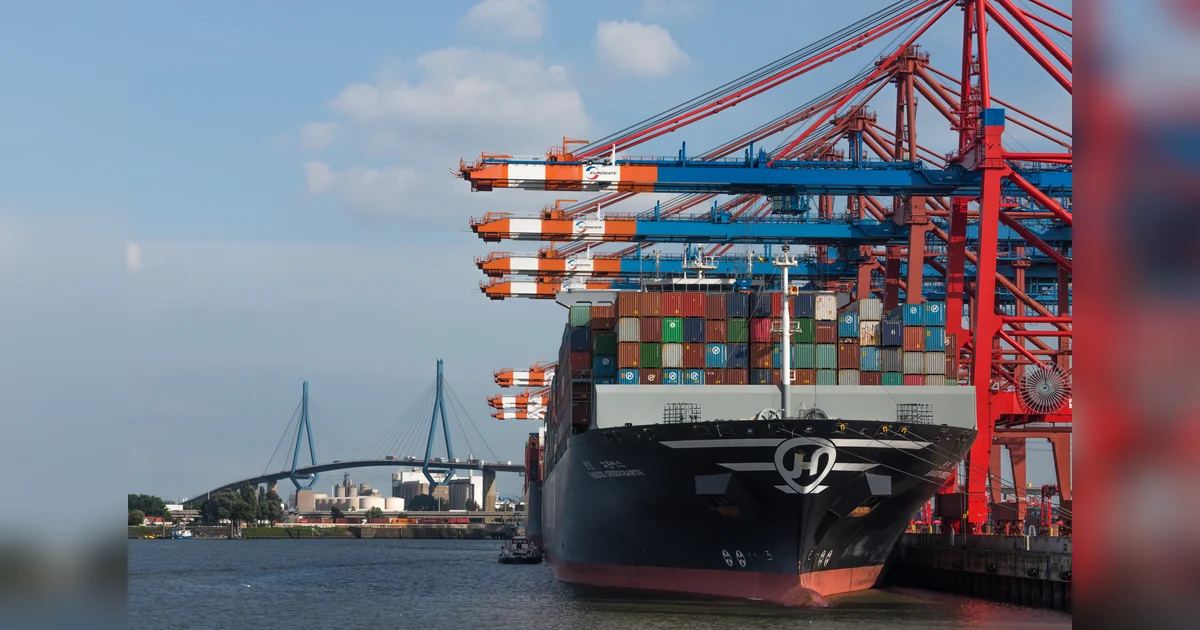
    India and the European Union have finalized negotiations on a comprehensive trade agreement described as historic by both parties, with formal announcement scheduled for Tuesday. The breakthrough concludes nearly two decades of intermittent discussions and creates a free trade pathway between the world’s largest democracy and the 27-nation bloc, collectively representing 25% of global GDP and approximately 2 billion consumers.

    Indian Trade Secretary Rajesh Agrawal characterized the agreement as “a balanced, forward-looking deal for better economic integration with the EU” that will significantly accelerate trade and investment flows between the signatories. Current bilateral trade stands at $136.5 billion for the fiscal year ending March 2025.

    The agreement emerges against a backdrop of strained relations with the United States, where President Donald Trump’s tariff policies—including 50% duties on Indian goods—have prompted trading nations to seek alternative partnerships. This strategic realignment follows the EU’s recent pact with Mercosur and India’s simultaneous agreements with Britain, New Zealand, and Oman.

    Final negotiations required delicate compromises on automotive and steel sectors. The EU secured reduced import duties on European vehicles, with India planning to slash car tariffs from 110% to 40%, while New Delhi obtained eased restrictions on its steel exports. Sensitive agricultural and dairy products were excluded from the agreement to protect India’s subsistence farmers.

    The formal signing will occur after a five-to-six month legal review process, with implementation expected within twelve months. The agreement marks India’s largest trade partnership and represents the EU’s most significant market opening in South Asia.