博客

  • Over 10,000 people displaced in 3 days in Sudan: UN

    Over 10,000 people displaced in 3 days in Sudan: UN

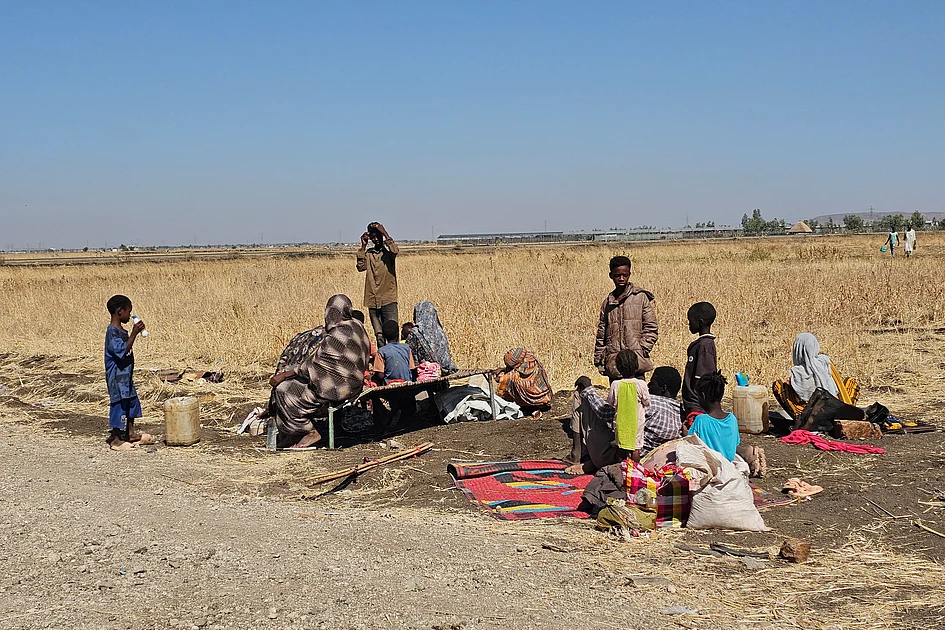
    The United Nations’ migration agency reported Sunday that escalating violence across western and southern Sudan has forcibly displaced more than 10,000 civilians within a devastating 72-hour period this week, marking one of the most intense displacement crises in the ongoing conflict.

    According to the International Organization for Migration, attacks on December 25-26 targeting the villages of Um Baru and Kernoi near Sudan’s western border with Chad alone displaced over 7,000 individuals. This surge in violence comes as the paramilitary Rapid Support Forces (RSF) continues its westward expansion after capturing the North Darfur capital of El-Fasher in October.

    The RSF’s recent offensive has pushed through territories inhabited by the Zaghawa ethnic group, areas traditionally controlled by militia forces allied with Sudan’s regular army. The conflict reached international dimensions on Friday when an RSF drone strike killed two Chadian soldiers in the border town of Tine, according to Chadian military sources.

    Simultaneously, between Christmas Eve and Friday, approximately 3,100 additional civilians fled the famine-stricken city of Kadugli in South Kordofan, which has endured a paramilitary siege for more than eighteen months. Resource-rich Kordofan has become the epicenter of intensified fighting as RSF and allied forces attempt to reclaim Sudan’s central corridor from Darfur toward the capital Khartoum.

    Since April 2023, the brutal confrontation between Sudan’s regular army and the RSF has created what the UN characterizes as a ‘war of atrocities,’ resulting in tens of thousands of fatalities and displacing over 11 million people nationwide. The conflict has effectively bifurcated the country, with army forces controlling northern, eastern, and central regions while the RSF dominates all five state capitals in Darfur and, through alliances, significant portions of southern territories.

    This devastating war has generated the world’s most severe hunger and displacement crises, with humanitarian conditions deteriorating rapidly as fighting intensifies across multiple fronts.
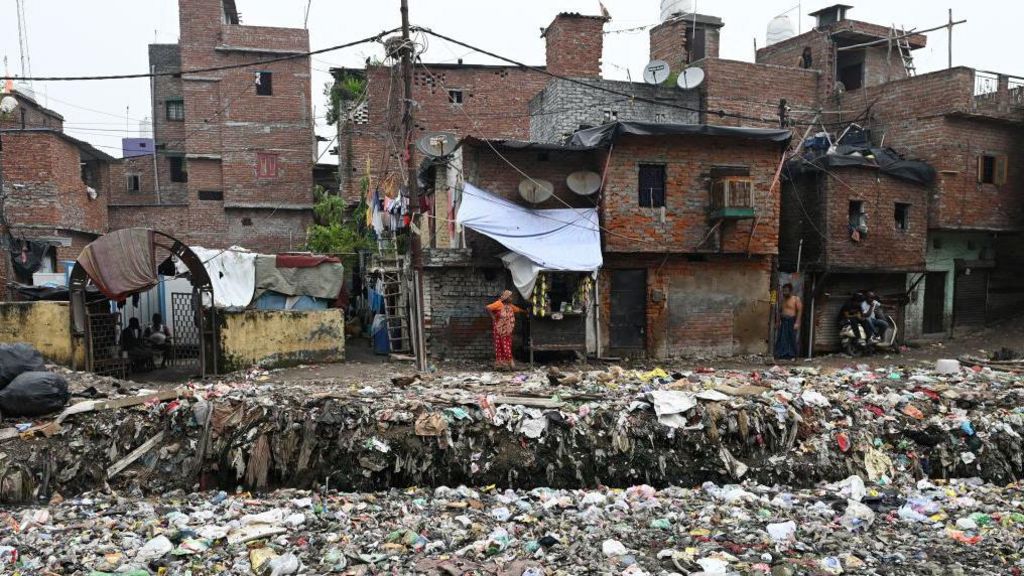

  • Toxic air, broken roads and unpicked rubbish – why India’s big cities are becoming unliveable

    Toxic air, broken roads and unpicked rubbish – why India’s big cities are becoming unliveable

    Despite massive infrastructure investments and rapid GDP growth, India’s major metropolitan centers continue grappling with severe urban decay that threatens their livability. Cities like Jaipur, Bengaluru, Mumbai, and Delhi—despite their economic significance and historical heritage—face overwhelming challenges including traffic gridlock, toxic air pollution, inadequate waste management, and crumbling infrastructure.

    The contrast between India’s economic progress and urban deterioration presents a puzzling paradox. While the Modi administration has prioritized state-funded infrastructure projects—resulting in modern airports, expanded highway networks, and new metro systems—these developments have failed to translate into improved urban living conditions. Bengaluru’s tech billionaires and ordinary citizens alike have publicly expressed frustration with perpetual traffic snarls and garbage accumulation. Mumbai residents have staged unusual protests against dangerous potholes and sewage overflows, while Delhi’s winter air quality regularly reaches hazardous levels, prompting medical advisories for vulnerable populations.

    Experts identify flawed governance structures as the fundamental cause of India’s urban crisis. Constitutional frameworks established decades ago never anticipated the massive scale of contemporary urbanization, leaving cities without adequate autonomous authority. Infrastructure specialist Vinayak Chatterjee notes that while the 1992 constitutional amendment theoretically empowered local bodies, implementation remains incomplete due to resistance from state-level bureaucracies and political interests.

    This governance deficit stands in stark contrast to China’s urban management model, where city mayors exercise substantial executive powers over planning and development, with clear performance incentives and accountability mechanisms. Indian cities, by comparison, suffer from emaciated local governments lacking revenue-raising authority and appointment powers.

    The problem extends beyond governance to basic data deficiencies. With the last census conducted over fifteen years ago and the next delayed until 2026, urban planners operate without current information on urbanization patterns and demographics. This data vacuum compounds existing challenges in addressing sanitation, transportation, and environmental issues.

    Some experts suggest that only a crisis comparable to London’s 1858 ‘Great Stink’—which prompted comprehensive sewer system reforms—will generate sufficient political will to address India’s urban decay. Until then, cities continue deteriorating despite economic growth, with their glorious architectural heritage increasingly overshadowed by urban dysfunction.

  • ‘Superiority’ concerns over Royal Yacht Britannia visit to Ireland

    ‘Superiority’ concerns over Royal Yacht Britannia visit to Ireland

    Recently declassified documents from Ireland’s National Archives have unveiled significant diplomatic concerns surrounding a proposed 1996 visit by then-Prince Charles to Ireland aboard the royal yacht Britannia. The planned three-day trip, which would have marked Charles’ first official visit to Ireland, was ultimately canceled due to mounting security apprehensions and political sensitivities.

    The records reveal that British Ambassador Veronica Sutherland formally proposed in March 1996 that Charles arrive aboard HMY Britannia in Galway Bay on June 28, 1996. The itinerary included hosting receptions aboard the vessel before it would sail to Kerry and Cork for a private weekend. However, Irish officials quickly expressed concerns about the ‘rather elaborate’ nature of the proposed visit.

    Then-Taoiseach John Bruton voiced particularly strong objections in a handwritten memo, warning that the royal yacht’s arrival would convey problematic symbolism. ‘The yacht suggests opulence and superiority,’ Bruton wrote. ‘It’s not the image that should be conveyed.’ He specifically worried that Britannia’s presence might revive historical debates about British treaty ports in Ireland from the 1930s.

    Bruton advocated for Charles to instead arrive by commercial aircraft, noting this would provide economic benefits to regional airports. He further observed that the yacht was ‘controversial in Britain lately because of its cost,’ adding that ‘Ireland is the last place he should be bringing it.’

    The documents show that by March 19, 1996, Irish officials had conveyed these concerns to British representatives and were anticipating a ‘scaled-down’ revised itinerary. Ultimately, the visit was canceled entirely due to security risks in the absence of an IRA ceasefire, with officials concluding that ‘the risks now seem to outweigh any benefits.’

    In a related 2003 document, the archives reveal that Taoiseach Bertie Ahern similarly rejected a request for the British naval vessel HMS Ark Royal to dock in Dublin. Senior civil servants warned that allowing the ‘symbol of British naval prowess’ would represent a policy shift toward accepting ‘British military displays in our jurisdiction,’ particularly sensitive given the ship’s role in the Iraq War.

  • ‘Shivering from cold and fear’: Over 42,000 tents damaged as rains ravage Gaza camps

    ‘Shivering from cold and fear’: Over 42,000 tents damaged as rains ravage Gaza camps

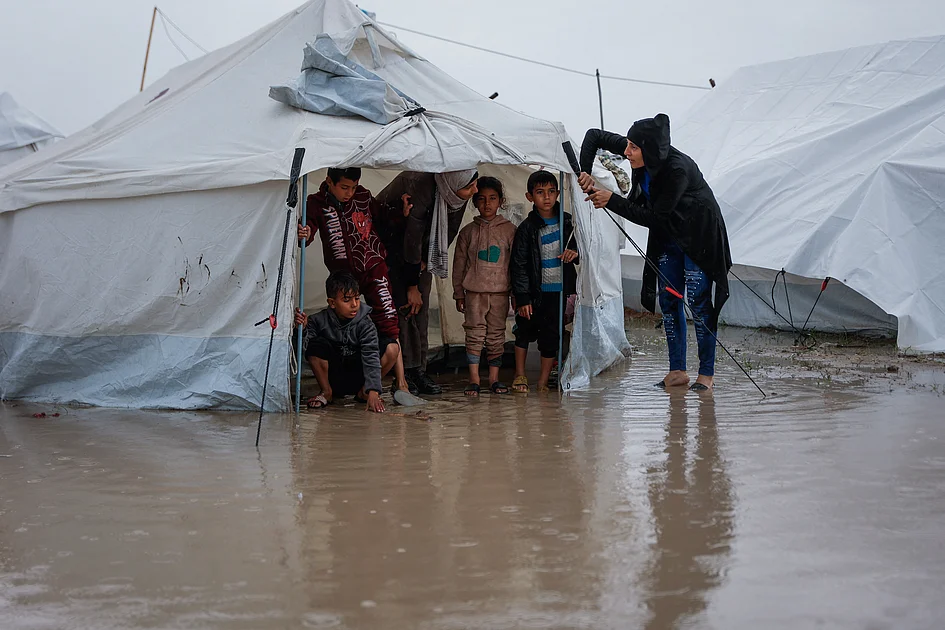
    Heavy winter rainfall has plunged displaced Palestinians in Gaza into deeper misery, destroying or damaging over 42,000 tents and makeshift shelters according to United Nations assessments. The overnight deluge flooded camps within minutes, soaking food supplies and blankets while leaving vulnerable families exposed to freezing temperatures.

    Jamil al-Sharafi, a 47-year-old father of six sheltering in Al-Mawasi, described watching his tent flood instantly. ‘My children are shivering from cold and fear… The tent was completely flooded within minutes. We lost our blankets, and all the food is soaked,’ he reported. His family is among approximately 1.5 million Gazans displaced by recent conflict, now surviving in temporary camps with inadequate protection from the elements.

    This meteorological crisis follows similar heavy rains earlier in December that claimed at least 18 lives through building collapses and hypothermia according to Gaza’s civil defence agency. The UN humanitarian office confirmed 17 structures collapsed during the previous storm, compounding the devastation in a territory where 80% of buildings have already been damaged or destroyed by warfare.

    Despite a fragile ceasefire between Israel and Hamas, the humanitarian situation remains critical. Displaced families crowd into tarpaulin tents surrounded by mud and standing water, with nighttime temperatures hovering between 8-12°C (46-54°F). Elderly resident Umm Rami Bulbul pleaded for mobile homes rather than tents, stating ‘Living in tents means we die from the cold in the rain and from the heat in the summer.’

    The crisis is exacerbated by insufficient aid delivery. Amjad Al-Shawa, director of the Palestinian NGO Network in Gaza, revealed that of 300,000 tents needed, only 60,000 have reached the territory due to Israeli restrictions on humanitarian access. UNRWA chief Philippe Lazzarini condemned the situation on social media platform X, emphasizing ‘There is nothing inevitable about this. Aid supplies are not being allowed in at the scale required.’

    Samia Abu Jabba articulated the collective despair: ‘I sleep in the cold, and water floods us and my children’s clothes. They are freezing. What did the people of Gaza and their children do to deserve this?’ The compounded crises of war destruction, inadequate shelter, and restricted aid have created what humanitarian organizations describe as one of the most severe emergency situations in the region.

  • China issues draft rules to regulate AI with human-like interaction

    China issues draft rules to regulate AI with human-like interaction

    China’s cyberspace administration has unveiled comprehensive draft regulations targeting artificial intelligence systems capable of simulating human personality traits and emotional engagement. The proposed framework, released for public consultation on Saturday, represents Beijing’s latest effort to establish guardrails around rapidly evolving consumer AI technologies.

    The regulatory initiative specifically addresses AI products and services that emulate human cognitive patterns, communication styles, and emotional responsiveness through text, imagery, audio, video, or multimodal interfaces. This move signals China’s proactive approach to balancing technological innovation with ethical considerations and user protection measures.

    Under the draft provisions, AI service providers would bear significant responsibility throughout the product lifecycle, mandating the implementation of robust systems for algorithm assessment, data security protocols, and personal information safeguards. The regulations introduce specific requirements for monitoring user engagement patterns, including obligations to warn against excessive usage and implement intervention mechanisms when signs of addiction are detected.

    The proposed rules establish clear content boundaries, prohibiting AI systems from generating material that threatens national security, disseminates false information, or promotes violent or obscene content. Notably, the framework emphasizes psychological risk mitigation, requiring providers to assess user emotional states and dependency levels, with intervention protocols triggered by detection of extreme emotional responses or addictive behavior patterns.

    This regulatory development occurs amid global debates about appropriate governance structures for advanced AI systems capable of human-like interaction. China’s approach reflects growing international concern about the societal impact of emotionally responsive AI, positioning the country at the forefront of establishing formal oversight mechanisms for this emerging technology category.

  • AI spending, strong corporate profits, Fed rate cuts seen as key to 2026 stock market

    AI spending, strong corporate profits, Fed rate cuts seen as key to 2026 stock market

    As Wall Street concludes a remarkable third consecutive year of double-digit gains, analysts are scrutinizing the catalysts required to sustain this bull market into 2026. The S&P 500’s impressive 17% ascent in 2025 follows 24% and 23% surges in 2023 and 2024 respectively, creating speculation about whether a fourth stellar year is achievable.

    Market strategists identify three critical pillars for continued growth: robust artificial intelligence expenditure, substantial corporate profit expansion, and accommodative Federal Reserve monetary policies. According to LSEG data, S&P 500 companies are projected to deliver over 15% earnings growth in 2026, building upon a solid 13% increase in 2025. This growth is expected to broaden beyond the technology sector’s dominant players, with the famed ‘Magnificent Seven’ anticipated to see their earnings advantage narrow significantly.

    The AI investment phenomenon remains a double-edged sword. While massive infrastructure spending and application demand have driven valuations, recent concerns about capital expenditure returns have created volatility. LPL Financial’s Jeff Buchbinder notes, ‘If companies reduce guided capex and market confidence in AI returns diminishes, we could be looking at a flat or modestly negative year.’

    Federal Reserve policy represents another crucial variable. Investors are pricing in at least two additional quarter-point rate cuts in 2026, following 175 basis points of reductions throughout 2024-2025. PNC Financial’s Yung-Yu Ma emphasizes, ‘The Fed maintaining a dovish stance is probably the biggest driver I’d be looking for.’ The upcoming appointment of a new Fed chair by President Trump adds another layer of policy uncertainty.

    Historical patterns offer mixed signals. LPL Research indicates that in seven bull markets reaching their fourth year since 1950, the average gain was 12.8% with positive performance in six instances. However, CFRA data shows midterm election years typically deliver subpar returns averaging just 3.8% for the S&P 500 compared to 11% in other presidential term years.

    Geopolitical factors, particularly U.S.-China relations, could serve as potential wildcards. While tariffs caused extreme volatility in early 2025, the relationship between the world’s two largest economies remains a swing factor that could produce unexpected positive catalysts according to market observers.

  • ‘Angel for animals’: Peta founder hails French film icon Brigitte Bardot

    ‘Angel for animals’: Peta founder hails French film icon Brigitte Bardot

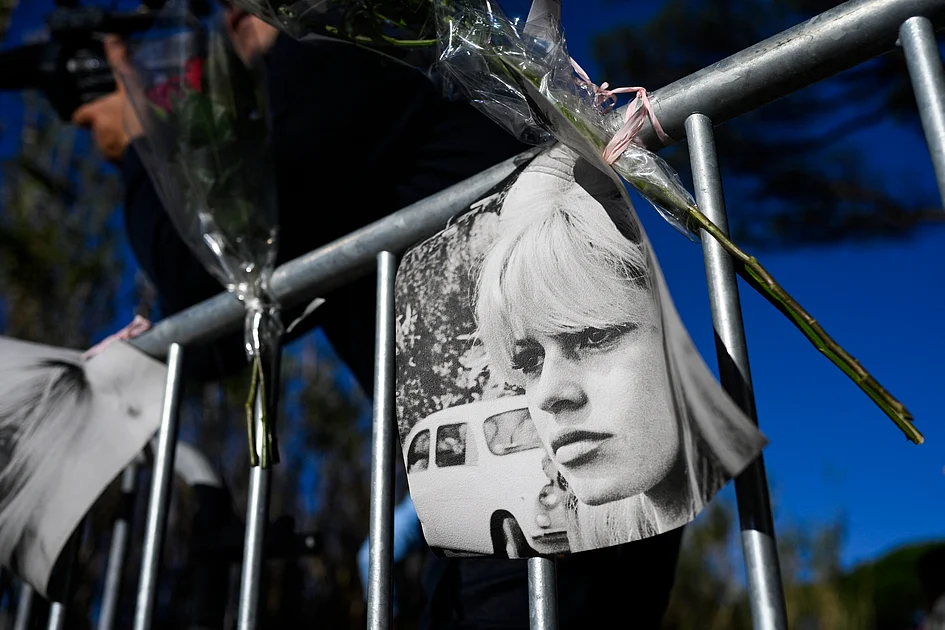
    The global animal rights community is mourning the loss of French cinematic legend Brigitte Bardot, who passed away at age 91. Ingrid Newkirk, founder of People for the Ethical Treatment of Animals (PETA), issued a heartfelt tribute celebrating Bardot’s transformative journey from international screen icon to one of history’s most influential animal welfare advocates.

    Newkirk characterized Bardot as ‘an angel for animals’ who consistently leveraged her celebrity status to champion animal protection causes. The PETA founder revealed that Bardot had personally participated in numerous organizational campaigns throughout her advocacy career, including a successful 2013 initiative that persuaded luxury British retailer Fortnum & Mason to cease sales of foie gras.

    Bardot’s remarkable transition from entertainment to activism began in 1973 when she voluntarily retired from her illustrious film career at its peak. She relocated permanently to her Saint-Tropez residence on the French Riviera, where she established what would become her life’s work: the Brigitte Bardot Foundation for animal protection in 1986.

    Her advocacy portfolio encompassed diverse and impactful campaigns spanning several decades. She emerged as a vocal protector of baby seals and elephants, campaigned vigorously against ritual animal sacrifice practices, and demanded the closure of horse slaughterhouses. Newkirk emphasized that Bardot often stated she ‘truly bloomed’ through her animal protection work, and called upon the public to honor her memory by performing acts of kindness toward animals.

  • Where to celebrate New Year’s Eve in the UAE: From fireworks and beach parties to desert countdowns

    Where to celebrate New Year’s Eve in the UAE: From fireworks and beach parties to desert countdowns

    The United Arab Emirates is poised to welcome 2026 with an extraordinary array of New Year’s Eve celebrations, offering uniquely crafted experiences across its iconic destinations. From Dubai’s glittering skyline to the serene Arabian desert, revelers can select from an impressive portfolio of events designed for every preference and demographic.

    Elevated celebrations take flight at Atlantis, The Palm’s Dubai Balloon, where the NYE Sky Carnival offers dual ascents providing unparalleled 360-degree views of fireworks illuminating the metropolitan landscape. This premium experience combines aerial spectacle with ground-level festivities including carnival décor, curated culinary offerings, and symbolic intention-setting rituals.

    Family-oriented programming dominates at Dubai Parks and Resorts, featuring daytime activities ranging from adrenaline zones to immersive escape rooms, culminating in a 9:30 PM fireworks display at The World of Riverland. The destination’s distinctive T-Rex Glamping package delivers dinosaur-themed accommodations, themed dinners, and exclusive park access for prehistoric-inspired revelry.

    Coastal celebrations emerge as prominent alternatives, with Luchador at Aloft Palm Jumeirah hosting Latin-inspired rooftop festivities featuring live music and premium beverages. Similarly, Vida Beach Resort Umm Al Quwain presents its White Beach Party, offering chilled bubbles and DJ sets against oceanfront fireworks in a relaxed dress-in-white atmosphere.

    Gourmet experiences abound at premium establishments including DREAM Dubai’s immersive 10-course culinary spectacle, Ergon Agora’s Mediterranean-inspired communal feast, and Mausam’s opulent multi-course menu paired with direct Burj Khalifa fireworks visibility. Cultural authenticity finds expression at Liwa Village’s desert celebration within the Liwa International Festival, framing the countdown against dramatic dunescapes under open skies.

    Nostalgic programming surfaces at Black Tap Dubai Mall with 90s throwback music and unlimited share-style menus, while Purani Dilli offers exclusive private dining for groups seeking authentic Indian flavors. Movenpick’s Glitter Gala and Swissôtel Al Ghurair’s family feast provide comprehensive entertainment packages featuring international cuisines, live performances, and dedicated children’s activities.

    With pricing spanning from accessible family packages to premium experiences exceeding Dh3,000 per person, the UAE’s 2026 New Year’s Eve portfolio demonstrates sophisticated event curation across diverse environments and cultural motifs, solidifying the nation’s status as a global celebration destination.

  • Catching the hunters trapping rare songbirds in China

    Catching the hunters trapping rare songbirds in China

    In the predawn darkness surrounding Beijing’s sprawling metropolis, a silent war unfolds across the grasslands where migratory birds seek refuge. Silva Gu, a dedicated conservationist, moves with practiced stealth through these urban oases, tracking those who would profit from capturing protected songbirds.

    The illegal trade in songbirds has become an increasingly lucrative enterprise in China, where economic pressures have driven many to seek income through low-risk, high-reward activities. A single Siberian rubythroat can command nearly 2,000 yuan (£210; $280) on the black market—exceeding many farmers’ monthly earnings. This profitability persists despite wildlife protection laws, as fines often fail to outweigh potential profits.

    During critical migration periods, particularly in October when billions of birds travel along major flyways through China, poachers deploy nearly invisible ‘mist nets’ that can trap hundreds of small birds overnight. These nets pose particular danger to protected species like the meadow pipit, an important indicator species whose population health reflects environmental conditions.

    Silva’s journey began in childhood, exploring a very different Beijing in the 1990s—one where grasslands stretched further and wildlife thrived. Witnessing rapid urbanization consume these natural spaces, he dedicated himself to conservation work. Over the past decade, he has personally intervened in countless poaching operations, sometimes facing physical retaliation from wildlife traders.

    His efforts have evolved from solitary patrols to founding the Beijing Migratory Bird Squad, through which he has successfully engaged law enforcement authorities. Initially met with indifference in 2015, Silva’s persistent advocacy has gradually shifted police attitudes. Authorities now recognize that combating wildlife crime often leads to uncovering other criminal activities.

    Despite these advances, challenges remain profound. Cultural traditions dating to the Qing Dynasty, when keeping caged birds symbolized status and elegance, continue primarily among older generations. Many retirees in their 60s and 70s maintain the practice without recognizing its ecological impact or legal implications.

    Silva employs sophisticated tactics against poachers, studying satellite imagery to identify frequently used paths and net placement patterns. He maps these against migratory routes to predict where birds will rest, allowing targeted interventions. His work costs over 100,000 yuan ($14,000) annually, funded primarily through donations that have dwindled amid economic slowdowns.

    Recent developments suggest growing institutional support. China’s Ministry of Public Security has launched campaigns against wildlife trafficking, while state media has emphasized the importance of bird protection for ecosystem health. These changes reflect increasing recognition of conservation needs, though enforcement remains inconsistent.

    Silva’s work demonstrates both the progress and persistent challenges in wildlife protection. While he has directly rescued over 20,000 birds and disrupted countless poaching operations, he acknowledges that lasting change requires generational shift in attitudes toward conservation. Until then, he continues his solitary patrols, striving to restore Beijing’s skies to their former chorus of songbirds.

  • Sidharth Bhatia explores an evolving Mumbai and its communities in his latest book

    Sidharth Bhatia explores an evolving Mumbai and its communities in his latest book

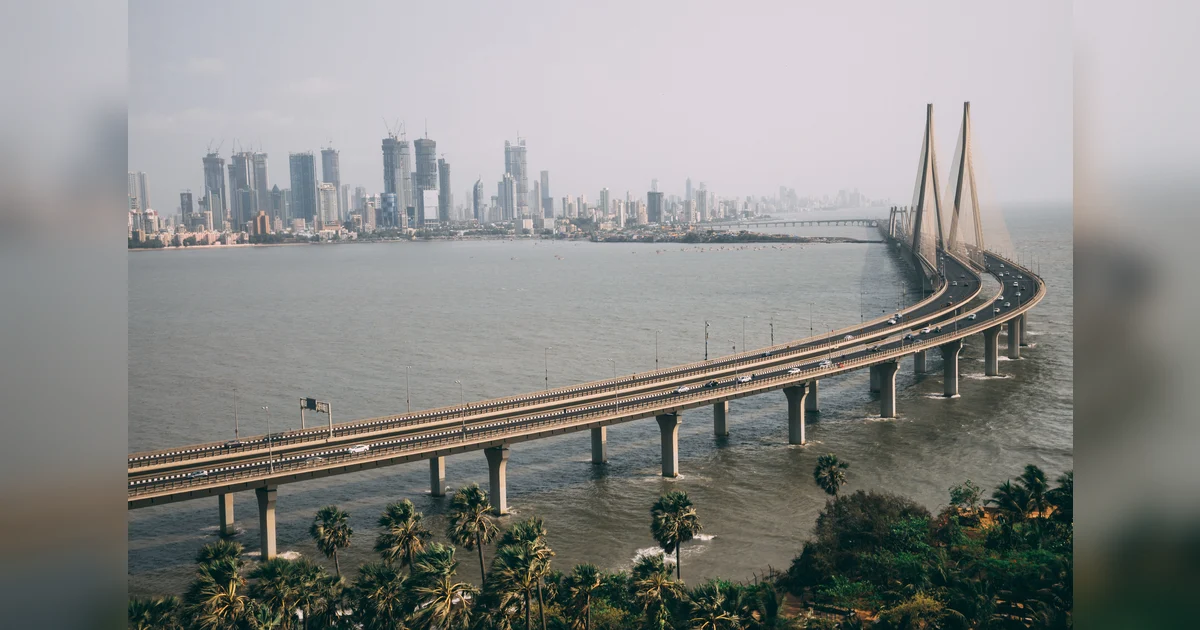
    In his groundbreaking work ‘Mumbai: A Million Islands,’ acclaimed journalist and founding editor of The Wire Sidharth Bhatia presents a penetrating examination of the social consequences of urban development in India’s financial capital. The book serves as both a historical document and contemporary critique, tracing Mumbai’s evolution from its origins as seven merged islands to its current status as a rapidly transforming metropolis.

    Bhatia’s narrative reveals the hidden human toll beneath the glittering surface of Mumbai’s development boom. While skylines rise with luxury high-rises and gated communities, the author uncovers how working-class neighborhoods and traditional ecosystems face systematic erasure. Through meticulous journalism and empathetic storytelling, the work documents the displacement of fisherfolk, mill workers, and informal laborers whose contributions once formed the foundation of the city’s economy.

    The book stands apart from previous romanticized portrayals of Mumbai by focusing on marginalized communities in areas like Behrampada, Dongri, and Mumbra. Bhatia conducts revealing interviews with residents facing spatial and social changes, capturing their determination to maintain dignity amid adversity. He particularly notes how mainstream media’s focus on glamorous development often overlooks these human stories of loss and displacement.

    Addressing the accelerated pace of change over the past decade, Bhatia describes the transformation as ‘a hurricane sweeping everything away.’ The work raises critical questions about urban priorities, asking what truly defines a great city when the absence of whole communities goes unnoticed by privileged classes. The author concludes with Gandhi’s principle that a society’s moral measure lies in how it treats its poorest and most vulnerable members.

    As coastal cities worldwide face climate pressures and growing inequality, Bhatia’s work offers a timely warning about unbalanced urban development. While technology has improved some government services, the fundamental issue of spatial justice remains largely unaddressed in Mumbai’s ongoing metamorphosis.