博客

  • Thailand repatriates 18 detained Cambodian soldiers

    Thailand repatriates 18 detained Cambodian soldiers

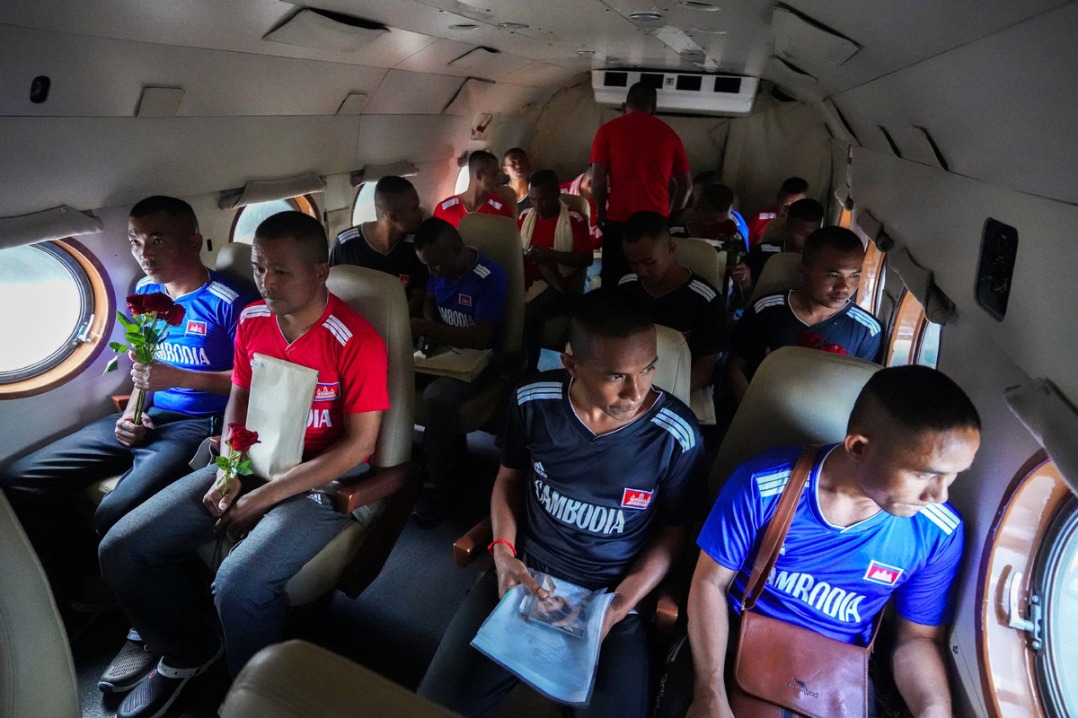
    In a significant diplomatic development, Thailand has formally repatriated 18 Cambodian soldiers who had been detained since late July 2025. The transfer occurred on Wednesday, December 31st, marking a crucial implementation of recent bilateral agreements between the Southeast Asian neighbors.

    The repatriation operation was conducted under strict observation from both the ASEAN Observer Team and the International Committee of the Red Cross, ensuring transparent and humane treatment throughout the process. The soldiers were transported via military helicopter from Battambang airport to Phnom Penh, completing their journey home after nearly five months in detention.

    This military personnel exchange directly fulfills Paragraph 11 of the Joint Statement signed during the 3rd Special General Border Committee Meeting on December 27, 2025. The agreement stipulated that the soldiers would be returned following a successfully maintained 72-hour ceasefire period between the two nations. Additionally, the action honors the spirit of the earlier Joint Declaration between Thailand and Cambodia signed in Kuala Lumpur on October 26, 2025.

    Cambodian Defense Ministry spokesperson Lieutenant General Maly Socheata confirmed the soldiers’ release, expressing optimism that this confidence-building measure would significantly contribute to regional stability. “Cambodia remains hopeful that this release will significantly contribute to building mutual trust and confidence,” Socheata stated. “We believe this creates an environment conducive to peace, stability, and the full normalization of relations for the benefit of both nations and their people in the near future.”

    The incident that led to the soldiers’ capture in July occurred amid ongoing border tensions between the two countries, though specific details surrounding their detention were not disclosed in the official statements. The successful repatriation represents a tangible step toward de-escalation and demonstrates both governments’ commitment to diplomatic resolution of conflicts.

  • Military drills necessary and justified, mainland official says

    Military drills necessary and justified, mainland official says

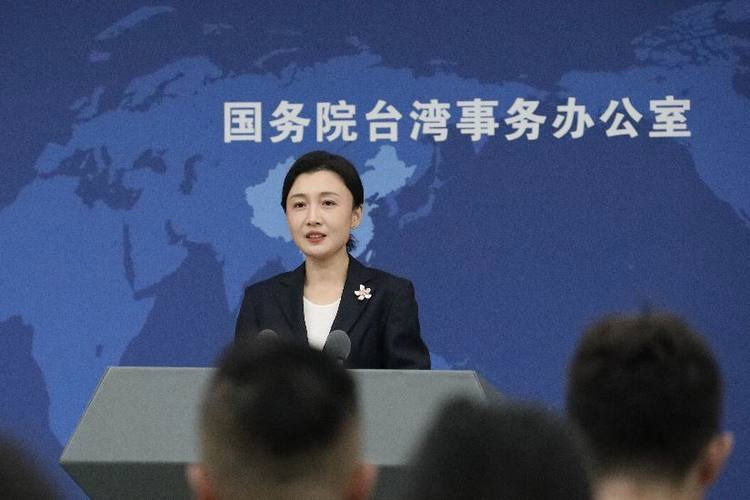
    Chinese officials have characterized recent military exercises in the Taiwan Strait as both essential and justified actions to preserve national sovereignty and territorial integrity. Zhang Han, spokeswoman for the State Council Taiwan Affairs Office, articulated this position during a regular press briefing on Wednesday, emphasizing that the People’s Liberation Army’s operations function as a stark warning to separatist factions and external forces meddling in the region.

    Zhang explicitly stated that China will not tolerate any activities promoting ‘Taiwan independence’ and will respond with determined countermeasures. The drills, she clarified, are designed to protect the Chinese nation’s core interests while simultaneously safeguarding the fundamental welfare of Taiwanese citizens.

    The military exercises, dubbed ‘Justice Mission 2025,’ were initiated by the PLA Eastern Theater Command on Monday in the maritime and aerial zones surrounding Taiwan. Security analysts interpret these maneuvers as a direct reaction to substantial recent arms sales by the United States to Taiwan.

    During the conference, Zhang criticized the Lai Ching-te administration for engaging in what she described as unprincipled appeals to foreign powers and activities that compromise Taiwan’s interests. She asserted that these provocative actions toward independence have negatively impacted Taiwan’s economic progress and population welfare, while simultaneously deteriorating cross-strait relations and endangering regional stability.

    Addressing the Democratic Progressive Party’s comments on the military exercises, Zhang accused DPP authorities of distorting facts and manipulating public perception. She further condemned the party as ‘destroyers of peace,’ ‘manufacturers of crises,’ and ‘instigators of war,’ identifying their persistent separatist stance and collaboration with external powers as the primary source of instability in the Taiwan Strait.

  • EU’s top diplomat rejects Russian claims of Ukrainian attack on government sites

    EU’s top diplomat rejects Russian claims of Ukrainian attack on government sites

    The European Union’s top diplomat has characterized Moscow’s allegations of Ukrainian aggression against Russian government sites as a calculated diversion tactic aimed at undermining ongoing peace negotiations. Kaja Kallas, responding to Kremlin assertions that Ukraine targeted one of Vladimir Putin’s residences with drone strikes, condemned these claims as baseless propaganda from the aggressor nation that has systematically attacked Ukrainian civilian infrastructure.

    Russian officials escalated rhetoric this week following unverified allegations of attempted strikes on Putin’s Valdai residence, with parliamentary defense committee head Andrei Kartapolov declaring the incident ‘a strike on the heart of Russia.’ Despite initially dismissing the need for evidence, Russian military authorities subsequently released geolocation maps and footage of downed drones allegedly proving Ukrainian involvement. Independent verification remains impossible, with the BBC unable to confirm the authenticity or origins of the materials.

    Ukrainian officials have met these allegations with derision, with Foreign Ministry spokesperson Heorhii Tykhyi describing the evidence as ‘laughable’ and unconvincingly fabricated. President Volodymyr Zelensky framed the incident within the context of recently productive ceasefire discussions with American mediators, suggesting Russia intentionally sought to disrupt diplomatic momentum between Kyiv and Washington.

    The allegations emerged alongside intensified aerial assaults on Ukrainian territories, particularly the port city of Odesa where recent attacks damaged residential buildings and left 170,000 without power during freezing temperatures. These developments occur against the backdrop of Putin’s December threat to sever Ukraine’s maritime access in retaliation for previous drone incidents involving Russian tankers.

    As another year of conflict concludes, Kyiv residents maintain cautious hope for peaceful resolution while contributing to war efforts through public fundraising initiatives. Zelensky has expressed desire to accelerate peace talks with international involvement in January, though Russian cooperation appears increasingly unlikely following the alleged drone incident and subsequent diplomatic deterioration.

  • Israeli forces kill three Palestinians in Gaza and West Bank

    Israeli forces kill three Palestinians in Gaza and West Bank

    Fresh violence has erupted across Palestinian territories with Israeli military operations claiming multiple lives, including children, despite an existing truce agreement. The ongoing conflict continues to exacerbate what international organizations describe as a catastrophic humanitarian situation in Gaza.

    In separate incidents spanning Tuesday and Wednesday, three Palestinians lost their lives during Israeli military operations. An 11-year-old child, Dana Hussein Ahmed Muqat, was killed in al-Zarqa northeast of Gaza City, while another juvenile died in al-Mawasi within the southern Gaza Strip. Simultaneously, Israeli forces conducted aerial and ground assaults throughout Gaza, with particularly intense operations reported in northern and central regions.

    The West Bank witnessed parallel violence as Israeli forces conducted overnight raids resulting in numerous arrests. During one operation between Awarta and Einabus towns south of Nablus, Israeli troops opened intensive fire on a Palestinian vehicle, causing it to overturn and burst into flames. The attack resulted in one fatality—20-year-old Qais Sami Jasser Allan—and left several others wounded.

    This recent escalation occurs against the backdrop of staggering casualty figures, with over 71,269 Palestinians killed in Gaza and more than 1,000 in the West Bank since October 2023, according to local reports.

    Amid the deteriorating situation, a coalition of ten nations—Canada, Denmark, Finland, France, Iceland, Japan, Norway, Sweden, Switzerland, and the United Kingdom—issued a joint statement on Tuesday demanding Israel remove restrictions on humanitarian access to Gaza. The diplomatic communiqué emphasized that unimpeded aid delivery is essential for effective humanitarian response, reconstruction efforts, and lasting peace stability.

    The humanitarian crisis has been severely aggravated by harsh winter conditions, with reports indicating at least three children have died from exposure to cold temperatures since the start of the rainy season. An additional 19 fatalities resulted from structural collapses caused by severe weather conditions. Palestinians face critical shortages of winter shelter, essential supplies, medicine, clean water, and food due to Israel’s prolonged aid blockade.

    Adnan Abu Hasna, media advisor for the United Nations Agency for Palestinian Refugees (UNRWA), revealed that approximately 1.6 million Palestinians currently experience dangerous levels of malnutrition and food insecurity. In an interview with Al Jazeera, he emphasized that the winter season is producing “direct and disastrous effects” on displaced populations throughout the territory.

  • Watch: Stunning celestial events that lit up the skies in 2025

    Watch: Stunning celestial events that lit up the skies in 2025

    The year 2025 has proven to be an extraordinary period for astronomical enthusiasts worldwide, featuring a succession of breathtaking celestial phenomena that transformed night skies into cosmic theaters. This remarkable series of events provided both amateur stargazers and professional astronomers with unprecedented opportunities to witness the universe’s grandeur.

    Among the most anticipated events were the periodic meteor showers, which delivered particularly intense displays this year. The Perseids in August and Geminids in December exceeded expectations with meteor rates reaching up to 120 visible streaks per hour under optimal conditions. These cosmic light shows resulted from Earth’s orbit intersecting with debris trails left by comets Swift-Tuttle and 3200 Phaethon respectively.

    The lunar calendar similarly impressed with multiple supermoons occurring throughout the year. These occurrences, when the full moon coincides with perigee (the moon’s closest approach to Earth), created spectacular visual displays with the lunar disk appearing approximately 14% larger and 30% brighter than typical full moons. The September supermoon was particularly notable for its coincidence with lunar perigee, making it the most dramatic lunar display of the year.

    Additional phenomena included planetary conjunctions where Venus, Mars, and Jupiter appeared to cluster in unusual celestial formations, providing exceptional photographic opportunities. The year also featured a partial solar eclipse visible across North America and a penumbral lunar eclipse observable from Europe and Africa.

    Astronomical organizations worldwide reported increased public engagement with night sky observation, with many communities hosting special viewing events. The accessibility of these events—requiring no special equipment beyond the naked eye—contributed to their widespread appeal, fostering greater public appreciation for astronomical science and the natural wonders of our universe.

  • Equatorial Guinea pair banned for abusing referee at Afcon

    Equatorial Guinea pair banned for abusing referee at Afcon

    The Confederation of African Football (CAF) has handed down significant disciplinary sanctions following controversial incidents during the 2025 Africa Cup of Nations. Equatorial Guinea’s captain Carlos Akapo and teammate Josete Miranda have each received four-match suspensions for verbally abusing match officials after their team’s 1-0 defeat to Sudan in Group E.

    The disciplinary measures stem from a CAF panel’s review of referee Messie Jessie Nkounkou Mvoutou’s report detailing the post-match confrontation. The Congolese official documented that both players “repeatedly uttered insulting and obscene remarks” toward him and his assistant referees immediately following the final whistle. The incident occurred in a context of “intense anger related to the defeat” but was deemed a “serious breach of the principles of respect and fair play.”

    In a partial reprieve, two matches of each player’s suspension have been deferred for one year, meaning they will serve immediate two-match bans. Both athletes already missed Equatorial Guinea’s final group match against Algeria, which ended in a 3-1 defeat that eliminated the National Thunder from the tournament.

    Additionally, the Equatorial Guinea Football Federation (Feguifut) has been fined $10,000 for the conduct of its technical staff and players, who engaged in “excessive and abusive protests” against officiating decisions. According to Mvoutou’s report, team behavior progressively deteriorated after defender Saul Coco scored an own goal in the 74th minute.

    In separate disciplinary action, Burkina Faso captain Bertrand Traoré has been fined $10,000 for making “offensive remarks” during a post-match interview following his team’s 1-0 loss to Angola in Group E. These sanctions highlight CAF’s strengthened commitment to enforcing disciplinary standards during Africa’s premier football competition.

  • Roberto Carlos reportedly undergoes heart surgery while on vacation in Brazil

    Roberto Carlos reportedly undergoes heart surgery while on vacation in Brazil

    MADRID (AP) — Brazilian football icon and Real Madrid legend Roberto Carlos has successfully undergone cardiac surgery following the discovery of a heart condition during a routine examination. The 52-year-old former defender, currently serving as an ambassador for Real Madrid, was vacationing in his native Brazil when medical professionals identified an irregularity in his heart function.

    The health concern emerged unexpectedly when Roberto Carlos sought medical attention for what initially appeared to be a minor blood clot in his leg. Physicians subsequently ordered a comprehensive full-body MRI scan, which revealed underlying cardiac issues requiring immediate intervention. Medical teams performed a catheterization procedure that, while initially projected to conclude within 40 minutes, extended to nearly three hours due to unforeseen complications.

    Despite the extended surgical duration, the procedure achieved complete success according to reports from Spanish sports publication Diario AS. The renowned athlete remains under close medical supervision and is expected to remain hospitalized for an additional 48-hour observation period to monitor his recovery progress.

    Roberto Carlos, widely celebrated as one of football’s most offensive-minded left backs in history, earned 125 international caps for Brazil and spent eleven illustrious seasons with Real Madrid. His legendary career includes participation in three World Cup tournaments, culminating in Brazil’s 2002 championship victory. He additionally secured two Copa América titles (1997, 1999) and claimed three UEFA Champions League trophies during his tenure with Madrid.

    The Brazilian star remains particularly famous for his extraordinary 1997 free kick against France—a seemingly physically impossible strike that curved dramatically to find the net after appearing initially off target. This remarkable demonstration of skill became subject to scientific analysis and is widely regarded as one of the most spectacular goals in football history.

    Current medical reports indicate the football legend is out of immediate danger and has communicated reassuring messages to concerned supporters, stating simply: ‘I’m fine now.’

  • In six decades, Xizang’s civil aviation soars to new heights

    In six decades, Xizang’s civil aviation soars to new heights

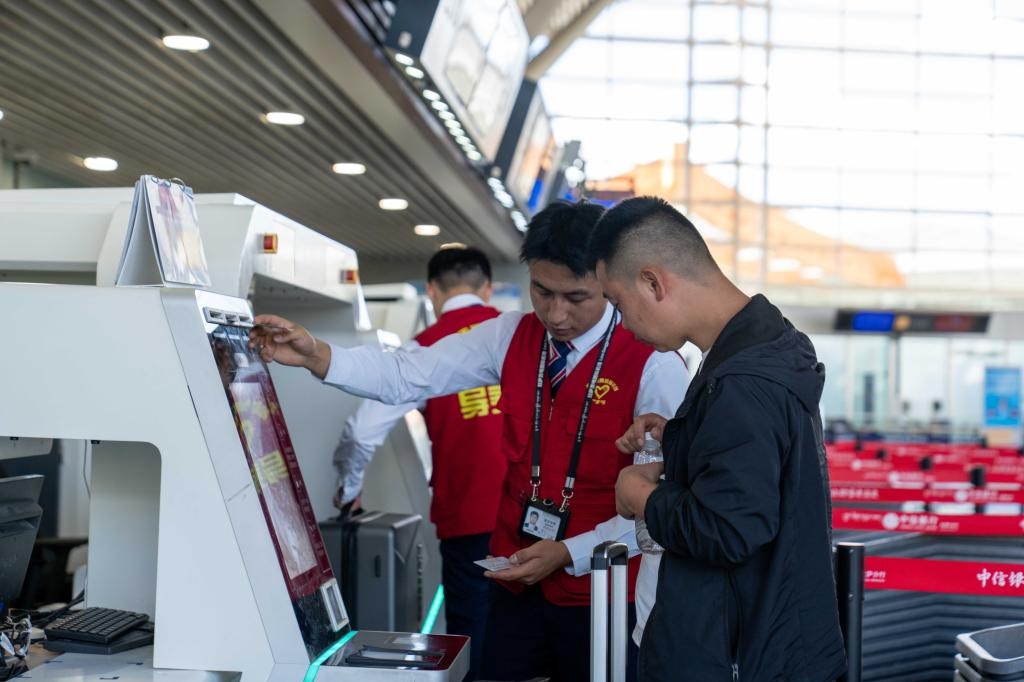
    LHASA — Marking a historic milestone in its transportation development, Southwest China’s Xizang Autonomous Region has recorded an unprecedented annual passenger throughput exceeding 8 million in 2025. This achievement represents the culmination of six decades of aviation progress on the Tibetan Plateau, where air travel has evolved from a rare spectacle to an integral part of regional connectivity.

    The regional civil aviation authorities project approximately 71,000 flight operations for the year, reflecting a 6 percent increase from previous records. Passenger transport volume has grown by 5.7 percent, while cargo and mail handling has surged by 7.7 percent, demonstrating robust expansion across all aviation sectors.

    This exponential growth stands in stark contrast to March 1965, when the region’s inaugural civil aviation flight touched down at Damxung airport. The Soviet-made Il-18 aircraft, having departed Beijing with a stopover in Chengdu, initiated what would become a transformative chapter in Tibetan transportation history.

    Damxung airport, situated at 4,230 meters above sea level, pioneered high-altitude aviation as China’s first airport operating above 4,000 meters. However, operational challenges stemming from extreme weather conditions and considerable distance from Lhasa prompted the development of Lhasa Konggar International Airport (LKIA) in 1966. Located in the more accessible Yarlung Zangbo River valley at approximately 3,500 meters elevation, LKIA has since evolved into the region’s primary aviation hub.

    Early aviation operations faced significant logistical challenges. Hu Jinfa, a retired official from the regional Civil Aviation Administration, recounted how staff and passengers would collectively clear snow and ice from runways using basic tools to maintain flight schedules during harsh winter months.

    Initially serving government officials, medical patients, and pregnant women who couldn’t endure overland journeys, air transport also facilitated the delivery of essential goods previously scarce on the plateau. Today, the region’s aviation network has expanded dramatically to encompass 193 routes connecting 81 cities through eight civil airports.

    The transformation extends beyond passenger services to cargo operations. Inbound shipments now include perishable goods, temperature-sensitive pharmaceuticals, and high-value products, while outbound flights carry an increasing volume of Tibetan specialties such as cordyceps sinensis, yak meat, barley products, traditional medicines, and handicrafts.

    Customs official Zhang Wei noted the strategic role of Xizang’s aviation infrastructure: “Not only are unique Tibetan products reaching markets across China, but quality goods from across the country are also reaching South Asian markets through Xizang’s flights.”

    The tourism sector has been a primary beneficiary of improved aviation access. Ngari Prefecture, among the region’s most remote areas, welcomed 2.5 million domestic and international visitors in 2024—a 40-fold increase since the opening of Ngari Gunsa Airport in 2010.

    Simultaneously, air travel has enabled growing numbers of Tibetan residents to explore educational, employment, and tourism opportunities elsewhere in China. At LKIA’s departure hall, 68-year-old Padma Dondrup embodied this new mobility as she prepared to accompany her granddaughter to university in Shanghai, fulfilling her lifelong dream of witnessing the iconic Bund waterfront firsthand.

  • Bridge celebrated as engineering marvel opens in Henan

    Bridge celebrated as engineering marvel opens in Henan

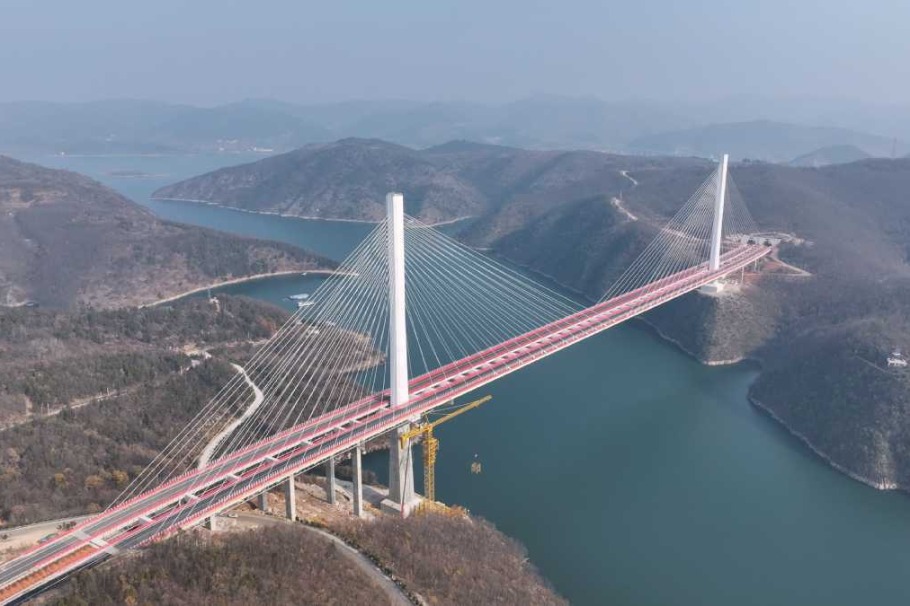
    Henan Province has unveiled a monumental infrastructure achievement with the inauguration of the Danjiang Xiaosanxia Grand Bridge, a cable-stayed marvel spanning the Danjiangkou Reservoir. This engineering masterpiece, officially opened to traffic on December 31, 2025, represents the longest cable-stayed bridge in Henan with a total length of 919 meters and a main span stretching 536 meters.

    The bridge serves as the centerpiece of the newly operational Mianchi-Xichuan Expressway segment connecting Xichuan County to the Henan-Hubei provincial border. This 24.838-kilometer highway section features four lanes accommodating two-directional traffic with a design speed of 100 kilometers per hour.

    Beyond its impressive technical specifications, the infrastructure project delivers substantial practical benefits by significantly reducing travel time between Henan and Hubei provinces. The bridge strategically links several major tourist destinations, promising to enhance regional connectivity and stimulate economic development through improved transportation networks.

    The project’s completion marks a significant advancement in China’s ongoing infrastructure modernization efforts, demonstrating sophisticated engineering capabilities in challenging geographical conditions. The bridge’s design and construction required innovative solutions to address the specific demands of spanning the reservoir while maintaining structural integrity and aesthetic appeal.

    This transportation corridor is expected to facilitate increased tourism, commercial exchange, and regional integration between central Chinese provinces, representing a substantial investment in the nation’s interprovincial connectivity infrastructure.

  • Through six landmark cases, top court strengthens protections for migrant workers

    Through six landmark cases, top court strengthens protections for migrant workers

    In a significant judicial move, China’s Supreme People’s Court has unveiled six precedent-setting cases addressing wage arrears for migrant workers, establishing new standards for adjudication while reinforcing the judiciary’s dedication to safeguarding labor rights. The December 31st announcement represents the culmination of a year-long nationwide directive prioritizing migrant worker wage disputes and livelihood protection as essential components of social welfare and national progress.

    The released cases demonstrate multifaceted judicial approaches, including inter-departmental coordination to address systemic issues, compulsory enforcement measures against non-compliant entities, and expedited corporate asset liquidation procedures to ensure timely wage distribution. These measures form part of a comprehensive collaborative system designed to accelerate dispute resolution while supporting high-quality economic development.

    One illustrative case from Shanghai’s Jinshan District involved seven workers seeking enforcement of labor arbitration rulings against an exhibition services company that had disregarded mediated settlements. Judicial investigation revealed the company operated without enforceable assets, frequently changed business locations, and maintained an elusive legal representative who systematically avoided court communications.

    The breakthrough came when court officials located the representative’s residence, imposed 15-day judicial detention, and levied a 1,000 yuan ($143) fine for non-compliance. This enforcement action prompted immediate settlement of all outstanding debts and penalties, demonstrating the effectiveness of determined judicial intervention.

    The Supreme Court has emphasized the principle of people-centered adjudication, urging courts at all levels to enhance enforcement mechanisms in wage dispute cases. This judicial strengthening aims not only to protect individual workers but also to promote broader social harmony and stability through the consistent application of legal protections for vulnerable employment groups.