博客

  • Abu Dhabi motorists who fail to stop for school buses face Dh1,000 fine, 10 black points

    Abu Dhabi motorists who fail to stop for school buses face Dh1,000 fine, 10 black points

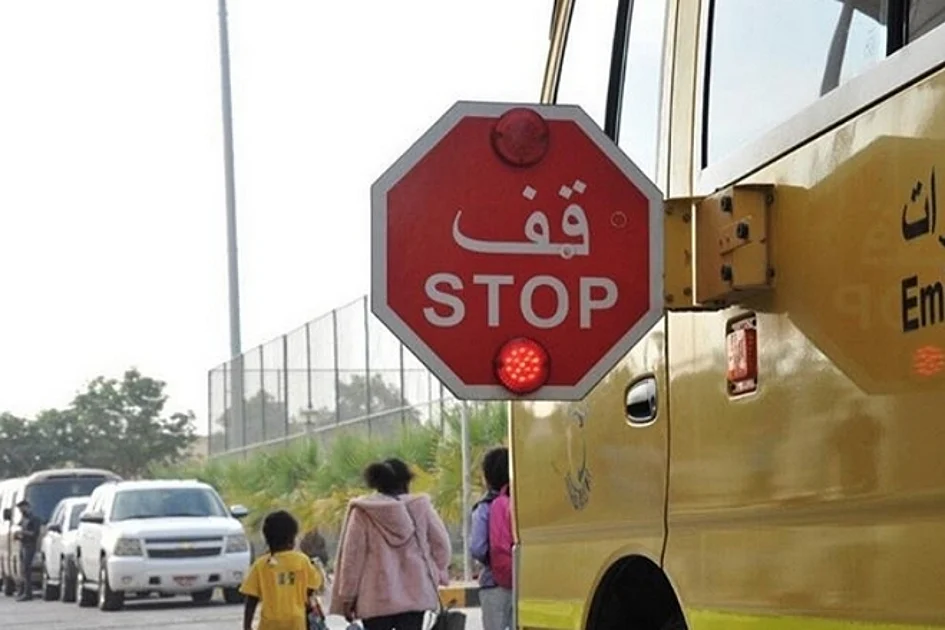
    Abu Dhabi authorities have implemented stringent traffic enforcement measures as students return to classrooms following the winter break. Motorists failing to halt for school buses displaying active stop signs now face substantial penalties: a 1,000-dirham fine and 10 black points on their driving records.

    The Abu Dhabi Police Directorate has reinforced road safety protocols requiring all drivers to come to a complete stop when school buses extend their side-mounted stop signs. This critical safety measure aims to protect children during boarding and disembarking procedures.

    Traffic regulations specify distinct stopping requirements based on road configuration. On single-lane roadways, vehicles traveling in both directions must maintain a minimum stopping distance of five meters from the bus. On multi-lane roads with divided directions, only motorists moving in the same direction as the bus are obligated to stop.

    The enforcement strategy incorporates automated monitoring systems to detect violations, ensuring consistent compliance with the safety regulations. This technological approach eliminates reliance on manual enforcement alone.

    The safety initiative coincides with the resumption of academic activities across the United Arab Emirates, with over one million students returning to educational institutions following the implementation of the new unified academic calendar. This return marks the conclusion of the nation’s first extended winter break under the revised academic scheduling system.

    Concurrently, educational authorities are preparing families for forthcoming adjustments to Friday school schedules and admission processes for the 2026-2027 academic year, modifications designed to accommodate revised prayer timings across the Emirates.
  • Vatican claims a Holy Year success with 33 million pilgrims

    Vatican claims a Holy Year success with 33 million pilgrims

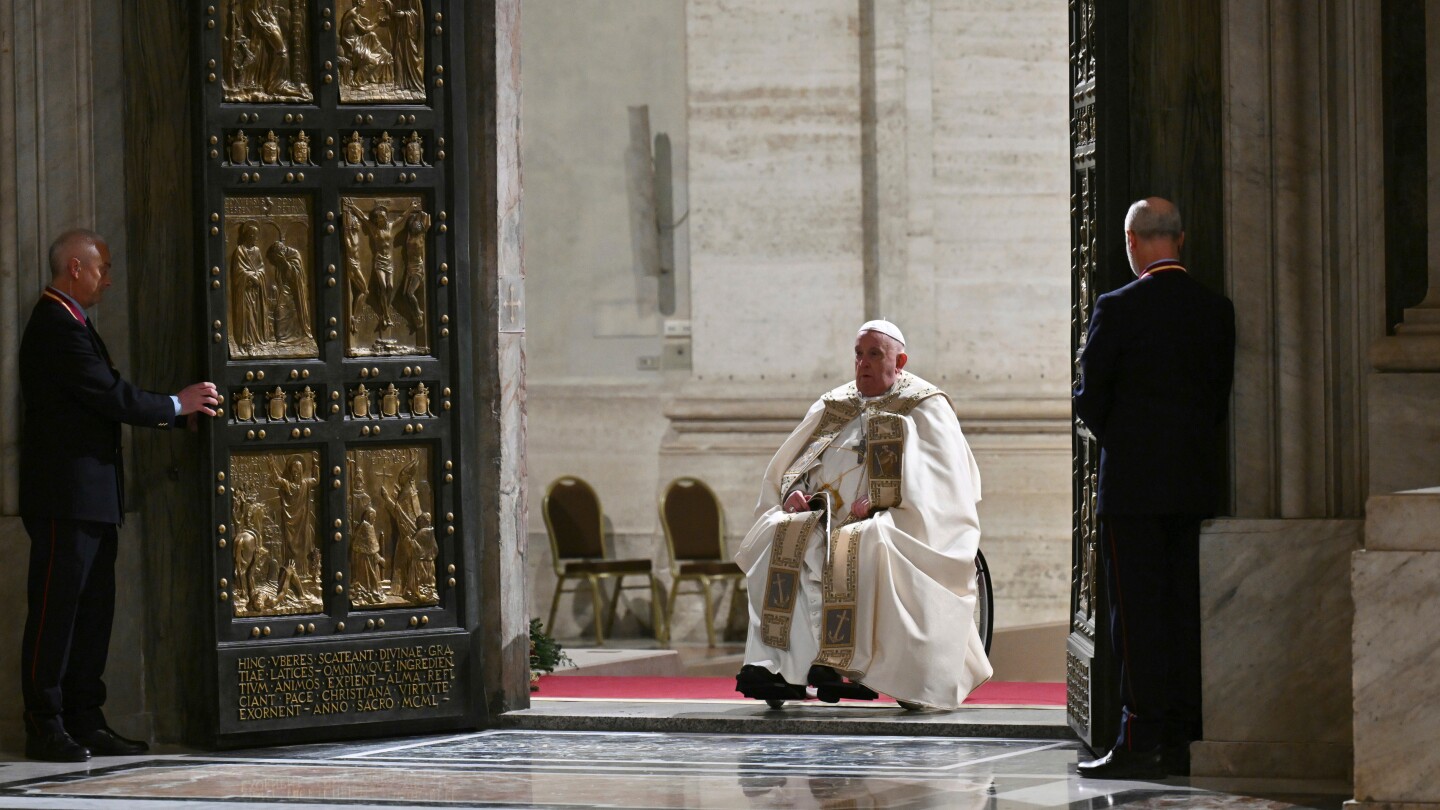
    The Vatican has officially concluded its 2025 Holy Year celebrations, reporting unprecedented participation from over 33 million pilgrims while revealing a lighthearted architectural disagreement with Roman authorities as the only notable contention. Pope Leo XIV ceremonially sealed the Holy Door of St. Peter’s Basilica on Tuesday, marking the end of a rare Jubilee that commenced under his predecessor Pope Francis and concluded under his leadership—a historical occurrence last witnessed in 1700.

    The Holy Year, a centuries-old tradition occurring every quarter-century, invites the faithful to pilgrimage to Rome for spiritual renewal and indulgences. For the Eternal City, the event triggered an infrastructural transformation with approximately €4 billion in public funding allocated to modernize urban facilities and address long-standing neglect.

    Archbishop Rino Fisichella, the Vatican’s Jubilee coordinator, acknowledged the participation figure of 33,475,369 represented an estimate potentially including duplicate counts. The calculation methodology combined official event registrations, volunteer tallies at basilicas, and CCTV data from St. Peter’s, which recorded 25,000-30,000 daily crossings at the Holy Door. This exceeded Roma Tre University’s initial projection of 31.7 million pilgrims.

    A notable surge in attendance followed the papal transition in April, when Pope Francis passed away and Pope Leo XIV assumed leadership. This unique circumstance made the 2025 Jubilee only the second in history to span two pontificates, echoing the 1700 Jubilee that began under Innocent XII and concluded under Clement XI.

    Despite overall harmonious collaboration, a stylistic disagreement emerged regarding the contemporary stone fountains installed at the newly pedestrianized Piazza Pia—the Jubilee’s flagship urban project at Via della Conciliazione’s terminus. While Rome Mayor Roberto Gualtieri championed the design, Archbishop Fisichella expressed reservations about their compatibility with the Baroque magnificence of St. Peter’s and the fascist-era architecture lining the boulevard. The archbishop humorously noted having to ‘back down’ on the aesthetic disagreement since the piazza resides on Italian territory, though he admitted the fountains had grown on him despite initially comparing them to ‘foot baths.’

    The tradition of Jubilee-inspired urban renewal dates to 1300, with historical projects including the Sistine Chapel (1475) and the Vatican garage (2000). Of the 117 planned infrastructure initiatives, 110 reached completion, substantially modernizing Rome’s public spaces and transportation networks.

  • Trump demands ‘total access’ to Venezuela

    Trump demands ‘total access’ to Venezuela

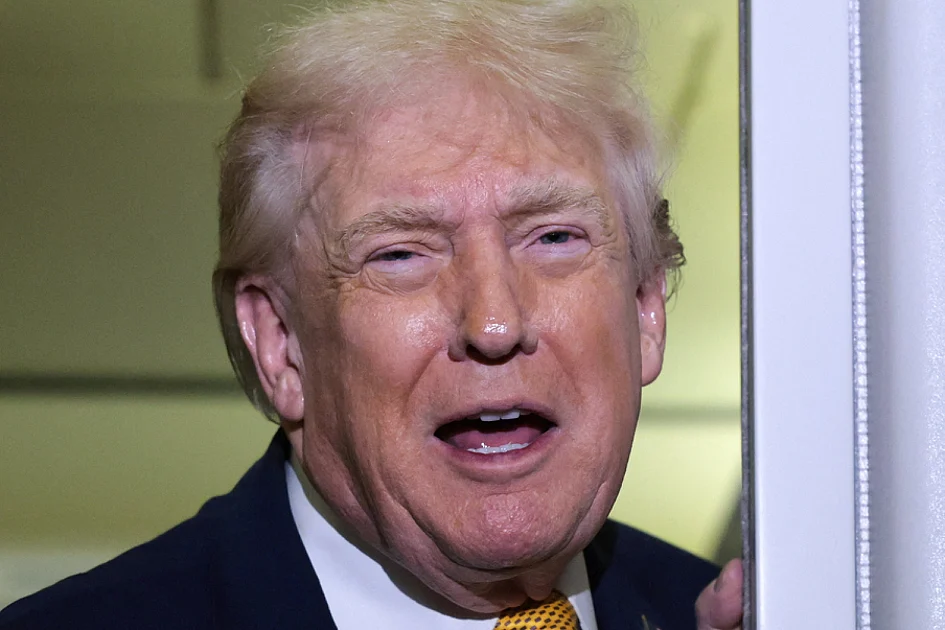
    WASHINGTON – In a dramatic escalation of tensions, former U.S. President Donald Trump has publicly demanded “total access” to Venezuela’s strategic resources, particularly its oil reserves, following controversial military operations that resulted in the capture of former Venezuelan leader Nicolás Maduro.

    Speaking to journalists aboard Air Force One on Sunday evening, Trump asserted that the United States required comprehensive access to Venezuela’s national resources to facilitate the country’s reconstruction. “We need total access. We need access to the oil and to other things in their country that allow us to rebuild their country,” Trump declared, despite lacking direct communication with Venezuelan acting president Delcy Rodríguez.

    The political crisis intensified as Trump claimed American authority over the South American nation, stating unequivocally that the U.S. was “in charge” of Venezuela and working with recently sworn-in officials. His comments came amid contradictory statements from Caracas, where Rodríguez simultaneously demanded Maduro’s immediate release and recognized him as Venezuela’s legitimate president during a National Defense Council session broadcast on state television.

    Trump issued a stark warning to Rodríguez, suggesting she would face consequences “probably worse than Maduro” if she failed to cooperate with American demands. This threat echoed earlier comments made during a phone interview with The Atlantic, where the former president emphasized his administration’s hardline approach toward the Venezuelan leadership.

    The situation developed rapidly after Maduro’s capture on Saturday morning, with Secretary of State Marco Rubio reportedly engaging in telephone diplomacy with Rodríguez. Trump characterized these interactions positively, noting that the acting president appeared “willing to do what we believe is necessary to make Venezuela great again,” while simultaneously acknowledging she had been “picked by Maduro” himself.

    Rodríguez countered these claims by condemning U.S. military strikes on Caracas and other regions, describing them as a “savage attack” on Venezuela’s territorial integrity conducted specifically to capture Maduro, who is expected to appear in a New York courtroom on Monday.

  • The Global Mayors Dialogue · Harbin opens Tuesday

    The Global Mayors Dialogue · Harbin opens Tuesday

    The northeastern Chinese city of Harbin inaugurated the Global Mayors Dialogue on Tuesday, transforming its winter landscape into a platform for international cooperation and cultural exchange. The event brings together municipal leaders from across the world to foster dialogue and collaboration against the backdrop of Harbin’s renowned winter attractions.

    The city has deployed its characteristic warmth and hospitality to welcome international delegates, showcasing traditional delicacies like sugar-coated haws and century-old Modern brand ice lollipops alongside breathtaking ice sculptures that illuminate the streets. The carefully curated atmosphere combines cultural heritage with modern diplomatic engagement, creating a unique environment for cross-border municipal cooperation.

    This gathering represents significant soft power diplomacy through urban governance exchange, allowing mayors to share best practices in city management, sustainable development, and cultural preservation. The timing during Harbin’s peak winter season highlights how cities can leverage their unique seasonal characteristics to promote international dialogue and economic opportunity.

    The dialogue occurs alongside several other significant international developments, including climate action discussions, European diplomatic initiatives, and Middle Eastern security matters, positioning urban governance as an essential component of global cooperation frameworks. The event demonstrates how city-to-city diplomacy complements traditional state-level interactions in addressing common challenges.

  • West Bank: Palestinian journalist and boy among dozens arrested by Israeli forces

    West Bank: Palestinian journalist and boy among dozens arrested by Israeli forces

    Israeli military operations across the occupied West Bank resulted in the detention of numerous Palestinians on Monday, with local media reporting widespread arrest campaigns targeting multiple regions. The operations notably included the apprehension of journalist Enas Ikhlawi from her residence in Idhna, west of Hebron, and 15-year-old Yazan al-Aloul during raids in the Nur Shams refugee camp near Tulkarm.

    In the Aida refugee camp north of Bethlehem, local sources indicated that Israeli forces arrested more than 25 Palestinians, conducting extensive house searches and employing intimidation tactics. Additional arrests were reported in Qalqilya, Ramallah, and Tubas, continuing a pattern of nightly operations that have become increasingly frequent since the onset of the Gaza conflict in 2023.

    Statistical data reveals that Israeli forces have detained over 21,000 Palestinians from the West Bank in just over two years. Current figures show approximately 9,250 Palestinians remain in Israeli detention, including 350 children and about 50 women. Nearly half of these detainees are held under administrative detention orders without formal charges or trial.

    Human rights organizations have documented systematic abuses against Palestinian prisoners, alleging deliberate targeting through physical and psychological mistreatment, including torture, starvation, denial of medical care, and solitary confinement. These claims find support in a report from Israel’s Public Defender’s Office, which acknowledges systematic violence by prison staff and highlights severe hunger among detainees resulting in extreme weight loss, weakness, and fainting episodes.

    The humanitarian crisis has reached lethal proportions, with a joint report by Palestinian rights groups documenting 32 detainee deaths in Israeli custody in 2025 alone—including one child—bringing the total number of prisoner fatalities since October 2023 to over 100.

  • 5.4-magnitude quake hits India’s Assam, near border with Bhutan

    5.4-magnitude quake hits India’s Assam, near border with Bhutan

    A moderate seismic event registering 5.4 on the Richter scale struck northeastern India’s Assam state in the early hours of Monday morning. The United States Geological Survey (USGS) confirmed the earthquake’s epicenter was positioned just three kilometers from the village of Dhing, located near India’s sensitive border region with Bhutan.

    The tremor occurred at approximately 4:17 AM local time (2:47 AM UAE time on Sunday), with preliminary reports indicating strong ground shaking in the immediate vicinity. Despite the significant seismic activity, the USGS preliminary assessment suggested limited population impact due to the remote nature of the affected area.

    This event occurs within the seismically active Himalayan region, which experiences numerous earthquakes annually and has witnessed some of India’s most devastating seismic disasters in recorded history. The region’s tectonic vulnerability stems from the ongoing collision between the Indian and Eurasian continental plates, which continues to generate substantial seismic stress along the Himalayan fault lines.

    Historical context reveals the area’s tragic seismic legacy, including the catastrophic 1950 earthquake that claimed approximately 4,800 lives across Assam and Tibet. The Great Assam Earthquake of 1897 remains documented as one of the most powerful seismic events ever recorded in the Indian subcontinent, resulting in hundreds of fatalities across the remote mountainous terrain.

    Current monitoring indicates no immediate reports of significant damage or casualties, though regional authorities remain on alert for potential aftershocks and are conducting preliminary damage assessments in the affected border region.

  • What Trump supporters in Florida make of US ‘running’ Venezuela

    What Trump supporters in Florida make of US ‘running’ Venezuela

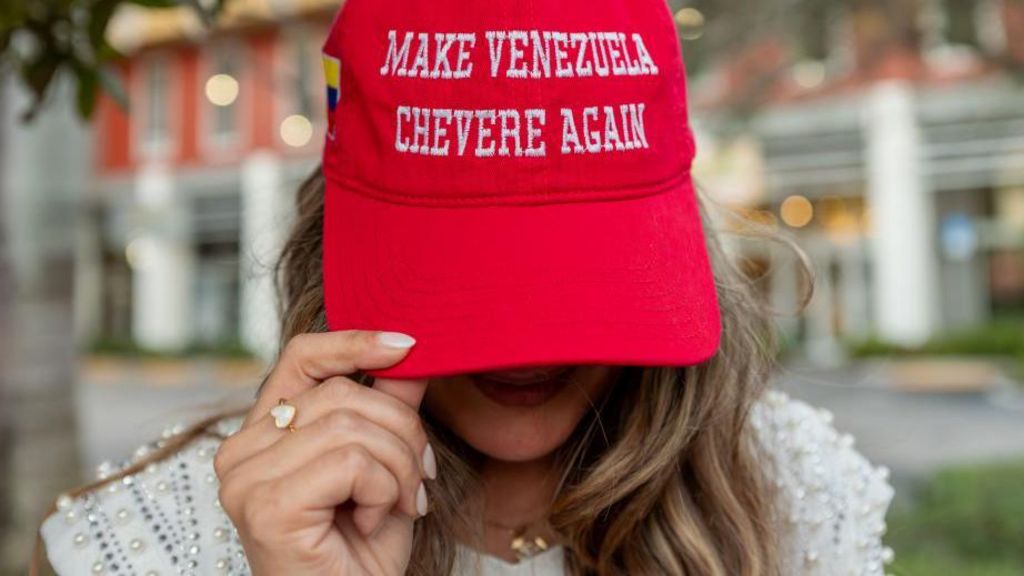
    In the wake of the dramatic seizure of Venezuelan leader Nicolás Maduro, Trump supporters in Florida are celebrating what they perceive as a masterful display of American strength. The operation, which resulted in no U.S. casualties, is being framed by the administration and its base as a necessary intervention fundamentally distinct from the prolonged nation-building missions of the past.

    Dirk Frazier, a longtime Trump supporter from St. Augustine, articulated this sentiment, contrasting the swift Venezuelan action with the ‘never-ending wars’ in Iraq and Afghanistan that defined his youth. ‘We are acting like a world superpower again,’ Frazier stated. ‘All bad actors are on notice.’ This perspective is echoed by conservative strategists who emphasize the Western Hemisphere’s proximity, arguing that even isolationist elements within the MAGA movement view regional stability as a core national interest.

    Administration officials, including Vice-President JD Vance, have vigorously defended the move, citing the need to combat drug flows and protect U.S. assets from what they characterize as a corrupt communist regime. ‘Are we just supposed to allow a communist to steal our stuff in our hemisphere and do nothing?’ Vance posed on social media.

    Despite this unified front from supporters, the operation has not been without its critics. A handful of prominent Republicans, including Representative Thomas Massie and former ally Marjorie Taylor Greene, have publicly questioned the intervention, with Greene declaring ‘this is what many in MAGA thought they voted to end.’ Internationally, the removal of a sitting president has been condemned by many as a dangerous breach of international law.

    The long-term outcome remains deeply uncertain. Former CIA deputy director John McLaughlin warned that inflicting violence carries unpredictable consequences, ‘even if you have a plan.’ While polling prior to the operation showed limited public support for military action, supporters in Florida’s ‘Little Venezuela’ believe the strategic benefits—potentially curbing migration and weakening leftist governments in Cuba and Nicaragua—justify the risk, viewing it as a calculated game of ‘chess, not checkers.’

  • UAE universities shift focus to make students job-ready under new federal law

    UAE universities shift focus to make students job-ready under new federal law

    In a significant overhaul of its higher education system, the United Arab Emirates has implemented transformative federal legislation designed to revolutionize academic preparation for the workforce. The groundbreaking law, enacted on December 30, 2025, establishes rigorous new standards for licensing and mandatory program accreditation across all institutions of higher learning.

    The comprehensive legislation represents a strategic shift toward aligning educational outcomes with the practical requirements of the UAE’s rapidly evolving knowledge economy. The new framework emphasizes enhanced governance structures, improved institutional management, and strengthened technical and vocational training programs. Central to these reforms is the integration of employability-focused components throughout the entire educational journey, from foundational courses to advanced professional studies.

    Academic leaders across the UAE have welcomed the reforms as a validation of existing quality standards while creating more consistent educational benchmarks. Professor A Somasundaram of BITS Pilani Dubai Campus noted that the legislation ‘creates a more level playing field across private, free-zone, and international campuses’ while providing ‘added layer of assurance regarding quality, governance, and outcomes.’

    The practical implementation of these reforms includes expanded internship requirements, with some institutions already mandating seven-and-a-half month professional placements. Universities are increasingly collaborating with industry partners to develop curriculum content that addresses emerging fields including artificial intelligence, data analytics, cybersecurity, digital business, sustainability, and fintech.

    Professor Cedwyn Fernandes of Middlesex University Dubai highlighted how ’employability is integrated throughout the student journey,’ with educational institutions incorporating industry-informed content, applied assessments, and extensive employer engagement opportunities. Early indicators suggest these reforms are already yielding positive results, with several institutions reporting record enrollment numbers particularly in future-focused academic programs.

    Dr. Anita Patankar of Symbiosis Dubai emphasized that job readiness is now ‘built into the learning journey from day one,’ with students gaining hands-on experience through real industry projects, professional networking opportunities, and practical skill development modules. The legislation also establishes stronger frameworks for lifelong learning opportunities, allowing professionals to continuously update their skills in response to evolving economic demands.

  • Venezuela: Rodriguez holds first cabinet meeting, creates commission for Maduro release

    Venezuela: Rodriguez holds first cabinet meeting, creates commission for Maduro release

    Venezuela’s political landscape remains in turmoil as Acting President Delcy Rodriguez convened her inaugural cabinet assembly on Sunday, marking the first such gathering since the dramatic ousting of former leader Nicolas Maduro by U.S. military forces approximately 48 hours prior. The meeting, broadcast nationally via state television network VTV, showcased Rodriguez positioned at the helm of the presidential table within Miraflores Palace, flanked by two pivotal Maduro loyalists: Defense Minister Vladimir Padrino and Interior Minister Diosdado Cabello.

    In a significant development, Rodriguez established a specialized commission dedicated to securing the liberation of Maduro and his spouse, Cilia Flores. The commission’s leadership will be jointly helmed by Jorge Rodriguez (the acting president’s brother and current National Assembly president) and Foreign Minister Yvan Gil. Information Minister Freddy Nanez will also serve as a key member of this delegation, as confirmed in his official announcement.

    The formation of this commission follows Maduro’s detention in a New York correctional facility on Saturday, where he faces serious charges including drug trafficking and terrorism allegations. The former president is scheduled for a court appearance on Monday, setting the stage for a complex international legal and diplomatic confrontation between Venezuela and the United States.

  • Trump threatens military operation against Colombia, says Cuba will fall on its own

    Trump threatens military operation against Colombia, says Cuba will fall on its own

    Former US President Donald Trump has issued provocative statements regarding Latin American nations, suggesting potential military intervention in Colombia while predicting Cuba’s imminent collapse without American involvement. Speaking to reporters aboard Air Force One on Sunday, Trump characterized Colombia as “very sick” under its current leadership, accusing the country’s administration of facilitating cocaine production and distribution to the United States.

    When questioned directly about potential military operations against Colombia, Trump responded enthusiastically: “It sounds good to me.” He further asserted that Colombia’s current leadership “won’t be doing it very long,” implying forthcoming action against the South American nation.

    Regarding Cuba, Trump presented a contrasting perspective, suggesting that military intervention would be unnecessary as the communist nation appears poised to collapse independently. “Cuba’s about to be down for the count,” he stated, indicating his belief that the country’s demise would occur without American military engagement.

    Trump’s comments extended to Mexico as well, where he declared the need to “do something” with the neighboring nation, which he claimed “needs to get its act together.” These remarks come shortly after the controversial capture of Venezuelan President Nicolas Maduro by US forces, signaling continued aggressive foreign policy positioning toward Latin American countries.