博客

  • 13-year-old swims for hours to save family swept out to sea

    13-year-old swims for hours to save family swept out to sea

    MELBOURNE, Australia — A 13-year-old Australian boy has been hailed as a hero after undertaking a perilous four-hour swim through treacherous ocean conditions to rescue his mother and two younger siblings who were being swept out to sea. The dramatic rescue operation unfolded off the Western Australian coast near Quindalup, where the Appelbee family found themselves in a life-threatening situation during what was supposed to be a leisurely vacation.

    Austin Appelbee demonstrated extraordinary courage and resilience when he embarked on a solo mission to seek help after the family’s recreational equipment began failing in unexpectedly rough seas. The teenager initially attempted to use an inflatable kayak that was taking on water, but abandoned it when it proved ineffective. In a critical decision that heightened the danger but improved his mobility, Austin removed his life jacket to facilitate his swimming through the massive waves.

    For approximately four hours, the determined youth battled challenging ocean conditions while maintaining positive mental focus. “The waves are massive and I have no life jacket on,” Austin recalled during a Tuesday press conference. “I just kept thinking ‘just keep swimming, just keep swimming.’ And then I finally made it to shore and I hit the bottom of the beach and I just collapsed.”

    The family’s ordeal began around noon when they were using hired kayaks and paddleboards from their hotel. Suddenly changing ocean and wind conditions began dragging them progressively further from shore. Joanne Appelbee, 47, made the heart-wrenching decision to send her eldest child for help, recognizing the rapidly deteriorating situation.

    “One of the hardest decisions I ever had to make was to say to Austin: ‘Try and get to shore and get some help. This could get really serious really quickly,’” the mother told Australian Broadcasting Corp.

    While Austin fought his way to shore, his mother and siblings—12-year-old Beau and 8-year-old Grace—remained in the water wearing life jackets and clinging to a paddleboard. They maintained positivity through song and humor as conditions worsened with the approaching darkness.

    Police Inspector James Bradley praised the teenager’s heroic actions, stating: “The actions of the 13-year-old boy cannot be praised highly enough — his determination and courage ultimately saved the lives of his mother and siblings.”

    A search helicopter located the remaining family members at 8:30 p.m., approximately 14 kilometers from their original position. By the time of rescue, the three had spent up to ten hours in the water, with Beau experiencing loss of sensation in his legs due to hypothermia.

    All four family members received medical assessment but none required hospital admission. Joanne Appelbee expressed overwhelming relief, stating: “I have three babies. All three made it. That was all that mattered.”

  • China’s top legislature schedules session for Wednesday

    China’s top legislature schedules session for Wednesday

    BEIJING – The Standing Committee of China’s 14th National People’s Congress (NPC), the country’s supreme legislative body, will conduct its twentieth plenary session in the capital on Wednesday. This scheduling decision was formally ratified during a Monday assembly of the NPC Standing Committee’s Council of Chairpersons, overseen by Committee Chairman Zhao Leji.

    The upcoming session’s provisional agenda highlights several critical parliamentary functions, with particular emphasis on the examination of official documentation concerning the qualifications of NPC delegates. This procedural review represents a routine yet essential component of the legislature’s oversight responsibilities, ensuring the proper credentialing and compliance of its members.

    The convening of this session continues the scheduled work of China’s primary lawmaking institution during its current term. These regular meetings facilitate the ongoing legislative processes and governmental supervision duties mandated by China’s constitutional framework. The NPC Standing Committee operates as the permanent working body of the full National People’s Congress, exercising legislative authority and making key decisions between the annual full congressional sessions.

    This gathering marks another institutional step in the governance mechanisms through which China’s legislative branch addresses national policy development and parliamentary affairs. The session’s outcomes will contribute to the continuous operation of China’s political system and its legal administration structures.

  • SPP drive helps protect Grand Canal’s heritage

    SPP drive helps protect Grand Canal’s heritage

    China’s Supreme People’s Procuratorate (SPP) has reported significant achievements in protecting cultural heritage along the Grand Canal through an extensive public interest litigation campaign throughout 2025. The initiative resulted in the resolution of 1,578 cases involving physical damage to cultural relics and the rectification of 832 violations that compromised historic landscapes along the world’s longest artificial waterway.

    The comprehensive operation, launched in February 2025, addressed critical challenges including structural deterioration of ancient structures, unauthorized construction projects, inadequate fire safety measures, and improper waste disposal within protected zones. Prosecutorial investigations revealed systemic vulnerabilities in the heritage protection framework, particularly noting weak enforcement at grassroots levels and insufficient interdepartmental coordination.

    Beyond immediate remediation, the campaign uncovered deeper structural issues in conservation approaches, including a predominant ‘rescue over prevention’ mentality, incomplete relic registries, and flawed mechanisms for intangible cultural heritage transmission. Several national-level intangible cultural heritage projects faced extinction risks due to successor shortages and inadequate intellectual property protections.

    The procuratorial organs implemented a multifaceted strategy that combined legal interventions with developmental approaches. This included establishing cultural industry parks, improving local legislation, and creating sustainable economic models around heritage assets. Notably, one revitalized intangible cultural heritage event generated over 500,000 yuan in additional annual income for local residents while preserving cultural traditions.

    The initiative secured 699 million yuan in specialized conservation funding and facilitated the conversion of 48 protected sites into cultural-educational venues. Additionally, 68 cultural tourism projects were launched, establishing a virtuous cycle between heritage preservation and sustainable regional development.

    Moving forward, the SPP has committed to strengthening preventive conservation measures and establishing permanent working mechanisms with relevant departments to ensure ongoing protection for the Grand Canal’s 2,500-year-old cultural legacy.

  • Chinese premier urges efforts to boost development, improve people’s well-being

    Chinese premier urges efforts to boost development, improve people’s well-being

    During an official inspection visit to Shandong province on February 2, 2026, Chinese Premier Li Qiang emphasized the critical importance of advancing regional development while simultaneously enhancing public welfare and strengthening economic momentum through more substantial and effective measures.

    As a senior member of the Standing Committee of the Political Bureau of the Communist Party of China Central Committee, Premier Li identified smart manufacturing as the cornerstone for driving technological transformation and industrial modernization. He specifically highlighted the necessity of actively deploying artificial intelligence technologies to comprehensively restructure the entire production and manufacturing chain throughout its complete lifecycle.

    The Premier’s agenda included detailed briefings on Shandong’s energy infrastructure development and nuclear power initiatives. He stressed the vital need for coordinated efforts in constructing and safely operating clean energy projects, while simultaneously enhancing technological capabilities and regulatory supervision to bolster support for establishing a contemporary energy system.

    In a significant policy development, Premier Li presided over a symposium to gather expert opinions and recommendations concerning the draft government work report and the preliminary outline of the 15th Five-Year Plan for Economic and Social Development. During these discussions, he urged governmental authorities at all levels to capitalize on their regional comparative advantages and actively cultivate new growth drivers.

    Premier Li outlined several priority areas for concentrated development efforts, including the establishment of new quality productive forces adapted to local conditions, the improvement of domestic economic circulation mechanisms, and the promotion of employment opportunities alongside resident income growth. These initiatives are expected to form the foundation of China’s development strategy through the latter half of the 2020s.

  • China to ban hidden door handles on cars starting 2027

    China to ban hidden door handles on cars starting 2027

    In a significant regulatory shift, China will prohibit vehicles equipped with concealed door handles lacking mechanical release mechanisms beginning January 2027. The Ministry of Industry and Information Technology announced this week that all passenger doors—excluding tailgates—must incorporate physical unlocking functionality to address critical safety vulnerabilities observed in emergency situations.

    The policy development follows multiple tragic incidents where electronic door systems failed during accidents, trapping occupants inside vehicles. Automotive manufacturers will face a phased compliance timeline: newly approved models must meet requirements by 2027, while existing approved models have until January 2029 to implement necessary design modifications.

    This regulation particularly affects premium electric vehicles utilizing retractable handles as design and aerodynamic features. Impacted models include Tesla’s Model Y and Model 3, BMW’s iX3, and numerous Chinese-branded EVs that currently employ flush-mounted handle systems.

    Industry analysts anticipate global ramifications from China’s pioneering safety standard. Chris Liu, senior analyst at technology research firm Omdia, noted that while other regions have expressed concerns about hidden handles, China becomes the first major automotive market to formalize prohibitions. European regulators and other jurisdictions may subsequently align with or reference China’s approach, potentially creating a new international safety benchmark.

    The regulatory process began with a draft proposal released for public commentary in September, indicating thorough stakeholder consultation. This development coincides with ongoing investigations by the U.S. National Highway Traffic Safety Administration into Tesla’s electronic door handle performance failures, highlighting international attention to this safety issue.

    Automakers now face substantial redesign challenges and potential cost implications as they reengineer door systems to combine aesthetic appeal with mechanical reliability, potentially reshaping EV design priorities worldwide.

  • Potential US-Iran nuclear talks face mixed signals amid rising tensions

    Potential US-Iran nuclear talks face mixed signals amid rising tensions

    The prospect of renewed nuclear negotiations between the United States and Iran remains shrouded in uncertainty as conflicting signals emerge from both capitals. While initial reports suggested an impending meeting between US Special Envoy Steve Witkoff and Iranian Foreign Minister Seyyed Abbas Araghchi in Istanbul, Iranian officials have since cast doubt on these arrangements, indicating that talks remain in a preliminary phase.

    The diplomatic maneuvering unfolds against a backdrop of escalating military deployments and heated rhetoric. The Trump administration has recently positioned an aircraft carrier strike group and additional warships to the Middle East, while President Trump himself issued warnings regarding Iran’s nuclear ambitions. Simultaneously, Iran’s Armed Forces’ Chief of Staff Abdolrahim Mousavi cautioned that any US military action could trigger regional conflict.

    At the heart of the potential negotiations lies a fundamental divergence in priorities. Iranian officials consistently emphasize sanctions relief as their primary objective, with Foreign Ministry spokesperson Esmaeil Baghaei stating that removing ‘unjust sanctions’ remains Tehran’s core demand. Conversely, Washington insists any agreement must include stringent limitations on uranium enrichment, removal of already enriched materials, restrictions on long-range missiles, and curtailment of Iranian support for regional proxies—conditions analysts describe as particularly challenging for Iran to accept.

    Regional dynamics further complicate the diplomatic landscape. Joint US-Israeli naval exercises in the Red Sea demonstrate strengthened military coordination, while several Middle Eastern nations, including Jordan, the UAE, and Saudi Arabia, have provided assurances that their territories will not be used for attacks against Iran. Meanwhile, Tehran continues to attribute domestic unrest to foreign interference, recently announcing the arrest of four foreigners allegedly involved in riots and releasing detailed casualty figures from recent protests.

    The path to negotiation appears fraught with obstacles, as both nations navigate complex domestic and regional considerations while maintaining military preparedness. The coming days will prove crucial in determining whether diplomatic channels can overcome escalating tensions and establish a framework for substantive dialogue.

  • Scientists pave way for faster, more stable chips

    Scientists pave way for faster, more stable chips

    Researchers at Shanghai’s Fudan University have achieved a transformative breakthrough in semiconductor technology that could revolutionize computing performance and energy efficiency. The pioneering study, conducted by the State Key Laboratory of Surface Physics and published in the prestigious journal Nature, successfully bridges the critical gap between theoretical potential and practical application of antiferromagnetic materials—a challenge that has perplexed scientists for decades.

    Traditional computing devices predominantly utilize ferromagnetic materials for data storage, encoding information through magnetization directions that represent binary data. However, these conventional materials face significant limitations including vulnerability to magnetic interference, restricted data density capacity, slower operational speeds, and higher power consumption—constraints that have become increasingly problematic as the semiconductor industry pursues more compact and efficient devices.

    Antiferromagnetic materials present a revolutionary alternative with their unique atomic structure where adjacent magnetic moments oppose each other, effectively neutralizing stray magnetic fields. This intrinsic property enables superior stability, enhanced data packing density, and dramatically faster switching capabilities compared to conventional ferromagnetic materials.

    The research team’s groundbreaking discovery identified that specific low-dimensional, layered antiferromagnets—particularly chromium thiophosphate (CrPS4)—can be reliably controlled using external magnetic fields. This manipulation allows predictable switching between two stable magnetic states, mirroring the functionality of current ferromagnetic materials while overcoming their limitations.

    Professor Wu Shiwei, co-corresponding author of the study, explained: ‘We have developed both the methodology to precisely control these magnetic states and the specialized magneto-optical microscopy technology to directly observe them. This dual capability fulfills the fundamental requirements for practical data reading and writing applications.’

    The research establishes clear criteria for identifying optimal antiferromagnetic materials, providing engineers and scientists with a practical framework for developing next-generation semiconductor devices. Industry analysts note this advancement could significantly influence global semiconductor competition, potentially accelerating China’s progress in advanced chip technologies amid ongoing international efforts to enhance computing capabilities while reducing energy consumption.

  • Banknote bouquets could land you in jail, Kenya’s central bank warns

    Banknote bouquets could land you in jail, Kenya’s central bank warns

    The Central Bank of Kenya has issued a formal warning against the increasingly popular practice of transforming banknotes into floral-style bouquets, a trend that has gained significant traction through social media influencers and celebrity endorsements. These monetary arrangements, particularly popular during Valentine’s Day celebrations, involve meticulously rolling and fastening currency notes of various denominations to resemble traditional flower bouquets.

    In an official statement released Monday, the banking authority clarified that such creative manipulations constitute defacement of national currency, an offense punishable by up to seven years imprisonment under Kenyan law. The bank detailed how the practice involves folding, rolling, gluing, stapling, and pinning notes together using adhesives and fastening materials, ultimately compromising their structural integrity.

    The technical consequences have proven substantial, with damaged notes causing operational disruptions across automated teller machines (ATMs) and cash-counting equipment. This has resulted in increased currency rejection rates and generated unnecessary replacement costs for both financial institutions and the public.

    Despite these restrictions, the central bank emphasized it does not oppose monetary gifting traditions, instead encouraging alternative presentation methods that preserve note quality. The timing of this announcement proves particularly significant given Kenya’s status as a leading global flower producer, with many citizens noting the irony of choosing currency manipulations over fresh floral arrangements.

    Social media reactions have ranged from amused to supportive, with some commentators praising the regulation as a welcome relief from expensive and wasteful gifting practices. The announcement has sparked broader discussions about cultural traditions, economic practicality, and appropriate Valentine’s Day celebrations in the East African nation.

  • Israel slammed for ceasefire violations

    Israel slammed for ceasefire violations

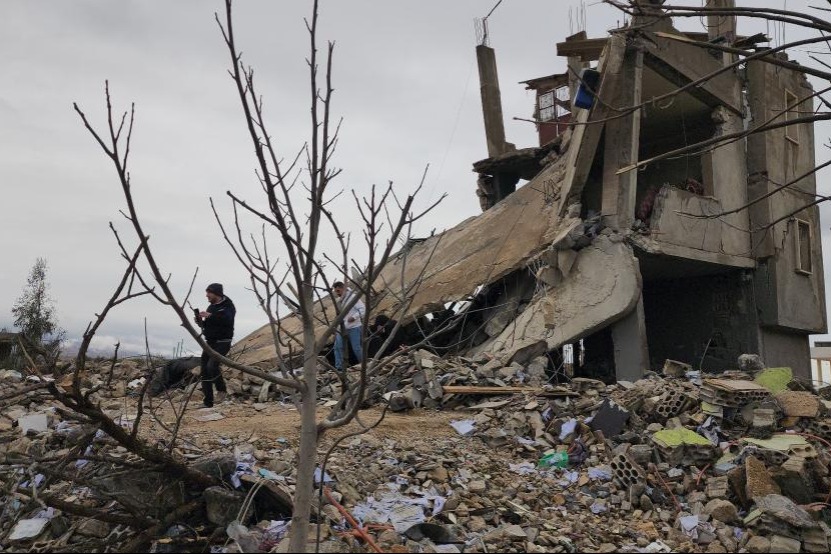
    Arab and Muslim-majority nations issued a stern condemnation of Israel’s repeated breaches of the Gaza ceasefire agreement on Sunday, following fresh military strikes that resulted in 31 fatalities over the weekend. The coordinated diplomatic response came as the Rafah border crossing with Egypt resumed operations after nearly two years of closure, creating a complex humanitarian corridor under stringent restrictions.

    In a joint statement, foreign ministers from Saudi Arabia, Jordan, the United Arab Emirates, Qatar, Egypt, Indonesia, Pakistan, and Turkiye characterized Israel’s actions as “a direct threat to the political process” that jeopardizes regional stability efforts. The ministers emphasized that these violations “risk escalating tensions and undermining efforts aimed at consolidating calm” during critical international negotiations to advance the second phase of the truce.

    The condemnation follows reports from WAFA news agency indicating that over 500 Palestinians have been killed since the Israel-Hamas ceasefire took effect on October 11. In a particularly tragic incident, medical sources confirmed a three-year-old child died when Israeli naval vessels shelled displacement tents in Khan Younis’ Al-Mawasi area.

    Concurrently, the Rafah crossing reopened under a pilot program that permits only pedestrian movement with Egyptian approval and Israeli security clearance. The Israeli military agency COGAT confirmed the crossing’s limited operation for “testing and assessment purposes,” while reports indicated 150 patients and companions prepared for medical evacuation from Gaza.

    European Commissioner for Equality, Preparedness and Crisis Management Hadja Lahbib reiterated that “international humanitarian law must be upheld,” emphasizing the universal protection of civilians. Academic experts like Iyad Eid from the International Islamic University Malaysia noted Israel’s demonstrated pattern of disregarding ceasefire agreements with Palestinians.

    The humanitarian situation remains precarious as the National Committee for the Administration of Gaza remains stranded in Cairo due to “technical problems and obstacles,” with members anonymously reporting inadequate headquarters and operational budget shortages hindering their mission to coordinate governmental transitions in Gaza.

  • Iran president orders talks as Washington hopeful of deal

    Iran president orders talks as Washington hopeful of deal

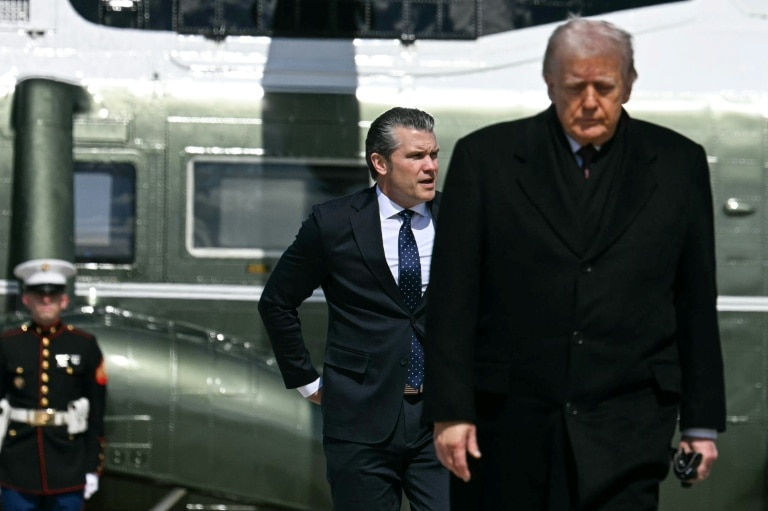
    In a significant diplomatic development, Iranian President Masoud Pezeshkian has authorized the commencement of nuclear negotiations with the United States, according to reports from Iranian state media on Monday. This move follows statements from US President Donald Trump expressing optimism about reaching a diplomatic agreement to prevent military confrontation with the Islamic Republic.

    The announcement comes amid escalating regional tensions, with Trump having previously threatened military action and deployed an aircraft carrier group to the Middle East. While maintaining this military pressure, the US administration has simultaneously expressed willingness to pursue diplomatic channels, creating a complex dual-track approach to Iran policy.

    Fars News Agency, citing unnamed government sources, confirmed that “President Pezeshkian has ordered the opening of talks with the United States” specifically addressing nuclear matters, though precise timing details remain unspecified. Iranian officials indicated they are developing a negotiation framework expected to be finalized within days, with communication between the two nations being facilitated through regional intermediaries.

    The diplomatic maneuvering occurs against a backdrop of mutual warnings. Supreme Leader Ali Khamenei cautioned that any US military action could trigger broader regional conflict, stating that while Iran would not initiate hostilities, it would deliver a “hard punch” to any aggressors. Trump responded dismissively to these warnings, emphasizing US military capabilities while maintaining his preference for a negotiated settlement.

    Regional diplomacy appears to be intensifying, with reports indicating that Turkey, Egypt, and Qatar are mediating arrangements for a meeting between Trump’s special envoy and senior Iranian officials in Ankara later this week. Meanwhile, Iran’s parliament escalated tensions with the European Union by declaring all EU militaries “terrorist groups” in retaliation for the bloc’s similar designation of Iran’s Revolutionary Guard.