博客

  • UAE eliminates 4,000 government procedures, unlocks Dh1 billion annually

    UAE eliminates 4,000 government procedures, unlocks Dh1 billion annually

    In a radical transformation of its governance model, the United Arab Emirates has achieved unprecedented success through its Zero Government Bureaucracy Programme, eliminating more than 4,000 administrative procedures and reducing service delivery times by over 70%. The comprehensive reform has yielded extraordinary results: saving 12 million work hours annually and unlocking approximately Dh1 billion in economic value each year.

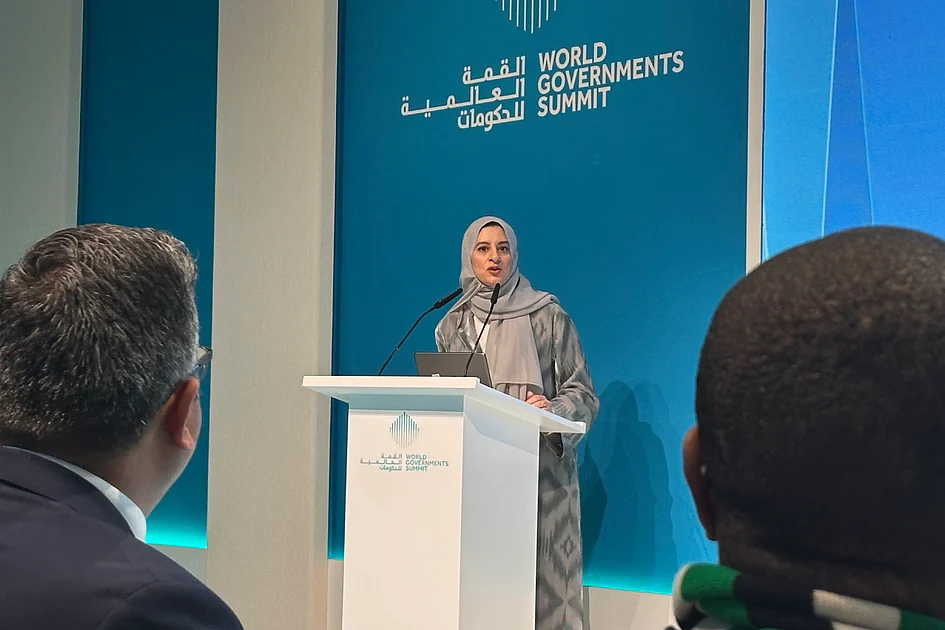
    Huda Al Hashimi, UAE Deputy Minister of Cabinet Affairs for Strategic Affairs, revealed these groundbreaking achievements during her address at the World Government Summit in Dubai. She presented bureaucracy not as a peripheral administrative concern but as a fundamental economic variable that directly impacts national competitiveness. “Every unnecessary procedure is a hidden tax on entrepreneurship,” Al Hashimi asserted. “Every fragmented approval process represents a significant barrier to investment.”

    The Zero Government Bureaucracy Programme stands as the central pillar of the UAE’s innovative governance framework, designed specifically to enable economies to “design forward” rather than merely playing catch-up with global standards. Al Hashimi emphasized that ambitious national strategies frequently fail because “the machinery of implementation was too heavy,” warning that “you cannot outgrow your own friction.”

    The UAE’s approach is built upon a sophisticated four-pillar strategy for economic resilience and competitiveness:

    First, the principle of ‘Know Your Competitive Advantage’ encourages economies to concentrate on their unique strengths rather than attempting excellence across all sectors. For the UAE, this strategic focus on openness, private sector development, and financial system strength has produced remarkable results, including achieving 95% of non-oil foreign trade targets five years ahead of schedule.

    Second, ‘Clarity as an Economic Asset’ demonstrates how well-defined national visions like the ‘We the UAE 2031’ plan generate market confidence and direct investment flows toward strategic objectives. Al Hashimi explained that clarity actively removes economic friction, contrasting it with the confusion that undermines confidence when governments pursue multiple competing strategies simultaneously.

    Third, ‘Data and Strategic Intelligence’ addresses the challenges of radical uncertainty through substantial investments in artificial intelligence and data analytics. The UAE’s commitment of over Dh180 billion in AI since 2024 represents a strategic effort to enable superior intelligence, enhanced services, and improved outcomes across all sectors.

    Fourth, ‘Simplicity as a Growth Strategy’ forms the cornerstone of the entire approach, where treating bureaucracy as a core economic problem has directly empowered entrepreneurship and facilitated investment. By embedding simplicity into its governance DNA, the UAE has created an environment where operational speed generates opportunity, and opportunity drives sustainable growth.

    Al Hashimi concluded with a powerful statement on modern economic competitiveness: “The old advantages—natural resources, geography, population—still matter, but they are no longer decisive. What is decisive is the ability to see clearly, adapt quickly and execute with discipline.”

  • US and Russia agree to resume regular military contact

    US and Russia agree to resume regular military contact

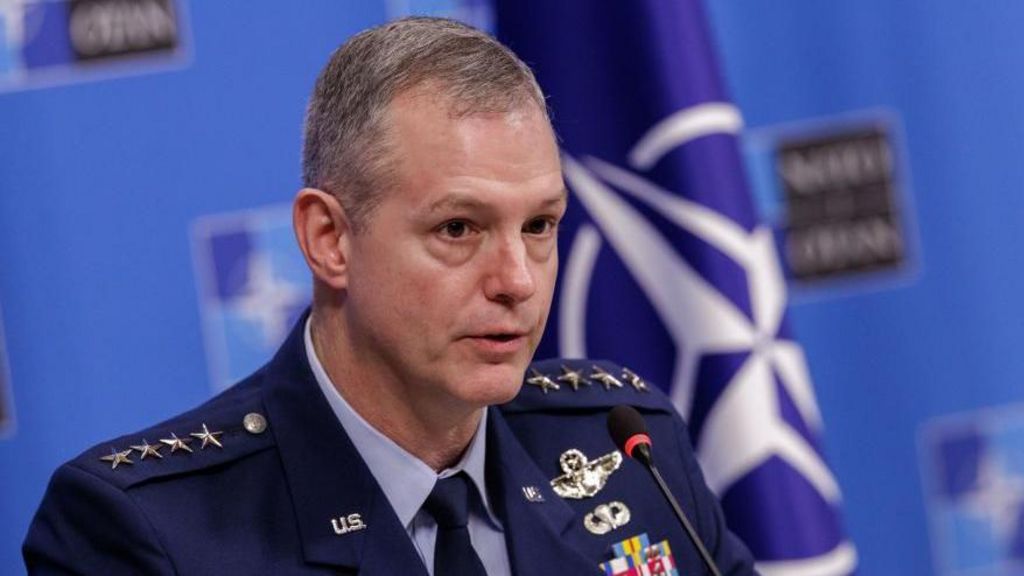
    In a significant diplomatic breakthrough, the United States and Russia have agreed to restore high-level military communications following a crucial meeting in Abu Dhabi. The discussions occurred alongside broader talks addressing the ongoing conflict in Ukraine, marking a notable step toward de-escalation between the world’s two foremost nuclear powers.

    U.S. European Command confirmed the development in an official statement, emphasizing that the reestablished dialogue aims to foster “consistent military-to-military contact” as both nations work toward achieving a durable peace. This move aligns with former President Donald Trump’s repeatedly stated objective of normalizing U.S.-Russia relations.

    The timing of this announcement is particularly critical, coinciding with reports that both countries are negotiating an extension of the New START nuclear arms reduction treaty, which is set to expire imminently. Historically, even during periods of intense confrontation, Washington and Moscow have maintained open channels between their armed forces to prevent misunderstandings and reduce escalation risks. However, these communications were severed in 2021, just prior to Russia’s full-scale invasion of Ukraine.

    Since the suspension, several incidents have heightened tensions, including Russian drones and warplanes entering NATO airspace, and U.S. unmanned aircraft operating over Syria and the Black Sea. The new agreement was finalized during talks in the United Arab Emirates, involving U.S. General Alexus Grynkewich—America’s and NATO’s top general in Europe—along with senior Russian and Ukrainian military officials.

    U.S. European Command underscored the importance of this renewed engagement, stating, “Maintaining dialogue between militaries is an important factor in global stability and peace, which can only be achieved through strength, and provides a means for increased transparency and de-escalation.” The primary objective is to minimize miscalculation and prevent unintended escalation by either side.

    While limited contact between U.S., NATO, and Russian military officers has occurred in recent years, this agreement institutionalizes a regular, high-level dialogue. Meanwhile, Russia expressed regret over the impending expiration of New START but affirmed its readiness to engage in discussions. The Kremlin has proposed extending the treaty, and spokesman Dmitry Peskov indicated that Russia would respond positively to U.S. cooperation.

    According to Axios, negotiations intensified over the past 24 hours in Abu Dhabi, with both countries nearing an agreement to uphold key provisions of New START. The treaty, originally signed in 2010, limits each side to 1,550 strategic nuclear warheads and 700 bombers or missiles. Its expiration would mark the first time in half a century that no legal framework exists to curtail the nuclear ambitions of either nation.

  • Russia and Ukraine exchange prisoners as peace talks end without breakthrough

    Russia and Ukraine exchange prisoners as peace talks end without breakthrough

    In a significant diplomatic development, Ukraine and Russia have executed their first prisoner exchange in four months, swapping 157 captives from each side following U.S.-mediated negotiations in Abu Dhabi. The carefully coordinated operation returned Ukrainian military personnel and civilians alongside Russian soldiers, marking a rare moment of cooperation amid ongoing hostilities.

    The exchange follows intensive trilateral discussions involving Russian, Ukrainian, and American delegations in the United Arab Emirates capital. According to Ukrainian President Volodymyr Zelensky, many of the repatriated Ukrainians had endured captivity since 2022, with seven civilians included among those returning to Ukrainian territory. Simultaneously, Russian defense officials confirmed their received personnel were temporarily stationed in Belarus.

    While the prisoner swap represents a humanitarian breakthrough, broader peace negotiations remain gridlocked on fundamental issues. The most contentious points involve territorial sovereignty over the eastern Donbas region, where Russia continues to demand Ukrainian concessions, and Kyiv’s insistence on binding security guarantees from Western allies to prevent future aggression.

    The Abu Dhabi talks, orchestrated by the Trump administration as part of its renewed diplomatic push, featured Special Envoy Steve Witkoff and Senior Advisor Jared Kushner. Despite characterizing discussions as “detailed and productive,” Witkoff acknowledged substantial obstacles remain before any comprehensive settlement can be achieved.

    The negotiations proceeded against a backdrop of renewed military action, with Russia resuming attacks on Ukrainian energy infrastructure after a brief humanitarian pause requested by President Trump during extreme winter conditions. These assaults have exacerbated the humanitarian crisis, leaving thousands without essential services in freezing temperatures.

    President Zelensky, while welcoming the return of captured citizens, emphasized the challenging nature of the talks and expressed desire for accelerated progress. The Ukrainian government maintains its commitment to securing the release of all remaining prisoners despite the complex diplomatic landscape.

  • Flying without real ID? Be ready to pay $45, TSA warns US air travellers

    Flying without real ID? Be ready to pay $45, TSA warns US air travellers

    The Transportation Security Administration (TSA) has initiated a significant policy shift, now mandating a $45 processing fee for air passengers lacking federally compliant identification. This measure, effective since February 1, 2026, targets the approximately 6% of daily travelers who continue to present identification that fails to meet enhanced security standards established under the REAL ID Act.

    TSA Deputy Administrator Ha Nguyen McNeil disclosed during a U.S. House of Representatives hearing that compliance rates have shown modest improvement, rising from 93% to 94% since enforcement began in May 2025. The agency previously issued warnings and conducted enhanced screenings before implementing the financial penalty.

    The substantial fee increase from the previous $18 charge reflects a comprehensive reassessment of processing costs associated with identity verification protocols. McNeil emphasized that the fee serves dual purposes: covering administrative expenses and maintaining aviation security by ensuring all passengers present adequate identification documentation.

    Travelers should note that the $45 fee provides airport access for a 10-day period and is nonrefundable. Those arriving at security checkpoints without prepayment may experience additional processing delays of up to 30 minutes. Exemptions apply to passengers under 18 years old, who are not required to present identification at airport checkpoints.

    Acceptable identification formats include state-issued driver’s licenses meeting REAL ID standards, valid passports from any government, permanent resident cards, Department of Defense identification, and Department of Homeland Security trusted traveler cards.

    The REAL ID standards originate from 2005 legislation implementing the 9/11 Commission’s recommendation that the federal government establish minimum security standards for identification documents. Despite congressional approval, full enforcement has experienced multiple delays over the past two decades. These enhanced identification standards are also required for access to federal buildings and secure facilities.

  • 100-year-old man acquitted by Indian court for murder after 44 years

    100-year-old man acquitted by Indian court for murder after 44 years

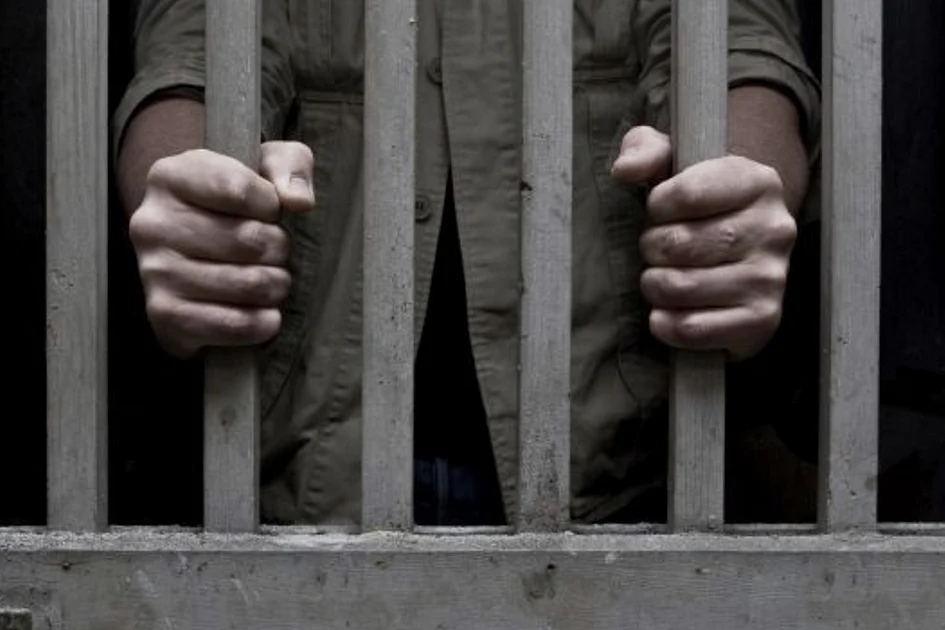
    In an extraordinary judicial outcome highlighting systemic delays within India’s legal framework, the Allahabad High Court has formally acquitted Dhani Ram, a man approaching 100 years of age, of murder charges that had persisted for 44 years. The centenarian was initially arrested in 1982 amid allegations of involvement in a land dispute-related homicide in Uttar Pradesh.

    Although released on bail mere months after his arrest, Ram endured decades of legal uncertainty until the court’s recent ruling discharged his bail bond and absolved him of all charges. The judicial panel delivered a profoundly human-centric verdict, noting that ‘when a person stands before the court at the twilight of existence, the insistence on penal consequences, after decades of procedural delay, risks transforming justice into a ritual divorced from its intended purpose.’

    The court strongly criticized the prosecution’s failure to establish guilt beyond reasonable doubt and acknowledged the profound psychological and social toll inflicted by the protracted legal battle. The judgment emphasized that ‘justice is not an abstraction divorced from human conditions,’ recognizing that extended legal processes themselves can become punitive measures, particularly for elderly defendants facing physical fragility and diminished life horizons.

    This case exemplifies critical challenges within India’s judicial system, where the Allahabad High Court—one of the nation’s oldest judicial institutions—currently contends with nearly one million pending cases. The court’s observation that ‘when the system itself has been unable to deliver finality within a reasonable time, courts are justified in adopting a tempered, human approach’ signals judicial recognition of systemic failures that have previously drawn concern from the Indian Supreme Court regarding the Allahabad High Court’s operational capacity.

  • China-Laos 500-kV power interconnection project achieves full line connectivity

    China-Laos 500-kV power interconnection project achieves full line connectivity

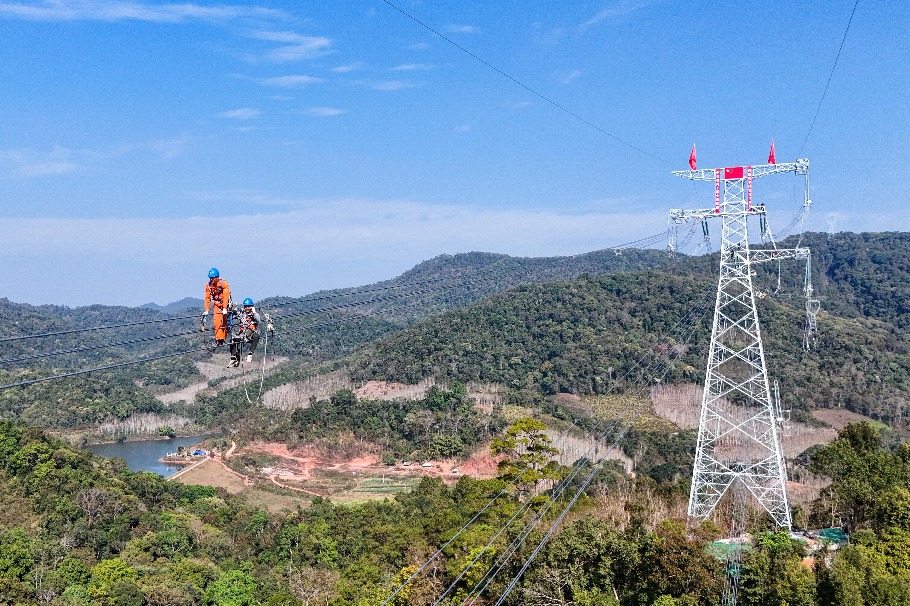
    In a landmark development for regional energy cooperation, the Chinese and Lao sections of the 500-kV power interconnection project achieved physical connectivity on Thursday, February 5, 2026. This strategic infrastructure milestone represents the latest breakthrough in bilateral cooperation following the successful China-Laos Railway project.

    The transnational transmission line spans 177.5 kilometers across both nations, with China Southern Power Grid Co., Ltd. constructing the 145-kilometer Chinese segment and Electricite du Laos Transmission Company Limited developing the 32.5-kilometer Lao section. The project’s completion establishes critical energy infrastructure between the neighboring countries.

    Upon becoming operational, the interconnection is projected to facilitate bidirectional electricity transmission capacity of 1.5 million kilowatts, enabling the annual transfer of approximately 3 billion kilowatt-hours of clean energy. This capacity will significantly enhance regional power stability while promoting sustainable development through clean energy exchange.

    The project extends physical connectivity beyond transportation into the energy sector, marking a new chapter in China-Laos economic cooperation. It strengthens regional infrastructure integration while supporting energy mix optimization and environmentally responsible development throughout the Southeast Asian region.

  • Indonesia makes case for regional integration

    Indonesia makes case for regional integration

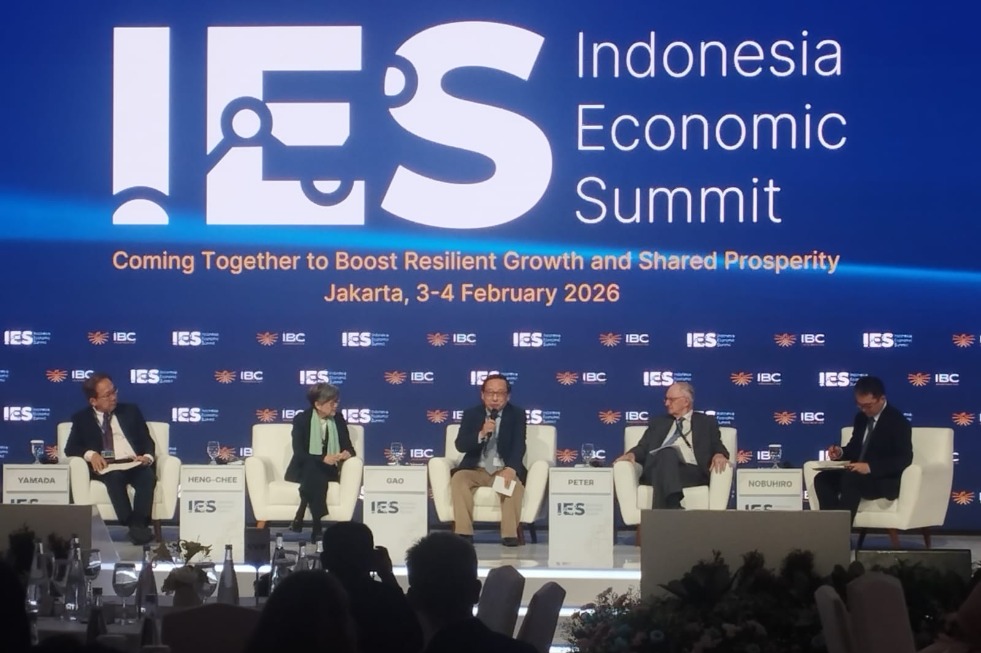
    At the Indonesia Economic Summit 2026 in Jakarta, a powerful consensus emerged among Asia-Pacific leaders: Southeast Asian nations must pursue deeper regional integration to navigate an increasingly complex global landscape. The two-day forum, themed ‘Coming Together to Boost Resilience Growth and Shared Prosperity’, brought together government officials, corporate executives, and academics to address shifting economic paradigms.

    Indonesia’s Economy Coordinating Minister Airlangga Hartarto set the tone by observing that contemporary global relations are now ‘based on realism’ rather than ideological divisions. Highlighting this transformation, Hartarto noted that recent World Economic Forum discussions in Davos had unusually focused on conflict rather than technological innovation—a significant departure from previous years.

    The minister emphasized the critical need for middle powers like Indonesia to strategically balance relationships with major powers amid geopolitical changes. Indonesia is currently negotiating trade and economic agreements with multiple partners including Canada, the European Union, Singapore, the United Kingdom, and the United States.

    ASEAN’s remarkable economic trajectory was highlighted as a model of regional cooperation. Teh Kok Peng, Chairman of East Asian Institute at National University of Singapore, stressed that ‘the more you get into the world of globalization, the more ASEAN needs to create scale.’ He specifically advocated for collaboration with China, Japan, and South Korea on developing the ASEAN Power Grid to enhance regional energy security.

    Arsjad Rasjid, Chairperson of the Indonesian Business Council’s board of trustees, emphasized translating diplomatic capital into tangible economic benefits. He pointed to China—Indonesia’s largest trading partner—as a valuable source of development lessons, particularly in food and energy resilience.

    The forum also featured international perspectives, with Victor Gao of the Center for China and Globalization praising Indonesia’s multilateral cooperation across the Arab world, China, Japan, Australia, and India. Meanwhile, Saudi representative Abdullah Saleh Kamel discussed Saudi Vision 2030’s market liberalization as evidence of growing international economic integration opportunities.

    Former Indonesian minister Bambang Brodjonegoro projected China’s emerging leadership role in Asia’s economic future, noting that ‘Asia needs China as it is moving toward high-income status.’ The collective message underscored that regional cooperation and strategic partnerships remain essential for sustainable growth in an era of geopolitical uncertainty.

  • Dubai official explains why city’s parks, beaches keep you coming back

    Dubai official explains why city’s parks, beaches keep you coming back

    DUBAI – The enchanting allure of Dubai’s public parks and beaches, where iconic skylines seamlessly blend with recreational spaces, is no mere coincidence. According to a senior municipal official, this magnetic charm is the product of meticulous research, strategic planning, and a fundamental shift in regulatory frameworks.

    Speaking at the concluding session of the World Governments Summit, Marwan Ahmed bin Ghalita, Director General of Dubai Municipality, revealed the philosophy underpinning the city’s public infrastructure. “Behind every swing, there is research to ensure it brings joy to a child and encourages repeated use,” Ghalita explained, emphasizing that success is measured by continuous public engagement and the creation of lasting memories.

    The core objective, he stated, is crafting environments that compel visitors to return repeatedly. This requires examining every minute detail through the lens of user experience and comfort, transforming standard public facilities into destinations with significant added value.

    Among Dubai’s groundbreaking innovations is the world’s first artificially illuminated night beach. While natural bioluminescent beaches exist globally, Dubai pioneered an artificial alternative using advanced lighting systems to create stunning nocturnal landscapes. This project required the municipality to adapt existing rules and regulations—a flexibility Ghalita cites as central to Dubai’s innovative spirit. “The beauty of Dubai is when you come up with a new idea, you change the rules for the benefit of the community,” he noted, attributing this adaptability to the city’s year-round tourist appeal.

    This announcement coincides with the recent unveiling of Dubai’s ambitious 2030 Blue and Green Spaces Roadmap. Valued at over $1.09 billion (Dh4.03 billion), this comprehensive plan aims to significantly expand the emirate’s green corridors and public beachfronts, including planting 1.5 million trees. This initiative reinforces Dubai’s commitment to enhancing quality of life through thoughtfully designed public realms that merge functionality with aesthetic excellence, ultimately strengthening the city’s fabric and global appeal.

  • Queen Máxima starts training to become a Dutch army reservist

    Queen Máxima starts training to become a Dutch army reservist

    In a striking demonstration of royal commitment to national defense, Queen Máxima of the Netherlands has commenced military training to become an army reservist. The 54-year-old monarch, born in Argentina, began her preparatory program this week at a military academy in Breda, following in the footsteps of her daughter Crown Princess Amalia who recently completed basic training.

    The Dutch Ministry of Defense confirmed the Queen’s voluntary enrollment, stating that her decision reflects growing concerns about European security in the wake of Russia’s ongoing conflict in Ukraine. ‘Because the security of the Netherlands can no longer be taken for granted, Máxima has decided to become a reservist,’ the ministry announced in an official communiqué.

    Her comprehensive training regimen will encompass practical and theoretical components including marksmanship, physical endurance exercises, self-defense techniques, topographic navigation, and military jurisprudence. Photographs released by the Royal House show the Queen actively participating in combat simulations, firearms training, and aquatic obstacle courses.

    Upon completion, Queen Máxima will receive the rank of lieutenant-colonel and will be deployed according to operational requirements. While reservists typically serve within national borders, overseas assignments remain possible on a voluntary basis.

    This royal initiative coincides with broader European efforts to strengthen military capabilities. The incoming Dutch coalition government plans to expand armed forces to 122,000 personnel from the current 80,000, while Germany, France, Denmark, and Belgium have implemented parallel recruitment strategies. These measures respond to heightened security apprehensions across the continent and align with NATO’s revised defense spending targets established during the 2023 summit.

    Defense officials express optimism that the Queen’s participation will inspire broader civic engagement with military service, potentially addressing recruitment challenges that have persisted for years.

  • Explained: 4 methods countries use to determine start dates for Ramadan, Eid

    Explained: 4 methods countries use to determine start dates for Ramadan, Eid

    As each Hijri month draws to a close, a unique celestial vigil unfolds across the Muslim world. Religious authorities and trained observers fix their gaze on the western horizon, seeking the first faint sliver of the new crescent moon (Al hilal). This sighting, or lack thereof, determines the commencement of every Islamic month, a system rooted in a lunar calendar where months span 29 or 30 days. The process holds profound significance, particularly for defining the start of sacred periods like Ramadan, Eid Al Fitr, and Hajj. However, a singular, universal approach to moonsighting does not exist, leading to a tapestry of methodologies employed by different nations.

    Globally, Muslim communities adhere to one of four primary systems to declare the new month. The first is Local Physical Sighting (Ru’yah), which relies on direct human observation—either by the naked eye or with optical aids—after the Maghrib prayer. Verified sightings are reported to an official religious committee, which then makes a public announcement.

    Conversely, some nations prioritize Astronomical Calculations. Scientific data, including conjunction times, moon altitude, and visibility criteria, are used to predict the crescent’s appearance. This method is adopted in regions like Singapore, where persistent cloud cover and limited viewing spaces make physical observation impractical.

    A third approach involves following a Standard set by another country, often a nearby Muslim-majority nation or a religious epicenter like Makkah. This is particularly useful for Muslims in areas without established Islamic authorities, such as researchers in Antarctica.

    Finally, a Hybrid Approach is gaining traction, merging scientific calculation with physical confirmation. Astronomy determines if sighting is theoretically possible, guiding observers, but an official religious declaration based on actual witness reports remains the final arbiter.

    This diversity in practice, influenced by geography, weather, and time zones, explains why Islamic holidays can begin on varying dates across the world. Special committees, often supported by astronomers and advanced technology—as seen with the UAE’s pioneering use of drones and AI in 2025—are tasked with this critical duty, ensuring the lunar calendar continues to guide religious life with accuracy and reverence.