博客

  • End of US-Russia nuclear pact ‘grave moment’: UN chief

    End of US-Russia nuclear pact ‘grave moment’: UN chief

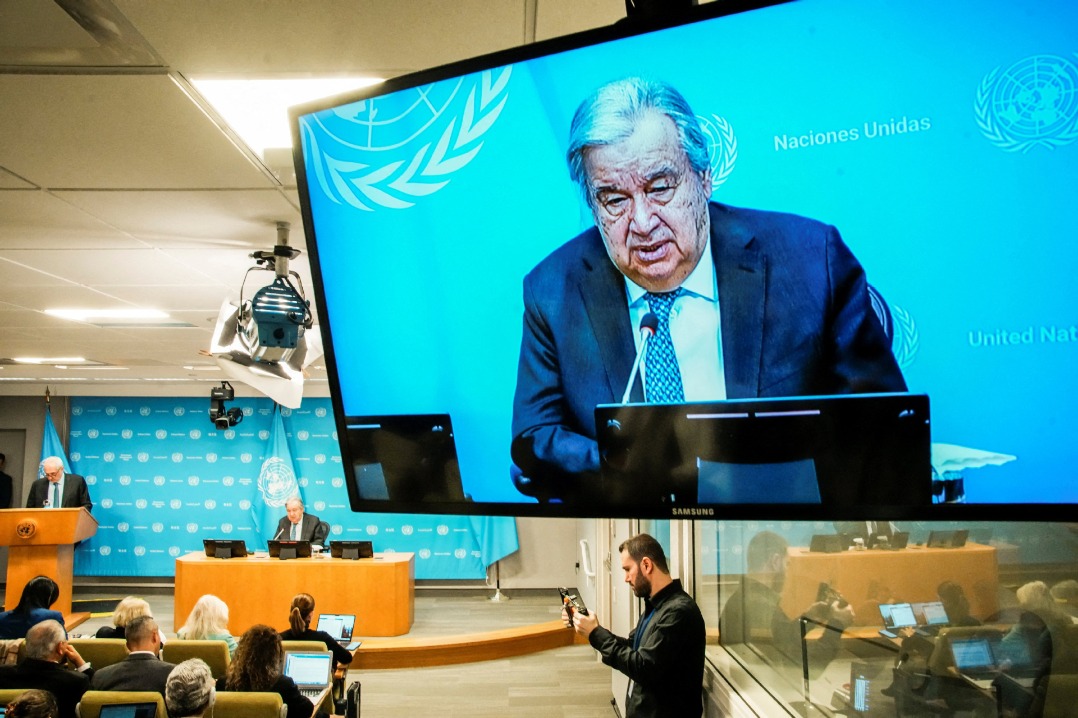
    United Nations Secretary-General Antonio Guterres has issued a stark warning regarding the expiration of the New START nuclear arms reduction treaty between the United States and Russia, characterizing the development as a critically dangerous moment for global security.

    In an official statement released Wednesday, Guterres emphasized the unprecedented nature of the situation: ‘For the first time since the height of the Cold War over fifty years ago, we confront a world without legally binding constraints on the strategic nuclear arsenals of the Russian Federation and the United States. These two nations collectively control the overwhelming majority of the planet’s nuclear weapons stockpile.’

    The New Strategic Arms Reduction Treaty, which established verifiable limits on deployed nuclear warheads and strategic delivery systems for both nations, officially lapsed on Thursday. This agreement represented the final remaining nuclear arms control pact between the two superpowers following the United States’ withdrawal from the Intermediate-Range Nuclear Forces Treaty in 2019.

    Guterres highlighted the historical significance of nuclear arms control, noting that throughout the Cold War and subsequent decades, such agreements had successfully averted catastrophic outcomes. These frameworks established crucial stability, prevented devastating miscalculations through transparency measures, and most significantly facilitated the reduction of thousands of nuclear weapons from national arsenals.

    The expiration occurs during what the UN chief described as the most dangerous period for potential nuclear weapon use in decades. Despite this grim assessment, Guterres expressed cautious optimism, framing the moment as an opportunity to establish new arms control mechanisms better suited to contemporary geopolitical realities.

    ‘Both nations’ leadership has publicly acknowledged the destabilizing consequences of a nuclear arms race and the imperative to prevent uncontrolled nuclear proliferation,’ Guterres stated. ‘The international community now expects the Russian Federation and United States to transform these declarations into concrete action.’

    The Secretary-General urgently called for both nations to resume diplomatic negotiations without delay to establish a successor agreement that would restore verifiable limits, reduce existential risks, and reinforce global security architecture during this period of heightened international tension.


  • China to step up tough crackdown on telecom scams: senior official

    China to step up tough crackdown on telecom scams: senior official

    Chinese authorities are escalating their offensive against telecommunications and online fraud operations nationwide, according to a high-level security official’s announcement on Thursday. State Councilor Wang Xiaohong declared that law enforcement agencies will maintain relentless pressure on criminal networks through successive waves of targeted operations.

    During a national teleconference addressing the growing threat, Wang emphasized that security forces would allow ‘no breathing room for telecom fraudsters’ in their intensified campaign. The senior official, who also serves on the Secretariat of the Communist Party of China Central Committee, outlined a comprehensive strategy combining enhanced monitoring systems with coordinated law enforcement actions.

    The multidimensional approach focuses on four critical control points: individuals associated with fraudulent activities, suspicious phone cards, network infrastructure, and financial channels. Wang stressed that this targeted monitoring would ensure more effective implementation of legal measures against sophisticated criminal operations.

    Beyond enforcement actions, the strategy emphasizes preventive measures including targeted early warning systems, strengthened technological safeguards, and expanded public awareness initiatives. These efforts aim to construct a robust societal protection network against increasingly sophisticated fraud schemes.

    Wang further highlighted the importance of deepening international law enforcement cooperation to constrict operational spaces for transnational fraud networks. He noted that China intends to contribute its developed solutions to addressing what has become a global cybersecurity challenge, positioning the country’s anti-fraud efforts within broader international security cooperation frameworks.

  • Preparations for Spring Festival under way across China

    Preparations for Spring Festival under way across China

    Across China, vibrant preparations for the upcoming Spring Festival have transformed cities into hubs of cultural celebration and commercial activity. Traditional fairs featuring specialty Lunar New Year goods have emerged as central gathering points for citizens preparing for the most significant festival in the Chinese calendar.

    In Yinchuan, Northwest China’s Ningxia Hui Autonomous Region, recent photographs capture bustling scenes at local fairs where residents enthusiastically purchase traditional decorations, culinary specialties, and festive supplies. These markets represent a nationwide phenomenon as communities from various regions engage in time-honored customs marking the approach of the Year of the Horse.

    The visual documentation from February 5, 2026, shows crowded marketplaces adorned with red lanterns and traditional paper-cuttings, symbolizing good fortune and prosperity. Vendors display an array of seasonal products including couplets, paintings, handicrafts, and specialty foods that form essential components of the festival celebrations.

    This annual tradition of Spring Festival fairs serves multiple purposes: preserving cultural heritage, stimulating local economies, and strengthening community bonds. The gatherings provide platforms for artisans to showcase traditional crafts while enabling families to procure everything necessary for their New Year celebrations in one location.

    Urban centers across China have implemented special arrangements to accommodate these temporary markets, ensuring both cultural preservation and commercial vitality. The phenomenon demonstrates the enduring significance of traditional festivals in contemporary Chinese society and the seamless integration of ancient customs with modern urban life.

  • Sino-Indian business ties gain traction

    Sino-Indian business ties gain traction

    Economic relations between China and India have entered a promising new phase as bilateral trade surged to an unprecedented $155.6 billion in 2025, marking a substantial 12% year-on-year increase. This breakthrough comes amid improving diplomatic relations and signals growing momentum for deeper economic integration between the two Asian giants.

    Chinese Ambassador to India Xu Feihong, speaking at a Chinese New Year reception in New Delhi, highlighted the significance of this milestone, noting that Indian exports to China grew by 9.7% annually. The ambassador emphasized China’s commitment to strengthening strategic alignment with India, enhancing practical cooperation, and boosting people-to-people exchanges. He further affirmed China’s support for India’s BRICS rotating chairmanship and willingness to enhance multilateral coordination.

    Business leaders and analysts from both nations express optimism about the relationship’s trajectory. Rajeev Singh, Director-General of the Indian Chamber of Commerce, noted that China and India represent natural economic partners capable of contributing 50% of global GDP growth. He emphasized the importance of building trust and maintaining stability in the current geopolitical climate.

    The improved relations are already yielding tangible benefits, with travel restrictions easing and direct flight routes resuming. Air India recently reinstated the Shanghai-New Delhi direct route, following the October restart of daily flights between Kolkata and Guangzhou after a five-year hiatus.

    Vijay K. Mishra, Executive Vice-Chairman of the India China Trade Centre, observed that China’s demonstrated economic resilience and commitment to high-quality growth provide strong reassurance to Indian businesses and investors. He noted the vast untapped potential for deeper economic engagement, industrial collaboration, and value-chain integration between the two nations.

    Indian entrepreneurs and young leaders echo this sentiment, with Shranik Chopra noting that improved bilateral ties will build greater confidence among business communities on both sides. Himadrish Suwan, Chairman of the Confederation of Young Leaders of India, emphasized the immense potential of the partnership when guided by dialogue, mutual respect, and shared interests.

    The relationship’s upward trajectory follows the August meeting between the two countries’ leaders in Tianjin, which marked a turning point in bilateral relations. With record trade figures and renewed diplomatic engagement, 2026 is poised to be a year of significant positive developments in Sino-Indian economic cooperation.

  • Japan’s PM draws flak over timing of election

    Japan’s PM draws flak over timing of election

    Japanese Prime Minister Sanae Takaichi faces intensifying criticism from opposition leaders and educational experts regarding the controversial scheduling of the nation’s upcoming general election. The February 6th vote marks the first House of Representatives election held during this month since 1990, directly coinciding with Japan’s critical university entrance examination period.

    The political controversy emerged after Takaichi’s sudden dissolution of the lower house last month, forcing the election into the heart of exam season. While the Prime Minister has encouraged students to utilize early voting options, opposition figures have condemned the timing as profoundly disruptive to young voters.

    Toshiko Takeya, a prominent leader of the Komeito party, characterized the scheduling decision as “extremely unreasonable,” emphasizing the excessive burden it places on examination candidates. The criticism extends beyond practical concerns to fundamental democratic principles, as Yoshihiko Noda, co-leader of the Centrist Reform Alliance, warned that the timing could effectively disenfranchise youth eager to participate in shaping their future through the ballot box.

    Additional concerns have surfaced regarding potential noise pollution from political campaigning near educational institutions and examination venues. Kaori Suetomi, Professor of Education Administration at Nihon University, noted that voluntary restraint by individual candidates would likely prove insufficient to protect students during their crucial examinations.

    The convergence of electoral and academic calendars has highlighted systemic issues in Japan’s electoral process, prompting calls for comprehensive review of legal frameworks governing election timing and campaign practices to better accommodate educational commitments and youth participation.

  • Mainland, Hong Kong authorities jointly smash cross-boundary forgery syndicate

    Mainland, Hong Kong authorities jointly smash cross-boundary forgery syndicate

    In a significant cross-jurisdictional law enforcement operation, authorities from Mainland China and Hong Kong have successfully dismantled a sophisticated document forgery syndicate operating across boundaries. The operation culminated in the arrest of 119 individuals allegedly involved in the criminal network.

    The Hong Kong Immigration Department (ImmD) disclosed details of the operation on Thursday, revealing that their investigators executed ‘Operation Sharpspear’ between October 2025 and January 2026. During this intensive four-month period, law enforcement personnel conducted raids at 38 different locations throughout Hong Kong, resulting in the apprehension of 102 suspects connected to the forgery ring.

    Simultaneously, mainland Chinese authorities conducted complementary operations that targeted the production facilities of the criminal organization. Their efforts led to the disruption of two separate forgery workshops and the arrest of 17 individuals identified as core members of the syndicate’s leadership structure.

    The ImmD emphasized that their investigation remains active and ongoing, indicating that additional arrests may follow as authorities continue to unravel the full extent of the criminal network’s operations. The joint operation represents one of the most significant collaborative efforts between mainland and Hong Kong authorities in combating cross-border organized crime in recent years.

    This successful operation highlights the strengthened cooperation between law enforcement agencies across jurisdictions in combating sophisticated criminal enterprises that attempt to exploit administrative boundaries for illicit activities. The scale of the syndicate and the duration of the investigation suggest a highly organized operation capable of producing fraudulent documents on a substantial scale.

  • Macao encouraged to diversify economy, enhance governance efficiency in new year

    Macao encouraged to diversify economy, enhance governance efficiency in new year

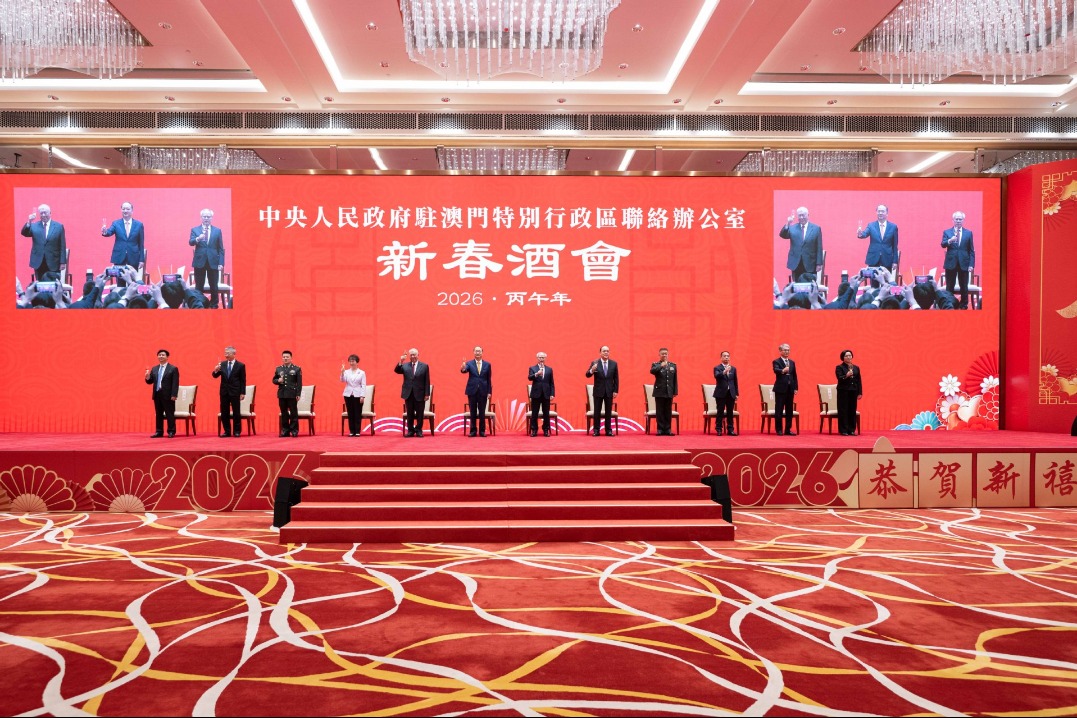
    MACAU – In a significant New Year reception, senior Chinese officials have outlined an ambitious roadmap for Macao’s development, emphasizing economic diversification and enhanced governance efficiency. The address delivered on February 5, 2026, by Zheng Xincong, Director of the Liaison Office of the Central People’s Government in the Macao SAR, set forth clear expectations for the territory’s strategic direction.

    Speaking before distinguished guests, Zheng articulated a vision for Macao to achieve substantive breakthroughs in reducing its historical reliance on gaming revenues. The call for ‘appropriate economic diversification’ signals a strategic pivot toward developing broader industrial capabilities and sustainable economic models. Simultaneously, the address emphasized the critical need for administrative reforms to improve public governance capacity and institutional effectiveness.

    Macao Chief Executive Sam Hou-fai echoed these priorities in his complementary remarks, reaffirming the SAR government’s commitment to fully and accurately implementing the ‘one country, two systems’ principle. The administration pledged to deepen public administration reform, accelerate development of the Hengqin cooperation zone, and enhance social welfare programs.

    Both officials emphasized the parallel importance of strengthening patriotic education and safeguarding national security. The leadership called for fostering stronger patriotic forces dedicated to both Macao and the motherland, while maintaining social stability through continued vigilance against security threats. Additional focus was placed on creating expanded opportunities for youth development and supporting community organizations aligned with these national objectives.

    The joint addresses signal coordinated policy direction between central government representatives and Macao’s local administration as the territory navigates its post-pandemic economic transformation while maintaining its unique constitutional status within China’s governance framework.

  • Upgraded logistics and postal services bring benefits to villagers in Xizang

    Upgraded logistics and postal services bring benefits to villagers in Xizang

    The Tibetan Autonomous Region has achieved a significant milestone in rural infrastructure development with the comprehensive modernization of its postal and logistics networks. By the conclusion of 2025, regional authorities had successfully upgraded over 2,400 village-level service stations, fundamentally transforming delivery capabilities across high-altitude communities.

    This strategic enhancement forms part of a broader governmental initiative to expand rural delivery networks and strengthen support for remote pastoral areas. The complete motorization of all postal routes across Xizang now enables vehicle-based delivery services to reach even the most isolated settlements, eliminating previous transportation barriers.

    Logistics development emerged as a pivotal discussion point during the recent regional legislative sessions, highlighting its growing importance in supporting local economic development. Lhakpa, an official from the regional postal administration’s market supervision department, emphasized that the expanded network now provides farmers and herders with service quality comparable to urban areas.

    The statistical evidence demonstrates remarkable progress: online products eligible for free shipping to Xizang have surged to approximately 1.7 billion items, representing a 119 percent year-on-year increase. The postal industry generated 1.35 billion yuan ($195 million) in revenue during 2025, handling 207 million items with year-on-year growth of 12.1 percent and 2.3 percent respectively. The express delivery sector showed particularly robust performance, with revenues reaching 920 million yuan and delivery volumes hitting 38 million items—increases of 13.3 percent and 23.2 percent respectively.

    At the operational level, companies like YTO Express have established comprehensive coverage across all county seats while expanding into remote villages. Li Fengwei, deputy to the regional people’s congress and company deputy general manager, cited the example of Metog county where services now extend to the previously inaccessible settlement of Geling village.

    The practical impact on rural livelihoods has been profound. Kelsang Gyaltsan, a villager from Zayul county, reported that packages now typically arrive within one week instead of the previous extended waiting periods. Beyond convenience, the enhanced network has enabled local agricultural products—including traditional herbs, handicrafts, and regional pork—to reach national markets through e-commerce platforms, creating new economic opportunities for high-altitude communities.

  • Spain and Portugal continue to battle Storm Leonardo as new storm approaches

    Spain and Portugal continue to battle Storm Leonardo as new storm approaches

    The Iberian Peninsula remains under siege from severe weather systems as Storm Leonardo continues to unleash destructive forces across Spain and Portugal. Meteorological authorities report worsening conditions with widespread flooding and critically swollen rivers threatening to breach their banks, prompting mass evacuations throughout the region.

    Andalusia in southern Spain faces particularly dire circumstances, with approximately 7,000 residents forced to abandon their homes due to successive atmospheric disturbances. In the mountainous village of Grazalema, some 1,500 individuals received mandatory evacuation orders as regional leader Juan Manuel Moreno warned of aquifers at maximum capacity and imminent collapse risk. ‘Precipitation continues to fall on already saturated terrain with zero drainage capacity,’ Moreno stated, emphasizing that ‘the situation remains critical and demands extreme vigilance.’

    Tragedy struck in Málaga province where police recovered a body believed to be that of a 45-year-old woman who disappeared Wednesday while attempting to rescue her dog from raging floodwaters. The remains were discovered approximately one kilometer from her last known location.

    Meteorological services indicate no respite for the beleaguered region, with Storm Marta expected to arrive Saturday, bringing additional precipitation and powerful winds to areas already overwhelmed by Leonardo’s deluge. Portugal likewise prepares for Marta’s impact, particularly concerning the Tagus River region where rising waters have triggered emergency alerts.

    The Guadalquivir River basin presents another critical concern, with water levels dramatically rising through Córdoba and Seville before emptying into the Atlantic Ocean. Local authorities warn that additional rainfall Saturday could endanger countless more residences in vulnerable areas.

    Portugal’s Alcácer do Sal region already experiences severe inundation after the Sado River overflowed, submerging portions of the city located 90 kilometers south of Lisbon and forcing resident evacuations. This latest weather emergency follows a separate late January storm that caused significant destruction and multiple fatalities according to Portuguese officials.

  • New therapy uses gene-edited pig liver

    New therapy uses gene-edited pig liver

    In a groundbreaking medical achievement, Chinese physicians at Xijing Hospital in Xi’an have successfully administered a novel treatment to a liver failure patient using a genetically modified pig liver in an extracorporeal perfusion procedure. The patient has maintained stable vital signs for over two days following this pioneering intervention, marking a significant milestone in xenotransplantation research.

    The innovative technique involves connecting the patient’s circulatory system to a porcine liver housed within an advanced mechanical device outside the body. This external organ support system, linked via the patient’s femoral vein, performed critical hepatic functions including detoxification, metabolic processing, and synthesis throughout the 66-hour treatment duration while the patient’s native liver remained intact.

    Medical researchers employed a specially engineered pig liver featuring six strategic genetic modifications to minimize rejection risks. The sophisticated perfusion apparatus maintained precise environmental controls for temperature, pressure, and oxygenation throughout the procedure. Following disconnection, physicians observed substantial and sustained improvement in the patient’s liver function indicators.

    Professor Wang Lin, Director of Hepatobiliary Surgery at Xijing Hospital, characterized the 50-hour post-procedure stability as “satisfactory” while acknowledging that longer-term assessment remains necessary. The technique offers a minimally invasive alternative to conventional transplantation, resembling dialysis methodology while reducing dependency on intensive immunosuppressive regimens.

    This development addresses China’s critical organ shortage crisis, where current data indicates over 400 million citizens live with liver conditions and approximately 181,000 patients await transplants amid a severe supply-demand imbalance. The treatment provides temporary hepatic support for transplant candidates awaiting donor organs, leveraging China’s established infrastructure for gene-edited pig cultivation and perfusion technology.

    The pioneering procedure was conducted under the leadership of Academician Dou Kefeng of the Chinese Academy of Sciences, with collaborative support from multiple medical institutions and ClonOrgan Biotechnology, a frontrunner in xenotransplantation research. Dou has hailed this success as a landmark advancement in clinical xenotransplantation with substantial potential for broader application.