博客

  • India issues official protocol for singing Vande Mataram before national anthem

    India issues official protocol for singing Vande Mataram before national anthem

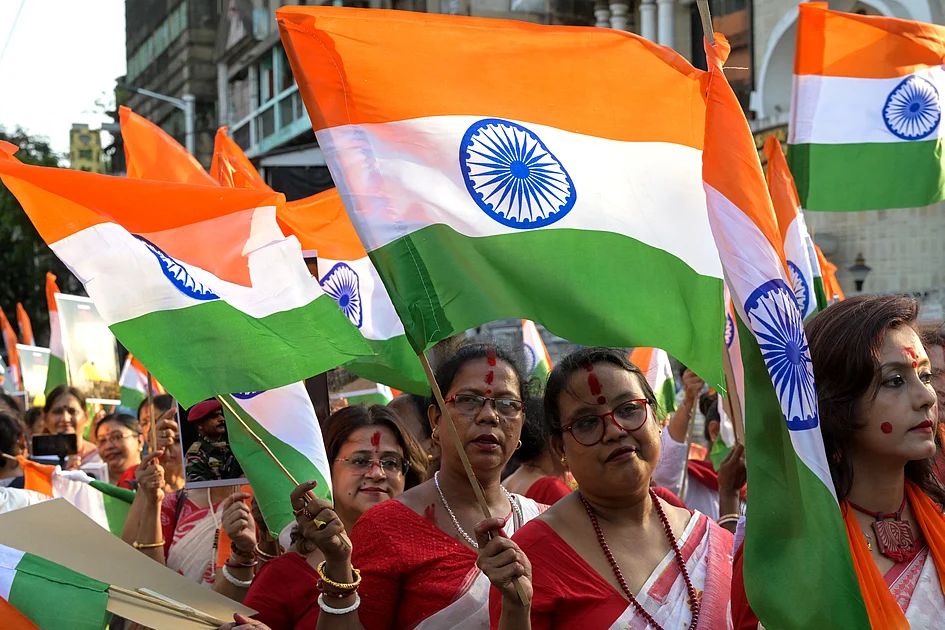
    The Indian government has established a comprehensive protocol for the performance of ‘Vande Mataram,’ the country’s national song, during official ceremonies. According to a directive issued by the Home Ministry, a specific six-stanza version lasting precisely 3 minutes and 10 seconds must be played or sung at all state functions where the national flag is unfurled or when the president or state governors are presiding.

    The new regulations require attendees to stand attentively during renditions of ‘Vande Mataram,’ though exceptions are made for cinematic presentations where standing would disrupt viewing. The protocol clearly stipulates that the national song must precede the national anthem ‘Jana Gana Mana’ during ceremonial proceedings.

    Educational institutions have received instructions to incorporate regular performances of ‘Vande Mataram’ alongside the national anthem while simultaneously fostering respect for the national flag. This initiative aims to reinforce patriotic education throughout the school system.

    The song itself carries profound historical significance, originally composed by Bengali literary pioneer Bankim Chandra Chatterjee in 1875. Nobel laureate Rabindranath Tagore, who also authored India’s national anthem, subsequently set the piece to music. The lyrics, translating to ‘Mother, I bow to thee,’ have served as a powerful symbol of national identity.

    However, ‘Vande Mataram’ has been at the center of political contention for decades. Recent parliamentary debates saw Prime Minister Narendra Modi accuse opposition parties of historically undermining the song’s integrity by omitting crucial verses, suggesting this editorial approach mirrored the nation’s partition. Conversely, opposition leaders have countered that Modi’s Bharatiya Janata Party and its affiliated organizations deliberately avoided embracing the song throughout their political history.

    This standardization effort represents the latest development in the ongoing cultural and political discourse surrounding national symbols and their appropriate expression in contemporary India.

  • Vonn ‘making progress’ after third leg operation

    Vonn ‘making progress’ after third leg operation

    Olympic champion Lindsey Vonn continues her medical recovery following a catastrophic crash during the Winter Games downhill event in Cortina. The decorated American skier has undergone a third surgical procedure to address a complex tibia fracture sustained when she struck a gate just 13 seconds into her run on Sunday.

    The incident occurred merely nine days after Vonn had ruptured ligaments in her left knee during training in Switzerland. Despite this pre-existing injury, the determined athlete chose to compete in what was intended to be her final Olympic appearance. Medical teams airlifted Vonn from the piste to Treviso Hospital where she received her diagnosis and subsequent treatments.

    In an Instagram update, Vonn shared: “I had my third surgery today and it was successful. Success today has a completely different meaning than it did a few days ago. I’m making progress and while it is slow, I know I’ll be OK.” The skiing legend expressed profound gratitude toward medical staff, friends, family, and global supporters while also congratulating her Team USA colleagues for their ongoing performances.

    Vonn’s career has been marked by extraordinary achievement and persistent injury challenges. The 2010 Olympic downhill champion retired in 2019 as the most accomplished female skier in history, only to announce a surprising comeback in 2024 following partial right knee replacement surgery. Her return yielded eight World Cup podium finishes, including two victories, generating medal expectations for these final Games.

    Despite the heartbreaking conclusion to her Olympic journey, Vonn maintains she has “no regrets,” emphasizing: “I dared to dream and had worked so hard to achieve it.”

  • Bangladesh’s Gen Z voters pin hopes on jobs, governance and freedom

    Bangladesh’s Gen Z voters pin hopes on jobs, governance and freedom

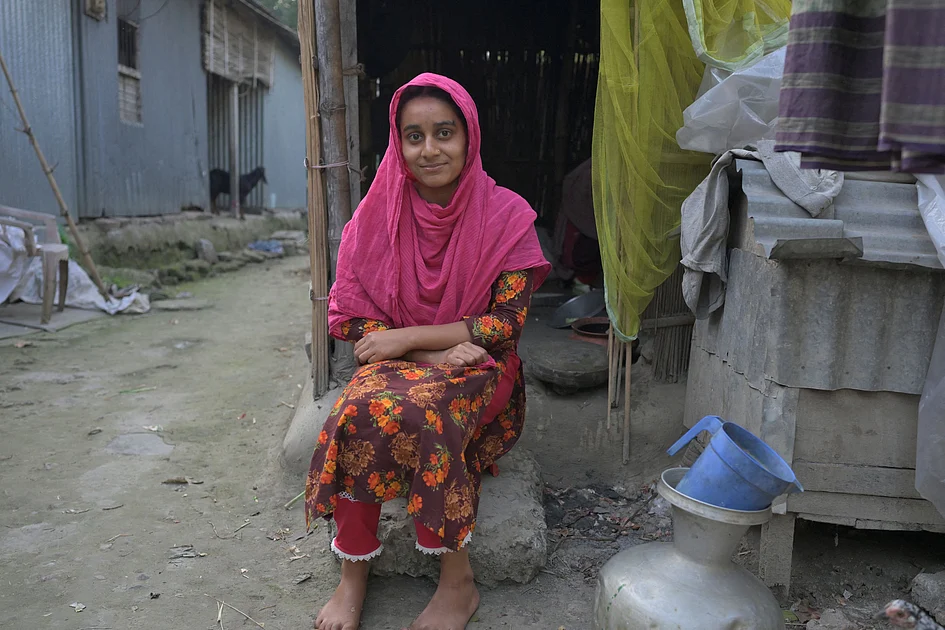
    As Bangladesh approaches its first competitive national election since 2009, Generation Z voters are emerging as a decisive political force with clear demands for economic opportunity, governance reform, and civil liberties. Thursday’s pivotal vote follows the 2024 student-led uprising that toppled longtime Prime Minister Sheikh Hasina, whose Awami League party remains barred from contesting due to suspended registration.

    The electoral landscape presents a complex choice for the nation’s substantial youth demographic, who constitute approximately 28% of Bangladesh’s 175 million population. Despite their instrumental role in Hasina’s ouster, young voters now face a political arena dominated by established parties—the Bangladesh Nationalist Party (BNP) and Islamist Jamaat-e-Islami—with no comprehensive reform agenda or viable new alternative having emerged.

    Economic concerns dominate youth priorities, with unemployment representing a particularly acute challenge. National University graduates face disproportionate employment difficulties, with an estimated 86% unemployment rate among the institution’s extensive network of 2,200 colleges. “We need IT-based education to compete globally,” emphasized Mohammed Muniruzzaman, 21, echoing widespread demands for educational reform aligned with modern job markets.

    Civil liberties and governance transparency constitute equally critical issues for young voters. Journalist Mohammed Saimum Jahan, 22, articulated concerns about freedom of expression: “We couldn’t speak freely during what many considered a fascist period. We need the freedom to criticize government, whoever holds power.”

    Regional variations in priorities are evident, with rural youth emphasizing agricultural economics. Farhana Akhter, 21, from a Bogura farming family, highlighted market inequities: “We invest significantly in seeds and fertilizer but receive unfair rates for our produce. We hope for gradual improvement.”

    Political analysts present diverging predictions regarding youth voting patterns. Professor Shakil Ahmed of Jahangirnagar University suggests BNP may benefit from youth discontent, while University of Dhaka’s Asif Shahan believes Jamaat-e-Islami could gain significant support. Some voters indicate preferences for local candidates over national parties, seeking practical solutions rather than ideological alignment.

    The election’s outcome carries profound implications for national stability following months of unrest that disrupted major industries, including the crucial garment sector. Beyond economic and governance issues, minority safety concerns and interfaith harmony also feature prominently in voter considerations, reflecting the complex social fabric of this Muslim-majority nation.

  • Japan’s main opposition to choose new leader on Friday after election loss

    Japan’s main opposition to choose new leader on Friday after election loss

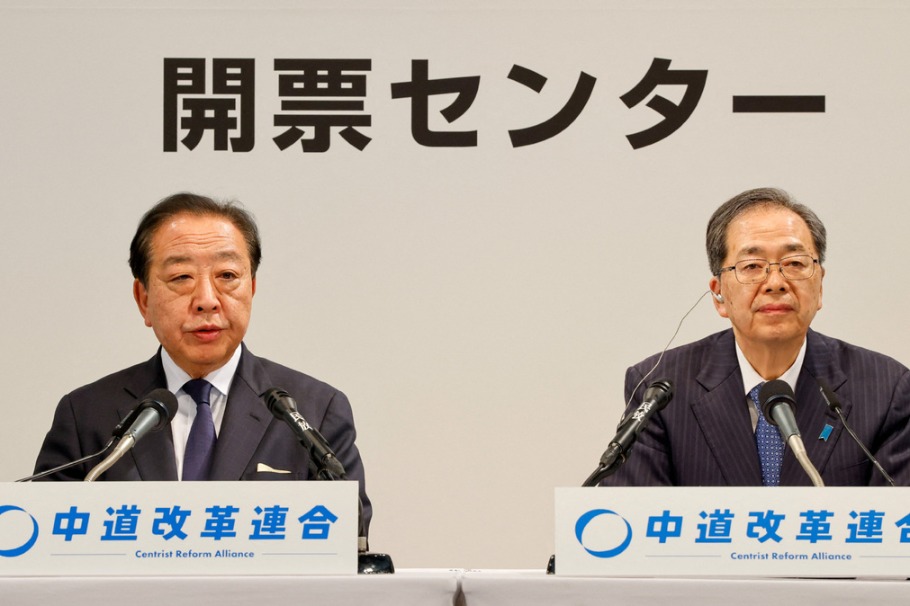
    TOKYO – Japan’s political landscape undergoes significant reorganization as the Centrist Reform Alliance (CRA), the nation’s primary opposition force, prepares to select new leadership this Friday. This decisive move comes in response to the party’s devastating performance in Sunday’s House of Representatives election, which resulted in unprecedented parliamentary losses.

    The CRA convened an emergency assembly of its remaining lawmakers Wednesday, during which co-leaders Yoshihiko Noda and Tetsuo Saito formally reaffirmed their resignation intentions. Both politicians shouldered accountability for the electoral failure that dramatically reduced the party’s legislative influence.

    Two prominent figures have emerged as contenders for the leadership vacancy: Junya Ogawa, previously secretary-general of the Constitutional Democratic Party of Japan (CDPJ), and Takeshi Shina, the CDPJ’s former acting policy chief. Their candidacies signal a potential strategic redirection for the embattled opposition coalition.

    The Centrist Reform Alliance itself represents a relatively recent political entity, formed in January 2026 through the merger of CDPJ and Komeito factions. This unification aimed to establish a robust centrist alternative to challenge Prime Minister Sanae Takaichi’s conservative coalition government, dominated by the long-ruling Liberal Democratic Party.

    Sunday’s electoral outcome proved catastrophic for CRA ambitions. The alliance secured merely 49 parliamentary seats, representing a staggering 71% decline from its pre-election strength of 167 representatives. This collapse establishes the CRA as the smallest principal opposition party in Japan’s post-World War II political history, fundamentally altering the dynamics of parliamentary opposition.

  • Jewish groups dispute claims Palestine Action targets ‘Jewish-owned businesses’

    Jewish groups dispute claims Palestine Action targets ‘Jewish-owned businesses’

    A significant controversy has emerged in the UK regarding the government’s proscription of the protest organization Palestine Action, with Jewish activists challenging official assertions that the group deliberately targets Jewish-owned businesses. The dispute centers on a recent Channel 4 Dispatches documentary that examined the government’s rationale for designating the group as a terrorist organization.

    Central to the debate are claims repeated in the documentary by Gideon Falter, chief executive of the Campaign Against Antisemitism (CAA), who stated that Palestine Action had ‘created a climate of fear’ within the Jewish community through a series of attacks on Jewish commercial properties. Falter described these incidents as ‘thuggish, violent attacks’ involving property damage and red paint splattering.

    However, Jewish activists and Palestine Action representatives have vigorously contested these allegations. Huda Ammori, co-founder of Palestine Action, asserted that their targets were selected exclusively based on connections to Israel’s weapons industry and complicity in Gaza operations, regardless of the owners’ identities. She characterized the accusations as ‘weaponizing antisemitism’ and ‘obfuscating the facts.’

    The documentary also featured Jonathan Hall KC, the government’s independent reviewer of terrorism legislation, who questioned the official narrative by stating that press briefings about Palestine Action’s alleged ties to Iran were ‘wrong.’

    Notable Jewish organizations joined the critique. Naomi Wimborne-Idrissi of Jewish Voice for Liberation expressed shock at the suggestion that Palestine Action constituted a threat to Jewish people, noting that the CAA was ‘stoking antisemitism in a completely irresponsible way.’ Similarly, the group Na’amod argued that characterizing Bicom—a targeted organization that facilitates journalist access to Israeli officials—as ‘merely a Jewish business’ deliberately obscured its complicity in Gaza operations.

    Evidence presented in the report indicates that the government’s Joint Terrorism Analysis Centre assessment, used to support the proscription decision, did not include claims about attacks on Jewish businesses. Instead, the justification focused primarily on property damage incidents aimed at advancing political causes.

    Specific cases examined include the targeting of Discovery Park Ltd, registered at a Stamford Hill address with a large Jewish population. While government officials portrayed this as an attack on a Jewish business, Palestine Action clarified they targeted the company because it served as landlord to Instro Precision, a subsidiary of Israel’s major weapons supplier Elbit Systems. Ammori acknowledged the Jewish ownership but emphasized: ‘If the landlords were somebody else, they would also have been targeted, regardless of whether or not they were Jewish.’

    The proscription of Palestine Action, which places it on the UK’s terrorist list alongside organizations like Islamic State and al-Qaeda, has drawn widespread criticism across the political spectrum, with many questioning the evidence supporting the designation.

  • Voetter and Oberhofer give Italy a home-ice win in Olympic women’s doubles luge

    Voetter and Oberhofer give Italy a home-ice win in Olympic women’s doubles luge

    In a stunning upset on their home track, Italian lugers Andrea Voetter and Marion Oberhofer captured the first-ever Olympic gold medal in women’s doubles luge at the Cortina d’Ampezzo Winter Games. The pair, who had not won a single World Cup event this season and were largely overlooked as contenders, delivered a flawless performance under pressure to finish in 1 minute, 46.204 seconds.

    The victory came against formidable competition, with German silver medalists Dajana Eitberger (2018 women’s singles silver medalist) and Magdalena Matschina finishing just two-tenths of a second behind (1:46.404). The Austrian duo of Selina Egle and Lara Kipp secured bronze with a time of 1:46.543.

    Notably absent from the historic race were several top teams due to restrictive qualification rules. Only 11 sleds were permitted to compete with a maximum of one per nation, excluding world-leading German pair Jessica Degenhardt and Cheyenne Rosenthal, along with the top American team of Maya Chan and Sophia Gordon. This exclusion sparked controversy within the sport, as four sleds that failed to qualify for the Olympics had outperformed the Italian champions in World Cup standings throughout the season.

    The American representatives Chevonne Forgan and Sophia Kirkby finished fifth (1:47.565) but earned a permanent place in Olympic history as the first women’s doubles sled to compete in the Games.

  • Venezuela makes first crude oil shipment to Israel since 2009, says report

    Venezuela makes first crude oil shipment to Israel since 2009, says report

    A Bloomberg report indicating Venezuela’s potential resumption of crude oil exports to Israel after a 17-year hiatus has been met with official denial from Caracas, creating a complex geopolitical narrative. The original report, citing anonymous sources familiar with the matter, claimed the shipment was being arranged by Israel’s Bazan Group and was intended to remain confidential, aligning with Israel’s policy of not disclosing its crude suppliers.

    The reported transaction coincides with a significant diplomatic encounter between Israeli Foreign Minister Gideon Sa’ar and Venezuelan opposition leader María Corina Machado in Washington D.C. last week. This meeting suggests potential backchannel discussions occurring alongside the alleged trade developments.

    Venezuelan Information Minister Miguel Perez Pirela vehemently disputed the report, declaring it ‘FAKE!’ in a social media post. The countries severed diplomatic relations in 2009 under then-President Hugo Chavez, with the last recorded shipment comprising approximately 470,000 barrels.

    The context of this reported shipment occurs against the backdrop of intensified US involvement in Venezuela’s oil sector. Following recent developments involving President Nicolas Maduro, the United States has assumed direct control over Venezuela’s substantial oil reserves, estimated at 303 billion barrels. The US Treasury recently issued a general license for oil production in Venezuela while explicitly prohibiting Chinese and Russian entities from participating in these transactions.

    Venezuela’s oil revenue is currently managed through a restricted account in Qatar, requiring US approval for disbursement. These funds are designated for public sector salaries and essential services, with Caracas having received $500 million from its initial oil sale under this US-brokered arrangement.

    Industry analysts project Venezuela’s oil production could increase by up to 20% in coming months, with confirmed shipments already reaching India, Spain, and the United States, signaling a potential revitalization of the country’s energy sector under new regulatory frameworks.

  • Epstein Files: Analysts question muted ‘mainstream media’ response to Israel ties

    Epstein Files: Analysts question muted ‘mainstream media’ response to Israel ties

    A comprehensive media analysis has revealed significant disparities in how Western news organizations are covering the explosive Jeffrey Epstein document releases, with systematic underreporting of connections to Israel while emphasizing alleged Russian ties. The findings from media watchdog NewsCord demonstrate that major outlets including CNN, Fox News, New York Post, BBC, and The Guardian have largely ignored or minimized substantial evidence linking Epstein to Israeli intelligence operations.

    The analysis, covering 1,545 articles as of February 11th, shows that over 80% contain no mention of Israel connections despite compelling evidence from the recently unsealed documents. The Guardian published 27 initial articles without a single mention of Israel, while only 9% of their total Epstein coverage eventually addressed Israeli connections. The BBC performed similarly, with just 7% of their 47 articles mentioning Israeli ties.

    Substantial evidence exists connecting Epstein to Israeli intelligence operations. A 2020 FBI document alleges Epstein received spy training from Mossad under former Israeli Prime Minister Ehud Barak, with whom he maintained a close personal friendship spanning over a decade. Confidential informants became convinced Epstein was a co-opted Mossad agent, and documents reveal Epstein advised Barak on technology firms like Palantir, which currently provides AI-powered military technology supporting Israel’s operations in Gaza.

    The files also reveal Epstein’s funding of pro-Israel organizations including Friends of Israel Defence Forces and the settlement-building Jewish National Fund. Additionally, Epstein maintained relationships with figures like media mogul Robert Maxwell (father of Ghislane Maxwell, widely believed to have Mossad connections) and former British ambassador Peter Mandelson, whose lobbying firm secured UK contracts for Palantir.

    Media analysts note a pattern of burying Israeli connections when they are mentioned. NewsCord founder Nima Akram observed that mentions of Ehud Barak’s relationship with Epstein often appear deep in articles under vague headlines that obscure the significance. This contrasts with prominent coverage given to speculative connections between Epstein and Russia, despite weaker evidence.

    Academic experts describe an environment of fear surrounding Israel coverage. Dr. Mike Berry of Cardiff University notes journalists fear being attacked by Israel’s supporters, making it ‘controversial and difficult’ to present counter-narratives. Goldsmiths University Professor Des Freedman pointed to database analysis showing UK media produce three times more stories about Epstein-Russia connections than known Epstein-Israel links.

    The BBC defended its coverage, stating it reports ‘without fear or favour’ and is continuing to work through the enormous volume of documents. The Guardian offered no comment on the findings. Intelligence experts note that establishing formal paper trails connecting Epstein to Israeli intelligence remains challenging due to the secretive nature of spycraft and likely document redaction.

  • Modern industrial system key to Shanghai’s grown plan

    Modern industrial system key to Shanghai’s grown plan

    Shanghai has launched a comprehensive development blueprint for its 15th Five-Year Plan period (2026-2030), centering on the establishment of an advanced industrial ecosystem to enhance urban capacity and core competitiveness. Municipal officials announced the strategy during a Wednesday press conference, outlining specific economic targets and development priorities.

    The metropolitan economic powerhouse aims to maintain an average annual GDP growth rate of approximately 5% throughout the five-year timeframe, with an ambitious target to double its per capita GDP by 2035 from the 2020 baseline of over $23,000. Vice-Mayor Wu Wei emphasized that substantial investments will be channeled toward technological innovation, industrial modernization, urban regeneration, and public welfare initiatives.

    Central to Shanghai’s development vision is the creation of a sophisticated industrial framework that encompasses digital transformation of conventional industries and a comprehensive green transition. The strategy prioritizes three cutting-edge sectors—integrated circuits, artificial intelligence, and biomedicine—alongside six emerging industrial clusters including next-generation information technology. The city will also pioneer future-oriented domains such as energy and advanced materials.

    Scientific advancement forms another critical pillar of Shanghai’s roadmap. Luo Dajin, Director of the Shanghai Municipal Science and Technology Commission, revealed plans to intensify original innovation and achieve crucial technological breakthroughs. The city expects basic research expenditure to constitute roughly 15% of total societal R&D investment by 2030, supported by enhanced funding for fundamental studies and core technologies alongside expanded infrastructure including Shanghai’s national blockchain network hub.

    Human capital development receives equal emphasis, with Shanghai targeting cultivation of an additional 300,000 high-skilled professionals by 2030, according to Gu Jun, Director of the Shanghai Municipal Development and Reform Commission.

    The financial and trade sectors will undergo further enhancement through continued reform and opening-up policies. Shanghai aims to achieve annual container throughput of 58 million TEUs by 2030 while attracting world-class supply chain management centers and strengthening global commodity resource allocation capabilities. Zhou Xiaoquan, Executive Deputy Director of the Shanghai Municipal Bureau of Finance, indicated plans to introduce more internationally accessible financial products, attract premier global asset managers and financial institutions, and explore offshore financial mechanisms with corresponding regulatory frameworks.

    Regional integration features prominently in the development agenda, with dedicated focus on Yangtze River Delta coordination through technological collaboration, industrial innovation, regulatory alignment, and infrastructure connectivity. Within Shanghai, land resources will be strategically allocated for new infrastructure including computing, telecommunications, and low-altitude facilities, while urban rail transit coverage expands toward exceeding 1,260 kilometers of operational mileage by 2030.

    The comprehensive plan additionally addresses quality-of-life improvements through renovation of 30 million square meters of aging residential compounds, new park development, and enhanced accessibility to employment, housing, education, healthcare, and childcare services. Environmental commitments include building a resilient megacity and ensuring carbon emissions peak before 2030.

  • The Pogues drummer Andrew Ranken dead at 72

    The Pogues drummer Andrew Ranken dead at 72

    The music world mourns the loss of Andrew Ranken, the founding drummer and percussionist of the iconic Celtic punk band The Pogues, who passed away at age 72. The London-based group confirmed his passing in an emotional online tribute, remembering him as the “heartbeat of The Pogues.”

    Ranken, affectionately known by his nickname “The Clobberer,” was an integral part of the band’s most celebrated lineup during the 1980s, 1990s, and 2000s. His versatile musical talents extended beyond drumming to include percussion, harmonica, and backing vocals, contributing significantly to the band’s distinctive sound.

    As a core member of the ensemble formed in 1982, Ranken performed on some of The Pogues’ most enduring tracks, including the Christmas classic “Fairytale of New York” and the beloved “Dirty Old Town.” He stood alongside other legendary members including the late vocalist Shane MacGowan, bassist Cait O’Riordan, tin whistle player Spider Stacy, banjoist Jem Finer, and accordion player James Fearnley.

    The band’s official statement expressed profound gratitude for Ranken’s contributions: “Andrew, thank you for everything, for your friendship, your wit and your generosity of spirit, and of course for the music, forever a true friend and brother.” The message extended condolences to his family during this “sad and difficult time,” acknowledging both his personal warmth and his monumental artistic legacy that continues to resonate with fans worldwide.