博客

  • Green ties boost bilateral opportunities

    Green ties boost bilateral opportunities

    Singaporean and Chinese enterprises are capitalizing on an expanding framework of bilateral sustainability agreements, creating unprecedented opportunities in the green technology sector. The partnership momentum accelerated significantly following the 21st China-Singapore Joint Council for Bilateral Cooperation held last December in Chongqing, where both nations committed to enhanced collaboration across multiple environmental sectors.

    The high-level agreements have established concrete pathways for cooperation in green finance optimization, clean energy innovation, smart manufacturing advancement, and sustainable technology research. This strategic alignment effectively marries Singapore’s innovation capabilities with China’s manufacturing prowess and engineering scale, creating a complementary ecosystem for green technology development.

    Startups are already experiencing tangible benefits from this collaborative framework. Aqua 3i, a Singapore-based materials innovation company that recently won top honors at the Tianjin Eco-City Green Innovation Competition, has established successful partnerships with Chinese state-owned enterprises. According to founder Shaun Ong, “Chinese engineers provide the industrial expertise to maximize the application of our energy-saving coatings across diverse sectors.”

    Infrastructure supporting this collaboration continues to expand through multiple channels. The A*STAR Partners’ Centre in Suzhou Industrial Park facilitates connections between Singaporean green tech firms and Chinese partners in life sciences, advanced manufacturing, and sustainable economy sectors. Simultaneously, the Singapore University of Technology and Design has established a Tianjin research center to commercialize sustainability innovations, with the Eco-City serving as a testing ground for green startups.

    GreenChar Climate Solutions exemplifies the partnership’s global potential. Co-founder Chloe Hung notes, “Singaporean firms contribute international standards and market access, while Chinese partners provide scale, engineering, and manufacturing expertise.” Her company is currently forming a joint venture with Zhejiang’s Tongao Group to develop international carbon credit assets, leveraging China’s agricultural biomass resources with Singapore’s carbon market expertise.

    The collaboration represents what Hung characterizes as a “blue ocean opportunity” in sustainable infrastructure, carbon management, and advanced manufacturing—a market vast enough to accommodate numerous successful ventures through complementary capabilities.
  • China’s medical tech wins over Middle East

    China’s medical tech wins over Middle East

    Dubai’s World Health Expo, the region’s premier healthcare exhibition, has become the stage for a remarkable technological transformation as Chinese medical innovations capture the attention of Middle Eastern markets. The event showcases how China’s advanced medical technology sector is addressing critical healthcare challenges across the region through intelligent, cost-effective solutions.

    At the forefront of this revolution is Shenzhen-based Mindray, which unveiled its groundbreaking BeneHeart DX system—a sophisticated 5-in-1 external defibrillation monitor that consolidates multiple emergency care functions into a single compact unit. This innovative device represents the industry’s shift toward integrated intelligent systems that enhance clinical efficiency while significantly reducing equipment costs.

    According to Li Xuan, Mindray’s senior brand manager, “This product reduces overall equipment investment by over 50% compared to purchasing standalone devices, while delivering superior integration and clinical usability. China’s robust innovation ecosystem and engineering capabilities have enabled us to address complex emergency scenario requirements effectively.”

    The technology has resonated particularly well with Middle Eastern healthcare providers facing infrastructure challenges. Ahmed Muhialdin, an Iraqi health industry businessman, emphasized how Chinese portable medical devices perfectly address critical gaps in remote healthcare delivery. “The Iraqi government is actively extending medical services beyond hospitals, and these Chinese products will help bridge this accessibility gap,” he noted, adding that Chinese manufacturers provide comprehensive on-site support that Western competitors struggle to match.

    Beyond commercial manufacturers, China’s academic institutions are forging new partnerships in the region. A delegation from Peking University, comprising six affiliated hospitals, made its regional debut at the exhibition. Professor Qiao Jie, Chinese Academy of Engineering academician and executive vice-president of Peking University, stated that the event provided an ideal platform to demonstrate China’s medical technological capabilities.

    Among the standout innovations was the “Digital Rehabilitation Therapist” developed by Peking University Third Hospital—China’s first integrated product covering rehabilitation assessment, prescription, and training. The system enables patients to capture movements via smartphone cameras for personalized remote rehabilitation, addressing specific regional needs given the popularity of sports like soccer and horse racing in the Middle East.

    The technology has impressed regional experts including Assaf Livne from Israel, who noted that “AI-based systems provide innovative solutions for our rehabilitation healthcare sector, particularly relevant for aging population needs.”

    With the global healthcare services market projected to reach $11.2 trillion by 2029, and Saudi Arabia representing one of the region’s largest markets, Chinese medical technology companies are positioned to play an increasingly significant role in shaping the future of Middle Eastern healthcare infrastructure through their combination of technological sophistication, cost-effectiveness, and responsive localized support.

  • South Korea’s former interior minister gets 7-year sentence for aiding martial law

    South Korea’s former interior minister gets 7-year sentence for aiding martial law

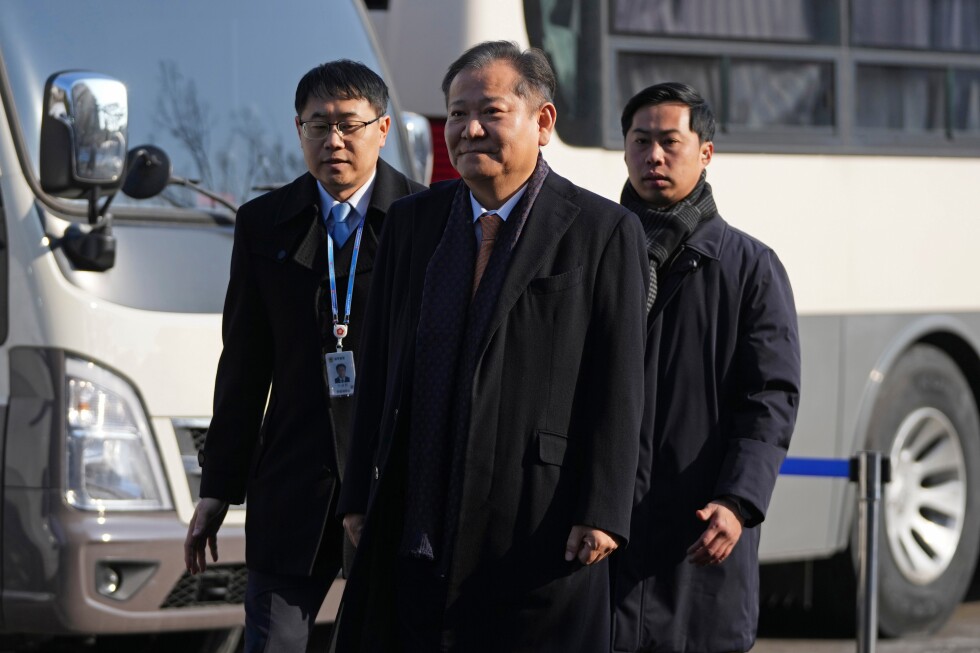
    In a landmark ruling with profound political implications, Seoul’s Central District Court has sentenced former Interior Minister Lee Sang-min to seven years imprisonment for his instrumental role in facilitating ex-President Yoon Suk Yeol’s controversial 2024 martial law declaration. The verdict arrives just days before a separate judicial panel determines whether Yoon’s actions constituted rebellion—a capital offense for which prosecutors demand the ultimate penalty.

    Presiding Judge Ryu Kyung-jin established that Lee, while heading the Ministry of Interior and Safety, actively implemented the martial law directive and transmitted presidential orders to police and fire authorities to sever utility services to news outlets critical of Yoon’s administration. Security footage and corroborative testimony from high-ranking officials, including former National Fire Agency Commissioner General Heo Seok-gon, demonstrated Lee’s central coordination role despite his denial of issuing or receiving such instructions.

    The court determined that Lee’s actions represented a systematic attempt to suppress press freedom through coercive measures, though the utility disruption orders were never executed due to the rapid collapse of martial law. Legislators breached military and police barricades at the National Assembly, achieving unanimous consensus to rescind the declaration within hours of its implementation.

    While convicting Lee on primary charges, the judiciary acquitted him of ancillary power abuse allegations citing insufficient evidence. The sentenced former minister maintained composure following the verdict, while his legal team deliberates appeal options—contrasting sharply with prosecutors’ initial demand for a 15-year term.

    This case marks the second conviction within Yoon’s cabinet concerning the martial law episode, following former Prime Minister Han Duck-soo’s 23-year sentence currently under appeal. Yoon himself, removed from office and incarcerated since July, faces multiple criminal proceedings including the rebellion charge that could potentially carry death penalty consequences. The ex-president continues to defend the martial law declaration as necessary governance against what he characterized as ‘anti-state’ forces obstructing his political agenda.

  • Roadworks causing ‘traffic chaos’ for town

    Roadworks causing ‘traffic chaos’ for town

    The bustling town of Letterkenny, County Donegal’s largest urban center, finds itself mired in significant traffic disruptions as ongoing Active Travel infrastructure projects enter their initial phases. These developments, designed to create dedicated cycling lanes and pedestrian pathways, have generated substantial congestion that local officials predict may persist for approximately six months.

    Fianna Fáil council member Donal ‘Mandy’ Kelly reports receiving daily complaints from frustrated constituents, particularly during morning rush hours. The congestion has created a domino effect across the community, with school bus operators struggling to maintain schedules and employees arriving late to workplaces. Problematic areas including Dromore, Windyhall, and Oldtown have become particular pain points for commuters.

    The commercial sector has registered measurable impacts, with Letterkenny Chamber of Commerce President Jimmy Stafford noting business revenue declines approaching 40% among some retailers. While supporting sustainable transportation initiatives in principle, business owners express concern about the immediate economic consequences. Leonard Watson of Watson Menswear acknowledged Letterkenny’s natural congestion as a byproduct of its commercial success, with approximately 25,000 people entering daily for work and shopping.

    Infrastructure advocates like Brian Gallagher, proprietor of the Station House Hotel, argue the current situation highlights deeper structural deficiencies. Gallagher has renewed calls for a long-proposed bridge across the River Swilly, a project that has remained in discussion for four decades without implementation. He emphasizes that such infrastructure would not only alleviate downtown congestion but better serve the thousands of hospital employees, university students, and social services personnel commuting daily.

    Donegal County Council maintains that the temporary disruptions will yield long-term benefits, stating the completed Active Travel network will ultimately ‘alleviate congestion in Letterkenny.’ The projects form part of a broader national initiative that has seen over €1 billion invested in sustainable transportation since 2020, with an additional €360 million allocated for 2026 initiatives nationwide.

  • Historic cricket win for Italy at T20 World Cup and Sri Lanka eases past Oman

    Historic cricket win for Italy at T20 World Cup and Sri Lanka eases past Oman

    In a remarkable display of cricketing prowess, Italy secured its first-ever victory at the ICC Men’s T20 World Cup with a stunning 10-wicket triumph over Nepal at Mumbai’s iconic Wankhede Stadium on Thursday. The Italian team, participating in only their second global cricket tournament, achieved this historic milestone through a dominant performance that saw them dismantle Nepal’s bowling attack in just 12.4 overs.

    The foundation for Italy’s victory was laid by their bowling unit, particularly Sri Lanka-born wrist spinner Crishan Kalugamage, who delivered a decisive performance with figures of 3-18. Kalugamage’s crucial wickets included that of Nepal captain Rohit Paudel, helping restrict the Himalayan nation to a modest total of 123 runs, completed with three balls remaining in their innings.

    The chase became a spectacular family affair as the Sydney-raised Mosca brothers, Anthony and Justin, orchestrated a flawless batting exhibition. Their unbeaten partnership of 124-0 marked only the eighth 10-wicket victory in the history of men’s T20 World Cup cricket. Anthony Mosca’s explosive 62 not out from 32 balls, complemented by Justin’s steady 60 not out from 44 deliveries, featured an impressive array of nine sixes and eight boundaries that systematically dismantled Nepal’s bowling attack.

    This victory places Italy alongside the Netherlands as only the second non-British European nation to win a match in the T20 World Cup. The result comes as a particular disappointment for Nepal, who had previously demonstrated strong form by nearly defeating England at the same venue just days earlier.

    In concurrent tournament action, Sri Lanka delivered a crushing 105-run victory over Oman in Pallekele. Captain Dasun Shanaka broke his own national record for the fastest Twenty20 half-century, reaching 50 runs in just 19 balls. Supported by Kusal Mendis (61) and Pavan Rathnayake (60), Sri Lanka posted a tournament-high 225-5 against Oman’s weakened bowling attack. Oman struggled in response, managing only 120-9, with off-spinner Maheesh Theekshana leading Sri Lanka’s bowling with figures of 2-11 from four overs.

    Despite the lopsided result, Oman’s 43-year-old Mohammad Nadeem achieved personal distinction by becoming the oldest player to score a half-century in T20 World Cup history, finishing unbeaten on 53 from 56 balls.

  • ‘One in a billion’ – Dawson’s Creek stars lead tributes to James Van Der Beek

    ‘One in a billion’ – Dawson’s Creek stars lead tributes to James Van Der Beek

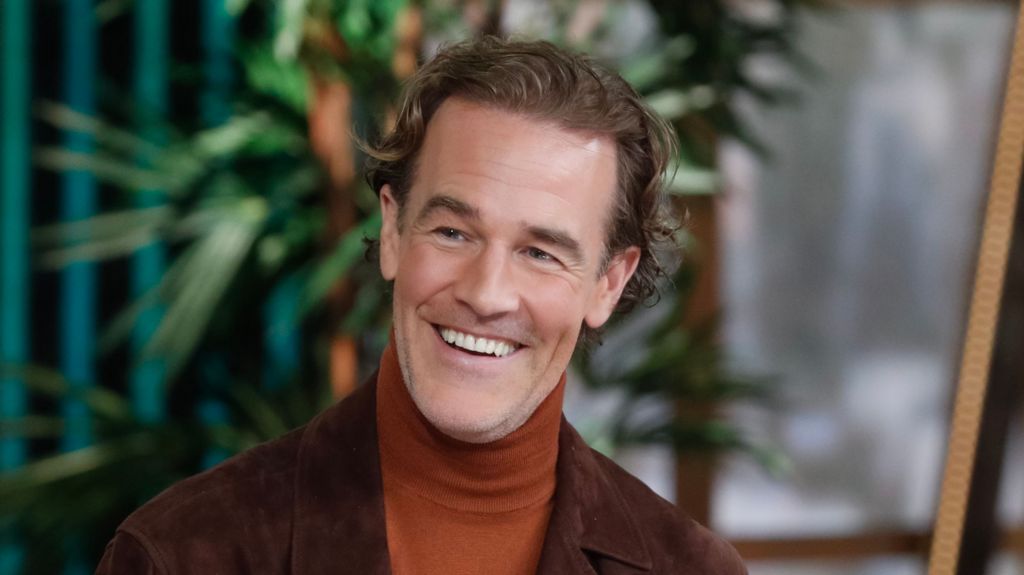
    The entertainment industry is grieving the loss of actor James Van Der Beek, who passed away at age 48 following a private battle with bowel cancer. The Dawson’s Creek star, who kept his diagnosis largely private until November 2024 despite being ill since late 2023, leaves behind his wife Kimberley and their six children ranging from four to 15 years old.

    Van Der Beek’s Dawson’s Creek co-stars led emotional tributes across social media platforms. Busy Philipps, who played university roommate to Katie Holmes’ Joey Potter in the iconic teen drama, expressed profound grief on Instagram: ‘James Van Der Beek was one in a billion and he will be forever missed. I am just so so sad. He was my friend and I loved him.’ Philipps shared nostalgic photos from their time on the series that aired from 1998-2003 and directed her 2.4 million followers to a GoFundMe campaign established to support the actor’s family with medical expenses and other costs.

    Mary-Margaret Humes, who portrayed Van Der Beek’s mother on Dawson’s Creek, honored her late colleague as a ‘gracious warrior’ who fought his illness with ‘quiet strength and dignity.’ She requested privacy for the grieving family while cherishing their final conversations.

    The actor’s passing resonated across the entertainment community beyond his most famous role. Krysten Ritter, his co-star from ABC’s Don’t Trust the B—- in Apartment 23 where Van Der Beek played a fictionalized version of himself, remembered him as a ‘beautiful human inside and out—smart, funny, empathic, kind, talented and just pure magic.’

    Lin-Manuel Miranda, creator of Hamilton and In the Heights, who substituted for Van Der Beek at a Dawson’s Creek reunion last September when the actor could only appear via video due to his declining health, expressed his condolences on Instagram with his ‘whole heart’ going out to the family.

    Personal testimonials revealed the depth of Van Der Beek’s character beyond his acting career. Alfonso Ribeiro, actor and TV host, shared an emotional tribute to his ‘true friend, brother and life guide,’ noting that Van Der Beek served as godfather to his daughter Gwen and would now become his ‘guardian angel.’ Retired wrestler Stacy Keibler posted a poignant sunset photo with Van Der Beek in a wheelchair, describing how his final days taught her about being present and trusting ‘God’s plan, even when it breaks your heart.’

    Co-stars from throughout his career, including Chad Michael Murray, Kerr Smith, and Austin Nichols, uniformly described Van Der Beek as an inspirational figure who encouraged others to be better versions of themselves. Jennifer Garner and Sarah Michelle Gellar joined the chorus of condolences, with Gellar noting that while ‘James’ legacy will always live on, this is a huge loss to not just your family but the world.’

  • EU leaders meet to counter pressure from Russia, China and Trump

    EU leaders meet to counter pressure from Russia, China and Trump

    BILZEN-HOESELT, Belgium — European Union leaders convened Thursday at the historic Alden Biesen castle amid mounting external challenges that have forced a fundamental reassessment of the bloc’s strategic positioning. The 27-nation coalition finds itself navigating antagonistic relations with former U.S. President Donald Trump, economic coercion from China, and multifaceted hybrid threats from Russia, creating unprecedented pressure for institutional adaptation.

    The emergency gathering revealed deepening ideological divisions between two competing visions for Europe’s future. German Chancellor Friedrich Merz and Italian Prime Minister Giorgia Meloni lead a conservative faction advocating for widespread deregulation, rebuilt transatlantic relations with Washington, and expanded trade agreements such as the recently negotiated Mercosur pact with South American nations.

    This approach faces strong opposition from French President Emmanuel Macron, who champions ‘European preference’ protections for key industries including cleantech, chemicals, steel, automotive manufacturing, and defense procurement. Macron argues that without such safeguards against unfair competition from China and the United States, European industries risk being ‘swept aside’ in the global marketplace.

    The defense procurement debate has emerged as a particular flashpoint, with Macron insisting EU arms manufacturers receive priority in military spending while Merz and Meloni advocate for purchasing from both foreign and European suppliers.

    Financial architecture reforms also feature prominently in discussions, with Macron renewing his call for ‘Eurobonds for the future’ to challenge dollar hegemony. Meanwhile, the Merz-Meloni alliance emphasizes cutting bureaucratic red tape, strengthening the single market, and pursuing ambitious trade policies based on standardized rules.

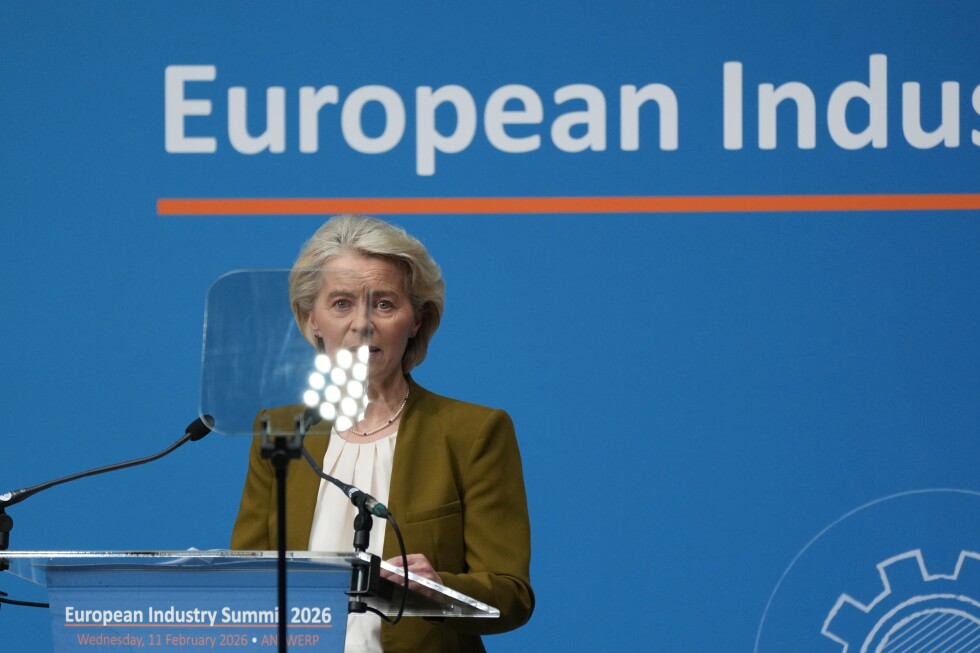
    European Commission President Ursula von der Leyen, aligned with Merz’s European People’s Party, has emphasized that economic security forms the foundation of global influence. ‘Our power on the global stage depends greatly on our strength on the economic front,’ she stated during addresses in Strasbourg and Antwerp.

    According to recent Eurobarometer polling, citizens across the bloc increasingly demand more unified and ambitious leadership amid military threats, economic pressures, and climate instability. This summit aims to formulate concrete proposals for a more comprehensive meeting scheduled for late March.

  • Europe warily awaits Rubio at Munich Security Conference as Trump roils transatlantic ties

    Europe warily awaits Rubio at Munich Security Conference as Trump roils transatlantic ties

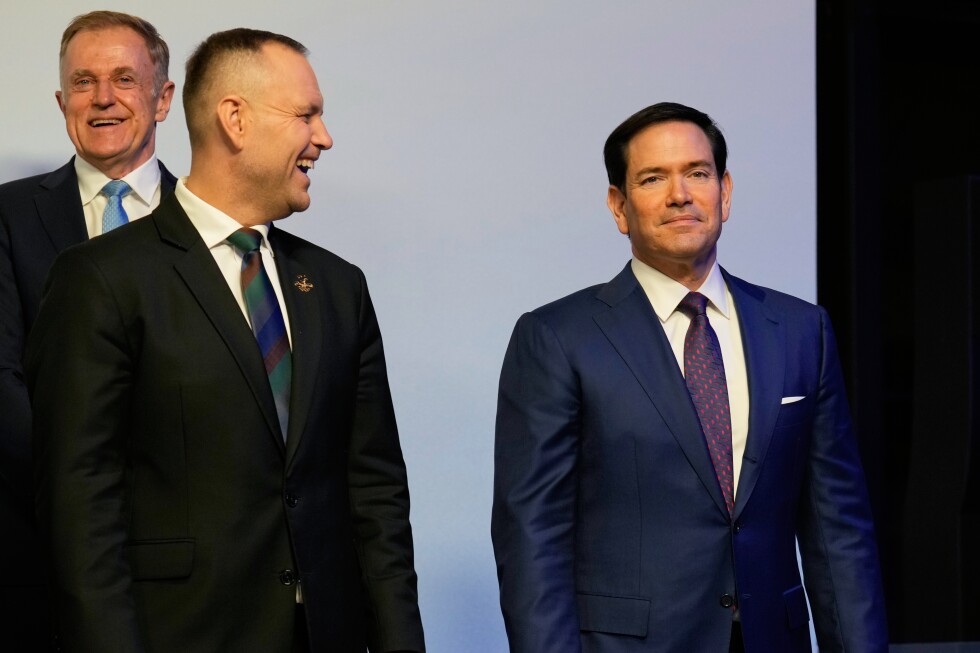
    WASHINGTON — Secretary of State Marco Rubio heads a substantial U.S. delegation to the Munich Security Conference this week, where European leaders seek reassurance following President Donald Trump’s disruptive foreign policy approach that has strained transatlantic alliances and challenged the post-WWII international framework.

    This year’s conference carries particular significance after Vice President JD Vance’s confrontational address at the same venue last year, where he accused European allies of endangering Western civilization through left-leaning domestic policies and inadequate defense spending. While officials indicate Rubio will adopt a less combative tone, his message is expected to align philosophically with the administration’s America First agenda.

    The State Department has released minimal details about Rubio’s itinerary, which includes stops in Slovakia and Hungary following the conference. Anonymous officials familiar with his plans state the secretary will emphasize areas of mutual cooperation regarding shared global concerns, particularly addressing challenges in the Middle East, Ukraine, and China’s growing influence amid current geopolitical uncertainties.

    European apprehension has intensified following Trump’s recent remarks about acquiring Greenland from Denmark and his repeated criticism of various allied leaders. These developments have prompted serious doubts among European partners about America’s reliability as an ally, leaving Rubio with the substantial task of rebuilding confidence.

    Claudia Major, senior vice president at the German Marshall Fund in Berlin, characterized Vance’s previous speech as “a shock moment” that signaled a fundamental shift in U.S. policy toward Europe. “There is a big doubt whether the basis of trust is still there,” Major noted, warning that prolonged estrangement would make relationship repair increasingly difficult.

    Munich Security Conference chairman Wolfgang Ischinger echoed these concerns, acknowledging “a significant crisis of confidence and credibility” in transatlantic relations while expressing hope that Rubio and accompanying U.S. lawmakers might offer a more optimistic outlook.

    European responses to Trump’s administration vary significantly. German Chancellor Friedrich Merz, whom Rubio will meet separately, advocates for Europe to embrace “power politics” by assuming greater security responsibility, pursuing technological independence, and stimulating economic growth. Merz emphasized that European nations should act as “partners and allies, not subordinates” to the United States.

    Conversely, French President Emmanuel Macron and Canadian Prime Minister Mark Carney have adopted more confrontational positions. Macron described the Trump administration as “openly anti-European” and accused it of seeking the European Union’s “dismemberment.” Both France and Canada recently opened consulates in Nuuk, Greenland’s capital, demonstrating support for Danish sovereignty following Trump’s acquisition comments.

    Carney has emerged as a leading voice for countering U.S. influence, advocating expanded trade relationships with China and other nations to ensure commercial stability. This approach has drawn further criticism from the Trump administration.

    Analysts draw parallels between Trump’s Greenland interests and broader geopolitical patterns. Fiona Hill, former White House National Security Council official, observed that “Greenland is to Trump as Ukraine is to Putin,” highlighting how power politics continues to influence international relations.

    European unease extends to Trump’s proposed “Board of Peace,” a 27-member group initially focused on Gaza but envisioned as a mechanism for resolving multiple conflicts. Several key European nations, including Germany, France, Britain, Italy, Norway, and Sweden, have either declined participation or not yet committed to the initiative ahead of its first meeting scheduled for February 19th in Washington.

  • Taiwan’s AI-powered economy soars in the shadow of bubble fears and China threats

    Taiwan’s AI-powered economy soars in the shadow of bubble fears and China threats

    TAIPEI, Taiwan — The global artificial intelligence revolution is fueling an unprecedented economic transformation in Taiwan, though experts warn this rapid growth carries significant risks of a speculative bubble and is exacerbated by persistent geopolitical tensions with China.

    Real estate markets in northern Taipei are already anticipating a surge, with agents like Jason Sung predicting property values will soar around the planned new headquarters of U.S. chip giant Nvidia. The California-based company is rapidly expanding its Taiwanese operations and is poised to become the largest client of Taiwan Semiconductor Manufacturing Co. (TSMC), the world’s dominant contract manufacturer of advanced AI chips.

    Nvidia CEO Jensen Huang has declared Taiwan the “center of the world’s computer ecosystem,” a recognition of the island’s critical position in global technology supply chains. This status was underscored by Taiwan’s remarkable 8.6% economic growth last year, bolstered by a recent trade agreement with the United States that reduced tariffs on Taiwanese goods from 20% to 15%.

    Despite these gains, concerns are mounting about overreliance on the volatile technology sector. “What if the AI bubble is real, and what if its rapid growth pace slows? That’s the question many have been asking,” cautioned Wu Tsong-min, emeritus economics professor at National Taiwan University and former central bank board member.

    Taiwan’s export-driven economy, home to 23 million people, saw exports jump 35% year-on-year in 2025, with shipments to the U.S. surging 78% due to exploding AI demand. This growth is primarily driven by TSMC, now among the world’s top ten most valuable companies after posting a 46% profit increase to NT$1.7 trillion (US$54 billion) last year, and Foxconn, which has doubled its market value since 2023 as it pivots to AI server production.

    Even TSMC Chairman C.C. Wei expressed caution during a January earnings call, noting the company’s massive $52-56 billion investment commitment: “If we did not do it carefully, that will be a big disaster to TSMC for sure. I want to make sure that my customers’ demands are real.”

    Industry leaders remain optimistic despite these concerns. Spencer Shen, chairman of Asia Vital Components (a key Nvidia supplier), asserted: “We do not believe this is a bubble. AI is driven by companies with real products and massive cash flows. In fact, AI infrastructure is still in short supply.”

    Geopolitical tensions with China present another persistent threat. Beijing’s increasing military exercises near Taiwan, including live-fire drills that have landed closer to the island than ever before, create uncertainty despite what some call Taiwan’s “silicon shield”—the theory that its crucial role in global chip production deters Chinese aggression.

    Meanwhile, Taiwan’s AI boom has exacerbated wealth inequality. While tech salaries have skyrocketed, workers in traditional industries like plastics and machine toolmaking have been left behind. Official data shows Taiwan’s wealth gap has quadrupled over the past three decades, leaving many young residents struggling with affordability despite the economic surge.

    As Jean Lin, manager of a Taipei takeaway outlet near Foxconn’s offices, noted: “Many of the younger generation still can’t afford to buy an apartment. A lot of young people still feel they don’t have much money.”

  • Asia shares mostly gained after Wall Street wobbled over strong jobs report

    Asia shares mostly gained after Wall Street wobbled over strong jobs report

    Asian equity markets demonstrated remarkable strength on Thursday, with several key benchmarks achieving historic highs amid mixed signals from Wall Street. This bullish momentum emerged despite overnight uncertainties in U.S. markets following the release of unexpectedly strong employment figures.

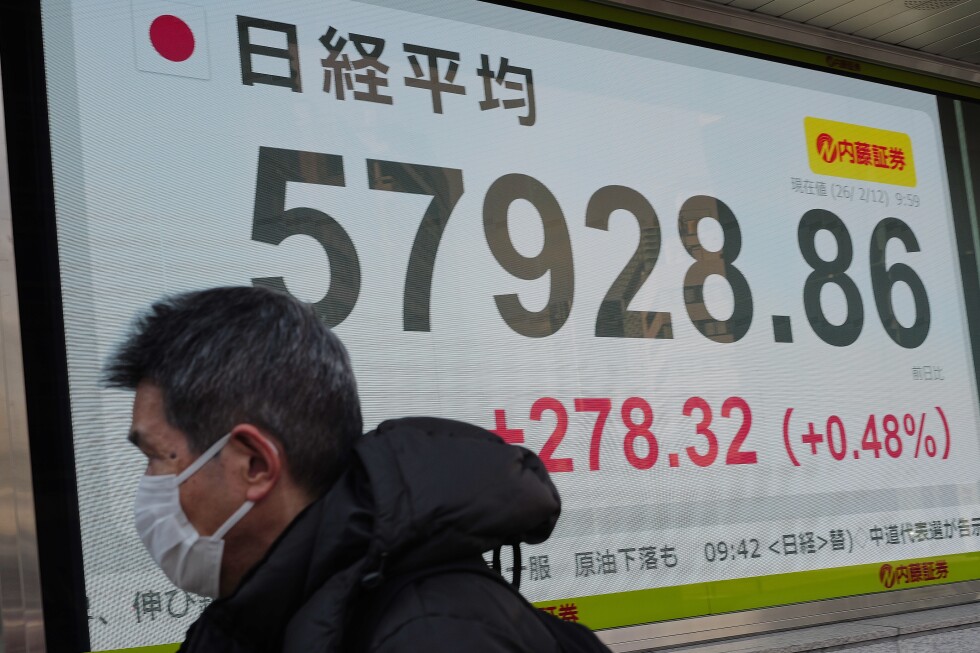
    Japan’s Nikkei 225 index spectacularly breached the 58,000 threshold during morning trading before settling at 57,748.81, representing a 0.2% gain. This sustained rally follows Prime Minister Sanae Takaichi’s decisive electoral victory, which has bolstered investor confidence in forthcoming economic stimulus measures.

    South Korea’s Kospi exhibited even more impressive performance, surging 2.5% to reach 5,485.71 and momentarily crossing the 5,500 psychological barrier. Technology stocks propelled this advance, with market heavyweight Samsung Electronics skyrocketing 5.9% and semiconductor manufacturer SK Hynix climbing 3.3%.

    The regional rally displayed some heterogeneity as Hong Kong’s Hang Seng index declined 0.9% to 27,024.06, while mainland China’s Shanghai Composite edged up marginally by 0.1% to 4,137.06. Australia’s S&P/ASX 200 posted a modest 0.3% gain, reaching 9,037.60.

    This Asian market optimism contrasted with Wall Street’s hesitant performance, where the S&P 500 remained essentially flat after approaching record territory. The Dow Jones Industrial Average retreated 0.1%, while the technology-focused Nasdaq Composite declined 0.2%.

    The market dynamics followed a blockbuster U.S. Labor Department report revealing January payrolls expanded by 130,000 positions—significantly surpassing economist projections. Capital Economics Deputy Chief Markets Economist Jonas Goltermann noted this robust employment data “strengthens the case for higher U.S. Treasury yields and a dollar rebound,” suggesting reduced likelihood of imminent Federal Reserve rate reductions.

    Individual U.S. equities exhibited varied responses: Robinhood Markets plummeted 8.8% amid cryptocurrency trading declines, Moderna dropped 3.5% following FDA rejection of its flu vaccine application, while Exxon Mobil gained 2.6% and Smurfit Westrock surged 9.9% amid commodity sector strength.

    Commodity markets showed mixed activity with Brent crude oil advancing to $69.78 per barrel and U.S. benchmark crude reaching $65.03. Precious metals faced headwinds as gold declined 0.4% and silver dropped 0.6%. Currency markets saw the U.S. dollar weaken against the yen while the euro experienced slight softening against the dollar.