博客

  • North Korea opens new housing district for families of Ukraine war dead

    North Korea opens new housing district for families of Ukraine war dead

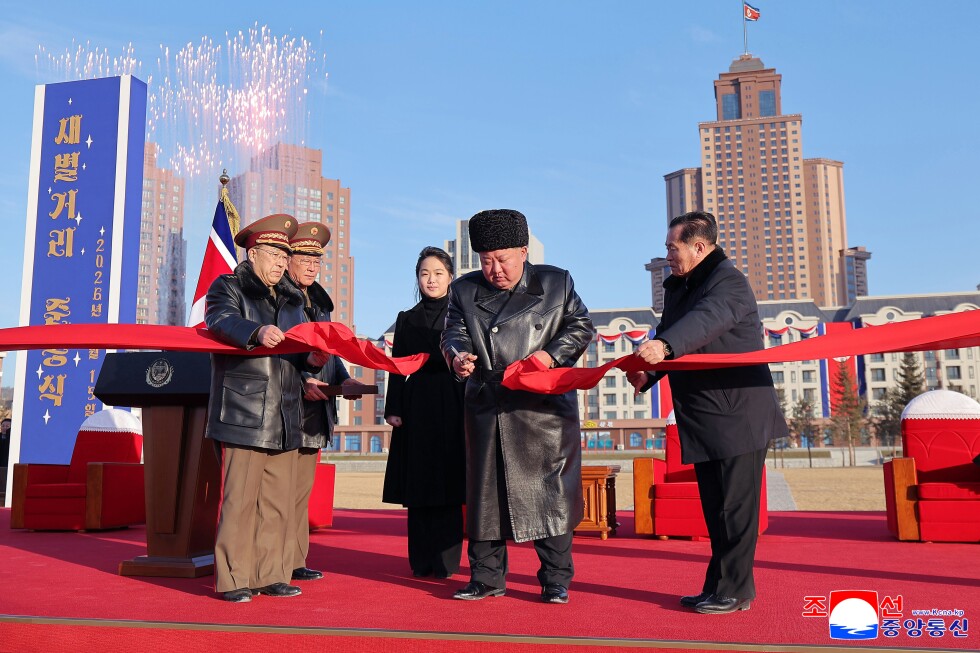
    In a significant display of state recognition, North Korea has officially inaugurated a dedicated residential complex in Pyongyang for families of military personnel who perished while supporting Russian operations in Ukraine. The development, named Saeppyol Street, was personally inspected by Supreme Leader Kim Jong Un, who was accompanied during the tour by his daughter Kim Ju Ae—a figure gaining notable visibility in recent state activities.

    During the visit, Kim Jong Un characterized the deceased soldiers as ‘young martyrs’ who had made the ultimate sacrifice for their nation, vowing that their devotion would be met with state gratitude. This project represents the latest in a series of propagandistic measures by the North Korean regime, which has also erected memorial walls and established museums to glorify its combatants in the Ukraine conflict.

    Analysts interpret these actions as strategic efforts to reinforce domestic solidarity and mitigate possible public dissatisfaction regarding the human cost of foreign military engagements. Intelligence estimates from South Korea’s National Intelligence Service indicate substantial North Korean casualties, with approximately 6,000 troops killed or wounded, though specific fatality figures remain undisclosed.

    Beyond the symbolic gestures, North Korean forces are reportedly gaining valuable battlefield experience and receiving technical assistance from Russia—benefits that could enhance Pyongyang’s military capabilities. The housing project’s completion coincides with preparations for an upcoming ruling party congress, where Kim is anticipated to outline major policy directives for the next five years and further consolidate his authority.

  • Ramesh Shukla: Expat who came to UAE with Rs50 and photographed its rise over 60 years

    Ramesh Shukla: Expat who came to UAE with Rs50 and photographed its rise over 60 years

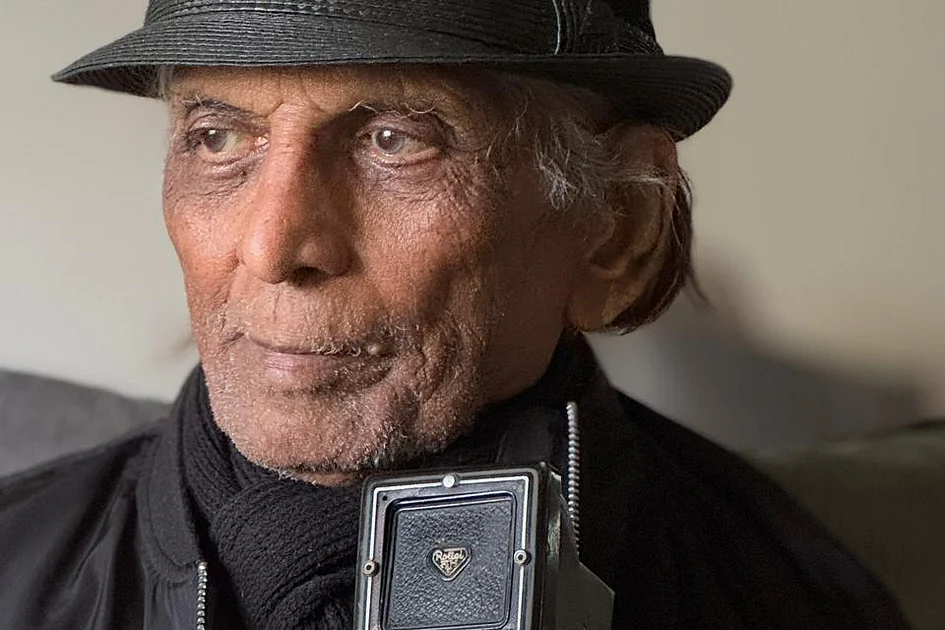
    In 1965, a young Indian immigrant named Ramesh Shukla arrived in the United Arab Emirates carrying merely 50 rupees and a cherished Rolleicord camera—a parting gift from his father. The landscape that greeted him stood in stark contrast to the modern metropolis we know today: an expansive desert terrain devoid of highways, skyscrapers, or modern infrastructure.

    Over the subsequent six decades, Shukla evolved into the nation’s most revered documentary photographer, earning the distinguished title of ‘royal photographer.’ His extraordinary journey began when his ship docked in Sharjah, where he encountered a vast, unfamiliar environment that would ultimately define his life’s mission: visually narrating the Emirates’ remarkable evolution.

    Shukla’s pioneering work gained royal recognition in 1968 when he captured a spontaneous moment of the late Sheikh Zayed bin Sultan Al Nahyan during a camel race. The ruler’s reaction to the photograph proved transformative—personally signing the image, gifting Shukla a gold pen, and bestowing upon him the Arabic honorific ‘Fannan’ (artist). This encounter established Shukla as the trusted chronicler of the nation’s most significant historical events.

    His defining moment arrived on December 2, 1971, at Union House, where he immortalized the gathering of rulers following the signing of the agreement that established the United Arab Emirates. This historic image, later celebrated as ‘The Spirit of the Union,’ achieved national icon status and was subsequently featured on the Dh50 banknote.

    Shukla’s dedication transcended financial gain, driven instead by a profound passion for preserving history. His intimate access to the nation’s leadership included life-saving interventions, such as when Dubai Ruler Sheikh Mohammed bin Rashid Al Maktoum rescued him from potential trampling at a horse race after the photographer became engrossed in capturing the perfect shot.

    Internationally, Shukla’s lens captured moments like Queen Elizabeth II’s 1979 visit to the UAE, where his persistence yielded a cherished solo portrait of the monarch. His extensive archive now resides in prestigious institutions including the Etihad Museum and Al Shindagha Museum, while his imagery adorns Dubai Metro stations, embedding his visual legacy into the nation’s collective consciousness.

    Despite documenting unprecedented transformation, Shukla maintained pride in preserving Emirati cultural essence and traditions. At the time of his passing, his unpublished work included undeveloped film rolls containing unseen fragments of the nation’s journey—a testament to his belief that history remains perpetually unfolding, with stories forever waiting to be revealed through the photographic lens.

  • Flexibility and rising costs are keeping mothers at work

    Flexibility and rising costs are keeping mothers at work

    A profound shift in workforce dynamics is unfolding across America as mothers with young children maintain unprecedented employment levels years after the pandemic’s peak. Current data reveals that nearly 71% of women with children under five are actively engaged in the workforce, surpassing pre-pandemic benchmarks according to analysis by the Hamilton Project at Brookings Institution.

    This sustained participation stems from two powerful, contrasting forces reshaping family economics. The pandemic’s legacy of remote work opportunities has created flexible arrangements that enable mothers to balance professional responsibilities with childcare duties. Simultaneously, escalating living costs are compelling many women to remain employed out of financial necessity rather than choice.

    For white-collar professionals, hybrid work models have created previously unavailable flexibility. Highly educated women particularly benefit from remote positions that accommodate their dual roles as caregivers and professionals. Meanwhile, the healthcare sector’s expansion has generated numerous predictable-shift positions in nursing and social assistance that appeal to working mothers.

    However, economists identify a concerning underlying trend: many mothers feel financially compelled to work rather than opting to do so. Grocery prices have surged over 25% in five years, while childcare costs have outpaced general inflation dramatically. These pressures make single-income households increasingly unsustainable, with over 70% of Americans reporting that childrearing has become unaffordable.

    The personal toll emerges in stories like Kelsey Whitlatch of West Virginia, who juggles multiple income streams despite preferring more time with her children. ‘We were going under so bad,’ she recounted of periods without employment. Similarly, Louisiana resident Cameron Hulin plans to leave her nonprofit career despite enjoying it, finding childcare for two children economically prohibitive.

    Structural challenges persist as pandemic-era subsidies expire and immigration policies reduce available childcare workers. While some states attempt to expand access, the fundamental tension between workplace flexibility and economic necessity continues to redefine motherhood in America’s post-pandemic economy.

  • What’s the secret to happiness? These researchers have a theory

    What’s the secret to happiness? These researchers have a theory

    A groundbreaking new publication from leading psychological researchers is challenging conventional wisdom on the pursuit of happiness. Distinguished psychology professor Dr. Sonja Lyubomirsky from University of California Riverside and relationship expert Dr. Harry Reis from University of Rochester present a compelling thesis in their collaborative work “How to Feel Loved”: genuine happiness stems not from self-improvement alone, but from perceiving love returned to us through meaningful social connections.

    The researchers identify a critical paradigm shift in understanding emotional wellbeing. While previous happiness studies emphasized the love we extend to others, their findings demonstrate that the sensation of being loved ourselves creates the fundamental foundation for contentment. This revelation addresses a fundamental human quest that Dr. Lyubomirsky has studied for decades, moving beyond reductive solutions to present evidence-based approaches.

    Central to their methodology is the development of enhanced listening capabilities. The authors contend that most individuals mistakenly believe themselves proficient listeners while primarily awaiting their opportunity to speak. They advocate for a “listening to learn” mindset that prioritizes understanding over response. Practical techniques include avoiding interruptions, refraining from unsolicited advice, and employing follow-up questions—with the simple phrase “tell me more” proving remarkably effective.

    The research proposes a targeted relationship investment strategy rather than diffuse social efforts. By selecting one significant relationship and conducting three curiosity-driven conversations within a week, individuals can initiate a reciprocal dynamic the authors compare to a seesaw: genuine attentiveness elevates both participants, creating mutual understanding and emotional reward.

    However, the research acknowledges relationship limitations. When concerted efforts yield minimal reciprocity or genuine curiosity proves unsustainable, these indicate potentially unsuitable connections for emotional investment. The ultimate empowerment comes from recognizing that feeling loved operates within our sphere of influence through conscious conversational choices and strategic relationship cultivation.

  • Israel approves registration of West Bank land as ‘state property’

    Israel approves registration of West Bank land as ‘state property’

    The Israeli government has formally endorsed a controversial measure to designate vast territories within the occupied West Bank as state property, a decision critics argue constitutes de facto annexation of Palestinian lands. The proposal, jointly advanced by Finance Minister Bezalel Smotrich, Justice Minister Yariv Levin, and Defense Minister Israel Katz, received official approval on Sunday.

    This legislative action effectively enables Israeli authorities to legally appropriate unregistered or purportedly abandoned Palestinian land by reclassifying it under state ownership. The move follows Israel’s 1968 suspension of a Jordanian-administered land registration system, which had prevented Palestinian residents from formally documenting property ownership since Israel’s occupation began in 1967.

    Minister Katz characterized the decision as “an essential security and governance measure designed to ensure control, enforcement and full freedom of action for the state of Israel in the area.” Smotrich explicitly stated the government’s intention to “continue the settlement revolution to control all our lands,” adding that the measures “fundamentally change the legal and civic reality” and effectively “bury the idea of a Palestinian state.”

    The Palestinian presidency, through the Wafa news agency, condemned the action as a “dangerous escalation” equivalent to annexation, arguing it violates multiple UN Security Council resolutions including Resolution 2334 which condemns Israeli settlements as illegal. Hamas denounced the measure as attempted land theft and “Judaization” by an illegitimate occupying power.

    Regional powers including Jordan, Qatar and Turkey joined in condemning the decision, which follows recent measures facilitating Jewish Israeli ownership of Palestinian land. Critics warn these developments accelerate settlement expansion and fundamentally undermine the 1993 Oslo Accords by expanding Israel’s civil control into areas previously under Palestinian Authority jurisdiction.

  • UAE considers phased rules to protect children on social media

    UAE considers phased rules to protect children on social media

    The United Arab Emirates is developing a comprehensive, phased regulatory approach to safeguard children’s digital wellbeing, positioning itself at the forefront of online child protection initiatives. This strategic move comes as global concerns mount regarding children’s exposure to harmful digital content and practices.

    Authorities are implementing a risk-based methodology that will initially focus on social media platforms before expanding to encompass broader digital services. The initiative establishes clear operational guidelines for service providers while creating robust compliance mechanisms to ensure age-appropriate content accessibility. This progressive framework represents a fundamental shift from reactive measures to proactive prevention, fundamentally redesigning how digital platforms operate for younger users.

    The Education, Human Development and Community Development Council has identified the regulation of children’s social media usage as a critical priority. During recent deliberations, the Council emphasized the necessity of a unified national framework addressing both social media and digital services comprehensively. Officials examined the substantial impact of digital platforms on family dynamics, communication quality, and children’s cognitive development—including attention span, time management capabilities, and language acquisition.

    To address these challenges, the UAE will provide families with practical tools for digital supervision and guidance, promoting healthier technology usage habits. Child development experts and mental health professionals will contribute specialized guidance, while coordinated public awareness campaigns will encourage responsible digital engagement. Multiple government sectors—including education, health, security, and media—will collaborate to ensure effective implementation.

    Educational policies and school programs are being harmonized under the national framework, incorporating standardized assessments including Arabic language evaluations to identify children requiring additional support. Updates to Arabic language and Islamic studies curricula will simultaneously strengthen fundamental skills while reinforcing national values and identity.

    This initiative builds upon the Child Digital Safety Law enacted in December 2025, which mandates protection from digital content adversely affecting children’s physical, psychological, and moral development. The legislation applies to internet service providers and digital platforms operating within or targeting UAE users, encompassing websites, search engines, applications, messaging services, forums, gaming platforms, social media, streaming services, and e-commerce platforms.

    The law fundamentally transforms digital environments by requiring platforms to recognize age differences and adjust content, features, and protections accordingly. It prohibits children under 18 from accessing features involving betting, gambling, or monetary game mechanics while imposing strict limitations on how children’s data can be utilized. This approach embeds safety directly into platform architecture rather than relying solely on parental supervision or post-incident intervention.

  • China predicts over 285 million inter-regional trips on first day of Spring Festival holiday

    China predicts over 285 million inter-regional trips on first day of Spring Festival holiday

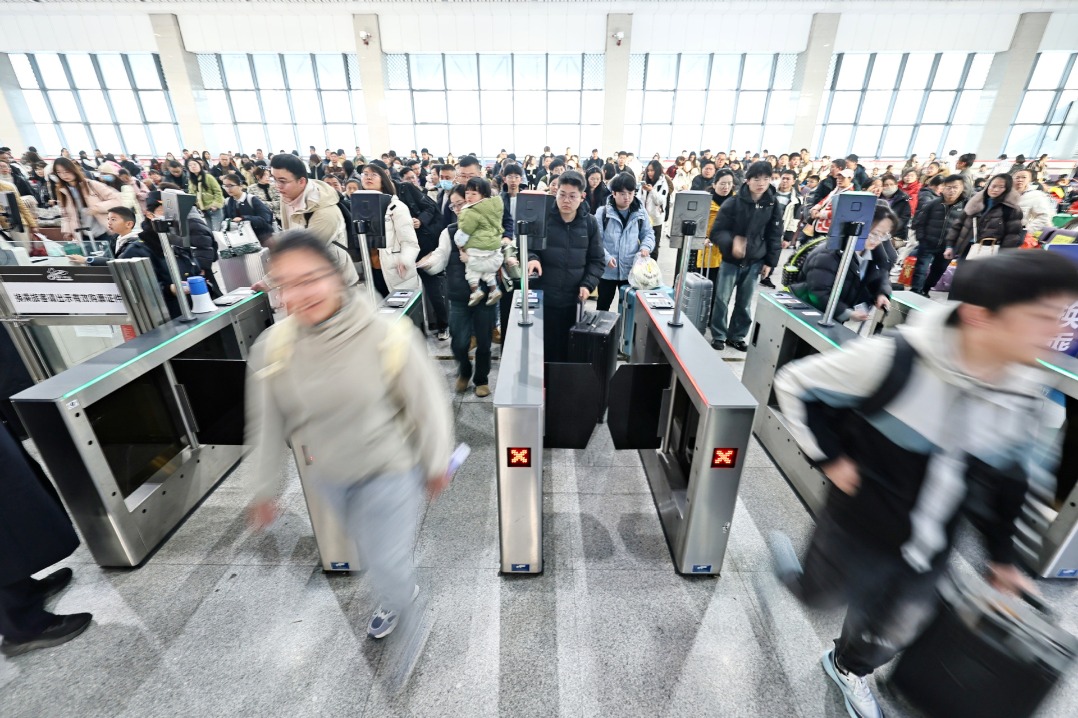
    China’s transportation networks witnessed an unprecedented surge in passenger volume as the nation commenced its extended Spring Festival holiday period. Official data from the Ministry of Transport indicates that Sunday, February 15th, 2026, marked the beginning of what authorities project to be the busiest travel period in recent history.

    Transport authorities reported an estimated 285 million inter-regional passenger journeys occurred on the holiday’s opening day, representing a substantial 10.5 percent increase compared to the same timeframe in the previous year. This massive movement of people reflects the enduring cultural significance of family reunions during China’s most important traditional festival.

    Road transportation bore the brunt of this travel explosion, with approximately 268.75 million trips recorded—a 10.8 percent year-on-year increase. Railway and air travel also experienced significant growth, rising by 4.3 percent and 6.4 percent respectively. The most dramatic surge was observed in waterway transportation, which saw an extraordinary 28.1 percent increase in passenger journeys.

    The Spring Festival, traditionally known as Chinese New Year, officially falls on February 17th this year. While the national holiday spans nine days, the annual travel rush—recognized as the world’s largest human migration—commenced earlier on February 2nd and will continue through March 13th. This extended period allows millions of Chinese workers and students to return to their hometowns for family celebrations, despite the logistical challenges posed by such massive population movement.

    The Ministry of Transport has implemented comprehensive measures to ensure transportation safety and efficiency during this period, including enhanced scheduling, increased capacity across all transport modes, and strengthened safety protocols. This coordinated approach aims to manage the unprecedented passenger flow while maintaining service quality and security standards throughout the holiday travel season.

  • Bondi faces criticism after saying all Epstein files have been released

    Bondi faces criticism after saying all Epstein files have been released

    The U.S. Department of Justice has declared full compliance with the Epstein Files Transparency Act, asserting it has released all documents in its possession related to Jeffrey Epstein’s case. However, congressional lawmakers are challenging this assertion, demanding greater transparency regarding internal deliberations about prosecution decisions.

    In a formal communication to Congressional judiciary leaders on Saturday, Attorney General Pam Bondi and Deputy Todd Blanche detailed the Department’s document release, emphasizing that no materials were withheld due to concerns about embarrassment, reputational harm, or political sensitivity. The correspondence included a comprehensive list of individuals mentioned within the files, ranging from government officials to public figures whose names appeared in various contexts.

    The released inventory encompasses prominent figures including former Presidents Donald Trump and Bill Clinton, Microsoft founder Bill Gates, and Prince Andrew, all of whom had documented associations with Epstein or his associate Ghislaine Maxwell. The Justice Department explicitly noted that mere appearance in the documents does not imply wrongdoing, and each individual has previously denied involvement in Epstein’s criminal activities.

    Notably, the list also contains unexpected entries including deceased music icons Janis Joplin and Elvis Presley, raising questions about the context of their inclusion. This development has sparked criticism from lawmakers who argue the disclosure lacks necessary clarification about individuals’ actual connections to Epstein’s network.

    Representative Thomas Massie (R-KY), co-author of the transparency legislation, contends that the Department continues to withhold crucial internal memoranda outlining historical decisions regarding whether to pursue charges against Epstein and his associates. Massie alleges the DoJ is invoking ‘deliberative process privilege’ to avoid releasing documents that would reveal internal prosecution deliberations.

    His legislative partner, Representative Ro Khanna (D-CA), has accused the Justice Department of ‘purposefully muddying the waters’ by failing to distinguish between actual predators and individuals merely referenced in communications. Khanna specifically criticized the inclusion of Joplin—who died when Epstein was 17—alongside convicted sex offender Larry Nassar without contextual explanation.

    The document release follows previous controversies where improperly redacted files revealed identifying information about potential victims, including email addresses and nude photographs. The Department attributed these errors to ‘technical or human error’ and removed the flagged materials. Despite these corrections, victim attorneys and lawmakers continue to demand complete transparency with appropriate protections for survivors’ identities.

  • ‘Erasing history’: British Museum criticised for removing references to ‘Palestine’ from exhibits

    ‘Erasing history’: British Museum criticised for removing references to ‘Palestine’ from exhibits

    The British Museum has ignited a firestorm of academic criticism after eliminating all references to Palestine within its ancient Middle Eastern galleries. This controversial decision, implemented following pressure from the pro-Israel advocacy group UK Lawyers for Israel (UKLFI), has been denounced by scholars as a politically-motivated assault on Palestinian cultural heritage.

    The institution altered exhibit labels dating from 1700–1500BC, replacing the term ‘Palestine’ with ‘Canaan’ and modifying descriptions of the Hyksos people from ‘Palestinian descent’ to ‘Canaanite descent’. Museum representatives justified the changes by asserting the term Palestine lacked historical relevance for that specific chronological context, claiming it only became appropriate for the southern Levant region in the later second millennium BC.

    This rationale has been vehemently contested by leading academics. Marchella Ward, a Classical Studies lecturer at the UK’s Open University, stated, ‘I use the term ancient Palestine frequently in my own research and will continue to do so.’ She characterized claims of the term’s illegitimacy as a ‘lie’ facilitating ‘the erasure of Palestinians.’

    The incident represents merely the latest in a series of successful campaigns by UKLFI targeting British public institutions. Recent targets include Encyclopaedia Britannica, which amended content in its children’s edition, and London’s Chelsea and Westminster Hospital, which removed artwork created by Gazan schoolchildren. The Open University similarly acquiesced to demands to purge ‘ancient Palestine’ from future educational materials.

    According to data compiled by the European Legal Support Centre (ELSC), UKLFI has been involved in 128 of approximately 900 documented cases of anti-Palestinian repression in the UK between 2019-2025. ELSC Director Giovanni Fassina described the pattern as ‘not surprising,’ noting institutions frequently comply with the group’s ‘misleading legal arguments’ despite their questionable foundation.

    The controversy intersects with broader concerns about cultural destruction in Gaza, where Israeli forces have damaged over 316 archaeological sites according to reports. Scholars argue that the revision of historical narratives in Western institutions complements physical destruction in conflict zones, collectively undermining Palestinian historical claims.

  • Israel’s West Bank annexation moves raise security alarm in Jordan

    Israel’s West Bank annexation moves raise security alarm in Jordan

    Jordan has issued a stern condemnation of Israel’s recent policy overhaul in the occupied West Bank, characterizing the measures as an acceleration toward full annexation that directly threatens Jordanian national security. The sweeping changes, announced last week, represent what Jordanian officials describe as a dangerous escalation beyond previous ‘creeping annexation’ into a phase of systematic territorial absorption.

    The most contentious measure involves revoking the 1953 Jordanian-era law that prohibited property sales to non-Arabs in the Palestinian territory—a legal safeguard originally intended to prevent Israeli settlement expansion through land purchases. Additional provisions include declassifying West Bank land registers (previously kept confidential to protect against fraudulent property transfers to settlers) and enabling Israel to reclassify unregistered or abandoned lands as ‘state lands’ for confiscation.

    Jordanian Senator Omar al-Ayasrah warned Middle East Eye that these actions constitute ‘a leap across strategic stages’ designed to eliminate Jordan’s influence over Palestinian affairs while dismantling legal protections for Arab landowners. The fundamental concern, analysts note, is demographic: Jordan fears Israel’s systematic pressure—through geographic constriction, economic suffocation, and political stagnation—will precipitate Palestinian emigration eastward, potentially destabilizing Jordan’s delicate social and security balance.

    In response, Jordan is pursuing diplomatic and legal countermeasures. The Royal Hashemite Documentation Centre is intensifying efforts to restore historical land deeds dating to the Ottoman era, potentially for use in an International Court of Justice challenge. While some Jordanians advocate more drastic responses—including revocation of the 1994 peace treaty or military confrontation—government officials currently describe treaty cancellation as ‘political suicide,’ preferring to exhaust diplomatic channels.

    Political analyst Lamis Andoni cautioned that Jordan’s hesitation to leverage economic agreements (such as the gas deal with Israel) might be interpreted as tacit approval. Meanwhile, retired Major General Mamoun Abu Nuwar characterized the land confiscations as an ‘undeclared war’ on Jordan, warning that forced displacement could ‘trigger a regional earthquake’ given Jordan’s strategic geopolitical position and preparedness to defend its demographic stability.