博客

  • Hillary Clinton accuses Trump administration of Epstein files ‘cover-up’ in BBC interview

    Hillary Clinton accuses Trump administration of Epstein files ‘cover-up’ in BBC interview

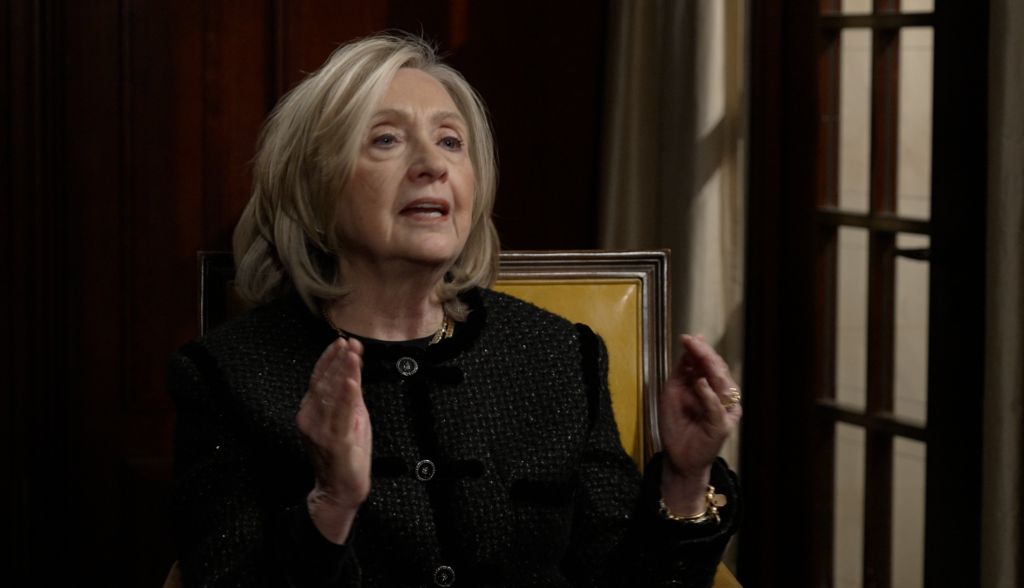
    Former Secretary of State Hillary Clinton has publicly accused the Trump administration of orchestrating a deliberate “cover-up” regarding the handling of documents connected to the late financier and convicted sex offender Jeffrey Epstein. During an interview at the World Forum in Berlin, Clinton demanded full transparency, stating authorities were “slow-walking” the release of critical files.

    The Justice Department recently disclosed millions of Epstein-related documents following the Epstein Files Transparency Act, legislation passed by Congress mandating transparency in investigations concerning Epstein. While the DoJ claims compliance with all legal requirements, lawmakers including Republican Representative Thomas Massie argue the disclosure remains insufficient and have called for additional internal memoranda outlining past charging decisions.

    Simultaneously, mounting political pressure surrounds testimonies from high-profile figures connected to Epstein. Prince Andrew faces renewed calls from U.S. officials and the family of his accuser, the late Virginia Giuffre, to appear before the Oversight Committee. Both Bill and Hillary Clinton are scheduled to testify before Congress later this month, marking the first instance of a former president appearing before a congressional panel since Gerald Ford in 1983.

    Hillary Clinton emphasized that “everyone should testify who is asked to testify,” while advocating for public hearings rather than closed-door depositions. She characterized the scrutiny directed at her and her husband as a political diversion tactic, stating they were being used as a “shiny object” to shift attention from former President Trump.

    The White House countered Clinton’s allegations, asserting that the Trump administration had “done more for the victims than Democrats ever have” by releasing documents and cooperating with congressional subpoenas. President Trump, frequently mentioned in the Epstein files, has consistently denied any wrongdoing and maintains he severed ties with Epstein decades ago.

    Epstein died in federal custody in August 2019 while awaiting trial on sex trafficking charges. Prince Andrew settled a civil lawsuit with Giuffre in 2022 without admitting liability, while the Clintons deny any knowledge of Epstein’s criminal activities during their acquaintance with him.


  • China is hitting Japan where it hurts. Will PM Takaichi give in?

    China is hitting Japan where it hurts. Will PM Takaichi give in?

    The recent return of giant pandas Xiao Xiao and Lei Lei from Tokyo’s Ueno Zoo to China marks more than just the end of an era in Sino-Japanese cultural exchange—it symbolizes the rapid deterioration of bilateral relations to their lowest point in decades. This diplomatic crisis emerged following Japanese Prime Minister Sanae Takaichi’s November comments suggesting Japan would activate its self-defense forces in response to any attack on Taiwan, crossing what China considers an “absolute red line” regarding its territorial sovereignty.

    Beijing’s response has been multifaceted and sustained, employing what analysts describe as “greyzone warfare” tactics across diplomatic, military, economic, and cultural fronts. Beyond recalling its pandas—a powerful symbol of friendship—China has deployed warships near Japanese territories, restricted exports of critical rare earth minerals, canceled flight routes, discouraged tourism to Japan, and halted cultural exchanges including music events and film releases.

    The situation differs from previous bilateral spats due to both China’s expanded capabilities and Prime Minister Takaichi’s strengthened domestic position following her historic electoral victory. Analysts from the Center for Strategic and International Studies note that while China’s responses have been relatively measured compared to past conflicts, there remains “ample room for further escalation.” Takaichi, emboldened by her strong mandate, has refused to retract her Taiwan comments while pledging to accelerate defense spending increases to 2% of GDP.

    Complicating the geopolitical landscape is the role of the United States, which has offered strong support for Takaichi’s government but remains unpredictable in its China policy. Some experts express concern that potential warming US-China relations, including scheduled meetings between President Trump and Xi Jinping, might lead to a “grand bargain” that could leave Japan strategically isolated. As both nations dig in their positions, analysts predict sustained tensions that will fundamentally reset the relationship at a more confrontational level than before the crisis.

  • Overseas Filipinos send home record  Dh130.76 billion ($35.63 billion) in 2025

    Overseas Filipinos send home record Dh130.76 billion ($35.63 billion) in 2025

    The Philippine economy received a substantial boost as remittances from overseas workers reached unprecedented levels in 2025, according to the Bangko Sentral ng Pilipinas (BSP). The central bank reported that cash transfers from Filipinos working abroad surged to $35.63 billion (Dh130.76 billion), marking a significant 3.3% increase from the $34.49 billion recorded in 2024.

    These financial inflows represent far more than personal support mechanisms—they constitute a critical economic foundation for the nation. Accounting for approximately 7.3% of the country’s gross domestic product, remittances have evolved into both a household income stabilizer and a reinforcement for the Philippines’ foreign currency reserves.

    Geographic analysis reveals the United States as the predominant source of these transfers, contributing 39.7% of total remittances. Singapore followed with 7.3%, while Saudi Arabia and Japan accounted for 6.6% and 5% respectively. The United Arab Emirates and United Kingdom jointly occupied the fifth position, each contributing 4.6% to the overall remittance volume.

    The year-end period demonstrated particularly robust activity, with December 2025 witnessing a 4.2% year-on-year increase, reaching $3.52 billion in single-month transfers. This surge followed the $2.91 billion recorded in November, indicating strengthened financial support during the holiday season.

    This sustained growth pattern underscores the deepening economic interdependence between the Philippine diaspora and their home nation, highlighting how overseas employment continues to function as both individual livelihood strategy and national economic stabilizer.

  • UAE, Bahrain launch one-point travel project to reduce airport transit time

    UAE, Bahrain launch one-point travel project to reduce airport transit time

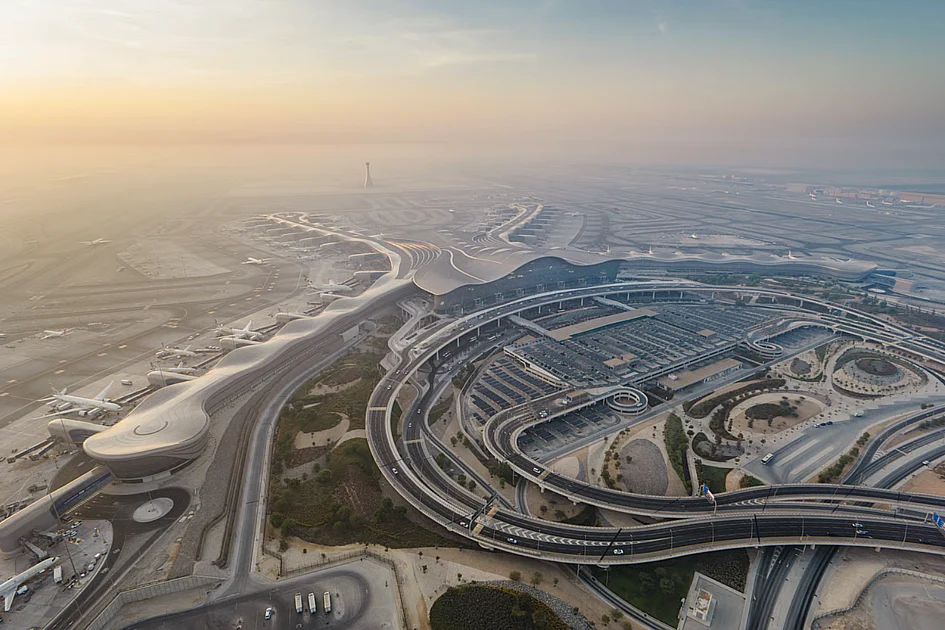
    In a groundbreaking move for regional aviation, the United Arab Emirates and the Kingdom of Bahrain have initiated the pilot phase of their transformative ‘One-Point Air Travellers’ project on February 16, 2026. This sophisticated travel integration system, now operational at Abu Dhabi’s Zayed International Airport and Bahrain International Airport, represents the most advanced border processing collaboration in the Gulf Cooperation Council region.

    The innovative framework utilizes cutting-edge biometric verification technology, electronic connectivity infrastructure, and automated e-gates to pre-clear citizens of both nations during departure procedures. This technological integration eliminates traditional arrival processing requirements, creating a seamless transition from departure gate to final destination without intermediate checks.

    Major General Suhail Saeed Al Khaili, Director General of the UAE’s Federal Authority for Identity, Citizenship, Customs, and Port Security, emphasized the project’s significance: ‘This initiative demonstrates our commitment to regional cooperation through technological innovation. By implementing advanced data exchange systems while maintaining stringent privacy protections, we’re establishing new standards for secure and efficient travel.’

    The bilateral project emerged from collaborative efforts between UAE security authorities and Bahrain’s Ministry of Interior, with strategic support from the GCC General Secretariat. Mohammed Ahmed Al Kuwaiti, Acting Director General of Ports, highlighted the system’s robust security architecture: ‘Our electronic connectivity platform ensures unprecedented accuracy in passenger processing while implementing comprehensive data protection protocols that exceed international standards.’

    Etihad Airways, as the primary aviation partner, has integrated the system into its operations between the two capitals. Captain Majed Al Marzouqi, Chief Operations and Guest Officer, noted: ‘This advancement positions our region at the forefront of global aviation innovation. Emirati and Bahraini travelers can now experience truly contactless transit that rivals any international travel corridor worldwide.’

    Beyond immediate convenience benefits, the initiative is projected to significantly boost tourism exchange and economic activity between the two nations. The system’s design allows for potential expansion across GCC member states, potentially establishing a regional network of integrated smart airports that could transform Gulf travel dynamics.

    Industry analysts predict the project could reduce average transit processing time by approximately 70%, while simultaneously enhancing security screening capabilities through advanced biometric documentation of passenger movements prior to arrival.

  • Eighth edition of UAE Tour starts tomorrow in Al Dhafra

    Eighth edition of UAE Tour starts tomorrow in Al Dhafra

    The prestigious UAE Tour 2026, the Middle East’s sole UCI WorldTour cycling event, launches its eighth edition on Tuesday from Al Dhafra Region. This premier competition will showcase 145 elite athletes representing 21 international teams across a demanding seven-stage course spanning 1,004.2 kilometers, concluding on February 22nd.

    Under the organizational leadership of Abu Dhabi Sports Council and with sponsorship from AD Ports Group, the race features diverse terrain including mountain ascents, desert tracks, and urban circuits. The route strategically highlights both emerging landmarks and scenic natural landscapes throughout the Emirates.

    The competition commences with Stage One, sponsored by Bin Hamoodah Auto, tracing a 144-kilometer path from Madinat Zayed Council to Liwa Fort in Al Dhafra Region. This opening segment sets the tone for a week of intense professional cycling competition.

    A recent press conference at Al Hudayriyat Island’s Colnago Store gathered key stakeholders including Dr. Ahmed Abdullah Al Qubaisi (Assistant Secretary-General of Abu Dhabi Sports Council) and Talal Al Hashemi (Executive Director of the Events Sector). The event featured five prominent riders who expressed their competitive readiness: Remco Evenepoel (Red Bull Bora Hansgrohe), Isaac del Toro (UAE Team XRG), Jonathan Milan (Lidl Trek), Joshua Tarling (Ineos Grenadiers), and Lennert Van Eetvelt (Lotto Intermarché).

    Del Toro, recognized as an exceptional emerging talent following his 2023 Tour de l’Avenir victory and subsequent signing with UAE Team, joins other world-class competitors in what promises to be a highly contested edition of the UAE’s flagship cycling event.

  • Pegula, Krawczyk swap forehands for fairways at Topgolf

    Pegula, Krawczyk swap forehands for fairways at Topgolf

    In an unconventional pre-tournament preparation, world-class tennis athletes Jessica Pegula and Desirae Krawczyk temporarily exchanged their rackets for golf clubs during a distinctive sporting crossover at Dubai’s Emirates Golf Club. The American competitors, currently ranked World No. 6 and No. 4 seed respectively, participated in a precision challenge at Topgolf’s futuristic driving range facility, blending athletic entertainment with panoramic views of the city’s iconic skyline.

    This recreational interlude occurred just days before the commencement of the prestigious WTA 1000 Dubai Duty Free Tennis Championships, offering the athletes a mental respite from intense competition preparations. Pegula, a 2024 US Open finalist, expressed appreciation for the diversionary activity: ‘It was genuinely refreshing to temporarily distance ourselves from the tennis courts and engage in something completely different. The experience proved both enjoyable and moderately competitive, providing an excellent overall experience amidst the stunning venue.’

    Remarkably, Krawczyk demonstrated unexpected golfing proficiency despite reportedly never having handled golf clubs previously. Pegula observed with amusement: ‘Her driving performance exceeded expectations—surpassing many regular golfers. With dedicated practice, she could develop into an exceptional player given the natural ability she displayed.’

    Krawczyk emphasized the importance of balancing competitive preparation with psychological recovery: ‘Our training sessions have progressed exceptionally well, and I feel thoroughly prepared. Activities like Topgolf provide wonderful opportunities to decompress while enjoying extraordinary views and camaraderie before tournament commencement.’

    Both athletes have subsequently transitioned back to professional tennis competition. Krawczyk and Ukrainian partner Lyudmyla Kichenok advanced to the doubles round of 16 with a straight-sets victory against Fanny Stollar and Miyu Kato, while Pegula teamed with Mexico’s Giuliana Olmos to defeat Tereza Mihalikova and Olivia Nicholls. As a top-eight seeded player, Pegula received automatic qualification to the second round in singles competition.

    The Dubai Duty Free Tennis Championships, running from February 15-21, features an elite field including 16 of the world’s top 20 female players, followed by an ATP 500 men’s event from February 23-28.

  • Israeli approval of West Bank land registration draws outrage

    Israeli approval of West Bank land registration draws outrage

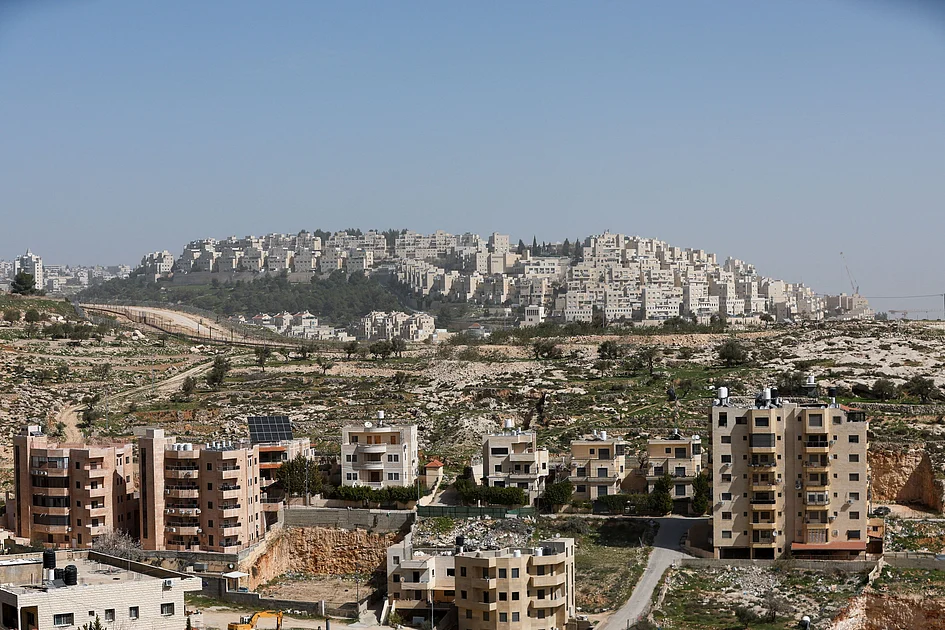
    Israel’s recent authorization of a contentious land registration procedure in the West Bank has ignited widespread international criticism and raised concerns about accelerated annexation of Palestinian territories. The government-approved measure, ratified late Sunday, designates disputed lands as “state property”—a move that Israeli authorities claim will establish transparency in resolving legal ownership conflicts.

    The decision has drawn sharp rebukes from multiple Arab nations. Egypt characterized the action as a “dangerous escalation” intended to solidify Israeli dominance over occupied territories. Qatar similarly denounced the declaration, asserting it would systematically deprive Palestinians of their legitimate land rights. Jordan joined the chorus of condemnation, labeling the measure a violation of international law.

    Israeli peace organization Peace Now condemned the policy as a “mega land grab” that advances the annexation agenda of Israel’s political right. Jonathan Mizrachi, the group’s co-director, explained that the registration process would exclusively affect Area C—comprising approximately 60% of the West Bank under Israeli administrative control. Mizrachi warned that numerous Palestinians would discover their traditionally held lands suddenly reclassified as state property under the new framework.

    This development occurs alongside other recently approved measures strengthening Israeli authority in West Bank regions nominally administered by the Palestinian Authority under the Oslo Accords. These include provisions enabling direct land purchases by Jewish Israelis and expanded Israeli administration of religious sites.

    The United Nations human rights chief Volker Turk expressed alarm over rapidly changing demographics in the occupied territories, noting that these policies systematically dispossess Palestinians of their lands. Despite international opposition, the U.S. administration has refrained from direct criticism of these recent Israeli initiatives. Currently, over 500,000 Israeli settlers reside in West Bank settlements considered illegal under international law.

  • England survive Italy scare to reach World Cup Super Eights

    England survive Italy scare to reach World Cup Super Eights

    England’s national cricket team narrowly avoided a major upset on Monday, securing a tense 24-run victory against tournament newcomers Italy to advance to the Super Eight stage of the Twenty20 World Cup. The twice champions demonstrated both vulnerability and resilience in a match that highlighted the growing competitiveness of associate nations in international cricket.

    Batting first, England posted their highest total of the tournament at 202-7, largely due to Will Jacks’ explosive unbeaten 53 from just 22 deliveries. The middle-order batsman delivered a spectacular performance, hammering four sixes and three fours during a critical final six-over onslaught that yielded 88 runs. Jacks received valuable support from Sam Curran, who contributed 25 off 19 balls, after England found themselves in a precarious position at 105-5.

    Italy’s response began disastrously as they slumped to 22-3 within four overs, with Jofra Archer claiming two early wickets. However, the debutants mounted a stunning comeback through Ben Manenti’s blistering 60 from 25 balls, featuring six maximums, and Justin Mosca’s steady 43. The pair added 92 runs in just eight overs, threatening what would have been one of the greatest upsets in T20 World Cup history.

    The match turned decisively when Curran dismissed the dangerous Grant Stewart for 45 in the 19th over, effectively ending Italy’s hopes. Jamie Overton sealed the victory by taking the final two wickets, finishing with three dismissals alongside Curran, who also claimed three wickets.

    England captain Jos Buttler acknowledged the close call, stating: ‘The associate nations have genuinely challenged the established teams throughout this tournament, which is tremendously exciting for the global game. We were certainly tested today.’

    The victory completed England’s Group C campaign with three wins and one loss to West Indies, who also qualified for the next stage. Italy, already eliminated from advancement, will play their final match against West Indies on Thursday.

  • Iraqi-UAE consortium to build $700 million ‘WorldLink’ fast data cable network

    Iraqi-UAE consortium to build $700 million ‘WorldLink’ fast data cable network

    A strategic Iraqi-Emirati partnership has unveiled plans to construct a groundbreaking $700 million data infrastructure project designed to establish a high-speed digital corridor between the United Arab Emirates and Turkey through Iraqi territory. The initiative, branded as WorldLink, represents a significant advancement in Middle Eastern telecommunications infrastructure.

    The ambitious project will feature a dual-component network combining submarine and terrestrial fiber-optic cables. The underwater segment will originate from Fujairah on the UAE’s eastern coast, traversing the Gulf waters to reach Iraq’s Faw Peninsula. From this coastal landing point, the infrastructure will continue as an overland cable network extending northward across Iraq until reaching the Turkish border.

    According to Ali El Ekabi, head of Iraq’s Tech 964—one of the three primary consortium members—the venture will be entirely privately financed with an anticipated completion timeline of four to five years. The consortium specifically targets major cloud service providers, international telecommunications carriers, and emerging artificial intelligence applications as primary customers for the new infrastructure.

    This development emerges just days after Saudi Arabia and Syria announced their own collaborative fiber-optic project, highlighting growing regional competition to capitalize on digital connectivity demands. Gulf nations are actively positioning themselves as critical digital infrastructure hubs, seeking to attract substantial investments into data center facilities and next-generation networking capabilities.

    The WorldLink project promises to alleviate congestion on existing east-west data transmission routes while significantly reducing latency compared to traditional pathways that navigate through the Suez Canal. This enhanced connectivity could potentially reshape data flow patterns between Asian and European markets.

    Besides Tech 964, the consortium includes Iraqi-Kurdish technology firm DIL Technologies and UAE-based investment company Breeze Investments. The project aligns with Iraq’s broader $17 billion “Development Road” initiative launched in 2023, which aims to establish the nation as a stable transit corridor following decades of regional conflict.

    The Emirati foreign ministry has not provided official commentary regarding the project. This strategic infrastructure development occurs amid broader regional efforts to rehabilitate and modernize telecommunications networks, with neighboring Syria simultaneously pursuing similar connectivity enhancements through separate partnerships.

  • Sharjah introduces electronic toll gates for trucks: How fees will be collected

    Sharjah introduces electronic toll gates for trucks: How fees will be collected

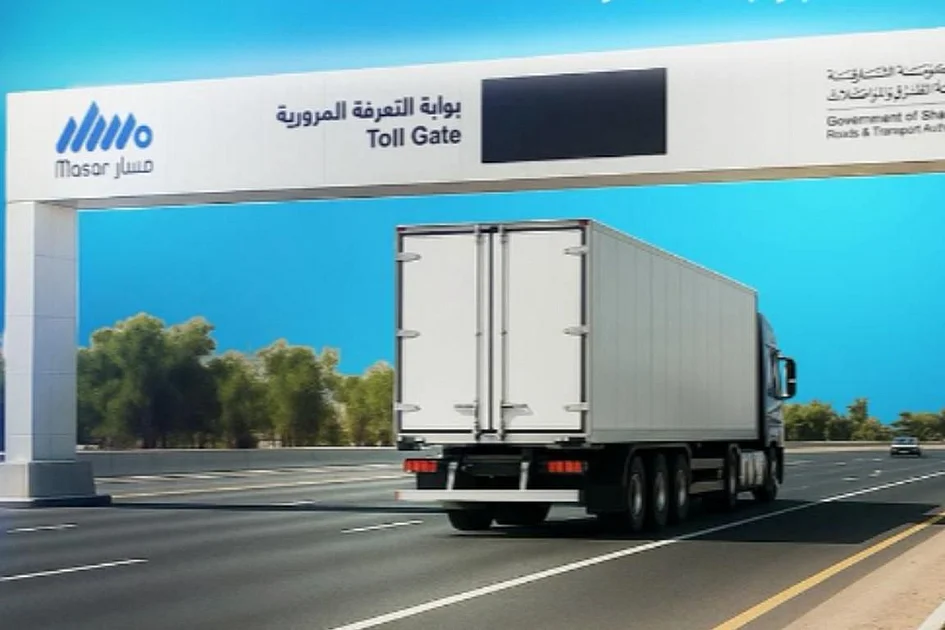
    Sharjah has implemented a groundbreaking electronic toll collection system named ‘Masar’ specifically designed for heavy commercial vehicles, marking a significant technological advancement in the region’s transportation infrastructure. This innovative system utilizes artificial intelligence and advanced sensor technology to automatically process fees without requiring trucks to stop at checkpoints.

    The system represents a collaborative effort between the Sharjah Roads and Transport Authority and the Sharjah Central Finance Department, replacing traditional manual collection methods with a fully automated, data-driven approach. Engineer Yousef Khamis Al Othmani, Chairman of the Roads and Transport Authority, described the project as “a pioneering initiative in electronic fee collection for commercial trucks and represents a qualitative leap in institutional work systems.”

    Masar’s technological framework integrates with the emirate’s existing digital payment infrastructure through the ‘Tahseel’ smart payment gateway, enabling secure cashless transactions and real-time financial reporting. Waleed Al Sayegh, Director General of the Central Finance Department, emphasized that the project “strengthens integration between government entities by connecting electronic toll gates to the digital wallet.”

    Beyond financial processing improvements, the system delivers multiple operational benefits including reduced congestion at checkpoints, decreased transit times for commercial vehicles, and minimized human error in fee collection. Environmental advantages are also significant, as reduced idling time for trucks contributes to lower emissions across Sharjah’s transportation network.

    The implementation supports Sharjah’s broader smart city initiatives and reflects the emirate’s commitment to technological innovation in public infrastructure. Officials confirm that the automated system enhances transparency, accelerates collection processes, and improves overall logistics efficiency throughout the region.