博客

  • Bencic masks fitness woes to keep the Dubai dream alive

    Bencic masks fitness woes to keep the Dubai dream alive

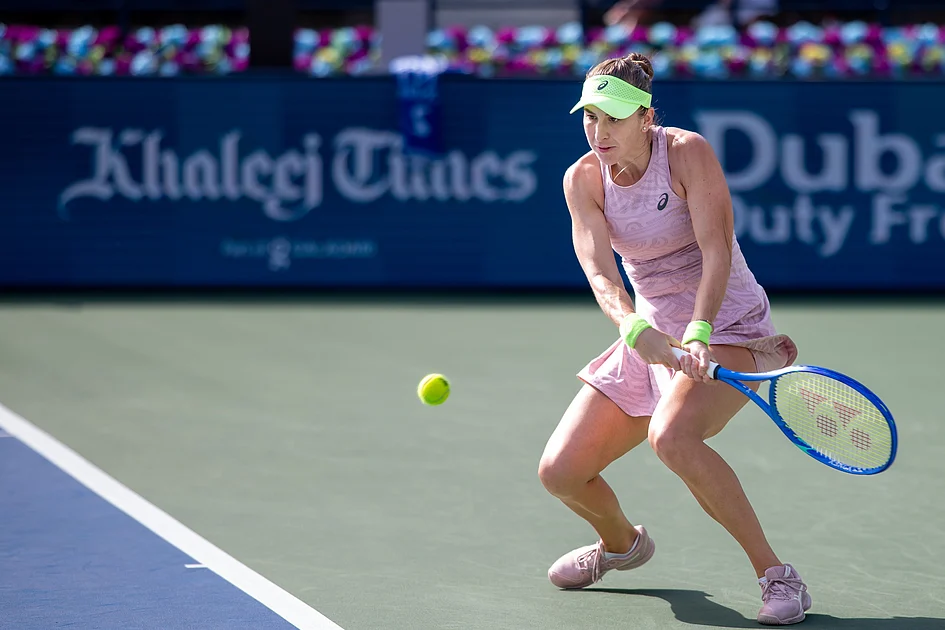
    Despite visible physical struggles, Olympic gold medalist Belinda Bencic demonstrated remarkable resilience at the Dubai Duty Free Tennis Championships on Monday, overcoming a first-set deficit to secure a hard-fought 2-6, 6-1, 6-2 victory against Spain’s Jessica Bouzas.

    The Swiss ninth seed, who withdrew from the Abu Dhabi Open earlier this month due to illness, displayed both competitive grit and fan-friendly generosity throughout the match. Following her comeback victory, Bencic engaged enthusiastically with spectators, even pausing to hold a fan’s toddler for photographs.

    ‘It was a really difficult time as I was not even able to practice properly after Abu Dhabi,’ Bencic revealed in post-match comments. ‘I’m just really happy I can be here and play again. Obviously, I’m struggling a bit with my fitness and ball security—this wasn’t my best performance.’

    The 28-year-old, who won the Dubai title in 2019, emphasized the psychological challenges of returning to competition: ‘It’s kind of crazy how fast you lose confidence and how long it takes for you to gain it again. But for sure, I’m here to fight and gain my confidence again.’

    Bencic now prepares for a challenging second-round encounter against Czech Republic’s Sara Bejlek, whom she described as ‘on fire’ and playing ‘really great tennis’ based on her observation of Bejlek’s previous match.

    The tournament saw several notable developments beyond Bencic’s victory. British star Emma Raducanu, the 2021 US Open champion, suffered elimination in a three-set thriller against Croatia’s Antonia Ružić (6-1, 5-7, 6-2). Meanwhile, 2017 French Open champion Jelena Ostapenko of Latvia fell to Russia’s Anna Kalinskaya, who advances to face American two-time Grand Slam winner Coco Gauff.

    In other matches, Spain’s Paula Badosa delivered a commanding performance against Katerina Siniakova (6-3, 7-5), while Amanda Anisimova received a walkover after opponent Barbora Krejčíková withdrew due to injury.

    The championship continues with highly anticipated appearances from Australian Open champion Elena Rybakina and defending champion Mirra Andreeva on Tuesday. Particular attention will focus on Filipina phenomenon Alexandra Eala as she challenges sixth-seeded Italian Jasmine Paolini for a spot in the round of 16.
  • Lunar New Year prayers and festivities usher in the Year of the Horse

    Lunar New Year prayers and festivities usher in the Year of the Horse

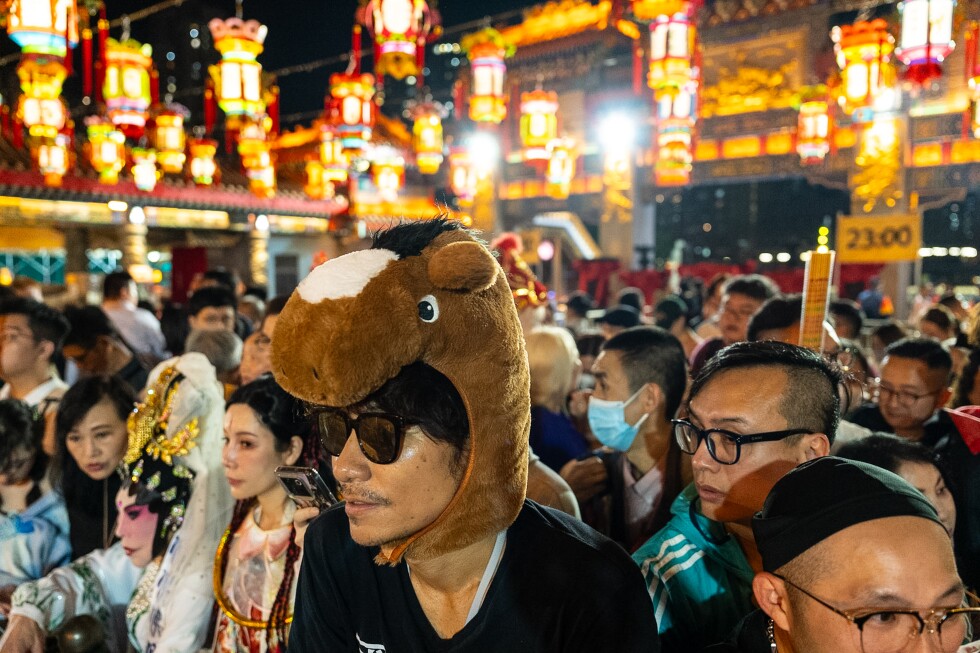
    Communities worldwide commenced vibrant observances of the Lunar New Year on Tuesday, transitioning from the Year of the Snake to the Year of the Horse within the Chinese zodiac cycle. This culturally significant festival, recognized as the paramount annual holiday across China and various East Asian nations, manifested through diverse traditions spanning multiple continents.

    In Hong Kong, midnight temple gatherings featured residents lining up to offer incense and articulate aspirations for the forthcoming year. Thick aromatic smoke permeated the air as devotees respectfully bowed before placing incense clusters in designated containers outside temple halls.

    Vietnam’s Tet celebrations energized urban centers with spectacular pyrotechnic displays synchronized to live musical performances. Bridges and skyscrapers transformed into luminous canvases during countdown events where entertainers engaged enthusiastic crowds.

    Moscow’s winter landscapes adopted festive characteristics with two-week cultural events featuring traditional Chinese street fairs. Snow-dusted avenues adorned with crimson lanterns and dragon motifs provided backdrop for culinary exploration and leisurely promenades. These Russian celebrations coincide with deepening Sino-Russian relations, a geopolitical development drawing mixed international responses amid ongoing Ukrainian conflicts.

    Taiwan’s Baoan Temple hosted morning ceremonies where the symbolic ringing of temple bells resonated 108 times—a number considered profoundly auspicious. Worshippers presented colorful floral arrangements and conducted incense-based rituals at outdoor altars throughout Taipei’s sacred precincts.

  • Canada reacts as cheating row rocks curling superpower

    Canada reacts as cheating row rocks curling superpower

    A significant controversy has erupted at the Winter Olympics, placing Canadian curling teams under intense scrutiny following multiple allegations of rules violations during competition. The incident has sparked widespread debate about sportsmanship and integrity in one of Canada’s most cherished sports.

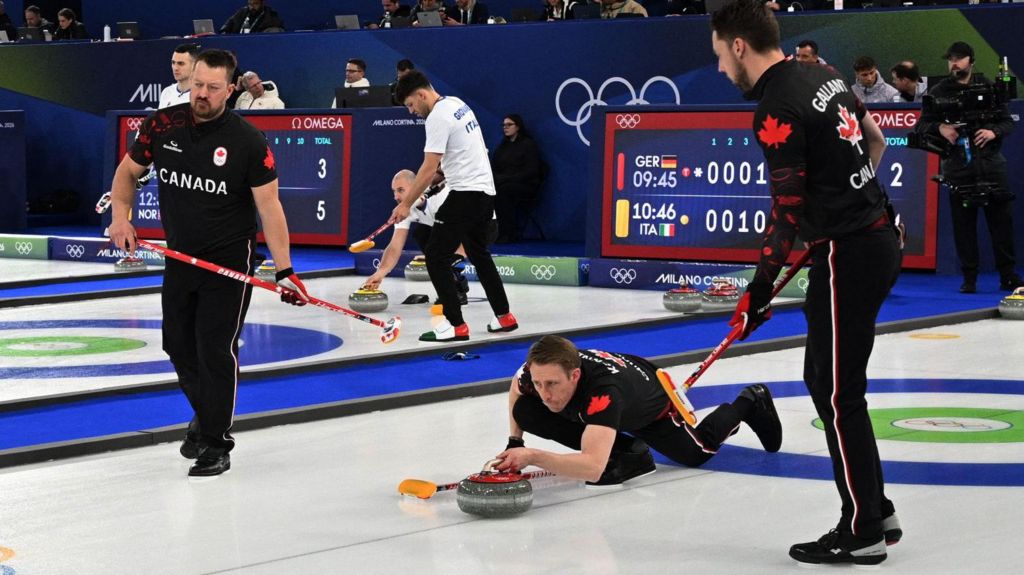
    The controversy began when Swedish curler Oskar Eriksson accused Canadian athlete Marc Kennedy of ‘double-touching’ – illegally touching the stone a second time after its initial release. The confrontation escalated into a heated verbal exchange that quickly circulated on social media, showing Kennedy appearing to make contact with stones during delivery.

    Within 24 hours, the Canadian women’s team faced identical allegations, with skip Rachel Homan accused of the same violation. Both Canadian teams vehemently denied any intentional wrongdoing, though match officials removed stones from play in both instances. The allegations extended beyond Team Canada when Great Britain’s men’s team also faced similar accusations.

    World Curling, the sport’s governing body, responded by clarifying regulations: ‘During forward motion, touching the granite of the stone is not allowed. This will result in the stone being removed from play.’ While the organization does not typically use video review, it deployed additional officials to monitor stone deliveries and implemented revised monitoring protocols requiring team requests for official observation.

    Canadian reaction has revealed deep divisions within the curling community. Tim Gray from Alberta called it ‘a sad day for Canadian sport,’ emphasizing that ‘integrity in the sport is important, even if you have to call it on yourself.’ The Globe and Mail published an opinion piece criticizing the teams’ competitive approach, suggesting they appeared ‘desperate to win’ at any cost.

    Kennedy acknowledged his emotional response while defending his integrity: ‘I probably could have handled it better. But we’re human out there and there’s a lot of emotions. I’ve curled my whole life, never once with the intention of getting an advantage through cheating.’

    International curling figures have expressed concern about the scandal’s broader implications. Former Olympian Tomi Rantamaki noted that Canadian teams serve as role models worldwide, with young players from Finland to Korea often emulating Canadian techniques and behavior. The incidents have prompted serious conversations about maintaining curling’s traditional values of sportsmanship and fair play at the highest competitive levels.

  • Visa-free entry for Omani citizens to Azerbaijan till Feb 2027

    Visa-free entry for Omani citizens to Azerbaijan till Feb 2027

    In a significant diplomatic development, Azerbaijan has officially eliminated visa requirements for citizens of Oman, facilitating enhanced travel connectivity between the two nations. The Azerbaijani Ministry of Foreign Affairs confirmed that this policy took effect on February 15, 2026, establishing a streamlined entry protocol that will remain operational until February 15, 2027.

    Under the new framework, Omani passport holders gain authorization to enter and remain in Azerbaijan for tourism or business purposes without obtaining prior visas. The arrangement permits stays of up to thirty days per visit, with travelers allowed to utilize this visa exemption up to three separate instances throughout the policy’s duration.

    Travelers must ensure their passports maintain validity for at least six months beyond their intended date of entry into Azerbaijani territory. Additionally, the Omani government has advised all prospective visitors to secure comprehensive international health insurance coverage spanning their entire period of stay, ensuring medical protection while abroad.

    This bilateral agreement reflects growing diplomatic cooperation between the South Caucasus nation and the Gulf state, potentially fostering increased tourism exchange and economic interaction. The visa waiver signifies Azerbaijan’s continued efforts to expand its global connectivity and strengthen international partnerships, particularly with Middle Eastern countries.

    The implementation follows a trend of visa facilitation policies emerging across the region, with several nations recently simplifying entry procedures to stimulate tourism and cross-cultural engagement. This development positions Azerbaijan as an increasingly accessible destination for Gulf Cooperation Council (GCC) nationals seeking new travel experiences.

  • Sheikh Hamdan directs Dubai Games prize money to be donated to charity

    Sheikh Hamdan directs Dubai Games prize money to be donated to charity

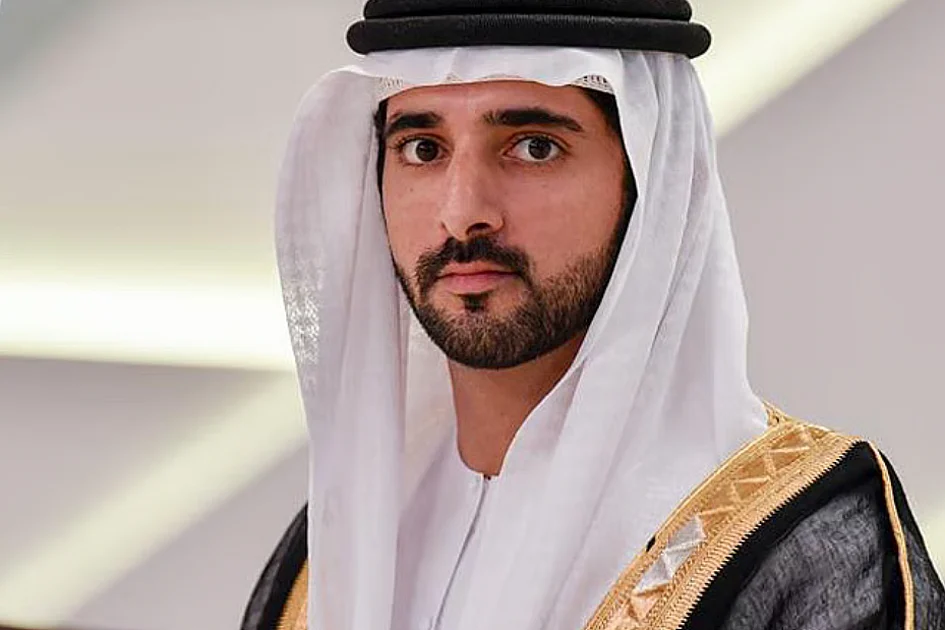
    In a significant move blending competitive sports with social responsibility, Dubai Crown Prince Sheikh Hamdan bin Mohammed bin Rashid Al Maktoum has mandated the reallocation of gaming tournament winnings to charitable organizations. The directive specifically concerns prize money earned by F3 and NAS teams during their top performances at the seventh Dubai Games edition held from February 12-15 at Dubai Festival City.

    The Crown Prince, who holds multiple governmental roles including UAE Deputy Prime Minister and Minister of Defence, emphasized the initiative’s alignment with broader objectives to enhance sports’ societal impact. The decision reflects a strategic vision to foster collective responsibility toward humanitarian causes that generate tangible improvements in community welfare.

    This philanthropic gesture occurred during the Battle of the Community competition, where F3 secured first position followed by NAS as runners-up. The Dubai Games 2026 event featured high-intensity challenges with professional medical support systems in place for participants, though specific monetary values of the redirected prizes remain undisclosed.

    The initiative establishes a precedent for integrating esports and gaming competitions with social development frameworks, demonstrating how recreational activities can directly contribute to societal betterment through structured charitable mechanisms.

  • Gaza reconstruction: Who has signed up to Trump’s Board of Peace?

    Gaza reconstruction: Who has signed up to Trump’s Board of Peace?

    Washington witnessed the inaugural gathering of President Donald Trump’s controversial Board of Peace on Thursday, marking a significant development in post-conflict governance plans for Gaza. The summit convened against the backdrop of ambitious reconstruction proposals featuring high-rise apartments and data centers, while Israeli military operations persist despite an October ceasefire agreement. The death toll in the enclave has surpassed 72,000 Palestinians since October 2023.

    The board, which Trump has hailed as “the most prestigious assembly ever convened,” requires a $1 billion entrance fee for permanent membership. Of the approximately 60 nations invited, nearly half have declined participation, including many traditional U.S. allies. Currently, 26 countries have joined the initiative that emerged from Trump’s 20-point peace plan announced last September.

    Structural Framework and Leadership:
    The board operates under a hierarchical structure with Trump serving as permanent chairman possessing unrestricted authority to appoint and remove members. An executive board of seven influential figures governs operations:
    – Jared Kushner, Trump’s son-in-law
    – Marco Rubio, U.S. Secretary of State
    – Steve Witkoff, U.S. Special Envoy to the Middle East
    – Tony Blair, former UK Prime Minister
    – Ajay Banga, World Bank President
    – Marc Rowan, U.S. private equity billionaire
    – Robert Gabriel, U.S. Deputy National Security Advisor

    These executives will oversee the National Committee for the Administration of Gaza (NCAG), a 15-member Palestinian body led by former deputy minister Ali Shaath that handles logistical operations without political authority. Nikolay Mladenov, former Bulgarian foreign minister, serves as High Representative for Gaza.

    Regional Participation and Geopolitical Calculations:
    Ten Middle Eastern and North African nations have joined, including UAE, Morocco, and Bahrain—all signatories of the 2020 Abraham Accords. Egypt’s participation reflects concerns about potential Palestinian displacement and dependence on U.S. military aid. Saudi Arabia, Turkey, Jordan, and Qatar joined through a joint statement committing to Palestinian self-determination, though Riyadh’s involvement is motivated by desired F-35 jet acquisitions and regional rivalries with the UAE.

    Notable Absences and Controversies:
    The board faces significant opposition from multiple fronts. Israel’s February 12 membership sparked domestic criticism, with Finance Minister Bezalel Smotrich advocating for military governance instead. The absence of Palestinian political representation—neither Hamas nor the Palestinian Authority were invited—has drawn condemnation. Iran, Lebanon, Syria, and several Arab states are excluded entirely.

    European participation remains limited to Hungary and Bulgaria as full members, with Italy and Cyprus attending as observers. France declined involvement, citing protection of UN authority, while Germany referenced constitutional incompatibility. Canada had its invitation rescinded after Prime Minister Mark Carney criticized Trump during his Davos address.

    International Skepticism and Legal Challenges:
    The board’s charter omits specific mention of Gaza, raising concerns about potential mission expansion that could marginalize existing international institutions. When questioned about replacing the UN, Trump responded, “It might,” criticizing the organization for failing to meet its potential.

    Human rights organizations have condemned the initiative, with Al-Haq describing it as “a dark day for the international community” that extends Israeli occupation. Hamas officials have dismissed the board as “the farce of the era,” while Islamic Jihad criticized appointments as serving Israeli interests.

    The board operates under UN Security Council Resolution 2803, permitting international stabilization forces in Gaza, though EU diplomat Kaja Kallas claims the current composition exceeds the original mandate. As reconstruction plans advance amid ongoing violence, the board faces profound challenges in establishing legitimacy and effective governance mechanisms.

  • Israel police to deploy around Al-Aqsa for Ramadan, Palestinians report curbs

    Israel police to deploy around Al-Aqsa for Ramadan, Palestinians report curbs

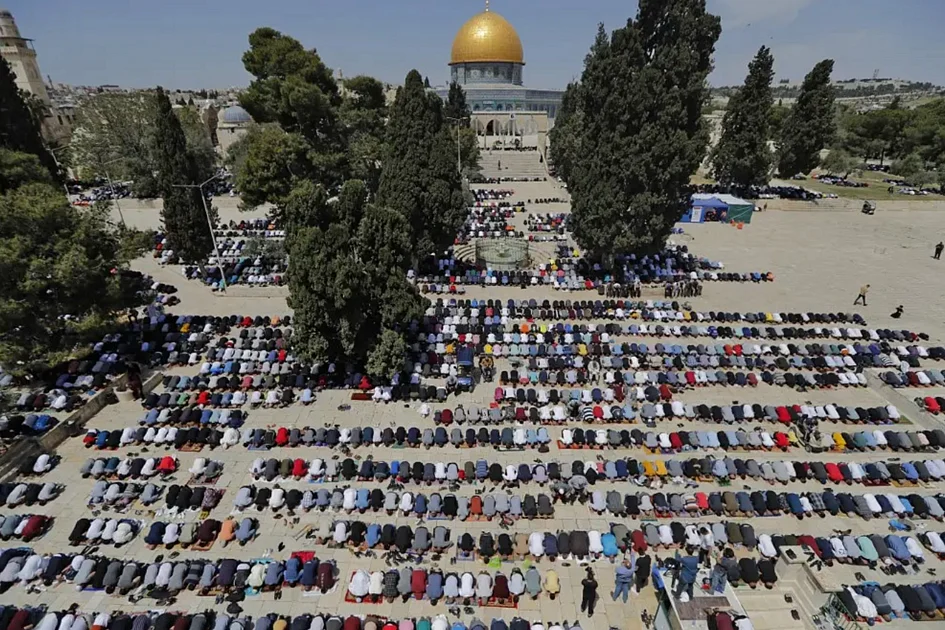
    Jerusalem braces for heightened security measures as Israeli authorities announce massive police deployments around Al-Aqsa Mosque compound during the upcoming Ramadan period. The controversial security plan, revealed Monday by senior Jerusalem police officer Arad Braverman, comes amid Palestinian allegations of increasingly restrictive measures at Islam’s third-holiest site.

    Throughout the Muslim holy month of fasting and prayer, traditionally attended by hundreds of thousands of Palestinian worshippers, Israeli forces will maintain constant presence “day and night” across the compound known to Jews as the Temple Mount. Special emphasis will be placed on Friday prayers, which typically draw the largest congregations of Muslim faithful.

    The policing strategy includes a recommended allocation of 10,000 entry permits for Palestinians from the occupied West Bank requiring special authorization to access Jerusalem. However, Palestinian officials contend that actual permit issuance will mirror last year’s restrictive criteria, limited to men over 55 and women over 50—a significant reduction from historical access levels.

    Further tensions emerged as Palestinian authorities reported Israeli restrictions on Islamic Waqf preparations, including prohibitions on installing shade structures and establishing temporary medical clinics. According to Waqf sources, 33 employees have already been barred from the compound in the week preceding Ramadan’s commencement.

    The sacred compound remains a perennial flashpoint in the Israeli-Palestinian conflict, representing both a central symbol of Palestinian identity and the site of the ancient Jewish Second Temple. While longstanding arrangements permit Jewish visits but prohibit prayer, recent years have seen increased challenges to this status quo by Jewish ultranationalists, including far-right politician Itamar Ben-Gvir’s controversial prayers at the site during his tenure as national security minister.

    Police officials maintain that no changes to the status quo are planned, though Palestinian communities express growing concerns about the erosion of traditional access rights and religious freedoms at one of Islam’s most significant holy sites.

  • Hundreds of ultra-Orthodox Jewish men chase Israeli female soldiers

    Hundreds of ultra-Orthodox Jewish men chase Israeli female soldiers

    A disturbing incident in the ultra-Orthodox city of Bnei Brak near Tel Aviv has exposed deepening fractures within Israeli society, as two female Israeli Defense Forces soldiers required emergency rescue after being pursued by hundreds of Haredi men. Dramatic footage captured the soldiers fleeing through debris-strewn streets surrounded by protective guards while being chased by screaming protesters clad in traditional black and white attire.

    The soldiers, identified as squad commanders from the education and youth corps, were conducting an official home visit to a prospective unit recruit when the mob targeted them. Israeli academic Shaiel Ben Ephraim characterized the event as “absolute insanity” on social media platform X, noting the incident reflected broader societal collapse.

    The confrontation highlights intensifying tensions over military conscription that has long divided Israeli society. The Haredim community, comprising approximately 15% of Israel’s Jewish population and among its fastest-growing demographics, has historically resisted military service, with many opting instead for religious studies supported by government subsidies.

    This conscription issue has created significant political strain within Prime Minister Benjamin Netanyahu’s government, with ultra-Orthodox representation parties United Torah Judaism and Shas recently enacting a “half-resignation” from the coalition over mounting tensions. While Netanyahu condemned the violence as unrepresentative of the broader Haredi community and vowed to prevent “anarchy,” footage showed local residents overturning a police vehicle to cheering crowds.

    Israeli riot police responded with stun grenades and made 23 arrests during the confrontation that left three officers wounded. The incident occurs against the backdrop of Israel’s Supreme Court ruling in June 2024 that ultra-Orthodox Jews could be conscripted, triggering mass opposition from the Haredim community and reigniting a decades-old debate about military service exemptions originally granted by Israel’s first prime minister in 1948.

  • Facing a demographic catastrophe, Ukraine is paying for troops to freeze their sperm

    Facing a demographic catastrophe, Ukraine is paying for troops to freeze their sperm

    Amid Russia’s relentless invasion, Ukraine faces an escalating demographic catastrophe compounded by massive military casualties and refugee displacement. A groundbreaking state-funded program now offers soldiers reproductive hope through cryopreservation services, though implementation challenges reveal deeper societal struggles.

    National Guard soldier Maxim, 35, represents the new frontline of Ukraine’s survival strategy. ‘Our men are dying. The Ukrainian gene pool is dying,’ he states from eastern combat positions. His recent sperm preservation at a Kyiv clinic provides potential future parenthood with his wife should he perish. The constant threat of Russian drones means ‘there is no guarantee you’re safe,’ Maxim explains, noting how combat stress reduces reproductive capacity.

    Private fertility clinics initiated free cryopreservation for military personnel in 2022 following Russia’s full-scale invasion. Parliament formalized the practice in 2023 with state funding. ‘Our soldiers are defending our future but may lose their own,’ explains MP Oksana Dmitrieva, who co-drafted the legislation. ‘We wanted to give them that chance.’

    The program addresses a pre-existing demographic crisis dramatically worsened by war. Millions of refugees (predominantly women) remain abroad while thousands of Ukraine’s fittest men die in combat. MP Dmitrieva acknowledges this during an interview in an unheated Kyiv hotel lobby, highlighting how Russian missile attacks on energy infrastructure compound daily hardships.

    Kyiv’s state-run Centre for Reproductive Medicine began accepting soldiers into the program in January. Director Oksana Holikova anticipates significant demand despite initial modest participation. The clinic’s quiet corridors reveal war’s hidden impacts: pregnancy rates have halved since the invasion began. Approximately 60% of patients now require antidepressants, with many experiencing ‘delayed life syndrome’—postponing major decisions like childbirth amid constant danger.

    Legal complexities emerged when war widow Katerina Malyshko was denied access to her deceased husband’s frozen embryos. Vitaly, killed by a guided bomb, had left reproductive material before his death. Katerina’s six-month legal battle culminated in a landmark court victory granting usage rights. ‘I felt joy and grief simultaneously,’ she recalls. ‘I wanted to honor my husband.’

    The legislation now preserves samples for three years posthumously with prior written consent, though MP Dmitrieva acknowledges needing further ‘ironing out.’ Amendments are scheduled for spring parliamentary review.

    Frontline soldier Maxim emphasizes psychological barriers to participation, suggesting mandatory preservation during military drafting. ‘Men are secretive,’ he admits, noting widespread reproductive issues among troops. ‘We won’t do anything unless you shove it in our face.’

    As Ukraine fights for territorial survival, this reproductive initiative represents parallel battles for demographic preservation and future family creation amid unimaginable loss.

  • How the tide turned against the leader of South Africa’s second-biggest party

    How the tide turned against the leader of South Africa’s second-biggest party

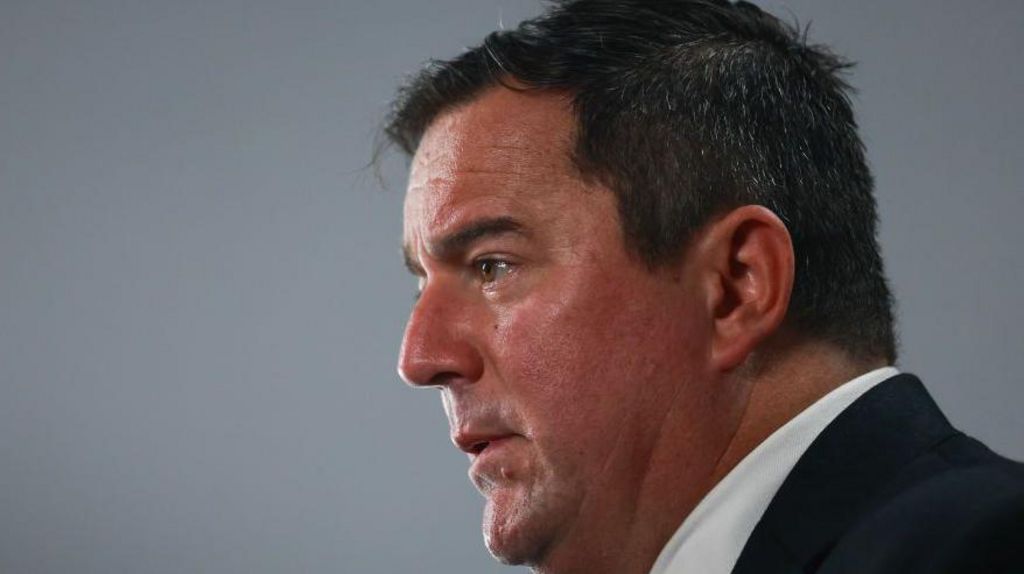
    South Africa’s political landscape faces renewed turbulence as Democratic Alliance (DA) leader John Steenhuisen announces his resignation following multiple scandals that have shaken the party’s carefully cultivated image of integrity. The development triggers a potentially divisive leadership contest that threatens to expose racial faultlines within the opposition party.

    The DA, historically perceived as representing racial minorities, joined the governing coalition for the first time following the 2024 elections that failed to produce an outright winner. Steenhuisen, serving as Agriculture Minister in President Cyril Ramaphosa’s cabinet, found himself embroiled in controversies that ultimately forced his political retreat.

    The minister faced intense criticism from farming communities over his handling of a devastating foot-and-mouth disease outbreak that crippled South Africa’s livestock industry. Theo de Jager of the Southern African Agri Initiative accused Steenhuisen’s administration of systematically silencing critics through exclusion and isolation tactics.

    More damaging emerged a financial scandal revealing Steenhuisen faced a default court judgment for unpaid personal credit card debt exceeding 150,000 rand despite earning an annual salary of 2.69 million rand. The Daily Maverick’s revelation prompted public scrutiny of how a leader unable to manage personal finances could oversee national agricultural policy.

    The controversy deepened when Steenhuisen orchestrated the dismissal of Environment Minister Dion George, the DA’s federal finance chair. While official reasons cited under-performance, conservation groups decried the move as a ‘political execution’ linked to George’s anti-wildlife trafficking stance. The EMS Foundation accused Steenhuisen of aligning with wildlife breeding interests upon assuming his ministerial portfolio.

    George’s subsequent resignation revealed further complications: he had confiscated Steenhuisen’s party-issued credit card last year due to unreconciled spending on UberEats, car rentals, and hotel accommodations. Although a DA inquiry cleared Steenhuisen of wrongdoing, the cumulative scandals proved politically insurmountable.

    Political analysts offer contrasting assessments of Steenhuisen’s legacy. Sandile Swana cited the leader’s 2010 extramarital affair, public fallout with George, and financial management issues as evidence of poor leadership. Conversely, Khanyi Magubane suggested Steenhuisen’s cooperative relationship with the ANC in coalition government represented the ‘core issue’ leading to his departure, disappointing DA hardliners expecting continued opposition.

    The leadership contest now pits Cape Town mayor Geordin Hill-Lewis against Gauteng leader Solly Msimanga, with analysts suggesting racial dynamics may influence the outcome. Magubane noted the DA’s conservative base might resist a black leader, reflecting persistent racial divisions within the party despite efforts to broaden its appeal following Mmusi Maimane’s leadership from 2015-2019.

    The developments underscore the challenges facing South Africa’s political evolution three decades after apartheid’s end, as historical divisions continue shaping contemporary governance dynamics.