博客

  • France releases suspected Russian ‘shadow fleet’ tanker after fine paid

    France releases suspected Russian ‘shadow fleet’ tanker after fine paid

    French authorities have released the oil tanker Grinch after its ownership paid a substantial financial penalty, concluding a three-week detention near Marseille. The vessel, sailing under a Comoros flag but originating from Murmansk in northern Russia, was intercepted by French naval forces in the Mediterranean in January as part of intensified efforts to combat Russia’s sanctions evasion network.

    French Foreign Minister Jean-Noël Barrot confirmed the tanker’s release on Tuesday, emphasizing that circumventing European sanctions now carries significant consequences. ‘Russia will no longer be able to finance its war with impunity through a ghost fleet off our coasts,’ Barrot stated in a social media post, referencing Moscow’s ongoing conflict in Ukraine.

    The Marseille judicial court administered the penalty through a guilty plea procedure, though the precise fine amount remains undisclosed. Officials described it as ‘several million euros’ in value. The tanker had been immobilized at Fos-sur-Mer port during the legal proceedings, incurring additional operational costs for its operators.

    This incident highlights the expanding challenge of shadow fleets—clandestine networks of aging tankers with obscure ownership structures deliberately designed to bypass Western sanctions on Russian, Iranian, and Venezuelan oil exports. Monitoring groups estimate this covert fleet has grown to approximately 1,468 vessels, nearly triple its size since Russia’s 2022 invasion of Ukraine.

    The French action aligns with recent multinational efforts to enforce energy sanctions. In January, British armed forces supported a U.S. operation to seize another Russian-flagged tanker in the Atlantic for similar violations, though Moscow continues to denounce such interventions as unlawful acts against properly registered vessels.


  • Frederick Wiseman, Oscar-winning documentary filmmaker, dies at 96

    Frederick Wiseman, Oscar-winning documentary filmmaker, dies at 96

    Frederick Wiseman, the groundbreaking documentary filmmaker whose observational style revolutionized nonfiction cinema, passed away peacefully on Monday at age 96. His production company, Zipporah Films, confirmed the news without disclosing the cause of death.

    Wiseman’s extraordinary six-decade career produced approximately 50 films that meticulously documented American institutions through his distinctive “direct cinema” approach. His cameras captured the inner workings of schools, hospitals, government bodies, and cultural organizations without narration, interviews, or artificial lighting—creating immersive experiences that allowed audiences to draw their own conclusions.

    The filmmaker’s method involved shooting hundreds of hours of raw footage that he would personally edit into feature-length documentaries. “The audience is placed in the middle of these events and asked to think through their own relationship to what they are seeing and hearing,” Wiseman told Documentary Magazine in 1991.

    Despite limited commercial distribution, Wiseman’s work earned critical acclaim and numerous honors, including an honorary Academy Award in 2016. The Academy praised his “masterful and distinctive documentaries [that] examine the familiar and reveal the unexpected.” His additional accolades included four Emmy Awards and recognition from major international film festivals.

    Born in Boston to Jewish immigrant parents on January 1, 1930, Wiseman initially pursued law before abandoning the profession for filmmaking. His groundbreaking 1967 debut, “Titicut Follies,” exposed conditions at a Massachusetts prison-hospital for the criminally insane and established his uncompromising observational style.

    Wiseman’s filmography includes seminal works like “High School” (1968), “Law and Order” (1969), and later projects examining European cultural institutions. His final film, 2023’s “Menus-Plaisirs — Les Troisgros,” continued his tradition of lengthy, immersive documentaries that challenged conventional viewing experiences.

    The filmmaker is survived by his sons, David and Eric. His wife Zipporah, a law professor for whom he named his production company, passed away in 2021.

  • Sri Lankan lawmakers scrap their pensions, delivering on a campaign promise

    Sri Lankan lawmakers scrap their pensions, delivering on a campaign promise

    COLOMBO, Sri Lanka — In a sweeping legislative action addressing public anger over economic mismanagement, Sri Lanka’s parliament voted decisively on Tuesday to eliminate pension benefits for lawmakers. The bill passed with overwhelming support, receiving 154 votes in favor with only two oppositions in the 225-member assembly.

    The move fulfills a central campaign pledge by President Anura Kumara Dissanayake’s Marxist-leaning government, elected in 2024 amid widespread resentment toward political elites blamed for the nation’s devastating 2022 economic collapse. The new legislation terminates payments to all current recipients and those who would have qualified under the previous system, which provided pensions after just five years of parliamentary service.

    This represents the administration’s second major austerity measure targeting political privileges, following September’s abolition of perks for former presidents that included state-funded housing, allowances, pensions, transportation, and dedicated offices with staff for ex-leaders and their widows.

    Justice Minister Harshana Nanayakkara, who presented the bill, emphasized that lawmakers had “no moral right” to receive pensions while the nation struggles to recover from its worst economic crisis. The country declared bankruptcy in April 2022 with over $83 billion in debt, prompting a $2.9 billion International Monetary Fund bailout package in 2023.

    Sri Lanka’s economic devastation—characterized by severe shortages of food, medicine, fuel, and electricity—sparked mass protests that ultimately forced former President Gotabaya Rajapaksa from office. The crisis stemmed from economic mismanagement compounded by COVID-19 pandemic impacts and 2019 terrorism attacks that crippled the vital tourism industry.

    The government recently announced completion of debt restructuring agreements with bilateral, multilateral, and private creditors, seeking $17 billion in debt service relief as the nation continues its recovery journey.

  • Powering industrial diversification efforts

    Powering industrial diversification efforts

    Brunei Fertilizer Industries (BFI) has rapidly transformed into a strategic national asset since its establishment in 2013, demonstrating remarkable success in advancing Brunei’s economic diversification agenda. Operating Southeast Asia’s largest single-train fertilizer facility, the company converts domestic natural gas into high-value ammonia and urea products for export across Asia, Africa, and the Americas.

    Under CEO Dr. Harri Kiiski’s leadership, BFI has achieved industry recognition as one of only 30 stewardship champions within the International Fertilizer Association’s 500-member network. The company boasts an exceptional safety record of over 4.2 million injury-free working hours while establishing itself as a reliable supplier with premium-quality products.

    The enterprise has significantly contributed to national workforce development, increasing Bruneian employment from 70% to 78% of its workforce. Through targeted graduate recruitment programs, BFI has developed 160 young professionals into key operational roles, aligning with Brunei’s Wawasan 2035 development vision.

    Technologically, BFI utilizes world-class licensed processes producing 2,200 tonnes of ammonia and 3,900 tonnes of urea daily. The company is advancing into specialty fertilizers containing inhibitors, micronutrients, and biostimulants to address regional food security challenges and soil health issues, particularly zinc deficiency affecting women and children.

    Environmental sustainability remains central to operations, with modern processes optimizing energy efficiency, reducing water intensity, and limiting emissions. The company explores future opportunities in carbon capture, storage, and green energy integration through the ASEAN grid.

    Strategically positioned at market center with superior logistics capabilities, BFI offers 30-40% lower transport emissions compared to Middle Eastern producers. The company now serves as a confidence anchor for investors in chemicals, energy transition, and advanced manufacturing, positioning Brunei as an emerging hub for future-oriented industries.

  • In the face of history, Japan’s discomfort telling

    In the face of history, Japan’s discomfort telling

    The Munich Security Conference became an unexpected arena for historical reckoning as Chinese Foreign Minister Wang Yi’s remarks about Japan’s wartime legacy triggered a diplomatic confrontation. During the 62nd gathering of global security leaders, Wang drew pointed comparisons between Japan and Germany’s approaches to addressing their historical responsibilities, highlighting stark contrasts in how the two nations have institutionalized remembrance of wartime actions.

    Wang’s commentary, grounded in the foundational agreements that established the post-1945 Asia-Pacific order, emphasized that China’s position on Taiwan’s status and Japan’s renunciation of militarism reflected Allied consensus rather than Chinese invention. The Chinese diplomat’s statements met with appreciative reception from European delegates familiar with confronting difficult historical truths.

    Japan’s response demonstrated notable sensitivity, with Tokyo lodging formal diplomatic protests with unusual urgency. The reaction appeared disproportionate to Wang’s actual statements, which primarily reiterated established historical facts and international agreements. Japanese officials framed their response within the context of contemporary security concerns, attempting to link Asian regional stability to the ongoing situation in Ukraine.

    Observers noted the particular irony of this exchange occurring in Germany, a nation that has systematically addressed its Nazi past through legal frameworks criminalizing Nazi symbolism and creating comprehensive remembrance institutions. German officials present at the conference maintained composure during Wang’s historical comparisons, acknowledging the points without diplomatic protest.

    The exchange revealed deeper tensions regarding Japan’s ongoing relationship with its wartime history, particularly concerning the Yasukuni Shrine where Class-A war criminals are honored. Recent statements from Japanese Prime Minister Sanae Takaichi about creating “the environment” for visiting the shrine have raised concerns among Japan’s neighbors about the nation’s historical perspective.

    Japan’s diplomatic strategy in Munich appeared focused on securing Western support for its military expansion plans, framed as “burden-sharing” within collective security arrangements. However, European officials preoccupied with transatlantic relations and domestic security challenges showed limited enthusiasm for underwriting Tokyo’s ambitions, despite Japanese efforts to present regional security through a Cold War-era lens.

    The conference ultimately demonstrated that historical accountability remains an unresolved element in Asia-Pacific relations, with China presenting itself as a stabilizing force committed to regional peace while Japan seeks to advance its security agenda through strengthened Western alliances.

  • The US will face Italy in the men’s speedskating team pursuit Olympic final

    The US will face Italy in the men’s speedskating team pursuit Olympic final

    In a commanding display of athletic prowess at the Milan Cortina Olympics, the American speedskating trio of Casey Dawson, Emery Lehman, and Ethan Cepuran secured their place in the men’s team pursuit final with a decisive victory over China during Tuesday’s semifinal round. The U.S. team, boasting both a world record set in November 2023 and a bronze medal from the 2022 Beijing Games, finished with an impressive time of 3 minutes, 44.29 seconds, establishing an nearly 8-second advantage over their Chinese competitors.

    The American victory sets the stage for a highly anticipated gold medal confrontation against host nation Italy, creating a dramatic rematch of Sunday’s quarterfinal where the Italian team emerged victorious. The Italian squad, comprised of Davide Ghiotto, Andrea Giovannini, and Michele Malfatti, demonstrated exceptional form in their own semifinal matchup against the Netherlands, clocking in at 3:38.88 – more than 1.5 seconds faster than the Dutch team.

    This championship face-off carries historical significance for Italy, whose only previous medal in men’s team pursuit came from their gold medal performance at the 2006 Turin Games. Meanwhile, the United States continues its pursuit of its first-ever gold medal in the discipline, having previously earned bronze in both men’s and women’s team events.

    The competition format, which debuted at the 2006 Olympics, features three skaters from each nation racing together against the clock, with teams starting from opposite sides of the track. The men’s competition covers 3,200 meters across eight laps of the oval.

    In other notable developments, two-time defending champion Norway suffered an unexpected elimination during the quarterfinal round, while China and the Netherlands will compete for the bronze medal. The women’s team pursuit semifinals, scheduled for later Tuesday, will feature matchups between the United States and defending 2022 gold medalist Canada, and the Netherlands against Japan.

  • Germany beats France and Switzerland tops Italy to reach men’s hockey quarterfinals at Olympics

    Germany beats France and Switzerland tops Italy to reach men’s hockey quarterfinals at Olympics

    In a commanding display of ice hockey prowess, Germany secured an emphatic 5-1 victory against France during their Olympic matchup on Tuesday, setting the stage for a quarterfinal confrontation with Slovakia. The German team established their dominance early with a three-goal explosion in the opening period. Edmonton Oilers star Leon Draisaitl initiated the scoring with a precise low wrist shot on a power play at the 3:40 mark, assisted by Joshua Samanski. Frederik Tiffels extended the lead with an unassisted goal from an acute angle, followed by JJ Peterka of the Utah Mammoth capitalizing on a perfect setup from Tim Stutzle to beat French goalkeeper Julian Junca. Despite a second-period consolation goal from French captain Pierre-Edouard Bellemare, Germany maintained control with additional goals from Samanski on the power play and Nico Sturm into an empty net. German netminder Philipp Grubauer delivered a solid performance in goal throughout the contest. The victory completes Germany’s group stage campaign while France concludes their Olympic tournament without a win in four appearances.

  • At least 2 killed, 3 critically injured in shooting at US ice rink

    At least 2 killed, 3 critically injured in shooting at US ice rink

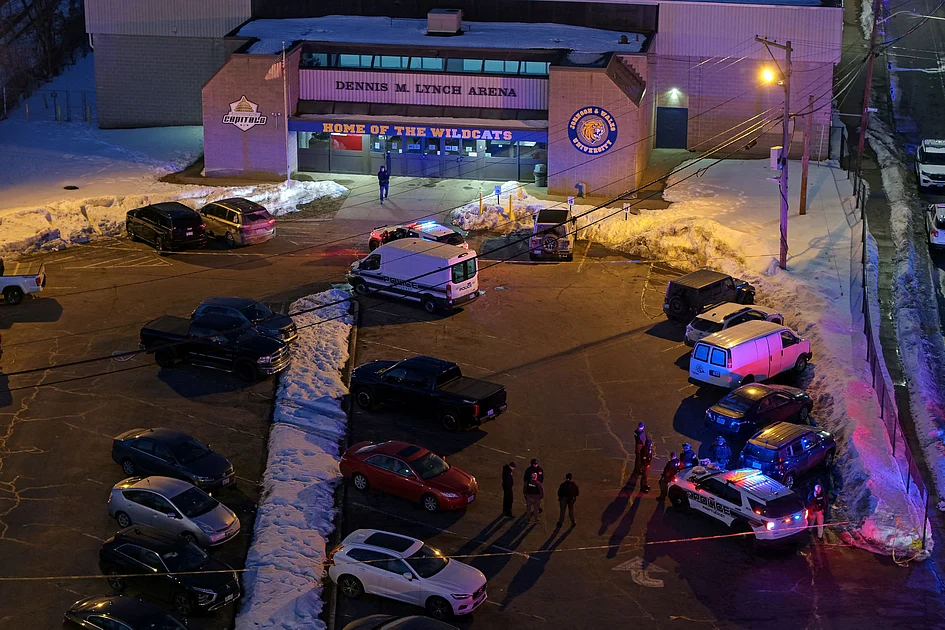
    A targeted shooting at a Rhode Island ice rink during a high school hockey game has resulted in multiple casualties, with authorities confirming two fatalities and three individuals critically injured. The incident occurred Monday evening at Pawtucket’s Dennis M. Lynch Arena, sending terrified players and spectators scrambling for safety as gunshots echoed through the facility.

    Pawtucket Police Chief Tina Goncalves revealed preliminary findings indicate the violence stemmed from a targeted attack potentially connected to familial conflicts. While specific identities remain undisclosed, authorities confirmed the suspect was among the deceased. Three additional victims were transported to nearby medical facilities in critical condition following the exchange of gunfire.

    Eyewitness accounts and unverified social media footage depict chaotic scenes as approximately twelve shots rang out during the game. Players initially continued skating before recognizing the danger, with many rushing toward locker rooms or exits while spectators sought cover. One participant recounted to local media how teammates barricaded themselves in dressing rooms for protection.

    This tragedy marks the second significant shooting incident within Rhode Island’s small geographic area in recent months, occurring merely 5.6 kilometers from Brown University where another mass shooting transpired two months prior. The event reinforces concerning statistics regarding American gun violence, with the Gun Violence Archive documenting over 400 mass shooting incidents nationwide during 2025 alone—defined as episodes where four or more individuals are shot excluding the perpetrator.

    Comprehensive gun violence data from the previous year indicates at least 14,703 firearm-related fatalities occurred across the United States, not including suicide cases. The frequency of such incidents highlights ongoing debates regarding firearm accessibility under current legislative frameworks.

  • CBSE says all Grade 10 students must attempt first exam

    CBSE says all Grade 10 students must attempt first exam

    The Central Board of Secondary Education (CBSE) has instituted a stringent new examination requirement mandating all Class 10 students to participate in the initial board examination session. According to an official communication released on Saturday, the educational board clarified that attendance during the first examination series is compulsory for all registered candidates.

    The policy establishes that students who miss three or more subject examinations during the initial testing period will be automatically disqualified from participating in the second examination session. These students will be categorized under ‘Essential Repeat’ status, requiring them to wait until the following year’s main examinations in February to attempt their tests again.

    CBSE developed these guidelines in response to numerous student requests seeking permission to bypass the first examination and directly appear for the second session. The board’s comprehensive framework outlines specific eligibility criteria for second examination participation, including: improvement category applications for up to three main subjects, first/third chance compartment examinations, combined compartment and improvement attempts, and improvement opportunities for students who passed through subject replacement.

    The notification further specified that students receiving ‘Compartment’ results in the initial examination will be permitted to reappear in the second session under the compartment category, though additional subjects beyond the standard curriculum will not be permitted after passing Class X. The board explicitly stated it will not entertain any further queries regarding this policy, emphasizing the finality of these examination regulations.

  • Slalom is Mikaela Shiffrin’s last shot at an Olympic medal in Italy. Good news? It’s her best event

    Slalom is Mikaela Shiffrin’s last shot at an Olympic medal in Italy. Good news? It’s her best event

    CORTINA D’AMPEZZO, Italy — As the alpine skiing events at the Milan Cortina Olympics approach their conclusion, all eyes turn to American skiing phenomenon Mikaela Shiffrin as she prepares for her final medal opportunity in Wednesday’s slalom competition. The most decorated ski racer in history finds herself in an unfamiliar position—still seeking her first podium finish at these Games and her first Olympic medal in eight years.

    Shiffrin’s campaign at Tofane has been marked by near-misses and uncharacteristic performances. A surprisingly slow slalom run during last week’s combined event cost her a potential medal, while her 11th-place finish in giant slalom—though just three-tenths off the podium—demonstrated the razor-thin margins separating champions in this highly competitive field.

    The 30-year-old champion approaches her signature event having already secured a record ninth World Cup slalom title this season with two races remaining. Yet Olympic glory has remained elusive since her teenage triumph in Sochi twelve years ago. Shiffrin acknowledges the unique challenges of her discipline, noting that despite 71 career slalom victories, ‘it never gets easier—you become more aware of how challenging it is.’

    The psychological burden remains significant for the athlete who has rewritten her sport’s record books. Shiffrin arrived in the Dolomites confident she had moved past her disappointing zero-medal performance at Beijing 2022, but the combined event left her mystified and subdued. Her aggressive giant slalom performance, however, restored optimism.

    Slovakian rival Petra Vlhova, the reigning gold medalist returning from January knee surgery that shredded multiple ligaments, expressed empathy for Shiffrin’s position: ‘I can imagine what she’s feeling right now. She’s strong and I believe she can make it, but it takes a lot of energy.’

    The technical course setup appears flatter and potentially easier than typical World Cup venues, suggesting another tightly contested race similar to the giant slalom. Shiffrin’s margin for error—both physical and mental—may be smaller than usual. She has analyzed her combined performance where she placed 15th—her worst slalom finish since 2012—citing equipment misalignment, difficult light conditions, and an imperfect mindset.

    U.S. Ski and Snowboard president Sophie Goldschmidt has praised Shiffrin as ‘the ultimate role model,’ noting her grace under pressure and support for teammates even while processing her own challenges. However, the unique pressure of the quadrennial Olympic spectacle continues to present a distinctive challenge for the athlete widely considered the Greatest of All Time in her sport.

    As Shiffrin prepares for her two runs on Wednesday, she does so with open eyes: ‘I’m kind of going into it with my eyes open that we can see a very similar situation and I will try to handle it differently in my head.’ Whatever the outcome, those who know her best understand she will leave everything on the mountain.