博客

  • Courting controversy and befriending Trump – Fifa’s ‘unlikely saviour’

    Courting controversy and befriending Trump – Fifa’s ‘unlikely saviour’

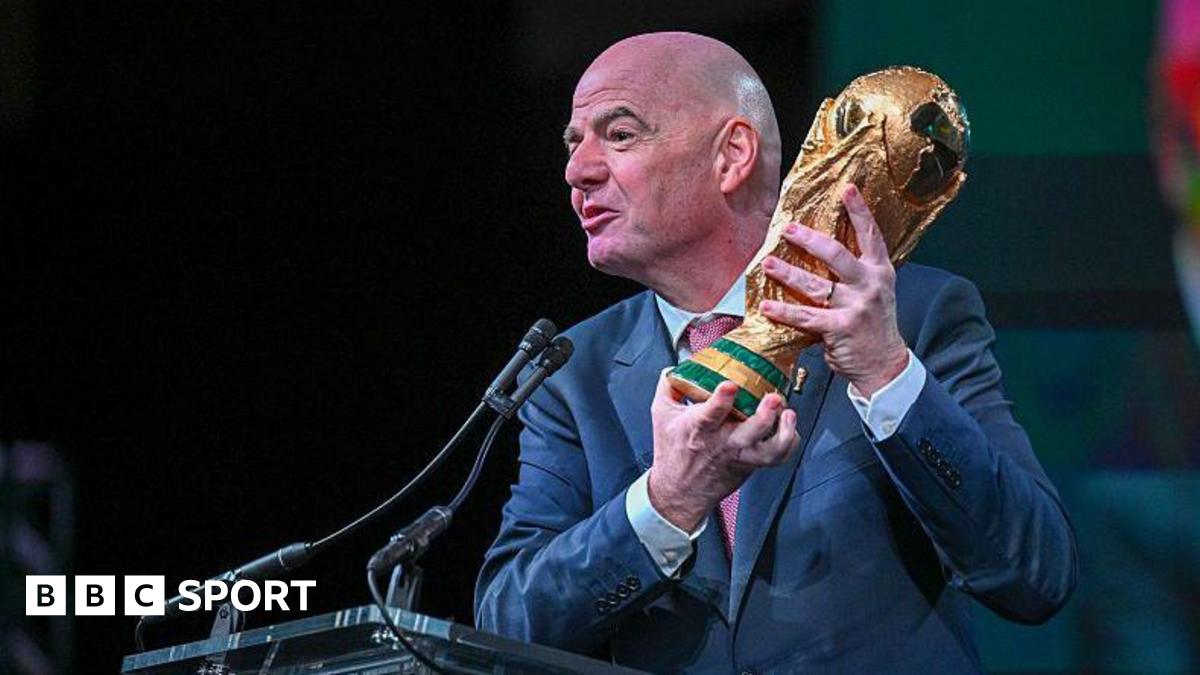
    A transformative yet divisive era in global football governance marks its tenth anniversary as Gianni Infantino completes a decade presiding over FIFA. Assuming leadership amidst unprecedented institutional crisis following Sepp Blatter’s corruption-tainted resignation, the Swiss-Italian administrator inherited a governing body facing a $550 million financial deficit and catastrophic credibility loss.

    The restoration journey commenced with radical financial redistribution policies. Infantino’s flagship FIFA Forward program revolutionized funding mechanisms, injecting $2.8 billion across 211 member associations through 1,600 development projects. This financial engineering produced staggering results: projected revenues of $13 billion for the 2023-2026 cycle, representing monumental growth from the precarious situation inherited in 2016.

    This economic renaissance however emerges alongside escalating controversies. The expansion of flagship tournaments—including the 48-team World Cup format and revamped Club World Cup—has drawn criticism from player unions and European stakeholders. Infantino’s unorthodox diplomatic approach has manifested through close ties with controversial figures, most notably U.S. President Donald Trump who received FIFA’s inaugural Peace Prize despite widespread skepticism.

    Geopolitical tensions peaked when European federations staged symbolic walkouts protesting Infantino’s perceived prioritization of political relationships over football governance. The awarding of the 2034 World Cup to Saudi Arabia, coupled with Qatar 2022’s human rights controversies, has intensified scrutiny about ethical consistency within FIFA’s decision-making processes.

    Infantino’s personal leadership style remains equally polarizing. His theatrical pronouncements—including the much-criticized “Today I feel Qatari” speech—contrast with substantial financial achievements for developing football nations. A 33% salary increase to $2.9 million, while independently determined, ironically places his compensation near Blatter’s disputed earnings level.

    Despite European criticism, Infantino maintains impregnable support from Asia and Africa, regions that have benefited most from financial redistribution. With term limit interpretations potentially enabling extended leadership, the football world contemplates a future where economic prosperity increasingly contends with ethical governance questions.


  • Spring Festival lights up New York and beyond

    Spring Festival lights up New York and beyond

    Across the United States, the vibrant hue of Chinese red has transformed urban landscapes as Spring Festival celebrations extend far beyond traditional Chinatown boundaries. From February 16-17, more than fifteen iconic American landmarks participated in illumination ceremonies, including New York’s Empire State Building which marked its 26th consecutive year of glowing crimson to honor the Lunar New Year.

    The cultural phenomenon has gained remarkable mainstream traction, with major institutions embracing the festivities. The Metropolitan Museum of Art hosted dragon dance performances and zodiac exhibitions while the National Museum of Asian Art in Washington DC held dedicated celebrations. The American Dream complex in New Jersey, the nation’s second-largest shopping center, transformed its iconic Ferris wheel red and organized family-friendly activities featuring traditional lantern displays and zodiac-themed decorations.

    Chinese Consul General Chen Li in New York emphasized the festival’s significance, stating: ‘Spring Festival has served as an important bond uniting Chinese people for thousands of years. It has also become a powerful cultural symbol that bridges different civilizations and peoples.’ This cultural exchange was further demonstrated through collaborations like the China Institute of America’s partnership with the Shanghai Museum, which brought interactive cultural workshops to Lower Manhattan.

    The commercial sector has enthusiastically adopted the celebration, with retailers launching zodiac-themed merchandise and promotional campaigns across social media platforms. Justin Ghermezian, vice-chairman of American Dream’s developer Triple Five Worldwide, noted: ‘Since we first opened our doors in 2019, celebrating Lunar New Year has been one of our proudest traditions. The horse symbolizes speed, momentum and limitless possibilities.’

    New York resident Dona Hatcher reflected the growing cross-cultural appreciation: ‘I celebrate it every year the same way I celebrate other New Year holidays, with good wishes and happiness for myself and my friends.’ This sentiment echoes the observation of Tang Shifen from Shanghai Museum, who noted that the universal ‘sense of hope’ associated with spring’s arrival makes the festival relatable to people everywhere.

  • Initial online pediatric consultations offered

    Initial online pediatric consultations offered

    Beijing has initiated a pioneering healthcare program that authorizes first-time virtual medical consultations for pediatric patients, signaling a transformative shift in China’s digital healthcare landscape. The National Health Commission approved this innovative pilot project, which effectively overturns existing regulations that previously limited online medical services exclusively to follow-up appointments after initial in-person visits.

    The year-long trial program will be implemented through two of Beijing’s premier pediatric institutions—Beijing Children’s Hospital and the Capital Institute of Pediatrics, both operating under the affiliation of Capital Medical University. These facilities will provide initial remote consultations across three specialized domains: child growth and development, pediatric nutrition, and childhood dermatological conditions.

    According to official statements from the Beijing Municipal Health Commission, the telemedicine services became accessible starting January 31 through the hospitals’ dedicated WeChat platforms. The comprehensive digital healthcare package includes preliminary online assessments, virtual diagnostic consultations, and home delivery services for prescribed medications.

    This strategic initiative addresses the significant challenge of geographical healthcare disparities, particularly relevant given Beijing’s status as a medical hub that attracts substantial numbers of patients from across China. The commission emphasized that internet-based medical services effectively eliminate geographical barriers while providing convenient access to specialized care.

    The selection criteria for participating hospitals incorporated multiple factors including institutional management capabilities, prior experience with virtual follow-up consultations, the volume and profile of non-local patients, and overall physician service capacity. The three designated specialties were specifically chosen due to their high proportion of out-of-town patients and relatively manageable diagnostic risks associated with remote assessment.

    Participating physicians must meet rigorous qualification standards, including minimum three years of independent clinical experience, the professional rank of attending physician or higher, and at least one year of prior teleconsultation experience. Additional requirements include demonstrated communication proficiency, completion of specialized digital healthcare training, and successful passage of competency assessments.

    The regulatory framework mandates that a guardian must be present during all pediatric teleconsultations. Physicians are instructed to immediately terminate virtual sessions and recommend in-person visits if a child’s condition appears unsuitable for remote diagnosis. Health authorities will maintain strengthened supervision throughout the pilot program, with particular attention to medical quality, patient safety, and cybersecurity protocols.

    This development aligns with China’s rapidly expanding digital healthcare infrastructure, which recorded 130 million online medical consultations during 2024 across 3,756 internet hospitals nationwide. The National Healthcare Security Administration had previously announced in January 2025 the establishment of pricing guidelines for initial online consultations, indicating systematic preparation for broader implementation of telemedicine services.

  • Martin Short’s daughter Katherine dies at 42

    Martin Short’s daughter Katherine dies at 42

    The entertainment world stands in solidarity with renowned Canadian actor and comedian Martin Short following the tragic passing of his daughter, Katherine Hartley Short, at age 42. Family representatives confirmed her death in an official statement that expressed “profound grief” and requested privacy for the devastated Short family during this difficult time.

    According to US media reports, Katherine was a dedicated social worker and the eldest of three children adopted by Martin Short and his late wife, actress and singer Nancy Dolman. Multiple law enforcement sources, including those cited by the Los Angeles Times and TMZ, have indicated her death appears to be a suicide, though official confirmation remains pending.

    In response to this profound personal tragedy, Martin Short has postponed several scheduled live performances with his longtime comedy partner Steve Martin. Venues in Milwaukee, Wisconsin and Minneapolis, Minnesota have announced the immediate postponement of their “Steve Martin & Martin Short” shows originally set for late February, citing “unforeseen circumstances.”

    The timing coincides with a professional milestone for Short, who is nominated for Best Male Actor in a Comedy Series at this weekend’s Actor Awards for his critically acclaimed performance in Hulu’s “Only Murders in the Building.” This tragedy marks the second devastating loss for the Short family following the death of Nancy Dolman from ovarian cancer in 2010.

    Despite the sorrow, the family’s statement emphasized Katherine’s enduring legacy, noting she “will be remembered for the light and joy she brought into the world” through her work helping others and her vibrant spirit.

  • Guterres says rule of law ‘outmuscled’

    Guterres says rule of law ‘outmuscled’

    United Nations Secretary-General Antonio Guterres delivered a stark warning during the opening of the 61st UN Human Rights Council session in Geneva, declaring that the rule of law is being systematically “outmuscled” by the rule of force worldwide. The UN leader emphasized that human rights are facing “a full-scale attack around the world” with devastating consequences.

    Guterres specifically highlighted the deteriorating situation in the Occupied Palestinian Territory, stating that “the two-state solution is being stripped away in broad daylight” through blatant violations of human rights and international law. He called on the international community to prevent this deliberate undermining of peace prospects.

    The warning comes amid escalating tensions in the West Bank, where Israeli forces recently raided the towns of Silwad and Turmus Ayya according to Palestinian news agency WAFA. In a separate incident, the Palestinian Foreign Ministry condemned the torching of Abu Bakr al-Siddiq Mosque in Tell village by Israeli settlers, demanding international intervention.

    Diplomatic pressure is mounting as nearly twenty nations from the Middle East, Europe, and Asia—plus the League of Arab States and Organization of Islamic Cooperation—issued a collective statement condemning Israel’s expanding control over the West Bank. The coalition criticized recent measures that reclassify Palestinian land as Israeli state territory and accelerate illegal settlement activity.

    The international community expressed particular concern about violations of Jerusalem’s historic status quo during Ramadan, warning these actions threaten regional stability. Meanwhile, high-level discussions between Egyptian President Abdel Fattah El-Sisi and Saudi Crown Prince Mohammed bin Salman Al Saud in Jeddah focused on ceasefire implementation, humanitarian aid delivery to Gaza, and reaffirmed rejection of Palestinian displacement.

    Chinese Foreign Ministry spokeswoman Mao Ning urged restraint and dialogue, stating that escalating Middle East tensions serve no party’s interests. Indonesian legal scholar Arie Afriansyah supported Guterres’ assessment, noting that military and political power increasingly override legal restraints, with inconsistent application of UN Charter protections for civilians.

  • Two Ugandan women detained after allegedly kissing in public

    Two Ugandan women detained after allegedly kissing in public

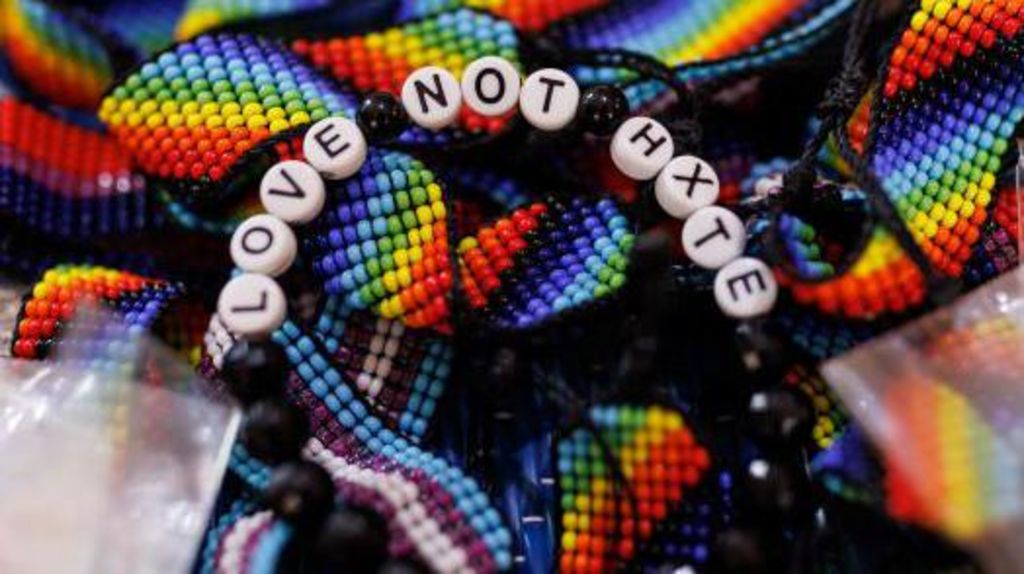
    Ugandan authorities have detained two women in their twenties following allegations of public same-sex intimacy, marking another enforcement case under the nation’s stringent Anti-Homosexuality Act. The arrest occurred on February 18 in Arua, a northwestern city, after local residents provided photographic evidence to police showing the women kissing outdoors.

    Police spokesperson Josephine Angucia confirmed that neighbors reported witnessing homosexual behavior and documented the incident before alerting law enforcement. Additionally, residents raised suspicions about overnight gatherings at the women’s one-bedroom residence, suggesting possible same-sex activities. The case has now been forwarded to prosecutors for evaluation and potential judicial action.

    Under Uganda’s controversial legislation, enacted in May 2023, consensual same-sex relations carry life imprisonment penalties, while aggravated offenses including repeat incidents or involvement of minors may result in capital punishment. The detained women currently remain in custody without legal representation according to AFP reports.

    The law has drawn significant international criticism since its implementation, with human rights advocate Frank Mugisha highlighting increased risks of blackmail and extortion against LGBTQ+ individuals who fear reporting violations. Western governments and global organizations including the United Nations have condemned the legislation, leading to temporary suspension of World Bank lending until 2025. Uganda maintains its conservative Christian values amid ongoing international scrutiny regarding human rights protections.

  • Mexico on edge after drug lord slain

    Mexico on edge after drug lord slain

    Mexico has been plunged into a state of heightened security crisis following the military killing of Nemesio Oseguera Cervantes, known as ‘El Mencho,’ the leader of the Jalisco New Generation Cartel (CJNG). The operation, which resulted in the death of Mexico’s most wanted drug lord, has triggered widespread retaliatory violence across multiple states, forcing the government to deploy substantial military resources to restore order.

    The coordinated military operation that eliminated El Mencho occurred on Sunday in Tapalpa, where the cartel leader was initially wounded before succumbing to injuries during transport to a medical facility. Mexican Security Minister Omar Garcia Harfuch confirmed the operation resulted in significant casualties, including 25 National Guard members and approximately 30 cartel suspects. Authorities reported seizing substantial weaponry including armored vehicles and rocket launchers during the confrontation.

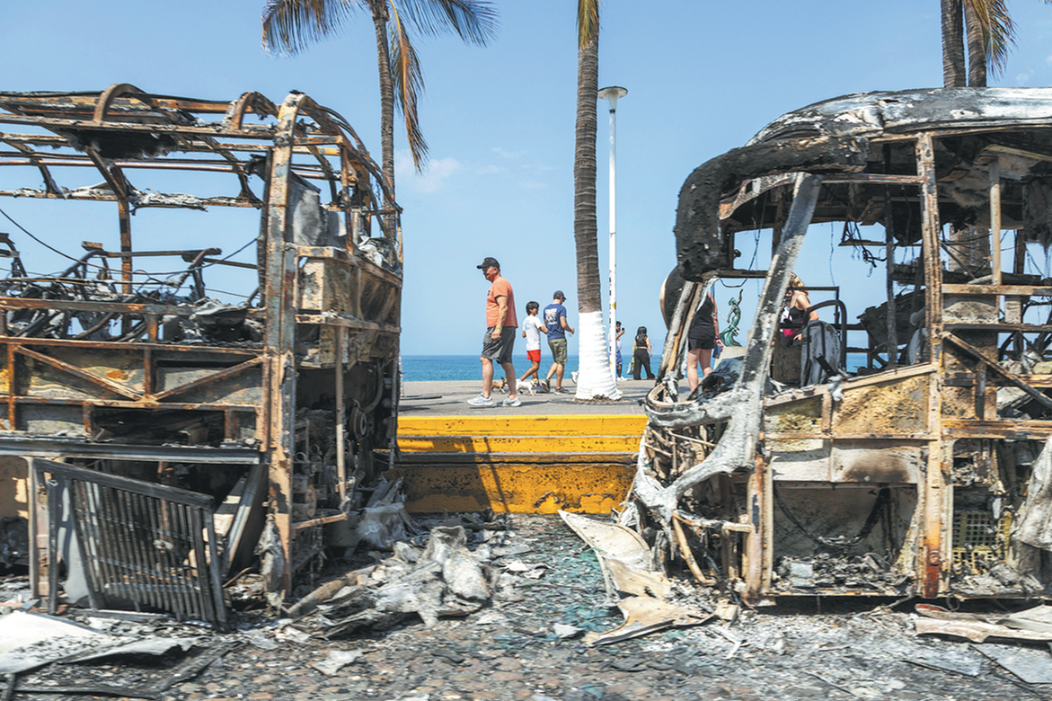
    In response to their leader’s death, CJNG members initiated a coordinated campaign of violence across 20 Mexican states, establishing over 250 roadblocks, burning vehicles, and engaging in open shootouts with security forces. The western Jalisco state experienced particularly intense violence, prompting Governor Pablo Lemus Navarro to activate an emergency ‘code red’ protocol, suspend public transportation, and advise residents to remain indoors.

    The escalating violence has significantly impacted civilian life and tourism. Multiple airlines canceled or redirected flights from affected regions, while social media footage showed passengers at Guadalajara International Airport scrambling for cover amid terminal chaos. The Chinese Embassy in Mexico issued security alerts advising Chinese citizens to maintain heightened vigilance and follow local government directives.

    US intelligence agencies provided support for the operation against El Mencho, according to White House press secretary Karoline Leavitt. The collaboration follows Washington’s formal designation of several Mexican cartels, including CJNG, as foreign terrorist organizations due to their involvement in drug trafficking, kidnappings, and targeted killings.

    Security experts caution that targeting individual cartel leaders produces limited long-term impact. Guadalupe Correa-Cabrera, a professor at George Mason University’s Schar School of Policy and Government, notes that criminal organizations like CJNG maintain fragmented leadership structures with multiple cells operating under local protection networks. ‘Arrests or extraditions don’t destroy the organization; family members or successors usually step in,’ Correa-Cabrera explained, emphasizing that the fundamental drivers—drug demand and systemic corruption—remain unaddressed.

    Mexican President Claudia Sheinbaum has praised security forces while calling for public calm amid the ongoing crisis. The government has deployed approximately 10,000 troops, including an additional 2,500 specifically to Jalisco, to quell the violence that continues to threaten stability across the region.

  • Park’s Siberian tigers get a ‘light-fasting’ program

    Park’s Siberian tigers get a ‘light-fasting’ program

    In an innovative conservation measure, Heilongjiang Province’s Siberian Tiger Park has launched a rotational ‘light-fasting’ program to safeguard its endangered big cats from overfeeding during peak tourist seasons. The strategy, implemented across 13 free-range enclosures from February 1 to March 31, designates one enclosure daily as a no-feeding zone while maintaining normal feeding opportunities in others.

    The park, operated by China Hengdaohezi Feline Breeding Center, houses over 300 Siberian tigers—nearly 200 residing in free-range habitats. During winter tourism peaks, daily visitor numbers exceed 10,000, with enthusiastic tourists feeding tigers beef strips and live chickens at designated points.

    Huang Haitao, director of the park’s feeding and veterinary department, explained the biological rationale: ‘The rotating fasting model allows tigers to periodically restore natural hunger rhythms, preventing digestive system overload and preserving hunting instincts.’ The approach balances animal welfare with visitor experience, as concentrated fasting could disappoint travelers.

    Implementation involves multi-channel communication including entrance notices, guided explanations, and sightseeing bus announcements. Zhang Weihua, a park driver, noted visitors’ cooperative response: ‘We create feeding opportunities in permitted areas to ensure visitor satisfaction while protecting tigers.’

    Tourists like Zhou Wei from Haikou expressed support: ‘I now understand reasonable control constitutes true protection.’ The park further customizes fasting schedules based on individual tiger health, visitor flow, and feeding patterns, occasionally isolating ‘celebrity tigers’ for health monitoring when overfed.

    As one of China’s three major Siberian tiger conservation facilities, the park continues refining scientific breeding systems to contribute to the species’ preservation. Siberian tigers remain critically endangered, primarily inhabiting northeastern China and eastern Russia.

  • Will UAE petrol prices rise in March as oil gains due to US-Iran tensions?

    Will UAE petrol prices rise in March as oil gains due to US-Iran tensions?

    Escalating geopolitical friction between the United States and Iran continues to exert significant pressure on global oil markets, creating substantial volatility that may impact fuel prices in the United Arab Emirates for March 2026. The ongoing tensions have injected a considerable risk premium into crude valuations, with Brent benchmark briefly surpassing the $71 per barrel threshold during February trading sessions.

    Market analysts observe that the current climate of uncertainty has created an unusually volatile trading environment. As of Tuesday evening, Brent crude traded at $66.31 per barrel while West Texas Intermediate reached $71.38. The monthly average for Brent stood at $68.90 per barrel, marking a noticeable increase from January’s average of $63.47.

    Norbert Rücker, Head of Economics and Next Generation Research at Julius Baer, provided critical insight: ‘The US-Iran conflict dominates oil market dynamics, with prices currently inflated by substantial geopolitical risk premiums. While military escalation appears increasingly probable, historical precedent suggests such developments don’t automatically translate to oil supply disruptions.’

    Rücker further emphasized the market’s current resilience: ‘Today’s oil landscape demonstrates remarkable supply stability, supported by ample storage capacities, production exceeding consumption patterns, and significant spare output capacity. Although uncertainty persists regarding whether prices will peak in the high $70s or high $80s range, we anticipate risk premiums diminishing with prices returning below $60 by mid-year.’

    The strategic significance of the Strait of Hormuz adds another dimension to market concerns. Recent temporary closures by Iranian authorities caused insurance premiums for this critical shipping channel to increase substantially. Daniela Hathorn, Senior Market Analyst at Capital.com, noted: ‘Iran’s geographical position adjacent to the Strait—through which approximately 20% of global oil shipments pass—means any sustained disruption could have profound consequences for energy markets worldwide.’

    Despite February’s price reduction of 8-9 fils per liter for UAE consumers, bringing Super 98, Special 95 and E-Plus 91 to Dh2.45, Dh2.33 and Dh2.26 respectively, market watchers remain cautious about March pricing. The complex interplay between geopolitical tensions and market fundamentals continues to create an unpredictable pricing environment for both crude and refined petroleum products.

  • Ramadan in Philippines: Filipino Muslims propose new mosque at historic Luneta

    Ramadan in Philippines: Filipino Muslims propose new mosque at historic Luneta

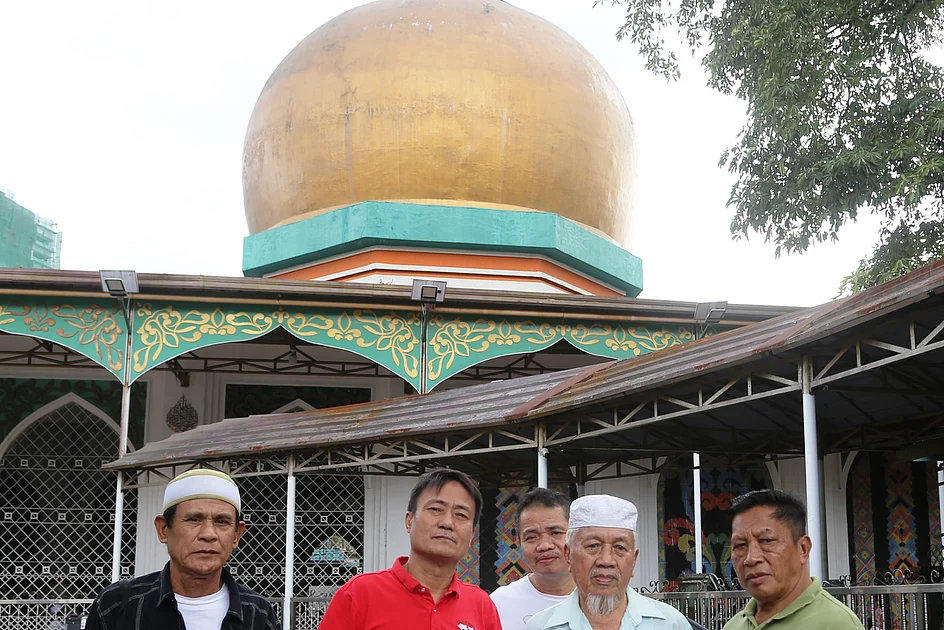
    As Ramadan commences, Manila’s Muslim community has initiated a significant cultural preservation effort by petitioning for the construction of a new mosque within the iconic Rizal Park, commonly known as Luneta. The proposal, advanced by the organization Markazuz Zakah, seeks to reestablish a place of worship that historically existed on the site before Spanish colonial forces destroyed it during their 1570s invasion of Manila.

    The initiative carries profound historical symbolism, as the proposed location lies adjacent to Intramuros, the historic Spanish walled city that once housed the fort of Rajah Sulayman—Manila’s final Muslim ruler prior to European colonization. Advocates emphasize that this project would acknowledge the Islamic heritage that predates the arrival of Christianity in the Philippines, highlighting that Muslim Rajahs governed Manila before Spanish colonization.

    Gambae Macatanong, president of Markazuz Zakah, articulated the dual purpose of the proposed mosque: serving as both a functional space for prayer and community connection for Muslims, and as an educational center where non-Muslims can learn about Islamic culture and traditions. The organization has assured that private funding would cover construction costs, though specific architectural details and dimensions remain undisclosed.

    The petition has been formally submitted to key government figures, including Muslim legislators Senator Robinhood Padilla and Representative Haima Kiram Ismula, Manila Mayor Francisco Domagoso, and Tourism Secretary Ma. Esperanza Frasco. While no official responses have been received yet, proponents remain hopeful for support, particularly from their fellow Muslims in government positions.

    This proposal emerges amidst a broader context of recognizing the Philippines’ Islamic heritage, with approximately seven million Muslims residing in the predominantly Catholic nation of 115 million citizens. The initiative represents not merely architectural construction but a meaningful step toward inclusive recognition of the nation’s diverse religious and cultural tapestry.