博客

  • Western Australia has selected its successor to accomplished coach Adam Voges

    Western Australia has selected its successor to accomplished coach Adam Voges

    In a significant development for Australian domestic cricket, former Test spinner Beau Casson has been officially named as the new head coach of Western Australia’s men’s cricket team. The 43-year-old, who represented Australia in a single Test match in 2008 and made 53 first-class appearances for both Western Australia and New South Wales during his playing career, emerged as the successful candidate following an extensive selection process.

    Casson’s appointment comes after he served as a highly-valued assistant to departing coach Adam Voges, who announced his resignation in November after establishing one of the most successful records in Australian domestic coaching history. Despite not securing Sheffield Shield or One Day Cup victories this season, Voges was instrumental in crafting WA’s golden three-year period of success.

    The newly appointed coach has built an impressive coaching resume since transitioning from his playing career, taking on various assistant and pathway roles in Sydney before returning to Western Australia. Industry sources revealed that Tim MacDonald, another of Voges’ assistants, did not formally apply for the position in a show of support for Casson’s candidacy.

    At Tuesday’s official announcement alongside general manager Kade Harvey and chief executive John Stephenson, Casson expressed his enthusiasm for the new role: ‘I am excited to be given the opportunity to take on the position of head coach. I’ve thoroughly enjoyed working with Adam Voges and the coaching staff over the past seven seasons and take pride in our collective achievements during that period.’

    Casson emphasized his commitment to continuing Voges’ legacy while implementing his own vision: ‘Adam created an environment that brought out the best in all our players, which is something I’m looking forward to building upon. I want our players to strive for excellence and have the best opportunity to push for higher honors. I’m confident we have the playing group that can bring WA more success in both formats of the game.’

    This coaching appointment occurs amidst potential widespread changes across Australia’s domestic coaching landscape. Brad Haddin has emerged as the favorite to coach New South Wales following the dismissal of veteran mentor Greg Shipperd, while Queensland coach Johan Botha faces increasing pressure despite the Bulls being Victoria’s only challenger in the Shield competition this summer. Meanwhile, Chris Rogers’ contract situation in Victoria remains unresolved despite coaching a near-perfect Shield campaign to date.


  • At the convent of Leonardo’s ‘Last Supper,’ Dominican friars still live, pray and welcome visitors

    At the convent of Leonardo’s ‘Last Supper,’ Dominican friars still live, pray and welcome visitors

    Within the hallowed walls of Santa Maria delle Grazie in Milan, a living Dominican community maintains its spiritual practices just steps away from one of art history’s most celebrated masterpieces. While Leonardo da Vinci’s “The Last Supper” draws countless visitors to the former refectory, twelve priests and nine novices continue their monastic traditions in the adjacent basilica and convent.

    The current friars, including Reverend Paolo Venturelli, experience the famous mural from a unique perspective. Venturelli prefers to view the painting from across the room where it was originally created in the 1490s at the request of Milan’s ruler Ludovico Sforza. “From there, the painting looks as though it were painted in the middle of the refectory,” Venturelli observes. “It unleashes all kinds of human and spiritual reactions.”

    Historical circumstances have created a physical separation between the friars and the artwork that was originally created for their order. Following Napoleon’s suppression of religious houses in the 18th century, the refectory passed into state control. Today known as the Cenacolo Vinciano, it is managed by Italy’s Regional Directorate of Museums of Lombardy. “We don’t go often because we have to ask permission to enter,” Venturelli explains, noting that preservation rules limit visits to just 15 minutes for everyone, including friars. “It no longer belongs to us.”

    The Dominican community maintains an active religious presence despite the tourist crowds. Dressed in their iconic white robes or brown winter capes, the friars are regularly seen within the basilica. Many visitors who come specifically for Leonardo’s masterpiece also discover the spiritual significance of the adjacent church. “We came to see Leonardo’s Last Supper but we also wanted to see the church because it’s quite special,” noted Maria Teresa Bruzzi, a recent visitor from Genoa.

    The friars provide multiple services to both locals and tourists, including confessions in several languages. Reverend Llewellyn Muscat, prior of the community, explains: “Confessions are very much sought after and we maintain this service for the citizens of Milan but also for all visitors.” The friars accommodate speakers of Italian, English, Maltese, French, and German.

    The intellectual legacy of the Dominicans remains evident throughout the convent, where halls contain dozens of shelves filled with books. “Reading is part of our identity,” Muscat emphasizes. The friars follow a routine shaped by study, prayer, and ministry, with some teaching at local Catholic institutions or collaborating with the cultural center that organizes conferences and events.

    For the Dominicans, “The Last Supper” represents more than artistic achievement—it embodies their continuing spiritual connection. “For us, it does not awaken an emotion about something that belongs to the past,” Muscat reflects. “It is like a continuation in which we eat together with Jesus and his apostles, as though his words are also spoken to us.”

    The current refectory where the friars actually dine is located deep within the convent’s labyrinth-like structure, away from tourist traffic. It features several square tables rather than the long table depicted in Leonardo’s masterpiece. While appreciating their functional dining space, Muscat acknowledges the community’s historical connection to the famous painting: “Maybe one day the old refectory will belong to us again.”

  • Arsenal favourites against Leverkusen in Champions League last 16

    Arsenal favourites against Leverkusen in Champions League last 16

    The UEFA Champions League round of 16 kicks off with compelling fixtures featuring Europe’s elite football clubs. Arsenal enters their match against Bayer Leverkusen as clear favorites following a flawless group stage performance where they secured victory in all eight matches. The Premier League leaders, pursuing their first European championship title, face a Leverkusen squad undergoing significant reconstruction after losing coach Xabi Alonso and multiple key players during the summer transfer window.

    In Paris, reigning champions PSG confront Chelsea amidst concerning form fluctuations. The French champions recently suffered a defeat to Monaco, narrowing their Ligue 1 advantage to a single point. This matchup marks the first encounter between the clubs since Chelsea’s decisive 3-0 victory in last year’s Club World Cup final.

    The most anticipated clash features Real Madrid and Manchester City, meeting in the knockout phase for the fifth consecutive season. The Spanish giants face considerable challenges with injuries potentially sidelining Kylian Mbappé and Jude Bellingham for the first leg. Manchester City approaches the fixture with confidence despite uncertainty surrounding Erling Haaland’s availability due to an ankle concern.

    Simultaneously, Norwegian contenders Bodo/Glimt continue their remarkable European campaign against Sporting Lisbon. The Arctic Circle-based team achieved stunning victories against Manchester City and Atlético Madrid during the group phase, followed by eliminating Inter Milan in the playoffs. Sporting arrives with impressive credentials of their own, having remained undefeated in twelve consecutive matches and previously defeating PSG during the group stage.

  • ‘Double whammy’ of fuel prices, rate hike fears hit Aussie households

    ‘Double whammy’ of fuel prices, rate hike fears hit Aussie households

    Australian households are confronting a severe economic squeeze as consumer confidence experiences a dramatic decline, driven by a convergence of escalating fuel expenses and anticipated interest rate increases. Recent surveys from major financial institutions Westpac and ANZ reveal a notable downturn in consumer sentiment over the past week, primarily attributed to surging global oil prices.

    AMP Chief Economist Shane Oliver identifies this situation as a ‘potential double whammy’ for mortgage-holding households, noting that rising fuel prices contribute directly to inflationary pressures that may necessitate monetary policy tightening. Current projections indicate fuel prices have surged approximately 40 cents per liter within a single week, translating to an estimated additional $730 annual burden on household budgets.

    The economic implications extend beyond immediate consumer spending patterns. NAB Chief Economist Sally Auld warns that sustained higher oil prices could drive inflation toward 5% in coming months, noting that ‘energy prices feed into almost every part of the economy’ and create widespread supply chain cost pressures.

    This presents particular challenges for the Reserve Bank of Australia, which must balance controlling inflation against risks of suppressed economic growth. Despite these pressures, economists anticipate the RBA will maintain current rates in March before potentially implementing increases in May, which would elevate the official cash rate to 4.1%.

    Survey data reveals nuanced consumer perspectives. While Westpac’s overall confidence index registered a modest 1.2% increase to 91.6 in March (remaining below the 100-point optimism threshold), responses collected in the final three survey days showed significantly lower confidence levels at just 84 points, coinciding with escalating Middle East tensions and subsequent 30% increases in oil futures.

    Concurrently, ANZ-Roy Morgan data indicates inflation expectations have reached 5.5% for the next twelve months—the highest level in three years—while perceptions of family financial situations and broader economic conditions have deteriorated markedly.

  • Team lists: Ezra Mam returns to the Broncos starting side as the Wests Tigers unleash teenage freak

    Team lists: Ezra Mam returns to the Broncos starting side as the Wests Tigers unleash teenage freak

    The Brisbane Broncos have implemented strategic roster adjustments following their disappointing 26-0 season-opening defeat against the Penrith Panthers, with coach Michael Maguire reversing his controversial selection decision regarding playmaker Ezra Mam.

    Mam has been restored to the starting five-eighth position after being surprisingly relegated to the bench for the Panthers clash. The dynamic playmaker’s return signals Maguire’s intention to inject more offensive creativity into the lineup as they prepare to face the Parramatta Eels this weekend.

    The Eels may receive their own offensive boost with veteran winger Josh Addo-Carr potentially returning from a thumb injury that sidelined him for just one week. Parramatta has made defensive adjustments, dropping Brian Kelly to reserves after his poor performance in Melbourne, while promoting Jack Williams to starting prop and inserting Kelma Tuilagi into the back row due to J’maine Hopgood’s suspension.

    Injury concerns continue to plague several teams across the league. Penrith remains without representative forward Liam Martin (calf strain) as they prepare for their Bathurst fixture, while the Roosters have received positive news with Maroons rookie Robert Toia cleared from a foot injury. However, Sydney will be without enforcer Spencer Leniu due to a hamstring injury sustained during warm-ups last week.

    Additional team developments include Wests Tigers starting teen sensation Heamasi Makasini at center for their Leichhardt Oval opener against North Queensland, while Melbourne could see Jack Hetherington make his club debut after being named on the bench for their Wollongong trip.

  • Search called off after Indonesia landfill collapse kills seven

    Search called off after Indonesia landfill collapse kills seven

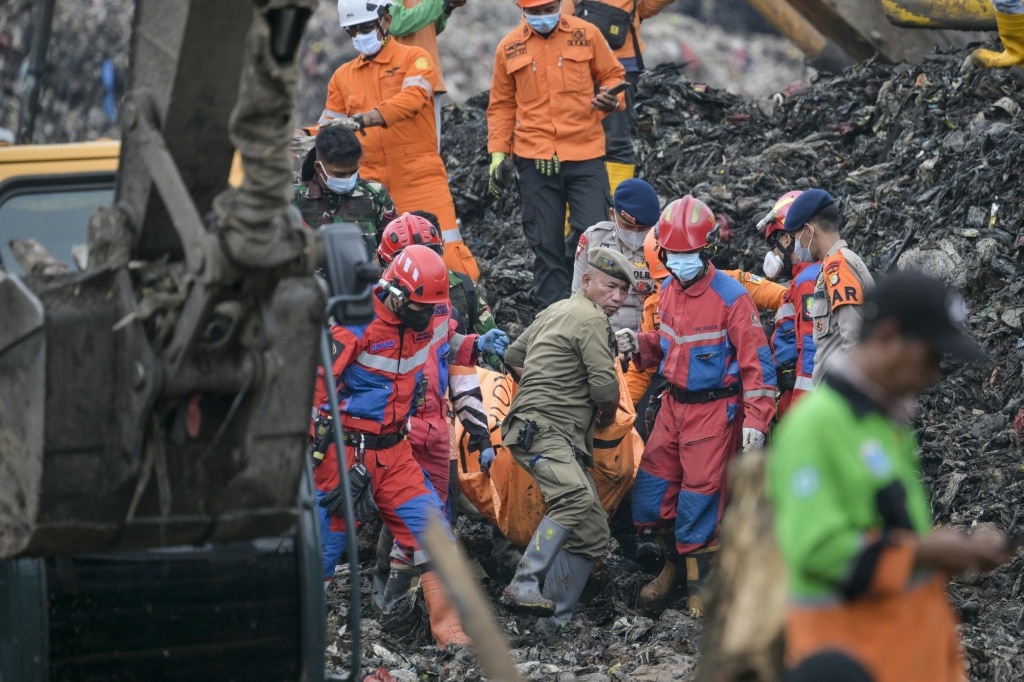
    Indonesian search and rescue teams have terminated operations following a catastrophic landslide at the nation’s largest open-air landfill, which resulted in seven fatalities. The incident occurred Sunday afternoon at the Bantargebang waste site, located merely 25 kilometers from Jakarta, after prolonged heavy rainfall triggered the collapse that buried multiple trucks and food stalls beneath tons of debris.

    Desiana Kartika Bahari, head of Jakarta’s search and rescue agency, confirmed the recovery of three bodies on Sunday and four additional victims on Monday. Six individuals were successfully rescued alive during the intensive operation that employed backhoes, canine units, and thermal drone technology to locate casualties. Authorities have verified that all missing persons have been accounted for.

    The National Disaster Mitigation Agency (BNPB) has initiated weather modification procedures to mitigate further rainfall intensity. This sophisticated technique involves dispersing sodium chloride particles via helicopter to induce premature precipitation over ocean areas rather than populated regions.

    The Bantargebang facility, spanning over 110 hectares and containing approximately 55 million tonnes of waste, represents one of the planet’s largest open landfills. The Jakarta metropolitan area and its satellite cities (collectively known as Jabodetabek), housing about 42 million residents, generate an estimated 14,000 tonnes of daily waste.

    President Prabowo Subianto recently warned that most Indonesian landfills would exceed capacity by 2028 as the nation phases out such facilities. The government has committed $3.5 billion to develop 34 waste-to-energy plants within two years, converting garbage into electricity through incineration processes.

    This tragedy echoes a 2005 landfill disaster in West Java that claimed 143 lives when methane gas explosions combined with heavy rains caused catastrophic collapse.

  • Many US soldiers oppose war on Iran, conscientious objector group says

    Many US soldiers oppose war on Iran, conscientious objector group says

    A prominent non-profit organization supporting military conscientious objectors reports unprecedented call volumes from US service members expressing moral opposition to potential operations against Iran. The Center on Conscience & War announced its phones have been ‘ringing off the hook’ with personnel objecting to deployment in what many perceive as an emerging US-Israel military campaign.

    Executive Director Mike Prysner stated on social media platform X that mobilization levels exceed public awareness, noting ‘A LOT more units have just been activated for deployment than the public knows about.’ The organization draws parallels between current resistance and historical opposition to the 2003 Iraq invasion.

    This development coincides with reports from Middle East Eye regarding potential US special forces operations in Iran and the cancellation of training exercises for the 82nd Airborne Division, a specialized ground combat unit. Further fueling concerns, White House press secretary Karoline Leavitt declined to rule out reinstating the military draft during a Fox News interview, a measure not implemented since the Vietnam War era.

    The Center on Conscience & War, which supports those opposing military service on moral or religious grounds, indicates opposition extends beyond individual objections. Service members report widespread dissent within units, particularly referencing two controversial incidents: the bombing of a girls’ school in Minab that killed 165 predominantly young victims, and an attack on an Iranian frigate in international waters.

    Evidence continues mounting regarding US involvement in the school bombing, with The New York Times and video evidence from Mehr News Agency suggesting Tomahawk cruise missile deployment. The Trump administration has evaded direct accountability, instead attributing the tragedy to Iranian ‘inaccurate munitions’ without providing substantiating evidence.

    Meanwhile, Iran has demonstrated precision strike capabilities against US assets, targeting advanced radar stations, military bases, embassy sections, and critical energy infrastructure across the Gulf region.

  • ‘Blip on the radar’: Eels not panicking after horror loss to the Storm as the blue and golds officially move on from Zac Lomax saga

    ‘Blip on the radar’: Eels not panicking after horror loss to the Storm as the blue and golds officially move on from Zac Lomax saga

    The Parramatta Eels, widely tipped as premiership contenders following an impressive pre-season, have encountered a harsh reality check after suffering a humiliating 52-4 defeat against the Melbourne Storm in their NRL season opener. The lopsided loss has abruptly halted the burgeoning hype surrounding the team.

    Captain Mitchell Moses characterized the performance as a potential ‘blip on the radar,’ while candidly admitting that several players may have become overconfident following their dominant preparatory phase. The match statistics painted a grim picture for Parramatta, who committed 14 handling errors and missed a staggering 44 tackles against a clinical Storm outfit.

    This disappointing start mirrors their 2025 campaign under rookie coach Jason Ryles, where a poor beginning ultimately transformed into a strong finish that saw them win four of their final five matches and claim the pre-season trophy. Moses emphasized that the team failed to meet the high standards they established during the pre-season, particularly noting their inability to execute their preferred style of football for more than brief periods during the match.

    The Eels face another formidable challenge with an upcoming clash against the defending premier Brisbane Broncos at Suncorp Stadium. The Broncos themselves are under scrutiny after being held scoreless by Penrith in their opening match. Parramatta will undertake this difficult assignment without winger Zac Lomax, who has departed the NRL entirely after securing a release from his contract. Lomax’s exit followed a complex legal situation involving a blocked move to the Storm and his subsequent signing with Super Rugby’s Western Force.

    Coach Ryles expressed relief that the Lomax situation has reached a resolution, stating, ‘The best thing is that there’s been an outcome and he gets to play footy again. On behalf of the club, we wish him all the best. He’s a good person and we only want to see what’s best for him. We can all move on now.’

    The Eels now confront the dual challenge of addressing their on-field deficiencies while adapting to their revised roster as they seek to validate their pre-season promise throughout the remainder of the competition.

  • What we know about alleged strike on Iran school

    What we know about alleged strike on Iran school

    A comprehensive New York Times investigation has brought new evidence to light regarding the contested events surrounding a reported military strike on a structure adjacent to an elementary school in Minab, Iran, during the early stages of the Middle East conflict. The incident has sparked a complex web of accusations and denials among involved nations.

    Iranian authorities have attributed the attack to a joint U.S.-Israeli operation, claiming the strike resulted in over 150 casualties, including numerous schoolchildren. State media broadcast emotional funeral scenes showing mourners grieving over white-shrouded bodies and flag-draped coffins, some containing photographs of children.

    The New York Times analysis, incorporating authenticated video evidence, satellite imagery, and social media verification, indicates a precision strike damaged the Shajarah Tayyebeh elementary school building simultaneously with attacks on a nearby Revolutionary Guards naval base. The newspaper authenticated footage from Iran’s Mehr News Agency showing a U.S. Tomahawk cruise missile striking a clinic within the Guards’ base complex located adjacent to the educational facility.

    U.S. Central Command released footage dated February 28—coinciding with the Minab incident—showing Tomahawk launches, with senior officers confirming early salvoes included Navy Tomahawks targeting Iran’s southern flank near the strategic Strait of Hormuz.

    President Donald Trump asserted Iranian responsibility, suggesting Iran might have conducted the strike itself using inaccurate munitions, despite Iran not possessing Tomahawk missile capability. Secretary of State Marco Rubio stated the U.S. would not deliberately target educational institutions, emphasizing military objectives focused exclusively on missile capabilities.

    Israeli military representatives denied awareness of any strike operation in the area, while Norwegian rights group Hengaw reported approximately 170 students were present during the school’s morning session when the alleged attack occurred.

    Independent verification remains challenging as Iranian authorities restrict foreign media access outside Tehran, and AFP could not independently confirm casualty figures or verify the timing of circulated footage showing excavation equipment preparing mass graves.

  • 15 years after Fukushima meltdown, an innkeeper makes radiation surveys to revitalize her hometown

    15 years after Fukushima meltdown, an innkeeper makes radiation surveys to revitalize her hometown

    Fifteen years after the catastrophic Fukushima nuclear disaster, a dedicated network of citizen scientists continues to monitor radiation levels in the affected regions, challenging official narratives of complete safety. Tomoko Kobayashi, who operates the family-run Futabaya Ryokan inn in the nearly deserted town of Odaka, has transformed her personal tragedy into a lifelong mission of radiation documentation and education.

    Kobayashi’s journey began when she returned to her hometown in 2012, conducting independent radiation surveys before reopening her inn in 2016. She now collaborates with fellow monitors who gather twice annually for intensive two-week measurement campaigns across hundreds of locations. Their color-coded radiation maps adorn the walls of her establishment, serving as both scientific record and memorial to the pre-disaster community that once thrived in this northeastern Fukushima region.

    The March 11, 2011 disaster unfolded when a magnitude 9.0 earthquake triggered a tsunami that overwhelmed the Fukushima Daiichi nuclear plant’s cooling systems, causing three reactor meltdowns. The subsequent hydrogen explosions released radioactive particles that forced hundreds of thousands to evacuate, with some areas remaining uninhabitable to this day.

    Despite government assurances of safety, Kobayashi’s team maintains a testing laboratory where they examine local produce and environmental samples. Their work reveals ongoing contamination challenges, with recent tests showing wild boar meat measuring 100 times above safety limits. Yukio Shirahige, a 76-year-old former plant worker who now assists the monitoring project, acknowledges that while radiation levels have significantly decreased, he remains cautious about declaring the area completely safe.

    Meanwhile, at the Fukushima Daiichi facility itself, decommissioning efforts continue using advanced robotics and remote-controlled technology. Plant officials have successfully collected minute melted fuel samples and deployed micro-drones to examine reactor interiors—technologies unimaginable at the time of the disaster. However, the process remains extraordinarily complex, with at least 880 tons of highly radioactive fuel debris still requiring removal, a task experts believe may take decades.

    As Japan reverses its nuclear phase-out policy in favor of reactor restarts, these citizen scientists face increasing pressure to silence their findings. Yet they persist in their mission, documenting radiation levels, testing local products, and maintaining a folk museum that preserves the disaster’s memory through art and photography—ensuring that both the physical and cultural aftermath of Fukushima’s nuclear crisis remains visible to future generations.