博客

  • Shandong sees sustained progress in afforestation and urban greening

    Shandong sees sustained progress in afforestation and urban greening

    As China commemorated its 48th National Tree Planting Day on March 12, 2026, Shandong Province unveiled remarkable achievements in its comprehensive environmental conservation programs. Under the leadership of Zhao Xiaohui, Director of the Shandong Provincial Department of Natural Resources, the eastern Chinese province has demonstrated significant progress in expanding forest coverage and integrating ecological considerations into urban development strategies.

    According to official statistics released during a press conference, Shandong’s forested areas now encompass approximately 3 million hectares, with national and provincial-level public welfare forests constituting roughly 25% of this total. The province has established nine specialized national forest tree breeding centers dedicated to sustainable forestry practices, with particular emphasis on cultivating key species including poplar, black locust, and black pine varieties.

    A distinctive characteristic of Shandong’s environmental approach involves the seamless incorporation of green space expansion within urban planning frameworks. Since the initiation of the 14th Five-Year Plan period (2021-2025), provincial authorities have created more than 450 major urban parks and established over 3,900 kilometers of interconnected urban greenways. These developments have elevated per capita park green space to 18.66 square meters, significantly enhancing urban livability standards.

    Beyond ecological improvements, Shandong’s forestry initiatives have generated substantial economic benefits for local communities. The programs have facilitated the cultivation of high-value traditional crops including chestnuts and persimmons across various regions. These agricultural activities are increasingly combined with forest wellness tourism and ecotourism ventures, creating diversified income streams for rural populations.

    The province has developed numerous nationally recognized geographical indication products, including Yantai apples, Laiyang pears, Zhanhua winter jujubes, Pingyin roses, and Heze peonies. Additionally, Shandong has established four national-level forest wellness bases, further strengthening the integration of ecological conservation with economic development.

    Director Zhao emphasized that emerging sectors combining environmental protection with agricultural and tourism activities have experienced continuous expansion in both operational scale and financial returns. The province has simultaneously maintained stable forest coverage rates while progressively reducing areas affected by desertification and sandy land degradation, demonstrating the effectiveness of its comprehensive environmental management strategies.


  • Customer sues Costco for tariff refunds

    Customer sues Costco for tariff refunds

    A significant legal challenge has emerged against retail giant Costco, initiated by customer Matthew Sockov through a proposed class action lawsuit. Filed in an Illinois federal court, the suit alleges that Costco stands to potentially recover its tariff expenses twice—first from consumers via elevated pricing and subsequently from government reimbursements. Sockov contends this constitutes ‘unjust enrichment’ and seeks judicial intervention to mandate refunds to affected shoppers.

    This litigation arises amidst broader complexities surrounding approximately $166 billion in tariff reimbursements owed to U.S. companies. The refund obligation follows last month’s Supreme Court decision to invalidate numerous tariffs imposed during the Trump administration, which utilized the International Emergency Economic Powers Act (IEEPA) of 1977 to levy duties on imports from dozens of countries. The Court of International Trade has since directed the government to commence refund distributions, though operational challenges persist.

    Goldman Sachs research cited in the complaint estimates consumers bore roughly two-thirds of the tariff burdens. With over 330,000 importers eligible for refunds, the Trump administration recently requested a 45-day period to develop an electronic processing system, warning that existing infrastructure could be overwhelmed by manual claims processing.

    Costco, among thousands of enterprises seeking reimbursements, has not publicly commented on the lawsuit. However, CEO Ron Vachris recently told analysts the company remains uncertain about ‘what refunds, if any, will be received,’ noting that full tariff costs weren’t always passed to members. Vachris committed that if reimbursements occur, Costco would ‘return this value to our members through lower prices and better values’ with transparency.

    Other corporations including FedEx have pledged to refund tariff reimbursements to affected clients, highlighting how businesses are navigating post-tariff financial reconciliation.

  • Sichuan’s peach, plum blossom festival drives rural income growth

    Sichuan’s peach, plum blossom festival drives rural income growth

    The hillsides of Xinyuan township in Peng’an county, Sichuan province, have transformed into a vibrant tapestry of peach and plum blossoms, signaling not just the arrival of spring but a remarkable economic revival for local communities. The inaugural day of the 16-day Peach and Plum Blossom Festival on Tuesday attracted substantial visitor numbers, creating new pathways for rural income generation and regional development.

    Against the backdrop of warming spring temperatures, the festival offers visitors a multifaceted experience combining natural beauty with cultural immersion. Attendees can wander through picturesque flower-lined pathways, capture the breathtaking spring scenery through photography, sample authentic local cuisine, and purchase freshly harvested agricultural products directly from farmers.

    This year’s edition introduces innovative digital components including an online photography competition, a dedicated Douyin (China’s TikTok equivalent) hashtag challenge, and live-streamed virtual tours conducted by social media influencers. These technological integrations represent a strategic enhancement to the festival’s traditional offerings, simultaneously boosting its cultural appeal while expanding the commercial reach of local agricultural products.

    The blossom-themed economy has emerged as a significant driver of rural vitalization in the region, demonstrating how agricultural tourism can effectively supplement farmers’ incomes while promoting regional specialty products. The festival model successfully merges ecological beauty with economic opportunity, creating sustainable development patterns that extend beyond traditional farming activities.

    Local authorities have positioned the event as a cornerstone of their rural development strategy, leveraging the region’s natural assets to create lasting economic benefits. The combination of physical tourism and digital engagement strategies represents a comprehensive approach to rural development in the digital age, potentially serving as a replicable model for other agricultural regions across China.

  • International court drops investigation into US sanctions on Venezuela

    International court drops investigation into US sanctions on Venezuela

    THE HAGUE, Netherlands — In a significant legal development, the International Criminal Court has terminated its examination of U.S. sanctions against Venezuela, determining insufficient grounds to pursue criminal charges. The decision concludes a preliminary investigation initiated in 2020 following Venezuela’s formal petition alleging American coercive measures constituted crimes against humanity.

    Prosecutors acknowledged that while economic restrictions imposed during the Obama administration and subsequently expanded may have worsened Venezuela’s humanitarian situation, they found inadequate evidence demonstrating the requisite criminal intent to classify sanctions as crimes against humanity. The ICC’s Office of the Prosecutor emphasized this closure remains unrelated to recent military actions involving Venezuelan leadership.

    Simultaneously, the court has progressed with a separate investigation into potential human rights violations by Belarusian authorities. This inquiry, prompted by Lithuania’s referral concerning Belarus’s suppression of political dissent, marks a significant escalation in international scrutiny of President Alexander Lukashenko’s government. Although Belarus remains outside the ICC’s jurisdiction, the court asserts authority based on the cross-border nature of alleged offenses.

    The divergent paths of these investigations highlight the ICC’s complex jurisdictional landscape. While Venezuela’s sanctions complaint has been dismissed, the court continues its longstanding examination of alleged crimes committed by Venezuelan security forces during the 2017 anti-government protests.

    These developments occur amid leadership challenges within the ICC, with Chief Prosecutor Karim Khan currently on temporary leave pending separate misconduct allegations. The court’s recent decisions demonstrate its ongoing navigation of geopolitical sensitivities while pursuing accountability for international crimes.

  • China to speed up revisions of food safety standards

    China to speed up revisions of food safety standards

    China is embarking on a comprehensive revision of its national food safety standards, prioritizing premade dishes, pesticide residue testing, and cold-chain transportation protocols. The State Council’s Food Safety Office announced this accelerated regulatory modernization effort on March 12, 2026, as part of a broader update to the country’s food safety legislation.

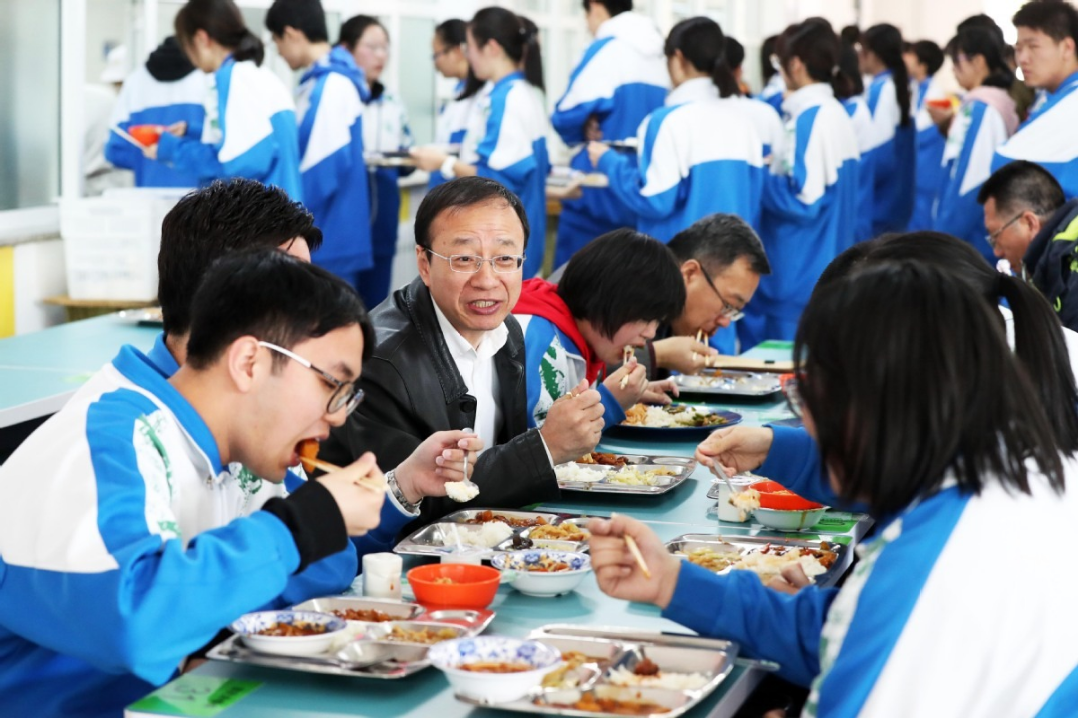
    The initiative establishes enhanced cross-departmental coordination mechanisms to facilitate joint inspections and enforcement operations. Key focus areas include school cafeteria safety, food delivery service compliance, and preventing unauthorized food additive usage. The office will implement both regular and targeted crackdowns to address persistent public concerns regarding food safety violations.

    Regulatory scrutiny will intensify across critical sectors including agricultural production, storage logistics, e-commerce food sales, and import controls. Authorities will enforce a zero-tolerance policy toward violations, applying stringent penalties for non-compliance. This approach aims to create robust regulatory frameworks grounded in comprehensively updated safety standards.

    Addressing particular concerns about school nutrition, the program will expand technological integration through kitchen livestreaming systems to increase transparency in food preparation areas. Additional measures include strengthening collective procurement systems for school food supplies and implementing regular joint inspections to prevent substandard ingredients from entering educational institutions.

    The regulatory enhancement strategy also involves improving inspection precision and proactively identifying potential risks before they escalate into public health concerns. This preemptive approach represents a shift toward more sophisticated food safety management systems.

    This initiative follows the National Health Commission’s February release of draft national standards specifically addressing the rapidly expanding premade food industry, indicating coordinated efforts across government agencies to modernize China’s food safety ecosystem.

  • Ancient observatory in Xizang marks spring sowing season with rituals

    Ancient observatory in Xizang marks spring sowing season with rituals

    In the highlands of Tibet, an ancient astronomical tradition marking the agricultural new year resumed with ceremonial grandeur at the historic Dakpo Observatory in Maldrogungkar county. On Thursday, corresponding to the 21st day of the first Tibetan month, local farmers and herders gathered at this centuries-old site to witness the precise celestial alignment that traditionally inaugurates the spring sowing season.

    Dressed in vibrant traditional attire, participants brought ritual offerings including butter tea and chemar—a ceremonial vessel filled with grains symbolizing prosperity and abundance. The pivotal moment occurred as the first beam of sunlight penetrated through a specially designed aperture in the observatory structure, striking a calibrated measuring stone with exact precision. This photometric event, meticulously calculated through ancestral astronomical knowledge, serves as Tibet’s official natural signal for initiating spring planting and irrigation activities across the region’s central agricultural zones.

    Dorje, assistant researcher at the Xizang Institute of Astronomy and Calendrical Calculation and secretary-general of the Xizang Astronomy and Calendar Society, emphasized the site’s unique cultural significance. “The Dakpo platform represents the only operational astronomy observatory of its kind in the region, maintaining an uninterrupted 300-year legacy,” he stated. “It functions as a comprehensive system integrating celestial observation, mathematical calculation, and temporal guidance—a cornerstone of Tibet’s distinctive astronomical traditions.”

    Beyond its agricultural scheduling function, the observatory’s sophisticated methodology enables calculation of solar terms, seasonal pattern monitoring, and even weather prediction capabilities. The ritual celebration incorporated educational components including scientific lectures, cultural performances, and community services such as free medical consultations, blending ancient wisdom with contemporary community engagement. This enduring practice demonstrates the sophisticated integration of astronomical science with agricultural practicality, preserving a living cultural heritage that continues to guide Tibet’s farming communities in harmonious synchronization with natural cycles.

  • NPC deputy calls for national policy to integrate sports and tourism

    NPC deputy calls for national policy to integrate sports and tourism

    Li Chu, Party Secretary of Guilin and deputy to China’s 14th National People’s Congress, has formally advocated for enhanced national policies to accelerate the integrated development of sports, tourism, and rural revitalization initiatives. The proposal draws upon Guilin’s demonstrated success in leveraging its distinctive karst topography to create a synergistic model combining athletic activities with tourism infrastructure.

    Speaking at the ongoing NPC sessions, Deputy Li highlighted how Guangxi’s premier tourist destination has strategically positioned sports as a central catalyst for comprehensive development. The city has constructed over 14,000 specialized sports facilities while innovatively transforming its natural landscapes into competition venues and recreational spaces.

    The integrated approach generates substantial economic benefits through approximately 400 annual public participation events and nearly 30 major international competitions biennially. This sports-tourism nexus has effectively connected urban attractions with countryside resources, stimulating growth in rural homestays, agricultural product sales, and local service industries.

    Li’s policy recommendations include issuing national-level implementation guidelines, establishing dedicated funding mechanisms for outdoor sports infrastructure, and streamlining land use approval processes. These measures would enable regions with comparable geographical advantages to pursue differentiated development strategies while supporting national rural revitalization objectives.

  • AFA president Claudio Tapia appears in Buenos Aires court in tax case

    AFA president Claudio Tapia appears in Buenos Aires court in tax case

    BUENOS AIRES, Argentina — Claudio Tapia, President of the Argentine Football Association (AFA), made his inaugural court appearance on Thursday amid mounting legal scrutiny over alleged financial misconduct. The hearing, presided over by Federal Judge Diego Amarante who specializes in economic crimes, centers on accusations that Tapia and four other AFA directors improperly withheld approximately 19 billion pesos ($13 million) in social security taxes during 2024 and 2025.

    The case, initiated by the Customs Revenue and Control Agency, has resulted in travel restrictions prohibiting Tapia and his associates from leaving Argentina. The football executive arrived at the federal courthouse accompanied by legal counsel but declined to make any public statements to the gathered press corps.

    This investigation represents just one facet of multiple ongoing probes into Tapia’s financial management and personal assets. Additional legal proceedings allege more serious offenses including tax evasion and money laundering. Under Argentine law, the deliberate withholding of national taxes beyond 30 days of their due date carries potential prison sentences ranging from two to six years.

    The AFA has vehemently denied all allegations, characterizing them as politically motivated persecution by the administration of President Javier Milei. The association has vigorously defended Tapia’s leadership tenure, which began in 2017 and has overseen unprecedented success for Argentine football including the national team’s victory in the 2022 World Cup and consecutive Copa América titles in 2021 and 2024.

    Legal experts indicate Tapia may exercise his right to remain silent or submit a written defense rather than provide oral testimony as the case progresses through Argentina’s judicial system.

  • Rapper-politician Balendra Shah’s party wins Nepal election

    Rapper-politician Balendra Shah’s party wins Nepal election

    Nepal’s political landscape has undergone a dramatic transformation with the Rastriya Swatantra Party (RSP) achieving an unprecedented electoral victory that positions 35-year-old rapper-turned-politician Balendra Shah to become the country’s next prime minister.

    The recently concluded parliamentary elections, the first since youth-led protests toppled the previous government in 2022, resulted in the RSP securing 182 seats in the lower house. While falling just two seats short of a supermajority, this represents the most substantial mandate for any single party in Nepal in decades. The established political forces—Nepali Congress with 38 seats and Communist Party of Nepal UML with 25—trailed significantly behind the newcomer party.

    This electoral outcome is particularly remarkable given Nepal’s mixed political system, which combines first-past-the-post and proportional representation methodologies specifically designed to prevent single-party dominance. The RSP’s ascent is nothing short of extraordinary for a party founded merely in 2022, when it placed fourth in that year’s election.

    Shah, whose political experience is limited to his current role as Kathmandu mayor, represents a seismic shift in Nepalese politics. His victory was underscored by a decisive win against former Prime Minister KP Sharma Oli in the Jhapa 5 constituency, traditionally considered Oli’s stronghold. In another symbolic defeat, Gagan Thapa, leader of the historically dominant Nepali Congress, lost his seat to an RSP candidate.

    The election, which saw approximately 60% turnout among Nepal’s 19 million eligible voters, reflects widespread demand for change following last year’s protests that began against social media restrictions but escalated into broader demonstrations against political stagnation, unemployment, economic inequality, and nepotism. Tragically, 77 protesters died during the unrest, with a BBC investigation revealing that police were authorized to use lethal force against unarmed demonstrators.

    Government formation is expected to take at least one week as the RSP navigates coalition building, marking the beginning of a new political era in Nepal led by a generation demanding substantive reform.

  • Starmer’s pick of Epstein ‘pal’ as top British envoy haunts prime minister

    Starmer’s pick of Epstein ‘pal’ as top British envoy haunts prime minister

    British Prime Minister Keir Starmer faces mounting political pressure following the disclosure of government documents revealing his deliberate appointment of Peter Mandelson as U.S. ambassador despite explicit warnings about the former minister’s connections to convicted sex offender Jeffrey Epstein.

    The nearly 150 pages of released documentation, representing merely a fraction of the anticipated thousands of pages yet to be made public, detail how Starmer overruled senior advisers who highlighted Mandelson’s ‘reputational risk’ factors. The vetting checklist prominently emphasized Mandelson’s friendship with Epstein—whom he reportedly called his ‘best pal’—and his controversial history in previous Labour governments, including two financial scandals that forced his resignation.

    Then-Cabinet Secretary Simon Case had cautioned that political appointments to diplomatic posts carried greater personal risk for the prime minister than traditional career diplomat selections. Starmer ultimately dismissed Mandelson in September when evidence emerged showing continued contact with Epstein after his 2008 conviction for sex crimes involving a minor.

    The prime minister now claims Mandelson misled him regarding the depth of their relationship, though released documents have yet to substantiate this assertion due to ongoing police investigations. Mandelson was briefly arrested last month on allegations of transmitting sensitive government information to Epstein over a decade ago, though he faces no sexual misconduct accusations and maintains his innocence.

    Legal experts suggest the document release represents merely ‘the thin end of the wedge,’ with subsequent batches likely to intensify scrutiny of Starmer’s judgment. Conservative leader Kemi Badenoch has accused the prime minister of lying to Parliament about the appointment process, while some Labour members have joined calls for his resignation.

    The escalating crisis has been partially overshadowed by Middle Eastern conflicts, with Starmer demonstrating cautious diplomacy regarding U.S.-Israeli military actions against Iran. His restrained approach, while criticized by some international partners, appears aligned with British public sentiment regarding limited involvement in foreign conflicts.