博客

  • Israel strikes Tehran, Beirut as Iraq pulled deeper into Mideast war

    Israel strikes Tehran, Beirut as Iraq pulled deeper into Mideast war

    The Middle East conflict escalated dramatically on Tuesday as Israeli forces launched coordinated strikes against Tehran and Beirut, simultaneously drawing Iraq deeper into a widening regional war that has triggered global economic disruption and massive civilian displacement.

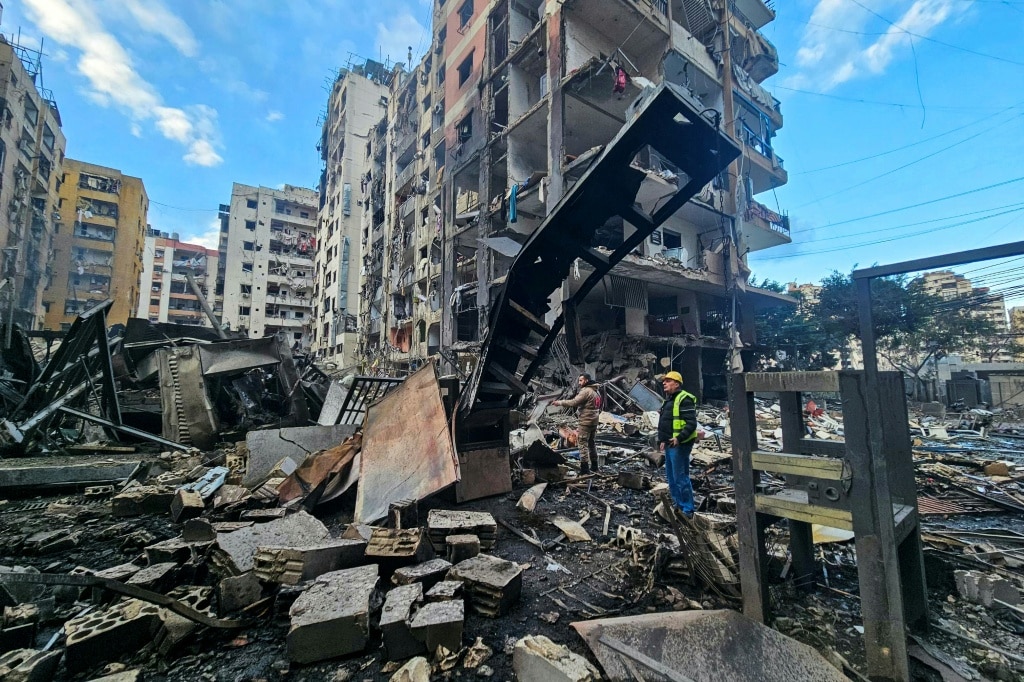
    Israeli military operations targeted what officials described as ‘terror regime infrastructure’ in the Iranian capital, which has endured near-daily bombardment since the joint U.S.-Israeli initiation of hostilities on February 28. Concurrently, dawn strikes hit a residential building in Beirut’s southern suburbs, a known stronghold of the Iranian-backed Hezbollah militant group.

    The conflict, now entering its third week, has resulted in hundreds of casualties and expanded to include Iranian retaliatory strikes against Gulf nations. Lebanese authorities report over one million registered displaced persons since March 2, with approximately 130,000 seeking refuge in more than 600 collective shelters.

    Iraq’s deepening involvement became evident as drone and rocket attacks targeted the U.S. embassy complex in Baghdad’s fortified Green Zone early Tuesday. Additional strikes killed four individuals at a residence reportedly hosting Iranian advisors, highlighting the nation’s continued role as a proxy battleground between U.S. and Iranian interests.

    The economic repercussions have been severe, with global oil prices surging over 40% since the conflict’s inception. The strategic Strait of Hormuz, through which approximately one-fifth of global crude oil passes, has experienced significant traffic disruption due to repeated attacks on oil infrastructure, including major fields in the United Arab Emirates and southern Iraq.

    Australia’s central bank responded to the crisis by raising key interest rates Tuesday, citing ‘sharply higher fuel prices’ directly attributable to the conflict.

    Diplomatic tensions intensified as several nations distanced themselves from U.S. President Donald Trump’s demand for allied participation in securing the Strait of Hormuz. British Prime Minister Keir Starmer indicated London was developing alternative plans with allies but explicitly ruled out NATO involvement, a position echoed by Germany, Japan, Australia, and several European Union members.

    Western allies including Canada, France, Germany, Italy, and the United Kingdom have concurrently urged Israeli restraint in Lebanon, where limited ground operations against Hezbollah have been announced. Israeli President Isaac Herzog countered these appeals, calling for European support in ‘any effort to eradicate Hezbollah now.’

    Iranian Foreign Minister Abbas Araghchi maintained a defiant stance, asserting Tehran’s readiness to ‘continue the war wherever it may lead’ despite significant casualties and infrastructure damage. The UN refugee agency estimates up to 3.2 million people have been displaced within Iran, where security forces previously suppressed domestic protests with lethal force.

  • Israel says it killed 2 top Iranian officials in wartime blow to country’s leadership

    Israel says it killed 2 top Iranian officials in wartime blow to country’s leadership

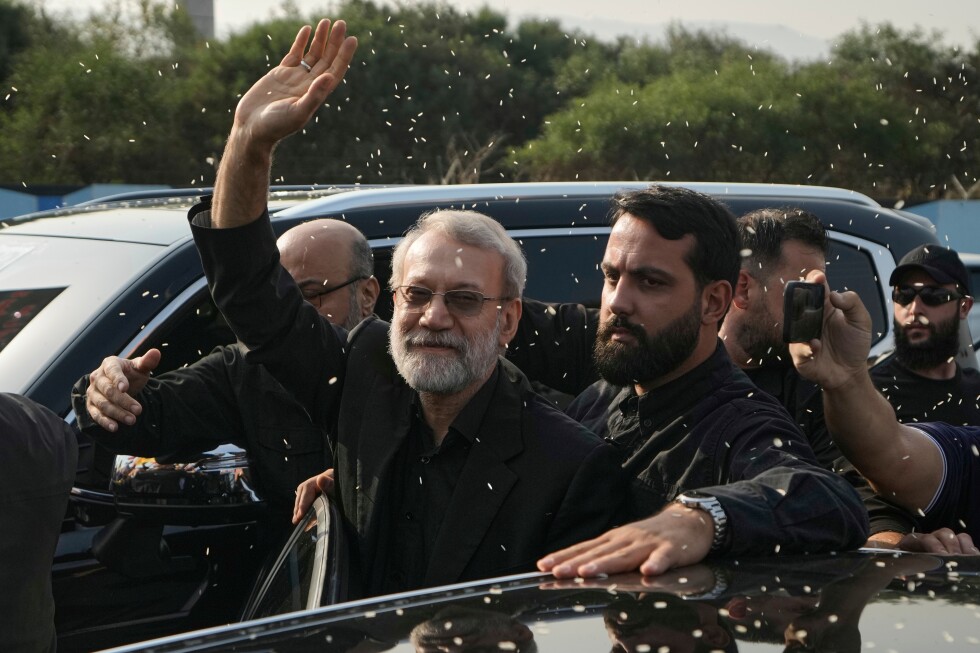
    DUBAI, United Arab Emirates — Israel has confirmed the targeted elimination of two senior Iranian security officials in overnight strikes, dealing a significant blow to Tehran’s leadership amid an intensifying regional conflict. Israeli Defense Minister Israel Katz identified the deceased officials as Ali Larijani, secretary of Iran’s Supreme National Security Council, and General Gholam Reza Soleimani, commander of the Revolutionary Guard’s Basij volunteer force.

    The targeted officials were instrumental in Iran’s violent suppression of January protests that challenged the theocracy’s decades-long rule. Their removal represents a strategic effort to weaken Iran’s governance structure during what has become the Islamic Republic’s most severe test in recent decades. Israeli Prime Minister Benjamin Netanyahu explicitly stated the objective was to “undermine this regime to give the Iranian people the opportunity to remove it.”

    Meanwhile, Iran continued its offensive operations, launching missile and drone attacks against Gulf Arab neighbors and regional oil infrastructure. Dubai’s airspace experienced temporary closure for the second consecutive day, disrupting international travel through the major transit hub. Iranian officials affirmed their intention to maintain control over the Strait of Hormuz, a critical waterway for global oil transportation.

    The conflict has triggered growing concerns about a global energy crisis as oil prices surge. President Donald Trump acknowledged that NATO and most allies have rejected his appeals to help secure the strategic strait, despite his demands for approximately half-dozen countries to deploy warships. European Union foreign policy chief Kaja Kallas explicitly stated, “This is not Europe’s war,” emphasizing the bloc’s reluctance to participate in a conflict without prior consultation.

    In parallel developments, the Israeli military initiated extensive strikes across Tehran and intensified operations against Iran-backed Hezbollah militants in Lebanon. The Lebanese government reports over 1 million displaced citizens—approximately 20% of the population—with 912 fatalities since the conflict’s escalation two weeks ago.

    The war has also created political repercussions in Washington, with Joe Kent, director of the National Counterterrorism Center, resigning citing concerns about the justification for military strikes in Iran. His departure signals growing unease within Trump’s political base as midterm elections approach, particularly regarding the administration’s departure from “America First” principles and rising gasoline prices.

  • Budapest’s vintage freight trams celebrate 100 years in service

    Budapest’s vintage freight trams celebrate 100 years in service

    BUDAPEST, Hungary — In a remarkable display of historical continuity, Budapest’s unique fleet of freight trams continues to serve the Hungarian capital after a full century of operation. These distinctive wood-sided vehicles, locally known as “mukis,” represent a living relic of urban industrial history that has adapted to modern needs while maintaining its original character.

    The mukis operate on Budapest’s extensive tram network—one of the world’s busiest—utilizing the same overhead electrical system that powers passenger trams. Unlike their yellow counterparts that transport commuters, these specialized vehicles perform essential infrastructure functions including snow clearance, nighttime maintenance, and transporting disabled trams for repairs.

    Originally acquired in 1926 as a pragmatic solution to post-World War I freight challenges, the trams were ingeniously constructed using repurposed components from war-damaged vehicles. Ádám Zadravecz, head of tram vehicle development at Budapest’s BKV public transit company, explains: “Engineers designed an electric drive system primarily from vehicles damaged in the war and those designated for scrapping. Their primary purpose was freight transport, but after World War II, these vehicles were also used for removal of the war ruins.

    Over decades of service, the mukis have undergone gradual modifications while retaining their fundamental design. The 1960s saw some equipped with snowplows for winter track clearance, and a comprehensive refurbishment in 2018 added modern comforts including cabin heating and driver seats—a significant improvement from their originally spartan design.

    Nándor Meixner, head of vehicle maintenance at Budapest’s Ferencváros depot, notes: “When manufactured in the 1920s, they were extremely simple, puritanical devices. During refurbishment, we strove to make our colleagues’ work easier.”

    The surviving fleet now numbers just six vehicles, with three remaining in active service. Their remarkable longevity stems from straightforward mechanical design that contrasts sharply with modern electronic systems. “Their maintenance costs are almost zero because these trams are very easy to maintain,” Zadravecz emphasizes. “Compared to today’s complex electronics, there is very little that can break down. People say they can be repaired with a hammer and a file, and that’s absolutely true.”

    Operating these historic vehicles requires specialized training and what Meixner describes as a particular “feel” for their operation. “It is not enough to just know the signs and instructions—you must understand the vehicle itself. We used to say the driver has to drive this vehicle with his butt,” he remarks, highlighting the intuitive connection between operator and machine.

    These century-old workhorses represent more than just functional infrastructure; they embody Budapest’s resilience and adaptive reuse philosophy. As Zadravecz concludes: “The value of these vehicles lies precisely in their simplicity, in the pure fact that they exist and remain available to us—a testament to practical engineering that continues serving the city a hundred years after their creation.”

  • Drone targets hotel in C. Baghdad

    Drone targets hotel in C. Baghdad

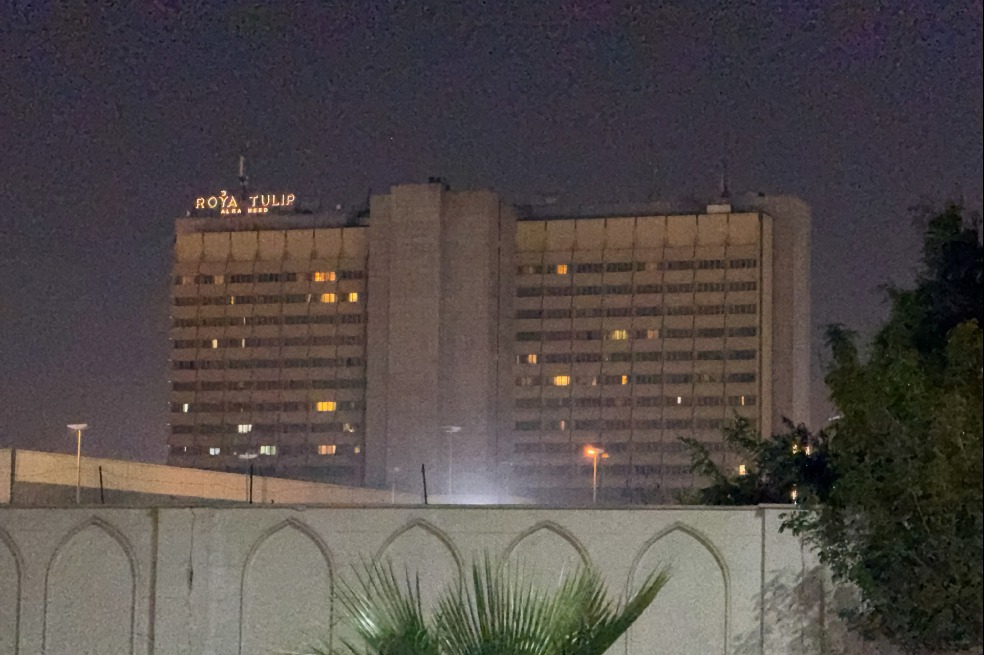
    A sophisticated drone attack targeted the Royal Tulip al-Rasheed Hotel within Baghdad’s heavily fortified Green Zone on Monday evening, according to Iraqi security officials. The explosive-laden drone struck the hotel’s rooftop structure, producing substantial detonations heard throughout central Baghdad.

    Security personnel speaking on condition of anonymity confirmed the incident occurred around nightfall, triggering immediate emergency responses from Iraqi defense forces. While preliminary assessments indicate no casualties or significant structural damage, security teams have initiated a comprehensive investigation into the breach of the high-security perimeter.

    The Green Zone represents Baghdad’s most secure district, housing critical government institutions including the Iraqi Parliament, ministerial complexes, and numerous foreign diplomatic missions—most notably the massive United States embassy compound. This fortified enclave has repeatedly faced security challenges in recent years, with frequent rocket and mortar attacks testing its defensive capabilities.

    This latest incident occurs against a backdrop of escalating regional violence that began on February 28th, when broader hostilities erupted involving Israeli, American, and Iranian interests. Security analysts note a concerning pattern of increased attacks targeting international diplomatic installations and military bases across Iraq since the regional conflict intensified. The drone strike methodology demonstrates evolving tactical capabilities among armed factions operating in the region, raising concerns about the potential for more sophisticated attacks against high-value targets.

    Iraqi authorities have heightened security alerts throughout the capital following the incident, while international missions within the Green Zone have been advised to review their security protocols. The investigation continues as authorities work to identify the perpetrators and determine the precise nature of the explosive device deployed in this brazen security breach.

  • Italy’s improbable World Baseball Classic run ends, but Azzurri leave lasting impact at home

    Italy’s improbable World Baseball Classic run ends, but Azzurri leave lasting impact at home

    MIAMI — Italy’s remarkable journey in the World Baseball Classic concluded Monday night with a heartbreaking 4-2 semifinal loss to Venezuela, yet manager Francisco Cervelli declared his team had achieved something far greater than a tournament victory. The Azzurri, who captured global attention with their unexpected deep run, believe they have fundamentally transformed baseball’s status in their soccer-dominated homeland.

    The semifinal matchup saw Italy surrender a 2-1 seventh-inning lead when Michael Lorenzen yielded consecutive run-scoring singles to Ronald Acuña Jr., Maikel Garcia and Luis Arraez with two outs. Following the final out, Italian players remained draped over the dugout railing for approximately ten minutes, watching Venezuelan celebrations unfold before a roaring sellout crowd at loanDepot Park.

    Despite the defeat, the Italian squad—composed of limited major leaguers and numerous minor league players—accomplished what many considered impossible. They stunned the baseball world with a perfect 5-0 start that included an 8-6 victory over the United States in pool play, a dominant 9-1 win against Mexico featuring captain Vinnie Pasquantino’s historic three-homer game, and an 8-6 quarterfinal triumph over Puerto Rico.

    ‘We are no longer the Cinderella,’ declared Cervelli, addressing his team’s transformation from overlooked underdogs to legitimate contenders. ‘In three years they are going to take us seriously. We have a group of young players that are going to participate in the next classic. What they experienced today, they are going to take it away for the rest of their lives.’

    The tournament impact extended far beyond the field. Pasquantino revealed that approximately 7 million viewers in Italy watched the semifinal broadcast, which began after 1 a.m. local time. ‘That’s incredible,’ he stated. ‘That’s why we’re doing this tournament. The goal of this team—we’ve talked about it a lot—is to impact Italy, and we have. We weren’t successful on the field tonight, but we were successful in Italy.’

    Italy’s captivating run featured endearing celebrations that garnered widespread attention, including espresso shots after each of their 12 home runs and progressively more expensive bottles of wine following victories. While some critics questioned the roster’s composition of primarily Italian-American players who had never visited Italy, Pasquantino expressed hope this would change: ‘We want in 20 years for the World Baseball Classic Italian team to be full of Italians, like Italian speakers from Italy.’

    Center fielder Jakob Marsee, entering his second season with the Miami Marlins, reflected on the experience: ‘To play in front of all these crowds and just how loud they were in these games—no one thought we could win, and being able to do it with all the guys was a lot of fun.’

    The Azzurri’s unexpected success has positioned them as ambassadors for baseball’s growth in Europe, with Cervelli concluding: ‘They revolutionized Italy. They put another sport on the map, which is good.’

  • Why did only two Iranian football players stay in Australia?

    Why did only two Iranian football players stay in Australia?

    In a revealing post-tournament development, Australia’s offer of humanitarian visas to seven members of Iran’s national football team has resulted in just two players choosing to remain in the country. The decision-making process, as detailed by BBC correspondent Katy Watson, highlights the complex considerations facing athletes from nations with strained international relations.

    The Australian government extended the humanitarian protection following the team’s participation in recent international matches, creating a potential pathway for players seeking political asylum or refuge from persecution. Despite this opportunity, the majority of the squad ultimately returned to Iran, underscoring the powerful personal and professional ties that compel athletes to maintain their homeland connections.

    This incident occurs against a backdrop of heightened geopolitical tensions and follows patterns of defection concerns involving Iranian athletes abroad. The relatively low uptake of Australia’s visa offer suggests either improved conditions for athletes within Iran or the significant personal sacrifices involved in permanent relocation. Sports analysts note that such decisions frequently involve weighing family security, career prospects, and national loyalty against political circumstances.

    The two players who remained join a growing diaspora of Iranian athletes who have sought international protection in recent years, though their identities and specific reasons for staying remain protected for privacy and security reasons. Australian immigration authorities have maintained strict confidentiality regarding individual cases, citing standard procedures for humanitarian visa recipients.

  • Argentina’s wine industry withers on the vine as consumption hits a record low

    Argentina’s wine industry withers on the vine as consumption hits a record low

    Argentina’s prestigious wine industry is confronting its most severe crisis in over a decade and a half, grappling with unprecedented challenges across domestic consumption, international exports, and agricultural production. Despite this sobering reality, the recent 90th National Wine Harvest Festival in Mendoza provided a moment of cultural celebration amidst the sector’s deepening troubles.

    Recent data from the National Institute of Viticulture (INV) reveals a startling decline in domestic wine consumption, plummeting to a historic low of 15.7 liters per capita in 2025—a dramatic decrease from the 90 liters annually consumed in 1970. This consumption collapse has been accompanied by the closure of approximately 1,100 vineyards nationwide and the disappearance of 3,276 hectares of grape production capacity.

    Industry experts attribute this downturn to multiple converging factors. Fabián Ruggieri, president of the Argentine Wine Corp trade group, identifies a “sharp decline in purchasing power” beginning in 2023 as a primary driver, particularly affecting middle- and low-income consumers who traditionally consumed wine daily.

    Simultaneously, a fundamental shift in consumer preferences is reshaping the market. Federico Gambetta, director of Altos Las Hormigas winery, observes that contemporary consumers no longer consume wine en masse but seek “coherence” and purpose behind their purchases. Younger generations are prioritizing approachability, freshness, and lightness—qualities typically associated with white wines and rosés—over the high-alcohol, full-bodied wines favored by previous generations.

    The international market offers little respite for Argentine producers. As the world’s 11th largest wine exporter, Argentina experienced a 6.8% year-on-year decline in exports during 2025, reaching only 193 million liters—the lowest volume since 2004. Export challenges include financing difficulties, high logistics costs, and significant competitive disadvantages due to external tariffs ranging between 10-20% in most markets, unlike neighboring Chile which enjoys free trade agreements with over 60 economies.

    Local producers face additional pressures from Argentina’s rampant inflation. Gabriel Dvoskin, owner of Canopus winery, notes that high production costs make Argentine wines increasingly expensive compared to international competitors, with basic inputs like bottles and corks costing significantly more than in countries like France.

    Despite these challenges, industry leaders emphasize that product quality remains non-negotiable. As Gambetta starkly warns, “Right now, everything is very delicate, and one wrong step can bankrupt you.” The crisis underscores the need for dynamic adaptation to evolving consumer preferences and market conditions throughout Argentina’s wine industry.

  • Hundreds of migrants are vanishing in the Mediterranean. Authorities are withholding information

    Hundreds of migrants are vanishing in the Mediterranean. Authorities are withholding information

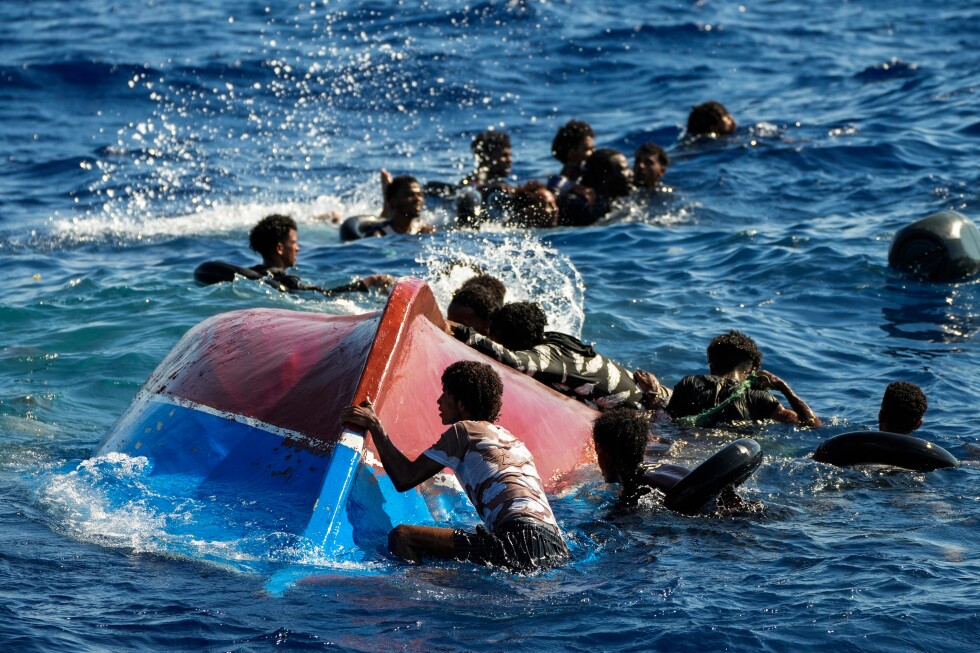
    A humanitarian catastrophe is unfolding across the Mediterranean Sea as migrants attempting to reach European shores vanish in record numbers through what aid organizations term ‘invisible shipwrecks.’ Government authorities in Italy, Tunisia, and Malta have systematically restricted information flow regarding migrant rescues and maritime disasters along the world’s deadliest migration route.

    The first quarter of 2026 has witnessed an unprecedented death toll, with the United Nations’ International Organization for Migration confirming at least 682 missing persons as of March 16—the deadliest opening period ever recorded. However, human rights groups assert the actual figure is substantially higher due to systematic underreporting and verification challenges.

    This information vacuum intensified following Cyclone Harry’s devastating impact in late January, which generated 9-meter waves and 100 kph winds across the central Mediterranean. Despite reports from Refugees in Libya indicating over 1,000 missing migrants after the storm, national authorities have neither confirmed nor denied these allegations.

    Julia Black, who leads IOM’s Missing Migrants Project, revealed the organization has created a secondary dataset for unverifiable cases due to the escalating information gap. ‘Last year, at least 1,500 reported missing persons could not be confirmed,’ Black stated, noting that 2026 has already produced over 400 such cases.

    The Associated Press conducted multiple inquiries with Italian, Tunisian, and Maltese authorities regarding their rescue policies and information disclosure practices. None provided substantive responses.

    Matteo Villa, migration researcher at the Italian Institute for International Political Studies, characterized the situation as ‘a strategy of silence’ designed to suppress public awareness. This opacity extends to Tunisia, which ceased sharing interception data in 2024 after previously publicizing numbers under a EU migration control agreement.

    The human impact is devastating for families awaiting news. ‘Europe should know that these people who got drowned in the sea have family members, have dreams, have passions,’ expressed Josephus Thomas, a Sierra Leonean migrant community leader in Tunisia.

    While Frontex, the EU border surveillance agency, reported spotting eight migrant vessels during the cyclone period, the fate of two boats carrying approximately 160 people remains unknown. Only one survivor has been confirmed from the Cyclone Harry period—a man rescued by merchant vessels who reported traveling with 50 others.

  • Iran ‘negotiating’ with FIFA over moving World Cup games to Mexico: embassy

    Iran ‘negotiating’ with FIFA over moving World Cup games to Mexico: embassy

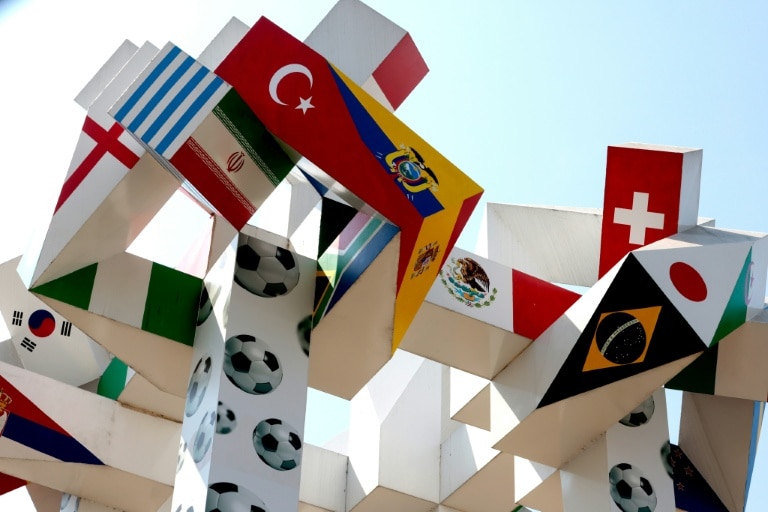
    The Iranian Football Federation has initiated formal negotiations with FIFA to transfer its 2026 World Cup group stage matches from the United States to Mexico, citing substantial security apprehensions and logistical complications. This diplomatic maneuver follows controversial statements from former U.S. President Donald Trump regarding the safety of Iranian athletes on American soil.

    Iran’s participation in the prestigious tournament, co-hosted by the United States, Canada, and Mexico from June 11 to July 19, 2026, has encountered significant uncertainty amidst escalating Middle Eastern tensions. The situation deteriorated when Trump publicly declared that the Iranian national team should reconsider their travel plans “for their own life and safety,” despite previously extending welcome through FIFA President Gianni Infantino.

    Mehdi Taj, President of Iran’s Football Federation, explicitly stated through the Iranian Embassy in Mexico’s official channels: “When Trump has explicitly stated that he cannot ensure the security of the Iranian national team, we will certainly not travel to America. We are currently negotiating with FIFA to hold Iran’s matches in the World Cup in Mexico.”

    Iran’s scheduled matches include confrontations with New Zealand and Belgium in Los Angeles, followed by a crucial game against Egypt in Seattle. The team’s designated training base in Tucson, Arizona, now faces potential abandonment.

    Abolfazl Pasandideh, Iran’s Ambassador to Mexico, has formally criticized the U.S. government’s alleged lack of cooperation regarding visa processing and logistical support for the Iranian delegation. The ambassador confirmed having personally proposed to FIFA the relocation of Iran’s matches to Mexican venues.

    The geopolitical context underscores these developments, with recent military engagements between the United States, Israel, and Iran exacerbating diplomatic tensions. Iran has emphatically asserted that “no one can exclude Iran’s national team from the World Cup,” reflecting their determination to compete despite political challenges.

    FIFA has not yet issued an official response to these negotiation requests or the surrounding controversy, leaving the football world awaiting resolution of this unprecedented international sports diplomacy dilemma.

  • And the burger goes to… Michael B Jordan marks Oscars win at In-N-Out

    And the burger goes to… Michael B Jordan marks Oscars win at In-N-Out

    Fresh from his Academy Awards triumph for Best Actor in ‘Sinners,’ Michael B. Jordan traded the Dolby Theatre’s glamour for a classic Hollywood afterparty venue: In-N-Out Burger. The newly crowned winner, still adorned in his formal black tuxedo, celebrated his victory with a substantial 3×3 burger—featuring three beef patties and three cheese slices—while his golden statuette occupied the seat beside him.

    The actor’s post-Oscars burger ritual places him within an elite group of A-list celebrities who have maintained this unconventional tradition. Photographers captured Jordan generously signing paper hats for restaurant staff amidst a vibrant atmosphere of cheering fans and flashing cameras, transforming the fast-food establishment into an impromptu celebration venue.

    This phenomenon traces back to 2005 when Hilary Swank made a grand entrance at Astro Burger following her ‘Million Dollar Baby’ victory, eliciting spontaneous applause from diners. More recently, Oscar presenters Julia Roberts (2019) and Jamie Lee Curtis (2024) have been spotted at the same burger chain after fulfilling their ceremonial duties.

    The connection between In-N-Out Burger and Hollywood’s biggest night extends beyond individual visits. Since 1994, Vanity Fair’s legendary post-Oscars gathering has featured the chain’s burgers as culinary staples, with director Steven Spielberg and models Emily Ratajkowski and Adwoa Aboah among those photographed enjoying them during recent celebrations.