博客

  • Fewer visitors travel to US amid tightened visa rules

    Fewer visitors travel to US amid tightened visa rules

    The United States is experiencing a significant downturn in international tourism as tightened visa regulations and additional fees discourage foreign visitors. According to data from the World Travel and Tourism Council, the US registered a 6% decline in foreign arrivals last year despite a 4% increase in global tourism elsewhere. This trend persisted into early 2026, with January figures showing a 4.8% year-on-year reduction according to the National Travel and Tourism Office.

    Industry analysts attribute the decline to multiple factors including stringent visa requirements, extended processing times, and the introduction of new fees. Particularly impactful is the ‘visa integrity fee’ of $250 implemented under the One Big Beautiful Bill Act for travelers from China, Mexico, Brazil, and India requiring non-immigrant visas. Erik Hansen of the US Travel Association noted this measure increases upfront visit costs by approximately 130%.

    The situation is further complicated by security-related travel restrictions. Since January 1, 2026, the US administration has paused immigrant visa issuance for nationals from 39 countries, including several World Cup qualifying nations such as Senegal, Côte d’Ivoire, Iran, and Haiti. While athletes and officials will receive visas under Presidential Proclamation 10998, ordinary fans from affected countries may be unable to attend the 2026 FIFA World Cup.

    Regional analysis reveals particularly sharp declines: Asian arrivals dropped 7.5% in 2025 compared to 2024, Canadian visitors fell 28% in January 2026 year-on-year, and Western European travelers from Germany and France also decreased. Only the UK showed modest growth with a 0.5% increase.

    This downturn presents economic concerns as the travel sector contributed $2.9 trillion to the US economy in 2024, supporting over 15 million jobs and accounting for 2.5% of GDP. The decline in high-spending Chinese tourists is particularly significant, as they have traditionally been among the biggest spenders globally, though recent trends show increased preference for domestic and regional Asian travel.

  • Sour soup from Guizhou makes a splash overseas too

    Sour soup from Guizhou makes a splash overseas too

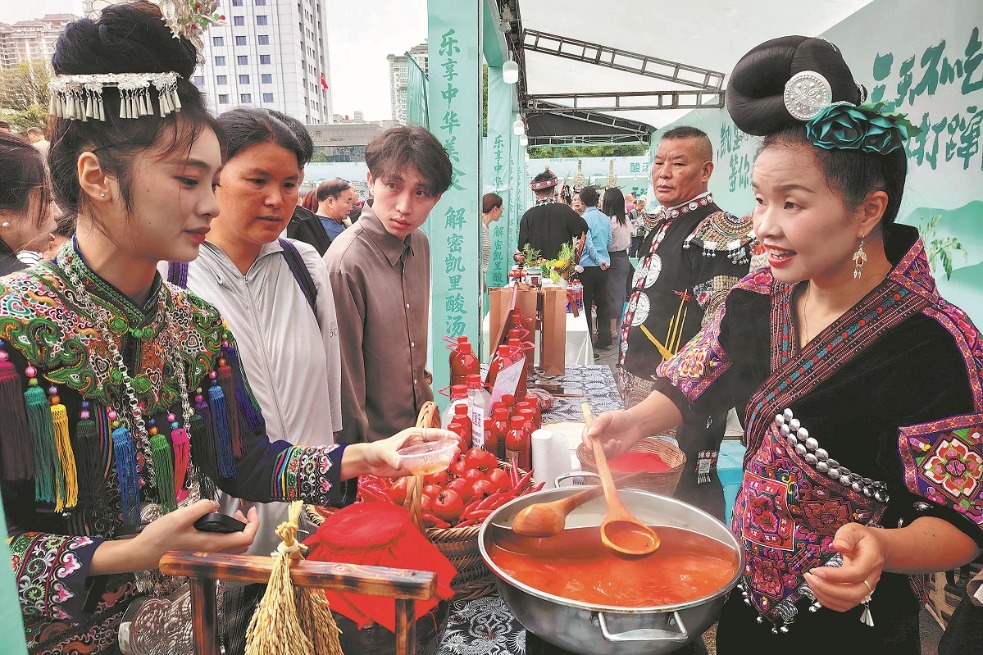
    What begins as an unfamiliar aroma evolves into an addictive culinary experience for those who dare to taste it. Kaili sour soup, a vibrant red delicacy from China’s Guizhou province, is captivating international palates while driving substantial economic growth in its native region.

    This traditional fermented soup, with roots stretching back over a millennium in the Qiandongnan Miao and Dong autonomous prefecture, represents both cultural heritage and culinary innovation. The signature red variation derives from natural fermentation of wild tomatoes (maolaguo) while the white version originates from rice. Blended with chili and litsea cubeba spices, the slow aging process yields a complex flavor profile—initially sour and spicy with a refreshing, subtly sweet finish.

    Deputy Zheng Peikun of the 14th National People’s Congress explains the historical context: ‘The tradition stems from times when salt was scarce, leading locals to develop fermentation techniques for seasoning. The saying goes: Three days without sour, and you’ll walk unsteady for sure.’

    Beyond its cultural significance as intangible cultural heritage, sour soup has evolved into an economic powerhouse. The Qiandongnan sour soup industry chain reached 8.15 billion yuan ($1.18 billion) in 2025, representing a staggering 221.4% year-on-year increase. This growth extends beyond China’s borders, with companies like Guizhou Yumeng Food Group exporting soup bases and instant rice noodles to Vietnam, Thailand, South Korea, Australia, the United States, Canada, and Spain, achieving 4.2 million yuan in export value.

    The international expansion continues through multiple channels. Restaurants featuring Guizhou sour soup have emerged in New York, Ho Chi Minh City, Bangkok, Phnom Penh, Kuala Lumpur, Madrid, and Melbourne. In Silicon Valley, restaurant operator Chen Yuzhu reports sour soup dishes as menu favorites. Innovative culinary fusions include sour soup-flavored spaghetti developed in collaboration with Milanese restaurants.

    During the recent National People’s Congress sessions, representatives highlighted the dish’s potential. NPC deputy Zhang Jizhi emphasized its health benefits as a natural source of probiotics and antioxidants that stimulate appetite and aid digestion. Provincial Party Secretary Xu Lin noted its visual appeal and refreshing qualities, advocating for broader national accessibility.

    The movement has gained organic momentum through events like the Village Super League soccer tournament, where foreigners’ initial hesitation transforms into enthusiastic adoption after tasting. Industry leaders like Chen Yang of Qiandaren Restaurant, which expanded to Ho Chi Minh City in January, recognize the dual appeal: satisfying homesick Chinese communities while aligning with local flavor preferences.

    With government support and growing international recognition, this traditional fermented soup appears poised for continued global expansion, carrying with it centuries of culinary wisdom and economic opportunity.

  • Scientists discover ‘baby star clusters’, offering new evidence for star formation

    Scientists discover ‘baby star clusters’, offering new evidence for star formation

    In a landmark astronomical discovery, researchers from China West Normal University have identified two exceptionally young star clusters located approximately 45,000 light-years from Earth in the peripheral regions of the Milky Way galaxy. Designated as Emei-1 and Emei-2, these celestial formations represent what scientists are calling ‘baby star clusters’ due to their remarkably recent emergence in cosmic terms.

    The findings, published in the prestigious journal Nature Astronomy, reveal that these clusters originated approximately 11 million years ago from a violent collision between two dense gas clumps within a high-velocity gas cloud streaming toward our galaxy. Associate Professor He Zhihong, the paper’s lead author, explained that the intense pressure generated by this cosmic impact created an extremely compressed environment that triggered the star formation process.

    What makes this discovery particularly significant is its challenge to conventional astronomical understanding. Previously, astronomers observing high-velocity clouds could detect only gaseous matter without any stellar components. The Emei clusters provide the first concrete evidence that such clouds can indeed foster star birth under specific extreme conditions, fundamentally altering scientific perspectives on stellar formation locations.

    Additionally, this breakthrough offers direct observational support for the theoretical framework suggesting that the Milky Way grows and nurtures new stars by accreting fresh gas from its intergalactic surroundings. The clusters’ distinctive blue coloration and exceptional brightness – characteristics of very young stars – further confirm their status as cosmic ‘newborns’ in the vast timeline of the universe.

  • Japanese firms upbeat on China’s rapid advances

    Japanese firms upbeat on China’s rapid advances

    TOKYO – Japan’s corporate sector maintains a strongly optimistic outlook on China’s economic trajectory, identifying rapid advancements in artificial intelligence and digital technologies as pivotal growth catalysts. This perspective emerges amid comprehensive industrial modernization efforts outlined in China’s 2026 Government Work Report, which prioritizes developing emerging sectors including integrated circuits and expanding the ‘AI Plus Initiative’ to accelerate large-scale implementation of digital technologies.

    Academic analysis from Rikkyo University’s College of Economics in Tokyo indicates China has strategically positioned technological innovation as the cornerstone of its industrial transformation, achieving remarkable progress across multiple sectors. The new energy vehicle industry exemplifies this transformation, with China establishing both substantial market presence and reinforced competitiveness in battery technology and comprehensive supply chain infrastructure.

    Recent automotive industry data reveals unprecedented production and sales figures exceeding 34 million units in the previous year, with new energy vehicles emerging as the primary growth driver. This segment achieved production and sales surpassing 16 million units, representing approximately 30 percent year-on-year growth and marking China’s eleventh consecutive year as the global leader in new energy vehicle sales.

    While acknowledging ongoing challenges within China’s semiconductor industry, experts note consistent expansion in research investment and gradual enhancement of technological capabilities. The rapidly evolving AI and digital sectors are projected to become principal economic growth engines in forthcoming years.

    The Japan-China Economic Association recognizes substantial potential within emerging technology and consumer sectors, affirming China’s sustained leadership in digital technologies. Despite regional supply chain restructuring initiatives, the association emphasizes China’s indispensable position within East Asia’s manufacturing and supply networks, noting that the nation’s extensive domestic market and progressively advancing manufacturing capabilities ensure its central role in regional industrial chains will persist indefinitely.

    Japanese economic circles simultaneously underscore the critical importance of stable bilateral economic relations, particularly following recent diplomatic tensions arising from provocative statements regarding China’s Taiwan region. These developments have adversely affected economic exchanges between the nations, resulting in the unprecedented cancellation of the annual joint business delegation that had continued since 1975.

    Existing cooperation mechanisms such as the Japan-China Energy Conservation and Environmental Protection Forum remain vital channels for economic collaboration, with significant potential for expanded cooperation in addressing global challenges. Beyond current priorities in decarbonization and digital economy sectors, future collaboration may encompass healthcare, elderly care services, social welfare systems, and disaster prevention initiatives.

    Continued progress in China’s market liberalization and business environment improvements are expected to provide Japanese companies with increasingly stable investment conditions, particularly within China’s vast consumer market where demand for premium products and services continues to escalate. Promising growth sectors including green energy, digital economy, artificial intelligence, and healthcare present substantial opportunities for Japanese enterprises, highlighting the necessity for deepened cooperation rather than confrontation to achieve balanced and mutually beneficial bilateral relations.

  • Shanghai’s invasive BMI medical device gets nod

    Shanghai’s invasive BMI medical device gets nod

    Shanghai-based Neuracle Technology has achieved a groundbreaking milestone in medical technology as its implantable brain-machine interface (BMI) system received full market authorization, becoming the world’s first invasive BMI medical device to gain regulatory approval. This historic development signals the transition of China’s invasive neural technology from experimental research to widespread clinical implementation.

    The National Medical Products Administration granted the medical device registration certificate on March 13, 2026, following successful clinical trials demonstrating significant improvement in hand-grasping ability among participants with quadriplegia. The device specifically targets patients aged 18 to 60 who have lost grasping function due to cervical spinal cord injuries.

    Neuracle’s innovative system employs a coin-sized minimally invasive implant that utilizes extradural implantation technology, positioning electrodes outside the dura mater to avoid brain tissue damage while maintaining high signal quality. The device extracts and analyzes neural signals in real-time, enabling patients to control specialized gloves through thought alone to perform essential tasks like grasping objects and drinking.

    Clinical trials involving 36 participants revealed a remarkable 100 percent improvement rate in grasping function, with some patients exhibiting additional neurological benefits including neural remodeling and recovery of supplementary nerve functions. The system features wireless power and communication capabilities, allowing for single implantation with long-term usability. Surgical implantation requires just over an hour, with patients typically achieving independent home operation within one month post-procedure.

    Compared to international counterparts, Neuracle’s technology demonstrates superior advantages in trauma reduction, patient compliance, and long-term stability. The company, founded in 2011 and among China’s first BMI-focused enterprises, plans to achieve the first clinical application this year while working to reduce manufacturing costs to enhance accessibility.

    The National Medical Products Administration emphasized its commitment to supporting major innovations in high-end medical devices, stating: ‘We will fully promote the application of new technologies, new materials, new processes and new methods in the healthcare field to enhance the international competitiveness of China’s high-end medical devices.’

    Industry experts recognize the device as providing a Chinese solution for global neurological treatment and offering novel insights for nervous system rehabilitation. BMI technology represents the convergence of integrated circuits, biomedicine, and artificial intelligence, with Shanghai emerging as a global hub for this cutting-edge field. The city currently hosts approximately 60 BMI companies, representing one of the world’s highest concentrations of firms and most advanced technologies in neural interface development.

    By 2025, Shanghai had already seen three invasive products enter China’s special review process for innovative medical devices, with another invasive product entering the FDA’s breakthrough therapy pathway. Several non-invasive BMI products are already deployed in stroke rehabilitation, mental health screening, and sleep disorder treatment.

  • US embassy in Baghdad attacked, fire breaks out

    US embassy in Baghdad attacked, fire breaks out

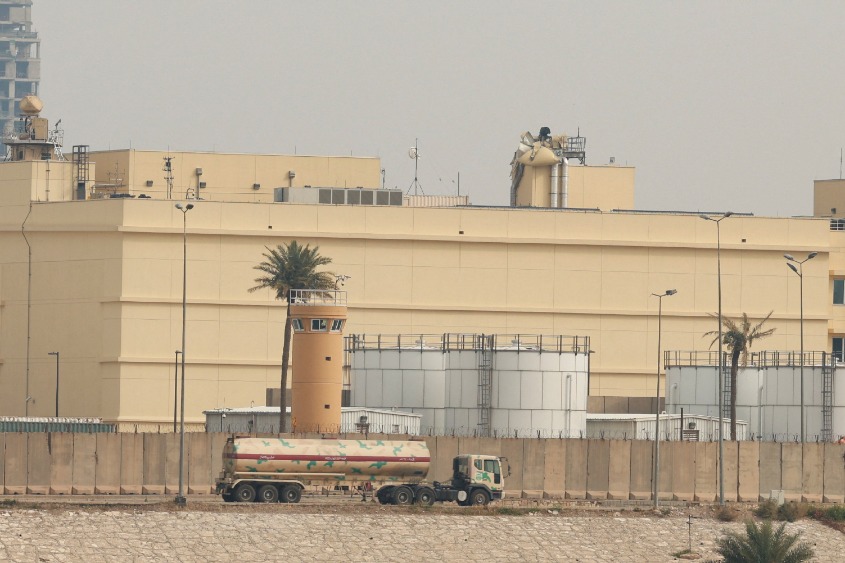
    The heavily fortified US Embassy compound in Baghdad’s Green Zone came under sustained attack in the early hours of Tuesday, March 17, 2026, with multiple projectiles striking the diplomatic facility and igniting fires within the secure perimeter.

    According to security sources in the Iraqi capital, the assault began on Monday evening and continued into Tuesday morning, representing one of the most significant attacks against American diplomatic presence in recent months. The Green Zone, which houses numerous government buildings and foreign missions, was placed on high alert as emergency response teams mobilized to contain the blazes within the embassy grounds.

    The attack occurred against a backdrop of heightened regional tensions and ongoing security challenges in Iraq. While no group has immediately claimed responsibility, the methodology suggests possible militia involvement. The United States maintains a significant diplomatic presence in Iraq despite periodic security incidents targeting its facilities.

    Pentagon officials have been notified of the incident and are monitoring developments closely. The State Department has yet to issue an official statement regarding potential casualties or damage assessment. Iraqi security forces have cordoned off the area and launched an investigation into the source of the attack.

    This incident marks the latest in a series of security challenges facing diplomatic compounds in Baghdad, underscoring the persistent volatility in the region despite ongoing stabilization efforts. The attack will likely prompt renewed discussions about security protocols for foreign missions in Iraq and may influence upcoming diplomatic engagements in the region.

  • Bus service meets regional business travel demands

    Bus service meets regional business travel demands

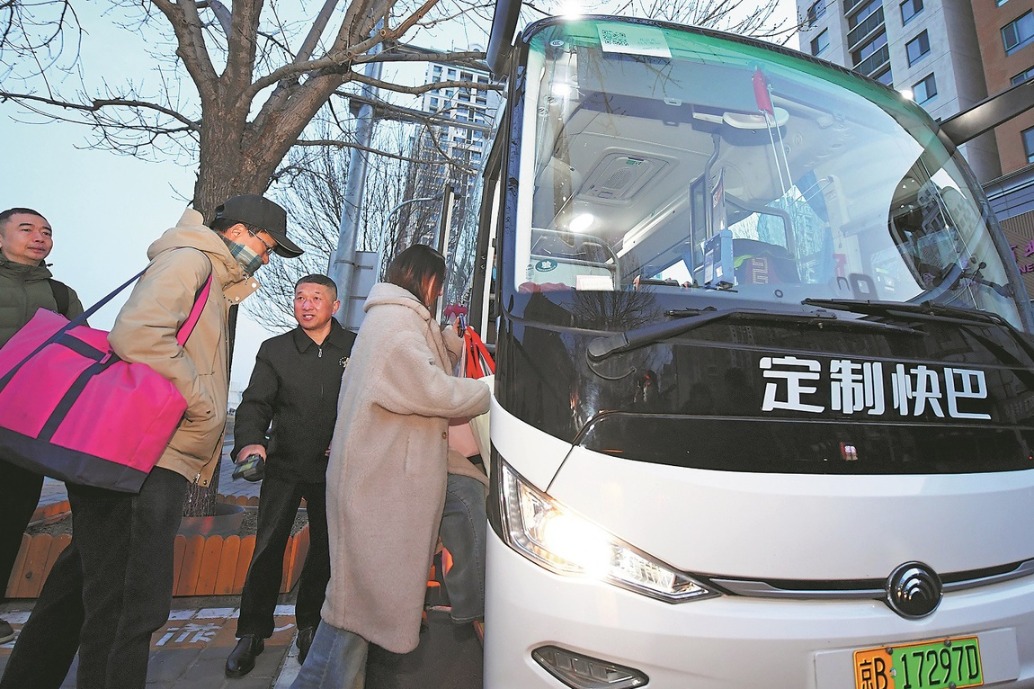
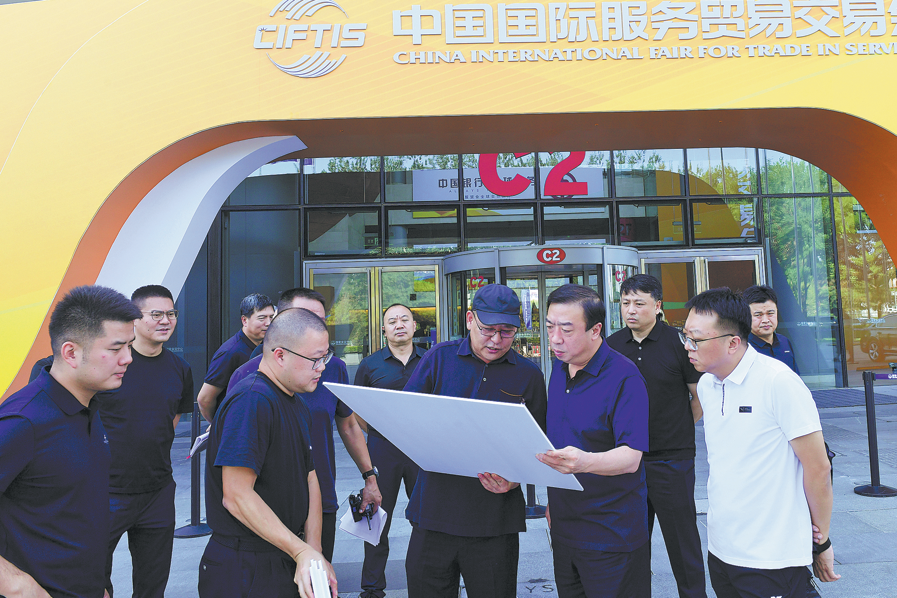
    A transformative commuter bus service connecting Beijing with the rapidly developing Xiong’an New Area has officially commenced operations, marking a significant milestone in the Beijing-Tianjin-Hebei regional integration initiative. The service, which completed successful trial operations spanning more than a year, introduces an expanded network designed specifically to accommodate growing business travel demands between the two economic hubs.

    The newly launched system features a strategic route expansion, including a specialized branch line that originates at Beijing’s Liuliqiao subway station, traverses the prominent Lize financial business district, and terminates at the Zhongguancun Science Park within Xiong’an. This carefully designed connectivity addresses the practical transportation needs of professionals and corporations operating across both locations.

    According to Zhang Jingxing, an official with the Beijing Municipal Commission of Transport, the service formalization enables broader commuter benefits while substantially enhancing transport infrastructure for industrial collaboration. The network design incorporates data insights from over 8,500 trial passengers, ensuring optimal route efficiency and coverage.

    The current operational framework includes three customized routes spanning 120 kilometers with a maximum travel duration of two hours. Priced at 50 yuan ($7.20) for a one-way journey, the service recorded promising initial metrics with 75 morning passengers on launch day and an average seat occupancy rate of 45%—surpassing projections by approximately 15%.

    Operational advantages include dedicated bus lanes and expedited checkpoint processing, eliminating inspection stops at Beijing borders. Wang Zhen, general manager of the operating company, emphasized the service’s competitive positioning: “It offers greater economy than private driving and superior convenience compared to high-speed rail options.”

    Passenger experience incorporates digital innovation through an official WeChat platform for ticket booking, with boarding facilitated via facial recognition or ID card authentication—eliminating traditional paper tickets. One commuter, identified as Li, praised the seamless integration with subway systems and direct workplace access without transfers.

    The broader customized network now encompasses 12 main routes and 58 branch lines interconnecting Beijing with multiple cities across Hebei province and Tianjin municipality. Cumulative performance data reveals impressive scale: over 163,000 completed trips transporting more than 5.3 million passengers to date.

    This development aligns with transportation objectives outlined in China’s 14th Five-Year Plan (2021-2025), which envisioned a “1 to 1.5-hour transportation circle” between major regional cities. With increasing corporate relocations to Xiong’an, including headquarters of major enterprises like China Satellite Network Group and Sinochem Group, demand is projected to grow substantially.

    Future expansion plans already include additional routes connecting Beijing’s Shuangjing station with Xiong’an’s Xuanwu Hospital and university district, further reinforcing the commitment to convenient, efficient, and affordable cross-city mobility.

  • War in the Middle East: latest developments

    War in the Middle East: latest developments

    The Middle East conflict entered a dangerous new phase with significant developments across multiple fronts, escalating regional tensions and global economic concerns.

    In a dramatic escalation, Israeli media reported targeting Iranian national security chief Ali Larijani in overnight strikes, though official confirmation remains pending. This comes after Larijani’s recent high-profile appearance at a Tehran rally where he dismissed US-Israeli attacks as acts of desperation following the February strike that eliminated Supreme Leader Khamenei.

    Tehran experienced loud explosions throughout the night, with an AFP journalist reporting blasts in the city center amid heavy thunderstorms. Simultaneously, Iran’s Revolutionary Guards announced the arrest of ten foreign spies in Razavi Khorasan province, alleging four were gathering intelligence on sensitive sites while others were linked to monarchist terrorist groups.

    The conflict expanded economically as oil prices surged over 5%, with US benchmark West Texas Intermediate reaching $98.32 per barrel. This spike followed several countries resisting former President Trump’s demand for securing the Strait of Hormuz, which Iran has shut down in response to US-Israeli attacks. The critical waterway normally handles one-fifth of global crude oil shipments.

    Energy infrastructure faced repeated attacks as a new drone strike hit the Fujairah oil complex on UAE’s east coast, causing fires but no injuries. This facility, which enables exports bypassing the Strait of Hormuz, was previously targeted on Monday.

    Regional security deteriorated significantly with multiple missile incidents. Qatar intercepted missile attacks after explosions were heard in Doha, while Dubai residents received emergency alerts warning them to “immediately seek a safe place” due to potential missile threats. In Abu Dhabi, falling shrapnel from an intercepted missile killed a Pakistani national.

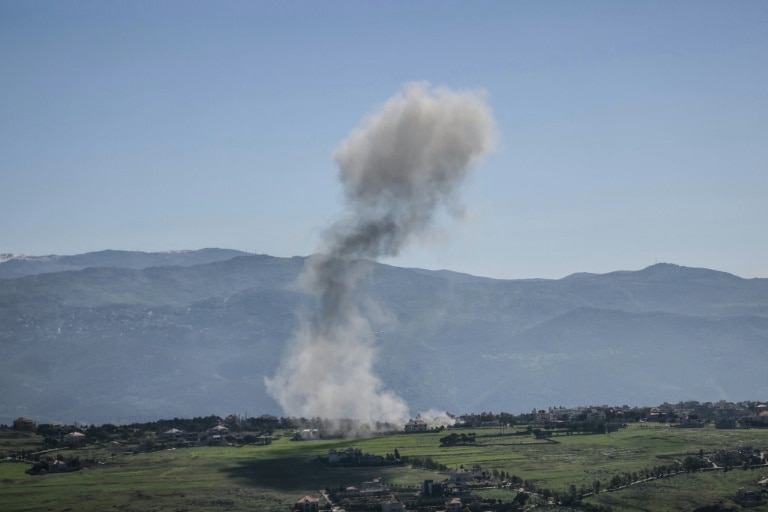
    Maritime security was compromised when an “unknown projectile” struck a tanker off Oman’s coast, causing minor structural damage but no injuries. Meanwhile, Israel launched widespread strikes in Tehran and began targeting Hezbollah positions in Beirut, where Lebanese media reported hits on three neighborhoods including residential buildings, wounding an Ethiopian woman.

    Iraq became increasingly embroiled in the conflict as a drone and rocket attack targeted the US embassy in Baghdad, with at least one drone crashing inside the compound. Separately, a missile strike on a Baghdad house killed four people, including two alleged Iranian advisors to Tehran-backed groups.

    Amid the escalating violence, China announced humanitarian assistance for Iran, Jordan, Lebanon, and Iraq. Foreign Ministry spokesman Lin Jian stated this aid aims to “alleviate the humanitarian plight faced by local populations,” though specific details were not provided.

  • Police officer pioneered Beijing traffic solutions

    Police officer pioneered Beijing traffic solutions

    In the complex ecosystem of Beijing’s urban mobility, where traffic is typically quantified through vehicle volume metrics and peak-hour speed analytics, the late Dong Yijun pioneered an unconventional measurement: footsteps. The former deputy director of the Beijing Municipal Public Security Bureau and head of its traffic management bureau, who passed away unexpectedly in October 2025 at 58, developed his transformative approach to urban governance through relentless ground-level observation.

    Over his 36-year policing career, Dong cultivated a methodology centered on firsthand investigation. He routinely walked congested bridges during late hours, traced neighborhood alleys on foot, stationed himself at bus terminals during rush hours, and engaged directly with citizens whose daily routines were shaped by the city’s transportation dynamics. His fundamental operating principle was simple yet profound: “If you haven’t seen it yourself, you haven’t really understood it.”

    Dong’s career trajectory exemplified this ground-up philosophy. After graduating from the People’s Public Security University of China in 1989, he began as a community officer in Xicheng district, one of Beijing’s most densely populated areas. Despite being a rare university graduate in grassroots policing at the time, he quickly distinguished himself by immersing completely in his assigned community—memorizing residents, businesses, and risk points through constant visitation rather than relying on paperwork.

    His leadership roles expanded significantly over the decades. Between 2021 and 2023, as head of the Tongzhou District Public Security Bureau, Dong spearheaded administrative reforms that simplified procedures and improved accessibility. Under his guidance, Tongzhou implemented over 120 measures that digitized approvals and expanded “one-stop” services, making policing and public services more responsive to residents and businesses alike.

    In 2023, Dong assumed what many considered Beijing’s most demanding public service role: director of the city’s traffic management bureau. He approached traffic not as an isolated system but as a reflection of urban functionality. Each morning and evening rush hour found him in the command center monitoring live feeds and directing responses. Late nights were dedicated to data analysis and planning for the following day, embodying his insistence that “no issue should wait until tomorrow.”

    Dong’s problem-solving methodology produced tangible results. When he noticed repeated pedestrian violations near Deshengmen in Xicheng, his investigation revealed that bus terminal placement and route design forced commuters to cross dangerously. His solution—which required cross-departmental coordination—led to the relocation of long-distance bus routes and optimization of traffic flow around key nodes, incorporated into Beijing’s broader transport governance plan.

    A strong advocate for technological integration, Dong championed digital public services that reduced burdens on citizens. Under his leadership, Beijing expanded the “Traffic 12123” mobile platform, enabling residents to handle dozens of services remotely. Today, approximately 80% of traffic-related services in Beijing can be completed online—a testament to his vision that “data should travel more and people should travel less.”

    Despite his seniority, Dong maintained exceptional personal discipline and humility. He worked extensively, often staying overnight at the office, yet rarely spoke of fatigue. Colleagues describe him as strategically minded yet detail-oriented—someone who cared about everything from traffic sign placement to drainage covers. Outside work, he remained private; his family learned of many professional achievements only through public reports.

    Dong, who joined the Communist Party of China in 1989, received numerous commendations including two first-class individual merits and the title of National Model Police Officer. His posthumous recognition as a “Role Model of the Times” celebrates a legacy visible in smoother traffic around major hospitals, streamlined administrative services, and policing models that prioritize coordination over confrontation. As one colleague summarized: “He showed us that leadership doesn’t come from distance, but from walking the same roads as the people you serve.”

  • Growing insulin resistance poses health challenge

    Growing insulin resistance poses health challenge

    China faces a mounting public health challenge as insulin resistance reaches alarming levels across its population, with many citizens remaining unaware of their metabolic condition. According to data from the Chinese Center for Disease Control and Prevention and Xinhua News Agency, this physiological phenomenon where the body’s response to insulin weakens has affected over 20% of adults aged 18 and above in certain regions, with prevalence rates soaring as high as 40.8% in some areas.

    The escalating trend, primarily driven by rapid lifestyle transformations, particularly endangers specific demographic groups. Men, individuals over 45, urban residents, excessive alcohol consumers, and those with sedentary habits or obesity face heightened vulnerability. Diets rich in sugars and fats further exacerbate this metabolic dysfunction, wherein the pancreas must produce excess insulin to maintain normal blood glucose levels.

    Medical experts emphasize the stealthy nature of this condition. Dr. Wang Weihao, Chief Physician of Endocrinology at Beijing Hospital, explains that insulin resistance typically progresses without noticeable symptoms until advancing to prediabetes. “Even with abnormal metabolism, blood sugar levels may appear normal. Most people experience no discomfort during this phase,” he noted in a November interview.

    Supporting research reveals concerning epidemiological patterns. A China CDC-led study published in June documented diabetes prevalence skyrocketing from 7.53% in 2005 to 13.7% in 2023—equating to 233 million patients nationwide. Simultaneously, investigation by Peking University revealed the average diabetes diagnosis age dropping from 62 to 56 years between 2008-2017, with cases under 40 surging from 3.0% to 10.9%.

    Dr. Li Jianhui, Chief Endocrinologist at Ningbo No 2 Hospital, highlighted the paradigm shift in his 2024 Yangtze Evening Post article: “Once considered an affluent elder’s condition, insulin resistance now permeates all population segments. Most affected individuals remain undiagnosed and unfamiliar with the term itself.”

    Healthcare professionals advocate multipronged lifestyle interventions to counter this epidemic. Dietary modifications include limiting carbohydrates to approximately 50% of total caloric intake while prioritizing whole grains. Increasing plant-based protein consumption benefits most individuals, though those with renal complications require specialized guidance. Intermittent fasting protocols alternating normal eating with calorie-restricted days show promising metabolic benefits.

    Physical activity constitutes another critical component, with experts recommending minimum weekly targets of 150 minutes of moderate-intensity aerobic exercise distributed across five days. Walking, jogging, and aerobic workouts complement resistance training like weightlifting and squats, which enhance insulin sensitivity while improving muscular and skeletal density.