博客

  • Culinary heritage fuels Shaxian’s prosperity

    Culinary heritage fuels Shaxian’s prosperity

    In the heart of Fujian province’s Shaxian district, a culinary revolution is transforming rural livelihoods through the power of traditional snacks. What began as humble street food carried on shoulder poles has evolved into a global phenomenon generating billions in annual revenue.

    At Yubang village’s Taste of Origins snack street, 60-year-old Zhang Xiuji exemplifies this transformation. After decades operating makeshift eateries across China, she now enjoys stable employment in her hometown, skillfully preparing wontons and noodles that represent Shaxian’s culinary heritage. Her personal journey from debt-ridden migrant to prosperous local mirrors the brand’s extraordinary ascent.

    The Shaxian snack tradition comprises over 200 varieties, with signature dishes including bianrou (springy meat wontons), banmian (peanut sauce noodles), and potstickers. According to Village Party Chief Zhang Changsong, this industry literally built the community: “In the 1980s and 90s, villagers carried this industry on their shoulders.” Of Yubang’s 1,200 residents, nearly 700 now derive their income from snack shops.

    The scale of Shaxian’s success is staggering. From 88,000 outlets in 2020, the network has expanded to 100,000 establishments nationwide, with over 60,000 Shaxian natives operating stores. The industry achieved an extraordinary 55 billion yuan ($7.6 billion) in annual turnover by 2025.

    Global expansion has been equally remarkable, with 241 overseas branches across 81 countries. Crucially, the brand has demonstrated remarkable adaptability, modifying recipes to suit local palates. In Saudi Arabia, pork-filled wontons have been reimagined to respect dietary customs, while Japanese outlets enhance peanut sauce intensity, and French locations add salad oil for local flair.

    This globalization is underpinned by sophisticated supply chains. Where early vendors carried ingredients on poles, modern operators receive standardized ingredients via smartphone orders, eliminating the hardships of earlier generations.

    The culinary success has sparked a homecoming trend, with food tourism drawing crowds to Shaxian’s origin village. As Zhang Xiuji reflects: “The village is thriving. We don’t have to wander anymore” – a sentiment capturing how traditional flavors have built modern prosperity.


  • Woods to return from 13 months out in TGL finale

    Woods to return from 13 months out in TGL finale

    Golf legend Tiger Woods is set to make his competitive return to golf after more than a year away from competition during Tuesday’s TGL season finale. The 50-year-old athlete, who has undergone multiple surgical procedures over the past two years, last competed in February 2025 within the TGL format, with his most recent PGA Tour appearance occurring 20 months ago.

    Woods’ comeback announcement came via social media from his Jupiter Links Golf Club account, which posted a photograph of the 15-time major champion accompanied by the simple declaration: “I’m back.” Throughout the 2026 TGL season, Woods has maintained a non-playing role with Jupiter Links GC, the PGA Tour-supported indoor league that utilizes massive simulator screens within a specially constructed Florida venue.

    The golf icon’s return comes at a crucial moment as his team advanced to the championship round by defeating Rory McIlroy’s Boston Common squad in last week’s semi-final matchup. Jupiter Links will face Los Angeles Golf Club, featuring English professionals Justin Rose and Tommy Fleetwood, in a best-of-three finals series. Woods replaces Kevin Kisner on the roster after Los Angeles claimed victory in the opening match.

    Regarding his physical condition, Woods acknowledged the challenges of recovery from his October disk replacement surgery. “I’ve had a lot of procedures prior to that, so the body doesn’t quite heal like it was when I was 24,” Woods commented last month. “Doesn’t quite bounce back. So I have good days when I can pretty much do anything, and other days where it’s hard to just move around.”

    The athlete’s medical history includes severe leg injuries from a 2021 car accident, a back operation in September 2024, and a ruptured Achilles tendon in March 2025. While Woods has indicated that participation in the upcoming Masters Tournament (April 9-12) remains “not off the table,” the physical demands of Augusta National’s hilly terrain present significantly greater challenges than the controlled environment of TGL’s indoor venue with predominantly flat lies.

    Woods, who captured his fifth Masters title in 2019 ending an 11-year major championship drought, continues to demonstrate resilience in his pursuit of competitive golf despite his extensive injury history and advancing age.

  • Rebels in Congo used containers to hold journalists in brutal conditions, advocacy group says

    Rebels in Congo used containers to hold journalists in brutal conditions, advocacy group says

    DAKAR, Senegal — A prominent media advocacy organization has exposed severe human rights violations perpetrated by the M23 rebel faction in the eastern Democratic Republic of Congo. Reporters Without Borders (RSF) issued a damning report on Tuesday detailing how the Rwanda-backed insurgents are utilizing metal shipping containers as makeshift detention facilities under what they describe as “inhumane” and “degrading” conditions in the city of Goma.

    According to RSF’s investigation, which incorporated witness testimonies, satellite imagery, and photographic evidence gathered in 2025, at least two journalists were among numerous civilians detained within these metal containers situated at the compound of the province’s legislative assembly. The identities of sources providing testimony have been protected for security reasons.

    The report reveals disturbing details of the detention conditions, with up to 80 detainees crammed simultaneously into single containers devoid of both light and ventilation. Prisoners were permitted exit only once daily and received minimal food rations, with multiple accounts describing routine physical beatings. Witnesses described extreme temperature fluctuations—suffocating heat during daylight hours followed by intense cold at night—with some fatalities reported under these brutal circumstances. Detainees typically remained captive for several weeks before being transferred to alternative locations.

    The M23 rebel group, which seized control of Goma last year, has not responded to requests for comment from The Associated Press regarding these allegations.

    This development represents a significant deterioration of press freedom in eastern Congo, where journalists already operated under widespread threats and attacks. RSF notes that the M23 has systematically tightened control over media coverage, including imposing specific linguistic restrictions on how their presence in the region may be described.

    The mineral-rich eastern territories of Congo have endured decades of sustained conflict, with government forces combating over 100 armed groups. The M23 rebellion, backed by Rwanda, emerged as the most potent threat, making unprecedented advances throughout the region early last year by capturing key urban centers.

    Despite a truce agreement brokered by the United States and Qatar, the ongoing conflict has triggered a massive humanitarian emergency, displacing at least 7 million people from their homes.

  • Cuba restores power after 2nd nationwide blackout

    Cuba restores power after 2nd nationwide blackout

    Cuban authorities successfully restored national power distribution on Sunday following the second complete grid failure within a single week, exacerbating the ongoing energy crisis in the Caribbean nation. The blackout, which left all 9.6 million residents without electricity, was attributed to severe fuel shortages resulting from a US-imposed oil blockade implemented in January.

    Prime Minister Manuel Marrero Cruz confirmed the grid restoration via social media platform X, acknowledging the strenuous efforts of electrical workers who managed to reinstate the National Electric System (SEN). However, government officials cautioned that energy demand would continue to surpass available supply capacity, indicating persistent vulnerabilities in the nation’s infrastructure.

    The power disruption occurred amidst escalating geopolitical tensions between Havana and Washington. Recent statements from US officials regarding potentially ‘taking’ the Caribbean island have prompted Cuban military preparations for potential aggression, according to diplomatic sources. Deputy Foreign Minister Carlos Fernandez de Cossio emphasized Cuba’s defensive posture while maintaining openness to diplomatic discussions, though explicitly excluding any negotiations regarding political system alterations.

    This incident marks the seventh nationwide blackout since 2024, severely impacting daily life as citizens struggle with food spoilage due to non-functional refrigeration and compromised communication systems. The situation has deteriorated significantly following the January military operation in Venezuela that resulted in the seizure of President Nicolas Maduro, after which Washington threatened tariffs against nations supplying oil to Cuba.

    The comprehensive oil embargo has paralyzed multiple sectors beyond energy, including public transportation and aviation, dealing a substantial blow to Cuba’s crucial tourism industry. Medical professionals like nurse Alina Quinones describe increasingly difficult living conditions, with basic services becoming unreliable amid the protracted economic and energy crisis.

  • More than 300 robots warm up for Beijing half-marathon next month

    More than 300 robots warm up for Beijing half-marathon next month

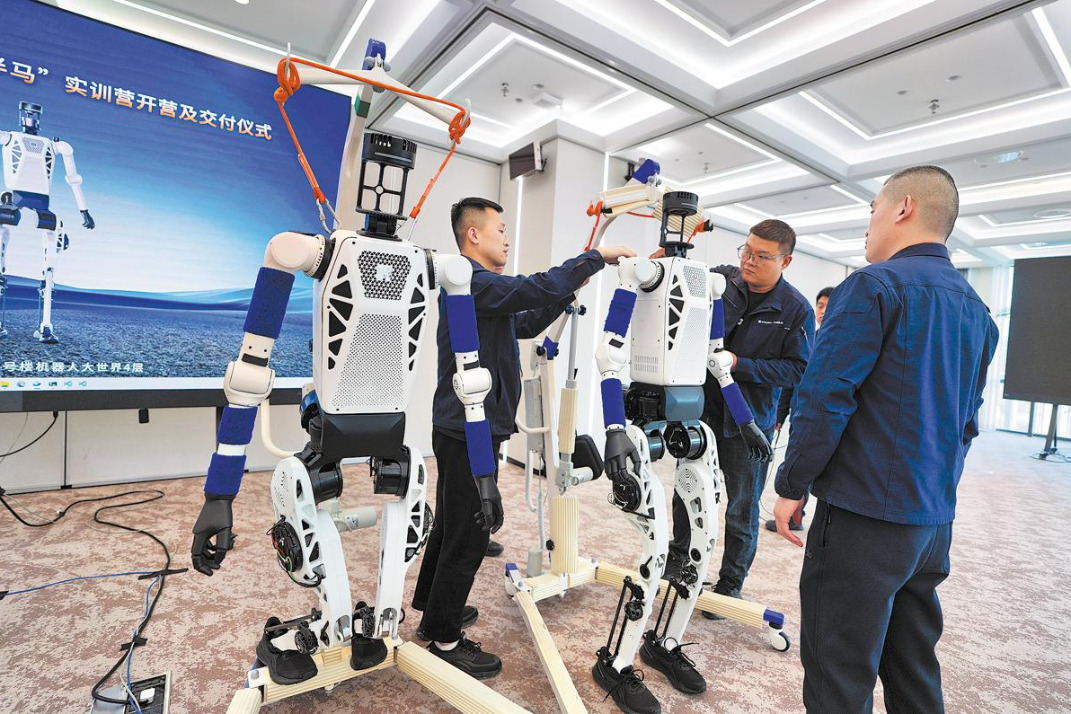
    In an unprecedented fusion of athletics and advanced robotics, Beijing is preparing to host a groundbreaking event where over 300 humanoid robots will compete alongside human participants in a half-marathon next month. The 2026 Beijing E-Town Half Marathon and Humanoid Robot Half Marathon, scheduled for April 19, represents a significant milestone in robotics development and real-world application testing.

    The event has attracted substantial participation from 76 institutions across 13 provincial-level regions, featuring more than 80 corporate teams and over 20 academic groups from universities and training camps. According to Liu Weiliang, spokesperson and deputy director of the Beijing Municipal Bureau of Economy and Information Technology, this gathering will showcase 26 distinct robot brands, highlighting China’s rapidly expanding robotics sector.

    This year’s competition demonstrates remarkable growth compared to previous iterations, with participating teams increasing nearly fivefold and university involvement surging tenfold from just two institutions last year to twenty currently. A particularly significant advancement is that approximately 38% of competing robots will utilize autonomous navigation capabilities, marking substantial progress in real-world mobility applications.

    Beyond the spectacle, the marathon serves as a rigorous testing ground for robotic endurance and reliability. Tang Jian, Chief Technology Officer of the Beijing Innovation Center of Humanoid Robotics, emphasizes that the event evaluates stability and consistency under sustained, complex conditions rather than merely assessing speed capabilities.

    The competition builds on last year’s successful inaugural event, where the winning robot completed the 21-kilometer course in 2 hours, 40 minutes, and 42 seconds. That event garnered massive public attention, with live broadcasts attracting 128 million viewers according to official data.

    Supporting this technological advancement, Beijing has established a substantial government investment fund worth 100 billion yuan ($14.48 billion) specifically targeting future industries including humanoid robotics. The city’s commitment is further demonstrated by the 23 robotics companies that have secured combined financing of 19.24 billion yuan since January 2025, accounting for 41% of national funding in this sector.

    The event signifies a crucial transition from demonstration-based robotics to practical implementation, with humanoid robots increasingly moving beyond staged performances into retail solutions and consumer-oriented applications, gradually integrating into everyday life scenarios.

  • China pushes for using patents as innovation incubators

    China pushes for using patents as innovation incubators

    Chinese authorities are implementing a comprehensive national strategy to transform intellectual property into a powerful engine for economic growth and technological advancement. The China National Intellectual Property Administration has announced the development of a sustainable mechanism designed to dramatically increase the practical application of patented innovations across industries.

    Deputy Commissioner Hu Wenhui revealed that significant progress has already been achieved, with university invention patent commercialization rates reaching 10.1% and research institutions achieving 17.2% by the end of 2025. These figures represent substantial improvements over previous years, demonstrating the effectiveness of recently implemented policies.

    The administration has confronted historical challenges in patent commercialization, including lengthy processes, uncertain outcomes, and high risks that previously discouraged researchers from bringing their innovations to market. To address these barriers, officials have introduced systematic reforms including pre-application patent evaluations, targeted research guidance, and specialized talent development programs focused on commercialization expertise.

    In a coordinated effort with the Ministry of Public Security and the State Administration for Market Regulation, authorities have intensified enforcement against illegal patent agents, handling over 170 cases that resulted in license suspensions or revocations for 61 patent and trademark agencies and 22 individual agents. The crackdown has eliminated more than 100,000 instances of illegal information and advertisements while shutting down over 2,200 user accounts involved in fraudulent patent activities.

    Ministry of Education official Zhou Dawang emphasized that pre-application evaluations ensure quality from inception while aligning patent development with market demands. Meanwhile, Ministry of Industry and Information Technology representative Wei Wei articulated that intellectual property rights must transcend laboratory confinement to achieve practical implementation on production lines, transforming abstract concepts into tangible products.

    The administration, in collaboration with industry partners, has established fast-track review processes for patent applications in critical manufacturing sectors while developing targeted policies to support small and medium-sized enterprises in patent commercialization. Officials describe this multifaceted approach as establishing a characteristically Chinese pathway to realizing full patent value through stable, long-term mechanisms for commercialization and utilization.

  • Former AFL player Nick Stevens always intended to install legally compliant pools, jury told

    Former AFL player Nick Stevens always intended to install legally compliant pools, jury told

    The fraud trial of former Australian Football League (AFL) player Nick Stevens has entered its critical phase in Victoria’s County Court, with the prosecution and defense presenting starkly contrasting narratives about the athlete-turned-businessman’s intentions. Stevens, who played 231 games for Port Adelaide and Carlton, faces 13 charges of obtaining financial advantage by deception and one count of using a false document related to his pool installation business operations in Mildura.

    According to prosecutors, Stevens systematically defrauded six clients totaling $171,000 in 2017 by accepting payments for swimming pool installations that he never intended to complete to legal standards. The court heard that projects were abandoned in various states of completion, with none having received proper permits from the Mildura council before Stevens relocated to Melbourne and ceased communication with clients. Several customers were left with unfinished excavations or poorly installed pools in their backyards.

    Defense barrister Jim Stavris presented an alternative account, arguing that Stevens genuinely intended to fulfill all contracts but encountered unforeseen financial difficulties and permit processing issues. Stavris emphasized that the crucial legal question revolves around Stevens’ state of mind when entering into agreements with customers, not the eventual outcome of the projects.

    The trial revealed complex business relationships at the heart of the case. Stevens initially operated as a distributor for Leisure Pools under the supervision of registered builder Brian McDonnell, who received $1,500 per project to arrange permits. Prosecutors allege Stevens deliberately operated without proper registration after this arrangement, while the defense maintains that Stevens believed his working relationship with McDonnell continued throughout the period in question.

    Key testimony highlighted disputes between Stevens and both Leisure Pools and a transportation company that allegedly prevented pool deliveries. Stavris characterized his client as a businessman whose back was ‘against the wall’ by late 2017 rather than a deliberate fraudster. The prosecution countered that documentary evidence and customer testimony contradict Stevens’ version of events, with most clients denying having signed permit applications that Stevens claims were submitted.

    The jury must now determine whether Stevens’ actions constituted deliberate deception or represented a business failure without criminal intent. The outcome hinges on interpreting complex contractual relationships and assessing the credibility of conflicting accounts about permit applications and business arrangements.

  • ‘City of the future’ a reality after 9 years

    ‘City of the future’ a reality after 9 years

    After nine years of development, Xiong’an New Area has emerged as a model of urban planning and high-quality development, realizing its vision as a ‘city of the future.’ The project, initiated under China’s national strategy, has transformed from conceptual designs into a fully functional urban center that prioritizes quality of life alongside economic development.

    The transformation story of Xing Jie and Li Jinghe illustrates the human impact of this massive urban development. Previously operating a small hardware store in rural Hebei province, the couple initially hesitated when learning their village would be incorporated into the Xiong’an New Area blueprint. “We were reluctant to leave because we couldn’t picture what the new area would be like,” Xing recalled.

    Their relocation journey took a positive turn when they utilized compensation funds to establish a wholesale business in Baigou, a neighboring commercial hub. Transitioning from retail to wholesale, they secured a 500-square-meter warehouse that enabled significant business expansion beyond their expectations.

    In 2021, the family achieved another milestone by moving into a modern apartment in Rongdong district. Xing now expresses confidence in the area’s development, noting that “the opportunities, especially for the younger generation, are far greater than what a small village store could ever offer.”

    The physical landscape of Xiong’an has similarly transformed, with the Xiong’an Business Service Center standing as an architectural landmark visible even at dusk. The area now represents successful implementation of integrated planning that balances economic development with residential quality, environmental sustainability, and technological innovation.

    This development exemplifies how national strategic planning can successfully translate into improved living standards and economic opportunities for citizens while creating sustainable urban environments designed for future challenges.

  • Sinner surpasses Djokovic’s Masters 1000 record

    Sinner surpasses Djokovic’s Masters 1000 record

    Italian tennis sensation Jannik Sinner has etched his name into the history books by breaking Novak Djokovic’s longstanding ATP Masters 1000 record for consecutive sets won. The world number two achieved this remarkable feat during his dominant performance against France’s Corentin Moutet at the Miami Open, securing a straight-sets victory of 6-1, 6-4 in just 71 minutes on court.

    Sinner’s triumph marks his 26th consecutive set won at the prestigious ATP Masters 1000 level, surpassing the previous record of 24 sets that Djokovic had maintained for over a decade. The 24-year-old Italian had initially equaled the Serbian champion’s record during his opening match against Damir Dzumhur before making the record his own against Moutet.

    Reflecting on his achievement, Sinner maintained his characteristic humility, stating, ‘I am very happy. This sport is unpredictable, so we try to keep attention as much as we can and we’ll see what is coming in the next round.’

    The four-time Grand Slam champion has been in exceptional form, having won the previous two Masters 1000 tournaments at Indian Wells and Paris without dropping a single set. His performance against Moutet demonstrated this dominance, as he won 19 of the first 26 points and sealed the first set in just 22 minutes.

    Sinner now advances to face American Alex Michelsen in the round of 16, continuing his pursuit of the coveted ‘Sunshine Double’ – winning both Indian Wells and Miami Open consecutively. The last player to achieve this remarkable feat was Roger Federer in 2017.

    In other tournament developments, former world number one Daniil Medvedev suffered an unexpected early exit in the last-32 stage against Argentina’s Francisco Cerundolo. The match was briefly interrupted by unusual circumstances when umpire Mohamed Lahyani’s chair became entangled with the aerial ‘spider cam’ system, requiring staff intervention to prevent the chair from toppling over.

  • Tourism soars as flower-chasing season

    Tourism soars as flower-chasing season

    China’s spring blossom season has triggered an unprecedented tourism boom as domestic and international travelers flock to iconic floral destinations across the nation. The phenomenon represents a significant economic driver, creating a comprehensive consumption chain spanning transportation, accommodation, dining, and experiential tourism.

    Record-breaking visitor numbers have been reported nationwide. Yuantouzhu Scenic Area in Wuxi, Jiangsu Province, entered ‘congestion mode’ in mid-March, welcoming nearly 70,000 visitors in a single day—a record for this year’s cherry blossom season. The surge demonstrates the powerful attraction of China’s spring floral landscapes, with social media amplifying interest in these natural spectacles.

    Major urban centers are experiencing particularly strong demand. Beijing’s magnolia and mountain peach trees have created vibrant spring displays, with Yuyuantan Park’s early cherry blossoms drawing crowds despite weekday visits. Hotel bookings near photogenic locations like Qianmen, Temple of Heaven, and Chaoyang Park have surged correspondingly.

    The trend extends beyond traditional domestic tourism. International visitors are arriving in dramatically increased numbers, with flight bookings using non-Chinese passports rising 21% year-on-year according to Qunar data. Specific destinations have seen extraordinary growth: Nyingchi in Tibet recorded a 630% increase in foreign arrivals for its pink peach blossoms, while Datong in Shanxi Province witnessed a 900% surge for its apricot blossoms.

    Affordable air travel has facilitated this tourism explosion, with fares dropping 30-70% compared to February prices. One-way flights from Beijing to popular destinations like Hangzhou, Wuxi, and Wuhan are available for as little as 300 yuan ($44), creating competitive pricing against high-speed rail alternatives.

    Professor Lü Ning, Dean of Tourism Sciences at Beijing International Studies University, notes the evolution of flower-viewing tours: ‘The 2026 season emphasizes immersive experiences and scenario innovation. We’re observing a transition from superficial viewing to deep participation, creating stronger emotional connections between visitors and natural environments.’

    The phenomenon demonstrates how natural attractions can transform into significant economic assets, generating comprehensive consumption chains that benefit multiple sectors of the tourism industry.