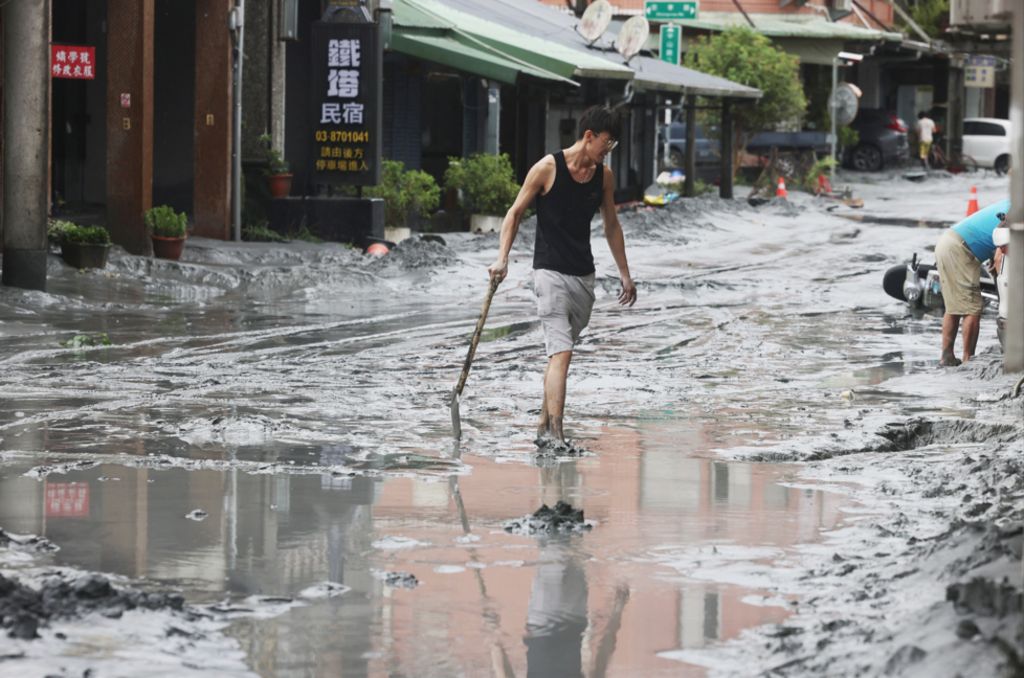
Super Typhoon Ragasa has left a trail of destruction in Taiwan, particularly in the eastern county of Hualien, where a catastrophic flood caused by the breach of a barrier lake has claimed lives and devastated communities. The barrier lake, formed after landslides triggered by an earlier typhoon in July, held an immense volume of water—approximately 91 million tonnes. When it burst its banks on Tuesday, it unleashed a torrent comparable to a tsunami, killing at least 14 people, injuring 32, and leaving 46 unaccounted for. The floodwaters, reaching depths of up to the second floor of buildings in some areas, swept away bridges, uprooted trees, and submerged vehicles, leaving residents in shock and despair. Awa, a 42-year-old bookstore owner in Guangfu Township, described the scene as “like a river outside, with cars floating and everything drifting.” She and her husband sought refuge on the second floor of their shop, attempting to salvage their books. Survivors reported receiving no immediate warning before the disaster struck, despite prior monitoring of the lake’s water levels by universities and authorities. Emergency evacuations were not mandatory, and many elderly residents, particularly those without access to smartphones, were left vulnerable. The disaster has highlighted the challenges of managing natural hazards in Taiwan, where barrier lakes are a recurring phenomenon. Experts noted that the lake’s composition and the lack of accessible roads hindered preventive measures. The tragedy has further strained Hualien’s tourism industry, already reeling from recent earthquakes. As communities grapple with loss and recovery, questions remain about the adequacy of disaster preparedness and response.
博客
-
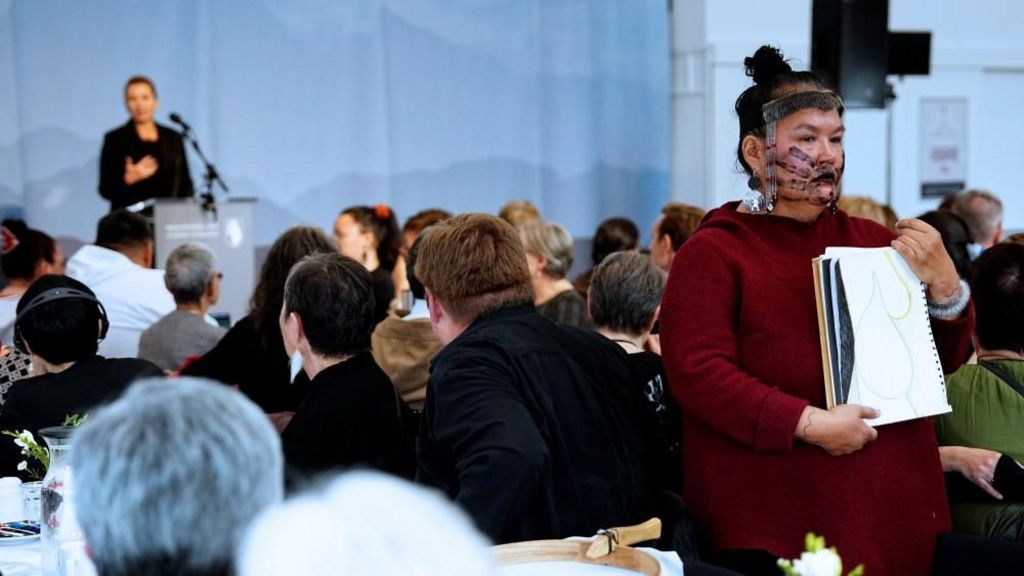
Greenland contraception scandal victims hear Danish PM’s emotional apology
In a historic and emotionally charged address, Denmark’s Prime Minister Mette Frederiksen formally apologized to the women of Greenland for a controversial birth control program that forcibly implanted contraceptive coils in thousands of Inuit women during the 1960s and 1970s. Speaking to a packed audience in Nuuk, Greenland’s capital, Frederiksen expressed deep remorse for the injustices committed. ‘Dear women. Dear families. Dear Greenland. Today there is only one right thing to say to you. Sorry,’ she stated. The apology was met with mixed reactions, including a silent protest by one woman who stood with her back to the prime minister, her mouth marked with a black handprint. The program, which targeted nearly half of Greenland’s childbearing-age women, involved the insertion of intrauterine devices (IUDs) without consent, including in girls as young as 12. Many victims have suffered lifelong physical and emotional trauma, including infertility. Naja Lyberth, a prominent advocate for the affected women, emphasized the importance of the apology but criticized the lack of exploration into potential human rights violations. Frederiksen also announced plans for a ‘reconciliation fund,’ though details remain unclear. A lawsuit demanding compensation has been filed by 143 women, including Aviaq Petersen, who discovered she had an IUD inserted without her knowledge during an abortion at age 24. The apology comes amid growing scrutiny of Denmark’s historical and current policies in Greenland, including forced adoptions and the separation of Inuit children from their families. Greenland’s Prime Minister Jens-Frederik Nielsen described the birth control program as one of the darkest chapters in the country’s history. While the apology has been welcomed by many, some victims, like Elisa Christensen, expressed disappointment over the lack of compensation and tangible support. ‘The little girl inside me felt a hug from society,’ Christensen said, ‘but the grown-up Elisa doesn’t know how to use that apology.’ The case highlights ongoing tensions between Denmark and Greenland, as well as the broader implications of colonial-era policies on indigenous communities.
-

Kindy parents told to pay thousands for kids’ art – sparking uproar and a midnight heist
A Brisbane-based kindergarten has ignited widespread controversy after asking parents to pay A$2,200 (£1,000; $1,400) to take home their children’s art portfolios. The Craigslea Community Kindergarten and Preschool, which recently closed due to financial troubles, framed the request as a fundraiser to address mounting debts, including unpaid staff wages. The folders contained a mix of abstract creations and cherished memories, described as ‘only a parent could love.’ However, the demand has been met with fierce criticism, with Queensland’s leader labeling it ’emotional blackmail.’ The kindergarten’s management, already under scrutiny for governance issues, faced further backlash when a parent allegedly broke into the center to retrieve their child’s artwork. The incident has drawn public outrage, with thousands condemning the move on social media. Queensland Premier David Crisafulli called the request ‘un-Australian’ and ‘wrong on so many levels,’ emphasizing the sentimental value of children’s art. The Department of Education and the Creche and Kindergarten Association (C&K) later intervened, successfully recovering the portfolios and ensuring they are now free for families to collect. C&K condemned the practice of charging parents for their children’s works, reaffirming their commitment to ethical childcare practices.
-
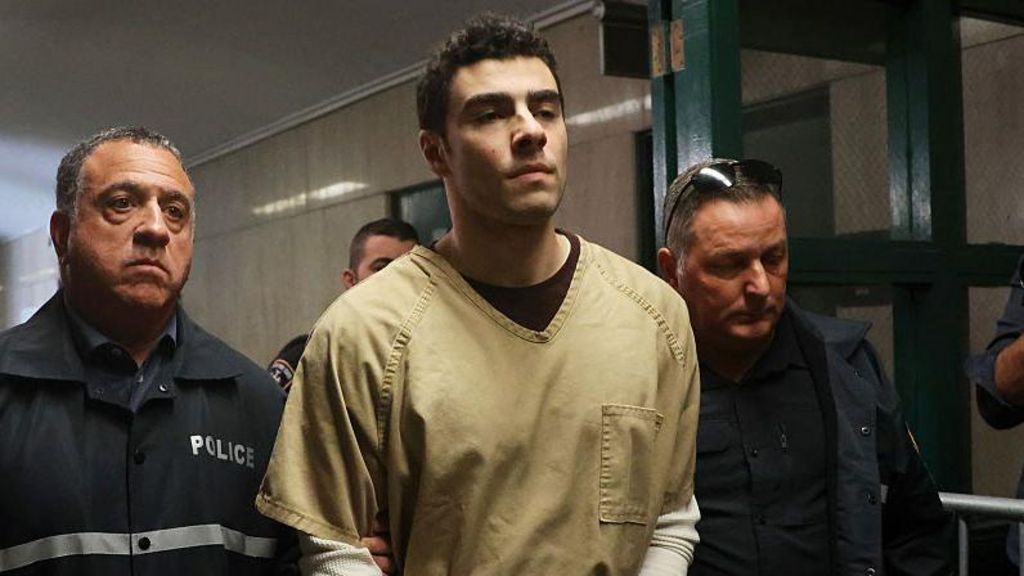
Luigi Mangione’s lawyers claim Trump violated right to fair trial
The legal team representing Luigi Mangione, the individual accused of murdering UnitedHealthcare CEO Brian Thompson, has asserted that former President Donald Trump compromised Mangione’s right to a fair trial. In a recent court filing, Mangione’s attorneys highlighted comments made by Trump during a Fox News interview, as well as social media posts by Department of Justice (DoJ) employees, which they argue implied Mangione’s guilt. US District Judge Margaret Garnett responded by instructing DoJ officials to refrain from sharing remarks that could influence the trial’s fairness, cautioning that further violations could lead to sanctions. Mangione, 27, has pleaded not guilty to the charges of murdering Thompson. During the Fox News interview, Trump described Mangione as a ‘pure assassin,’ stating, ‘He shot someone in the back as clear as you’re looking at me or I’m looking at you.’ Mangione’s lawyers also contested a White House statement that linked him to ‘left-wing extremist groups,’ citing an interview with Stephen Miller, the White House’s deputy chief of staff for policy, who referred to Mangione as a ‘self-described so-called anti-fascist.’ They argued that these statements are part of a broader political narrative that has no place in a criminal case. Thompson was fatally shot in December 2024 while entering a Manhattan hotel where his company was hosting an investors’ meeting. Five days later, Mangione was arrested at a McDonald’s in Pennsylvania and charged with murder. He faces federal charges of stalking, firearms offenses, and murder through the use of a firearm, with prosecutors seeking the death penalty. Mangione’s lawyers have requested the removal of the death penalty, claiming that Trump’s statements violate his Fifth and Eighth Amendment rights. His next hearing is scheduled for December 5. The BBC has reached out to the White House and DoJ for comment.
-
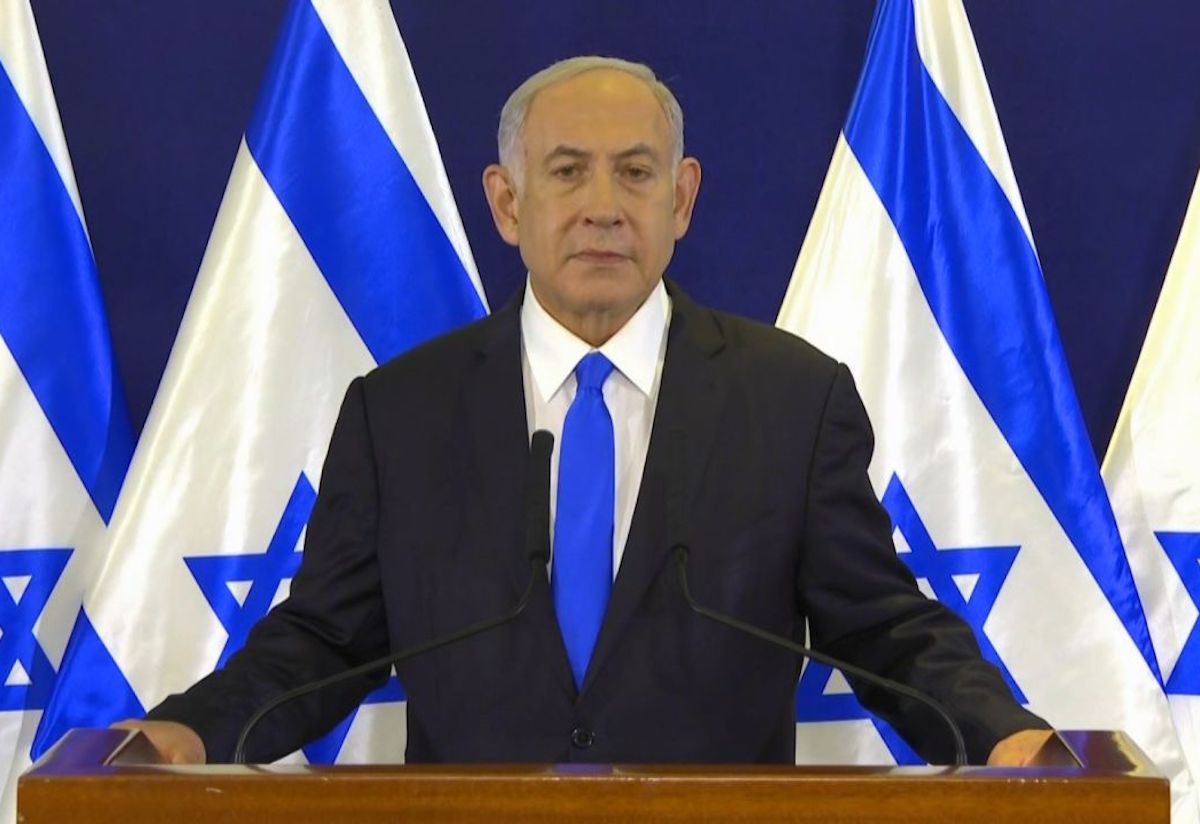
Is Netanyahu on a mission to realize a Greater Israel?
The long-standing Israeli-Palestinian conflict has often been framed around the concept of a two-state solution, but Israeli Prime Minister Benjamin Netanyahu seems determined to pursue a different path—his vision of a ‘Greater Israel.’ Despite widespread international condemnation of Israel’s actions in Gaza and its increasing isolation, Netanyahu appears to be making significant strides toward this goal. The two-state solution, once a cornerstone of diplomatic efforts, now seems increasingly irrelevant as Israel works to render the idea obsolete. The prospects of establishing an independent Palestinian state encompassing the West Bank, East Jerusalem, and Gaza Strip have never been more uncertain. Netanyahu’s strategy is bolstered by unwavering support from the United States, particularly under the Trump administration. Recent events, such as Israel’s attack on Hamas leaders in Qatar, have further highlighted the region’s inability to counter Israel’s actions. An emergency Arab-Muslim summit convened by Qatar resulted in a tepid response, with leaders issuing condemnations but failing to propose concrete measures to curb Israel’s aggression. Middle Eastern leaders recognize that only the United States holds the power to influence Israel, yet Washington shows no signs of altering its staunch support. Netanyahu’s rhetoric and actions suggest a commitment to expanding Israeli sovereignty over contested territories, including Gaza and the West Bank. This vision, rooted in the ideology of Netanyahu’s Likud Party, has drawn sharp criticism from Arab and Muslim leaders, though the U.S. has not publicly endorsed it. Despite international backlash, Netanyahu remains undeterred, prioritizing his vision over the safety of Israeli hostages held by Hamas and the desires of many Israelis for a ceasefire. As the international community grapples with how to respond, the path forward remains unclear. Sanctions and severing ties with Israel are among the few potential measures that could alter its course, but such actions are unlikely given the current geopolitical landscape. Netanyahu’s pursuit of a ‘Greater Israel’ risks further destabilizing the region and tarnishing Israel’s global reputation, leaving a legacy of conflict and international disrepute.
-
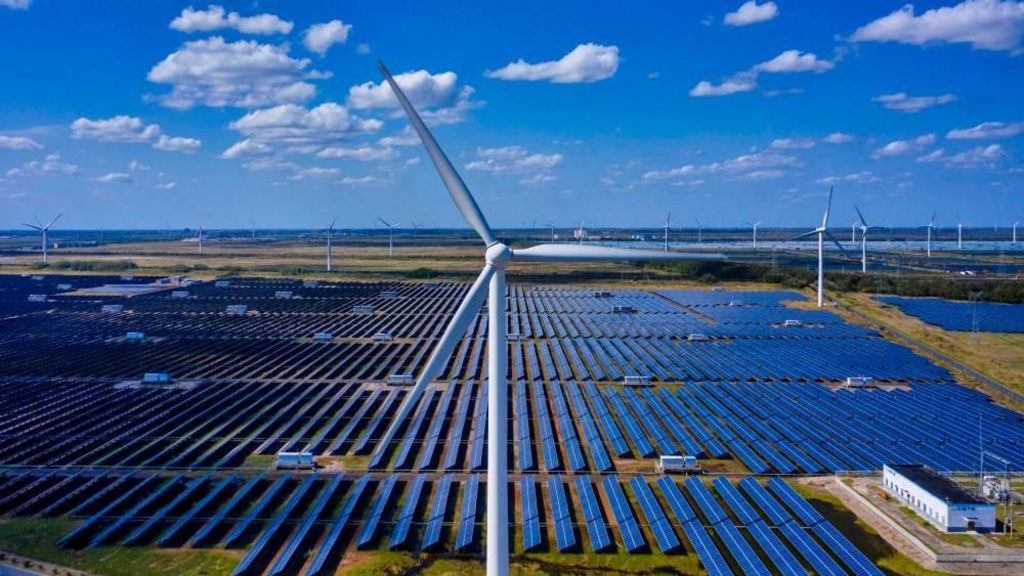
China makes landmark pledge to cut its climate emissions
In a landmark announcement, China, the world’s largest emitter of greenhouse gases, has pledged to reduce its emissions by 7-10% by 2035, marking its first absolute target for emissions reduction. President Xi Jinping made the commitment in a video statement to the United Nations in New York, emphasizing China’s dedication to surpassing these goals. This announcement comes at a critical juncture as the US, under President Donald Trump, has scaled back its climate commitments, with Trump dismissing climate change as a ‘con job’. However, environmental experts argue that China’s targets, while significant, fall short of what is necessary to meet global climate objectives. ‘Even for those with tempered expectations, what’s presented today still falls short,’ said Yao Zhe, global policy adviser at Greenpeace East Asia. The urgency of these pledges is underscored by the looming deadline for countries to submit their updated climate plans under the Paris Agreement, originally due in February but now expected by the end of September. UN Secretary-General António Guterres stressed the importance of these commitments in limiting global temperature rise to 1.5°C, a goal set in the Paris Agreement. ‘We absolutely need countries to come with climate action plans that are fully aligned with 1.5 degrees,’ he said. China’s new targets cover all greenhouse gases and include ambitious plans to expand wind and solar power capacity, increase forest stocks, and promote new energy vehicles. Despite these efforts, analysts like Lauri Myllyvirta of the Centre for Research on Energy and Clean Air argue that a 30% reduction is necessary to align with the 1.5°C target. China’s reliance on coal remains a significant challenge, although recent data suggests a plateau in emissions. Observers remain hopeful, citing China’s history of exceeding its climate commitments, such as achieving its 2030 renewable energy target six years early. ‘The targets should be seen as a floor rather than a ceiling,’ said Li Shuo of the Asia Society Policy Institute. As the world grapples with the climate crisis, China’s actions will be pivotal in determining the trajectory of global emissions.
-
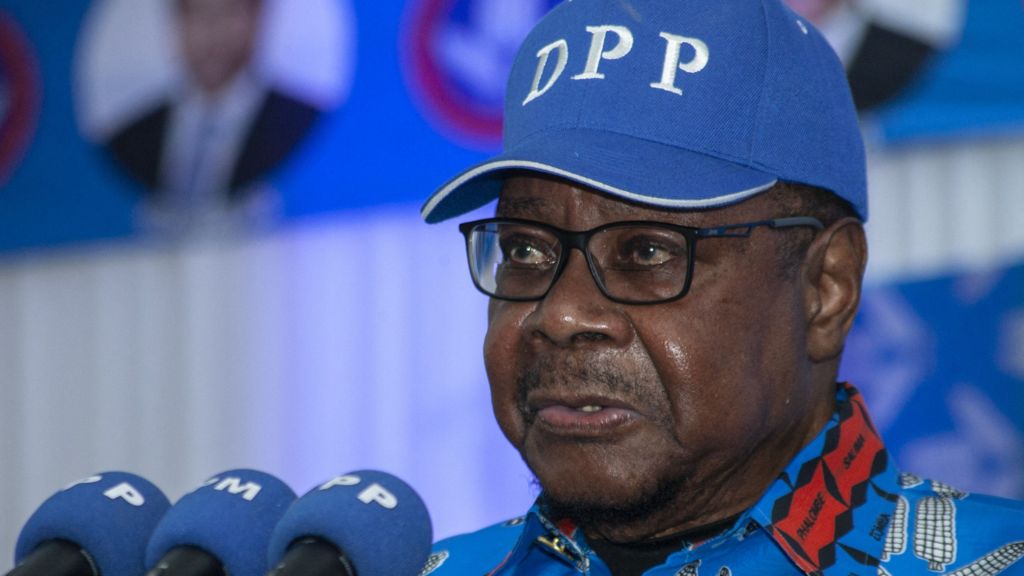
Malawi’s ex-president wins election in comeback at age 85
In a remarkable political turnaround, Malawi’s former President Peter Mutharika, aged 85, has been declared the winner of the recent presidential election, marking a significant comeback in his political career. Official results reveal that Mutharika secured 57% of the vote, decisively defeating incumbent President Lazarus Chakwera, who garnered 33%. Chakwera, a former pastor, conceded defeat and congratulated Mutharika on his ‘historic win’ ahead of the final announcement. Mutharika, a former law professor, previously served as president from 2014 to 2020, when he lost to Chakwera by a wide margin. His return to power comes at a critical juncture for Malawi, as the nation grapples with severe economic challenges, including skyrocketing inflation, fuel shortages, and a lack of foreign currency. The official inflation rate stands at nearly 30%, with basic necessities like frozen chicken costing $20 in a country where most citizens survive on less than $2 a day. The election commission emphasized that the eight-day delay in announcing the results was necessary to address complaints and ensure accuracy. This election marks the fourth electoral contest between Mutharika and Chakwera, with Mutharika’s 2019 victory annulled due to widespread irregularities. Chakwera won the subsequent rerun in 2020 but faced mounting criticism during his tenure for issues such as corruption, economic mismanagement, and frequent power outages. Mutharika’s campaign, centered on the promise of ‘proven leadership,’ resonated with voters disillusioned by Chakwera’s administration. However, questions linger about Mutharika’s health and ability to lead at 85, given his limited public appearances during the campaign. The swearing-in ceremony is expected to take place within the next 30 days, as Malawi looks to Mutharika to address its pressing economic woes and restore stability.
-
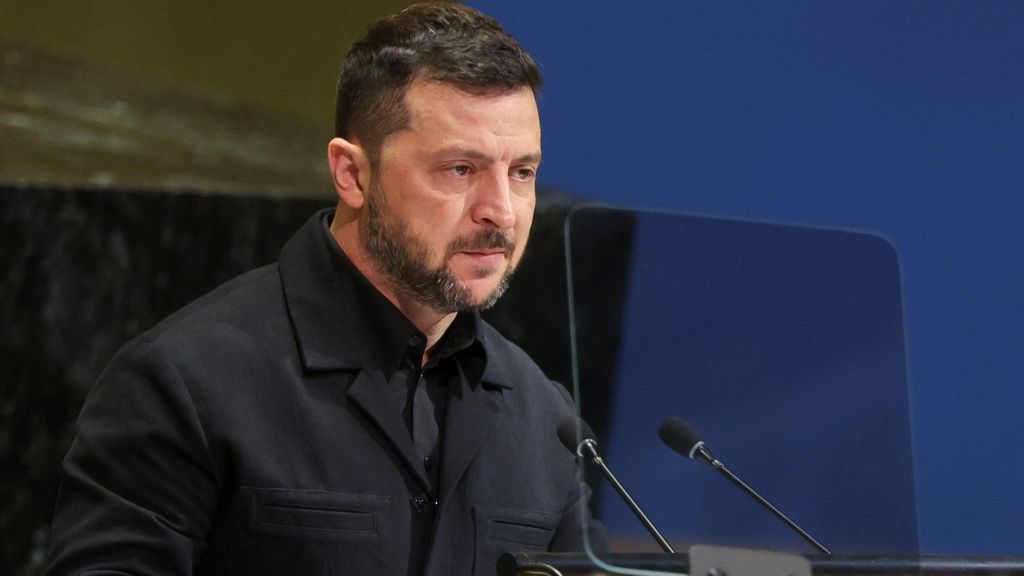
Russia will expand aggression beyond Ukraine if not stopped, Zelensky warns
Ukrainian President Volodymyr Zelensky issued a stark warning at the United Nations General Assembly in New York, asserting that Russian aggression will continue to expand unless the international community takes decisive action. Zelensky emphasized that without a united front and increased support from allies, more nations will fall victim to Russia’s ambitions. He highlighted the growing threat of a global arms race, particularly with advancements in military technology, and called for international regulations on artificial intelligence (AI) in weaponry. ‘Weapons decide who survives,’ he declared, urging global cooperation to prevent further escalation. Zelensky’s remarks followed a shift in U.S. President Donald Trump’s stance on the Russia-Ukraine conflict, with Trump now suggesting that Ukraine could reclaim all its lost territories. However, Zelensky criticized international institutions for their inability to provide adequate security guarantees, noting that membership in long-standing alliances like NATO does not ensure safety. He also warned of the risks posed by autonomous drones and unmanned aircraft, describing them as more dangerous than traditional warfare. Additionally, Zelensky expressed concern over Russian influence in Moldova, urging the West to prevent the country from falling under Moscow’s control. He lamented missed opportunities to protect Georgia and Belarus from Russian dominance. The Ukrainian leader’s speech coincided with accusations from Moldovan President Maia Sandu, who claimed that the Kremlin is funding efforts to incite violence and spread fear in Moldova ahead of its upcoming elections. Meanwhile, NATO members Estonia, Poland, and Romania reported violations of their airspace by Russian drones and jets, prompting calls for consultations within the alliance. Zelensky praised Trump for his support and revealed that the U.S. is considering security guarantees for Ukraine post-war, potentially including increased military aid. Trump’s recent comments marked a departure from his previous suggestion of ‘land swaps’ as a condition for peace, instead describing Russia as a ‘paper tiger’ that has been ‘fighting aimlessly.’ Kremlin spokesman Dmitry Peskov dismissed Trump’s characterization, asserting that Russia remains a formidable force. The ongoing conflict continues to dominate international discussions, with U.S. Secretary of State Marco Rubio meeting Russian Foreign Minister Sergei Lavrov to reiterate calls for an end to hostilities and a durable resolution to the war.
-
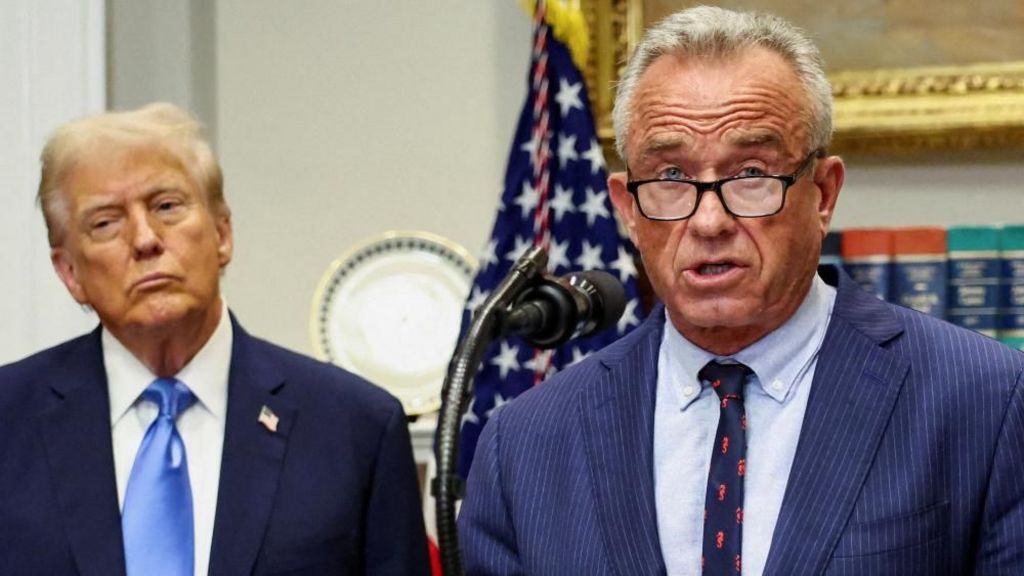
How doctors are responding to Trump’s autism announcement
Former President Donald Trump’s recent assertion that taking Tylenol during pregnancy increases the risk of autism in children has sparked widespread concern and confusion among expectant mothers. Speaking at a press conference alongside Health Secretary Robert F. Kennedy Jr., Trump advised pregnant women to ‘tough it out’ rather than use acetaminophen, the active ingredient in Tylenol, for pain or fever relief. This statement has drawn sharp criticism from medical professionals, who argue that it lacks scientific evidence and could endanger maternal and fetal health. Dr. Dallas Reed, Chief of Genetics and OBGYN at Tufts Medical Center, reported receiving numerous inquiries from anxious parents questioning whether their child’s autism could be linked to Tylenol use during pregnancy. She emphasized that current research does not support a conclusive connection between the two. The Autism Science Foundation also refuted Trump’s claim, stating that existing data does not provide sufficient evidence to establish such a link. However, the foundation cautioned that all medications during pregnancy should be used judiciously and under medical supervision. Acetaminophen remains one of the few pain relievers deemed safe for pregnant women, as alternatives like ibuprofen have been associated with birth defects. Public health experts attribute the rise in autism diagnoses to improved awareness and testing rather than medication use. Despite this, Trump’s remarks have fueled unnecessary fear and guilt among parents. Dr. Allison Bryant, a high-risk obstetrician at Massachusetts General Hospital, expressed concern that women might avoid necessary medications, potentially leading to untreated fevers or pain, which pose significant risks to pregnancy. Dr. Elizabeth Langen, a maternal-fetal medicine specialist, stressed that untreated pain can trigger stress responses harmful to both mother and baby. The FDA has issued a cautious statement, noting that a causal relationship between Tylenol and autism remains unproven, and advised physicians to limit acetaminophen use only for low-grade fevers. Medical professionals continue to recommend acetaminophen as a safe option for pain and fever relief during pregnancy, urging patients to consult their healthcare providers for personalized advice. Dr. Langen lamented that the controversy detracts from addressing other critical health issues, underscoring the need for evidence-based guidance in prenatal care.
-

Exclusive: Albania asked to arrest chief rabbi over alleged war crimes in Gaza
Albanian authorities are under pressure to arrest and prosecute the country’s chief rabbi, Yoel Kaplan, for alleged war crimes and crimes against humanity linked to Israel’s military actions in Gaza. Middle East Eye has exclusively revealed that a case against Kaplan, an Israeli-American citizen and active Israeli soldier, was submitted to Albania’s prosecutor general on Wednesday. Kaplan, who also leads a small Jewish community in Thessaloniki, Greece, has been photographed in Gaza and is seen in videos wearing the uniform of the Israeli army’s 55th battalion, part of the 98th division. The International Centre of Justice for Palestinians (ICJP), a UK-based rights group, has formally notified Albanian police about Kaplan’s suspected involvement in war crimes, urging an immediate investigation and arrest. Sources in Albania have confirmed Kaplan’s identity as the suspect. The ICJP launched the Global 195 Coalition in March, an international legal network targeting Israeli war crimes and crimes against humanity in Gaza. Kaplan, who divides his time between Israel, Albania, and Greece, has been active in the military since the conflict began, stating, ‘I’m very active [in the military] and I think it’s the time to be active because if not in this war, when?’ The 98th Division, to which Kaplan belongs, operated in Gaza from December 2023 until at least August 2024, with reports of civilian deaths and widespread destruction in Khan Younis. Kaplan’s battalion was active during incidents where Israeli forces allegedly targeted hospitals, ambulances, and schools sheltering civilians. As a signatory to the International Criminal Court (ICC) and International Court of Justice (ICJ), Albania is obligated to investigate such allegations. In September 2024, Middle East Eye revealed social media footage of Kaplan celebrating atop a tank amid Gaza’s devastation. Kaplan, a member of the Chabad-Lubavitch movement, has aligned himself with hardline settler politics, framing Israel’s occupation of Palestinian land as a divine mission. Despite his role as a spiritual leader, Kaplan has dismissed pro-Palestinian protests in Albania as insignificant, claiming government support. The ICC has issued arrest warrants for Israeli Prime Minister Benjamin Netanyahu and former Defense Minister Yoav Gallant for alleged war crimes in Gaza, a decision Kaplan criticized. When questioned about the humanitarian crisis in Gaza, Kaplan repeated disproven Israeli government claims about Hamas stealing aid. Kaplan’s WhatsApp profile picture, showing him leading troops in prayer in Gaza, was deleted after Middle East Eye’s interview. The rabbi has not responded to requests for comment on the legal case against him.