
ATHENS, Greece — For the first time in decades, visitors to Athens’ iconic Acropolis Hill can now marvel at the Parthenon temple without the obstruction of scaffolding. The western façade of the 5th century B.C. monument, which had been encased in scaffolding for nearly 20 years due to conservation efforts, has been fully unveiled, offering an unobstructed view of the UNESCO World Heritage site. This marks a significant moment, as it is the first time in approximately 200 years that the Parthenon’s exterior is entirely free of scaffolding on any side. Greek Culture Minister Lina Mendoni described the experience for visitors as akin to ‘seeing a completely different monument.’ The removal of the scaffolding, completed in late September, has been particularly impactful, as the western side provides the best street-level view of the ancient temple. However, this respite is temporary. New scaffolding, described as ‘lighter and aesthetically aligned with the monument’s logic,’ will be installed along the western side in about a month. The renewed conservation work is expected to continue until early summer 2026, after which the Parthenon will once again be entirely free of scaffolding. The Acropolis remains Greece’s most popular tourist destination, attracting 4.5 million visitors in 2024. The Parthenon, a marble temple built in the mid-5th century B.C. to honor the city’s patron goddess, Athena, continues to stand as a testament to ancient Greek architecture and culture.
博客
-

An old tradition finds new life as Germans flock to forests to collect mushrooms
POTSDAM, Germany — In the heart of an oak and beech forest on the outskirts of Potsdam, Wolfgang Bivour, a renowned fungi expert, carefully laid out a basket of freshly collected mushrooms. Among the assortment were brown-capped porcini, bay boletes, slimy purple brittlegills, honey-colored armillaria, and the deadly green death caps. Bivour, a 75-year-old retired meteorologist, led a group of 20 eager participants, including university students, retirees, and a Chinese couple with their young daughter, through the intricacies of mushroom identification. This scene is emblematic of a broader trend across Germany, where mushroom hunting is experiencing a resurgence, fueled by the pandemic and the rising popularity of vegan lifestyles. Historically, mushroom foraging was a necessity in post-World War II Germany, but as the economy improved, the practice waned. However, recent years have seen a revival, with social media playing a pivotal role in transforming this once-unfashionable hobby into a chic pastime. Bivour’s guided tours, which emphasize the ecological importance of mushrooms and biodiversity, have become immensely popular. He is often consulted by hospitals in cases of suspected mushroom poisoning and has been leading tours in the Potsdam region for over five decades. His sessions, organized by the local institution Urania, are in high demand, reflecting a growing public interest in fungi. Despite the enthusiasm, many newcomers approach mushroom hunting with caution, wary of the dangers posed by toxic varieties like the green death cap, which can be mistaken for common button mushrooms. Tragically, several deaths occur annually, often involving immigrants unfamiliar with local species. Participants like Tim Köster, a 25-year-old university student, express a desire to learn but remain hesitant to forage independently. Instead, they prefer to consult experts to verify the safety of their finds. Margit Reimann, a 42-year-old participant, acknowledged the vast array of edible mushrooms but plans to stick to familiar varieties when foraging with her children. The revival of mushroom hunting in Germany is a testament to the enduring allure of nature, the importance of education, and the need for caution in the face of potential dangers.
-

Sciver-Brunt hits 117 as England reaches 253-9 vs. Sri Lanka at Women’s Cricket World Cup
In a thrilling Women’s Cricket World Cup match held in Colombo, Sri Lanka, England’s captain Nat Sciver-Brunt delivered a masterclass performance, scoring a magnificent century to guide her team to a competitive total of 253-9 in 50 overs. Despite losing the toss and being sent in to bat by Sri Lanka, England showcased resilience and skill, largely due to Sciver-Brunt’s exceptional innings. Her 117 runs off 117 balls marked her 10th century in one-day internationals, solidifying her status as one of the game’s elite players. England’s innings began steadily, but early dismissals of Amy Jones (11) and Tammy Beaumont (32) put pressure on the middle order. However, Sciver-Brunt formed crucial partnerships, including a 60-run stand with Heather Knight and a 40-run collaboration with Sophia Dunkley. Despite a mid-innings collapse triggered by Sri Lanka’s Inoka Ranaweera, who took 3-33, Sciver-Brunt’s composure and aggressive strokeplay, including a six to reach her century, ensured England posted a defendable total. Sri Lanka’s bowlers, including Udeshika Prabodhani and Sugandika Kumari, claimed two wickets each but couldn’t contain the English captain’s dominance. With this victory, England strengthened its position in the tournament standings, holding four points from wins over South Africa and Bangladesh. Sri Lanka, meanwhile, languishes near the bottom after a loss to India and a rain-abandoned match against Australia.
-

China-US biz travel shows signs of recovery
The business travel sector between China and the United States is showing signs of recovery, as evidenced by the bustling activity at IMEX America 2025 in Las Vegas. Despite lingering challenges such as visa processing delays, limited flight capacity, and high travel costs, companies from both nations are eager to reestablish in-person communication and business exchanges. China, as the world’s second-largest economy, continues to attract international visitors for business purposes, including participation in major exhibitions like the China International Import Expo and exploration of its expanding consumer market. Travelers are increasingly combining professional activities with cultural experiences, spending time in cities like Beijing, Shanghai, and Shenzhen. Alex Mortensen of HiSEAS International noted the growing momentum for US outbound travel to China, citing improvements in infrastructure and hospitality. However, he highlighted that visa policies remain a critical factor for sustaining this growth. Linda Wang of Asia Concierge pointed out the limited number of direct flights as a significant barrier, with only about 80 weekly flights compared to 300 pre-pandemic. Patrick Sudlow of American Express Global Business Travel echoed concerns about US visa processing delays for Chinese professionals. On a positive note, China has implemented measures to facilitate business visits, including visa-free policies for certain countries and a 240-hour visa-free transit policy. Industry professionals like G.V. Schloss of Maritz Global Events remain optimistic about expanding cooperation with China, emphasizing the importance of mutual respect and understanding in navigating the current geopolitical climate.
-

Experts see complementary strengths in AI development between US, China
Technology experts have observed that the United States and China are pursuing distinct yet complementary approaches in the field of artificial intelligence (AI), creating potential avenues for cooperation despite ongoing political tensions. Eric Chan, Chief Public Mission Officer of Hong Kong Cyberport, emphasized that while the US has focused on foundational AI models, China has made significant strides in inference and reasoning, which drive practical applications. Chan highlighted China’s historical effectiveness in applying technology to enhance livelihoods and business operations, while also acknowledging the importance of foundational model investments. During a recent visit to Silicon Valley, Chan led a delegation of young entrepreneurs exploring AI-driven smart living solutions. Graham Webster, Editor-in-Chief of Stanford University’s DigiChina Project, echoed this sentiment, noting China’s focus on industrial applications of AI, such as manufacturing and power system optimization, contrasting with the US’s emphasis on large models and existential risks. China’s Global AI Governance Action Plan, unveiled at the World Artificial Intelligence Conference in Shanghai, advocates for an inclusive, multi-stakeholder framework promoting cross-border data flows and open-source models. This contrasts with the US’s strategic rivalry-focused approach under the Trump administration. Webster dismissed concerns about Chinese-made AI as xenophobic, emphasizing the importance of functionality over origin. Both experts called for collaboration across the AI stack, from computing to applications, to build a comprehensive ecosystem. Chan also underscored the potential for innovation clusters like Shenzhen-Hong Kong-Guangzhou and Silicon Valley to foster global cooperation, despite geopolitical uncertainties.
-

Schauffele and Greyserman atop the leaderboard after three rounds of Japan PGA tournament
YOKOHAMA, Japan — Max Greyserman and Xander Schauffele are tied at the top of the leaderboard after the third round of the Baycurrent Classic, setting the stage for an exciting final day of competition. Both golfers finished with a total score of 12-under 201 at the Yokohama Country Club, despite challenging rainy conditions. Greyserman carded an even-par 71, while Schauffele posted an impressive 67. Greyserman, who has consistently held or shared the lead since the tournament began, is vying for his first PGA Tour title, having finished as the runner-up in this event last year. Schauffele, a seasoned champion with two major titles, an Olympic gold medal, and numerous PGA Tour victories, is aiming to add another accolade to his illustrious career. The tournament holds special significance for Schauffele, whose mother grew up in Japan. ‘It would be an incredible feeling,’ he remarked, reflecting on the possibility of winning in front of his family. Five players, including defending champion Nico Echavarria, trail by three strokes heading into the final round. The Baycurrent Classic, the PGA Tour’s sole event in Japan, moved to Yokohama this year after previously being held east of Tokyo. The tournament, which debuted in 2019 with Tiger Woods as its inaugural winner, continues to draw top talent and captivate golf enthusiasts worldwide.
-

Mexico floods leave at least 27 dead and more missing
Torrential rains that battered Mexico on October 10 and 11 have unleashed catastrophic flooding and landslides, claiming at least 27 lives and leaving many others unaccounted for. The deluge, which caused rivers to overflow, wreaked havoc across multiple regions, with Hidalgo in eastern Mexico bearing the brunt of the disaster, reporting 16 fatalities. The floods swept away homes, vehicles, and bridges, leaving thousands of houses either damaged or completely destroyed. Fast-moving floodwaters inundated streets, carrying cars and debris, while highways were blocked and electricity supplies were severed.
-

Gaza ceasefire brings calls for full implementation
A long-awaited ceasefire agreement between Israel and Hamas has taken effect in the Gaza Strip, marking a significant step toward de-escalation in the region. The truce, which commenced at 12:00 noon local time (0900 GMT) on Friday, has been met with cautious optimism as both parties pledge to uphold the terms of the deal. The international community has emphasized the critical need for full implementation, urging all sides to avoid violations and ensure lasting peace. The agreement, brokered through intensive negotiations mediated by Egypt, Qatar, Turkiye, and the United States, outlines a phased approach to peace. The initial phase includes the withdrawal of Israeli forces from key areas such as Gaza City, the north, Rafah, and Khan Younis, alongside the opening of five crossings for humanitarian aid and the exchange of hostages and prisoners. Israeli Prime Minister Benjamin Netanyahu confirmed the government’s approval of the framework, which includes the release of all hostages, both living and deceased. As part of the deal, Israel will release 1,700 Palestinian prisoners in exchange for 48 hostages held in Gaza. Despite the ceasefire, reports of Israeli fighter jets near the Nuseirat refugee camp have raised concerns about potential breaches. Hamas’ top negotiator, Khalil al-Hayya, assured in a televised speech that the US administration and mediators have guaranteed the end of the war, allowing Palestinian factions to focus on self-determination and statehood. Meanwhile, Hamas spokesman Hazem Qassem called on mediators to pressure Israel to adhere to the agreed terms, warning that any violations could jeopardize international and regional efforts to end the conflict. The agreement follows US President Donald Trump’s 20-point plan for Gaza, as the region grapples with the devastating toll of the conflict, which has claimed over 67,000 Palestinian lives.
-

Power restored to 800,000 in Kyiv after major Russian strikes on Ukraine’s energy grid
Electricity was reinstated to more than 800,000 residents in Kyiv on Saturday, following a devastating series of Russian attacks on Ukraine’s power grid the previous day. The strikes, which caused widespread blackouts across the country, also injured at least 20 people in the capital and damaged residential buildings. Ukraine’s largest private energy company, DTEK, confirmed that the primary restoration efforts had been completed, though localized outages persisted in some areas. Prime Minister Yulia Svyrydenko described the assault as one of the most significant concentrated attacks on Ukraine’s energy infrastructure to date. The Russian Defense Ministry claimed the strikes targeted energy facilities supporting Ukraine’s military, utilizing Kinzhal hypersonic missiles and drones. The energy sector has remained a critical battleground since Russia’s full-scale invasion over three years ago, with annual attempts to cripple Ukraine’s power grid ahead of the harsh winter months. Ukrainian President Volodymyr Zelenskyy, in his nightly address, accused Russia of exploiting global focus on Middle East peace efforts and called for bolstered air defenses and stricter sanctions. Meanwhile, European leaders, including British Prime Minister Keir Starmer, French President Emmanuel Macron, and German Chancellor Friedrich Merz, announced plans to coordinate the use of frozen Russian assets—valued at hundreds of billions of euros—to support Ukraine’s war effort. The European Union has already contributed 174 billion euros since the conflict began in February 2022, with additional funds available through frozen Russian assets held in Belgium, Japan, and other nations. Ukraine’s air force reported intercepting or jamming 54 of 78 Russian drones launched overnight, while Russia claimed to have downed 42 Ukrainian drones over its territory.
-
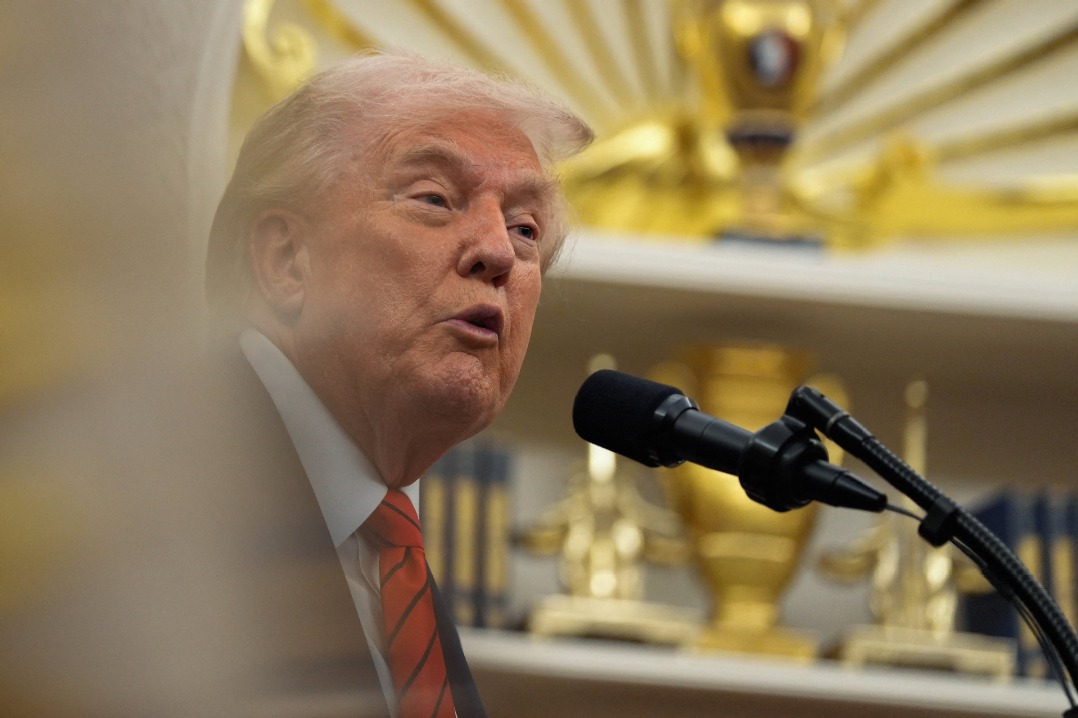
Trump: US will add extra 100% tariffs on China
In a significant escalation of trade tensions, former US President Donald Trump announced on Friday that the United States will impose an additional 100% tariff on all imports from China starting November 1, 2025. The move, which could be implemented sooner depending on China’s actions, will apply on top of existing tariffs. Trump also revealed plans to enforce export controls on all critical US-made software from November. The announcement was made via his Truth Social account, where he emphasized that these measures are part of broader countermeasures under consideration. This decision comes despite recent trade talks between Chinese and US teams in Madrid, Spain, following earlier discussions in Switzerland, Britain, and Sweden. The announcement triggered a sharp decline in US stocks, marking the worst single-day performance since the height of the tariff war in April. Trump’s aggressive stance underscores the ongoing economic rivalry between the two nations, with potential ripple effects on global trade and markets.