博客

  • Trump orders airport security paid as travellers face hours-long queues

    Trump orders airport security paid as travellers face hours-long queues

    Amid the longest airport security queues in U.S. aviation history, President Donald Trump has announced an unprecedented executive intervention to pay Transportation Security Administration (TSA) agents who have been working without salaries during a partial government shutdown.

    The crisis stems from a congressional deadlock over Department of Homeland Security (DHS) funding that began in February, creating a domino effect that has paralyzed air travel nationwide. With approximately 50,000 TSA agents classified as essential personnel required to work without pay, hundreds have resigned, creating critical staffing shortages at security checkpoints.

    The situation reached a breaking point this week as wait times exceeded four hours at major hubs including Houston’s George Bush Intercontinental Airport, where nearly 40% of security staff failed to report for duty. Similar disruptions were reported at airports in New York, New Jersey, and Illinois, with security lines extending into parking areas and across multiple terminal levels.

    President Trump announced via Truth Social on Thursday that he would invoke executive authority to instruct newly-confirmed Homeland Security Secretary Markwayne Mullin to “immediately pay our TSA Agents in order to address this Emergency Situation.” The president acknowledged the legal complexity of such action, stating “It is not an easy thing to do, but I am going to do it!”

    Legal experts immediately questioned the move’s validity. Georgetown University law professor Josh Chafetz told the BBC that the proposal “seems to me pretty clearly a violation of the Antideficiency Act, which prohibits spending money that has not been appropriated by Congress.”

    The political standoff centers on Democratic demands for immigration enforcement reforms as a condition for DHS funding, while the Trump administration has blamed opposition parties for the impasse. As a temporary measure, hundreds of Immigration and Customs Enforcement (ICE) agents—whose funding remains intact under separate legislation—have been deployed to 14 airports to alleviate security bottlenecks.

    White House spokesperson Karoline Leavitt emphasized that “the best and easiest way to pay TSA Agents is to fund DHS,” indicating that the executive order represents an emergency measure rather than a permanent solution. President Trump has additionally floated the possibility of deploying National Guard troops to airports if the crisis persists.

  • F1’s Japanese GP will be the last for 5 weeks due to the effects of the Iran war

    F1’s Japanese GP will be the last for 5 weeks due to the effects of the Iran war

    SUZUKA, Japan — The Formula 1 calendar enters an unexpected five-week hiatus following this weekend’s Japanese Grand Prix, as conflicts in the Middle East have forced the cancellation of races in Bahrain and Saudi Arabia. This early pause reshapes the rhythm of the nascent season, compelling teams and drivers to reassess their strategies sooner than anticipated.

    Mercedes and Ferrari have emerged as the standout performers following the sport’s most significant technical overhaul in over a decade. Mercedes’ George Russell and rookie Kimi Antonelli have each claimed victory in the opening two rounds. Ferrari’s duo of Lewis Hamilton and Charles Leclerc have consistently challenged, trading third and fourth places. Their demonstrated adaptability makes them the favorites at Suzuka’s demanding figure-eight circuit, a historic and technically complex track known for rewarding aerodynamic efficiency and driver skill.

    In contrast, reigning champions McLaren face a dramatic reversal of fortune. After securing both the drivers’ and constructors’ titles last season, the team suffered the embarrassment of a double DNS (Did Not Start) in China due to critical engine and electrical failures. Lead driver Lando Norris acknowledged the setback, stating the team is now focused on proving its resilience against the front-runners.

    Further down the grid, Red Bull and four-time champion Max Verstappen are grappling with the new regulatory environment. Verstappen, who retired in Shanghai, has been openly critical of the new car dynamics, labeling the racing unpredictable. The extended break provides a crucial window for development before the campaign resumes in Miami. Off-track, Verstappen generated headlines by ejecting a journalist from a press conference, highlighting rising tensions.

    Adding to the technical drama, engine supplier Honda is experiencing a troubled start to its new partnership with Aston Martin, a stark contrast to its previous success with Red Bull. Severe vibration issues have prevented both Fernando Alonso and Lance Stroll from seeing the checkered flag, presenting an acute challenge for the Japanese manufacturer at its home grand prix.

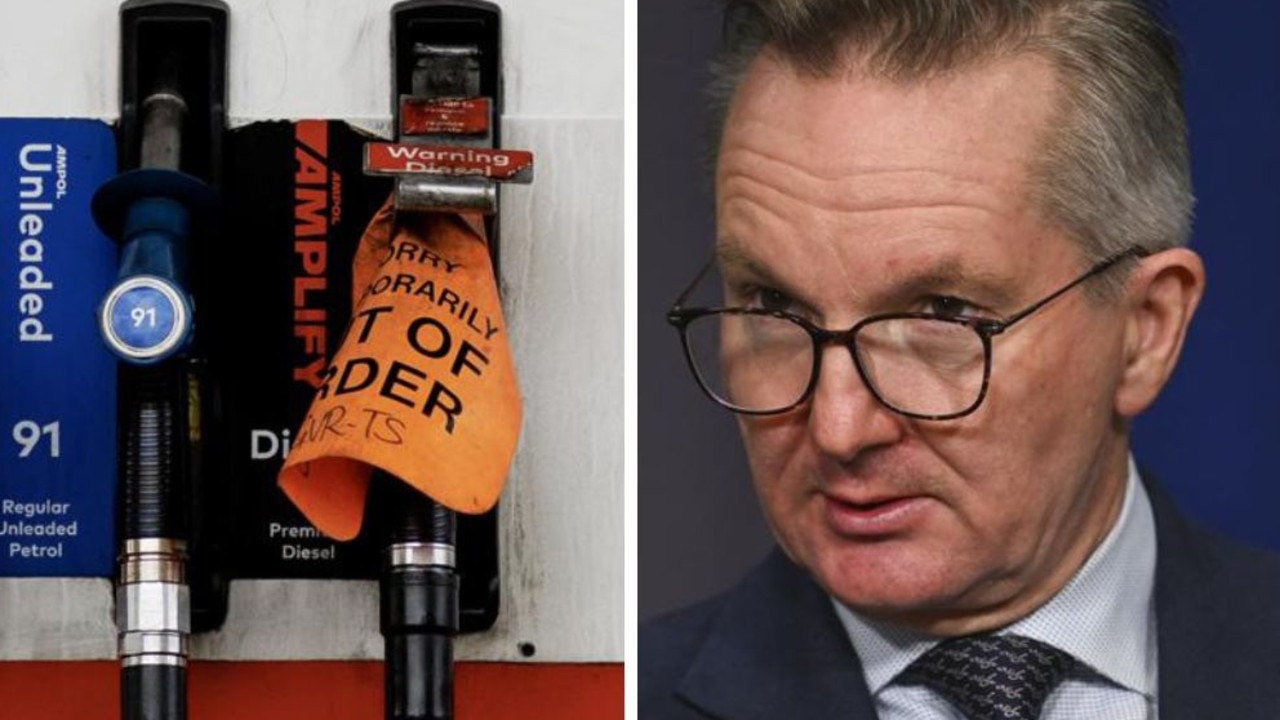
  • ‘Higher than it normally would be’: Energy Minister Chris Bowen reassures Australia’s fuel supply secure, extra oil shipments ordered

    ‘Higher than it normally would be’: Energy Minister Chris Bowen reassures Australia’s fuel supply secure, extra oil shipments ordered

    In a hastily convened media briefing, Energy Minister Chris Bowen and Prime Minister Anthony Albanese addressed mounting concerns regarding Australia’s fuel security amidst global supply disruptions. The ministerial appearance followed widespread reports of fuel shortages across the nation, with hundreds of service stations experiencing depleted reserves.

    The current energy crisis stems from severe disruptions in global oil shipments triggered by geopolitical tensions involving the US-Israel coalition and Iran. Tehran’s imposition of a de facto blockade through the Strait of Hormuz—a critical maritime passage handling approximately 20% of global oil shipments—has created significant supply chain complications worldwide.

    Minister Bowen presented a detailed assessment of Australia’s strategic response, confirming that six previously canceled oil shipments had been successfully replaced through alternative sourcing arrangements. Additionally, refiners and importers have secured at least three supplementary cargoes beyond regular requirements. ‘For the coming weeks,’ Bowen stated, ‘Australia’s supply of petrol, diesel, and oil will be consistent with, if not exceeding, normal inventory levels.’

    The government simultaneously addressed aviation fuel anxieties ahead of the Easter travel period. Bowen verified that six jet fuel cargoes are currently en route to Australian ports, representing standard shipment volumes for this seasonal period, with none experiencing cancellations.

    Prime Minister Albanese characterized the situation as part of a broader global crisis requiring coordinated national response. ‘This conflict is generating real consequences for Australians, mirroring impacts felt worldwide,’ Albanese remarked. ‘Our approach involves structured, mature collaboration with industry and governmental partners to mitigate supply challenges and address resultant cost-of-living pressures.’

    While ruling out immediate emergency measures like rationing, the government confirmed that Monday’s national cabinet meeting will develop a unified national strategy to address prolonged supply challenges should geopolitical tensions persist.

  • The Iran war seen through Asia’s eyes

    The Iran war seen through Asia’s eyes

    The escalating conflict in the Persian Gulf has triggered a severe energy crisis across Asia, with the closure of the Strait of Hormuz exposing the region’s critical dependence on Middle Eastern oil supplies. While Europe awaits the delayed impact of disrupted shipments, Asian nations are already experiencing profound economic consequences due to their geographical proximity and heavier reliance on Gulf energy.

    South Asian nations including India, Pakistan, Sri Lanka and Bangladesh are implementing strict fuel conservation measures and rationing systems due to limited strategic reserves. India faces compounded challenges with shortages of Qatari LPG for cooking, disruptions to Gulf air travel, and declining remittances from its nine million migrant workers in the region—previously contributing approximately $50 billion annually to the economy.

    Southeast Asia confronts parallel difficulties: Cambodia witnessed widespread gasoline station closures, Vietnam prepares for aviation cuts, and Malaysia experiences rising fertilizer costs that will soon affect global palm oil prices. The Philippines has declared a national energy emergency, mandating work-from-home measures to conserve fuel.

    Northeast Asian economies face particularly complex challenges. South Korea, which sources 70% of its crude oil and half of its naphtha through the Strait, finds its historic economic ties to the Gulf dating to 1970s construction projects now creating vulnerability. Japan, despite maintaining one of the world’s largest strategic oil reserves capable of sustaining 254 days of consumption, remains critically dependent on Hormuz transit for 90% of its crude imports.

    The crisis has intensified diplomatic pressures on both nations from the United States. The Trump administration has requested military assistance in securing the Strait, creating tension with both countries’ constitutional limitations and public sentiment. Japan’s Prime Minister Sanae Takaichi navigates delicate diplomatic maneuvers, balancing alliance commitments with constitutional restrictions on military deployment.

    Analysts suggest the conflict may accelerate Asia’s transition to renewable energy, though solutions like Mekong River hydropower projects remain controversial due to environmental and social impacts. Meanwhile, China’s response to the crisis represents a significant geopolitical unknown, with some analysts speculating about potential long-term strategic calculations involving global energy supply chains and technological competition.

    The situation highlights how regional conflicts can rapidly transform into global economic crises, particularly when critical maritime chokepoints become contested zones. As Asian nations grapple with immediate energy shortages, the crisis may ultimately accelerate structural changes in energy security policies across the world’s most economically dynamic region.

  • Alan Boulton: Former Fair Work Commission judge may potentially face new charges, court told

    Alan Boulton: Former Fair Work Commission judge may potentially face new charges, court told

    A prominent former Australian judicial figure is confronting the possibility of additional criminal charges across multiple jurisdictions following allegations of displaying child exploitation material during an academic lecture. Alan Boulton, 75, a former senior deputy president of Australia’s Fair Work Commission, appeared via video link in Melbourne Magistrates’ Court where prosecutors revealed plans to potentially file six new charges against him.

    The case originated in February 2023 when Boulton allegedly inadvertently shared abusive material while lecturing law students at Monash University. Subsequent police investigations led to searches of properties in Melbourne and Sydney’s eastern suburbs, resulting in the seizure of electronic devices and initial charges of possessing child abuse material filed in July 2023.

    During Friday’s proceedings, Magistrate Stephen Ballek acknowledged the case’s complexity, particularly regarding potential interstate jurisdictional issues. Defense counsel Holly Baxter successfully sought a 10-week adjournment until June 5 to address the anticipated new charges and navigate the legal complexities between state and federal jurisdictions.

    The court denied media access to case documents as the new charges had not been formally presented. Boulton, who maintained his bail conditions, appeared from a home office before a cluttered bookshelf during the virtual hearing.

    Boulton’s distinguished career includes over two decades with the Fair Work Commission, previous service as a legal officer for the Australian Council of Trade Unions, representation at the International Labour Organisation, and appointment as an Officer of the Order of Australia in 2002. Monash University has stood down the former lecturer pending resolution of the case.

  • UK judge orders home secretary to explain opposition to Hamas de-proscription appeal

    UK judge orders home secretary to explain opposition to Hamas de-proscription appeal

    A British judge has issued a stern directive to the UK Home Secretary, demanding expedited explanations for the government’s opposition to Hamas’s legal challenge against its terrorist organization designation. Justice Jonathan Swift, presiding over the independent Proscribed Organisations Appeal Commission (POAC), criticized governmental delays during Thursday’s proceedings, ordering official responses by May 20th with clear justifications for any postponements.

    The case originates from Hamas’s formal appeal against its 2021 proscription by then-Home Secretary Priti Patel, which extended the existing ban on its military wing (Qassam Brigades) to the entire organization. Represented by pro bono legal counsel Franck Magennis and Daniel Grutters, Hamas contends this designation impedes political negotiation capabilities and unjustly criminalizes ordinary Palestinians.

    Justice Swift expressed particular frustration with the Home Office’s procedural approach, noting seven months had lapsed since the appeal filing without substantive progress. The court session faced operational delays due to difficulties appointing a special advocate for handling classified evidence, ultimately canceling scheduled testimony from Hamas foreign relations head Mousa Abu Marzouk via video link.

    Hamas’s legal submission includes expert testimony from Oxford academic Avi Shlaim advocating for UK adoption of a ‘more nuanced position’ through delisting. The organization argues that under Section 4 of the Terrorism Act, which permits banned groups to appeal their designation, the government has exceeded the standard 90-day response period while simultaneously seeking to dismiss the case entirely rather than address its merits.

    Magennis accused the government of employing delay tactics to avoid judicial scrutiny of its decision-making process, suggesting this reflects broader challenges to counterterrorism policies in legal venues. The Home Office maintains discretion to modify proscribed lists for organizations engaged in armed conflict, though must provide justification when challenged through proper legal channels.

  • Millions of Australian mortgage holders hit by rate pain today after major banks pass on interest rate hikes

    Millions of Australian mortgage holders hit by rate pain today after major banks pass on interest rate hikes

    Australian households are confronting intensified financial strain as the Reserve Bank of Australia’s latest interest rate increase takes effect this Friday. The central bank’s decision to elevate the cash rate by 25 basis points to 4.10 percent—the highest level since the global financial crisis—marks the second consecutive monthly hike, significantly impacting variable rate mortgage holders nationwide.

    Major financial institutions including Commonwealth Bank, National Australia Bank, and ANZ are implementing the full rate adjustment immediately, while Westpac will follow suit next Tuesday. This monetary tightening places Westpac as the most competitive among the major lenders with a variable rate of 5.74 percent, whereas NAB and ANZ have pushed their lowest variable rates above 6 percent.

    Canstar’s Data Insights Director Sally Tindall emphasizes that borrowers face a complex timeline: “While banks begin charging higher rates immediately, the actual increase in minimum repayments may not materialize for 10-30 days depending on the institution.” Commonwealth Bank adjusts payments after 20 days, while other major banks provide a 30-day grace period.

    The fixed-rate landscape has simultaneously transformed, with NAB eliminating all fixed-rate options below 6 percent. Westpac currently offers the most competitive one-year fixed rate at 5.79 percent, though analysts caution this may soon increase.

    Market analysts project further monetary tightening, with IG Market’s Tony Sycamore forecasting approximately 67 basis points in additional rate hikes through year-end. This trajectory could elevate the cash rate to 4.85 percent by December—a level not witnessed since November 2008. Economic pressures including rising oil prices (Brent crude at $148 AUD) and domestic inflation concerns are driving this aggressive monetary stance.

    MLC Senior Economist Bob Cunneen warns of a ‘double whammy’ effect: “With petrol prices exceeding $2.40 per liter and potential inflation surpassing 5 percent, households face simultaneous pressure from both rising living costs and debt servicing expenses.”

    Financial experts advise borrowers to proactively model repayment scenarios accounting for potential additional rate increases in May and beyond, while those considering fixed-rate options are encouraged to act promptly as competitive offers diminish rapidly.

  • Nepal to swear in ex-rapper as new prime minister

    Nepal to swear in ex-rapper as new prime minister

    In an unprecedented political transformation, Balendra Shah—the former rapper known as Balen—has ascended to Nepal’s highest office following a landslide electoral victory. The 35-year-old’s rise from underground music sensation to prime minister represents a seismic shift in the nation’s political landscape, signaling a decisive rejection of entrenched corruption and elite dominance.

    Shah’s journey from Kathmandu’s Naradevi neighborhood to the prime minister’s office reads like a political fairytale. After earning engineering degrees in Nepal and India, he first captured national attention in 2013 by winning a popular rap battle with verses that articulated the frustrations of a generation feeling marginalized and unheard. His music career flourished with hits like ‘Balidan’ (Sacrifice), which amassed 14 million YouTube views while critiquing systemic corruption and inequality.

    Shah’s political ascent began in 2022 when he won Kathmandu’s mayoral race as an independent candidate, defeating established political parties that had dominated for decades. His three-year tenure as mayor was marked by aggressive anti-corruption measures, heritage preservation initiatives, and controversial urban cleanup campaigns that included bulldozing illegal structures—a move that drew both praise and criticism.

    The recent general elections saw Shah partner with the four-year-old Rastriya Swatantra Party (RSP) as their prime ministerial candidate. His campaign broke conventional norms by largely avoiding media interviews and instead connecting directly with voters through social media. This strategy proved remarkably effective, with the RSP securing a decisive victory that even unseated former Prime Minister KP Sharma Oli in his long-held constituency.

    Shah’s inauguration follows last year’s youth-led protests that resulted in 77 fatalities, during which his song ‘Nepal Haseko’ (Smiling Nepal) became a protest anthem. The unrest, initially triggered by social media restrictions, evolved into a broader movement against corruption, unemployment, and economic stagnation.

    Despite widespread enthusiasm for his leadership, questions remain about Shah’s governing approach. Human rights organizations have expressed concerns about his heavy-handed tactics against street vendors during his mayoral term. Additionally, his controversial social media presence—including an expletive-laden post naming global powers and Nepali political parties—has drawn scrutiny.

    The new administration faces formidable challenges: managing Nepal’s relations with regional powers India and China, addressing chronic unemployment, revitalizing a struggling economy, and determining how to implement recommendations from the investigation into last year’s deadly uprising. With millions of Nepalis working in conflict zones like the Middle East, foreign policy decisions carry significant economic implications.

    As Shah prepares to implement his ambitious agenda—including anti-corruption measures, judicial reform, and creating 1.2 million new jobs—the nation watches to see whether this political outsider can translate his activist rhetoric into effective governance.

  • US judge suspends govt sanctions on AI company Anthropic

    US judge suspends govt sanctions on AI company Anthropic

    A landmark judicial decision has temporarily suspended federal sanctions against artificial intelligence company Anthropic, marking a significant development in the intersection of technology policy and constitutional rights. US District Judge Rita Lin of the Northern District of California issued a preliminary injunction on Thursday, effectively freezing the Trump administration’s executive order that had barred all federal agencies from utilizing Anthropic’s technology.

    The legal confrontation emerged after Anthropic publicly expressed ethical concerns regarding the potential military applications of its AI systems, specifically opposing their use in mass surveillance programs and fully autonomous weaponry. This stance provoked strong reactions from Pentagon leadership, with Defense Secretary Pete Hegseth characterizing the company’s position as “a master class in arrogance and betrayal” in social media statements.

    Judge Lin’s ruling specifically challenges the government’s designation of Anthropic as a “national security supply chain risk” – a classification typically reserved for foreign entities from adversarial nations. This designation had not only prevented Department of Defense use of Anthropic’s Claude AI model but also required all defense contractors to certify they weren’t utilizing the company’s technology in their work.

    In her written opinion, Judge Lin expressed serious constitutional concerns, stating that the government’s actions appeared to “punish Anthropic for criticizing the government’s contracting position in the press,” which would violate First Amendment protections. She further characterized the supply chain risk designation as “likely both contrary to law and arbitrary and capricious,” noting that nothing in governing statutes supports “the Orwellian notion that an American company may be branded a potential adversary and saboteur of the US for expressing disagreement with the government.”

    The technology sector has largely rallied behind Anthropic following the sanctions. The seven-day suspension granted by the court provides the government window to file an emergency appeal. Anthropic representatives expressed gratitude for the swift judicial action while emphasizing their commitment to “working productively with the government to ensure all Americans benefit from safe, reliable AI.”

  • ‘I don’t love that’: Daly Cherry-Evans laughs off boos sent his way but disappointed in vitriol shown to his former coach

    ‘I don’t love that’: Daly Cherry-Evans laughs off boos sent his way but disappointed in vitriol shown to his former coach

    In a narrative-rich return to Brookvale Oval, Daly Cherry-Evans navigated a storm of mixed emotions and vocal fan reactions during his first appearance as an opposition player at his former home ground. The veteran playmaker, who departed the Manly-Warringah Sea Eagles after 15 illustrious seasons and 352 games for a surprise move to the Sydney Roosters, led his new team to a commanding 33-16 victory on Thursday night.

    The match was overshadowed by pre-game meteorological and metaphorical storms, with biblical rainfall preceding Cherry-Evans’ emotionally charged return. While Sea Eagles supporters greeted his every touch with boos during warm-ups and gameplay, the Queensland State of Origin captain remained unfazed, demonstrating professional composure throughout the contest.

    Post-match reflections revealed Cherry-Evans’ complex emotional landscape. ‘I was here for a long time so I don’t feel great about seeing them without a win yet,’ he confessed, expressing empathy for his former club’s winless start to the season. ‘There are too many people here that I’ve got too much friendship with to see sad or down or getting booed. I don’t love that.’

    The evening took a more concerning turn when frustrated Manly faithful redirected their discontent toward head coach Anthony Seibold, chanting ‘Seibold out’ as the team slumped to their third consecutive home defeat. This treatment of his former mentor appeared to bother Cherry-Evans more than the personal jeers he endured throughout the evening.

    The 35-year-old described the experience as ‘bizarre’ and unprecedented, revealing he sought counsel from teammate Spencer Leniu, who had undergone similar transitional experiences after leaving Penrith. Cherry-Evans emphasized the crucial support from Roosters teammates and family members that helped stabilize his nerves during the emotionally charged encounter.

    In a gesture demonstrating his enduring connection to the community, Cherry-Evans gifted his training top to a young fan and signed a unique split jersey—half Roosters, half Sea Eagles—symbolizing his divided loyalties and respect for both institutions.

    Manly captain Tom Trbojevic addressed the crowd’s reaction philosophically: ‘You understand it. He’s gone to a different club so they’re entitled to do what they want. I was a little bit surprised, but if they want to boo him, then they can boo him.’