
In a significant crackdown on organized crime, Irish authorities have intercepted a massive cocaine shipment valued at approximately €10.5 million (£9.1 million) at Rosslare Europort in County Wexford, Republic of Ireland. The operation, conducted by An Garda Síochána (Irish police) in collaboration with the Revenue’s customs service, was part of an intelligence-led initiative targeting serious criminal activities. During the search of a truck and trailer unit arriving from Europe, officials uncovered an intricate lead-lined compartment concealed within the vehicle’s fuel tank. Inside, they discovered around 150 kilograms of cocaine. A man in his 50s, believed to be involved in the drug trade, was arrested and remains in custody. This seizure highlights the ongoing efforts by Irish law enforcement to combat the illegal drugs trade and disrupt organized crime networks.
博客
-

Nobel laureate Philippe Aghion says creative upbringing shaped his vision of innovation and freedom
PARIS (AP) — Philippe Aghion, the distinguished French economist and recent Nobel laureate, attributed his groundbreaking insights into innovation and economic growth to his family’s creative legacy. On Monday, Aghion, who shared the 2023 Nobel Memorial Prize in Economic Sciences with Joel Mokyr of Northwestern University and Peter Howitt of Brown University, paid tribute to his mother, Gaby Aghion, the visionary founder of the iconic fashion house Chloé. In an exclusive interview with The Associated Press from his Parisian apartment in the Latin Quarter, the 69-year-old professor highlighted how his mother revolutionized the fashion industry by introducing luxury ready-to-wear, a concept that offered women a more liberated and practical alternative to traditional haute couture. ‘I grew up with innovators. My mother invented luxury ready-to-wear,’ Aghion remarked, emphasizing her pioneering role in shaping modern fashion. He also reminisced about his childhood, surrounded by influential artists, including the legendary designer Karl Lagerfeld, who once assisted him with his German homework. Aghion’s research, which redefined the understanding of how technological advancements fuel economic prosperity, continues to be inspired by the themes of freedom and creativity that permeated his upbringing. His apartment, adorned with books on art and liberty, serves as a testament to the enduring influence of these values on his academic pursuits.
-

Eurovision organisers postpone vote on Israel’s inclusion in contest next year
The European Broadcasting Union (EBU) has delayed a crucial vote on whether Israel will be permitted to participate in the Eurovision Song Contest 2026, citing ‘recent developments in the Middle East’ as the primary reason. Initially scheduled for November, the virtual meeting has been canceled, and the issue will now be addressed during an in-person gathering in December. The EBU emphasized the need for an open discussion among its members but did not confirm whether a vote would still occur.
Israel’s potential inclusion in the competition has sparked controversy, with several participating countries, including Spain, Ireland, Slovenia, Iceland, and the Netherlands, considering a boycott due to the ongoing conflict in Gaza. The situation escalated recently when Hamas released 20 Israeli hostages in exchange for hundreds of Palestinian prisoners, following a ceasefire that took effect last Friday.
The EBU stated, ‘In light of recent developments, the executive board agreed on October 13 that an open, in-person discussion on Israel’s participation is necessary.’ The matter will now be added to the agenda of the EBU’s winter general assembly in December, replacing the previously planned extraordinary session.
Austrian national broadcaster ORF, the host of Eurovision 2026, has supported the EBU’s decision, urging countries not to boycott the event. ORF’s Foreign Minister, Beate Meinl-Reisinger, argued that Eurovision and the arts should not be platforms for political sanctions. Meanwhile, Dutch broadcaster AvroTros maintained its stance, stating that a ceasefire would not alter its position for 2026, though it would reassess participation in future years.
Israel’s national broadcaster, Kan, has previously defended its right to participate, highlighting Israel’s long-standing success in the contest. In May, Israel’s act, Yuval Raphael, secured the largest public vote, though jury votes ultimately crowned Austria the winner. The decision on Israel’s participation remains a contentious issue, reflecting the broader geopolitical tensions surrounding the event.
-
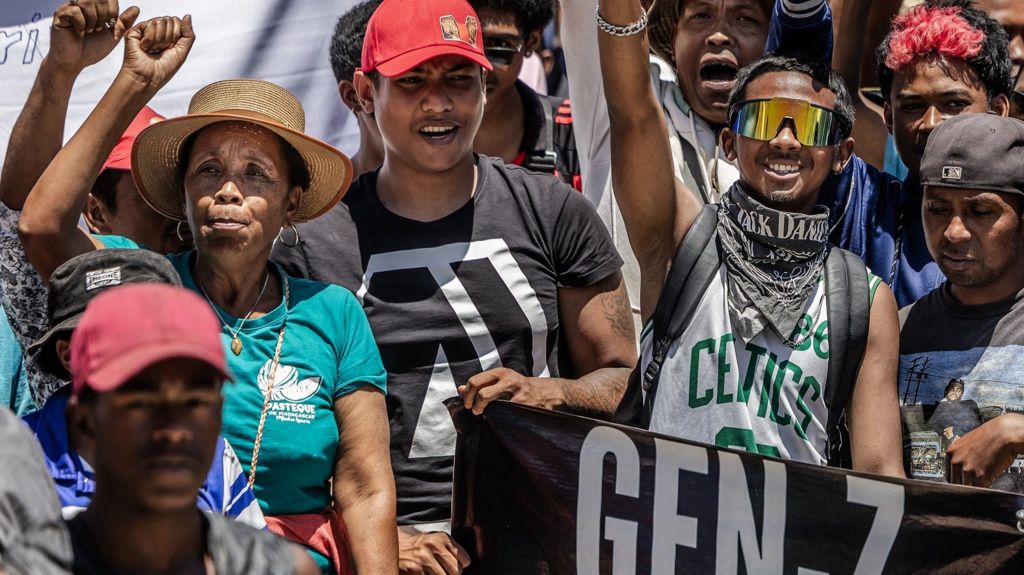
Soldiers threaten to seize state TV in Madagascar, presidency says, amid warnings of coup attempt
Madagascar is embroiled in a deepening political crisis as soldiers have threatened to seize the state TV headquarters, coinciding with President Andry Rajoelina’s delayed national address. Unconfirmed reports suggest Rajoelina has fled the country, with a French military aircraft allegedly transporting him from the Indian Ocean island to an undisclosed location. This follows two weeks of nationwide protests led by young activists, dubbed ‘Gen Z Mada,’ demanding his ouster. Despite sacking his entire government and offering concessions, Rajoelina failed to quell the unrest. Over the weekend, CAPSAT, a powerful army unit instrumental in Rajoelina’s 2009 rise to power, declared itself in command of all armed forces, with some officers joining protesters in the capital, Antananarivo. The newly appointed Chief of Army Staff, General Demosthene Pikulas, assured the public of efforts to maintain order. Meanwhile, opposition parties, including the TIM party, are preparing impeachment proceedings against Rajoelina for ‘abandonment of post.’ Several of his close associates have fled to Mauritius. The protests, initially sparked by water and power shortages, have escalated into broader discontent over unemployment, corruption, and the cost-of-living crisis. Tragically, at least 22 people have died, and over 100 have been injured, with reports of security forces using live ammunition and tear gas. Madagascar, one of the world’s poorest nations despite its natural resources, has a history of political upheaval, including the 2009 protests that brought Rajoelina to power. His tenure, marked by allegations of cronyism and corruption, now faces its most significant challenge yet.
-

More than 150 schoolchildren quarantined as US measles cases hit 33-year high
In a concerning development, more than 150 unvaccinated schoolchildren in South Carolina have been placed under a 21-day quarantine following exposure to measles, according to state health officials. The affected students, who attend Global Academy of South Carolina and Fairforest Elementary in Spartanburg County, were forced to miss school due to their lack of immunizations during the period of potential disease transmission. This incident marks the latest in a series of measles outbreaks across the United States, with South Carolina reporting its eighth confirmed case in two weeks in Greenville County. The state’s Department of Public Health emphasized the urgency of measles vaccinations, citing active community transmission in the Upstate region. The MMR vaccine, which is 97% effective against measles, mumps, and rubella, remains the most reliable defense against the disease, which can lead to severe complications such as pneumonia, brain swelling, and even death. Meanwhile, measles cases are also surging in Utah and Arizona, with 55 and 63 cases reported, respectively. Nationwide, the U.S. has confirmed 1,563 cases this year—the highest in over three decades, according to the Centers for Disease Control and Prevention (CDC). This alarming trend follows earlier outbreaks in Texas and New Mexico, where hundreds were infected, and three fatalities occurred. The majority of cases involve unvaccinated individuals, highlighting the critical role of immunization in preventing the spread of this highly contagious disease. Globally, measles outbreaks have been reported in 100 countries over the past five years, with Canada experiencing a particularly severe surge, logging 5,024 cases—more than triple the U.S. total despite its smaller population. The situation has raised questions about the effectiveness of containment efforts and the impact of vaccine skepticism.
-
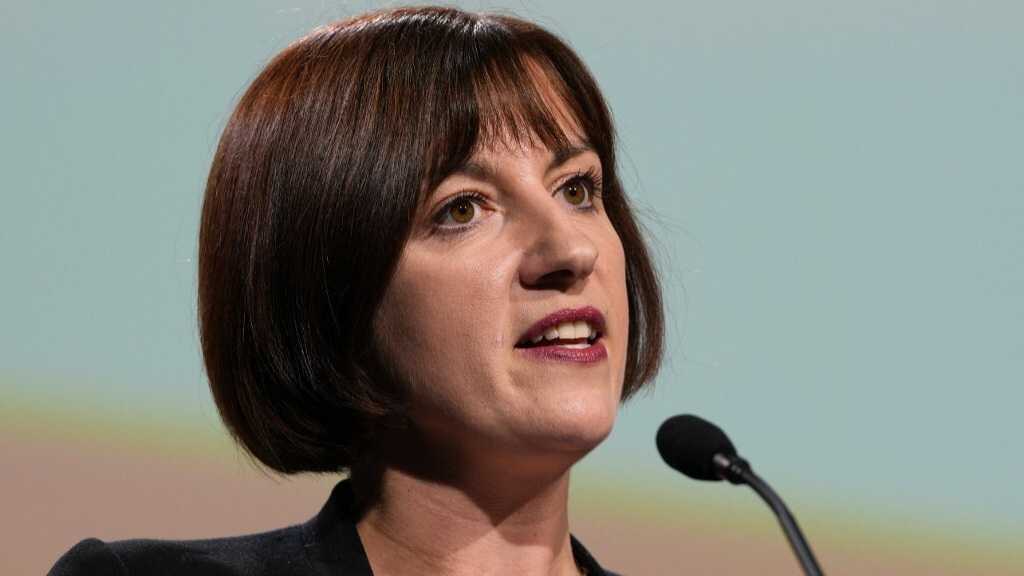
Pro-Israel group gets £1m from UK government to ‘identify’ antisemitism
The British government has allocated a £1 million funding package to the Union of Jewish Students (UJS), a pro-Israel organization, to deliver antisemitism training across universities. This initiative aims to equip university staff with tools to identify and address harassment and hate, fostering open and respectful debate on campuses. The Department for Education (DfE) announced the plan on Sunday, emphasizing that universities failing to protect Jewish students could face regulatory action. The UJS, which describes itself as the ‘voice of Jewish students,’ has ties to the World Zionist Organization, a group known for funding illegal Israeli settlements in the occupied West Bank and East Jerusalem. Critics argue that the training program, based on the International Holocaust Remembrance Alliance (IHRA) definition of antisemitism, may stifle legitimate criticism of Israel. The announcement follows heightened tensions in the UK, including student protests against the Gaza conflict and antisemitic attacks. Education Secretary Bridget Phillipson is set to meet with university leaders and faith groups to ensure student safety. Meanwhile, new protest restrictions introduced by Home Secretary Shabana Mahmood have sparked controversy, with critics labeling them as authoritarian. The UJS has faced scrutiny for its pro-Israel advocacy and alleged funding from the Israeli embassy, raising questions about its role in shaping campus discourse.
-
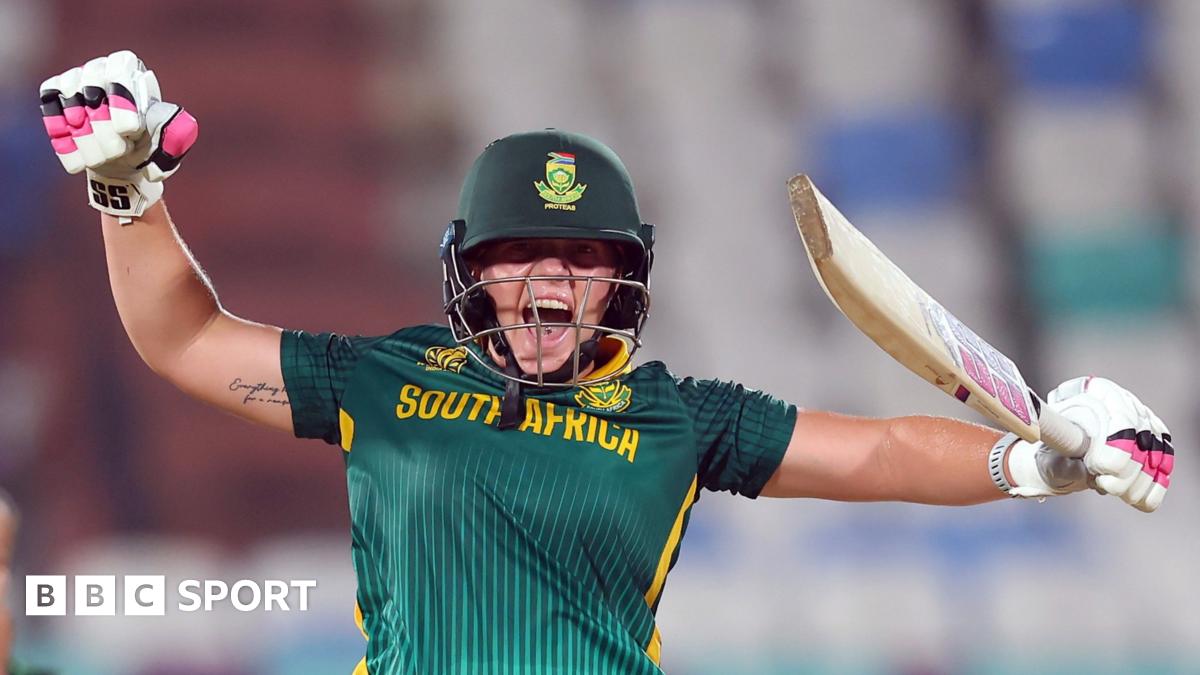
South Africa survive scare to beat Bangladesh
In a nail-biting encounter at the ICC Women’s World Cup in Visakhapatnam, South Africa emerged victorious by three wickets against Bangladesh, showcasing resilience and determination. Chasing a target of 233, the Proteas faced early adversity, collapsing to 78-5. However, half-centuries from Chloe Tryon (62 off 69) and Marizanne Kapp (56 off 71) steadied the ship. Nadine de Klerk, fresh from her heroics against India, played a pivotal role, remaining unbeaten on 37 off 29 balls, including a match-winning six with three balls to spare. Bangladesh, despite a competitive total bolstered by Shorna Akter’s rapid 51 off 34 balls, were left to rue missed opportunities, including crucial dropped catches. South Africa’s third consecutive win highlights their fighting spirit, while Bangladesh must regroup from this heart-wrenching defeat.
-
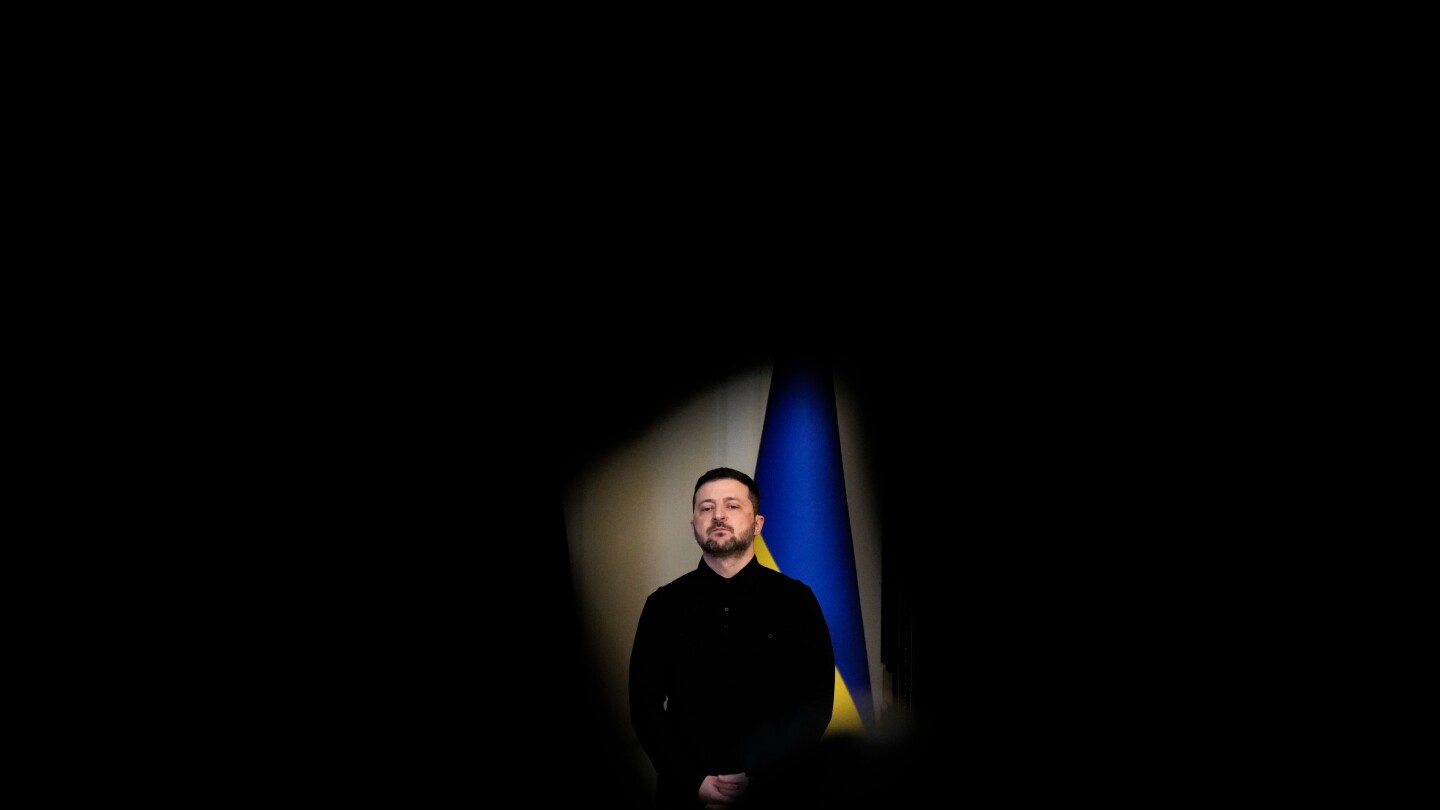
Zelenskyy to visit Washington this week seeking long-range weapons and a Trump meeting
Ukrainian President Volodymyr Zelenskyy announced on Monday his upcoming visit to the United States to discuss the potential provision of long-range weapons, including Tomahawk missiles, to bolster Ukraine’s defense against Russia. The visit, scheduled for later this week, will include meetings with U.S. President Donald Trump, defense and energy companies, and members of Congress. Zelenskyy emphasized that the primary focus of the talks would be enhancing Ukraine’s air defense capabilities and long-range strike potential to maintain pressure on Russia. This follows a ‘very productive’ phone call between Zelenskyy and Trump, during which the U.S. president warned Russia of the possibility of supplying Ukraine with advanced missile systems if Moscow does not de-escalate the conflict. The move has sparked ‘extreme concern’ from Moscow, with Russian President Vladimir Putin previously stating that such actions would severely damage U.S.-Russia relations. Zelenskyy also highlighted the need for U.S. assistance to protect Ukraine’s electricity and gas networks, which have been relentlessly targeted by Russian attacks. The Ukrainian delegation, led by Prime Minister Yulia Svyrydenko, is already in the U.S. for preliminary discussions. Meanwhile, Russia has intensified its strikes on Ukraine’s energy infrastructure, particularly in the Black Sea port of Odesa and the Chernihiv region, resulting in casualties and widespread damage. EU High Representative for Foreign Affairs Kaja Kallas, who met with Zelenskyy, pledged continued pressure on Moscow and expressed optimism that EU member states would overcome objections to a new sanctions package against Russia, despite potential delays.
-
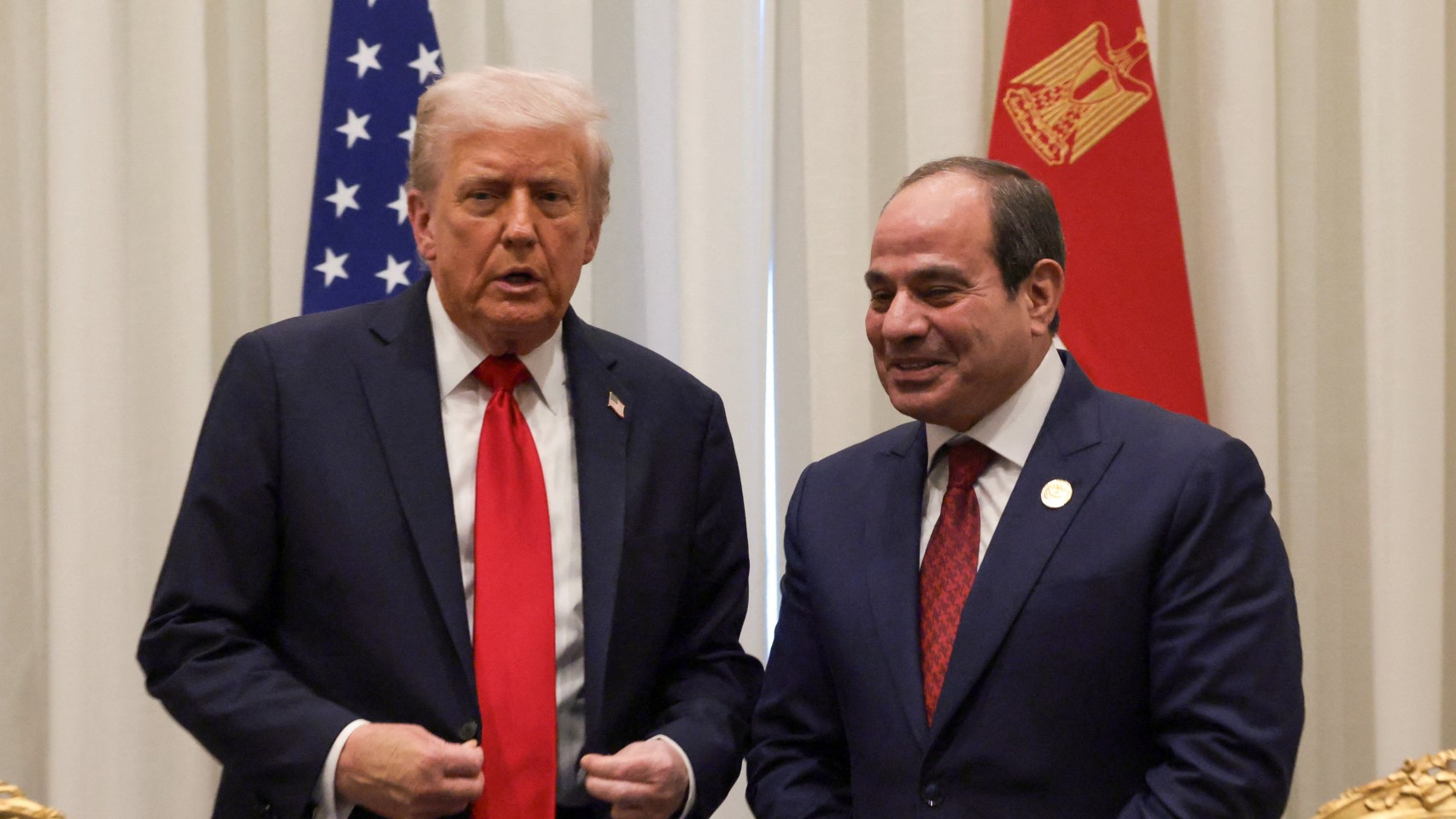
World leaders descend on Egypt to sign Trump’s Gaza ceasefire deal
In a landmark event, leaders and officials from over two dozen nations convened in Sharm el-Sheikh, Egypt, on Monday to formalize a ceasefire agreement aimed at concluding Israel’s prolonged conflict in Gaza. The summit, orchestrated by Qatar’s Emir Sheikh Tamim bin Hamad Al Thani and Egyptian President Abdel Fattah el-Sisi, saw the participation of prominent figures including Palestinian Authority President Mahmoud Abbas, Turkish President Recep Tayyip Erdogan, and Indonesian President Prabowo Subianto. Notably absent were representatives from Hamas and Israel, as well as the leaders of Saudi Arabia and the United Arab Emirates, who opted to send lower-level delegates instead.
US President Donald Trump, who arrived to a warm reception, played a pivotal role in the proceedings. He praised Israeli Prime Minister Benjamin Netanyahu as ‘one of the greatest wartime leaders’ and heralded the ceasefire as a ‘once in a lifetime deal.’ Trump unveiled the ‘Trump Declaration for Enduring Peace and Prosperity,’ a memorandum signed by the US, Egypt, Qatar, and Turkey, which emphasized diplomatic resolutions over force and the protection of fundamental human rights for both Palestinians and Israelis.
The ceasefire agreement, reached days prior, stipulated the release of Israeli captives by Hamas and the return of Palestinian detainees by Israel. While celebrations erupted in Israel, Gaza witnessed subdued reunions due to Israeli warnings against public celebrations. However, critical questions remain unresolved, including Gaza’s governance, Israeli troop withdrawal, and Hamas’s disarmament.
Trump’s controversial 20-point peace plan, announced earlier, proposed the creation of a Board of Peace led by the US president. Former British Prime Minister Tony Blair, whose involvement has sparked mixed reactions, was also named to the committee. Despite his controversial legacy in the region, Blair met with Palestinian officials to discuss post-war strategies and the implementation of Trump’s peace efforts.
Hamas, in a statement, claimed that Netanyahu had ‘submitted to the resistance’s conditions,’ highlighting the group’s efforts to protect Israeli captives during the conflict. The war, which spanned over two years, resulted in significant civilian casualties and widespread destruction in Gaza, with recent reports indicating that over 80% of the fatalities were civilians.
-
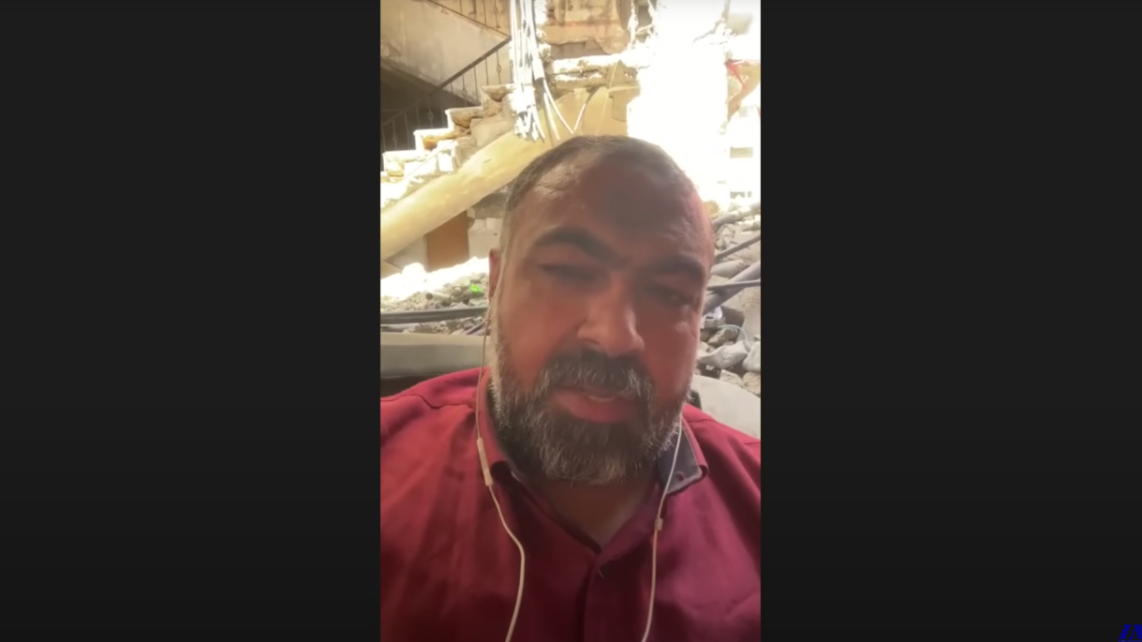
‘My joy was shattered’: Journalist grieves killing of third son as ceasefire arrives too late
The announcement of a ceasefire in Gaza, intended to bring relief to war-torn communities, instead marked another devastating loss for journalist Motasem Dalloul. Just hours after U.S. President Donald Trump declared the end of hostilities, Dalloul received the heart-wrenching news that his 21-year-old son, Ibrahim, had been killed by Israeli forces while searching for food. This tragedy marks the third son Dalloul has lost since the onset of what he describes as the ‘genocide in Gaza.’
Dalloul, a prominent journalist, has remained steadfast in Gaza City throughout the two-year conflict, refusing to evacuate despite repeated Israeli threats and invasions. His family has been displaced 13 times, most recently living in a tent in the al-Rimal neighborhood. The relentless violence has left them grappling with unimaginable hardships, including famine and the destruction of their home and livelihood.
On the day before the ceasefire, Ibrahim and his friends ventured south in search of food, driven by unbearable hunger and the hope of earning money by selling goods in the north. However, their journey ended in tragedy near the al-Nabulsi roundabout, where Israeli forces opened fire. The exact circumstances of the attack remain unclear, but the loss has left Dalloul and his family shattered.
Dalloul’s grief is compounded by the memories of his wife, Riham, and their two-year-old son, Abu Bakr, who were killed in an Israeli bombing last year while waiting for flour. Three months later, his son Yehya was fatally shot by an Israeli tank as they searched the rubble of their destroyed home. Dalloul’s pain is palpable as he reflects on the loss of his loved ones and the destruction of his family’s future.
Despite the ceasefire, Dalloul emphasizes that the suffering in Gaza continues. The region’s infrastructure lies in ruins, and basic necessities remain scarce. As the community begins to reckon with their losses, the scars of war run deep. Dalloul’s story is a poignant reminder of the human cost of conflict and the enduring resilience of those who endure it.