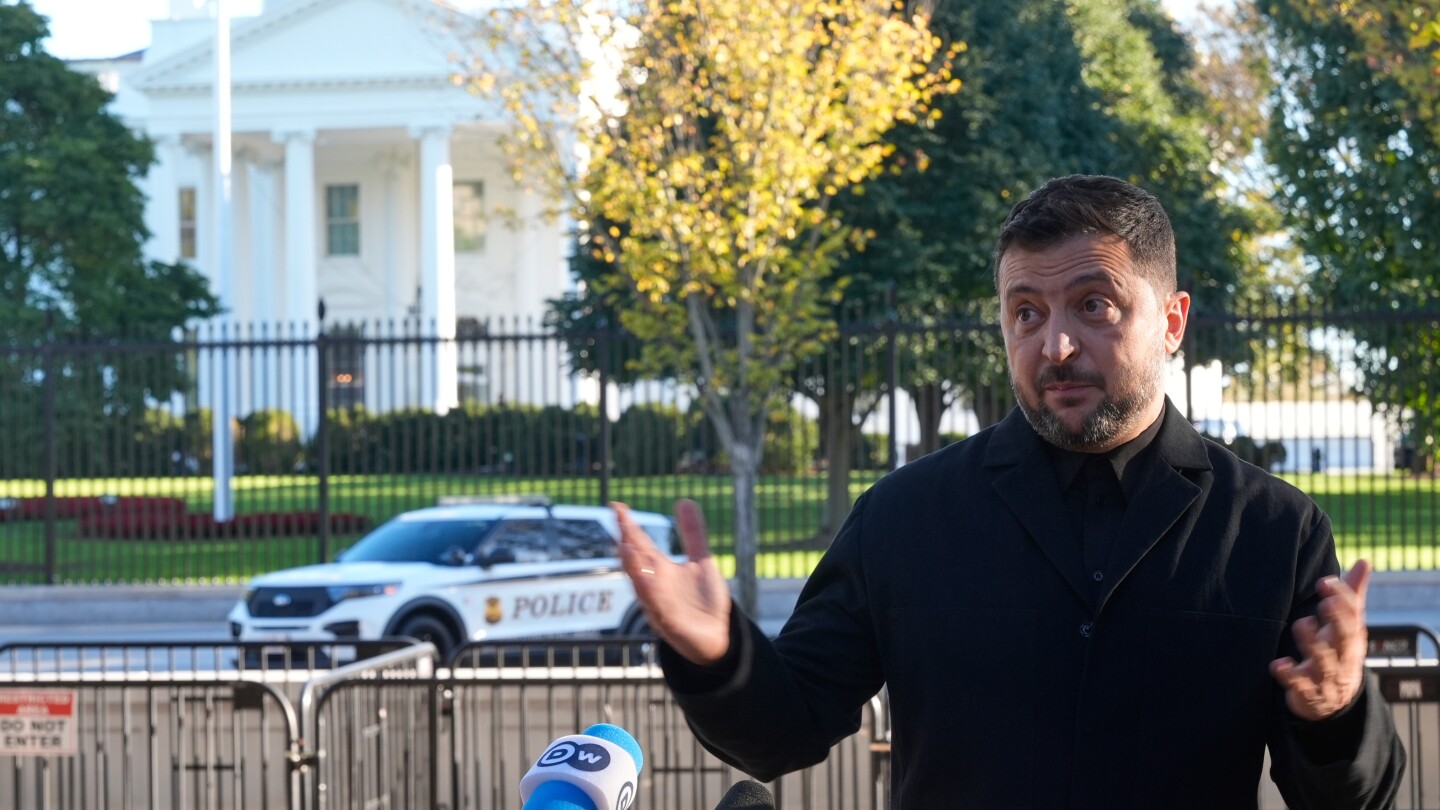
Ukrainian President Volodymyr Zelenskyy has characterized his recent meeting with U.S. President Donald Trump as “positive,” despite failing to secure the delivery of Tomahawk missiles for Ukraine. The meeting, which took place last week, was reportedly tense, with Trump reportedly reneging on the possibility of sending long-range missiles to Ukraine following a phone call with Russian President Vladimir Putin. Zelenskyy suggested that Trump is avoiding escalation with Russia until their next meeting. Ukraine is seeking to purchase 25 Patriot air defense systems from American firms, using frozen Russian assets and international assistance, though Zelenskyy acknowledged that procurement will take time due to production delays. He also discussed expediting the process with Trump, potentially leveraging European partners. Zelenskyy noted that Trump reiterated Putin’s unchanged demand for Ukraine to cede the Donetsk and Luhansk regions. Despite this, Zelenskyy described Trump’s overall message as positive, emphasizing the U.S. president’s desire to end the war. Trump’s upcoming meeting with Putin in Hungary, a country unsupportive of Ukraine, is seen as a potential step toward peace, though Zelenskyy expressed reservations about Budapest as a venue. He also criticized Hungarian Prime Minister Viktor Orbán for obstructing Ukraine’s interests. Zelenskyy remained skeptical of Putin’s territorial swap proposal but acknowledged that all parties have moved closer to a possible resolution. Additionally, he highlighted U.S. interest in bilateral energy projects with Ukraine, including an LNG terminal in Odesa and initiatives in nuclear energy and oil.
博客
-
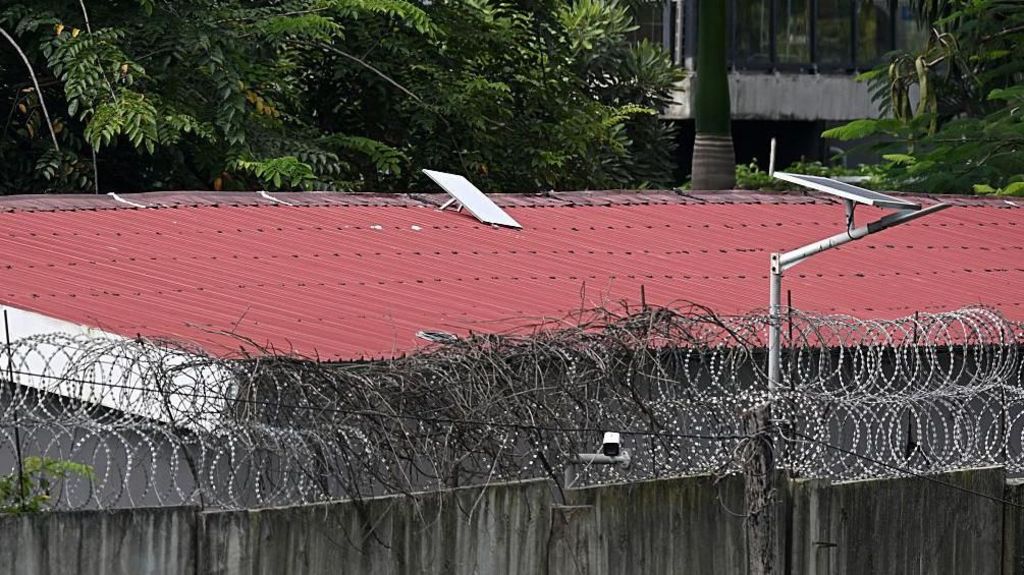
Notorious cyber scam hub linked to Chinese mafia raided
In a significant development in Myanmar’s ongoing civil war, the military has announced the capture of KK Park, one of the most infamous scam compounds located along the Thai-Myanmar border. Situated south of the border town of Myawaddy, KK Park has been a hub for online fraud, money laundering, and human trafficking for the past five years. Thousands of individuals, many from African countries, were lured with promises of lucrative jobs, only to be forced into orchestrating elaborate scams that defrauded victims worldwide of billions of dollars. The military, which has long been implicated in the scam industry, claims to have taken control of the complex as part of its broader strategy to reclaim territory lost to insurgent groups. This move comes as the junta prepares for a planned election in December, aiming to consolidate its control over key areas. The junta’s information ministry stated that its forces had ‘cleared’ KK Park, releasing over 2,000 workers and confiscating 30 Starlink satellite terminals, which were widely used by scam centers for online operations. The ministry blamed the Karen National Union (KNU) and volunteer people’s defence forces for illegally occupying the area. The KNU, an ethnic insurgent group controlling much of the region, had leased the land to Huanya International, a Hong Kong-listed company linked to Chinese underworld figure Wan Kuok Koi, also known as Broken Tooth. Despite the junta’s claims, sources suggest that scam operations may still be ongoing in parts of KK Park, and the military’s actions may be influenced by pressure from China, which has been urging the junta and Thai government to crack down on illegal activities run by Chinese syndicates. The capture of KK Park is part of a larger effort by the military to regain control of territory, including the strategic road linking Myawaddy to the rest of Myanmar. However, the junta still faces significant resistance, with opposition forces dismissing the upcoming election as a sham and vowing to block it in areas under their control.
-
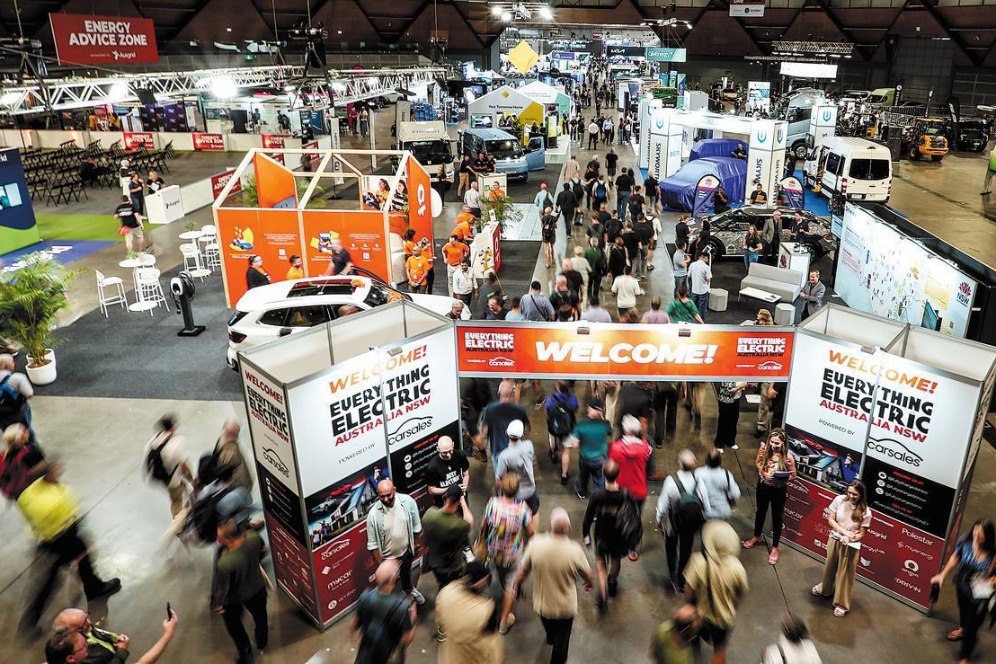
Chinese carmakers drive record Australian EV sales
Electric vehicle (EV) sales in Australia have soared to unprecedented levels, driven by advancements in charging infrastructure and the introduction of high-quality, affordable models from Chinese automakers. According to the latest industry report, Australians purchased 72,758 EVs in the first half of 2025, marking a 24.4% increase from the same period last year. EVs now represent 12.1% of all new car sales, with Chinese brands dominating the market. The State of EVs 2025 report, released by Australia’s Electric Vehicle Council, highlights that June 2025 set a new monthly record, with EVs accounting for nearly 16% of new vehicle sales. The national EV fleet has more than doubled in two years, reaching over 410,000 vehicles. This growth is attributed to significant investments in charging infrastructure and the implementation of new vehicle efficiency standards. The report notes that there are now 153 EV models available in Australia, up from 123 in June 2024, alongside a 20% increase in fast-charging locations and a 22% rise in high-power public charging plugs. Aman Gaur, head of legal, policy, and advocacy at the Electric Vehicle Council, emphasized that Chinese automakers are playing a pivotal role in this transformation by offering affordable, high-quality EVs with diverse features. Despite the sector’s rapid growth, EVs still constitute only 2% of all cars on Australian roads. The Australian Automotive Dealer Association echoed these sentiments, noting that Chinese brands account for 77.5% of all battery-electric vehicle sales in 2025. However, challenges such as brand competition and the need for expanded service infrastructure remain. Australian consumers, like accountant Shawn Williams, are increasingly opting for Chinese EVs due to their competitive pricing and utility, especially in light of rising household costs.
-
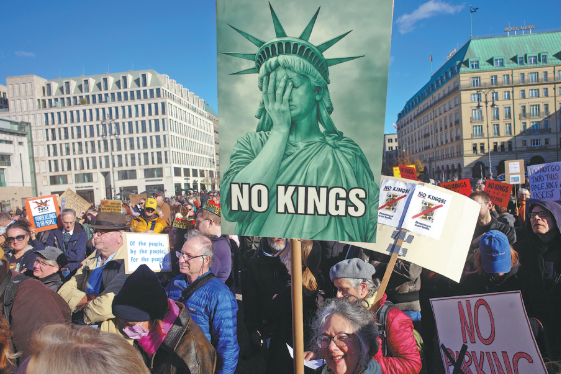
‘No Kings’ protests erupt across US
On Saturday, October 19, 2025, millions of Americans took to the streets in all 50 states in a series of coordinated protests dubbed ‘No Kings.’ The demonstrations, which spanned from New York to Los Angeles, were a direct response to President Donald Trump’s controversial policies and perceived authoritarian tendencies. Organizers estimated that over 7 million people participated, with rallies even occurring near Trump’s Florida residence. Protesters voiced their opposition to Trump’s hard-line immigration policies, attacks on the media, and alleged erosion of democratic norms. Slogans such as ‘Protect Democracy’ and ‘Fight Ignorance, Not Migrants’ dominated the marches, reflecting widespread discontent. While the protests were largely peaceful, isolated incidents in Los Angeles saw police deploying nonlethal rounds and tear gas to disperse crowds. Trump responded with a series of AI-generated videos on his Truth Social platform, depicting himself as a king, further fueling the outrage. House Speaker Mike Johnson dismissed the rallies as ‘Hate America’ protests, a claim met with derision by demonstrators. The events underscored the deep political polarization gripping the nation, with many participants expressing fears for the future of American democracy.
-
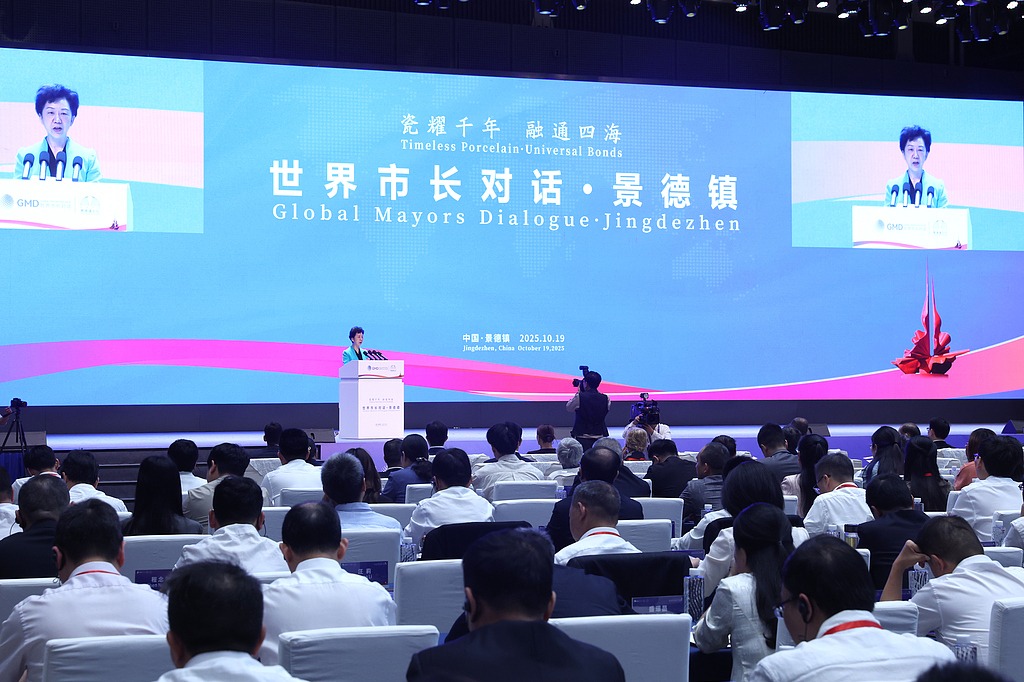
Global mayors foster artistic ceramic bonds
City leaders from across the globe gathered in Jingdezhen, China’s renowned ‘porcelain capital,’ to celebrate ceramics as a timeless symbol of cultural unity and friendship. The 2025 Global Mayors Dialogue, held on October 19, highlighted the shared artistic heritage that transcends borders and fosters mutual understanding in an increasingly diverse and complex world. Jingdezhen, located in Jiangxi province, served as the perfect backdrop for this international event, showcasing its centuries-old craftsmanship and innovation. Kagan Mehmet Usta, the mayor of Iznik, Turkiye, emphasized the deep cultural ties between Iznik and Jingdezhen, which were formalized as sister cities in 2021. He noted that this relationship symbolizes a shared artistic legacy that continues to inspire future generations. Nurbaev Niiazbek, deputy speaker of the City Council of Osh, Kyrgyzstan, praised ceramics as a universal language of peace, reflecting a nation’s aesthetics, craftsmanship, and philosophy. He announced plans to invite Jingdezhen experts to train local ceramic specialists and establish a dedicated pavilion for Jingdezhen porcelain at Silk Road trade fairs. Chen Kelong, mayor of Jingdezhen, highlighted the city’s commitment to cultural and trade cooperation, citing its international exchange activities and flagship stores in Dubai and Istanbul. The Jingdezhen International Ceramic Expo, running from October 19 to 22, further underscored the city’s global influence. Tourism in Jingdezhen has seen remarkable growth, with over 60 million visitors in 2024. Veronika Todorova, deputy mayor of Troyan, Bulgaria, expressed her admiration for Jingdezhen’s traditions and expressed eagerness for future collaborations. The event reinforced the role of ceramics as a bridge for cultural exchange and cooperation in the modern era.
-
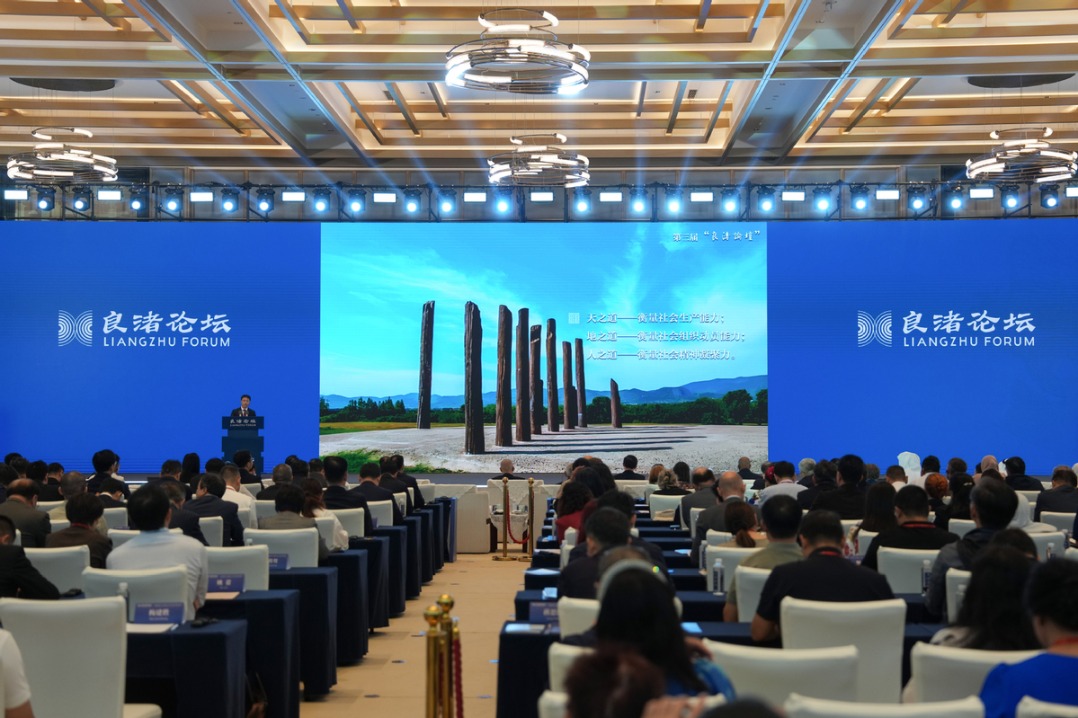
Liangzhu forum promotes need to protect world’s cultural heritages
The third Liangzhu Forum, held in Hangzhou, Zhejiang Province, from October 18 to 20, 2025, brought together over 300 participants to discuss the urgent need for global cultural heritage protection. The event emphasized the importance of safeguarding cultural diversity and fostering mutual understanding among civilizations.
-
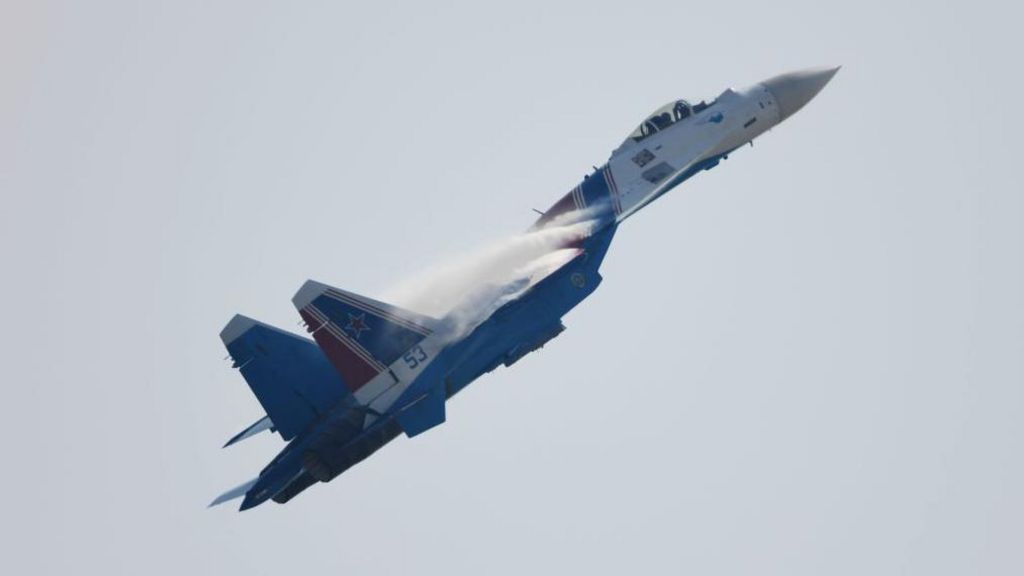
Australia accuses China of ‘unsafe’ military jet manoeuvres
Australia has lodged a formal complaint with China following an incident in the South China Sea, where a Chinese military aircraft allegedly released flares dangerously close to an Australian patrol jet. The Australian Department of Defence described the maneuver as ‘unsafe and unprofessional’ in a statement issued on Monday. Fortunately, the Australian P-8A aircraft and its crew emerged unscathed from the encounter, which occurred on Sunday. The Australian Defence Force emphasized its expectation that all nations, including China, adhere to safe and professional military conduct. When questioned by reporters, a spokesperson for the Chinese Foreign Ministry claimed to be unaware of the incident. This confrontation is the latest in a series of tense military interactions between the two countries in the region, where China’s expansive territorial claims conflict with those of neighboring nations. The incident coincided with Australian Prime Minister Anthony Albanese’s visit to the United States for discussions with President Donald Trump, focusing on the AUKUS submarine deal involving Australia, the US, and the UK. Australia has previously accused Chinese jets of similar actions, including a February incident where flares were allegedly dropped near an Australian aircraft. China defended its actions at the time, stating that the Australian jet had intruded into its airspace and that its response was ‘lawful and restrained.’ Although Australia does not claim territory in the South China Sea, it has aligned with the US and its allies in challenging the legal basis of China’s claims. Previous incidents include a May 2023 accusation that a Chinese fighter jet dropped flares near an Australian navy helicopter in the Yellow Sea, and a November 2023 claim that Chinese navy sonar pulses injured Australian divers in international waters off Japan.
-
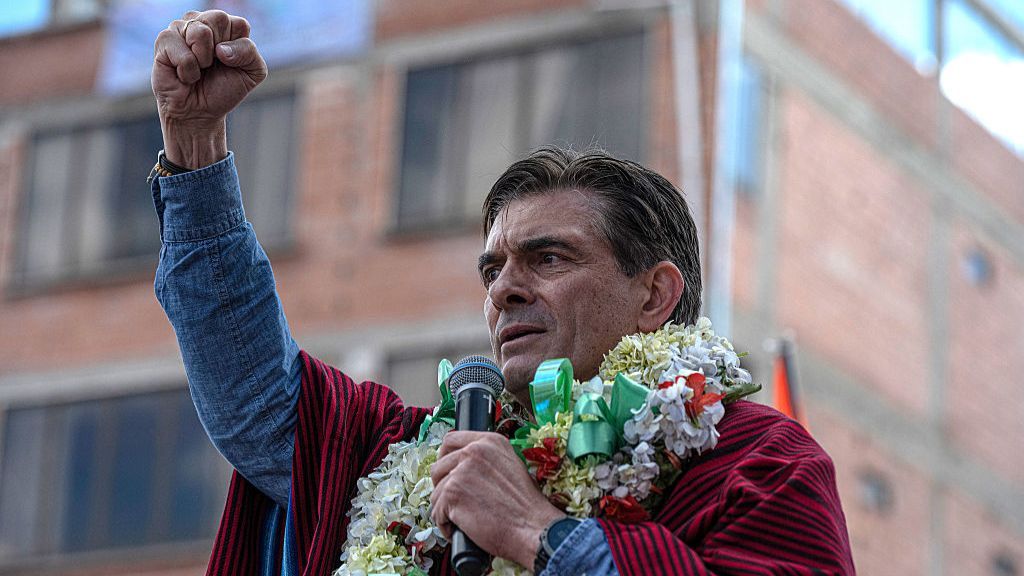
Bolivia elects centrist Rodrigo Paz, ending decades of socialist rule
Bolivia has ushered in a new political era with the election of centrist senator Rodrigo Paz as its next president, marking the end of nearly 20 years of dominance by the Movement for Socialism (Mas) party. In a decisive run-off election, Paz, representing the Christian Democratic Party, secured 54.6% of the vote, defeating right-wing candidate Jorge ‘Tuto’ Quiroga. The election outcome reflects widespread voter dissatisfaction with Bolivia’s severe economic crisis and internal divisions within Mas, which has governed since 2006. Paz campaigned on a platform of ‘capitalism for all,’ pledging to address fuel shortages, attract international investment, and stimulate private-sector growth. His victory speech emphasized a commitment to economic reform and social programs aimed at alleviating poverty. Paz’s moderate stance appealed to undecided and disillusioned left-leaning voters, who sought change but were reluctant to support Quiroga. Quiroga conceded defeat, and Paz’s supporters celebrated in the streets of La Paz, expressing hope for a new direction. Bolivia faces significant challenges, including fuel shortages, a dollar deficit, and soaring inflation, exacerbated by plummeting natural gas exports. Paz has pledged to ease credit access for small businesses, reduce taxes and import tariffs, combat corruption, and decentralize government. However, his plan to cut unsustainable fuel subsidies may prove contentious. Internationally, Paz’s election could signal a thaw in Bolivia’s strained relations with the United States, which have lacked formal diplomatic ties since 2008. The U.S. State Department expressed optimism about partnering with Paz to restore economic stability and strengthen security. Paz may also recalibrate Bolivia’s alliances, potentially distancing the country from Venezuela and Cuba while maintaining trade ties with China, a key partner for Bolivia’s mineral and lithium exports. Paz’s running mate, Edman Lara, a former police captain known for his anti-corruption stance, helped attract working-class voters. The election result underscores a national desire for change, but Paz inherits a deeply divided country and a challenging economic landscape. He will take office on November 8, 2025, with the formidable task of restoring economic credibility and uniting Bolivia after years of political turmoil.
-
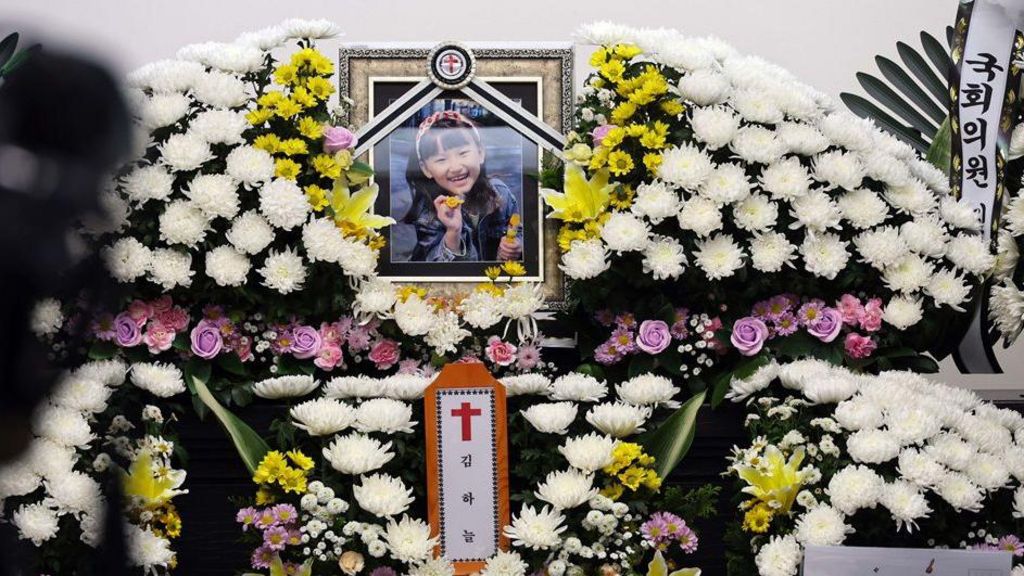
Teacher who killed eight-year-old jailed for life in South Korea
In a case that has deeply shaken South Korea, a 48-year-old elementary school teacher, Myeong Jae-wan, has been sentenced to life imprisonment for the brutal murder of an eight-year-old girl, Kim Hae-neul. The incident occurred in February in the central city of Daejeon, where Myeong lured the young student into a classroom before fatally stabbing her. Prosecutors had pushed for the death penalty, emphasizing the victim’s family’s demand for severe punishment. However, the court ruled that while the risk of reoffending was high, it could not conclusively justify execution. Myeong, who claimed her judgment was impaired due to ongoing mental health treatment, expressed remorse through dozens of letters submitted to the court, though prosecutors noted her lack of remorse during the investigation. Prior to the attack, Myeong had taken a six-month leave for depression but was deemed fit to return to work by a doctor just 20 days later. Reports indicate she exhibited violent behavior in the days leading up to the stabbing, including an altercation with another teacher. On the day of the crime, Myeong purchased a weapon, intending to end her own life and that of a random child. She lured Kim into a media room, where the attack took place. Kim was reported missing after failing to board her school bus and was later found with fatal stab wounds. Myeong also sustained a neck injury, suspected to be self-inflicted. The court condemned Myeong’s actions, stating that as a teacher, she was entrusted with protecting her students but instead committed a heinous crime in a place meant to be safe. In addition to the life sentence, Myeong has been ordered to wear an electronic tracking device for 30 years. South Korean leaders have called for enhanced safety measures to prevent such tragedies in the future.
-
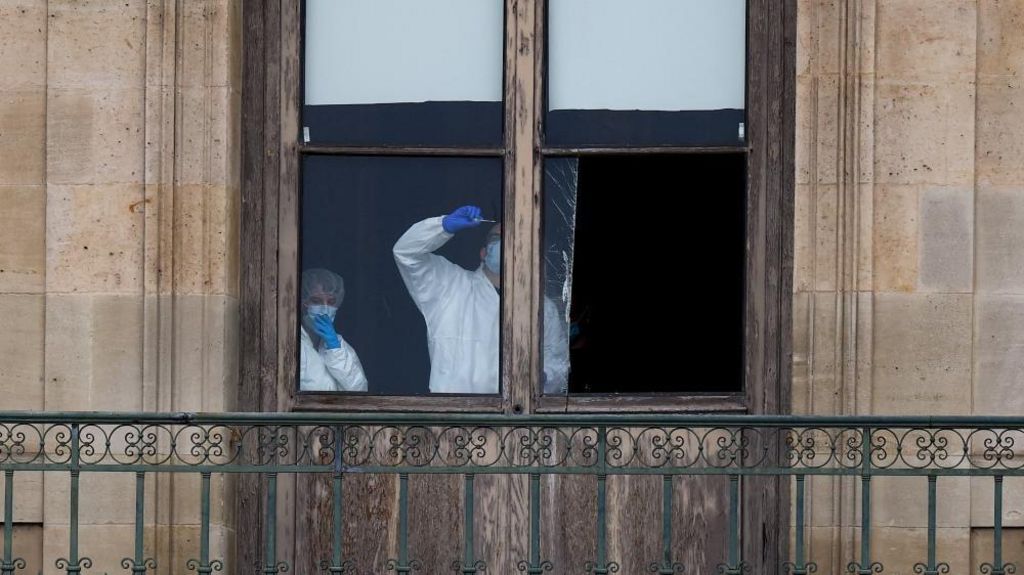
Louvre heist creates ‘terrible image’ of France, justice minister says
A daring daylight robbery at the Louvre Museum in Paris has exposed significant security vulnerabilities, leaving French authorities scrambling to recover priceless stolen artifacts. On Sunday morning, four masked thieves executed a meticulously planned heist, using a truck-mounted mechanical lift to access the museum’s Galerie d’Apollon via a balcony overlooking the River Seine. Armed with power tools, the perpetrators cut through glass panes, threatened guards, and smashed display cases to steal eight invaluable jewelry pieces, including a diamond and emerald necklace gifted by Emperor Napoleon to his wife, Empress Marie Louise. The entire operation lasted just seven minutes, during which alarms blared, and museum staff evacuated visitors. Despite immediate intervention by security forces, the thieves escaped on scooters, leaving behind a charred vehicle they attempted to set ablaze. French Justice Minister Gérald Darmanin condemned the incident, stating that the breach has tarnished France’s international image. Experts warn that the stolen items, including crowns and diadems adorned with thousands of diamonds, are at risk of being dismantled, melted down, or smuggled out of the country. Chris Marinello, CEO of Art Recovery International, emphasized the urgency of apprehending the thieves within the next 24 to 48 hours to prevent the irreversible loss of these cultural treasures. The Louvre, one of the world’s most visited museums, now faces scrutiny over its security protocols as authorities race against time to recover the stolen artifacts.