
In a dramatic escalation of political tensions, at least two protesters were fatally shot by security forces in Cameroon on Sunday as opposition supporters took to the streets to demand transparency in the recent presidential election. The unrest unfolded in multiple cities, including the economic hub of Douala, where clashes between demonstrators and law enforcement turned violent. The opposition, led by candidate Issa Tchiroma Bakary, alleges that President Paul Biya, who has ruled the country for nearly four decades, rigged the October 12 election to secure his reelection. Cameroon’s constitutional council is set to announce the final results on Monday, but the opposition has already dismissed the process as fraudulent. Videos circulating online depict chaotic scenes of tear gas being deployed and protesters barricading major roads in cities like Garoua and Maroua. Authorities have remained silent on the reported deaths, which were confirmed by the African Movement for New Independence and Democracy party but could not be independently verified by The Associated Press. Meanwhile, dozens of opposition supporters and activists have been arrested in recent days, with the government accusing them of plotting violent attacks. One protester, Oumarou Bouba, a 27-year-old trader from Maroua, expressed his determination to defend his vote, stating, ‘I am ready to stake my life for change.’ The election has deepened divisions in Cameroon, a nation of nearly 30 million people, with many criticizing Biya, the world’s oldest leader at 92, for seeking another term after nearly half a century in power. The opposition has also accused him of sidelining his strongest rival and manipulating state resources to tilt the election in his favor.
博客
-

What to know about uncontacted Indigenous peoples and efforts to protect them
In the remote corners of the Amazon rainforest and the dense jungles of Indonesia, uncontacted Indigenous communities are facing an existential crisis. A recent report by Survival International, a London-based Indigenous rights organization, reveals that at least 196 uncontacted groups across 10 countries are under severe threat from logging, mining, agribusiness, and drug trafficking. The report, released on Sunday, estimates that 65% of these groups are endangered by logging, 40% by mining, and 20% by agribusiness. Fiona Watson, Survival’s research and advocacy director, describes these threats as “silent genocides,” unfolding far from public scrutiny or effective state protection. Uncontacted peoples, often misunderstood as “lost tribes,” are contemporary societies that deliberately avoid contact with outsiders due to historical violence, slavery, and disease. They thrive in their environments, maintaining ancient traditions and languages, and play a crucial role in preserving forests essential to combating climate change. However, their isolation makes them vulnerable to diseases like the flu, which can decimate entire communities. The report highlights the urgent need for stronger legal protections, no-contact policies, and global awareness to safeguard these communities. Governments and corporations must halt extractive activities in Indigenous territories, while consumers must ensure their purchases do not fund destruction. International treaties like the ILO’s Convention 169 and the U.N. Declaration on the Rights of Indigenous Peoples affirm their right to self-determination, but enforcement remains inconsistent. Survival International’s report calls for immediate action to prevent the extinction of these unique cultures, emphasizing that their survival is intertwined with the planet’s future.
-
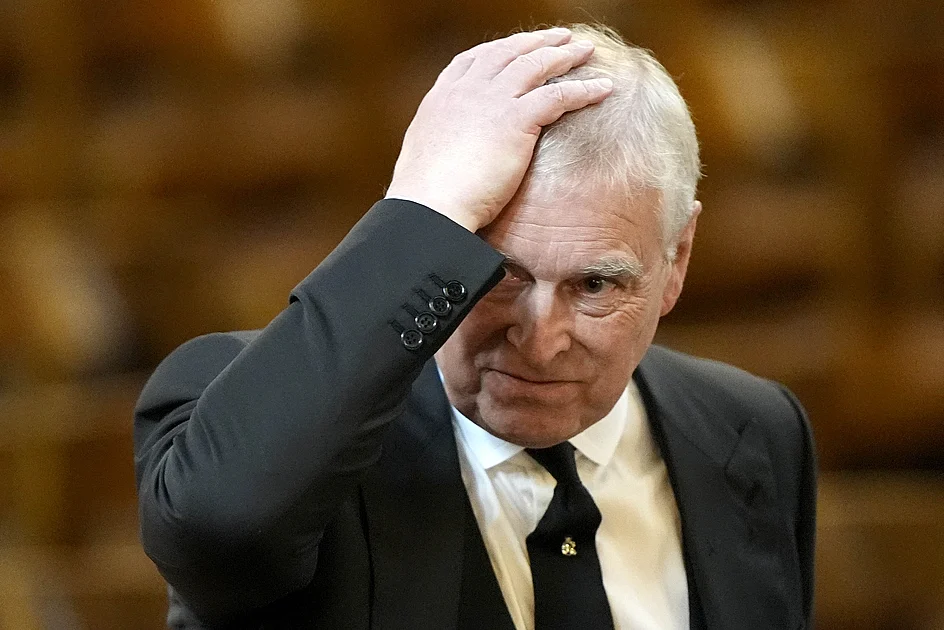
UK’s Prince Andrew under pressure over royal home, titles
Britain’s Prince Andrew is under increasing scrutiny as discussions between him and King Charles III intensify regarding his living arrangements and royal titles. Reports suggest that the King may compel his younger brother to vacate his 30-room residence, Royal Lodge, located within the expansive grounds of Windsor Castle. This development follows renewed public outrage sparked by allegations from Virginia Giuffre, one of Jeffrey Epstein’s primary accusers, who detailed her claims in a recently published memoir. Prince Andrew has consistently denied any wrongdoing but settled a civil sexual assault case with Giuffre in 2022, paying her millions of dollars. Giuffre tragically took her own life in April, while Epstein died in prison in 2019 while awaiting trial on sex-trafficking charges. Adding to the controversy, The Times revealed that Prince Andrew has not paid rent for two decades on Royal Lodge, a mansion owned by the Crown Estate. British media outlets have reported ongoing negotiations between the King and Prince Andrew about his potential relocation. The Sunday Times described the situation as a ‘pincer movement’ from both Parliament and Buckingham Palace to strip him of his Duke of York title and remove him from Windsor. Meanwhile, the Liberal Democrat party is pushing for a parliamentary debate to scrutinize Prince Andrew’s conduct and living arrangements. While such a debate would be unprecedented in modern times, it remains unclear when it might occur or whether it would be binding. The pressure on King Charles and the government to address the issue continues to mount, with Prince William reportedly seeking to move into a nearby residence and urging his uncle to leave beforehand.
-
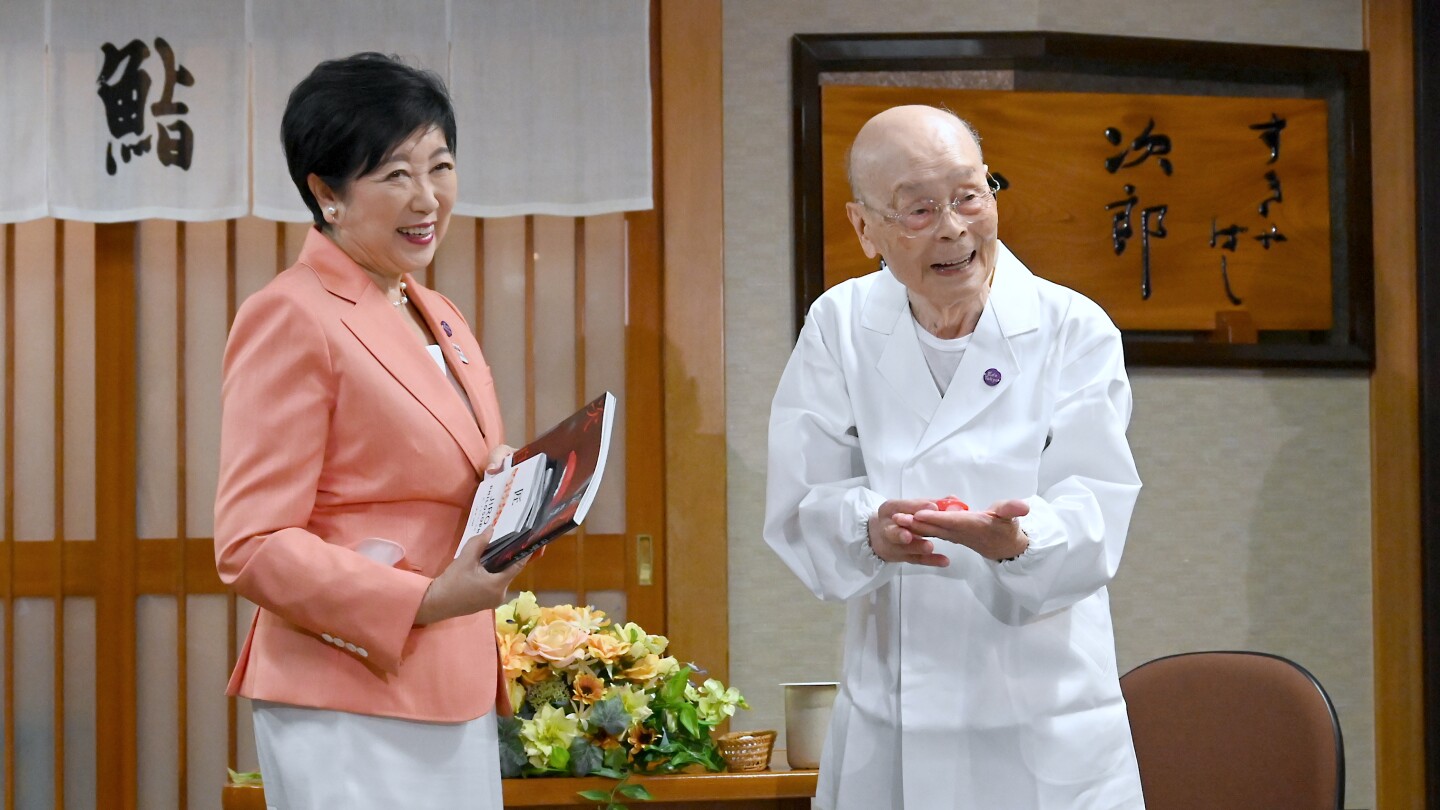
Japan’s sushi legend Jiro Ono turns 100 and is not ready for retirement
At the age of 100, Jiro Ono, the legendary sushi master behind Tokyo’s famed Sukiyabashi Jiro, remains an enduring symbol of dedication and excellence. Renowned for earning three Michelin stars for over a decade, Ono has served dignitaries worldwide and inspired countless individuals through his unwavering pursuit of perfection. His story was immortalized in the award-winning documentary “Jiro Dreams of Sushi,” which showcased his meticulous craft and profound influence on the culinary world. Despite his advanced age, Ono has no plans to fully retire, stating, “I plan to keep going for about five more years.” His secret to longevity? “To work,” he replied when asked by Tokyo Governor Yuriko Koike. “I believe the best medicine is to work.” Born in 1925 in Hamamatsu, Ono began his culinary journey at age 7, eventually opening Sukiyabashi Jiro in Tokyo’s Ginza district in 1965. His restaurant, a modest 10-seat establishment, became a global icon, earning Michelin stars in 2007 and maintaining its status until 2019. Ono’s dedication to his craft and his clients is unparalleled. In 2014, he famously turned down a reservation request from the Japanese government for then-U.S. President Barack Obama and former Prime Minister Shinzo Abe, citing a fully booked schedule. Obama later visited and enjoyed the experience, a testament to Ono’s commitment to his regulars. In recent years, Ono has scaled back his direct involvement due to physical limitations but continues to inspire through his son Yoshikazu, who now leads the restaurant. Ono’s philosophy of lifelong learning and improvement resonates deeply. “I haven’t reached perfection yet,” he once said. “I’ll continue to climb trying to reach the top, but nobody knows where the top is.” His humility, humor, and kindness have left a lasting impression on those who know him, including filmmaker David Gelb, who directed the documentary. Gelb described Ono as “a teacher and a fatherly figure” who remains “very funny and very sweet.” As Japan’s population ages, Ono stands as a beacon of resilience and inspiration. With over 100,000 centenarians in Japan, his story underscores the importance of purpose and passion in life. Ono’s favorite sushi? “Maguro, kohada, and anago (tuna, gizzard shad, and saltwater eel),” he shared. As he looks to the future, Ono remains optimistic, aiming to live to 114. “I cherish my life so I get to work for a long time,” he says. His legacy continues to inspire generations, proving that age is no barrier to greatness.
-

A singer’s death, 38,000 songs and a question – who owns the music?
Vishal Kalita, a devoted music enthusiast from Guwahati, Assam, has transformed his home into a private museum housing an extensive collection of music cassettes, CDs, and rare posters. For over a decade, the 30-year-old has traveled across India to acquire obsolete tapes, meticulously preserving them. Last month, he opened his collection to the public, with the discography of Zubeen Garg, a beloved Assamese singer and composer, drawing the most attention. Garg, a cultural icon, passed away in Singapore last month, leaving millions of fans heartbroken. Kalita’s collection includes 38,000 of Garg’s songs, some of which are unavailable elsewhere. Just days before his death, Garg visited Kalita’s residence, expressing nostalgia for his ‘long-forgotten’ creations. Kalita is now part of a network of fans and friends working to make Garg’s oeuvre accessible through online streaming platforms and ensure royalties for his family. However, challenges persist due to unclear ownership of many songs, scattered among producers, distributors, and music labels. Music ownership is a contentious issue globally, as seen in Taylor Swift’s re-recording efforts and similar struggles by Indian artists. Garg’s fans faced this complexity when one of his popular songs, ‘Mayabini Ratir Bukut,’ was temporarily uploaded online but removed due to licensing issues. India’s Copyright Act, 1957, governs music ownership, with separate copyrights for lyrics, composition, and sound recordings. Producers often hold rights to sound recordings, leading to intricate and untraceable ownership networks. Garg’s career spanned 33 years, during which he sang in over 40 languages and dialects. While some songs are owned by his label, many from the 1990s and 2000s belong to producers and distributors. The rise of digital platforms has complicated ownership tracking, but initiatives like the Indian Performing Right Society (IPRS) aim to protect creators’ rights. Kalita is now exploring advanced Japanese technology to digitize rare tapes, ensuring Garg’s music endures. ‘Zubeen Garg will live through his music,’ Kalita says, ‘and as his fan, that’s the least I can do for him.’
-

Navy loses two aircraft from USS Nimitz aircraft carrier within 30 minutes
In a concerning sequence of events, two U.S. Navy aircraft operating from the USS Nimitz crashed into the South China Sea within a half-hour span on Sunday afternoon, according to the Navy’s Pacific Fleet. The incidents involved an MH-60R Sea Hawk helicopter and an F/A-18F Super Hornet fighter jet. Fortunately, all five crew members—three from the helicopter and two from the jet—were rescued and reported to be in stable condition. The causes of the crashes remain under investigation. The USS Nimitz, which had been deployed to the Middle East for much of the summer as part of U.S. efforts to counter Houthi rebel attacks on commercial shipping, is now en route to its home port at Naval Base Kitsap in Washington state. This marks the carrier’s final deployment before its scheduled decommissioning. The crashes add to a series of recent mishaps involving U.S. Navy aircraft in the region. In December, an F/A-18 jet from the USS Harry S. Truman was mistakenly shot down by the guided-missile cruiser USS Gettysburg. In April, another F/A-18 slipped off the Truman’s hangar deck and fell into the Red Sea. In May, an F/A-18 attempting to land on the Truman went overboard after failing to catch the arresting cables, forcing its pilots to eject. While no fatalities occurred in these incidents, investigations into their causes are still pending.
-

Thailand’s Fifa Laopakdee seizes Asia-Pacific Amateur crown with stunning comeback
In a breathtaking finale at the Emirates Golf Club, Thailand’s Fifa Laopakdee staged a remarkable comeback to clinch the 2025 Asia-Pacific Amateur Championship. The 20-year-old golfer overcame a six-shot deficit to force a playoff against Japan’s Taisei Nagasaki, ultimately securing victory on the third extra hole. Laopakdee’s composed final-round 68, including six birdies, brought his 72-hole total to 15-under-par 273, matching Nagasaki’s score. The sudden-death playoff saw Laopakdee card three consecutive birdies on holes 17, 18, and 17 again, while Nagasaki narrowly missed a crucial birdie putt. Laopakdee’s triumph not only marks a personal milestone but also makes him the first Thai player to qualify for the 2026 Masters at Augusta National. Meanwhile, UAE’s Ahmad Skaik achieved a historic 13th-place finish, the best-ever by a UAE national in the championship, despite a costly double bogey on the final hole. The event also celebrated the participation of three UAE players who made the cut, signaling a proud moment for Emirati golf. The championship, featuring 120 players from 41 countries, showcased the growing talent and competitiveness in the Asia-Pacific region. Laopakdee’s victory underscores the power of resilience and determination, while Skaik’s performance highlights the progress of UAE golf on the international stage.
-

Longevity seekers are taking NAD+ supplements. Do they work?
As the quest for longevity gains momentum, NAD+ supplements have emerged as a popular yet controversial therapy. Nicotinamide adenine dinucleotide (NAD+), a molecule crucial for cellular repair and energy production, naturally declines with age. Proponents argue that boosting NAD+ levels through infusions or supplements could slow aging, but scientists remain cautious, citing a lack of conclusive evidence in humans.
-
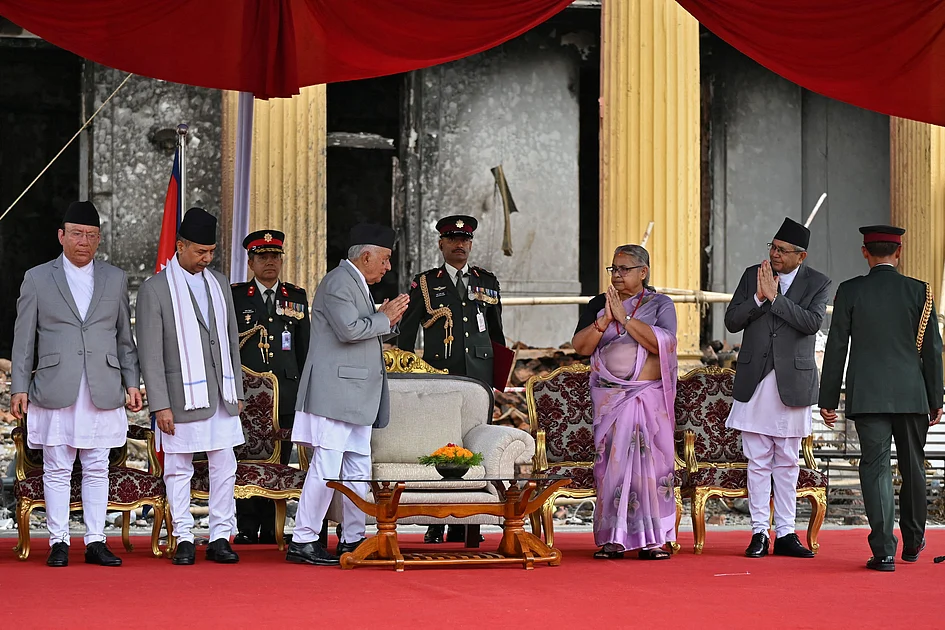
Nepal interim PM adds popular youth figures to cabinet
In a strategic move to address mounting youth discontent, Nepal’s interim Prime Minister Sushila Karki expanded her cabinet on Sunday, October 26, 2025, by appointing two prominent figures known for their appeal among the younger population. The new appointees include Bablu Gupta, 28, as Minister of Youth and Sports, and Sudha Sharma, a physician and author, as Minister of Health and Population. Both individuals actively supported the youth-led protests that erupted in September, which were initially sparked by a temporary social media ban but quickly escalated due to widespread frustration over economic struggles and corruption. The unrest resulted in the collapse of the previous government, leaving at least 73 dead and key government institutions in ruins. Gupta, recognized for his work with the volunteer organization 100’s Group, has been instrumental in supporting marginalized communities through food drives and educational initiatives. Sharma, on the other hand, has gained acclaim for her leadership in maternal and child health policy. Despite these appointments, the cabinet expansion remains incomplete, as negotiations with youth representatives continue, according to a source at the president’s office. Karki, a 73-year-old former chief justice, assumed leadership in the wake of the protests and has committed to restoring stability and ensuring clean governance ahead of the scheduled elections on March 5, 2026. Her administration faces the daunting task of addressing the demands of Nepal’s 30 million citizens while navigating the complexities of a deeply divided political landscape.
-

UAE Royals attend wedding reception of adviser Faisal Al Bannai’s sons
In a grand celebration at Erth Abu Dhabi, UAE President Sheikh Mohamed bin Zayed Al Nahyan, along with other prominent royals and dignitaries, attended the wedding reception of Abdulaziz and Abdulla, sons of Faisal Abdulaziz Al Bannai, Adviser to the UAE President for Strategic Research and Advanced Technology Affairs. The newlyweds married the daughters of Najeeb Ibrahim Al Zarouni and Sameer Meer Abdulaziz Al Khoury, respectively. The event was graced by Sheikh Mohammed bin Rashid Al Maktoum, Vice President and Prime Minister of the UAE and Ruler of Dubai, accompanied by Sheikh Hamdan bin Mohammed bin Rashid Al Maktoum, Crown Prince of Dubai. Other notable attendees included Sheikh Mansour bin Zayed Al Nahyan, Vice President and Chairman of the Presidential Court, and Sheikh Saif bin Zayed Al Nahyan, Deputy Prime Minister and Minister of the Interior. Sheikh Khaled bin Mohamed bin Zayed Al Nahyan, Crown Prince of Abu Dhabi, also joined the festivities. Sheikh Mohamed extended his heartfelt congratulations to the couples and their families, wishing them a prosperous and harmonious life. The families expressed profound gratitude for the royal presence, highlighting the leadership’s deep connection with the Emirati people. The celebration featured traditional Emirati performances, adding cultural richness to the joyous occasion.