博客

  • US still wants to deport Kilmar Abrego Garcia to Liberia, despite new agreement with Costa Rica

    US still wants to deport Kilmar Abrego Garcia to Liberia, despite new agreement with Costa Rica

    A high-stakes legal clash over immigration policy moved back into a Maryland federal courtroom this week, as U.S. government attorneys reaffirmed on Tuesday that the Department of Homeland Security (DHS) remains committed to deporting Salvadoran national Kilmar Abrego Garcia to Liberia — even after a new bilateral agreement with Costa Rica to accept migrants who cannot be safely returned to their home countries.

    Abrego Garcia’s case has emerged as one of the most high-profile flashpoints in the ongoing national U.S. debate over immigration enforcement, rooted in a catastrophic administrative error by federal authorities last year. The 30-year-old, who has lived in Maryland for years, is married to a U.S. citizen and shares a child with her, and entered the country illegally as a teenager. Back in 2019, an immigration judge had already formally ruled that he could not be deported to his native El Salvador, citing documented threats against him and his family from a violent local gang that put his life at risk. Despite this court-ordered protection, immigration officials mistakenly deported him to El Salvador anyway in 2024.

    Facing intense public backlash and a binding court order, the Trump administration ultimately arranged for Abrego Garcia to be returned to the U.S. in June 2024. But before his return, authorities secured a controversial indictment on federal human smuggling charges in Tennessee. Abrego Garcia has pleaded not guilty to all counts and has filed a motion to dismiss the criminal case entirely.

    Since his return to U.S. soil, Abrego Garcia has been locked in a battle to block a second deportation, which DHS officials have proposed to a series of unnamed African nations. He has long argued that if deportation is ultimately required, he should be sent to Costa Rica, which has previously agreed to accept him under existing deportation protocols. However, Todd Lyons, acting director of U.S. Immigration and Customs Enforcement (ICE), pushed back against this proposal in a March internal memo, arguing that transferring Abrego Garcia to Costa Rica would be “prejudicial to the United States.” Lyons noted that the U.S. has already invested significant government resources and political capital in negotiating an agreement with Liberia to accept third-country deportees, making the West African nation the only acceptable destination.

    U.S. District Judge Paula Xinis, who presides over the case, had previously barred ICE from detaining Abrego Garcia or moving forward with his deportation, arguing that federal authorities have never presented a viable, realistic plan to carry out the removal. Back in February, she criticized the agency’s sequence of proposals, dismissing them as “one empty threat after another to remove him to countries in Africa with no real chance of success.”

    During Tuesday’s hearing, Ernesto Molina, director of the Department of Justice’s Office of Immigration Litigation, sparked pushback from the judge when he suggested that Abrego Garcia could simply “remove himself” to Costa Rica to resolve the impasse. Judge Xinis rejected that suggestion outright, calling the idea a “fantasy” — pointing out that Abrego Garcia remains facing active criminal prosecution in Tennessee, and cannot legally leave the jurisdiction while the case is pending.

    Xinis has since set a formal briefing schedule for the legal dispute, with the next hearing in the case scheduled for April 28, as the court continues to sort through conflicting claims over the government’s deportation authority and the legality of its proposed plan.

  • Pakistan makes last-minute bid to avert Trump threat to destroy Iran

    Pakistan makes last-minute bid to avert Trump threat to destroy Iran

    Just hours before a self-imposed deadline for massive military action against Iran, Pakistan tabled a last-minute diplomatic proposal Tuesday aimed at pulling the Middle East back from the brink of catastrophic full-scale war, after more than five weeks of escalating US-Israeli strikes across Iranian territory. The initiative comes after US President Donald Trump issued an unprecedented, chilling warning that a “whole civilization will die tonight” if his demands were not met, leaving the global community reeling from the scale of the threat.

    The White House confirmed it had received the Pakistani proposal and would issue a formal response in due course. Pakistan stepped into the mediator role as regional tensions hit a boiling point, with daily strikes crippling key Iranian infrastructure and violence spilling across neighboring borders. In a post on the social platform X, Pakistani Prime Minister Shehbaz Sharif affirmed that diplomatic efforts to resolve the ongoing conflict were moving forward with tangible momentum, adding that substantive progress could be reached in the near term if both sides agreed to the compromise.

    Under the terms of Pakistan’s proposal, Sharif appealed directly to Trump to extend his 8:00 PM Washington time deadline by 14 days. In exchange, the plan calls for Iran to commit to reopening the Strait of Hormuz for a two-week period – the non-negotiable core demand Trump has laid out since Tehran shut down the critical global oil chokepoint in retaliation for the initial US-Israeli attacks on February 28.

    Trump’s latest threats have drawn widespread international condemnation, with even observers familiar with his history of provocative rhetoric expressing shock at the escalation. Critics have warned that the planned attacks amount to a call for genocide, and could open the door to future war crimes charges for any US service members who carry out the orders. The apocalyptic warning marked a sharp escalation from a profanity-laden post Trump shared on his Truth Social platform two days earlier, on Easter Sunday, where he threatened to destroy every bridge and power plant across Iran, a country home to 90 million people. International law defines deliberate attacks on civilian infrastructure as a war crime unless the sites serve an overwhelming military purpose, a condition the US has not publicly established.

    Pope Leo XIV issued a blunt rebuke of the threat, stating that any attack targeting the entire population of Iran is “truly unacceptable.”

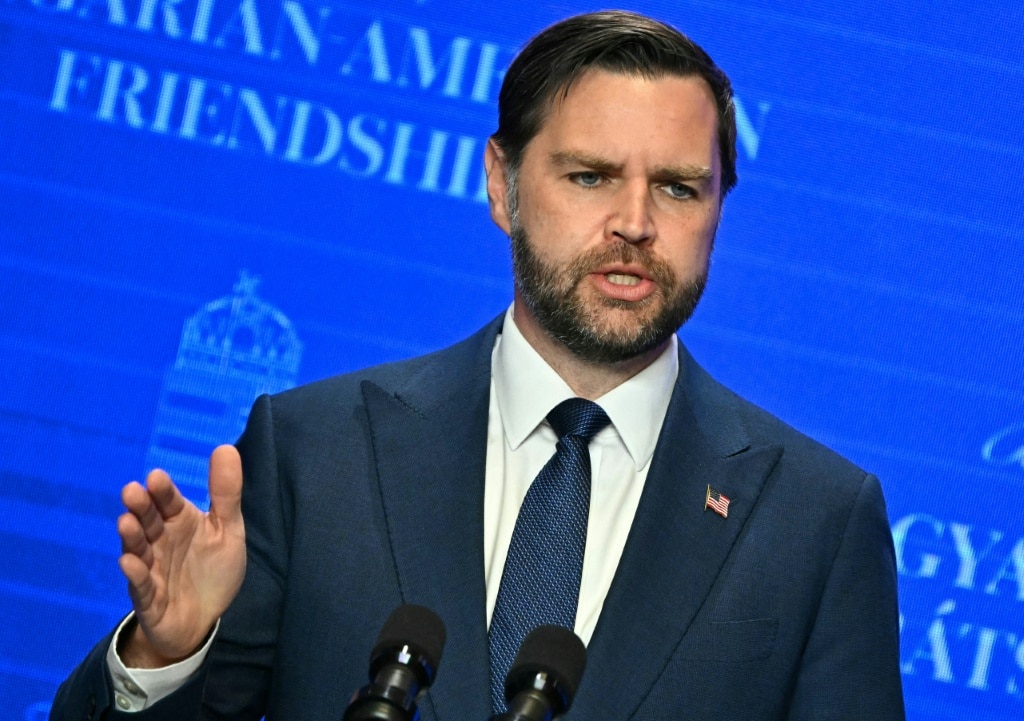
    While Trump prepared for a potential major strike, US Vice President JD Vance fueled speculation about unconventional military action during a speaking appearance in Budapest, noting that the US held military tools “that we so far haven’t decided to use” against Iran. The White House quickly issued a clarification to AFP, denying that Vance’s comments were a reference to nuclear weapons.

    Even ahead of Trump’s deadline, the US and Israel had ramped up daily strikes on Iranian infrastructure. Israeli Prime Minister Benjamin Netanyahu confirmed that recent attacks targeted railways and bridges, which he claimed were being used by Iran’s Islamic Revolutionary Guard Corps. In a rare acknowledgment of error, the Israeli military issued a statement of regret after confirming that an overnight strike damaged the Rafi-Nia Synagogue in central Tehran during an operation targeting a senior Iranian commander. Iran, which is governed by Shia Muslim clerics, is home to a centuries-old Jewish community that maintains roughly 100 active synagogues across the country.

    Iranian senior officials have made clear that the country is prepared for every possible outcome of the current standoff. “No threat is beyond our preparedness and intelligence,” First Vice President Mohammad Reza Aref told state media Tuesday.

    On-the-ground reporting confirms that the strikes have already killed civilians and disrupted critical transport links across Iran. Iranian authorities reported Tuesday that a US-Israeli strike on a bridge near the holy city of Qom and a second attack on a rail bridge in central Iran left two people dead. Regional officials added that a key highway connecting Tabriz in northern Iran to the capital Tehran has been completely shut down by a strike, while the Iranian Mizan news agency reported fresh damage to railway lines in Karaj, a city just outside Tehran. Early Tuesday, multiple explosions were reported across Tehran, and Iranian state media confirmed that 18 people – including two children – were killed in strikes in neighboring Alborz Province. Iran’s Mehr news agency also reported strikes on Kharg Island, the central hub of Iran’s oil export industry, though US media outlets claimed the strikes targeted only military infrastructure on the island.

    As the deadline approached, ordinary Iranians expressed a mix of fear, resignation, and defiance in interviews with AFP. University student Metanat, 27, who lost a classmate to an earlier strike, said “I feel terrified and so should everyone else in the country. Some people dismiss Trump’s ultimatums as a joke, but death is not a joke.” 62-year-old pensioner Morteza Hamidi said he felt “gloomy for the future of the country after the war,” adding that repeated threats from Trump have left many Iranians desensitized: “We are now numb to his threats.”

    In a show of public unity as the deadline neared, Iranian state media published images of thousands of Iranians forming human chains around critical power plants to shield the facilities from potential attack. The display of patriotism comes just months after Iran’s clerical leadership violently cracked down on widespread mass anti-government protests, with international human rights groups documenting over a thousand deaths in the crackdown.

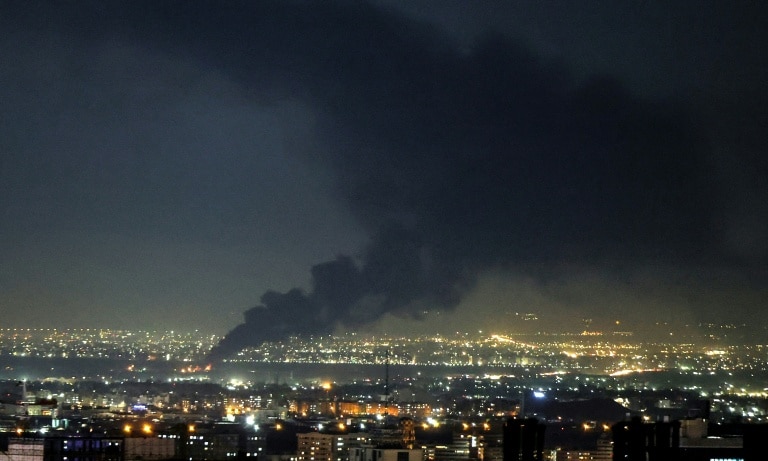
    The conflict has already spilled far beyond Iran’s borders, raising fears of a full regional war. Overnight Tuesday, a strike hit a petrochemical complex in the Saudi industrial city of Jubail, a witness confirmed to AFP, just hours after similar energy infrastructure targets were hit in Iran. Loud explosions were also reported late Tuesday in central Baghdad, just kilometers from the US embassy compound in the heavily fortified Green Zone.

    Iran has responded to the US-Israeli attacks by targeting Gulf Arab states that host US military bases, while Israel has launched a full-scale ground invasion of southern Lebanon, vowing to seize territory controlled by Iranian-backed Hezbollah, which has launched thousands of rockets into Israel since the conflict began. Lebanese authorities report that the Israeli invasion has killed more than 1,500 people to date. On Tuesday, the Israeli military issued a new warning ordering all vessels in the maritime zone off southern Lebanon to move immediately north of the city of Tyre, announcing new military operations would be carried out in the area in the coming hours.

    As regional governments prepared for the worst, Israel warned its citizens of a sharply increased risk of retaliatory Iranian attacks ahead of the deadline. Kuwait urged all of its citizens to remain indoors from midnight GMT until 7 AM Wednesday, while Bahrain’s main commercial port announced it would suspend all operations starting early Wednesday over security concerns.

    The standoff centers on the closure of the Strait of Hormuz, the strategic waterway that carries roughly one-fifth of all globally traded oil. After the initial February 28 attacks, Tehran seized control of the strait to force a response from the international community, a move that has sent global oil prices soaring and put intense domestic political pressure on Trump, who has made reopening the strait his top priority in the conflict. Trump has justified the attacks by claiming Iran is months away from building a nuclear weapon, a claim that has not been corroborated by the United Nations’ nuclear watchdog or independent nuclear analysts.

    At the United Nations Security Council last week, Russia and China vetoed a Western-backed resolution calling for the Strait of Hormuz to be reopened. The draft resolution had already been watered down to remove a provision that would have given Gulf states authorization to use military force to secure the waterway, but Beijing and Moscow still rejected the text.

    US and Israeli officials maintain that all strikes are aimed at degrading Iran’s military capabilities, and that civilian casualties are unintended consequences of the military campaign.
  • Israeli forces beat elderly Palestinian woman to death

    Israeli forces beat elderly Palestinian woman to death

    A 68-year-old Palestinian woman is dead after being violently beaten by Israeli soldiers during an early-morning incursion into her family home in the town of Jayyous, located in the northern sector of the Israeli-occupied West Bank, in an incident that underscores the mounting danger facing Palestinian civilians amid a sharp escalation of Israeli military raids across the territory.

    The incident unfolded around the pre-dawn hours of Tuesday, when Israeli forces stormed the residential property of Sabriya Shamasneh to carry out what they described as a targeted search operation, breaking into the home and interrogating members of the extended family on-site. Sabriya’s husband, Walid Shamasneh, recounted the chaotic moments leading up to the military incursion to local reporters: his daughter-in-law had first raised the alarm after spotting suspicious activity outside, believing intruders or thieves had entered the property after forcing open the front garden gate and generating unidentifiable noises.

    Before the family could react, Israeli soldiers breached the home’s locked front door, sending the entire household into immediate panic. According to Walid’s account, the commanding Israeli officer began demanding he provide identities of people Walid did not recognize, before the entire family was forced into a single corner of the main room while soldiers ransacked the residence’s other bedrooms in their search.

    The confrontation turned fatal when Sabriya tried to shift position and called out to her son Hassan, who she feared was being taken into custody by the raiding party. In response, soldiers violently shoved the elderly woman with the butts of their rifles, throwing her to the hard floor and screaming commands for her to stay silent. Sabriya’s head crashed into a nearby wall during the fall, and she immediately lost consciousness. A panicked Walid shouted for help and begged soldiers to provide medical assistance, but their requests were ignored by the Israeli forces.

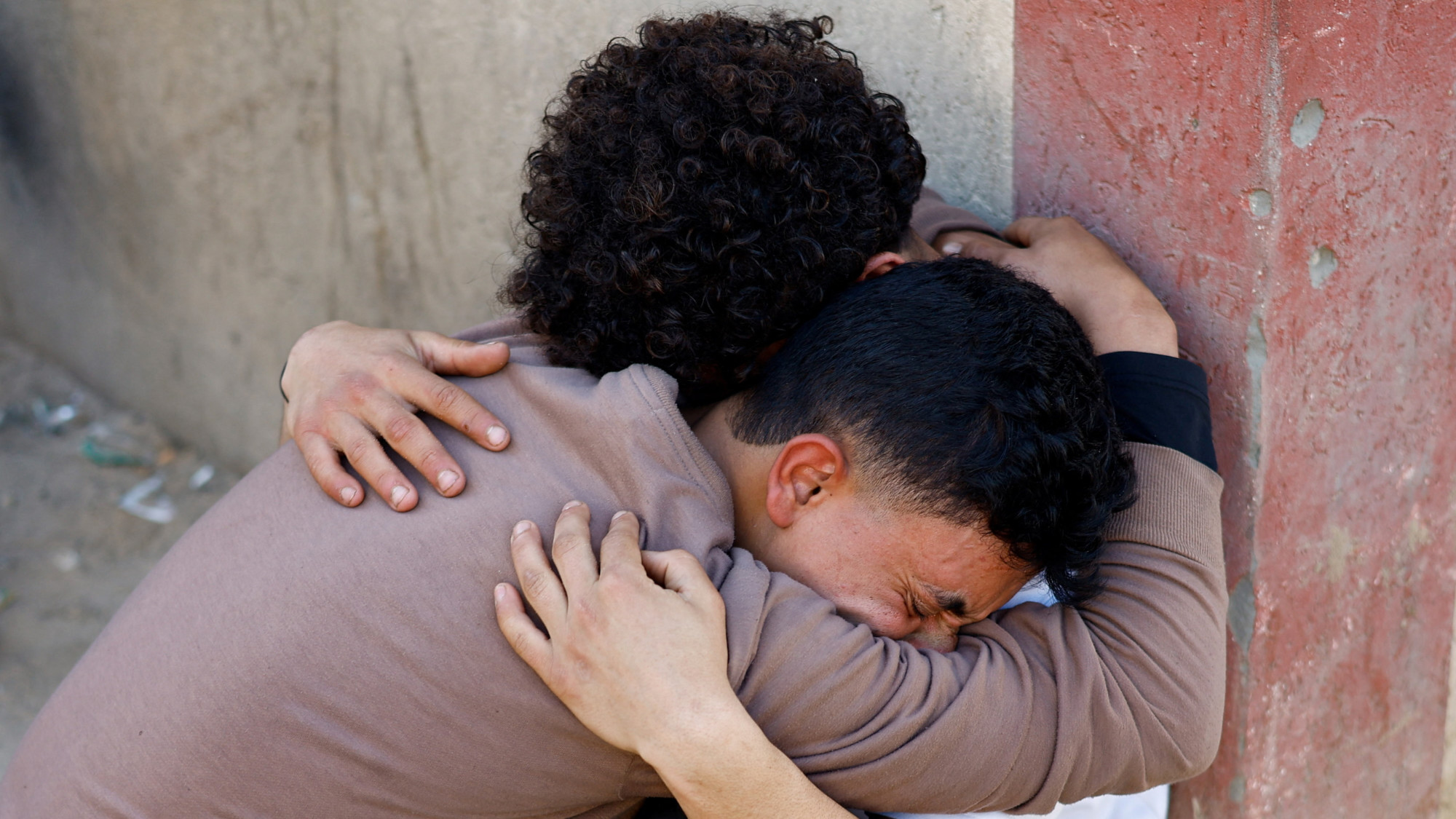
    Once the military operation concluded and soldiers withdrew from the property, Walid and his son rushed Sabriya to the nearby Darwish Nazzal Governmental Hospital in Qalqilya. An ambulance could not reach the scene of the incident due to the heavy deployment of Israeli military vehicles blocking access to the area, forcing the family to transport her on their own. Upon arrival at the medical facility, medical staff pronounced Sabriya dead from the blunt force injuries she sustained during the raid, leaving her relatives and the broader local community reeling from sudden shock.

    The family has delayed Sabriya’s funeral to allow her daughter, who currently resides in Jordan, to travel to the West Bank to pay her final respects before burial. The entire town of Jayyous has joined the Shamasneh family in mourning over the killing.

    The fatal assault on Sabriya was not the only violence recorded during Tuesday’s raid on Jayyous, which sits east of Qalqilya. A young Palestinian man was also attacked by soldiers during the incursion, leaving him with multiple bruises and broken bones.

    Local Palestinian observers and residents have documented a sharp recent escalation in Israeli military incursions into Palestinian towns and villages across the occupied West Bank, alongside marked increases in the level of aggression soldiers display during house searches and raids, including routine physical assaults on civilian residents. These frequent incursions have also been paired with widespread mass arrest campaigns carried out by Israeli forces in Qalqilya and surrounding areas over recent weeks, which have targeted dozens of Palestinian people, including multiple women.

    The day before the fatal Jayyous raid, on Monday, Israeli forces arrested multiple relatives of Palestinians who had previously been killed by Israeli forces in the Qalqilya area, including the mothers of the deceased. The move has been widely condemned as an intentional act of collective intimidation that punishes family members even after their relatives have been killed.

    Just last month, the Israeli military detained 15 women from Qalqilya and its neighboring rural areas, including the wives of imprisoned Palestinians and local political activists. While most of the detained women have since been released, one remains held in Israeli administrative detention, a policy that allows Israeli authorities to hold prisoners indefinitely without formal charges or trial.

    This killing also marks the second death of an elderly Palestinian woman during an Israeli house raid in less than two months. Back in November, 80-year-old Haniya Hanoun died after Israeli soldiers stormed her family home in al-Mazraa al-Gharbiya, a village north of Ramallah, beat her severely in front of her family members, and arrested her grandson during the incursion.

  • Americans react to Trump’s ‘a whole civilisation will die tonight’ warning

    Americans react to Trump’s ‘a whole civilisation will die tonight’ warning

    A dramatic warning issued by former U.S. President Donald Trump — that “a whole civilisation will die tonight” if Iran fails to comply with his demand to reopen the Strait of Hormuz by a self-imposed deadline — has sparked sharp division and widespread debate across the United States. The unprecedentedly dire statement has pulled regional tensions in the Persian Gulf back into the national spotlight, with American citizens from across the political spectrum offering clashing reactions to the president’s aggressive rhetoric.

    The Strait of Hormuz has long been one of the world’s most critical strategic chokepoints for global energy supplies, with roughly a fifth of all globally traded oil passing through its waters on a daily basis. Any disruption to shipping traffic through the strait carries immediate consequences for international energy markets and regional stability, making disputes over access to the waterway a persistent flashpoint in U.S.-Iran relations for decades.

    Trump’s warning, delivered in uncommonly apocalyptic language, has left many Americans alarmed at the prospect of a sudden escalation of conflict between the two nations. Anti-war advocacy groups and opposition political figures have condemned the statement as reckless and irresponsible, arguing that extreme, open-ended threats increase the risk of miscalculation that could spiral into a full-scale military conflict with catastrophic consequences for the Middle East and the global economy. Many ordinary citizens sharing this view have expressed deep anxiety about the potential for another costly foreign war that would drain American resources and put thousands of U.S. military personnel at risk.

    On the other side of the debate, supporters of the president have framed the stark warning as a necessary show of strength against what they characterize as Iranian aggression in the region. They argue that Iran has repeatedly violated international norms by threatening shipping traffic and pursuing nuclear capabilities, and that a firm show of U.S. military and diplomatic pressure is the only way to force Tehran to back down. For these Americans, the warning is a welcome demonstration of strong leadership that protects U.S. national interests and the security of key regional allies.

    As the deadline set by the president approaches, the debate over his rhetoric continues to intensify, with foreign policy experts tracking developments closely to assess the risk of escalation and the prospects for a diplomatic resolution to the standoff.

  • Artemis and ISS astronauts share celestial call

    Artemis and ISS astronauts share celestial call

    In a rare and historic cross-orbit exchange between two groups of humanity’s space explorers, the four astronauts of NASA’s Artemis II mission — currently streaking back to Earth after completing the first crewed lunar flyby in more than half a century — connected live for a lighthearted, reflective conversation with the crew of the International Space Station (ISS) on Tuesday.

    The cross-space call marked a special moment for both teams, coming just one day after the Artemis II crew checked off a string of landmark milestones: breaking the all-time record for the farthest humans have ever traveled from Earth, executing the first close lunar pass by a crewed mission since NASA’s Apollo program in the 1970s, and capturing more than six hours of high-resolution, firsthand observations of the Moon’s cratered surface. For the Artemis team, the chat with ISS colleagues was a long-awaited chance to swap perspectives on life off our home planet.

    “We have been waiting for this like you can’t imagine,” Artemis II commander Reid Wiseman opened the conversation. Canadian astronaut Jeremy Hansen, a first-time space traveler making the journey around the Moon as part of NASA’s international partnership on the Artemis program, added: “It’s fun to be up in space with you at the same time!”

    Leading the question from the ISS side was Crew-12 commander Jessica Meir, who pressed the Artemis crew on how seeing Earth from the Moon’s neighborhood transformed their view of our planet. At roughly 240,000 miles from Earth, the Artemis II crew’s vantage point is around 1,000 times farther out than the ISS’s low-Earth orbit, creating a dramatically different view of the pale blue planet set against the infinite black of deep space.

    “Every astronaut that comes to space remarks on how seeing Earth from orbit changes your perspective,” Meir noted. “We really wanted to hear what that felt like, how different that felt now from your new perspective around the Moon?”

    Artemis astronaut Christina Koch — who previously made history alongside Meir as part of the first all-female spacewalk in ISS history — shared that the contrast between Earth and the surrounding blackness of deep space created an unforgettable impression. “It truly emphasized how alike we are, how the same thing keeps every single person on planet Earth alive,” Koch explained.

    Beyond the big reflective questions, the conversation turned to the shared practical realities of living and working in space. All three American Artemis II crew members are veteran ISS astronauts, and both teams agreed that every lesson they learned on the low-Earth orbit outpost — from large-scale operational procedures to the small, everyday tricks for surviving in microgravity — prepared the Artemis team for this historic lunar voyage.

    “Basically every single thing that we learned on ISS is up here,” Koch said. “And then, of course, there’s the funny and practical, how to eat, how to do silly things with water, how to flip around. We’re bringing that with us too.”

    Wiseman shared a lighthearted anecdote that highlighted Hansen’s first-time experience in space, as the crew prepared to fire their engines to leave Earth orbit and set course for the Moon. As the craft aligned for the burn, the view of Earth grew rapidly larger in the capsule’s window, prompting a moment of playful panic from Hansen.

    “Jeremy turns around to us and goes, ‘I’m not sure. I think we’re going to run right into it!’” Wiseman recalled. “We were all dyin’ laughin’.”

    Following the successful lunar flyby, the Artemis II crew is now on the final leg of their 10-day test mission, which is designed to validate all of the Orion capsule’s critical systems ahead of future crewed lunar landings as part of NASA’s Artemis program. The mission is scheduled to conclude with a splashdown in the Pacific Ocean late Friday.

  • Trump tells Iran: ‘A whole civilization will die tonight’

    Trump tells Iran: ‘A whole civilization will die tonight’

    Tensions in the Middle East reached a fever pitch on Tuesday as former U.S. President Donald Trump issued an unprecedented apocalyptic threat to Iran, warning that the country’s entire civilization could cease to exist by nightfall unless Tehran agrees to a surrender deal to end the ongoing regional conflict. The alarming warning came as the global community held its collective breath, watching closely to see if aggressive rhetoric would translate into full-scale military escalation after Trump had set a deadline for Iran to reopen the strategically vital Strait of Hormuz.

    In a post to his Truth Social platform, Trump doubled down on his increasingly belligerent rhetoric toward the Islamic Republic. “A whole civilization will die tonight, never to be brought back again. I don’t want that to happen, but it probably will,” he wrote. The former president added that Tuesday would stand as one of the most consequential moments in modern world history, leaving global leaders and populations on edge over the prospect of catastrophic regional war.

    Parallel to Trump’s threats, multiple regional reports confirmed that Israeli forces have already launched widespread targeted strikes against Iranian infrastructure, hitting civilian and key transport sites across the country. According to Iran’s semi-official Mehr News Agency, an explosive projectile struck a residential building in the city of Shahriar, leaving at least nine people dead and 15 others injured. A separate Israeli attack targeted the Yahya Abad railway bridge in the central city of Kashan, killing two additional people. These strikes mark a significant expansion of Israeli military action within Iranian territory, deepening an already volatile conflict that began when U.S. and Israeli forces launched a joint assault on Iran in late February.

    Trump’s posture toward Iran has grown increasingly erratic over the past seven days, with the former president swinging wildly between vague hints that a negotiated settlement was within reach and extreme threats of total destruction. Just days prior on Sunday, he released a profanity-laced tirade on Truth Social, calling Iranian leaders “crazy bastards” and demanding they immediately reopen the “fuckin’ strait” of Hormuz or face “hell.”

    The Strait of Hormuz, a narrow waterway that carries roughly 20% of the world’s daily oil supplies and serves as a critical chokepoint for global energy trade, was closed shortly after the U.S.-Israeli assault on Iran began in late February. Its closure has already sent shockwaves through international energy markets, disrupting supply chains and driving up crude prices worldwide. On Tuesday alone, following unconfirmed reports of strikes on Kharg Island—Iran’s primary oil export hub in the Persian Gulf—U.S. West Texas Intermediate crude prices jumped by more than 2%, exacerbating already widespread market volatility.

    In response to the escalating threats, Iran’s Islamic Revolutionary Guard Corps (IRGC) issued a stark warning of its own Tuesday, carried live on Iranian state television. The paramilitary force made clear that any further crossing of Tehran’s “red lines” by Washington would trigger a retaliatory response that extends far beyond the Middle East region. “If the American terrorist army crosses the red lines, our response will go beyond the region,” the statement read. The IRGC added that it would target regional energy infrastructure in order to cut off U.S. and allied access to Middle Eastern oil and gas for years, and noted that Iran’s previous self-imposed limits on retaliation have been lifted, with no more restraint remaining. The warning also extended to regional partners of the United States and Israel.

    Despite the escalating violence, there have been small signs of diplomatic movement in recent days. Tehran announced last Thursday that it is working alongside Oman to draft a peacetime protocol to oversee maritime traffic through the Strait of Hormuz, which would go into effect only after the conflict with the U.S. and Israel comes to an end. Iranian Deputy Foreign Minister Kazem Gharibabadi confirmed the plan to Russian state media, according to Iran’s official IRNA news agency. Last week, an Iranian parliamentary committee also approved measures to impose shipping tolls on all vessels transiting the strait, and implement a full ban on U.S. and Israeli-flagged ships from entering the waterway.

    This report is compiled from independent on-the-ground and open-source reporting on the fast-developing regional crisis.

  • Trump threatens Iran’s ‘whole civilization will die tonight’ as war escalates

    Trump threatens Iran’s ‘whole civilization will die tonight’ as war escalates

    Tensions between the United States, its ally Israel and Iran have surged to a new dangerous peak after former U.S. President Donald Trump issued an unprecedented, extreme threat targeting the entire Iranian civilization. In a public post shared to his social media platform Truth Social on Tuesday morning, Trump warned that “a whole civilization will die tonight, never to be brought back again” – a comment tied to his self-imposed deadline for Iran to reach a new negotiation deal and reopen the strategically critical Strait of Hormuz. He added that while he does not want the catastrophic outcome to unfold, he believes it is likely to occur.

    The incendiary statement comes amid a rapidly deteriorating security landscape that has already pushed the long-running US-Israeli confrontation with Iran to the brink of open large-scale war. The Strait of Hormuz, a narrow waterway that connects the Persian Gulf to the Arabian Sea, is one of the world’s most vital chokepoints for global energy trade, with roughly a fifth of the world’s total oil consumption passing through the corridor daily. Any sustained closure of the strait or a full-scale military conflict in the region would send shockwaves through global energy markets and risk dragging regional and global powers into a broader, destabilizing war. As of the update on April 7, 2026, no immediate official response from Iranian authorities has been reported, and the international community is on high alert for rapid developments that could reshape global security in the coming hours.

  • War in the Middle East: latest developments

    War in the Middle East: latest developments

    In a rapidly escalating conflict that has sent shockwaves across the global community, the Middle East is facing one of its most volatile security crises in recent years, marked by a joint US-Israeli strike on Iran’s capital Tehran that left visible destruction on April 7, 2026. As the conflict approaches a critical turning point following a US ultimatum to Iran, developments are unfolding by the hour, drawing condemnation, warnings, and intervention from world leaders and international bodies.

  • Israeli strikes on Gaza school kill 10 as health crisis deepens under siege

    Israeli strikes on Gaza school kill 10 as health crisis deepens under siege

    Five months after a ceasefire agreement was reached between Israeli forces and Hamas to de-escalate conflict in the Gaza Strip, repeated violations by Israeli military operations have sent civilian casualty numbers soaring and pushed the enclave’s already collapsing healthcare system to the brink of total failure. The most recent deadly incident unfolded Monday, when Israeli fighter jets launched an airstrike on a school in the Gaza Strip, leaving 10 Palestinians dead.

    Local media reports outline the sequence of events that led to the strike: Israeli-backed armed factions first launched a raid on the school, located east of the Maghazi refugee camp in central Gaza, with the stated goal of locating and abducting individuals on their target list. Local residents confronted the raiding groups, triggering intense armed clashes in the immediate area. In line with its longstanding practice of supporting its allied armed groups when they face resistance in Gaza, the Israeli military ordered airstrikes on the clash site, resulting in the 10 civilian fatalities.

    Palestinian health authorities confirmed Tuesday that the 10 deaths marked just a fraction of Israeli-inflicted casualties over the preceding 24-hour period, with an additional 144 Palestinians injured in separate operations across the enclave. This violence followed a deadly incident just one day prior, when seven Palestinians were killed including a United Nations contractor who worked as a driver for a World Health Organization (WHO) aid convoy that was targeted in an Israeli strike.

    WHO Director-General Tedros Adhanom Ghebreyesus released a statement expressing that he was “devastated” by the killing of the contractor, noting that an official investigation into the attack is currently underway. In the wake of this fatal incident targeting UN and WHO personnel, the United Nations has suspended its coordination of patient transfers from Gaza to Egyptian medical facilities through the Rafah border crossing. This suspension has drastically worsened the plight of an estimated 15,000 critically wounded and ill Gazans who are waiting for urgent medical care that is unavailable inside the blockaded enclave.

    Data from Palestinian officials shows that ceasefire violations have become routine for Israeli forces over the past five months. Since the ceasefire was signed, Israeli operations have killed at least 733 Palestinians, 223 of whom are children. Since the full-scale conflict began in October 2023, more than 72,300 Palestinians have been killed by Israeli forces, and more than 170,000 have sustained injuries, according to official Palestinian counts.

    Even with the ceasefire in place, Israeli military authorities continue to enforce near-total restrictions on the entry of humanitarian aid and essential goods into Gaza. In addition to blocking aid, Israeli officials also restrict the number of sick and wounded Gazans who are allowed to travel to Egypt for life-saving medical treatment.

    The Palestinian Ministry of Health has issued a stark warning that the ongoing Israeli restrictions on medical aid and patient evacuations have pushed Gaza’s medical crisis to a catastrophic tipping point. Shortages of critical supplies have reached unprecedented critical levels: only 50% of all essential medications are currently available to care providers, and more than 70% of all laboratory testing supplies have been completely depleted.

    Oncology services, which serve 4,100 Gazan cancer patients, are among the hardest hit, with a 61% shortage of specialized life-saving cancer drugs. Core medical services including primary care, neurology, nephrology, surgery, and intensive care all face essential drug shortages exceeding 40%. Critical cardiac procedures including open-heart surgeries and cardiac catheterisations have been completely halted due to a total lack of necessary resources. Additionally, 89% of all ophthalmic surgical supplies are no longer available, cutting off care for thousands of patients at risk of blindness. Overall hospital bed capacity across the Gaza Strip has fallen by more than 55%, even as the number of injured and ill patients continues to climb steadily with each new Israeli military incursion and strike.

  • Airport parrot ‘back home with pal’ after search

    Airport parrot ‘back home with pal’ after search

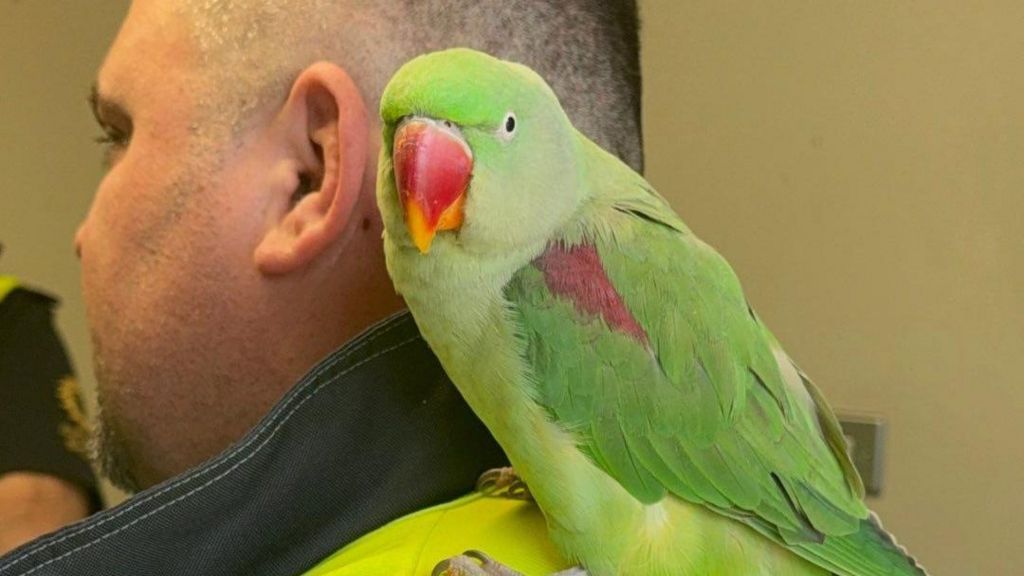
    Dublin Airport has wrapped up a heartwarming, unlikely tale of an unexpected visitor, after a lost Alexandrine parakeet was successfully returned to her owner following days of care from airport staff and a widespread public search.

    The young female parakeet was first spotted perched on a rubbish bin near Terminal 1 by airport police on Easter Sunday. After taking the wayward bird into custody, the airport police team — including members of the K9 unit — stepped up to care for her while looking for clues about her owner. The team built a temporary cozy enclosure for her, and kept her well-fed with fresh fruit and water, while adding toys to keep her entertained during her unexpected stay. Staff even gave her a temporary nickname: Troy, a playful nod to Republic of Ireland star striker Troy Parrott, an inside joke the airport has leaned into after considering renaming the airport after the player following his iconic hat-trick against Hungary.

    Over the following days, airport staff shared details of the lost parrot on social media to help connect her to her owner, who had apparently lost track of her before she turned up at the busy aviation hub. The clues they shared quickly helped narrow the search: the nearly two-year-old bird, it turned out, responds to the name Lola, and carried a visible identification tag with a registration number. Her favorite snacks are watermelon and strawberries, and she is not shy about demanding attention when she feels ignored. Lola even took the airport’s nickname in stride, with staff joking that she was happy to keep “Troy” as her official middle name.

    By Tuesday, the airport confirmed the happy outcome: Lola had been matched to her owner Gheorghe, and was on her way home. In a playful social media post, the airport announced the parrot was “back home with her pal,” adding that staff joked Lola seemed thrilled her unpaid “shift” at the airport was finally over. During her stay, Lola even formed close bonds with the airport’s social media team, who documented her stay for followers online.

    This is far from the first time an unplanned avian visitor has turned up at Dublin Airport. In 2019, an African grey parrot named Hugo was found taxiing on the main runway by a firefighter conducting a routine safety check, and was later reunited with her owner. As recently as August 2025, another talkative parrot who had not booked a ticket turned up at the airport as a surprise visitor, adding to the hub’s growing collection of unexpected feathered guest stories.