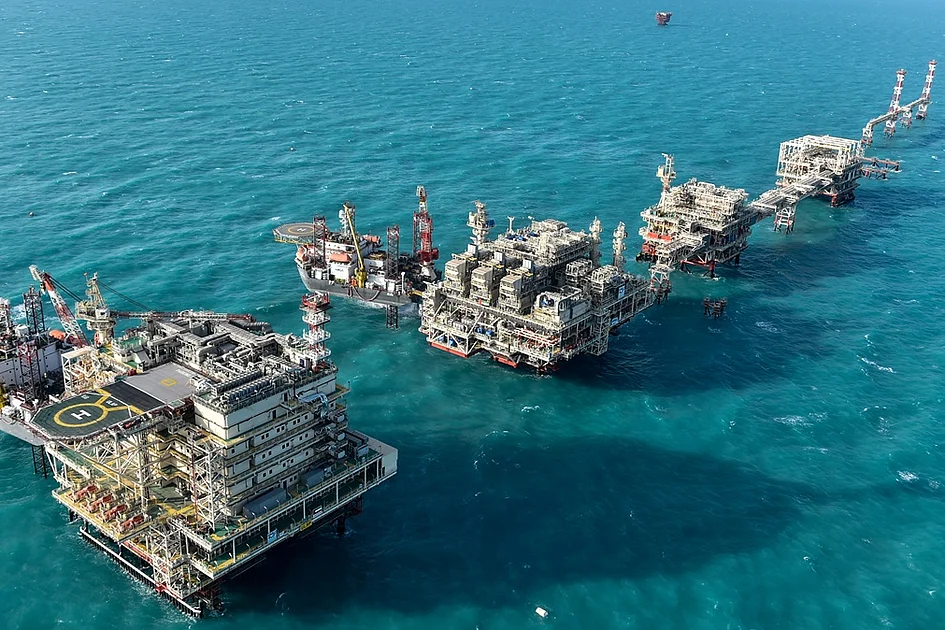
NMDC Energy has announced a remarkable 33% year-on-year increase in revenue for the first nine months of the year, reaching Dh13 billion. This growth is attributed to the company’s robust backlog execution and its expanding footprint in both regional and international energy markets. Net profit also saw a 5% rise, amounting to Dh951 million, reflecting the company’s operational efficiency and consistent project delivery. The company’s backlog at the end of September stood at Dh45.6 billion, bolstered by significant contract wins and project mobilizations across onshore and offshore sectors. NMDC Energy’s project pipeline expanded to Dh61.4 billion, showcasing its diversified growth strategy and market reach. Chairman Mohamed Hamad Almehairi emphasized the company’s focus on scaling capacity in key global energy markets, which has enhanced its long-term growth prospects. CEO Eng. Ahmed Salem Al Dhaheri highlighted the company’s operational agility and efficient backlog delivery, solidifying its position as a leading EPC contractor in the Middle East. A notable achievement during this period was the launch of fabrication work at NMDC Energy’s new 400,000 square meter yard in Ras Al Khair, Saudi Arabia. This state-of-the-art facility, equipped with advanced automation and digital systems, boasts an annual production capacity of 40,000 tonnes and will support complex offshore and onshore energy projects. The company secured major contracts, including a Dh9.7 billion offshore EPC contract in the UAE and a Dh4.2 billion project in Taiwan, with international operations contributing 31% to its revenue. NMDC Energy also strengthened its sustainability profile, earning an MSCI ESG Rating of “A” for its adherence to global environmental, social, and governance standards. Additionally, the company signed strategic memoranda of understanding with UAE-based Al Gharbia and China’s Hilong Shine New Materials to explore domestic pipe production and advanced coating technologies, respectively.
博客
-
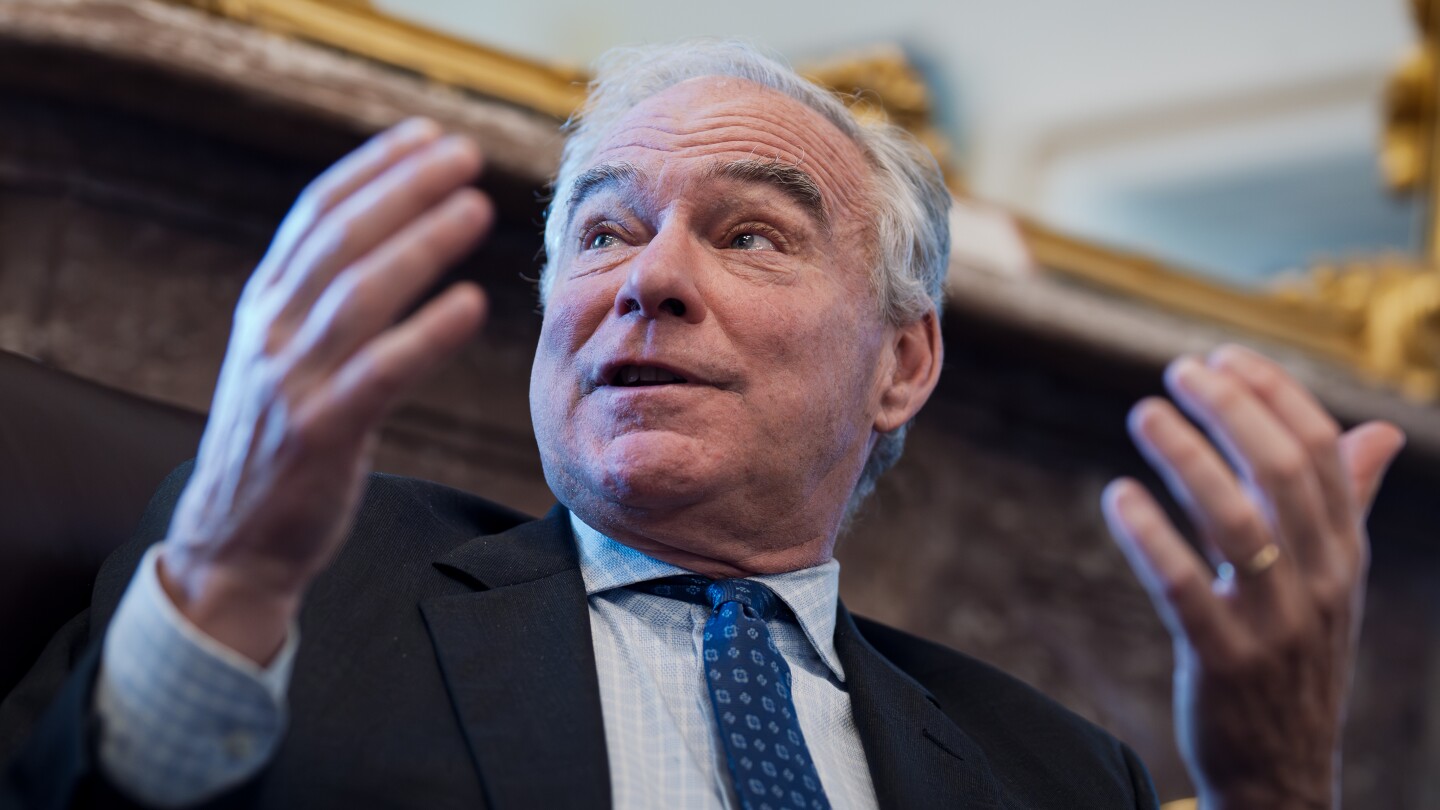
Democrats force a Senate vote to block Trump’s tariffs on Brazil
The U.S. Senate convened on Tuesday evening to vote on legislation aimed at nullifying President Donald Trump’s tariffs on Brazil, targeting key imports such as oil, coffee, and orange juice. The resolution, introduced by Democratic Senator Tim Kaine of Virginia, seeks to terminate the national emergencies declared by Trump to justify these tariffs. Kaine also plans to introduce similar resolutions addressing tariffs on Canada and other nations later this week. Despite the effort, the legislation faces significant hurdles. The Republican-controlled House has implemented rules that could block the resolution from reaching a vote, and Trump is expected to veto it if it passes Congress. Nevertheless, Kaine emphasized that the vote serves as a symbolic pushback against Trump’s trade policies, forcing a Senate discussion on the economic repercussions of tariffs. ‘This is about how much we will let a president get away with,’ Kaine stated, questioning whether his colleagues would challenge Trump’s authority. Trump imposed 50% tariffs on Brazil, citing the country’s policies and the criminal prosecution of former President Jair Bolsonaro. Last year, the U.S. recorded a $6.8 billion trade surplus with Brazil, according to the Census Bureau. Senate Democratic leader Chuck Schumer criticized the tariffs, stating that everyday Americans are paying the price for Trump’s ‘reckless’ trade policies. Republicans, too, have expressed growing discomfort with Trump’s aggressive trade stance, particularly amid economic uncertainty. The Congressional Budget Office recently warned that Trump’s tariff policies could exacerbate joblessness, inflation, and slow economic growth. In April, four Republicans joined Democrats to block tariffs on Canada, though the bill never advanced in the House. Kaine invoked a decades-old law to force the vote, allowing Congress to challenge a president’s emergency powers. Vice President JD Vance urged Republicans to support Trump’s trade negotiations, arguing that tariffs provide leverage for American workers and farmers. Meanwhile, the Supreme Court is set to review a case challenging Trump’s tariff authority, with lower courts already deeming many of his tariffs illegal. Some Republicans, like Senator Kevin Cramer, are awaiting the court’s decision before taking a stance. Others, including Senator Mitch McConnell and Senator Rand Paul, have openly criticized Trump’s use of emergency powers to justify tariffs, calling it an abuse of authority. Kaine also plans to introduce a resolution limiting Trump’s ability to conduct military strikes in Venezuela, aiming to pressure Republicans on contentious issues.
-

Quetta Qavalry to take on Northern Warriors in Abu Dhabi T10 opener
The much-anticipated 2025 Abu Dhabi T10 cricket tournament is scheduled to kick off on November 18, 2025, and will conclude on November 30, 2025. This high-octane event promises to deliver nearly two weeks of exhilarating cricket action, featuring some of the sport’s most renowned players. The opening match will see Quetta Qavalry face off against Northern Warriors, setting the stage for an exciting season. Defending champions Deccan Gladiators will also make their debut in a thrilling encounter against Delhi Bulls. The tournament will adopt a Round-Robin format, with the top four teams from the initial stage advancing to the playoffs. The playoff stage begins on November 29, 2025, with Qualifier 1, where the top two teams from the league stage will compete for a direct spot in the final. The losing team will get another chance in Qualifier 2. On the same day, the third and fourth-placed teams will battle it out in the Eliminator, with the winner moving on to Qualifier 2 and the loser being eliminated. Qualifier 2, scheduled for November 30, 2025, will determine the second finalist, who will join the winner of Qualifier 1 in the championship match. The tournament will culminate with the final and a grand closing ceremony, celebrating the champions and the thrilling cricketing spectacle. Fans can access the full schedule on the tournament’s official website.
-

Apple suppliers Skyworks, Qorvo agree to create $22 billion radio-chip giant
In a landmark deal announced on Tuesday, Skyworks Solutions and Qorvo have agreed to merge, creating a $22 billion combined entity that will dominate the radio-frequency (RF) chip market. The merger, structured as a stock-and-cash transaction, aims to capitalize on the resurgence in smartphone demand following the post-pandemic downturn. Qorvo shareholders will receive $32.50 in cash and 0.960 Skyworks shares for each share held, valuing the deal at a 14.3% premium to Qorvo’s closing price on Monday. Shares of both companies surged approximately 12% in pre-market trading. Skyworks CEO Phil Brace will lead the merged company, while Qorvo’s CEO Bob Bruggeworth will join the board. The combined firm will hold a significant position in supplying RF chips to Apple and other smartphone manufacturers, though Apple’s ongoing development of in-house chips could pose long-term challenges. The merger is expected to face rigorous antitrust scrutiny, with the deal projected to close by early 2027. Skyworks investors will own about 63% of the new entity, with Qorvo shareholders holding the remaining 37%. The merger follows months of discussions and comes amid activist investor Starboard Value’s push to enhance Qorvo’s share price.
-
India signs aircraft deal with sanctioned Russian firm
In a significant development for India’s aviation sector, state-owned Hindustan Aeronautics Limited (HAL) has entered into a groundbreaking agreement with Russia’s United Aircraft Corporation (UAC), a firm currently under US and European sanctions. The deal, signed in Moscow, marks the first time India will manufacture complete civil passenger aircraft domestically. The collaboration will focus on producing the SJ-100, a twin-engine, narrow-body plane designed for short-haul connectivity, primarily catering to the Indian market. Defence Minister Rajnath Singh lauded the deal as a ‘landmark step’ for India’s civil aviation industry, emphasizing its potential to create jobs and enhance self-reliance. However, the agreement has drawn criticism from Western allies, particularly the United States, which has previously urged India to align with sanctions against Russia following its invasion of Ukraine. India has consistently maintained its stance against unilateral sanctions, asserting its right to pursue independent foreign and trade policies. The deal underscores India’s continued strategic and economic ties with Russia, despite increasing scrutiny over its energy imports and defense collaborations. This move also comes amid heightened trade tensions, with the US recently imposing tariffs on Indian exports, accusing India of indirectly supporting Russia’s war efforts. While US President Donald Trump claimed Indian Prime Minister Narendra Modi agreed to reduce Russian oil imports as part of a potential trade deal, no official confirmation has been provided by the Indian government.
-

Amazon to cut 30,000 office jobs amid AI investments, media reports say
Amazon, the global e-commerce and technology giant, is set to reduce its workforce by 30,000 office jobs as part of a cost-cutting strategy while ramping up investments in artificial intelligence (AI). The layoffs, which represent nearly 10% of Amazon’s approximately 350,000 office employees, are expected to commence this week, according to multiple U.S. media reports. Notably, the cuts will not impact the company’s distribution and warehouse workforce, which constitutes the majority of its 1.5 million employees. Amazon has not officially commented on the reports, which were initially published by outlets such as The Wall Street Journal and The New York Times, citing anonymous sources. Despite the news, Amazon’s shares saw a slight increase at the close of the trading day. CEO Andy Jassy has consistently emphasized the transformative potential of AI in enhancing workplace efficiency, from customer interactions to operational streamlining. During Amazon’s recent quarterly earnings call, Jassy highlighted the growing impact of AI on customer experiences. The company is under pressure to demonstrate the value of its substantial AI investments, particularly within its Amazon Web Services (AWS) cloud computing division. Analysts, including Emarketer’s Sky Canaves, have noted that AWS must show both revenue growth and improved operating margins to justify its AI expenditures. Additionally, Amazon faces scrutiny following a recent AWS outage that disrupted numerous internet services globally, including streaming platforms, messaging apps, and banking services. The outage, attributed to an issue with the Domain Name System (DNS), underscored the widespread reliance on AWS’s infrastructure. AWS remains the leader in the cloud computing market, closely followed by Microsoft Azure and Google Cloud.
-

iCAUR hosts Global User Summit in Wuhu, China
From October 17 to 21, 2025, iCAUR hosted its annual Global User Summit in Wuhu, China, under the theme ‘Co-create, Co-define.’ The event attracted over a thousand attendees, including media representatives, users, and distributors from across the globe. The summit featured product showcases, off-road driving sessions, and ESG-focused activities, highlighting iCAUR’s commitment to innovation and sustainability. The exhibition area, designed with wood textures and soft tones, created a luxurious yet natural ambiance, allowing guests to explore the brand’s customization ecosystem and witness the fusion of innovation and personal expression. Attendees shared their experiences through livestreams, videos, and photos, capturing the essence of iCAUR’s craftsmanship and creativity. The Tech Interaction Zone showcased AiMOGA humanoid robots and robot dogs in a synchronized dance performance, drawing widespread admiration. A guest from the UAE remarked, ‘They’re incredible — we really need this too!’ emphasizing the potential of such innovations in enhancing global user experiences. The off-road driving sessions tested iCAUR’s vehicles on challenging terrains, including high-speed curves, slopes, wave tracks, and muddy trails. Despite light rain, models like the V27, V23, and 03T, equipped with Golden Range Extender technology and the i-AWD system, demonstrated exceptional performance. On the Crescent Track, the advanced suspension and damping systems ensured smooth handling, earning praise from participants. A Middle Eastern guest noted, ‘Driving the V27 through rough terrain — it’s hard to believe this is a boxy SUV. The comfort really surprised me.’ Former UN Secretary-General Ban Ki-moon visited the exhibition and personally experienced iCAUR’s vehicles, describing the brand as ‘very unique’ and expressing strong interest in the latest models. The summit also marked a significant milestone in iCAUR’s global expansion, with CEO Si Fenghuo signing distributor agreements with partners from Malaysia, the UAE, and Oman. In Oman, iCAUR will collaborate with SBG, the country’s leading automotive group, to accelerate its strategic growth across the Middle East.
-

Deboard plane, get on flying taxis? DXB passengers to reach hotels, malls in minutes
Dubai is poised to revolutionize urban transportation with the introduction of flying taxis, as the city’s first vertiport, Dubai International Vertiport (DXV), remains on track to become operational by the first quarter of 2026. Located near Dubai International Airport (DXB), DXV will serve as a hub for electric vertical take-off and landing (eVTOL) vehicles, offering passengers a seamless transition from air travel to their final destinations. Anthony El-Khoury, UAE General Manager of Joby Aviation, highlighted the potential of integrating existing helipads at hotels, malls, and hospitals into the air taxi network, significantly reducing travel times. For instance, a trip from DXB to Madinat Jumeirah or Burj Al Arab could take just eight minutes, compared to the usual 45-minute car journey. The UAE’s General Civil Aviation Authority (GCAA) has already established a regulatory framework to enable the dual use of helipads for both helicopters and flying taxis, ensuring efficient infrastructure utilization. Joby Aviation, in collaboration with Skyports and Dubai’s Roads and Transport Authority (RTA), is developing three additional vertiport sites to expand the air taxi network. While the construction of vertiports requires substantial investment, leveraging existing helipads with minimal modifications—such as reinforcing infrastructure, adding safety features, and installing charging stations—offers a cost-effective solution. Safety remains a top priority, with each flying taxi equipped with redundant systems to prevent failures, including multiple propellers, engines, inverters, and battery packs. Test flights are currently underway at Joby’s facility in Margham, with professional pilots certified to operate eVTOLs. Paul Griffiths, CEO of DXB, expressed optimism about the transformative potential of flying taxis, which could alleviate road congestion and redefine urban mobility. Although commercial certification from the GCAA is still pending, El-Khoury assured that flying taxis will become a reality in Dubai by next year.
-

Why are Israeli settlers destroying the Palestinian olive harvest?
The olive harvest in the occupied West Bank, a centuries-old tradition and economic cornerstone for Palestinians, has been marred by escalating violence from Israeli settlers and military forces. According to the UN Rights Office, 757 assaults by settlers were recorded in the first half of 2025, resulting in injuries, property damage, and the destruction of olive groves. These attacks have drawn global condemnation and criticism from UN human rights officials. In Gaza, once a thriving hub for olive cultivation, nearly all agricultural land has been devastated by Israel’s two-year military campaign, which has claimed over 68,000 Palestinian lives. The olive tree, deeply rooted in Palestinian culture and history, symbolizes resilience and peace. However, its survival is under threat as settler violence intensifies, often with the complicity of Israeli security forces. The destruction of olive groves, uprooting of trees, and restrictions on access to farmland have severely impacted the livelihoods of 100,000 families in the West Bank, many of whom rely on olive cultivation for income. In Gaza, the olive industry has been decimated, with 98.5% of agricultural land damaged or inaccessible, according to the UN Food and Agriculture Organization. The ongoing assault on Palestinian agriculture is part of a broader strategy to displace communities and annex land, exacerbating humanitarian crises and threatening the cultural and economic fabric of Palestinian society.
-

China revises Cybersecurity Law to bolster AI development
In a significant move to bolster artificial intelligence (AI) development and governance, China’s Standing Committee of the National People’s Congress (NPC) has passed revisions to the Cybersecurity Law. The amendments, approved on October 28, 2025, during the 18th session of the 14th NPC Standing Committee, will take effect on January 1, 2026. The revised law emphasizes national support for foundational AI research, algorithm development, and the construction of critical infrastructure such as training data resources and computing power. A newly added provision underscores the importance of advancing AI ethics, enhancing risk monitoring, and ensuring safety oversight to promote the responsible application and growth of AI technologies. Additionally, the amendments encourage innovative cybersecurity management practices, including the integration of AI and other emerging technologies to elevate protection standards. The revisions also refine legal liabilities for activities that compromise network security, increase penalties for violations, and expand extraterritorial application where necessary. Furthermore, the updated law enhances coordination with the Data Security Law and the Personal Information Protection Law to ensure precision, effectiveness, and consistency in legal frameworks. Since its initial enactment in 2016, the Cybersecurity Law has played a pivotal role in curbing harmful cyber activities and fostering a safer digital environment. However, persistent challenges such as network intrusions, cyberattacks, and the spread of illegal content highlight the ongoing complexities of maintaining cybersecurity. The latest amendments aim to address these issues while aligning with China’s broader strategic goals in AI and digital governance.