
China’s National Healthcare Security Administration has announced the results of the 11th nationwide centralized drug procurement round, selecting 55 medicines that are expected to be available at reduced prices starting February 2026. The bidding process, held in Shanghai on October 27, included a wide range of therapeutic areas such as infections, allergies, cancers, and chronic conditions like diabetes and high blood pressure. Among the selected drugs are the flu medication oseltamivir, the diabetes drug metformin, and the cancer treatment olaparib. This round saw participation from 794 products across 445 enterprises, with 453 products from 272 companies ultimately chosen. Approximately 46,000 medical institutions had pre-submitted their procurement demands, with 75% of these volumes successfully matched with winning products. The administration emphasized that the selected brands align closely with clinical needs and are produced by established manufacturers with proven supply capabilities and quality assurance. To reinforce quality control, bidding manufacturers were required to demonstrate prior experience in producing the same category of drugs and have a clean manufacturing record over the past two years. Regulatory authorities will conduct comprehensive supervision and inspections of all selected products. The competition in this round was notably more intense compared to previous rounds, prompting the administration to introduce measures to mitigate excessive competition and avoid extremely low bids. These measures included an anchor price reference, a revival mechanism, and proactive communication with companies to encourage reasonable pricing. As a result, the round maintained a relatively high selection rate, with a substantially smaller average price gap among winning drugs compared to earlier batches. The administration also emphasized efforts to prevent bid-rigging and collusion, promoting a fair and competitive market environment. Since its inception in 2018, the centralized procurement program has included a cumulative total of 490 drug varieties through 11 rounds.
博客
-

Lebanese president calls for diplomacy with Israel amid border tensions
Lebanese President Joseph Aoun has called for diplomatic engagement with Israel amid escalating border tensions, emphasizing that negotiation is the only viable path forward. Speaking at Baabda Palace during a meeting with officials on Monday, Aoun underscored the importance of diplomacy over war, stating, “In politics, there are three tools: diplomacy, economy, and war. When war leads nowhere, what else can we do? Every war in the world eventually ends with negotiations, and negotiation is never with a friend or ally, but with an enemy.” He highlighted the destructive nature of war, praising the diplomatic efforts of Lebanon’s leadership, including Parliament Speaker Nabih Berri and Prime Minister Nawaf Salam. Aoun also stressed the need for national unity, urging politicians to prioritize Lebanon’s interests over sectarian divisions and electoral ambitions. The call for diplomacy comes after a deadly raid on the border village of Blida in late October, which prompted Aoun to order the Lebanese army to respond to any Israeli incursions. While a US- and French-brokered ceasefire has been in place since late November 2024, Israel has continued occasional strikes in Lebanon, claiming to target Hezbollah threats. These actions have been condemned by Lebanon and international organizations as violations of the truce.
-
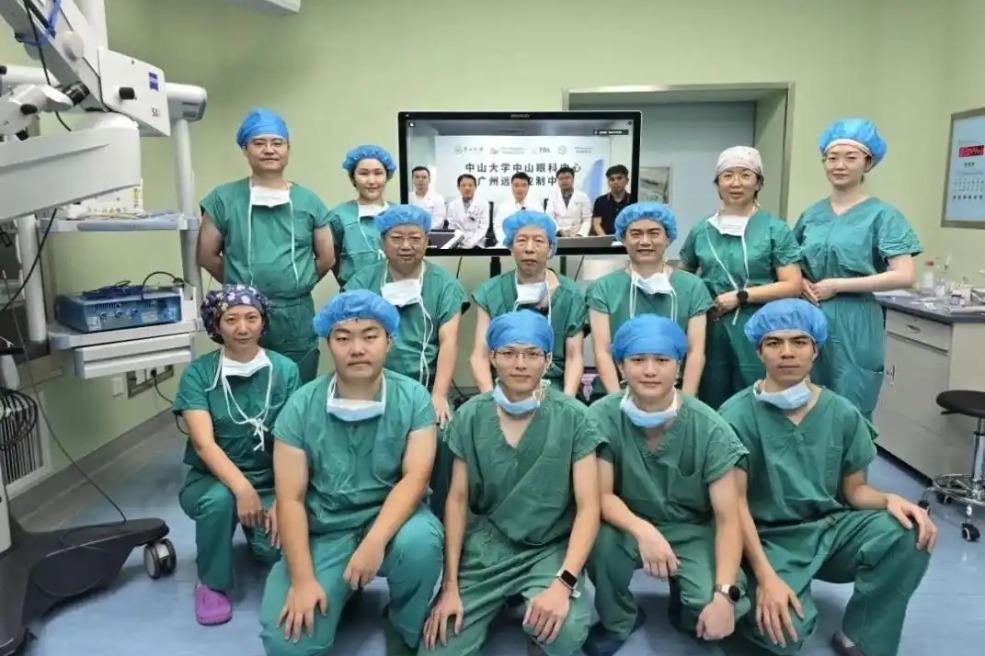
Hospital pioneers remote robotic surgery
In a groundbreaking medical achievement, Xiamen Cardiovascular Hospital in Fujian Province, China, has successfully conducted the world’s first cross-border remote robot-assisted heart surgery. This historic procedure, performed on October 23, 2025, involved collaboration between Chinese and French medical experts. The surgery was led by Wang Yan, president of Xiamen Cardiovascular Hospital, and Lionel Leroux, a professor of cardiovascular disease from Bordeaux University Hospital in France. Using a robotic system developed jointly by the Xiamen hospital and a Shanghai-based robotics company, the team remotely performed a transcatheter mitral valve repair on a 73-year-old patient in Xiamen, with no local surgeons physically present. The hour-long operation was executed with submillimeter precision and stable communication, monitored in real-time by the Xiamen hospital’s cardiac intervention, anesthesia, ultrasound, and nursing teams. The patient recovered well and was discharged shortly after the successful procedure. This milestone demonstrates the practicality and safety of remote precision control in robotic interventional therapy, marking a significant advancement in global medical technology. Wang Yan emphasized that this achievement highlights China’s capability to export its cardiovascular robotic systems for complex surgeries worldwide. French experts, including Thomas Modine, praised the technology as a major step forward in democratizing advanced medical skills globally. The success of this surgery is expected to pave the way for broader adoption of remote robotic techniques in clinical settings across the United States, Europe, and Southeast Asia.
-
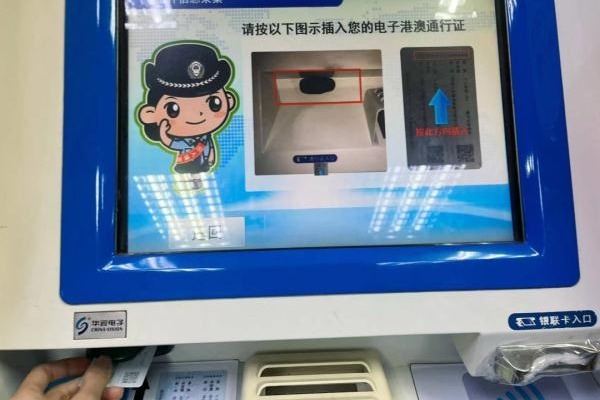
Mainland talent get easier access to SARs
In a significant move to bolster cross-border collaboration and talent mobility, China’s National Immigration Administration has unveiled a series of streamlined measures aimed at facilitating easier access for mainland professionals to Hong Kong and Macao. Effective from November 6, 2025, eligible individuals—spanning high-level talent, researchers, educators, healthcare professionals, and legal experts—can now apply for multiple-entry permits valid for up to five years, allowing stays of up to 30 days per visit. These permits are contingent on official talent certification, ensuring a merit-based approach.
The policy, initially piloted in Beijing, Shanghai, and the Guangdong-Hong Kong-Macao Greater Bay Area, will now extend to the Yangtze River Delta, the Beijing-Tianjin-Hebei region, and all national pilot free trade zones. Additionally, professionals working in the Shenzhen Park of the Hetao Shenzhen-Hong Kong Science and Technology Innovation Cooperation Zone will benefit from expedited three-year multiple-entry permits, bypassing the need for additional talent credentials.
High-tech and advanced manufacturing firms will receive preferential quotas for these permits, while emerging startups within the zone will be exempt from first-year tax revenue requirements when applying for business travel permits. To further enhance efficiency, dedicated lanes and streamlined arrangements will be established at key ports, including Huanggang and Futian, to provide fast-track clearance for frequent travelers. A green channel will also expedite customs clearance for vehicles transporting research supplies.
In a parallel development, facial recognition technology will be expanded to major land crossings in Shenzhen and Zhuhai, including Huanggang, Luohu, and the Hong Kong-Zhuhai-Macao Bridge port. Eligible travelers aged 14 and above, including mainland residents with valid multi-entry endorsements and Hong Kong and Macao residents with mainland travel permits, can utilize these channels, provided they consent to facial and fingerprint data verification.
Starting November 20, mainland residents on family visit visas in Hong Kong or Macao can apply to extend their stay directly within the SARs, provided applications are submitted at least seven working days before the current stay period expires.
Jesse Shang Hailong, founder of the Hong Kong Top Talent Services Association, anticipates that these measures will attract tens of thousands of mainland professionals to Hong Kong, leveraging its unique position as an international connectivity hub. The policy is expected to significantly enhance researcher mobility and cross-border collaboration, particularly as the Hong Kong park of the Hetao zone prepares for its official opening by year-end.
-

Britain’s Treasury chief prepares the ground for a tax-hiking budget
In a significant pre-budget announcement, UK Treasury Chief Rachel Reeves has indicated that tax increases are likely in the forthcoming budget, scheduled for November 26. Reeves, in an unusual move, addressed the public and financial markets three weeks ahead of the budget, preparing them for potential hikes in income and sales taxes. This decision marks a departure from her earlier election pledge to avoid such increases. Reeves emphasized the necessity of collective contribution to secure the nation’s future, hinting at broad tax adjustments. She attributed the need for these measures to several factors, including the UK’s substantial £2.6 trillion national debt, lower-than-expected productivity, and global economic challenges such as U.S. President Donald Trump’s tariffs, volatile supply chains, and rising government borrowing costs. Reeves also pointed to the economic mismanagement by the previous Conservative government, which has left the UK particularly vulnerable. Despite these challenges, Reeves aims to deliver a budget focused on growth, fairness, and strengthening public services, while reducing national debt and controlling inflation. However, her approach has faced criticism for being overly pessimistic and for increasing business taxes in the previous budget. Additionally, Reeves has been under scrutiny for allegedly renting out her London house without a proper license, a mistake for which she has apologized.
-

20 killed, over 640 injured in Afghanistan earthquake
A catastrophic magnitude 6.3 earthquake struck northern Afghanistan in the early hours of Monday, November 3, 2025, resulting in significant loss of life and widespread injuries. According to Qari Taj Mohammad Hemat, deputy spokesman for Afghanistan’s National Disaster Management Authority, the disaster claimed at least 20 lives and left 643 people injured, with 25 in critical condition. The epicenter, located 22 kilometers west-southwest of Khulm, was reported by the United States Geological Survey to have occurred at a depth of 28 kilometers. Rescue operations are underway in the hardest-hit provinces of Balkh and Samangan, where emergency teams are transporting the injured and providing aid to affected families. The Taliban government’s chief spokesman, Zabihullah Mujahid, expressed deep sorrow over the casualties and financial losses, emphasizing the ongoing efforts to assist those impacted. Additionally, the historic Blue Mosque in Mazar-e-Sharif sustained damage, though it remains structurally intact. The United Nations has mobilized teams to assess needs and deliver urgent assistance, noting that this disaster follows a recent deadly earthquake in eastern Afghanistan.
-

Academic journal promotes Hongshan culture
A significant milestone in the study of ancient Chinese civilization was marked with the launch of the academic journal ‘Research on Hongshan Culture’ in Shenyang, Liaoning province. This quarterly publication aims to provide a systematic platform for academic exchange, featuring articles on new archaeological discoveries, material culture research, social and cultural studies, comparative civilization research, and international perspectives. The journal is chaired by Gu Yucai, president of the Chinese Society of Cultural Relics, with Bai Baoyu, director of the Liaoning Provincial Institute of Cultural Relics and Archaeology, serving as editor-in-chief. The editorial board includes renowned archaeological experts from China and abroad, such as Jia Xiaobing, Pauline Sebillaud of France, and Christian E. Peterson of Canada. Hongshan culture, dating back to the late Neolithic period, is a crucial component of Chinese civilization, known for its exquisite jade artifacts, large-scale stone tombs, and goddess temples. These findings have pushed the origins of Chinese civilization further back in history, providing essential physical evidence for exploring its development. The journal’s establishment aims to centralize scattered research findings, foster international academic exchange, and showcase the long history and achievements of Chinese civilization. At the first International Communication Conference on Hongshan Culture, scholars like Christian E. Peterson and Elizabeth Childs-Johnson highlighted the unique aspects of Hongshan society, emphasizing its ritual organization and significant contributions to the origins of Chinese civilization. The journal is expected to deepen cross-regional and cross-disciplinary research cooperation, allowing Hongshan civilization to shine anew in the modern era.
-

Shutdown disrupts food aid for millions
The ongoing U.S. government shutdown, now in its fifth week, has severely disrupted critical food assistance programs, leaving millions of low-income Americans in dire straits. House Minority Leader Hakeem Jeffries has accused Republicans of ‘weaponizing hunger’ by failing to reopen the government, which has led to the suspension of the Supplemental Nutrition Assistance Program (SNAP). SNAP, which provides food aid to over 42 million citizens, has seen its funding lapse due to the shutdown, with recipients losing benefits as of last Saturday. Despite a federal judge’s order to use emergency funds to maintain SNAP, officials have stated that restoring benefits could take at least a week. The shutdown’s impact is particularly severe for Black Americans, who constitute 12.6% of the population but more than a quarter of SNAP recipients. Additionally, the $4.1 billion Low-Income Home Energy Assistance Program (LIHEAP) is also facing delays, leaving millions of households without heating and cooling assistance as winter approaches. Mark Wolfe, executive director of the National Energy Assistance Directors Association, warned that the temporary disruption could have profound effects on the nation’s poorest families. The shutdown has also led to a multibillion-dollar hit to the economy, with both political parties exchanging sharp accusations over the crisis.
-

Revitalized river the source of success
Longli County in Guizhou Province has pioneered an innovative model that harmonizes ecological river management, water tourism, and community involvement, setting a benchmark for sustainable development. The Sanyuan River, the county’s largest waterway, has undergone a remarkable transformation since 2020, evolving from a narrow, farmland-bordered channel to a vibrant hub of tourism and recreation.
-

Treasure from the mountain
Under the golden autumn sun of Changbai Mountain, 70-year-old Cui Chang’an, a fourth-generation ginseng master, carefully uncovers a ginseng root that has grown for over three decades. ‘We never just dig ginseng,’ Cui explains. ‘We lift it, leave the small ones, and replant the seeds. That’s how the mountain keeps giving.’ This ancient practice is the cornerstone of Fusong county, known as China’s hometown of ginseng, where the tradition of gathering ginseng, called Fangshan, has been recognized as a national intangible cultural heritage since 2008. Fusong boasts over 460 years of documented cultivation history, with wild collection in the Changbai Mountain region dating back more than 1,500 years. Today, about 45,000 people in Fusong are employed in the ginseng industry, managing 14,000 hectares of wild-simulated ginseng, producing nine metric tons valued at 135 million yuan ($18.9 million). Ginseng is cultivated in two main ways: garden ginseng, grown on flat land like ordinary crops, and wild-simulated ginseng, which grows naturally under forest canopy and is considered equivalent to wild ginseng, a national first-class protected plant. At the heart of Fusong lies Wanliang, home to the world’s largest national-level ginseng market, where 80 percent of China’s ginseng is traded. Products from this small town are exported globally, particularly to Japan, South Korea, and Southeast Asian countries, with items like ginsenosides soaps exceeding 100,000 pieces annually. Fusong now produces five major categories of ginseng goods — food, health supplements, cosmetics, medicines, and bioproducts — totaling more than 600 varieties. Fusong County Natural Biotechnology Co, a provincial high-tech leader, is at the forefront of innovation, being the only firm in China capable of extracting individual ginsenosides like RH2 and RG3. With rising global wellness awareness, demand for ginseng continues to grow. Experts like Wang Defu, honorary president of the Fusong Ginseng Culture Research Association, see a promising future for Chinese ginseng, emphasizing the need for a stronger international brand and greater global recognition. Supported by government initiatives focusing on standardization, brand development, market expansion, and technology integration, the ginseng industry in Fusong is thriving, ensuring its position as a global ginseng hub. For Cui Chang’an, the legacy of ginseng is timeless. ‘I may never find the ginseng my grandfather planted,’ he reflects. ‘But someone will, and the mountains will keep giving.’