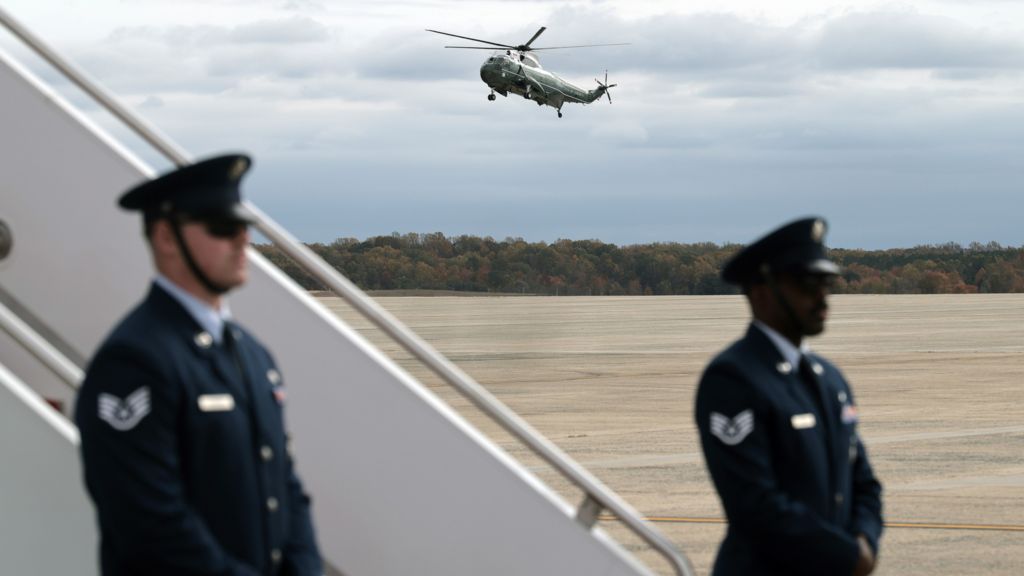
A potentially hazardous incident unfolded at Joint Base Andrews (JBA) in Maryland, near Washington DC, after multiple individuals fell ill upon opening a suspicious package delivered to the base’s operations center. The package, which contained an unidentified white powder, prompted an immediate evacuation of the building and a connected facility as a precautionary measure. Medical personnel confirmed that those affected were in stable condition.
博客
-
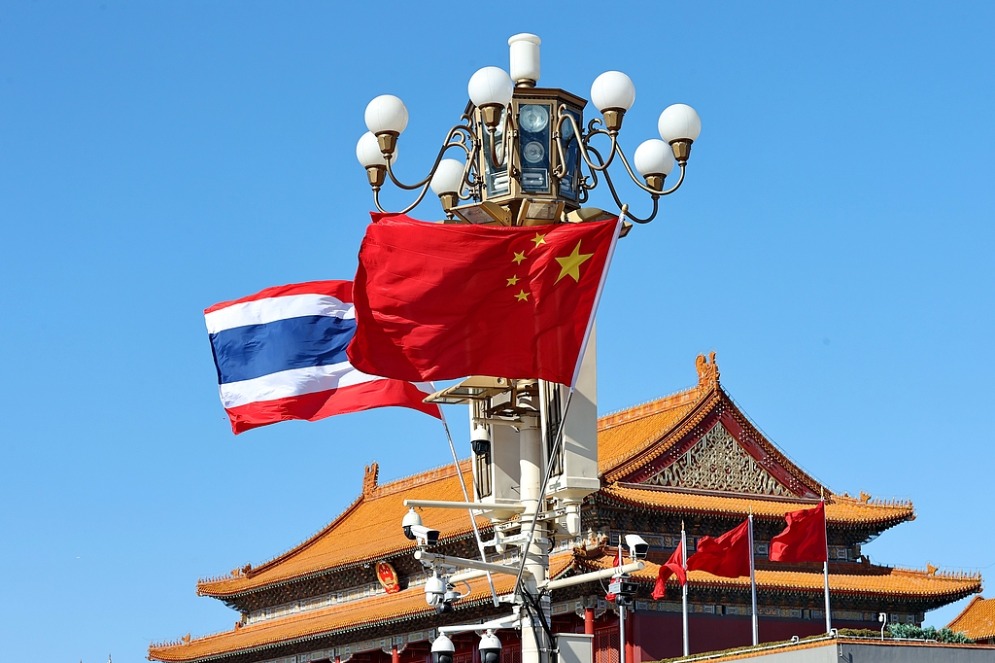
Thai king to pay state visit to China
In a landmark event marking 50 years of diplomatic relations, King Maha Vajiralongkorn of Thailand is set to embark on a state visit to China from November 13 to 17, 2025. This visit, the first by a Thai monarch since the establishment of diplomatic ties in 1975, underscores the deepening relationship between the two nations. During his stay, King Maha Vajiralongkorn and Queen Suthida Bajrasudhabimalalakshana will engage in a series of high-level meetings with Chinese President Xi Jinping and Premier Li Qiang, alongside visits to significant cultural and developmental sites in Beijing. The Thai Foreign Ministry highlighted the visit as a testament to the enduring friendship and mutual understanding between Thailand and China, aiming to bolster bilateral relations and foster regional peace and prosperity. China, Thailand’s largest trading partner for 12 consecutive years, anticipates this visit to further enhance economic and political cooperation, building on a bilateral trade volume that surpassed $133.98 billion in the previous year. The visit also coincides with the golden jubilee of China-Thailand friendship, presenting new opportunities for collaboration in various sectors, including science, technology, and education.
-
Nation’s Mars orbiter snaps images of interstellar object
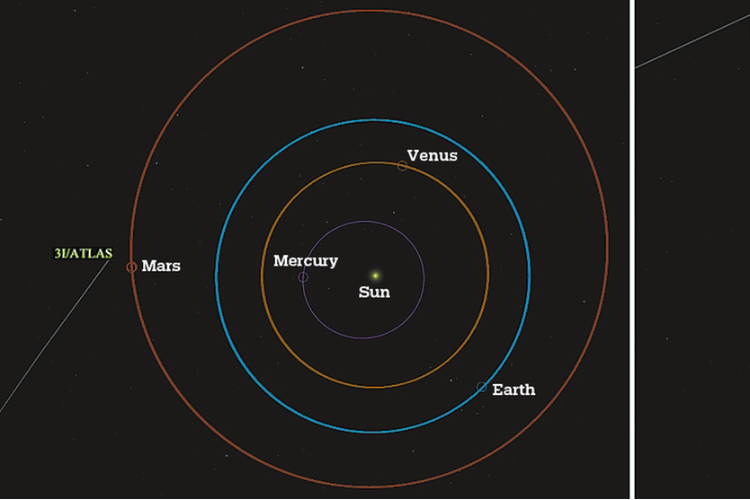
In a groundbreaking achievement, China’s Mars orbiter, part of the Tianwen 1 mission, has successfully captured images of a rare interstellar comet, 3I/ATLAS, as it traversed the solar system. The China National Space Administration (CNSA) announced the milestone on Thursday, marking a significant advancement in space exploration. The comet, first discovered on July 1 by NASA-funded ATLAS telescopes, is the third confirmed interstellar object to pass through our solar system, following 1I/’Oumuamua and 2I/Borisov. The Tianwen 1 orbiter, positioned approximately 29 million kilometers from the comet, executed one of the closest observations of such a celestial body. Scientists and engineers meticulously planned the observation, conducting extensive calculations and simulations to optimize the imaging process. The comet, estimated to be between 3 to 11 billion years old, offers invaluable insights into the composition and evolution of exoplanets. Its unique characteristics, including a tail direction opposite to typical comets, have piqued scientific interest, providing a rare opportunity to study extraterrestrial icy objects. This observation also serves as a technical test for the upcoming Tianwen 2 asteroid exploration mission, launched in May. The discovery underscores China’s growing prowess in space exploration and its contribution to understanding the cosmos.
-
What to know about China’s newest aircraft carrier, the Fujian
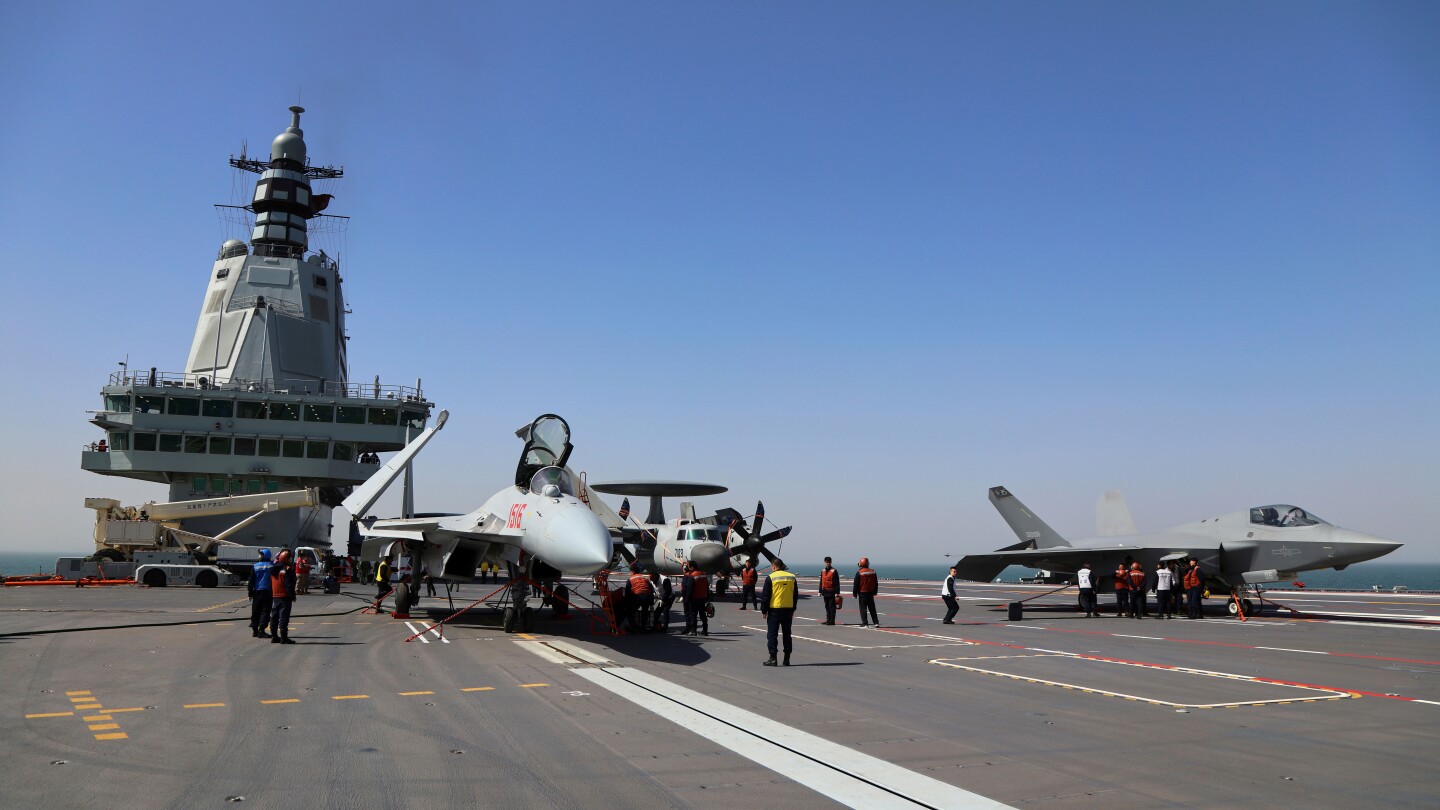
China has officially commissioned its third aircraft carrier, the Fujian, solidifying its position as the nation with the second-largest carrier fleet globally, trailing only the United States. The Fujian, unveiled in a ceremony attended by President Xi Jinping, represents a significant technological leap with its electromagnetic catapult launch system. This innovation enhances the carrier’s ability to project power across the Pacific, particularly in contested regions like the East China Sea, the Taiwan Strait, and the South China Sea. The Fujian is China’s first domestically designed carrier, distinguishing it from its predecessors, the Liaoning and Shandong, which were based on Soviet designs. The Fujian’s advanced catapult system allows it to launch heavier, fully-loaded aircraft, including early-warning and control planes, extending its operational range and firepower. While China’s carrier fleet now surpasses those of India, the UK, and Italy, it still lags behind the U.S., which operates 11 nuclear-powered carriers. The Fujian’s electromagnetic catapult system, second only to the U.S. Navy’s USS Gerald R. Ford, offers greater efficiency and flexibility, enabling the launch of a wider range of aircraft. However, the Fujian’s non-nuclear propulsion limits its operational range compared to U.S. carriers. China is reportedly developing nuclear propulsion for future carriers, though the timeline remains uncertain. Despite its advancements, the Fujian is smaller than U.S. carriers, with a displacement of over 80,000 tons and an estimated capacity of 40 to 60 aircraft, compared to the 60 to 70 planes on U.S. carriers. The Fujian’s commissioning underscores China’s growing naval ambitions, though it still faces significant gaps in carrier technology and capacity compared to the U.S.
-
Record gridlock exposes deep divide
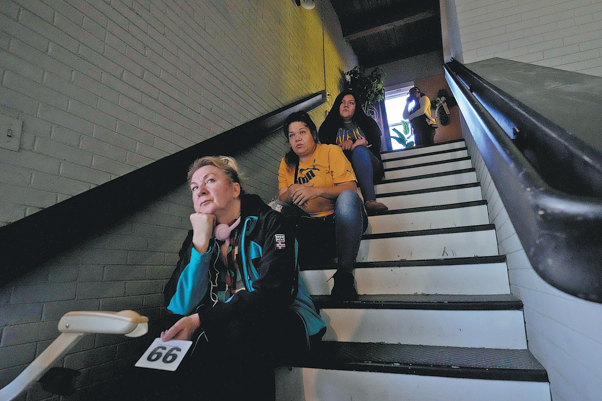
The United States is grappling with its longest-ever federal government shutdown, a crisis that underscores the deepening partisan divide and systemic dysfunction in American governance. The shutdown, which began on October 1, 2025, after lawmakers failed to agree on funding bills for the 2026 fiscal year, has now surpassed the previous record of 35 days set during the 2018-19 shutdown under President Donald Trump. Experts warn that this impasse reflects a broader trend of political polarization, where government shutdowns are increasingly weaponized as tools for partisan warfare. Wei Zongyou, a professor at Fudan University’s Center for American Studies, attributes the crisis to growing ideological rifts between Democrats and Republicans on key issues such as taxation, healthcare, and immigration. The inability to pass even temporary funding measures highlights the extreme nature of this divide. The shutdown has far-reaching consequences, disrupting essential services like the Supplemental Nutrition Assistance Program, which aids 42 million Americans, and forcing the Federal Aviation Administration to reduce airline traffic. Economically, the Congressional Budget Office estimates that a four-week shutdown could reduce real GDP by $7 billion, with losses escalating to $11 billion if the impasse continues for six weeks. Diao Daming, a professor of US studies at Renmin University of China, notes that the shutdown disproportionately affects the middle and lower classes while creating a dangerous blind spot for policymakers due to the halt in government data collection. This crisis underscores two critical challenges in US governance: an escalating fiscal crisis driven by reliance on debt and a widening ideological divide that hampers the government’s ability to function effectively.
-
Trump hints at India visit amid high-stakes trade deal talks
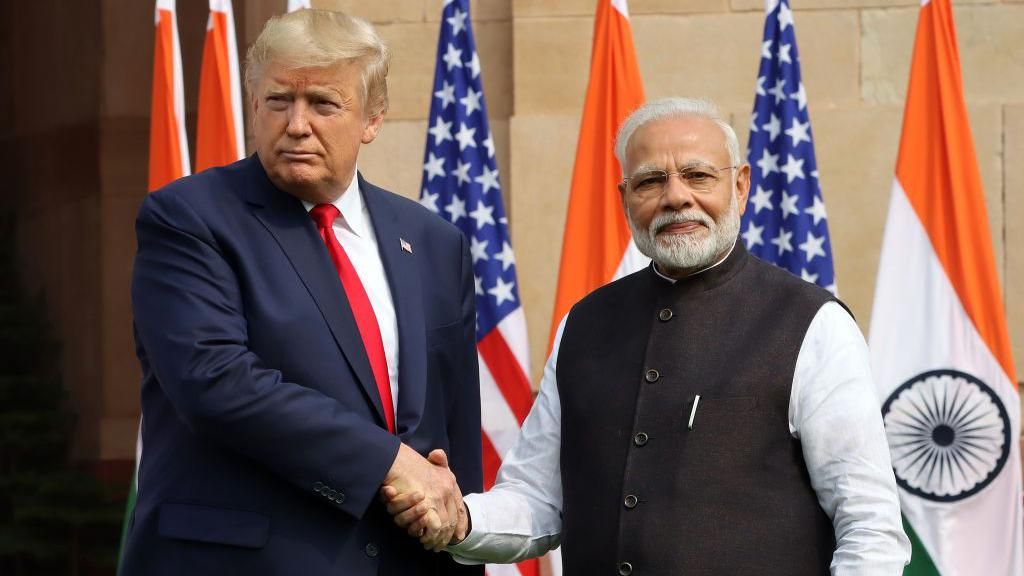
US President Donald Trump expressed optimism about ongoing trade negotiations with India during a White House press briefing on Thursday. Describing the talks as ‘going good,’ Trump also hinted at a potential visit to India next year, praising Indian Prime Minister Narendra Modi as ‘a friend’ and ‘a great man.’ Trump reiterated his claim that India has ‘largely stopped buying oil from Russia,’ a statement he has made repeatedly in recent weeks. This comes after the US imposed 50% tariffs on India in August, including a 25% penalty for purchasing Russian oil and arms, which Trump argues funds Moscow’s war in Ukraine—a claim India denies. The trade talks, which had stalled over India’s Russian oil imports, have now resumed as both nations aim to finalize a high-stakes trade deal this fall. Trump’s remarks also addressed the possibility of his attendance at the Quad Summit, a strategic alliance between Japan, the US, Australia, and India, scheduled to be hosted by India later this year. While the exact dates for the 2025 summit remain unconfirmed, Trump emphasized his commitment to strengthening US-India ties. Despite Trump’s assertions, India has not directly confirmed a reduction in Russian oil imports. Preliminary data from October showed a slight increase in India’s Russian oil purchases, though major refiners have reportedly scaled back following new US sanctions on Russian producers. India, the second-largest importer of Russian crude, has defended its energy strategy, citing the need to secure affordable oil for its population. The Trump administration has urged India to diversify its energy sources by increasing purchases from the US. Despite recent tensions, bilateral relations appear to be improving, with Trump and Modi frequently communicating and publicly reaffirming their commitment to enhancing trade and cooperation. In 2024, bilateral trade between the US and India reached $190 billion, with both leaders aiming to more than double this figure to $500 billion.
-

Cafe leads aid drive for hurricane-hit Jamaica
In the wake of Hurricane Melissa’s devastating impact on Jamaica, a family-run cafe in Wolverhampton, UK, has stepped up to organize a significant relief effort. The L’ouis-Mella Cafe Patisserie, owned by Camille Lange and her family, is spearheading a donation drive to ensure aid reaches all 14 parishes of Jamaica, particularly the most remote and hardest-hit areas. The category five hurricane, with winds reaching 185 mph (297 km/h), has claimed at least 30 lives and left many communities isolated, without access to food, power, or clean water. Camille Lange, who has personal ties to Jamaica, emphasized the importance of community involvement, stating, ‘This is bigger than us. It’s going to take a community.’ The cafe is coordinating with local volunteers to distribute essential items such as food, water, and baby supplies, including pre-made milk formula. The Jamaican government has also provided a list of urgently needed items and online donation options. The L’ouis-Mella Cafe has already received generous contributions from the local community and is urging anyone with connections to affected areas to reach out for assistance. ‘Everything adds up,’ Lange added, ‘and everything will create some kind of aid to someone in need.’ The initiative highlights the resilience and solidarity of both the Jamaican diaspora and the global community in times of crisis.
-

Ten photos from across China: Oct 31 – Nov 6
China Daily Information Co (CDIC) holds exclusive rights to all content published on its platform, including text, photos, and multimedia materials. Unauthorized reproduction or use of this content in any form is strictly prohibited without prior written consent from CDIC. The website recommends using browsers with a resolution of 1024*768 or higher for optimal viewing. Additionally, the platform operates under the online multimedia publishing license number 0108263 and is registered under the number 130349. China Daily offers various services such as advertising opportunities, contact information, job offers, and employment resources for expatriates. Users can also follow the platform for updates and engagement.
-

At the 6-months mark, Pope Leo finds his footing and starts charting his own path and style
VATICAN CITY — Six months into his papacy, Pope Leo XIV is steadily adapting to his role, demonstrating a blend of continuity with his predecessor, Pope Francis, and a willingness to carve out his own path. During a historic visit to the Vatican last month, King Charles III remarked on the omnipresent television cameras, to which Leo responded with a casual, “You get used to it.” This offhand comment underscores the pontiff’s growing comfort in his position, according to Vatican observers.
-

France mourns its stolen crown jewels as their uncomfortable colonial past returns to view
The recent theft of crown jewels from the Louvre in Paris has not only triggered a high-profile police investigation but also reignited a contentious debate about the origins of museum artifacts and the ethics of colonial-era acquisitions. While the stolen jewels were crafted in France, their gemstones trace back to former colonies, including Ceylon (Sri Lanka), India, Brazil, the Persian Gulf, and Colombia. This revelation has prompted calls for greater transparency from the Louvre and other European museums about the provenance of their collections. Experts argue that the heist presents an opportunity to confront the uncomfortable histories tied to these treasures and to push for restitution. The stolen items, including tiaras, necklaces, and brooches, once belonged to 19th-century French royalty, but their raw materials were sourced through imperial networks that exploited global labor and resources. Critics emphasize that while the theft is criminal, the colonial context of these jewels complicates the narrative of loss. The case parallels other high-profile restitution battles, such as India’s claim over the Koh-i-Noor diamond, which is currently held by the British Crown. France has taken limited steps toward restitution, returning some artifacts to Benin and Senegal, but critics argue that legal and institutional barriers hinder broader action. The Louvre, meanwhile, has been accused of narrowly defining what constitutes “looted” artifacts and demanding excessive proof for restitution claims. Scholars and activists advocate for museums to adopt a decolonized approach, providing honest accounts of how artifacts were acquired and acknowledging the exploitation involved. The Louvre heist, they say, could catalyze a broader reckoning with colonial legacies in Western museums.