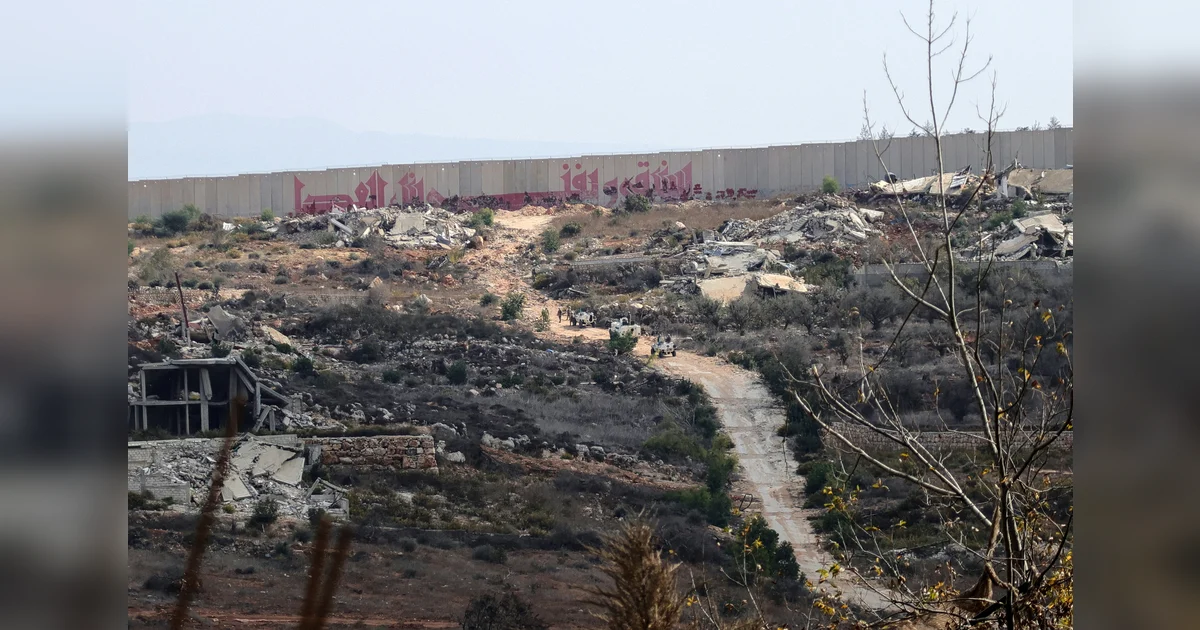
Lebanon has announced its intention to lodge a formal complaint with the United Nations Security Council, accusing Israel of constructing a concrete wall that encroaches on Lebanese territory. The Lebanese presidency revealed this decision on Saturday, following a report by the United Nations Interim Force in Lebanon (UNIFIL) that the wall crosses the UN-demarcated Blue Line, the de facto border between the two nations. According to UNIFIL, the structure, identified as a concrete T-wall, has rendered over 4,000 square meters of Lebanese land inaccessible to its citizens. The Israeli military, however, has denied the allegations, asserting that the wall does not cross the Blue Line. President Joseph Aoun has directed officials to submit the complaint alongside UN reports refuting Israel’s denial. UNIFIL’s investigations in October and November confirmed that sections of the wall near Yaroun violate Lebanon’s sovereignty. The force has urged the Israeli army to relocate the wall. This dispute arises amidst ongoing tensions following a November 2024 ceasefire intended to end hostilities between Israel and Hezbollah. Israel maintains that the wall is part of a broader military strategy initiated in 2022, aimed at reinforcing its northern border. Despite the truce, Israel continues to conduct strikes in Lebanon, primarily targeting Hezbollah.
博客
-
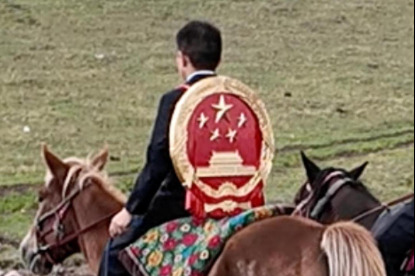
Justice on horseback: bringing the court to Xinjiang’s herders
In a remarkable initiative to ensure justice reaches every corner of China, judges in the Xinjiang Uygur Autonomous Region are taking to the grasslands on horseback. This innovative approach brings the courtroom directly to herders, providing them with essential legal services in their remote communities. The initiative underscores the Chinese government’s commitment to inclusivity and accessibility in the judicial system, particularly for those living in isolated areas. The mobile courtrooms, though simple in setup, have a profound impact, demonstrating a deep sense of care and responsibility towards the herding community. This effort not only facilitates legal recourse but also strengthens the bond between the government and its citizens, fostering a sense of trust and security. The initiative is a testament to China’s broader strategy of ensuring that no citizen is left behind in the pursuit of justice and equality.
-

Argentina stuns Scotland from 21-0 down at Murrayfield
In a breathtaking display of resilience, Argentina orchestrated one of the most remarkable comebacks in rugby history, overcoming a 21-0 deficit to defeat Scotland 33-24 at Murrayfield on Sunday. This victory marks the Pumas’ first win at Murrayfield in 16 years and stands as their greatest comeback triumph to date. The match, which seemed firmly in Scotland’s favor, took a dramatic turn in the final quarter as Argentina scored five tries in just 22 minutes. Scotland had dominated the early stages, with Ewan Ashman scoring two tries and Finn Russell adding extras to build a commanding lead. However, Argentina’s fortunes changed after coach Felipe Contepomi made strategic substitutions, bringing on key players like Santiago Carreras and Pablo Matera. Carreras’ attacking prowess and Matera’s physicality revitalized the Pumas, leading to a flurry of tries. Julian Montoya, Pedro Rubiolo, and Matera all crossed the line, while Santiago Carreras’ conversion and Justo Piccardo’s late try sealed the historic win. This loss is a bitter blow for Scotland, who also suffered a narrow defeat to New Zealand the previous week. The match highlighted Argentina’s grit and determination, as they turned a seemingly insurmountable deficit into a stunning victory.
-
Iran begins cloud seeding operations as severe drought bites
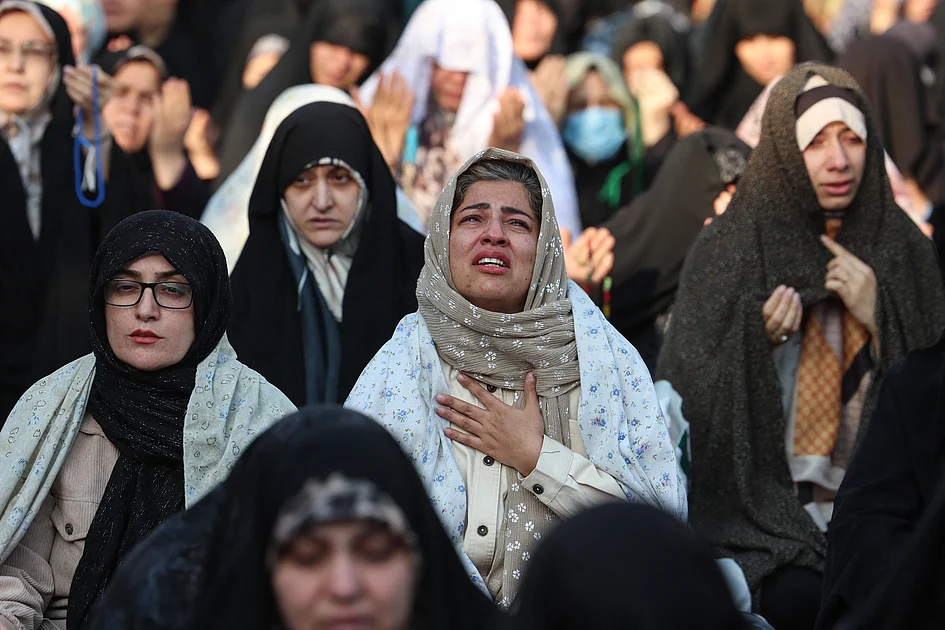
Iran has commenced cloud seeding operations in response to an unprecedented drought, marking a critical step in its battle against water scarcity. The country, which has long endured chronic dry spells and heat waves exacerbated by climate change, is now facing its most severe drought in decades. The first cloud seeding flight of the current water year, which began in September, was conducted over the Urmia Lake basin, as reported by the official IRNA news agency. Urmia, once Iran’s largest lake, has largely dried up, transforming into a vast salt bed. Further operations are planned for the provinces of East and West Azerbaijan. Cloud seeding involves dispersing particles like silver iodide and salt into clouds to induce rainfall. Iran has developed its own technology for this practice, which has also been employed by neighboring countries such as the United Arab Emirates. Recent reports indicate rainfall in several western and northwestern provinces, though overall precipitation has decreased by 89% compared to the long-term average. Tehran, the capital, is experiencing its lowest rainfall in a century, with half of Iran’s provinces remaining rainless for months. President Masoud Pezeshkian has warned of potential evacuations in Tehran if rain does not arrive before winter. The situation underscores the urgent need for innovative solutions to address the escalating water crisis in the region.
-

Ecuadorians vote on whether to allow foreign military bases amid rising crime
QUITO, Ecuador — In a pivotal national referendum held on Sunday, Ecuadorians cast their votes on a series of proposals that could reshape the country’s constitutional framework and security policies. The referendum, comprising four key questions, sought public approval for amending the constitution to permit foreign military bases on Ecuadorian soil and to initiate a process that could lead to the drafting of a new constitution. This comes as Ecuador grapples with escalating violent crime, driven by its role as a major transit hub for cocaine produced in neighboring Colombia and Peru. Drug trafficking gangs have targeted presidential candidates, mayors, and journalists in their struggle for control over ports and coastal cities. President Daniel Noboa, a conservative leader advocating for a tough stance on crime, has been a vocal proponent of the referendum. In recent weeks, Noboa has engaged in discussions with U.S. officials, including Homeland Security Secretary Kristi Noem, to explore regional security and migration cooperation. He also showcased a military base along Ecuador’s coast that could potentially host U.S. troops. ‘International cooperation is the only way to dismantle these transnational criminal networks,’ Noboa stated after casting his vote. The referendum also included proposals to reduce public funding for political parties and to decrease the number of legislators in the National Assembly from 151 to 73. While Noboa argues these measures are essential to curb excessive government spending, critics warn they could undermine political representation, particularly in low-income communities. Additionally, voters were asked whether Ecuador should establish a constituent assembly to rewrite the constitution, a move Noboa believes is necessary to strengthen crime-fighting tools and border control. However, opponents fear a new constitution could weaken legislative and judicial oversight of the executive branch. Voting is compulsory in Ecuador for individuals under 64, with nearly 14 million registered voters participating in this historic decision.
-
Man arrested over deadly Delhi car bomb attack
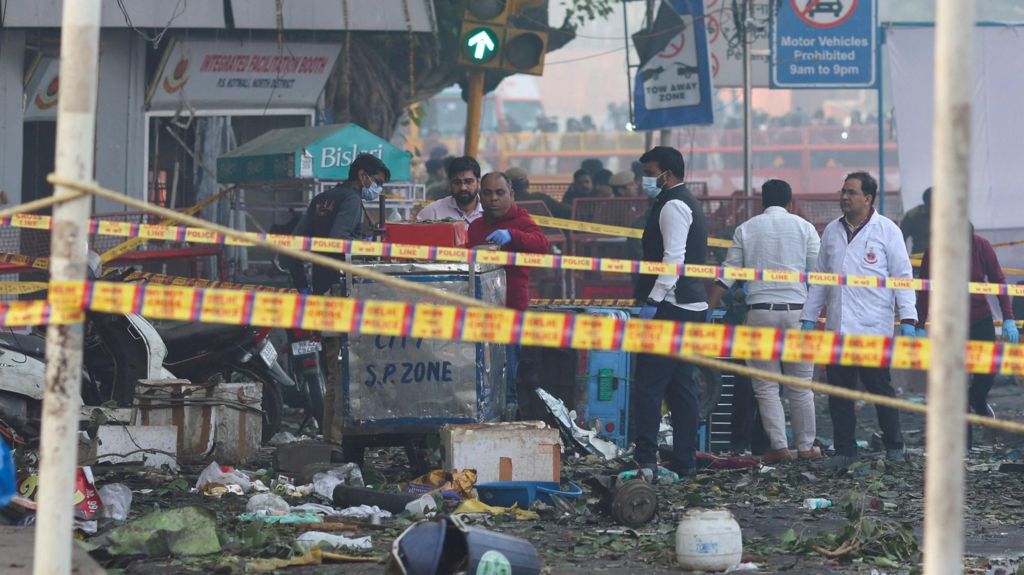
Authorities in Delhi have apprehended a man linked to a devastating car bomb attack that claimed eight lives and left 20 others injured last week. The National Investigation Agency (NIA) revealed that the vehicle used in the attack, which the government has labeled a ‘terrorist incident,’ was registered under the suspect’s name. The individual, a resident of Indian-administered Kashmir, is accused of conspiring with the alleged suicide bomber. The explosion occurred near a metro station adjacent to the Red Fort, a prominent historical landmark in Delhi. The NIA has seized another vehicle believed to belong to the suicide bomber for further examination and has interrogated 73 witnesses, including those injured in the blast. This marks the first such explosion in the heavily guarded city since 2011. The attack took place on Monday evening at 18:52 local time (13:22 GMT) when a slow-moving vehicle stopped at a busy traffic signal and detonated. Home Minister Amit Shah confirmed the explosion involved a white Hyundai i20, with footage from the scene showing the charred remains of the car and other vehicles. Prime Minister Narendra Modi condemned the attack as a ‘conspiracy,’ pledging to bring the perpetrators to justice. Opposition leader Rahul Gandhi expressed deep sorrow over the incident. Police are investigating potential links to recent arrests in Indian-administered Kashmir and the seizure of 2,900kg of explosives from a Delhi suburb. The Red Fort, a 17th-century Mughal fortress, is a major tourist attraction and the site of India’s annual Independence Day speeches.
-
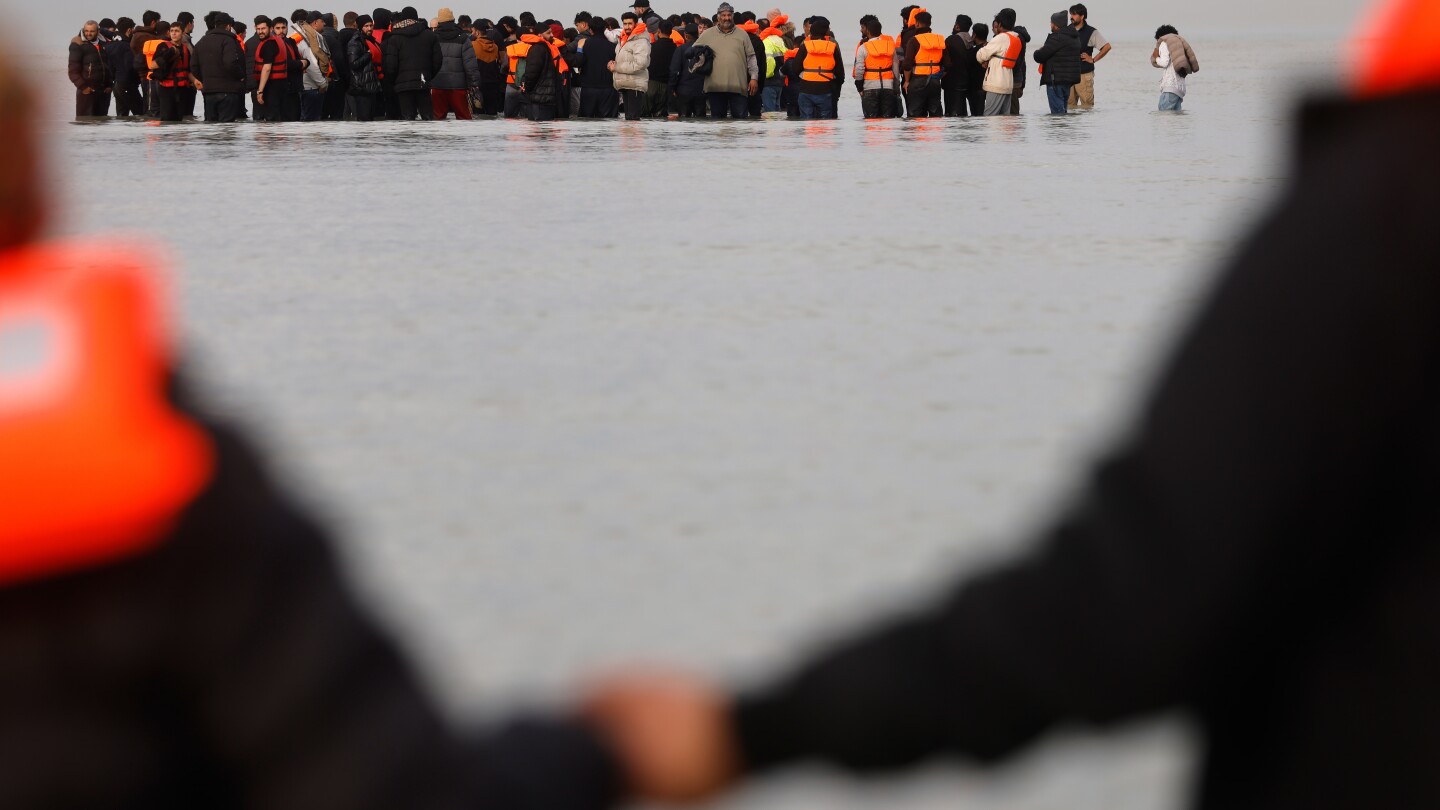
UK government poised to overhaul its asylum system as a political storm brews over migration
The British government is set to introduce a series of stringent asylum reforms, inspired by Denmark’s model, aimed at reducing illegal immigration and addressing the political controversy surrounding unauthorized Channel crossings. Home Secretary Shabana Mahmood will unveil the policy changes in the House of Commons on Monday, marking the latest effort to deter asylum seekers and streamline the removal of those deemed ineligible for refuge. Mahmood described the initiative as a moral imperative to secure borders and heal a nation divided over immigration, a contentious issue that has bolstered the hard-right Reform UK Party. Despite her migrant heritage, Mahmood denied that the Labour Party is adopting far-right rhetoric, emphasizing the need to address systemic flaws and prevent abuse of the asylum system. The reforms include revoking the UK’s legal obligation, established under EU law in 2005, to support asylum seekers, potentially stripping them of housing and financial allowances. Benefits may also be withheld from individuals who fail to work legally or violate laws. Additionally, refugee status will undergo regular reviews to assess the possibility of safe repatriation. The government plans to establish safer pathways for asylum claims, reducing the reliance on perilous Channel crossings. Critics, including Conservative MP Chris Philp, argue that the reforms are insufficient and lack the impact of the previously abandoned Rwanda policy. Philp dismissed the measures as superficial, likening them to ‘rearranging deck chairs on the Titanic.’ The Home Office, however, highlighted Denmark’s success in reducing asylum applications and removing 95% of ineligible applicants as a model for the UK’s new approach. Denmark, once a refuge for migrants, has faced international criticism for its restrictive policies amid Europe’s broader struggle with mass migration driven by conflict, famine, and poverty.
-
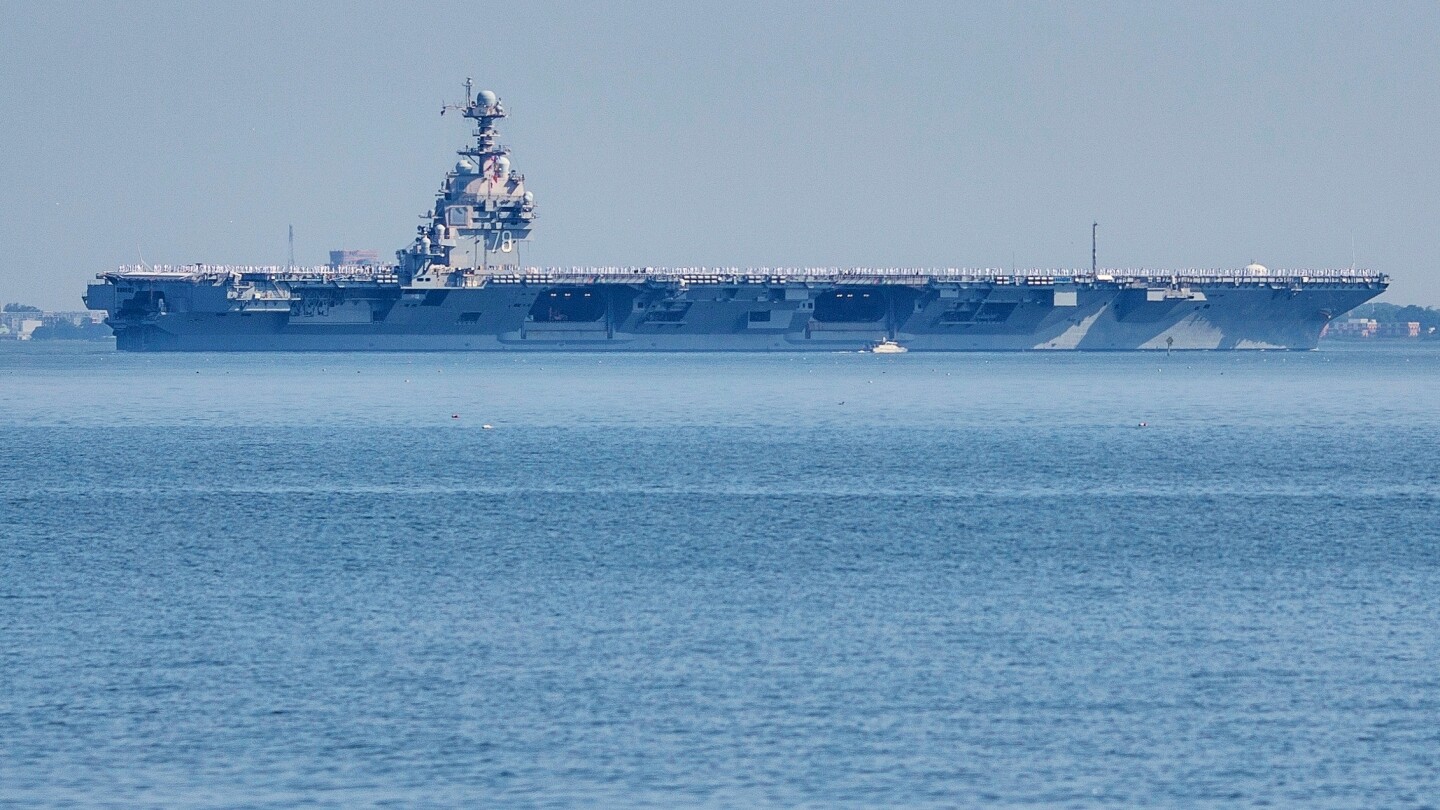
Aircraft carrier arrives in the Caribbean in major buildup near Venezuela
The USS Gerald R. Ford, the U.S. Navy’s most advanced aircraft carrier, arrived in the Caribbean Sea on Sunday, marking a significant escalation in the Trump administration’s counterdrug operations in South America. The deployment, part of “Operation Southern Spear,” brings the total number of U.S. troops in the region to approximately 12,000, supported by nearly a dozen Navy ships. The carrier strike group, which includes fighter jets and guided-missile destroyers, transited the Anegada Passage near the British Virgin Islands, according to a Navy statement. While the administration frames the buildup as a mission to combat drug trafficking, critics view it as a pressure tactic against Venezuelan President Nicolás Maduro. Since September, U.S. strikes have killed at least 80 people in 20 attacks on boats allegedly involved in drug transport. Rear Adm. Paul Lanzilotta, commander of the Ford’s strike group, emphasized the mission’s focus on protecting U.S. security against “narco-terrorism” in the Western Hemisphere. However, the administration has yet to provide evidence linking those killed to drug cartels or terrorist organizations. President Trump has hinted at expanding military action beyond maritime strikes, including potential land operations. The deployment has drawn criticism from regional leaders, the U.N. human rights chief, and U.S. lawmakers, who question the legal basis and transparency of the strikes. Meanwhile, Venezuela has mobilized troops and civilians in anticipation of possible U.S. aggression. Experts debate whether the Ford’s presence is a strategic deterrent or a provocative move, with some arguing it is ill-suited for counterdrug efforts but effective as a tool of intimidation. Elizabeth Dickinson of the International Crisis Group noted that the deployment has heightened anxieties across Latin America, with many watching closely to gauge the U.S. willingness to use military force.
-
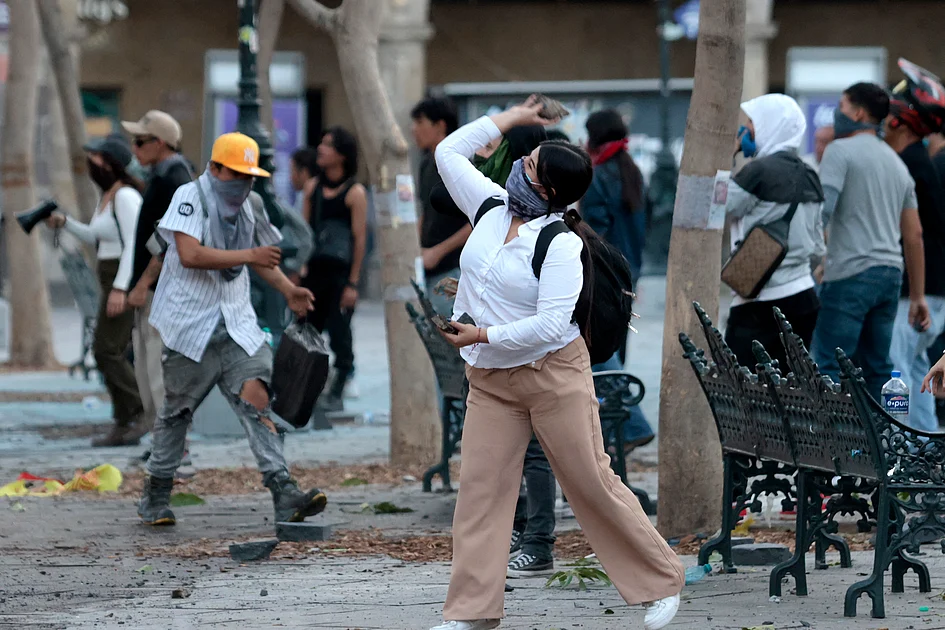
Clashes erupt in Mexico City anti-crime protests, injuring 120
A massive anti-crime protest in Mexico City turned violent on Saturday, resulting in over 100 injuries and 20 arrests, according to local government officials. Thousands of demonstrators, predominantly young Mexicans connected to a global wave of Generation Z activism, gathered at the historic Zocalo square. The protest was also fueled by the domestic ‘Sombrero Movement,’ which emerged following the recent assassination of Carlos Manzo, a mayor known for his fight against organized crime in Michoacan state. Participants of all ages rallied in front of the National Palace, where President Claudia Sheinbaum resides. The demonstration initially remained peaceful until a group of masked individuals began toppling metal barriers and hurling paving stones at riot police, who responded with tear gas. Mexico City’s security chief, Pablo Vazquez, reported that 20 protesters and 100 police officers were injured, with 40 officers hospitalized. Police arrested 20 individuals for theft and assault and launched an investigation into the alleged assault of a journalist from La Jornada newspaper. President Sheinbaum, who has faced criticism over her security policies, dismissed the protest as ‘inorganic’ and ‘paid for,’ suggesting foreign influence. Protesters displayed banners honoring Carlos Manzo and the pirate flag from the Japanese manga One Piece, a global symbol of youth resistance. The widow of the slain mayor distanced her husband’s movement from the protest, while demonstrators accused the government of failing to protect Manzo.
-
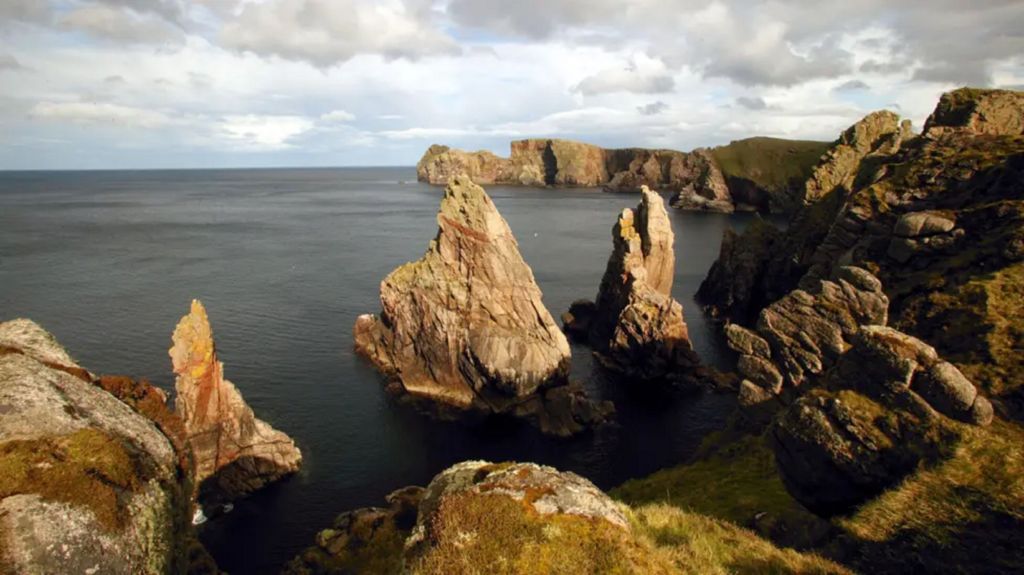
Search for missing Royal Navy crew member stood down
The extensive search for a missing Royal Navy crew member off the north-west coast of the Republic of Ireland has been called off, with the individual remaining unlocated, the Ministry of Defence (MoD) confirmed. The crew member, part of the Royal Fleet Auxiliary (RFA) Tidesurge, was last seen around 22:30 local time on Friday. The search operation, which spanned the waters between Tory Island in County Donegal and Eagle Island in County Mayo, involved multiple agencies and resources. Defence Secretary John Healey expressed his profound sorrow over the outcome, stating, ‘After an extensive search, it is with deep sadness that we confirm the missing crew member of RFA Tidesurge has not been found. My thoughts are with their family during this tragic time, as well as their fellow crew members.’ He also extended his gratitude to the Irish authorities, the RNLI, Royal Air Force, and Royal Navy for their swift and relentless efforts in the search. The Irish Coast Guard received a distress call from a Royal Navy support vessel before 09:00 on Saturday, prompting an immediate search and rescue operation. The search involved aerial support from the Coast Guard’s fixed-wing plane Rescue 120F, based in Shannon airport; Coast Guard helicopter Rescue 118, based in Sligo; and the Irish Air Corps plane, CASA 284. At sea, the search was coordinated by the UK naval support vessel and three RNLI all-weather lifeboats based at Ballyglass, Arranmore Island, and Lough Swilly. The family of the missing crew member has been informed, and an investigation into the incident is now underway. No other individuals were reported harmed or missing during the operation.