
In a groundbreaking initiative to address global energy transition challenges, a Chinese international NGO, the Global Energy Interconnection Development and Cooperation Organization (GEIDCO), has partnered with United Nations agencies to launch a comprehensive research program. Announced during the COP30 climate conference in Belem, Brazil, this collaboration aims to identify capacity gaps and training needs across different regions to foster a just and inclusive energy transition. GEIDCO, established in 2016 as China’s first international energy organization, brings extensive experience in capacity-building, having trained over 10,000 participants from 80+ countries through 30+ international programs. The research will focus on energy policies, technologies, talent development, and financing, with a particular emphasis on regional disparities. For instance, African participants prioritize distributed renewable energy and project financing, while West Asian stakeholders are more interested in emerging technologies like hydrogen energy. The program, developed in collaboration with the UN Framework Convention on Climate Change and the Paris Committee on Capacity-building, seeks to create targeted training initiatives to bridge these gaps. Gloria Alvarenga of the Latin American Energy Organization praised the initiative, highlighting the importance of shared experiences and collaborative mechanisms in accelerating climate action. Riad Meddeb of the UN Development Programme emphasized the urgency of addressing capacity gaps to ensure a just transition, noting that 60% of global energy production remains inefficient. He also underscored the role of digitalization in transforming clean energy systems, while pointing out the stark digital divide, with only 27% of people in low-income countries having internet access. The initiative reflects a growing global consensus to limit temperature rise to 1.5°C, as outlined in the Paris Agreement, to avoid catastrophic climate impacts.
博客
-
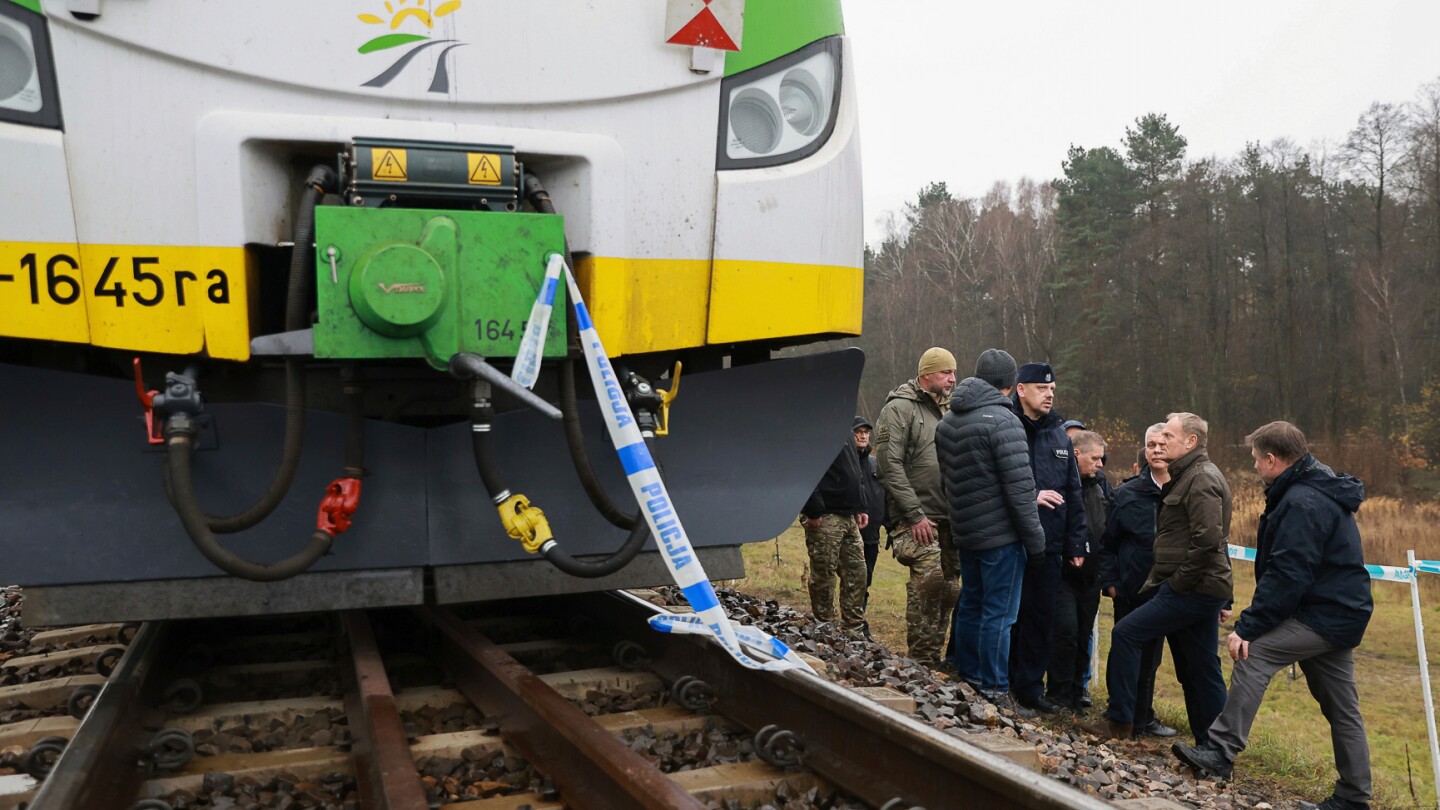
Polish prime minister says weekend rail line explosion near Warsaw was act of ‘sabotage’
WARSAW, Poland — A critical railway line connecting Warsaw to southeastern Poland was severely damaged by an explosion on Sunday, which authorities have labeled as an act of sabotage. Prime Minister Donald Tusk confirmed the incident on Monday, stating that the explosion occurred on the Warsaw-Lublin route near the village of Mika, approximately 100 kilometers (62 miles) southeast of the capital. The blast destroyed a section of the railway track, disrupting train services. Fortunately, no injuries were reported among the two passengers and several staff members aboard the train at the time. The incident was first detected by a train driver who reported irregularities on the track around 7:40 a.m. Sunday. Subsequent investigations revealed damage at multiple locations along the route. Tusk vowed to apprehend the perpetrators, calling the act ‘unprecedented’ and emphasizing that justice would be served ‘regardless of who is behind them.’ This incident adds to a series of suspected sabotage and espionage cases in Poland since Russia’s invasion of Ukraine in February 2022, with dozens of individuals detained in connection with these activities.
-

US scraps tariffs on some foods over inflation woes
In a significant policy shift, the US administration has announced the removal of tariffs on over 200 food products, including essential items like coffee, beef, bananas, and orange juice. This decision comes as American consumers grapple with escalating grocery prices, which have fueled widespread discontent. The move represents a notable departure from President Donald Trump’s earlier stance, where he maintained that the tariffs imposed earlier this year were not contributing to inflation. The executive order, released on Friday, modifies the scope of reciprocal tariffs initially announced on April 2 and took immediate effect. Duties already collected will be refunded. Trump, speaking aboard Air Force One, acknowledged that tariffs might ‘in some cases’ raise prices but reiterated his belief that the US has ‘virtually no inflation.’ He also revealed plans to distribute a $2,000 payment to lower- and middle-income citizens next year, funded by tariff revenues. The list of exempted products includes everyday staples that have seen double-digit price increases, such as oranges, cocoa, and fertilizers. Critics, including US Representative Don Beyer, argue that the administration is finally acknowledging the inflationary impact of its trade policies. Despite the tariff rollback, consumers remain frustrated by high grocery prices, which economists attribute partly to import duties. Richard Neal, the top Democrat on the House Ways and Means Committee, criticized the move as ‘putting out a fire that they started.’ The US Consumer Price Index for September 2025 showed a 3% year-over-year increase, with beef and coffee prices surging by 14.7% and 18.9%, respectively. While some industry groups have praised the exemptions, the broader economic implications of the tariff reversal remain a contentious issue.
-

First winter rains soak makeshift Gaza tents
The first heavy rains of winter have inundated the Mawasi tent camp in Gaza, exacerbating the already dire living conditions for displaced Palestinians. On Saturday, torrential downpours flooded the makeshift shelters, forcing residents to dig trenches in a desperate attempt to divert water from their tents. The rains, which began on Friday, seeped through torn tarpaulins and fragile structures, soaking the meager belongings of families. Strong winds further threatened to topple tents and disrupt the already scarce food and supply distribution.
Bassil Naggar, a resident who recently purchased a new tent for $712 on the black market, described the relentless struggle to keep his shelter dry. ‘I spent all of Friday pushing water out of my tent,’ he said, noting that his neighbors’ tents and possessions were also ruined. ‘Water puddles are inches high, and there is no proper drainage.’
The United Nations reports that Mawasi housed up to 425,000 displaced Palestinians earlier this year, most of whom are living in temporary tents after being displaced by Israel’s military campaign. While the Israeli defense body overseeing humanitarian aid claims to be allowing winter supplies like blankets and tarpaulins into Gaza, aid organizations argue that these efforts are insufficient as temperatures drop and winds intensify.
Amid the worsening humanitarian crisis, international efforts to stabilize Gaza are underway. The UN Security Council is set to vote on a U.S. proposal for a UN-mandated stabilization force, which would operate independently of the UN and maintain Israel’s control over Gaza’s security perimeter. Meanwhile, Russia has introduced a competing resolution advocating for a UN-led stabilization force, opposing territorial changes in Gaza and urging a two-state solution.
On Saturday, Russian President Vladimir Putin and Israeli Prime Minister Benjamin Netanyahu discussed the Gaza ceasefire, Iran’s nuclear program, and stability in Syria during a phone call. As the first stage of the Gaza ceasefire agreement nears its end, the focus shifts to the more challenging task of establishing a governing body and deploying an international stabilization force.
-

Climate protesters seek action at COP30
Thousands of climate activists gathered in Belem, Brazil, on Saturday, staging a vibrant and peaceful protest to demand stronger global action against climate change. The demonstration, dubbed the ‘Great People’s March,’ coincided with the halfway point of the COP30 climate conference, where negotiations have stalled amid disagreements among nations. Protesters, including indigenous leaders and environmental advocates, marched through the city under the scorching sun, chanting slogans and rolling a massive inflatable globe to symbolize the planet’s fragility. Some participants staged a symbolic funeral procession for fossil fuels, carrying coffins labeled ‘coal,’ ‘oil,’ and ‘gas’ to highlight the need for a transition to renewable energy. Indigenous leader Txai Surui, 28, emphasized the urgency of the situation, stating, ‘We are here to pressure countries to fulfill their promises and prevent any regression.’ The march concluded near the COP30 venue, where security forces were deployed to maintain order. Inside the conference, COP30 President Andre Correa do Lago acknowledged the lack of progress in negotiations and urged delegates to prioritize meaningful dialogue over procedural delays. He pledged to release a summary of key positions on Sunday to guide ministers in the final week of talks. The protesters’ demands include reparations for environmental damage caused by corporations and governments, particularly to marginalized communities, and greater representation of indigenous voices in climate discussions.
-
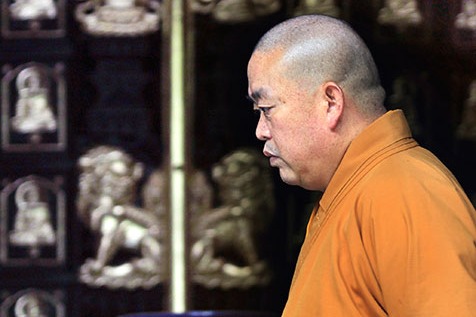
Prosecutors approve ex-abbot’s arrest
The Supreme People’s Procuratorate has officially sanctioned the arrest of Shi Yongxin, the former abbot of the renowned Shaolin Temple in Henan Province. Shi is accused of embezzlement, misappropriation of funds, and bribery. The case, initially investigated by the Xinxiang public security authorities under the directive of the Henan Provincial Public Security Department, has now progressed to the arrest phase following approval from the Xinxiang People’s Procuratorate. The allegations against Shi surfaced on July 27, when the Shaolin Temple disclosed that he was under investigation for embezzling funds, misusing project and temple assets, maintaining inappropriate relationships with multiple women, and fathering an illegitimate child. The following day, the Buddhist Association of China revoked Shi’s ordination certificate, effectively expelling him from the monastic community. Shi, who became a monk in 1981 and served as the 30th abbot of the 1,500-year-old Shaolin Temple since 1999, has been a prominent figure in Zen Buddhism and the temple’s celebrated kung fu tradition. The case has drawn significant attention due to the temple’s cultural and spiritual significance.
-

Man who grabbed Ariana Grande at premiere jailed in Singapore
An Australian man, Johnson Wen, 26, has been sentenced to nine days in jail by a Singapore court for causing a public nuisance by grabbing Hollywood star Ariana Grande at the Asia premiere of ‘Wicked: For Good’ last Thursday. Videos circulating on social media captured Wen leaping over barriers, rushing towards Grande, and grabbing her shoulders while jumping up and down, leaving the singer visibly shocked. The incident has sparked widespread outrage in Singapore, with many calling for Wen’s arrest and deportation. Grande, who has previously spoken about her struggles with post-traumatic stress disorder following the 2017 Manchester Arena bombing, has not publicly commented on the incident. During the trial, it was revealed that Wen had attempted to intrude on the premiere twice. After the initial grab, Grande’s co-star Cynthia Erivo forcibly removed Wen, and security staff escorted him out. However, Wen made a second attempt to breach the barriers, leading to his detention by security. Wen later posted videos of the incident on his social media accounts, thanking Grande and claiming he was ‘free.’ Singapore police arrested him the following day, and he pleaded guilty to the charges. Prosecutors argued for a week’s jail term, citing Wen’s history of disrupting concerts and sporting events to gain online popularity. Wen, who was unrepresented in court, assured the judge he would ‘not do it again.’ Under Singapore’s public nuisance laws, Wen could have faced up to three months in jail, a fine of up to S$2,000, or both. Meanwhile, Grande has continued her public appearances in Los Angeles, while Erivo subtly referenced the incident in a recent statement about their relationship during the film’s production.
-

Museums turn to technology for relics care
At the 27th General Conference of the International Council of Museums in Dubai, officials and scholars emphasized the pivotal role of museums as custodians of civilization. The event, the largest global gathering of museum professionals, highlighted the importance of integrating new technologies and engaging younger generations to protect cultural heritage and foster mutual understanding among civilizations. Hala Badri, Director-General of Dubai Culture and Arts Authority and chairwoman of the conference’s organizing committee, underscored the shared commitment to leveraging digital transformation, artificial intelligence (AI), and virtual interaction to create inclusive and impactful cultural experiences. Harith Al Battashi, an expert from the National Museum of Oman, stressed that attracting and nurturing young talent is central to museums’ missions. He praised the Chinese video game *Black Myth: Wukong* as a groundbreaking example of how cultural heritage can be promoted globally through youth-centric mediums. The game, which integrates Chinese folklore, has sparked international interest and bridged the gap between tradition and modern youth culture. At the conference, Zhejiang University’s Department of Cultural Heritage showcased the International Alliance of Teaching Museology in Universities, an initiative aimed at advancing global museum education and professional training. The alliance, comprising nearly 20 members from East Asia, Europe, and North America, seeks to foster collaboration with Middle Eastern universities to develop a more open museology education system. Chinese companies like Bangda Group also demonstrated their innovative solutions for cultural relic preservation, including earthquake-resistant storage facilities with real-time environmental monitoring. Omar Al Kaabi, an official from Abu Dhabi’s Department of Culture and Tourism, announced the upcoming opening of the Zayed National Museum, which will utilize VR and AI technologies to showcase the UAE’s rich cultural history. He expressed openness to adopting Chinese technologies for heritage protection and promotion.
-

Films shine, youth, talent applauded
The 38th China Film Golden Rooster Awards, held on November 15, 2025, in Xiamen, Fujian province, celebrated the best of Chinese cinema, honoring storytelling, artistry, and diversity. The prestigious event saw ‘Her Story,’ a feminist drama exploring the struggles and aspirations of Chinese women, emerge as the biggest winner. Directed by Shao Yihui, the film clinched Best Feature Film, while Song Jia and Zhong Chuxi won Best Actress and Best Supporting Actress, respectively. Shao, a Beijing Film Academy graduate, expressed her gratitude and commitment to advancing Chinese cinema in her heartfelt acceptance speech. The Lifetime Achievement Award was bestowed upon veteran voice actor Qiao Zhen and director Xiao Guiyun, whose works have left an indelible mark on Chinese film history. Yi Yangqianxi, at 24, became the youngest Best Actor winner for his role in ‘Big World,’ showcasing his dedication to his craft. The Best Director award went to Chen Sicheng and Dai Mo for ‘Detective Chinatown 1900,’ a film highlighting the challenges faced by Chinese immigrants in early 20th-century America. Italian film ‘There’s Still Tomorrow’ won Best Foreign Language Film, with director Paola Cortellesi expressing her pride in receiving the accolade. The awards also recognized outstanding contributions in animation, screenwriting, and supporting roles, underscoring the vibrant and evolving landscape of Chinese cinema. The event, part of the 2025 China Golden Rooster and Hundred Flowers Film Festival, presented 20 awards selected from 212 domestic films, reaffirming its status as a cornerstone of China’s film industry.
-
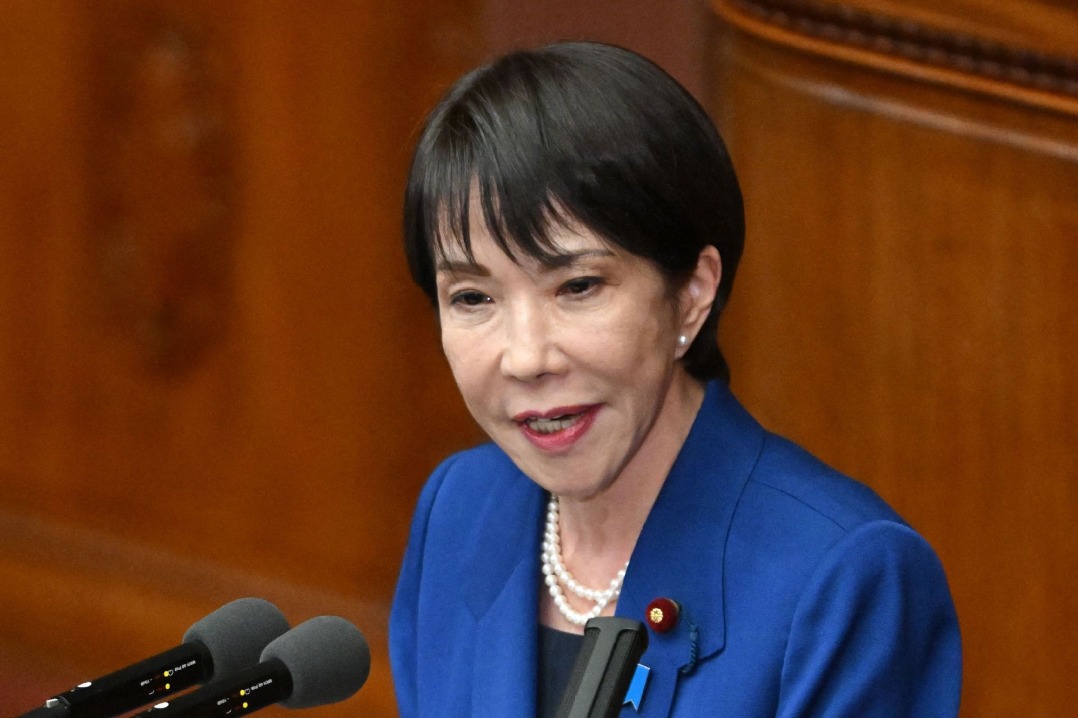
Japan PM’s remarks on Taiwan draw criticism
Japanese Prime Minister Sanae Takaichi’s recent comments on Taiwan have ignited widespread criticism both domestically and internationally, with observers warning of severe repercussions for Japan-China relations. Takaichi’s remarks, made during a November 7 session of Japan’s Diet, suggested that a military contingency involving Taiwan could pose a ‘survival-threatening situation’ for Japan, potentially justifying the use of collective self-defense by Japan’s Self-Defense Forces. This assertion has been condemned as a blatant violation of the one-China policy, which recognizes Taiwan as an inalienable part of China. Critics argue that such statements erode the mutual trust established by the 1972 Japan-China joint statement and risk destabilizing regional security. On November 16, approximately 100 Japanese citizens protested outside the prime minister’s official residence in Tokyo, demanding Takaichi’s resignation and calling for an immediate retraction of her remarks. Prominent figures, including former Prime Ministers Yukio Hatoyama and Shigeru Ishiba, have also criticized Takaichi’s stance, emphasizing the importance of avoiding interference in China’s internal affairs. Experts like Ukeru Magosaki, a former senior official at Japan’s Ministry of Foreign Affairs, and Hiroshi Shiratori, a political science professor at Hosei University, have warned that Takaichi’s comments not only distort Japan’s pacifist principles but also jeopardize the fragile diplomatic balance in East Asia. Despite China’s formal protests, Takaichi has refused to retract her statements, further straining bilateral relations and raising concerns about the potential for unnecessary regional conflict.