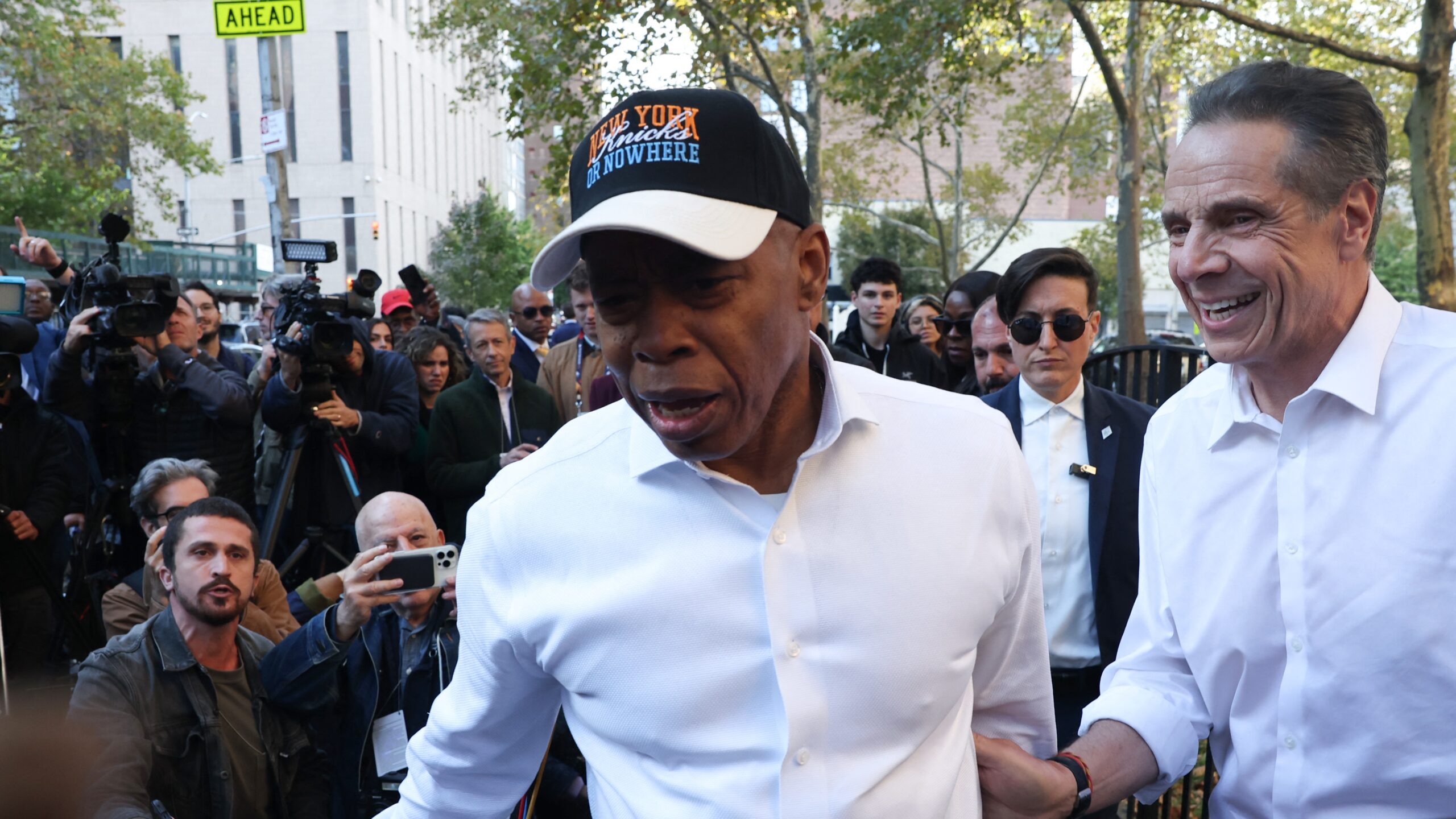
New York City’s outgoing mayor, Eric Adams, has ignited a firestorm of criticism following his taxpayer-funded trip to Israel, where he declared that he ‘served’ Israeli Jews during his tenure. The remarks, made during a stop in occupied East Jerusalem, have drawn sharp backlash online, with many questioning the implications of foreign influence on U.S. politics. Adams’ statement, ‘I wanted to come back here to Israel and let you know that I served you as the mayor,’ has been widely condemned as inappropriate and divisive. His office defended the trip as a multi-day visit to meet Israeli officials and explore religious sites, but the timing and tone of his comments have fueled accusations of prioritizing foreign interests over local concerns. The controversy is further amplified by the contrasting stance of mayor-elect Zohran Mamdani, who pledged to remain in New York City to address pressing domestic issues rather than embark on symbolic international visits. Adams’ tenure has been marked by aggressive handling of pro-Palestinian protests, including NYPD crackdowns on demonstrations and student encampments. Critics argue that his actions reflect a broader effort to criminalize pro-Palestinian organizing, while supporters of Israel have reportedly urged him to take decisive measures against campus protests. The scandal surrounding Adams’ alleged acceptance of luxury travel and perks from Turkish businesspeople and government officials has further eroded his credibility, raising questions about whose interests he truly serves. As New York City grapples with record homelessness, a housing crisis, and rising costs, Adams’ decision to travel abroad in his final weeks in office has been met with widespread disapproval. His ‘I served you’ remarks, delivered not to New Yorkers but to Israeli Jews, have deepened frustrations among constituents, particularly Palestinian, Arab, and Muslim communities. The incident underscores a broader pattern of Adams aligning closely with Israel while treating pro-Palestinian voices at home with suspicion. Mamdani’s contrasting approach has highlighted the divide between leadership rooted in local accountability and one seeking symbolic alignment abroad. The federal indictment against Adams adds another layer of scrutiny, accusing him of exploiting New York City’s public matching funds program and accepting illicit benefits in exchange for political favors. As the controversy unfolds, many are left questioning the integrity and priorities of their outgoing mayor.
博客
-

Dubai’s emotional intelligence expert Dr. Taylor Elizabeth announced as Mrs UAE World 2025
Dr. Taylor Elizabeth, a globally acclaimed emotional intelligence and etiquette coach, has been officially named Mrs UAE World 2025. She will represent the UAE at the prestigious Mrs World pageant, scheduled for early next year. Dr. Taylor’s appointment was announced by Dr. Aditi Govitrikar, the newly appointed Director for Mrs UAE World 2025 and the first-ever Mrs World from India. Dr. Govitrikar praised Dr. Taylor’s multicultural understanding, conscious leadership, and global representation, emphasizing her role as a powerful ambassador for the UAE. Dr. Taylor, a Dubai-based coach with a clientele spanning 22 markets across five continents, is celebrated for her empathy-driven leadership and dedication to women’s empowerment. She believes that pageantry has evolved into a platform for identity, empowerment, and meaningful influence. ‘Mrs World is a space where possibility becomes visible,’ says Dr. Taylor. ‘When women see someone who shares their values or story standing confidently on a global stage, they see what’s possible for themselves too. My vision is to make this platform not just about beauty or competition, but about emotional intelligence, communication, and the power of authenticity.’ Dr. Taylor aims to challenge outdated narratives that expect women to soften their identity or make themselves smaller, instead championing a new language for modern womanhood—one where emotional intelligence, purpose, and self-expression coexist with grace, confidence, and conscious strength. An award-winning thought leader and UN Women Mentor, Dr. Taylor’s credentials are impressive. She has been honored under the patronage of H.H. Sheikh Nahayan Mabarak Al Nahayan, UAE Cabinet Minister for Tolerance and Coexistence, and recognized by The Hindustan Times and Observe Now Dubai for excellence in mentorship and leadership. She has spoken at hallmark platforms including the ETHRWorld NexTech Middle East HR Summit, the Economic Times India HR World Annual Conclave, and the Cartier Women’s Pavilion at Expo 2020 Dubai. A Certified Professional Coach and ICF-accredited Emotional Intelligence Coach, Dr. Taylor also holds specializations in Positive Psychology, Neurobiology Coaching, and Transformational Leadership. Her popular podcast, Success Decoded, now in its third season, features conversations with global thinkers on mindset, mastery, and authentic success. Academically, Dr. Taylor brings a global perspective with an MBA in International Business from The George Washington University and a Master’s in European, Russian, and Eurasian Studies from The Elliott School of International Affairs, complemented by a Diploma in International Etiquette and Protocol from Institut Villa Pierrefeu in Switzerland. As she prepares to carry the UAE’s name to the Mrs World stage, Dr. Taylor steps forward with a message that is unmistakably contemporary: leadership begins with emotional clarity, confidence is a form of service, and the world is ready—more than ever—for women who trust their authenticity and choose to be seen.
-
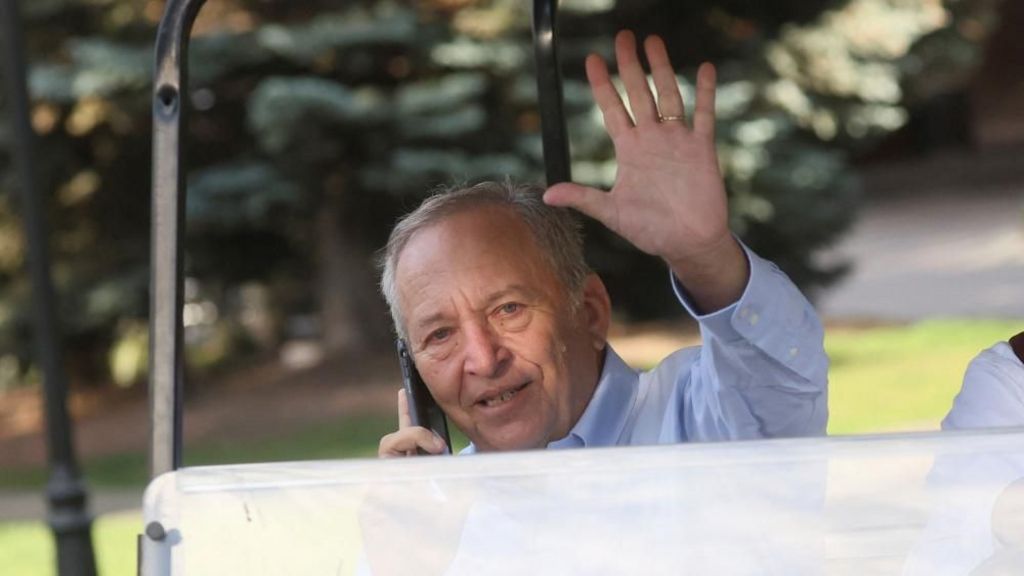
Ex-Harvard president Larry Summers steps back from public role after Epstein email release
Former Harvard University President and ex-US Treasury Secretary Larry Summers has announced his decision to withdraw from public engagements following the release of his emails with convicted financier Jeffrey Epstein. In a statement obtained by CBS News, Summers expressed deep remorse, stating, “I am profoundly ashamed of my actions and acknowledge the pain they have caused. I take full responsibility for my misguided decision to maintain communication with Mr. Epstein.” The emails, disclosed by Congress last week, reveal that Summers corresponded with Epstein until the day before Epstein’s 2019 arrest for sex trafficking minors. The scandal has intensified political tensions, with the US Justice Department launching an investigation into Epstein’s ties to former President Bill Clinton and other prominent Democrats. This decision followed pressure from former President Donald Trump, who also called for investigations into Summers, LinkedIn founder Reid Hoffman, and banks JP Morgan and Chase. Trump emphasized on social media, “Epstein was a Democrat, and he is the Democrat’s problem, not the Republican’s problem!” Clinton has vehemently denied any knowledge of Epstein’s crimes. Summers, who served under both Clinton and former President Barack Obama, is currently a professor at Harvard. In his statement, Summers expressed his intention to “rebuild trust and repair relationships with those closest to me” while continuing his teaching duties. The Center for American Progress, where Summers was a senior fellow, has severed ties with him. The released emails also highlight Epstein’s attempts to connect Summers with influential global figures, including a proposed meeting with the UN president. Summers’ representative previously stated that he deeply regrets maintaining contact with Epstein after his 2008 conviction for soliciting an underage prostitute. The emails, which mention Trump over 1,600 times, have further implicated numerous high-profile individuals in the ongoing scandal.
-
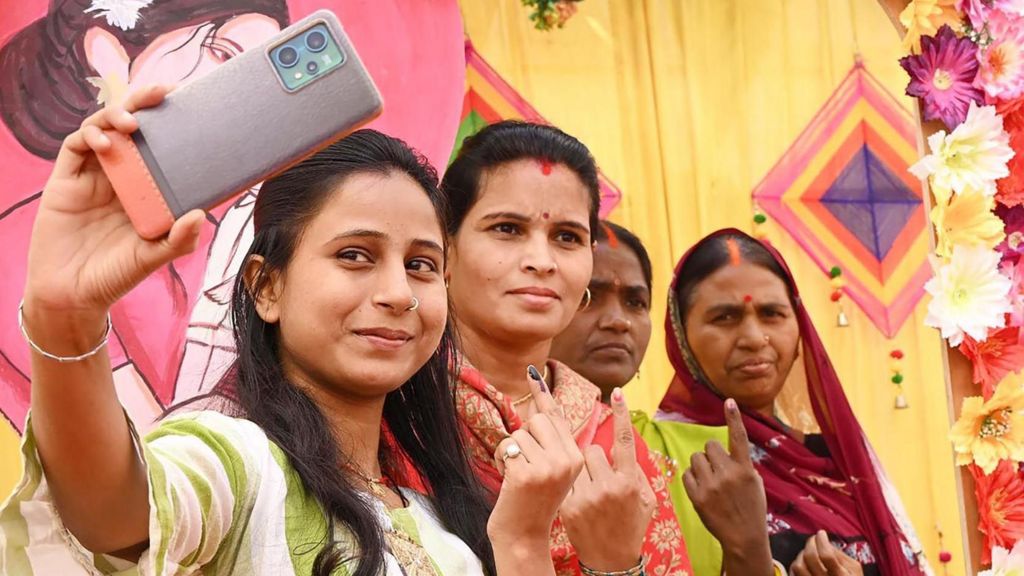
India’s politicians are dishing out election freebies – but can states afford them?
In India, the distribution of freebies has become a cornerstone of electoral strategy, particularly in the lead-up to elections. From televisions and bicycles to gold ornaments, political parties have employed a variety of handouts to sway voters, blurring the lines between welfare economics and populism. Recently, cash transfers targeting women have emerged as a particularly effective tactic. For instance, a ₹10,000 ($112) cash handout to women in Bihar, India’s poorest state, is credited with contributing to a sweeping victory for Prime Minister Narendra Modi’s alliance in the state’s recent election. This strategy has also been replicated in other states, such as Maharashtra, where Modi’s party launched similar women-oriented financial schemes. Opposition parties have followed suit, promising comparable initiatives in their election campaigns. Economists like Jean Drèze argue that such giveaways, while sometimes wasteful, are often the only means by which India’s poor can extract promises from their political representatives. However, Modi himself has warned against the dangers of what he terms ‘revdi culture,’ likening election freebies to the frivolous distribution of sweets. The Indian Supreme Court has also sought to curb the distribution of ‘irrational freebies’ during elections. Despite these warnings, the practice of offering unaffordable handouts as electoral bait continues to dominate Indian politics. Research from brokerage Emkay Global highlights the fiscal pressures this creates. Bihar, for example, announced pre-election schemes amounting to 4% of its GDP, exceeding its capital outlay and diverting funds from long-term, job-creating investments. This trend is not isolated; 21 of India’s 29 states have exceeded the mandated 3% fiscal deficit ceiling, largely due to election-driven spending. The unsustainable nature of such populism is evident in Maharashtra, where the Ladki Bahin financial assistance scheme led to a 0.4% increase in the state’s deficit, forcing the government to roll back some promises post-election. The Reserve Bank of India (RBI) has flagged the rising burden of subsidies on state-level debt as a key concern. While overall state debt has declined to 28.5% of GDP, it remains well above the recommended 20% threshold, with subsidies for farm loan waivers, free electricity, and cash transfers exacerbating the issue. The RBI has urged states to rationalize their subsidy outgoes to avoid crowding out productive expenditure. Despite these warnings, the success of freebies in Bihar and the upcoming state elections in Tamil Nadu, Kerala, and West Bengal suggest that this trend is unlikely to abate. As Emkay Global economists Medhavi Arora and Harshal Patel noted, ‘This election outcome reinforces the freebie wave that has swept states in the last two years, and with more elections on the horizon, one can expect this race to the bottom to continue.’
-
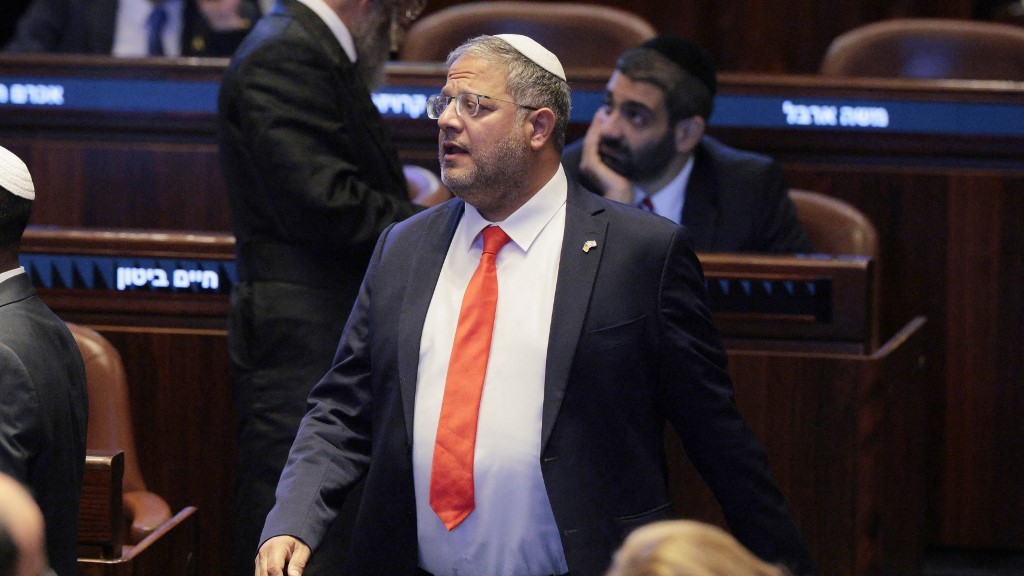
Ben Gvir says Israel must arrest Abbas and kill PA officials if Palestinian state recognised
Israel’s National Security Minister Itamar Ben Gvir has sparked controversy by demanding the arrest of Palestinian President Mahmoud Abbas should the United Nations recognize Palestinian statehood. In a provocative statement on X (formerly Twitter), Ben Gvir also urged targeted assassinations of senior Palestinian Authority (PA) officials, whom he branded as “terrorists.” He revealed that a solitary confinement cell at Ketziot Prison has already been prepared for Abbas, referred to by his honorific name, Abu Mazen. These remarks come ahead of a critical UN Security Council vote on a US-backed resolution endorsing a Gaza peace plan, which includes a “credible pathway” to Palestinian statehood. On Sunday, Kan News reported that Israeli Prime Minister Benjamin Netanyahu’s government is making last-minute diplomatic efforts to remove references to statehood from the draft resolution. The current draft suggests that conditions for Palestinian self-determination and statehood could be met following PA reforms and Gaza’s redevelopment. Meanwhile, the National Commission for Palestinian Popular Action (NCPPA) issued a strong statement rejecting US proposals for an externally imposed transitional administration in Gaza, labeling it as “a new colonialism.” The NCPPA, comprising various Palestinian groups and figures, emphasized that any governing body must reflect the will of the Palestinian people and uphold their right to self-determination, resistance, and freedom under international law.
-
Canada narrowly approves Carney’s first federal budget
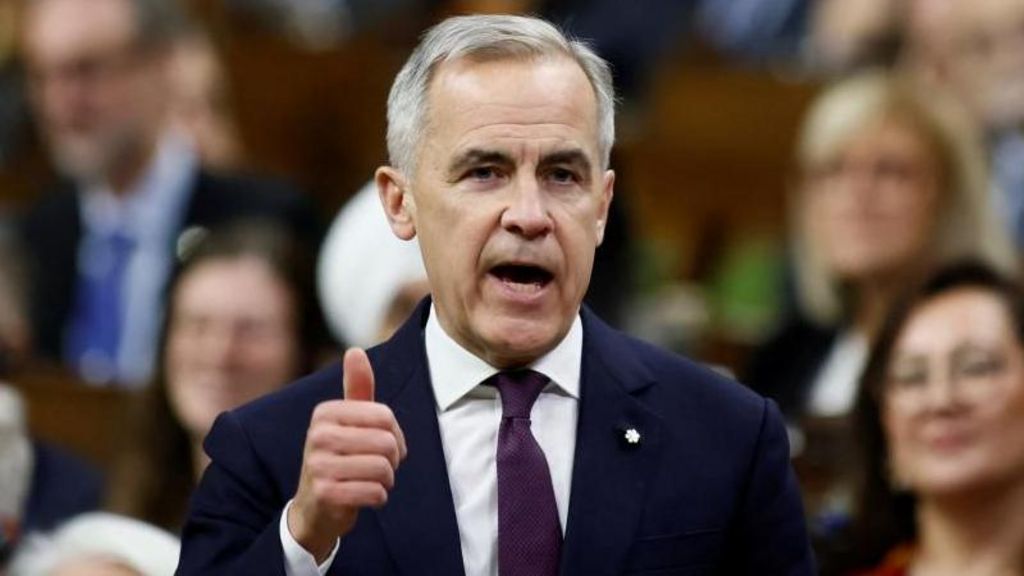
In a razor-thin vote, Canada’s Parliament has approved Prime Minister Mark Carney’s first federal budget, narrowly averting an early election for his minority Liberal government. The fiscal plan, which projects a record deficit of C$78 billion ($55.3 billion), passed with 170 votes in favor and 168 against, relying heavily on support from opposition MPs, including Green Party leader Elizabeth May. Despite widespread criticism from opposition lawmakers, Carney defended the budget as a “generational investment” aimed at bolstering Canada’s economy. The vote was pivotal for the Liberal government, which holds two seats short of a majority, necessitating support from at least two opposition MPs or abstentions from four. Two NDP MPs and House Speaker Francis Scarpaleggia abstained, while Conservative MPs Shannon Stubbs and Matt Jeneroux also refrained from voting. May’s support was secured after Carney committed to advancing Canada’s climate targets. The Conservative Party, led by Pierre Poilievre, and the Bloc Québécois opposed the budget, accusing the government of neglecting affordability concerns. Poilievre criticized the plan as a “credit card budget” that fails to address the cost-of-living crisis. Liberal MP Nathaniel Erskine-Smith expressed concerns about the budget’s shortcomings in tackling housing and climate issues. The budget proposes C$140 billion in new spending over five years to enhance productivity, competitiveness, and resilience, including investments in trade infrastructure and support for businesses affected by US tariffs. However, Carney’s plan to reduce the federal workforce by 10% has sparked backlash from public sector employees. The budget’s passage follows weeks of political drama, including the defection of Conservative MP Chris d’Entremont to the Liberals and the resignation of Matt Jeneroux, raising questions about Poilievre’s leadership.
-

KPop Demon Hunters star on how her life mirrored main character’s journey
Arden Cho, the actress who voiced Rumi in Netflix’s animated film ‘KPop Demon Hunters,’ has shared her personal journey of identity and acceptance. The film, which topped Netflix charts in 93 countries, tells the story of a female K-Pop trio saving the world from evil forces. Cho, a Korean-American, found resonance in Rumi’s struggle with her dual identity as part human, part demon. Growing up in Texas as the eldest daughter of Korean immigrant parents, Cho faced challenges in American society, often feeling alienated due to her Asian appearance. ‘I hated that I looked Asian, that I didn’t have blue eyes and blonde hair, because that’s what was beautiful at the time,’ she recalls. The film’s success, with 33 million views in just two weeks, has made Cho a role model for Asian-American children, something she lacked in her own childhood. She believes the film has contributed to a greater appreciation of Korean culture globally. Despite the challenges faced by Asian-led projects, Cho’s personal efforts to connect with the film’s team and her hope for humanity’s respect for authentic art have been pivotal. The film’s soundtrack has also dominated global music charts, with seven tracks on the Billboard Hot 100, and fans are eagerly anticipating a sequel. Cho remains hopeful, emphasizing the film’s ability to bring hope and unity to diverse communities.
-
Dubai: Dewa customers can now receive deposit refunds of up to Dh4,000 in just 30 minutes
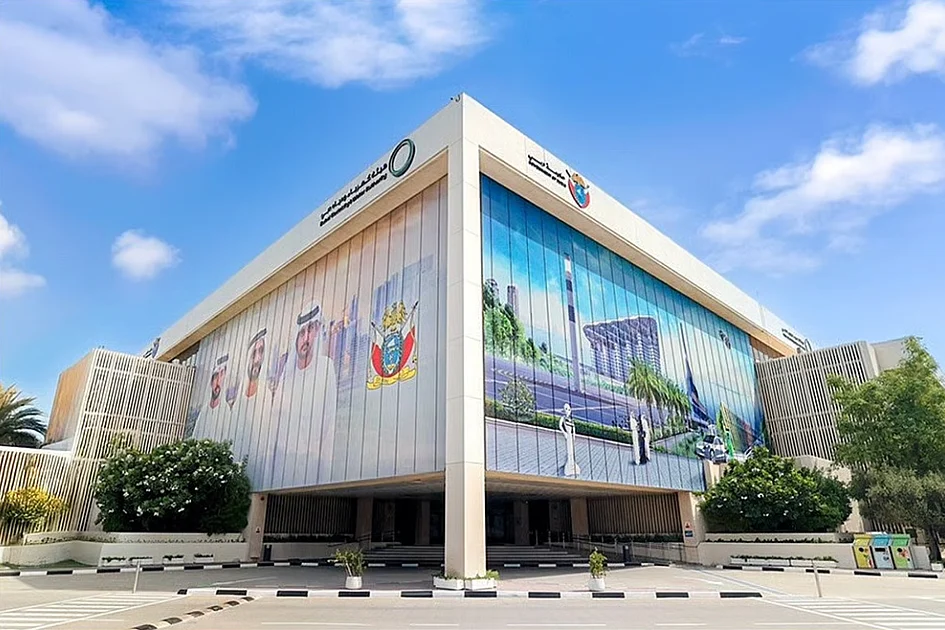
Dubai Electricity and Water Authority (Dewa) has revolutionized its deposit refund process, enabling customers to receive refunds of up to Dh4,000 in just 30 minutes. This marks a significant improvement from the previous four-day processing time, thanks to a newly automated system. The upgraded process incorporates advanced validation checks, allowing direct bank transfers to customer accounts without manual intervention, ensuring enhanced speed, accuracy, and reliability. This innovation aligns with Dewa’s broader digital transformation efforts, which include the recent launch of the updated Smart Living Programme on October 18. The programme leverages artificial intelligence to provide hyper-personalized recommendations for reducing electricity and water consumption by comparing individual usage with neighborhood averages. Customers can access these insights through the Dewa app, fostering greater awareness and efficiency in resource consumption. Dr. Ali Rashed Bin Ghaith Alsuwaidi, Dewa’s Chief Innovation Officer, emphasized the programme’s role in promoting sustainable living. This development underscores Dewa’s commitment to leveraging technology to enhance customer experience and operational efficiency.
-
The Trump Organization eyes real estate deal in Saudi government development: Report
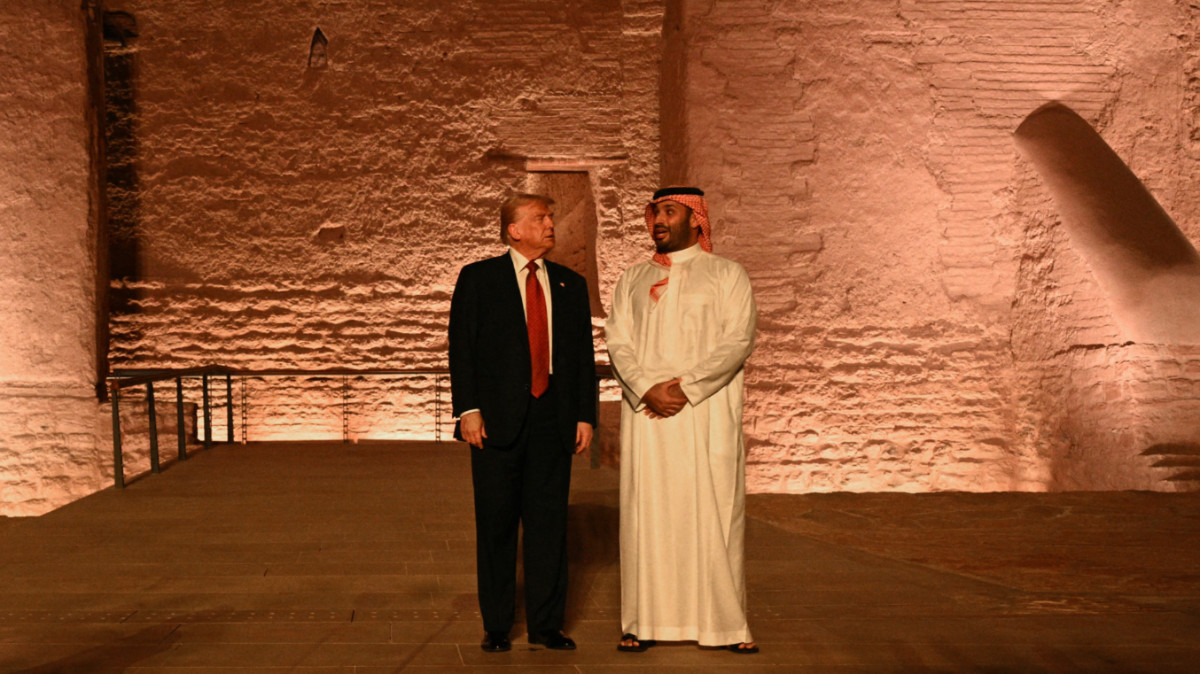
The Trump Organization is reportedly in advanced negotiations to establish a branded property within one of Saudi Arabia’s most ambitious government-owned real estate developments. Jerry Inzerillo, CEO of the Saudi company spearheading the Diriyah project, hinted to The New York Times that an official announcement is imminent. ‘Nothing announced yet, but soon to be,’ Inzerillo stated, emphasizing that a deal is ‘just a matter of time.’
Diriyah, the ancestral home of the Al-Saud ruling family and a UNESCO World Heritage site, is undergoing a $63 billion transformation into a luxury destination featuring hotels, restaurants, shops, and museums. During his May visit to Saudi Arabia, former U.S. President Donald Trump toured the site, which Inzerillo described as a strategic move to appeal to Trump’s developer instincts. ‘It turned out to be a good stroke of luck and maybe a little bit clever of us to say, ‘OK, let’s appeal to him as a developer’ – and he loved it,’ Inzerillo remarked.
This potential deal aligns with the Trump Organization’s expanding footprint in the Gulf region. The company, managed by Trump’s sons Eric and Donald Jr., has secured numerous high-profile projects across Saudi Arabia, the UAE, Qatar, Oman, and the Maldives. These ventures often involve licensing the Trump brand to foreign developers, a lucrative strategy that generated $21.9 million in revenue last year alone, according to The New York Times.
The Trump Organization’s Gulf expansion has not been without controversy, raising questions about potential conflicts of interest and favoritism during Trump’s presidency. Despite these allegations, the organization continues to forge partnerships with influential regional firms like Saudi Arabia’s Dar Global, which recently announced a new luxury hotel project in the Maldives under the Trump International brand.
As the Trump family business thrives abroad, its reliance on foreign partnerships underscores the global appeal of the Trump name, even as it navigates ongoing scrutiny.
-
Gunmen kidnap 25 schoolgirls in northwestern Nigeria
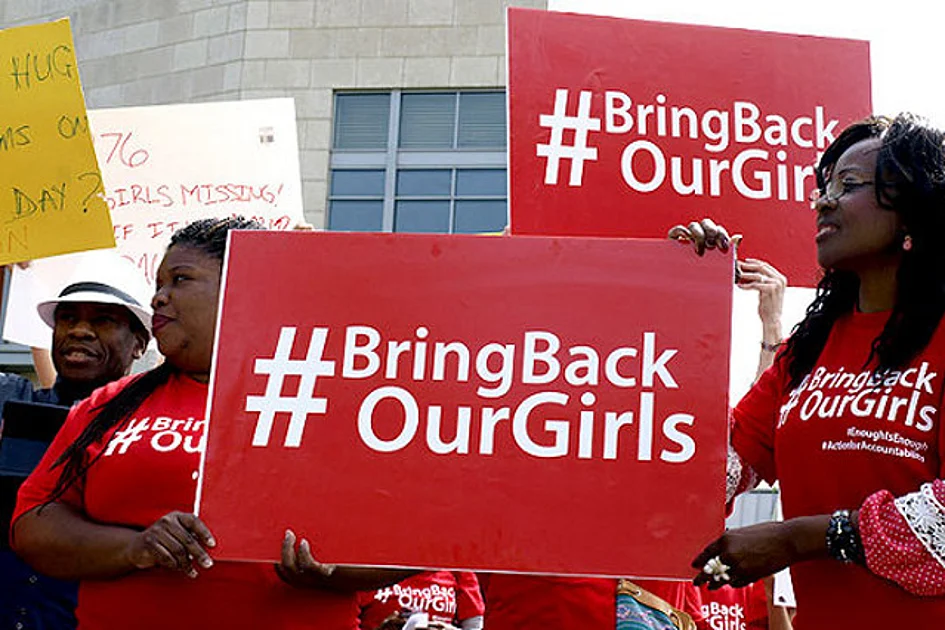
In a harrowing early morning raid on Monday, gunmen from a criminal gang stormed the Government Girls Comprehensive Secondary School in Kebbi state, northwestern Nigeria, kidnapping 25 schoolgirls and killing a staff member. Armed with sophisticated weapons, the assailants breached the school’s defenses, abducting the students and fleeing to an unknown location. The attack has reignited fears of a spiraling kidnapping crisis in Nigeria, reminiscent of the infamous 2014 Chibok abduction, where 276 girls were taken by Boko Haram insurgents. Police, military units, and local vigilantes have launched a manhunt to rescue the abducted students and apprehend the perpetrators. This incident marks the second mass school abduction in Kebbi in four years, following a 2021 attack where over 100 students and staff were taken. The region has become a hotspot for kidnappings, with heavily armed gangs exploiting the security vacuum to terrorize communities. Despite efforts by authorities to negotiate peace deals and deploy vigilante groups, the kidnapping crisis continues to escalate, leaving families and communities in despair. Nigeria’s northwest, plagued by armed violence and banditry, remains the epicenter of this growing humanitarian and security crisis.