博客

  • Tariffs, AI boom could test global growth’s resilience, OECD says

    Tariffs, AI boom could test global growth’s resilience, OECD says

    The Organisation for Economic Cooperation and Development (OECD) released its latest Economic Outlook on Tuesday, presenting a complex global economic landscape where artificial intelligence investments are counterbalancing the disruptive effects of U.S. tariff policies. While maintaining cautious optimism, the Paris-based intergovernmental organization highlighted the delicate equilibrium that could be easily disrupted by renewed trade conflicts or unmet AI expectations.

    The comprehensive report maintains its previous global growth projections, forecasting a gradual deceleration from 3.2% in 2025 to 2.9% in 2026, followed by a modest recovery to 3.1% in 2027. This stability masks significant regional variations and underlying vulnerabilities that could test the resilience of worldwide economic expansion.

    United States economic prospects appear strengthened, with the OECD revising upward its 2025 growth forecast to 2.0% (from 1.8%) and 2026 projection to 1.7% (from 1.5%). This improved outlook stems from substantial AI sector investments, continued fiscal support, and anticipated Federal Reserve rate reductions, which collectively mitigate the negative impacts of import tariffs, reduced immigration, and federal employment cuts.

    China’s economic trajectory shows initial resilience with a upgraded 2025 forecast of 5.0% growth (from 4.9%), though analysts expect a slowdown to 4.4% in 2026 as fiscal measures diminish and new U.S. tariffs take full effect. The eurozone demonstrates modest improvement with 2025 growth revised to 1.3% (from 1.2%), primarily driven by Germany’s robust labor market and increased public expenditure. However, fiscal tightening in France and Italy is projected to constrain 2026 expansion to 1.2%.

    Japan’s economic performance exceeded expectations with a 2025 growth upgrade to 1.3% (from 1.1%), supported by strong corporate profitability and investment, though a slowdown to 0.9% is anticipated in 2026.

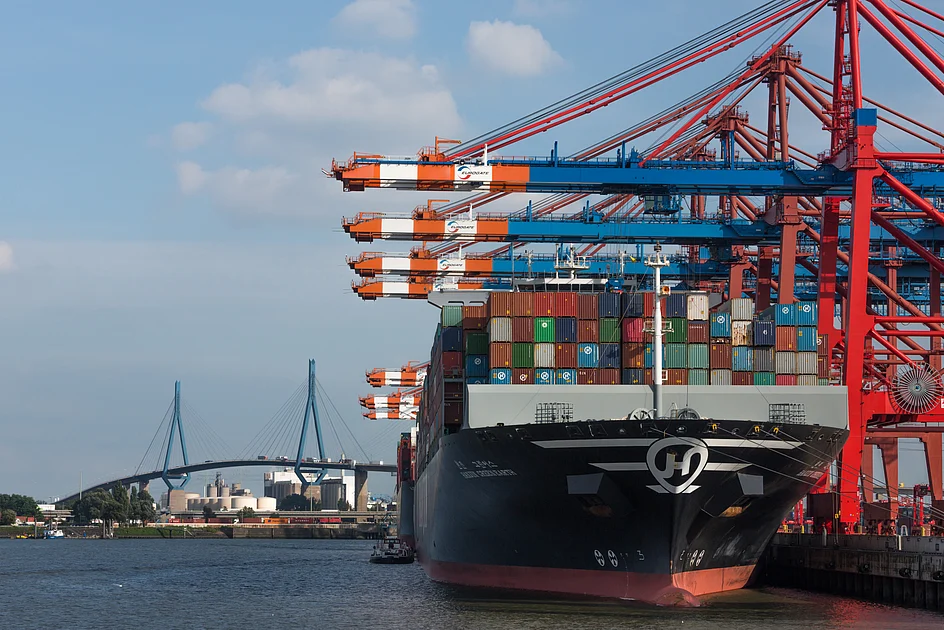
    The report highlights concerning trade dynamics, with global trade growth expected to decline significantly from 4.2% in 2025 to 2.3% in 2026 as tariff implementations dampen investment and consumer activity. Persistent trade policy uncertainty continues to hinder prospects for substantial recovery.

    Inflation projections indicate a gradual return to central bank targets across most major economies by mid-2027. The United States may experience a mid-2026 inflation peak due to tariff effects before subsequent easing, while China and select emerging markets could see modest inflation increases as production capacity normalizes.

    Monetary policy is expected to remain accommodative, with most central banks maintaining or reducing borrowing costs throughout the coming year. The Federal Reserve is projected to implement moderate rate cuts by late 2026, assuming no unexpected inflation surges from trade measures.

    The OECD concludes that while current economic resilience is noteworthy, the coexistence of AI-driven optimism and trade policy uncertainties creates a fragile balance that requires careful monitoring and international cooperation to sustain global growth.
  • Trump vowed fewer regulations and lots more oil. He’s delivered on one.

    Trump vowed fewer regulations and lots more oil. He’s delivered on one.

    Despite sweeping campaign pledges to dramatically expand U.S. fossil fuel production, President Donald Trump’s first year in office has yielded mixed results for the energy sector. While the administration has successfully dismantled numerous environmental regulations and delivered substantial tax benefits to oil companies, actual production increases have remained modest and failed to generate promised job growth or consumer price reductions.

    Energy economists report that current oil output of approximately 13.9 million barrels per day represents only a slight increase from the record 13.4 million barrels achieved during the Biden administration. This incremental growth stems primarily from improved operational efficiency rather than new drilling initiatives. Meanwhile, crude prices have declined from $75 to below $60 per barrel since Trump took office.

    The administration’s policy approach has produced significant contradictions. While implementing tariffs that raised costs for essential drilling materials like steel and aluminum, Trump simultaneously signed legislation delivering nearly $6 billion in annual tax breaks to major fossil fuel companies. His administration has opened millions of acres in Alaska’s Arctic National Wildlife Refuge to drilling and moved to strike down pollution controls on power plants and industrial facilities.

    Consumer energy costs have moved contrary to Trump’s campaign promises. Gasoline prices averaged $3.069 per gallon—virtually unchanged from year-ago levels—while household electricity bills have increased 11% nationally. Environmental groups estimate the repeal of climate regulations could add 22-32 billion metric tons of greenhouse gases to the atmosphere by 2055, with associated health and economic consequences.

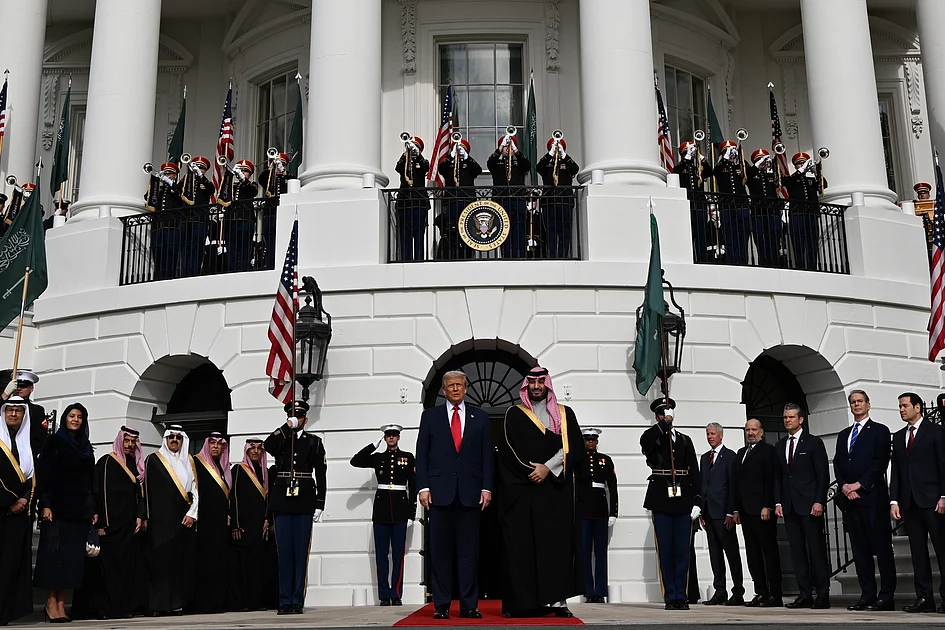
    The international dimension reveals further complexity. While hosting Saudi Arabia’s Crown Prince Mohammed bin Salman and striking deals for foreign purchases of U.S. liquefied natural gas, the administration has simultaneously worked to thwart global climate agreements. This occurs even as Saudi Arabia pursues its own economic diversification away from oil.

    Energy analysts characterize the investment climate as uncertain and confusing for industry players. While acknowledging the administration’s rhetorical support for energy dominance, experts note that tangible benefits for both industry and consumers have remained marginal at best, with the most significant impact being the systematic dismantling of previous climate policies.

  • Hegseth cites ‘fog of war’ in defending follow-on strike in scrutinized attack on alleged drug boat

    Hegseth cites ‘fog of war’ in defending follow-on strike in scrutinized attack on alleged drug boat

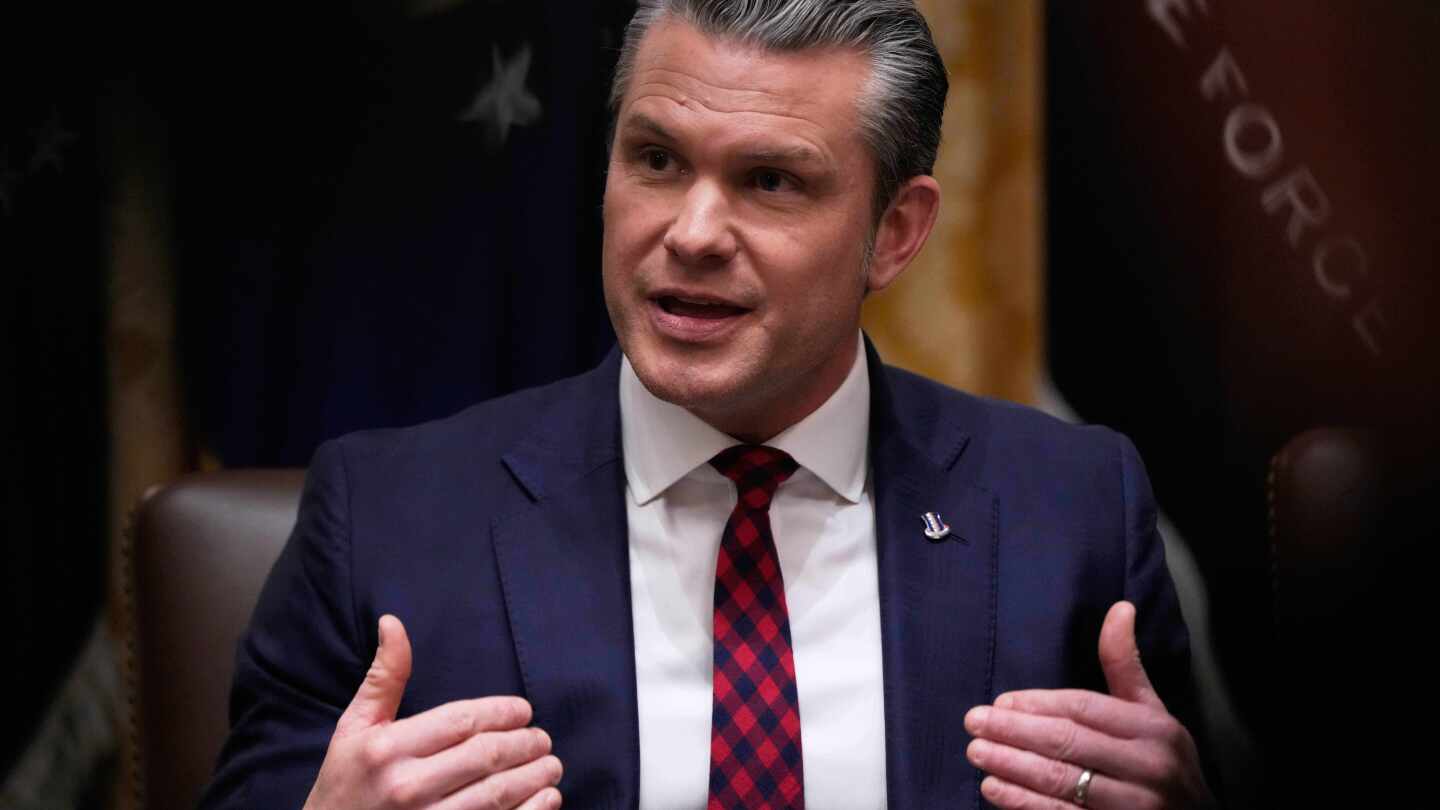
    U.S. Defense Secretary Pete Hegseth has invoked the ‘fog of war’ doctrine to justify a controversial secondary military strike in the Caribbean Sea that resulted in casualties among survivors from an initial engagement. The incident, which targeted a vessel suspected of narcotics trafficking earlier this September, has prompted congressional scrutiny and raised questions about military protocol.

    During Tuesday’s White House cabinet meeting, Secretary Hegseth defended the decision-making process, stating he observed no survivors in the water before authorizing the follow-up attack. ‘The vessel was actively engulfed in flames at the time of the secondary engagement,’ Hegseth testified, emphasizing the chaotic nature of combat operations. The Defense Secretary acknowledged he departed the operational theater following the initial strike, delegating full authority to Navy Vice Admiral Frank ‘Mitch’ Bradley who executed the subsequent action.

    The Washington Post’s initial reporting revealed Hegseth issued verbal orders for the secondary strike that eliminated survivors from the first engagement. White House officials confirmed Monday that Admiral Bradley operated ‘within established legal parameters and his conferred authority’ when initiating the follow-up attack.

    Congressional committees have announced formal reviews into U.S. military protocols regarding drug interdiction operations. Admiral Bradley is scheduled to deliver a classified briefing to military oversight legislators this Thursday. When questioned about the controversial strike, President Donald Trump expressed limited familiarity with the incident, noting he ‘relies on Secretary Hegseth’s assessment’ and had not received comprehensive briefing materials.

  • Pope Leo leads mass for 150,000 worshippers in Beirut

    Pope Leo leads mass for 150,000 worshippers in Beirut

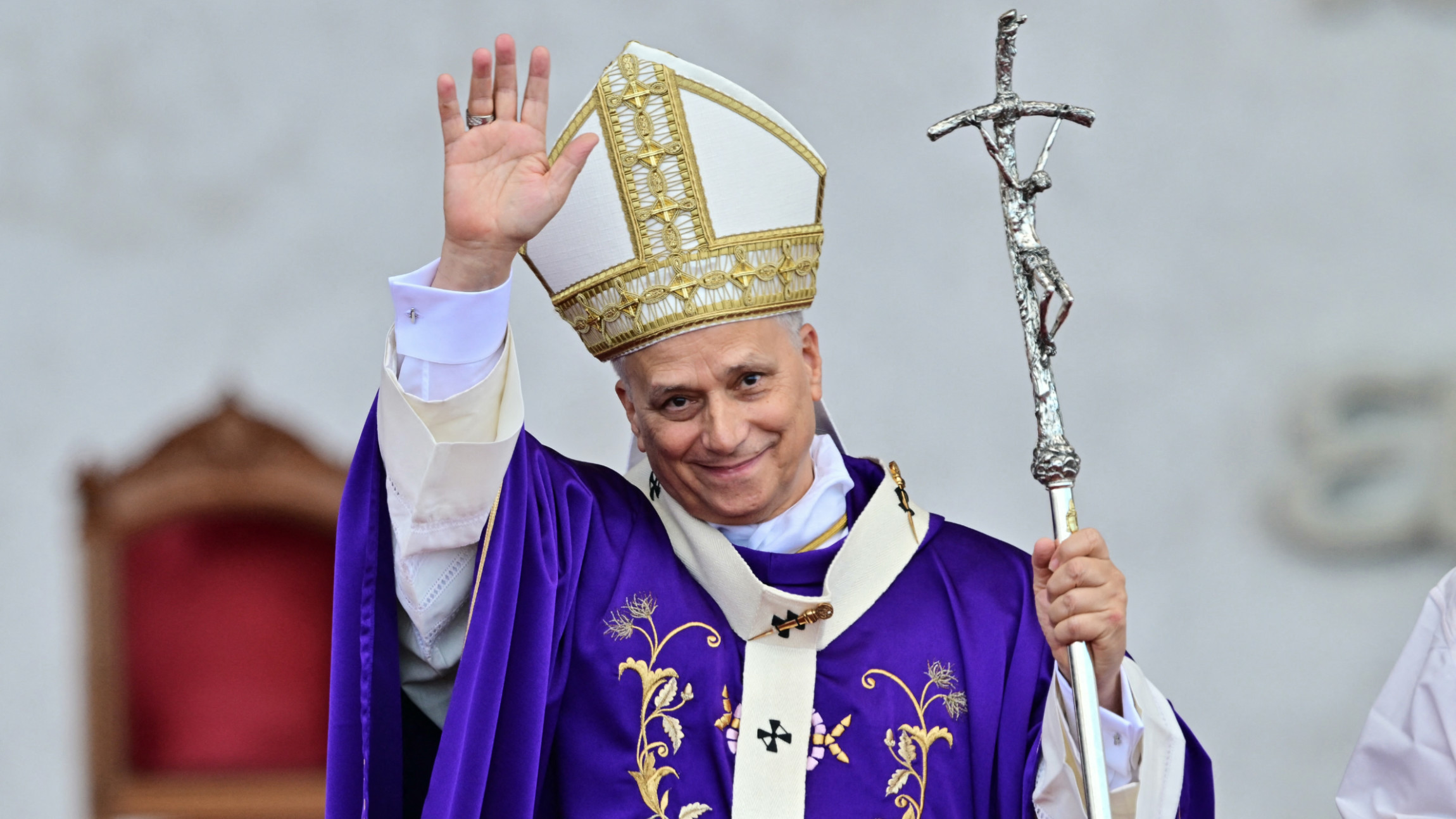
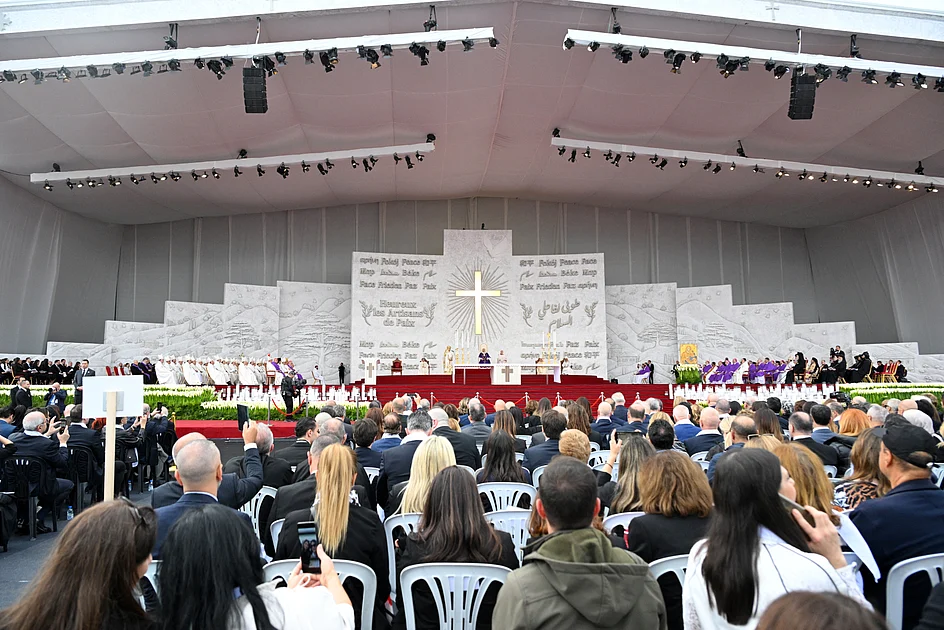
    BEIRUT – In a historic culmination of his first international pilgrimage, Pope Leo XIV delivered a stirring appeal for national reconciliation to Lebanon’s fractured communities during a massive waterfront mass attended by approximately 150,000 faithful.

    The pontiff’s three-day visit, which began in Turkey before concluding in Lebanon, transformed into a diplomatic mission addressing the nation’s profound political paralysis, economic collapse, and sectarian divisions. Speaking before a diverse audience comprising Lebanon’s highest officials, international visitors, and migrant workers, Leo emphasized that “armed struggle brings no benefit” while championing negotiation and dialogue as constructive alternatives.

    The emotional apex of the journey occurred earlier at Beirut’s port, where the Pope conducted a solemn memorial at the site of the catastrophic 2020 chemical explosion that killed 220 people. After laying a floral wreath and lighting a lamp amidst the haunting backdrop of ruined grain silos, he comforted 60 survivors and bereaved relatives, presenting each with a rosary while acknowledging their ongoing pursuit of justice.

    “I carry with me the pain, and the thirst for truth and justice, of so many families, of an entire country,” the pontiff reflected before departing.

    The visit produced striking moments of symbolic unity as Hezbollah’s al-Mahdi Scouts joined multireligious crowds in welcoming the Pope with Vatican flags alongside portraits of their slain leader Hassan Nasrallah. Despite the festive atmosphere in Beirut’s southern suburbs—heavily damaged during recent conflicts—Israeli military operations continued unabated in southern Lebanon, underscoring the urgent need for intervention that residents had hoped the papal visit might inspire.

    In his final address, Pope Leo specifically encouraged Levantine Christians to remain “artisans of peace” while calling upon the international community to intensify reconciliation efforts across the Middle East.

  • Israel-Turkey rift dampens Gaza force plans as allies get cold feet

    Israel-Turkey rift dampens Gaza force plans as allies get cold feet

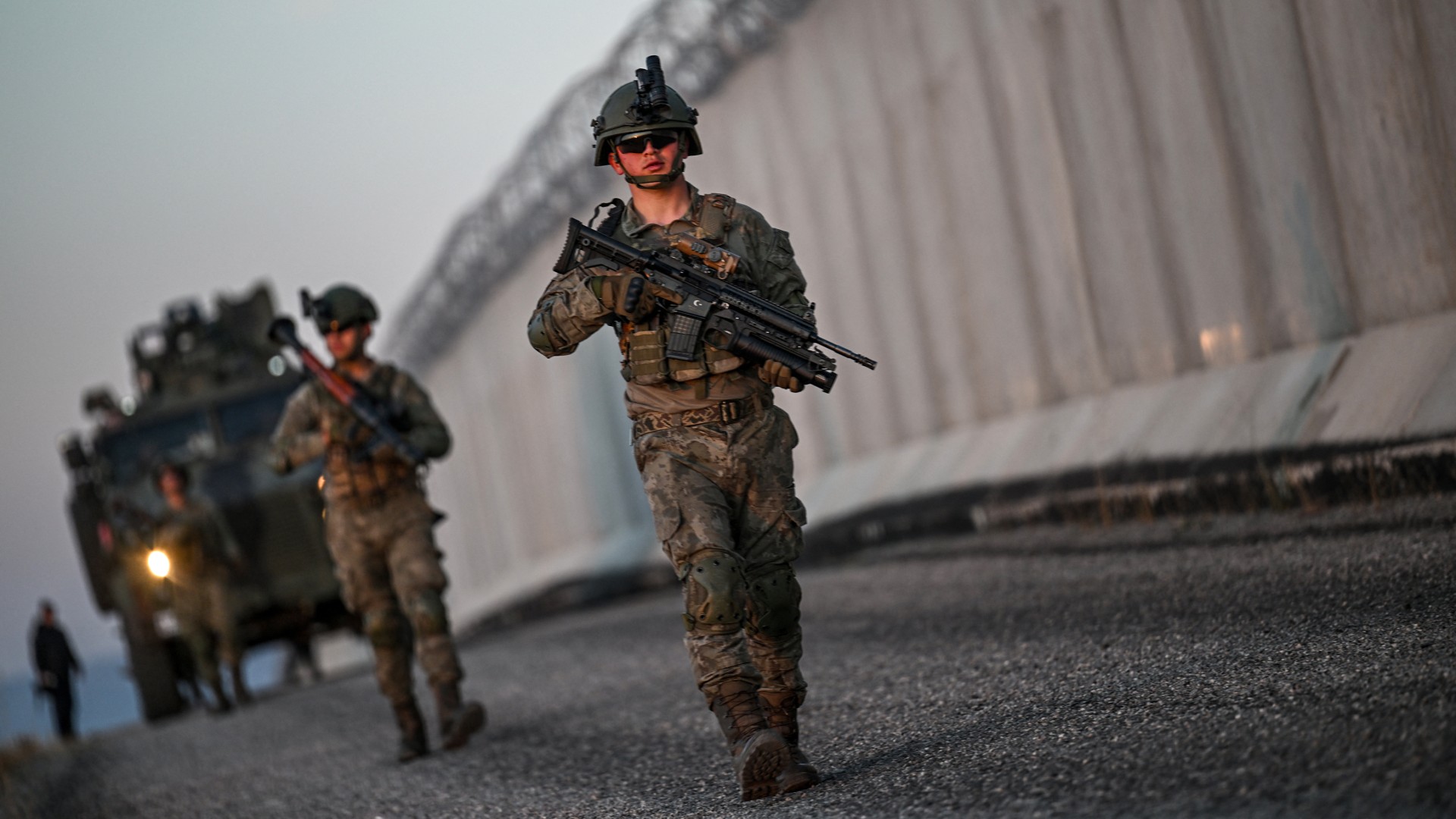
    Diplomatic efforts to establish a United Nations-mandated international stabilization force for Gaza have reached an impasse due to escalating tensions between Israel and Turkey, according to sources familiar with the negotiations. The United States, tasked with coordinating the multinational effort, faces significant challenges in bridging the divide between these key regional powers.

    The UN Security Council previously approved the creation of a peacekeeping contingent with preliminary support from several nations including Turkey, Qatar, Egypt, the UAE, Saudi Arabia, Indonesia, Pakistan and Jordan. However, implementation has stalled as Israel maintains its firm opposition to Turkish military presence in Gaza, despite Ankara’s readiness to deploy approximately 2,000 experienced peacekeeping personnel.

    The diplomatic deadlock has created a domino effect, with multiple nations reconsidering their participation. Saudi Arabia, Azerbaijan, Pakistan and Indonesia have indicated reluctance to contribute troops without Turkish involvement, while the UAE has formally declined participation citing insufficient operational framework. Emirati officials expressed concerns that Qatari and Turkish involvement could potentially empower groups affiliated with the Muslim Brotherhood and Hamas in reconstruction efforts.

    Complicating matters further, Turkey’s recent issuance of an arrest warrant for Israeli Prime Minister Benjamin Netanyahu on charges of crimes against humanity has exacerbated tensions during sensitive negotiations. This development follows Israel’s previous blockage of Turkish search and rescue teams from entering Gaza and ongoing trade restrictions imposed since spring 2024.

    The proposed stabilization force, envisioned to comprise between 15,000-20,000 troops organized into three brigades, now faces an uncertain timeline. While some US officials target deployment by early 2026, others suggest operations might commence as early as January, though participation arrangements remain highly fluid. The UAE has indicated it will instead focus on humanitarian aid and supporting local governance structures in Gaza.

  • Key negotiators in the talks to end the war in Ukraine

    Key negotiators in the talks to end the war in Ukraine

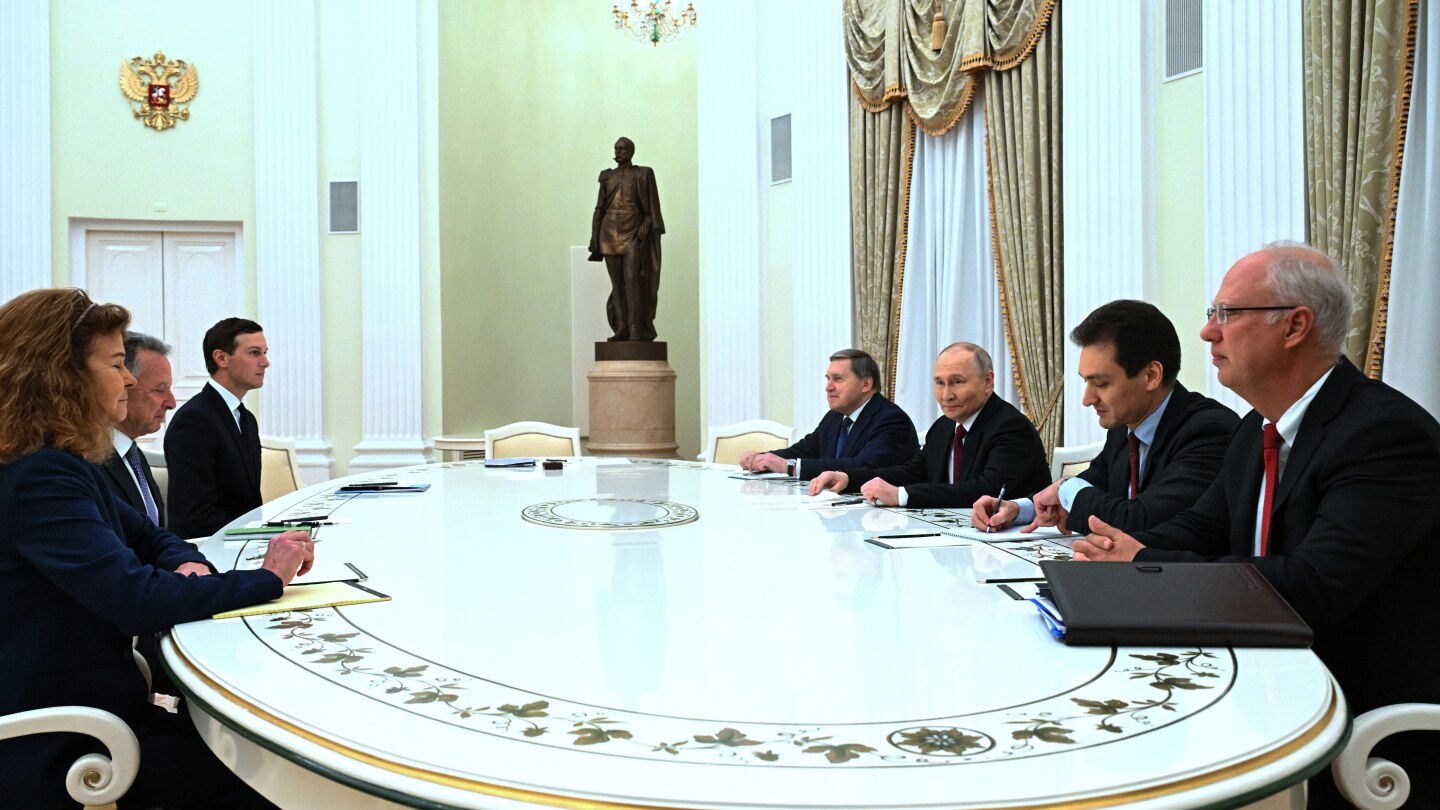
    The Trump administration is accelerating diplomatic efforts to broker a resolution to the Ukraine conflict, deploying an unconventional team of negotiators who have engaged in intensive shuttle diplomacy across global capitals. This diplomatic offensive has brought together a unique combination of government officials and private citizens working through both formal and backchannel communications.

    Leading this unconventional diplomatic corps is Steve Witkoff, a real estate billionaire and longtime Trump confidant who has emerged as a key foreign policy facilitator. Despite lacking Senate confirmation, the 68-year-old businessman has made multiple trips to Moscow while coordinating efforts to resolve both the Ukraine and Gaza conflicts. His personal relationship with the President has provided unusual access to high-stakes negotiations.

    Secretary of State Marco Rubio has spearheaded official diplomatic channels, recently leading the U.S. delegation in Geneva where significant amendments were proposed to the U.S.-Russia mediated peace framework. These modifications have drawn attention for their perceived alignment with Russian interests.

    Jared Kushner, the President’s son-in-law and former White House adviser, has continued his diplomatic involvement following his earlier ceasefire achievement between Israel and Hamas. His recent meetings with Ukrainian representatives in Florida and Russian officials in Moscow demonstrate his ongoing role in the administration’s peace efforts.

    The negotiation team includes unexpected participants such as Army Secretary Dan Driscoll, a 38-year-old Iraq War veteran and friend of Vice President JD Vance. Driscoll personally presented Trump’s peace proposal to Ukrainian President Zelenskyy in Kyiv before engaging Russian officials in the United Arab Emirates.

    Ukraine’s representation has shifted with the appointment of Rustem Umerov to lead their delegation following the resignation of Zelenskyy’s chief of staff. Umerov brings substantial experience from his tenure as defense minister and involvement in previous negotiation rounds.

    The Russian delegation features seasoned diplomats including Yuri Ushakov, a presidential aide and former ambassador to the United States, who has received coaching from Witkoff on presenting proposals to the Trump administration. Kirill Dmitriev, head of Russia’s sovereign wealth fund despite being on the U.S. sanctions list, has emerged as an important backchannel communicator. Veteran Foreign Minister Sergey Lavrov continues to represent Russian interests with his characteristic determination and linguistic fluency.

    This multifaceted diplomatic push represents one of the most significant efforts to end the conflict, characterized by its blend of formal government channels and unconventional personal diplomacy.

  • Samsung unveils first multi-folding phone as competition set to heat up

    Samsung unveils first multi-folding phone as competition set to heat up

    Samsung Electronics has officially unveiled its groundbreaking Galaxy Z TriFold smartphone, marking the company’s entry into the multi-folding device segment. The South Korean technology giant introduced the innovative device on Tuesday, December 2, 2025, as competition in the foldable smartphone market intensifies.

    The Galaxy Z TriFold represents a significant technological advancement with its three-panel design that unfolds into an expansive 253.1 millimeter (10-inch) display, providing approximately 25% more screen real estate than Samsung’s current Galaxy Z Fold 7 model. Priced at 3.59 million won ($2,440.17), the device incorporates Samsung’s largest battery ever featured in flagship models and supports super-fast charging capabilities that can reach 50% capacity within just 30 minutes.

    Manufactured in South Korea, the Galaxy Z TriFold will debut in domestic markets on December 12, 2025, with subsequent releases planned for China, Singapore, Taiwan, and the United Arab Emirates before year-end. United States consumers can anticipate availability beginning in the first quarter of 2026.

    Industry analysts perceive Samsung’s multi-folding debut as primarily a technological demonstration rather than a volume-driven product. Ryu Young-ho, senior analyst at NH Investment Securities, noted that as a first-generation commercialized trifold design, Samsung will likely maintain conservative production volumes while assessing market reception and addressing potential durability concerns.

    The foldable smartphone market continues to face growth constraints despite increasing competition, with Huawei launching the industry’s first three-way folding device in September 2025 and Apple expected to enter the segment next year. According to Counterpoint Research, foldables are projected to constitute less than 2% of total smartphone market share in 2025, potentially reaching under 3% by 2027.

    Counterpoint data revealed Samsung’s foldable market shipment share experienced dramatic fluctuation, jumping from 9% to 64% between the second and third quarters of 2025, highlighting the market’s nascent stage and sensitivity to product launch timing. The research firm anticipates 14% market growth this year, accelerating to approximately 30% annual growth in 2026 and 2027 as Apple’s entry brings renewed attention to the category.

  • What is Honduras ex-president accused of and why has Trump pardoned him?

    What is Honduras ex-president accused of and why has Trump pardoned him?

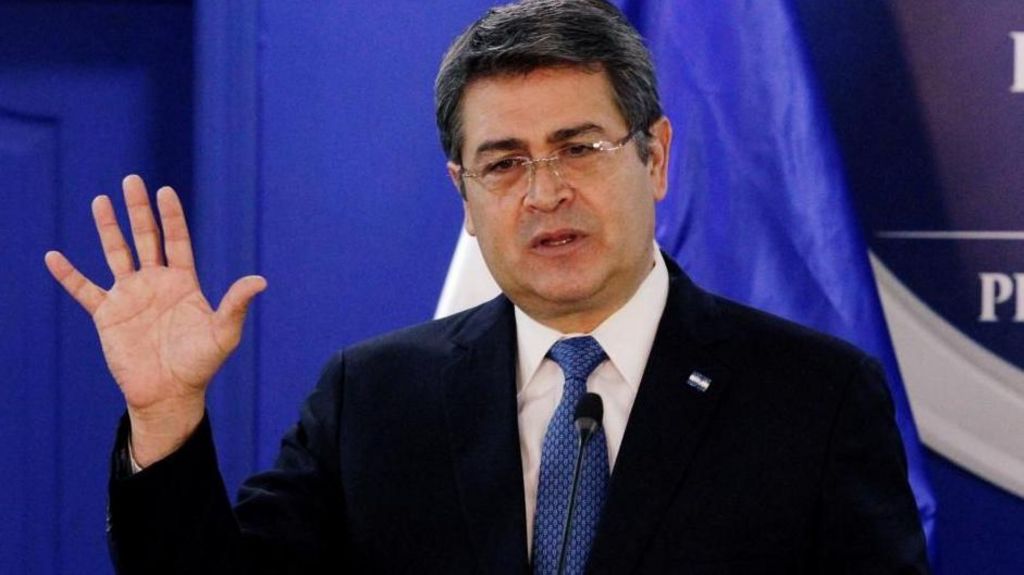
    In a stunning reversal of justice, former Honduran President Juan Orlando Hernández has been released from prison following a presidential pardon from Donald Trump, despite being convicted for orchestrating one of the most extensive drug trafficking operations in hemispheric history.

    The convicted leader, sentenced to 45 years imprisonment by a U.S. federal court in 2024 for masterminding a scheme that funneled over 400 tons of cocaine into the United States, walked free after Trump declared him a victim of “political persecution” and “over-prosecution” by the Biden administration’s Justice Department.

    Hernández’s dramatic fall from power culminated a remarkable political trajectory that saw the conservative National Party leader maintain cordial relationships with consecutive U.S. administrations. Initially courted by Barack Obama during the migrant children crisis and subsequently endorsed by Trump following his controversial 2017 re-election victory, Hernández’s fortunes reversed when federal prosecutors uncovered his intricate partnership with notorious drug cartels.

    Evidence presented during his three-week trial revealed Hernández accepted million-dollar bribes from infamous drug lord Joaquín “El Chapo” Guzmán during his initial presidential campaign, exchanging political protection for secured narcotics routes through Honduras. Prosecutors demonstrated how multiple state institutions, including the Honduran National Police, actively facilitated cocaine shipments while Hernández allegedly used campaign funds derived from drug profits to consolidate power.

    The former president’s legal troubles intensified following the 2019 conviction of his brother, Juan Antonio “Tony” Hernández, who received a life sentence for cocaine smuggling. Shortly after leaving office in 2022, Hernández faced extradition to the United States, where he eventually received what prosecutors termed a “historic” sentence for narcotics trafficking and weapons charges.

    Trump’s pardon announcement coincided with his endorsement of National Party candidate Tito Asfura in Honduras’ ongoing presidential election, a move analysts suggest reflects strategic alignment with right-leaning hemispheric allies. The decision has bewildered legal experts and policy analysts, who note the stark contradiction between Trump’s vehement anti-drug trafficking rhetoric and his liberation of a convicted narcotics kingpin.

    White House Press Secretary Karoline Leavitt defended the pardon as necessary to “correct the wrongs” of the Biden Justice Department, while acknowledging Trump’s simultaneous commitment to combating “narco-terrorists” throughout the Americas. U.S. media reports indicate Hernández personally appealed to Trump in a four-page October letter, characterizing his prosecution as politically motivated and praising the former president’s leadership.

    The unprecedented pardon has ignited intense scrutiny regarding the intersection of diplomatic relations, drug enforcement policy, and the application of presidential clemency powers in cases involving international narcotics trafficking and corruption.

  • Look: Pope Leo visits site of Beirut port blast, holds mass

    Look: Pope Leo visits site of Beirut port blast, holds mass

    BEIRUT – In a profound gesture of solidarity, Pope Leo XIV concluded his inaugural international pilgrimage with a massive outdoor mass attended by approximately 150,000 congregants on Beirut’s waterfront Tuesday. The spiritual gathering marked the culmination of a three-day visit to Lebanon, a nation grappling with multifaceted crises.

    The pontiff’s itinerary included a solemn visit to the Beirut port explosion site, where he offered silent prayers and met with relatives of victims still seeking justice for the August 4, 2020 catastrophe that killed over 220 people. The disaster, one of history’s largest non-nuclear explosions, resulted from improperly stored ammonium nitrate that authorities had repeatedly warned about.

    Earlier in his visit, the Pope received an enthusiastic reception from thousands of Lebanese youth at Bkerke, headquarters of the Maronite Church. He implored the young generation to harness their enthusiasm to ‘change the course of history’ and build ‘a new future’ for their beleaguered nation.

    The visit provided a temporary respite for citizens like Yasmine Chidiac, who noted the papal visit ‘has brought a smile back to our faces.’ Many Lebanese remain traumatized by recent conflicts with Israel and fear renewed hostilities, making the spiritual leader’s message of hope particularly significant.

    Security measures intensified throughout the capital, with authorities establishing checkpoints and restricting access to central Beirut areas where papal events were held. The Pope also visited a psychiatric hospital operated by nuns and convened an interreligious meeting with Christian and Muslim leaders, urging collective action against intolerance and violence.

  • Sabrina Carpenter and Franklin the Turtle in tiff with Trump administration over use of work

    Sabrina Carpenter and Franklin the Turtle in tiff with Trump administration over use of work

    The U.S. Defense Department has triggered a significant cultural and diplomatic controversy by appropriating Franklin the Turtle, a cherished Canadian children’s book character, for propagandistic military content. Defense Secretary Pete Hegseth posted a doctored image on social media depicting the anthropomorphic turtle operating heavy weaponry from a military helicopter to attack alleged drug traffickers. The manipulated artwork, styled as a mock book cover titled “Franklin Targets Narco Terrorists,” represents an aggressive psychological operation amid ongoing U.S. strikes against Venezuelan drug trafficking vessels.

    Kids Can Press, the Toronto-based publisher of the Franklin series, issued a forceful condemnation of what it termed “denigrating, violent, and unauthorized use” of their intellectual property. The company emphasized that Franklin represents values of “kindness, empathy, and inclusivity” that are fundamentally incompatible with violent militaristic messaging. The character, known for navigating childhood challenges like learning to ride a bike, has been a cultural icon for generations of Canadian children.

    This incident forms part of a broader pattern of the U.S. administration co-opting popular culture for political messaging. Simultaneously, pop artist Sabrina Carpenter vehemently protested the White House’s use of her music in deportation promotion videos, labeling the practice “evil and disgusting.” These controversies follow previous instances involving Pokémon theme music and British singer Jess Glynne’s work being used without permission in government deportation content.

    The Pentagon responded defensively through spokesperson Sean Parnell, questioning whether Franklin should demonstrate “inclusivity of drug cartels” or express “kindness and empathy of narco-terrorists.” The administration maintains its military actions constitute self-defense against narcotics trafficking networks. The original creators of Franklin have remained silent amid the growing international dispute, while the incident continues to generate diplomatic friction between neighboring nations.