博客

  • Europeans accuse Putin of faking interest in peace after talks with US envoys

    Europeans accuse Putin of faking interest in peace after talks with US envoys

    Diplomatic efforts to resolve the Ukraine conflict reached an impasse Wednesday as European and Ukrainian officials accused Russian President Vladimir Putin of feigning interest in peace negotiations following inconclusive talks with U.S. envoys at the Kremlin.

    The five-hour meeting between Putin and U.S. President Donald Trump’s special envoy Steve Witkoff and senior adviser Jared Kushner produced no tangible breakthroughs, though both sides agreed to continue discussions. The negotiations represent the latest attempt by the renewed Trump administration to broker a settlement to the nearly four-year conflict that has defresolution since Russia’s February 2022 invasion.

    Ukrainian Foreign Minister Andrii Sybiha characterized the Russian leader’s engagement as disingenuous, stating Putin should ‘stop wasting the world’s time.’ This sentiment was echoed by U.K. Foreign Secretary Yvette Cooper, who urged the Russian president to ‘end the bluster and the bloodshed and be ready to come to the table and to support a just and lasting peace.’

    The core disagreement remains the status of occupied Ukrainian territories, with both Moscow and Kyiv refusing to compromise on territorial sovereignty. Yuri Ushakov, a senior Putin adviser, acknowledged that ‘so far, a compromise hasn’t been found’ on this fundamental issue, without which the Kremlin sees ‘no resolution to the crisis.’

    European officials expressed growing skepticism about Moscow’s intentions. Estonian Foreign Minister Margus Tsahkna noted that Putin ‘has not changed any course’ and is ‘pushing more aggressively on the battlefield,’ while Finnish counterpart Elina Valtonen called for immediate confidence-building measures including ‘a full ceasefire.’

    As diplomatic efforts faltered, military actions intensified. Russia launched 111 strike and decoy drones at Ukraine overnight, with attacks in the Dnipropetrovsk region killing two civilians and injuring three others. Ukraine’s air defenses reportedly destroyed 102 Russian drones in reciprocal operations.

    NATO allies simultaneously announced enhanced military support for Ukraine, with Canada, Germany, Poland, and the Netherlands committing hundreds of millions of dollars collectively to purchase U.S. weapons for Kyiv. NATO Secretary-General Mark Rutte emphasized the alliance’s dual approach: continuing peace talks while ensuring Ukraine maintains ‘the strongest possible position to keep the fight going.’

    The situation remains volatile both diplomatically and militarily, with no immediate path to resolution evident as casualties mount and destruction continues across the conflict zone.


  • Life pressures put Chinese youth at risk of mental illness

    Life pressures put Chinese youth at risk of mental illness

    China faces a growing mental health emergency among its younger population as contemporary pressures create unprecedented psychological vulnerabilities. Recent data reveals over 10% of Chinese children and adolescents currently live with diagnosed mental disorders, with anxiety, depression, and impulse-control conditions representing the most prevalent concerns.

    The scale of the challenge becomes evident through China Youth Development Report statistics indicating approximately 30 million youths under 17 experience significant emotional and behavioral difficulties. This mental health crisis stems from a complex interplay of biological, social, and technological factors that have emerged in modern Chinese society.

    Dr. Michael Phillips, Crisis Intervention Research Director at Shanghai Mental Health Center, identifies a concerning developmental mismatch: “Contemporary adolescents experience physiological maturation approximately two years earlier than previous generations, while psychological maturity now delays until around age 25. This expanding gap between physical and emotional development creates extended vulnerability windows during critical formative years.”

    This asynchrony manifests through inadequate emotional regulation capabilities and underdeveloped conflict-resolution skills, leaving youth particularly susceptible to academic pressures, relationship challenges, and competitive environments. The problem compounds through well-intentioned but potentially harmful family dynamics, where overprotective parenting creates unrealistic expectations about real-world challenges.

    Digital environments present additional complications. While social media platforms theoretically expand social networks, they simultaneously degrade practical interpersonal abilities. Shi Yu, founder of Beijing’s Mentaverse Psychological Service Studio, observes: “These digital platforms weaken real-world conflict-resolution competencies while exposing adolescents to unfiltered content promoting success anxiety, peer comparison, and negative information narratives that shape self-perception and future outlook.”

    Systemic responses are emerging but face implementation challenges. Guangzhou mandates mental health education lessons biweekly and themed seminars semesterly, with counseling facilities required to maintain minimum operating hours. However, inconsistent qualification standards and insufficient oversight continue hampering psychological service quality nationwide.

    Experts emphasize that effective solutions require moving beyond medicalization of mental health issues. Dr. Phillips notes: “Exclusively medical frameworks risk ignoring crucial social determinants including family dynamics, interpersonal conflicts, and perceived social inequities. We must establish longitudinal research cohorts tracking emotional, behavioral, and familial changes from primary school onward to identify evolving risk factors and evaluate social transformation impacts.”

    This comprehensive approach promises more effective intervention strategies addressing both individual psychological needs and broader societal contributors to China’s youth mental health challenge.

  • ‘Resilience’ tops list of Chinese buzzwords of 2025

    ‘Resilience’ tops list of Chinese buzzwords of 2025

    The Chinese language magazine Yaowen-Jiaozi unveiled its annual list of top buzzwords for 2025 on December 3, with ‘resilience’ claiming the top position as the most significant term capturing China’s current social and economic climate. The selection, based on rigorous sociological and linguistic analysis, serves as a cultural barometer reflecting evolving social trends and collective public sentiment across digital platforms.

    Amid rising global uncertainty fueled by unilateralism, protectionism, and intensified technological blockades, ‘resilience’ has emerged as the defining concept in China’s response to external challenges. The term appears frequently in government documents and media reports through derivatives including ‘development resilience,’ ‘economic resilience,’ ‘supply chain resilience,’ ‘foreign trade resilience,’ and ‘manufacturing resilience,’ highlighting the nation’s commitment to high-standard opening-up and steady economic transformation.

    The list also captured a remarkable cross-strait cultural phenomenon originating from Taiwanese lawmaker Wang Shih-chien’s fiery council remarks criticizing government inefficiency. Mainland netizens transformed his intense delivery into a viral electronic rock track titled ‘Useless,’ which subsequently became a widespread meme template on Douyin and other platforms. The humorous contrast between being ‘calm, composed, and masterful’ versus ‘rushing about, tumbling and scrambling’ resonated across the Taiwan Strait, turning a political sound bite into a shared pop culture moment.

    Other notable entries reflect diverse social developments. The Jiangsu Football City League (‘suchao’) has emerged as a viral amateur sports phenomenon surpassing professional leagues in live audience attendance. The intelligent era has accelerated lexical expansion with AI-related terms like ’embodied intelligence’ and ‘huoren gan’ (sense of being a real person), reflecting a growing cultural desire for authenticity amid AI-generated content saturation.

    New vocabulary also mirrors evolving economic models, including ‘guzi’ (phonetic adaptation of ‘goods’) representing the booming market for anime and gaming peripherals, and ‘digital nomads’ describing location-independent professionals. Humorous meme formats like ‘prefabricated XX’ (critiquing prepackaged experiences) and ‘basic A, non-basic B’ (contrasting simplicity with extravagance) further demonstrate how linguistic innovation captures shared emotions and social commentary.

  • Judge-led independent panel to probe HK fire

    Judge-led independent panel to probe HK fire

    Hong Kong Chief Executive John Lee Ka-chiu announced on Tuesday the formation of a judge-led independent committee to conduct a comprehensive investigation into the catastrophic Wang Fuk Court fire that has resulted in 156 fatalities. The blaze, which raged for 43 hours beginning last Wednesday, represents one of Hong Kong’s deadliest building fires in recent history.

    The judicial panel will undertake a thorough examination of systemic failures in Hong Kong’s building works system, with particular focus on eight critical areas where serious negligence occurred. These include safety protocols during repair works, daily maintenance standards, potential improper connections or collusion among involved parties, completeness of materials documentation, and the effectiveness of inspection regimes.

    Lee emphasized that accountability would be determined for all relevant parties, including government departments and accredited professionals. “I will contact the judicial authority to invite a judge to chair the review committee’s work and examine its detailed work scope,” Lee stated during a briefing before the weekly Executive Council meeting.

    Meanwhile, residents of Wang Chi House—the sole unaffected building in the complex—will be permitted to return on Wednesday and Thursday to retrieve essential belongings under police supervision.

    The tragedy has prompted an unprecedented outpouring of support from both Hong Kong and mainland Chinese communities. Donations to the government-established Support Fund for Wang Fuk Court have reached HK$2.3 billion, far exceeding the initial HK$300 million startup fund.

    Central authorities have provided crucial assistance, with Xia Baolong, director of the Hong Kong and Macao Work Office, commending the HKSAR government’s relief efforts and pledging continued support. The Ministry of Emergency Management has coordinated the delivery of specialized equipment including portable charging stations, blowers, protective suits, and vapor filtration systems to aid rescue operations.

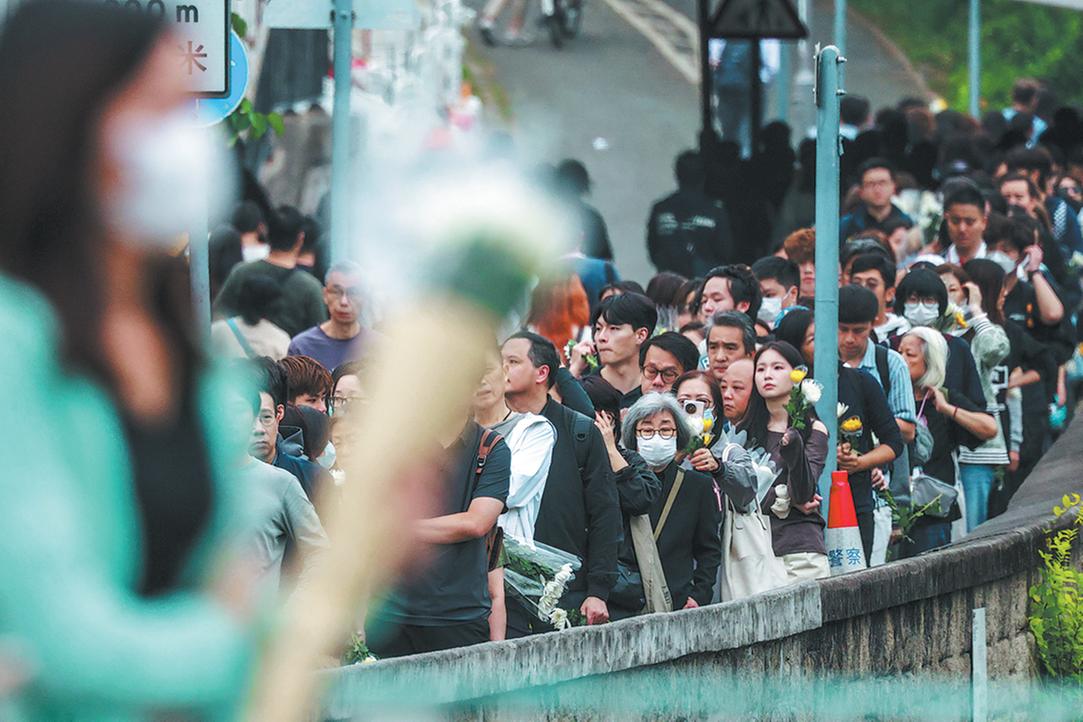
    Tuesday marked the traditional Chinese “first seven” day of remembrance for the victims, with mourners gathering at makeshift memorials near the disaster site to place white flowers, paper cranes, and condolence cards. The community’s grief was palpable as residents comforted one another at the Kwong Fuk sitting-out area, where a special section was designated for commemorating pets that perished in the fire.

    Despite the tragedy, Lee confirmed that Hong Kong’s Legislative Council General Election would proceed as scheduled on Sunday, noting that a functioning legislature remains essential to the city’s recovery and reform process.

  • Belgium rejects EU plan to use frozen Russian assets for Ukraine, saying the move is too risky

    Belgium rejects EU plan to use frozen Russian assets for Ukraine, saying the move is too risky

    BRUSSELS — In a significant development within European Union policymaking, Belgium has formally opposed a controversial proposal to utilize frozen Russian assets as collateral for financing Ukraine’s reconstruction and military needs. The plan, championed by the European Commission, sought to address Ukraine’s projected budget shortfall of approximately 130 billion euros ($150 billion) for 2026-2027 through an innovative “reparations loan” mechanism.

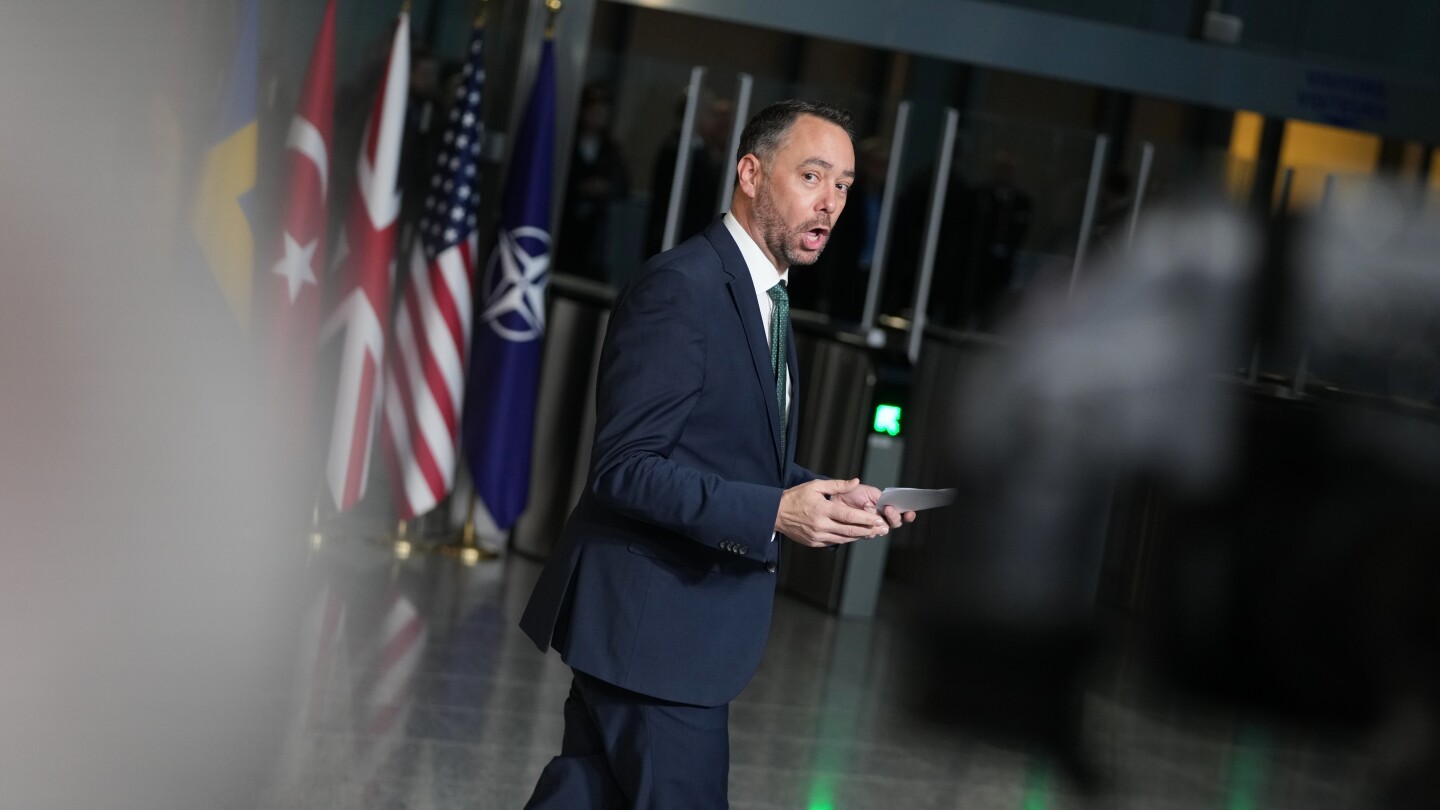
    Belgian Foreign Minister Maxime Prévot articulated his nation’s firm stance during remarks at NATO headquarters, characterizing the proposed scheme as “the worst of all options” due to its unprecedented nature and substantial risks. Prévot emphasized that Belgium considers the plan fraught with “consequential economic, financial and legal risks” that remain unaddressed in current proposals.

    The heart of Belgium’s concern lies with Euroclear, the Brussels-based financial clearing house currently holding approximately 194 billion euros in frozen Russian assets as of June. Belgian authorities fear potential legal repercussions should Moscow challenge the asset utilization, alongside possible damage to Euroclear’s international reputation and business operations. Prévot noted that Belgium has derived some tax revenue from these frozen assets, with accrued interest already contributing to a G7-organized loan program for Ukraine.

    Instead of the reparations loan framework, Belgium advocates for conventional international market borrowing to meet Ukraine’s financial requirements. Prévot described this alternative as “a well-known, robust and well-established option with predictable parameters” that would avoid potentially disastrous consequences for member states.

    The Belgian position highlights emerging tensions within EU solidarity mechanisms, with Prévot explicitly stating that Belgium seeks “to avoid potential disastrous consequences for a member state that is being asked to show solidarity without being offered the same solidarity in return.”

    This development occurs against the backdrop of broader concerns, including those raised by the European Central Bank regarding potential erosion of confidence in the euro should the reparations loan proceed. EU leaders are scheduled to deliberate further on Ukraine’s economic and military requirements during their upcoming summit in Brussels on December 18.

  • What to know about missing Malaysian Airlines Flight MH370 as search resumes

    What to know about missing Malaysian Airlines Flight MH370 as search resumes

    KUALA LUMPUR, Malaysia — A renewed search operation for Malaysia Airlines Flight MH370, which vanished over a decade ago in one of aviation’s most perplexing mysteries, is set to recommence on December 30. The Malaysian government has authorized American marine robotics firm Ocean Infinity to conduct a final 55-day seabed exploration in a last-ditch effort to locate the missing aircraft.

    The Boeing 777 disappeared on March 8, 2014, during its routine flight from Kuala Lumpur to Beijing with 239 passengers and crew aboard. The final communication from the cockpit—’Good night, Malaysian Three Seven Zero’—marked the last verified contact before the aircraft veered off course, disabled its transponder, and ultimately vanished from radar systems.

    Previous multinational search efforts, constituting the most extensive underwater operation in aviation history, scoured approximately 120,000 square kilometers of the southern Indian Ocean between 2014 and 2018. Despite these monumental efforts, only minimal debris fragments—discovered along African coastlines years later—provided tangible evidence of the aircraft’s fate.

    The new search parameters will focus on a targeted 15,000-square-kilometer zone identified through advanced drift analysis and satellite data re-examinations. Ocean Infinity will operate under a ‘no-find, no-fee’ arrangement, with a $70 million compensation package contingent upon successful wreckage discovery. The company has deployed cutting-edge autonomous underwater vehicles and collaborated with oceanographic experts to refine search coordinates.

    Numerous theories continue to circulate regarding the aircraft’s disappearance, ranging from mechanical failure and onboard fire to deliberate human intervention. Malaysian investigators previously eliminated crew and passenger involvement but acknowledged potential ‘unlawful interference’ in their 2018 final report.

    The passenger manifest represented 14 nationalities, with Chinese citizens comprising the majority. Among those lost were technology professionals, artists, and families traveling with young children, creating a multinational tragedy that captured global attention.

    Ocean Infinity’s previous search attempt in April was postponed due to adverse weather conditions. The upcoming operation will employ intermittent search patterns across what experts believe represents the most probable crash site location, leveraging technological advancements unavailable during initial search phases.

  • ‘Silence Choir’ gives voice to deaf children, opens hearts

    ‘Silence Choir’ gives voice to deaf children, opens hearts

    In an extraordinary fusion of art and human resilience, a unique choir composed entirely of deaf children has transformed perceptions of disability and musical expression. The Silence Choir, founded by multimedia artist Li Bo and musician Zhang Yong, represents a decade-long journey that began in the remote mountains of Lingyun county in Guangxi Zhuang Autonomous Region.

    The breakthrough moment occurred in 2013 when Yang Weiwei, a young deaf student, astonished the artists with her vocalization—a solitary ‘ah’ that resonated with such emotional purity that it inspired the choir’s creation. This pivotal encounter at a specialized school for children with disabilities marked the beginning of an unconventional musical odyssey.

    Located in cloud-veiled highlands that belie its name ‘Lingyun’ (meaning ‘above the clouds’), the school housed children who initially resisted interaction with the outside world. Li and Zhang’s early attempts to record their voices failed until they invested time building genuine connections through days of shared play and interaction.

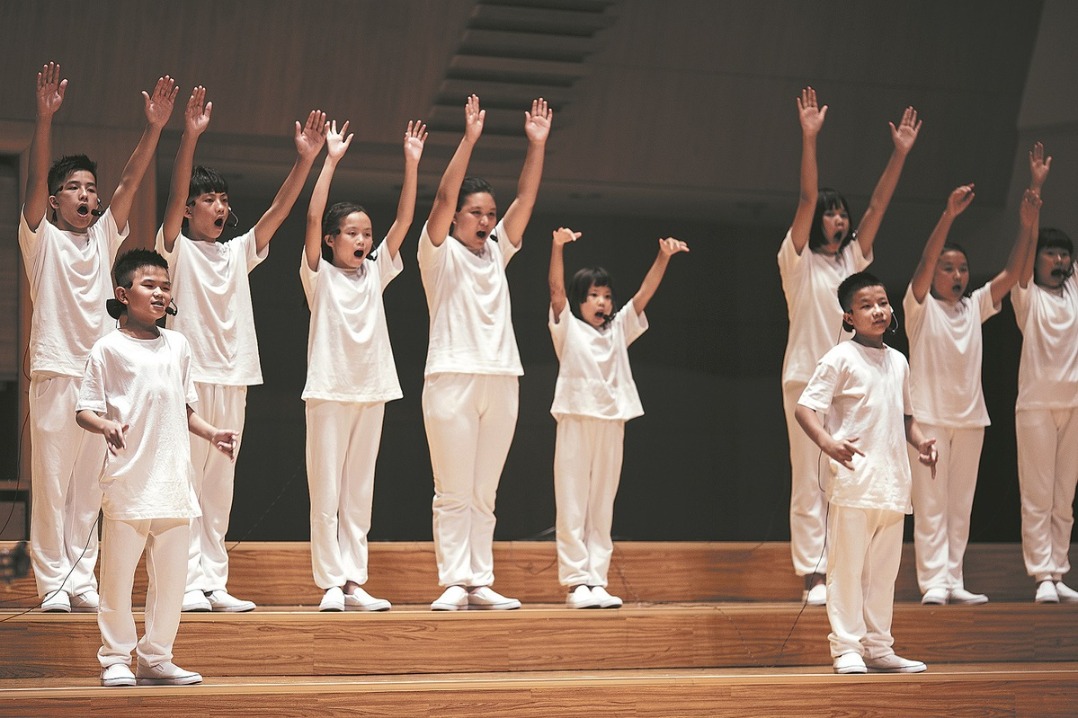
    The choir’s recent performance at Beijing’s Forbidden City Concert Hall demonstrated their remarkable artistic evolution. The performance began with delicate, ethereal tones that gradually built into a powerful vocal cascade—each child contributing their unique vocal resonance through vibration-based techniques rather than conventional auditory processing.

    ‘True equality originates from the resonance of the heart,’ reflects Li Bo, whose artistic philosophy has been fundamentally transformed through this collaboration. What began as an experimental sound project evolved into a profound commitment to these children’s artistic expression and personal development.

    The initiative, highlighted during the International Day of Persons with Disabilities observances, demonstrates how artistic innovation can bridge sensory divides while challenging preconceptions about disability and creative potential.

  • India loses 20th successive toss, South Africa elects to field in second ODI

    India loses 20th successive toss, South Africa elects to field in second ODI

    RAIPUR, India — South African captain Temba Bavuma won the crucial coin toss and elected to field first in the second ODI against India on Wednesday, extending India’s remarkable streak of lost tosses to twenty consecutive matches. This statistical anomaly places additional pressure on the Indian team as they seek to clinch the three-match series following their narrow 17-run victory in the opening contest at Ranchi.

    The series opener saw Virat Kohli’s masterful 52nd international century propel India to a competitive 349-8, setting the stage for a dramatic bowling performance that ultimately contained South Africa at 332 despite a formidable middle-order resistance. The Proteas, reeling at 3-11 during the powerplay, mounted a spectacular comeback through aggressive half-centuries from Matthew Breetzke, Marco Jansen, and Corbin Bosch before succumbing to the Indian attack.

    South Africa implemented strategic roster adjustments, welcoming back captain Bavuma who replaced Ryan Rickelton after the latter’s disappointing first-match dismissal. The bowling department saw significant reinforcements with left-arm spinner Keshav Maharaj replacing off-spinner Prenelan Subrayen, while pace bowler Lungi Ngidi took over from Ottneil Baartman, signaling a calculated shift toward experienced campaigners.

    India maintained consistency by retaining their entire playing eleven, offering redemption opportunities for Ruturaj Gaikwad and Washington Sundar at fourth and fifth batting positions respectively after both failed to deliver significant contributions in the previous encounter.

    Indian skipper Lokesh Rahul humorously acknowledged the toss dilemma, stating: ‘I’ve been practicing the coin call extensively, but unfortunately the results haven’t materialized. Honestly, the toss presents the most pressure-packed moment for me currently.’ He further elaborated on tactical considerations: ‘Dew factors significantly in these conditions—our bowling unit has developed specific strategies to counter this challenge.’

    The match features identical lineups from both sides, with India fielding Yashasvi Jaiswal, Rohit Sharma, Virat Kohli, Gaikwad, Sundar, Rahul, Ravindra Jadeja, Harshit Rana, Kuldeep Yadav, Arshdeep Singh, and Prasidh Krishna. South Africa’s roster includes Aiden Markram, Quinton de Kock, Bavuma, Breetzke, Tony de Zorzi, Dewald Brevis, Jansen, Bosch, Maharaj, Nandre Burger, and Ngidi.

  • Cold wave, strong winds grip many parts of country

    Cold wave, strong winds grip many parts of country

    A severe Arctic outbreak has descended upon China, triggering the most intense cold snap of the season and pushing temperatures to unprecedented lows across central and eastern regions. The National Meteorological Center maintains active blue alerts for both the cold wave and strong winds as this formidable air mass continues its southward trajectory.

    Meteorological data reveals dramatic temperature plunges of 6-14°C throughout Inner Mongolia, Northeast China, and North China since Tuesday. Accompanying these freezing conditions are powerful winds reaching 39 km/h across affected regions, including the Shandong and Liaodong peninsulas, creating dangerous wind chill conditions.

    Urban centers recorded landmark low temperatures, with Beijing and Tianjin experiencing their coldest mornings of the latter half of the year at approximately -5°C. Meanwhile, Changchun, Shenyang, and Shijiazhuang all registered new seasonal minimums, signaling the cold wave’s intensifying grip.

    Chief forecaster Yang Shunan emphasized the system’s distinctive characteristics, noting its complex weather impacts and significant temperature declines. Unlike November’s cold wave that primarily affected southern and western regions, the current Arctic blast follows a more northerly path, concentrating its most severe cooling effects north of the Yangtze River.

    The meteorological phenomenon has generated additional complications beyond temperature drops, including sand and dust storms across parts of Inner Mongolia and North China during the initial outbreak phase.

    Forecast models indicate the freezing line will reach its southernmost extent by Thursday, penetrating areas of Zhejiang, Anhui, and Hubei provinces. The Northeast anticipates particularly harsh conditions, with Harbin and Changchun potentially experiencing their first sub-20°C temperatures this season. Meteorological authorities advise residents to employ comprehensive protective measures—including hats, gloves, and scarves—to prevent frostbite during outdoor activities.

    The cold wave is projected to gradually weaken from late Wednesday through Thursday night, offering eventual respite from the frigid conditions that have gripped the nation.

  • Russia’s reciprocal visa-free policy expected to promote tourism

    Russia’s reciprocal visa-free policy expected to promote tourism

    In a significant diplomatic move strengthening Sino-Russian relations, President Vladimir Putin has signed an executive order establishing visa-free travel for Chinese citizens entering Russia. The policy, which took immediate effect on December 2, 2025, permits Chinese nationals to stay for up to 30 days for purposes including tourism, business activities, family visits, and participation in cultural and scientific events.

    This landmark decision represents a reciprocal arrangement following China’s implementation of a similar visa-waiver program for Russian passport holders in mid-September 2025. Both policies are set to expire simultaneously on September 14, 2026, creating a one-year trial period for enhanced bilateral movement.

    The announcement triggered an immediate surge in travel interest across Chinese digital platforms. Leading travel agency Qunar reported a remarkable threefold increase in flight searches from Hangzhou to St. Petersburg within the first hour of the news breaking, while Beijing-Moscow route inquiries jumped by 44%.

    Industry experts anticipate substantial benefits for both nations’ tourism sectors. Wei Changren, founder of tourism financial news platform btiii.com, identified two primary travel corridors likely to experience growth: the classic Moscow-St. Petersburg circuit and destinations in Russia’s Far East region.

    The policy’s impact is already evident in border regions. Harbin Trip of Garden International Tour Company reported a 30% year-on-year increase in Russian tourists over the past two months, with visitors typically extending their journeys to other Chinese cultural hotspots including Beijing, Shanghai, and Xi’an.

    Beyond tourism, researchers highlight broader economic implications. Zhang Jinshan, a tourism development expert at Beijing Union University, noted that the mutual visa-waiver arrangements will likely stimulate economic revitalization in neighboring industrial zones, particularly in Northeast China and Russia’s Far East territories, while further deepening strategic cooperation between the two nations.