博客

  • Watch: Awkward tensions test US, Mexico and Canada ahead of World Cup

    Watch: Awkward tensions test US, Mexico and Canada ahead of World Cup

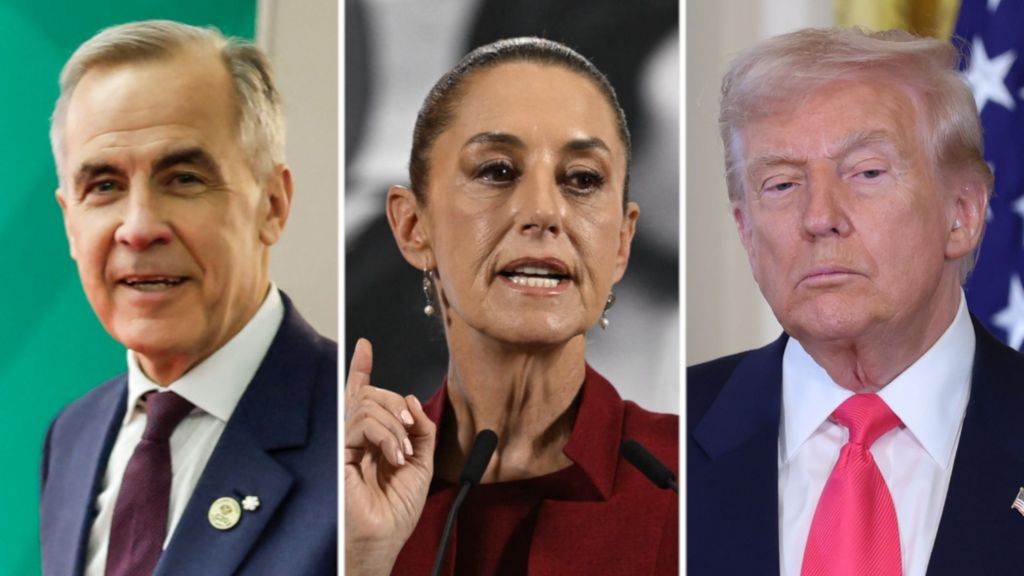
    A palpable diplomatic frost has settled over North American relations just days before a pivotal moment for the continent’s shared sporting future. U.S. President Joe Biden is scheduled to host Mexican President Andrés Manuel López Obrador and Canadian Prime Minister Justin Trudeau in Washington D.C. this Friday. The occasion is the highly anticipated final draw for the 2026 FIFA World Cup, an event meant to symbolize unity and celebration as the three nations jointly prepare to host the globe’s largest sporting event.

    However, the backdrop to this ceremonial gathering is fraught with significant geopolitical strain. Long-standing trilateral collaboration has been tested by a series of recent disagreements, primarily concerning trade, energy policies, and immigration. These tensions threaten to cast a shadow over the proceedings, transforming what should be a showcase of continental partnership into a potentially awkward display of underlying discord.

    The 2026 World Cup, the first to be co-hosted by three countries, represents an unprecedented logistical and diplomatic undertaking. The success of the tournament is heavily reliant on seamless cooperation between the governments on security, infrastructure, and organization. Observers note that the current political climate presents a substantial challenge to this necessary synergy, raising questions about the ability of the leaders to present a unified front.

    This meeting, occurring at the symbolic heart of American power, is now being scrutinized as a critical barometer for the health of the North American partnership. The world will be watching not only the draw itself but also the body language and interactions between the leaders, searching for signs of collaboration or conflict that could define the trajectory of the upcoming tournament and regional relations.


  • Police recover a James Bond-inspired Fabergé pendant from the bowels of a man accused of eating it

    Police recover a James Bond-inspired Fabergé pendant from the bowels of a man accused of eating it

    WELLINGTON, New Zealand — New Zealand law enforcement has successfully recovered a luxury Fabergé pendant valued at NZ$33,000 (approximately US$19,000) through an extraordinary six-day monitoring operation of a suspect’s digestive system. The jeweled octopus-inspired piece, allegedly swallowed during a theft incident at Partridge Jewelers in Auckland on November 28, was naturally excreted on Thursday evening without requiring medical intervention.

    The 32-year-old suspect, whose identity remains protected under New Zealand privacy laws, has been held in police custody since his immediate arrest at the upscale jewelry store. Authorities maintained constant surveillance of the man’s biological functions to secure the valuable evidence, demonstrating an unusual but necessary approach to evidence preservation in extraordinary circumstances.

    This limited-edition pendant draws direct inspiration from the 1983 James Bond film “Octopussy,” which features a similar jewel-smuggling plot involving counterfeit Fabergé eggs. The recovered piece represents one of only 50 such creations worldwide, crafted from gold with green enamel coating and adorned with 183 diamonds and two sapphires. Measuring 8.4 centimeters in height, the pendant contains an intricate internal mechanism revealing a gold octopus embellished with white and black diamonds.

    Police released photographic evidence showing the recovered pendant still attached to its gold chain with price tag intact. Both the jewelry and the suspect remain in custody as the judicial process continues. The man is scheduled for appearance in Auckland District Court on December 8, having previously appeared on November 29 without entering a plea to theft charges.

    Inspector Grae Anderson explained the unusual police procedure in an official statement: “Given this man is in Police custody, we have a duty of care to continue monitoring him given the circumstances of what has occurred.” This case represents one of the most unusual evidence recovery operations in New Zealand’s law enforcement history, blending criminal investigation with extraordinary patient monitoring responsibilities.

  • ‘Deep indignation’ after Ukraine diver switches to Russia

    ‘Deep indignation’ after Ukraine diver switches to Russia

    The Ukrainian Diving Federation has initiated severe disciplinary measures against European diving champion Sofiia Lyskun following her controversial decision to transfer international sporting allegiance to Russia. The 23-year-old athlete, who secured gold in the 10m synchronized event at the 2023 European Aquatics Championships, formally changed her citizenship earlier this week without prior notification to national sports authorities.

    In an official statement, the federation expressed profound condemnation of Lyskun’s actions, characterizing them as detrimental to both individual athletic integrity and collective national pride. The organization emphasized that such conduct undermines the sacrifices made by teammates who continue representing Ukraine during ongoing geopolitical tensions.

    Lyskun defended her decision in an interview with Russian publication Izvestia, citing professional stagnation under Ukrainian coaching leadership. She claimed her previous trainers, predominantly from gymnastics and trampoline backgrounds, could not facilitate her further development in elite diving.

    Following an emergency executive committee session, the federation unanimously resolved to immediately dismiss Lyskun from the national team roster and revoke all titles and honors she obtained under its jurisdiction. Additionally, the organization will petition international sporting bodies to impose competitive quarantine restrictions on Lyskun in accordance with global athletic regulations.

    This controversy emerges amidst evolving participation policies for Russian and Belarusian athletes, who were initially barred from World Aquatics events following the 2022 invasion of Ukraine. Recent modifications now permit individual neutral competition without national identifiers, with team event eligibility for neutral athletes scheduled to commence in January.

  • Trump hires new architect for White House ballroom

    Trump hires new architect for White House ballroom

    The White House has confirmed a significant leadership change in its ambitious ballroom construction project, with President Donald Trump appointing Shalom Baranes Associates to replace original architect James McCrery. This architectural transition follows reported disagreements regarding the scale and design vision for the multi-million dollar addition to the presidential residence.

    The project, which necessitated the October demolition of the historic East Wing, has undergone substantial expansion since its initial conception. Originally planned as a 500-person capacity space, the blueprint has now evolved into a sprawling 90,000 square foot (8,360 square meter) entertainment venue capable of accommodating 1,350 guests. This dimensions notably surpass the White House’s residential quarters (55,000 sq ft) and the West Wing offices (40,000 sq ft), raising concerns about architectural proportionality.

    While McCrery will maintain an advisory role as consultant, sources indicate his departure from lead architect position stemmed from concerns about the project’s overwhelming scale potentially diminishing the historical integrity of the presidential mansion. The Washington Post reported McCrery’s apprehension that alternative architectural leadership might produce inferior design quality.

    White House spokesman Davis Ingle praised the appointment, stating: “Shalom is an accomplished architect whose work has shaped the architectural identity of our nation’s capital for decades. His experience will be a great asset to the completion of this project.” Ingle further characterized the ballroom as “the greatest addition to the White House since the Oval Office.”

    The project faces regulatory hurdles requiring approval from the National Capital Planning Commission (NCPC) before construction commences. Concurrently, political opposition has emerged with Senator Richard Blumenthal introducing the “No Palaces Act” legislation. This bill would mandate NCPC approval before any future presidential administration could demolish historic federal structures, directly responding to the East Wing’s removal.

    President Trump has asserted that the project is entirely funded through private donations and personal contributions, though conservation groups and political critics continue questioning both its oversight mechanisms and architectural appropriateness within the historic compound.

  • US Supreme Court allows Texas to use redrawn voting maps in midterms

    US Supreme Court allows Texas to use redrawn voting maps in midterms

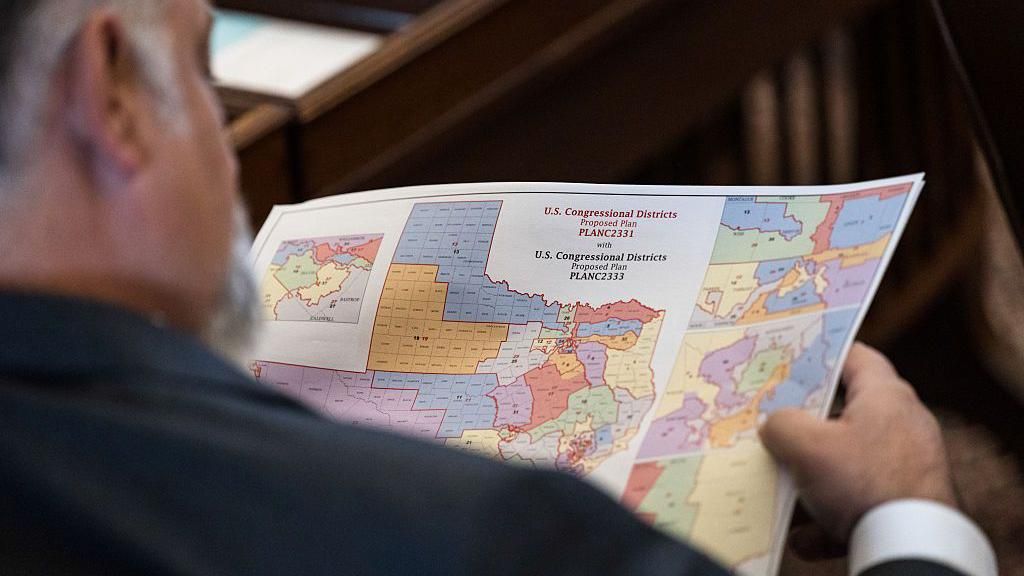
    The U.S. Supreme Court has authorized Texas to implement a controversial congressional redistricting map that could significantly bolster Republican representation in the 2026 midterm elections. The unsigned ruling, issued Thursday, grants the state’s emergency request to suspend a lower court decision that had blocked the map over allegations of racial gerrymandering.

    In what appears to be a 6-3 decision along ideological lines, the Court’s conservative majority concluded that Texas met the requirements for emergency judicial relief. The majority opinion stated that the lower court had “committed at least two serious errors” in its preliminary assessment of the case. The three liberal justices filed dissenting opinions opposing the decision.

    The legal battle stems from redistricting legislation passed by Texas’s Republican-controlled legislature and signed by Governor Greg Abbott in August. In November, a federal district court found substantial evidence that the new voting districts constituted unconstitutional racial gerrymandering and ordered the state to revert to previous congressional boundaries.

    The redistricting conflict escalated dramatically when Democratic state lawmakers staged a walkout during the summer to prevent voting on the proposed map. This political maneuver sparked similar redistricting efforts in other states, including California, where voters approved new congressional maps in a November special election specifically designed to counterbalance Texas’s potential gains.

    The Supreme Court’s intervention represents a significant development in the ongoing national battle over electoral maps, with potentially far-reaching consequences for partisan control of Congress.

  • UAE e-Invoicing should move from back office to boardroom

    UAE e-Invoicing should move from back office to boardroom

    The United Arab Emirates is fundamentally reshaping corporate financial operations through its forthcoming national e-invoicing framework, compelling businesses to elevate this initiative from back-office technical teams to boardroom priority. Unlike conventional system upgrades, this transformative mandate introduces real-time validation that directly impacts revenue recognition and cash flow.

    Under the new model, every invoice and credit note must be generated in structured digital format—replacing traditional PDFs—and processed through Ministry of Finance-accredited service providers. These providers validate content, apply VAT regulations, and report data to the Federal Tax Authority simultaneously. Crucially, invoices failing validation may be deemed non-compliant for VAT purposes, potentially rendering delivered goods or services effectively unrecognized in the tax system.

    The framework introduces significant localization requirements, mandating that invoice data reside on UAE-based infrastructure and transit through nationally approved channels aligned with Peppol standards. This data residency requirement, coupled with stringent cybersecurity protocols, effectively prohibits offshore invoicing hubs that multinational corporations previously relied upon.

    Implementation timelines are already established: a pilot program commences July 2026 for selected taxpayers, with voluntary participation available for technically prepared businesses. Mandatory compliance begins January 2027 for enterprises exceeding AED 50 million in UAE revenue, followed by smaller businesses in July 2027 and government entities by October 2027.

    This regional shift extends beyond UAE borders, with Saudi Arabia’s FATOORAH program already implementing real-time reporting, Egypt expanding e-invoicing across consumer transactions, and Oman developing Peppol-aligned systems. The Gulf region is collectively moving toward continuous transaction monitoring rather than periodic declarations, making UAE compliance strategies potentially applicable across Middle Eastern operations.

    Corporate leadership must immediately address three critical areas: integrating e-invoicing into board governance structures, mapping entire invoice lifecycle vulnerabilities, and rigorously vetting accredited providers for data localization capabilities and rejection resolution efficiency. Businesses should conduct comprehensive drills before the 2026 voluntary period to avoid revenue disruption during actual implementation.

  • Green Party’s Mothin Ali calls on Lammy to help Palestine Action hunger strikers

    Green Party’s Mothin Ali calls on Lammy to help Palestine Action hunger strikers

    The Green Party has issued an urgent appeal to the UK government to intervene immediately in what they describe as a deteriorating humanitarian crisis involving detained Palestine Action activists. Party deputy leader Mothin Ali became the first political figure to visit hunger-striking activists at HMP Bronsfield in West London, where he witnessed what he called “inhumane” conditions that represent “an affront to human decency.”

    According to Ali’s account to Middle East Eye, activists Amu Gib and Jon Cink are among 24 Palestine Action members incarcerated while awaiting trial for protests targeting weapons facilities connected to Israel. The deputy leader reported both prisoners are on their “last legs,” exhibiting severe physical deterioration including protruding cheekbones and sunken eyes, yet maintaining surprisingly high spirits despite their failing health.

    This hunger strike, which Ali compared to the historic 1980s Irish prisoner strikes led by Bobby Sands, involves six activists who have refused food for over a month while being held without trial. The Green Party delegation’s visit revealed multiple health crises among the strikers, including two hospitalizations confirmed by the campaign group Prisoners for Palestine.

    The political dimension intensified as Ali urged Green Party MPs to support an Early Day Motion proposed by Labour’s John McDonnell, demanding Justice Secretary David Lammy ensure humane treatment and human rights protection for the detainees. Meanwhile, family members of the hunger strikers met with parliamentarians on Wednesday, delivering grim assessments of their loved ones’ conditions.

    Ella Mousdale, friend of 20-year-old detainee Qesser Zuhrah, described how the young activist “shivers constantly” and suffers from debilitating headaches and dangerously dropping blood pressure after 32 days without sustenance. Similarly, Shamina Alam recounted the terror of her brother Kamran Ahmed’s hospitalization during which family communication was completely severed.

    The Ministry of Justice has remained silent on the matter, not responding to requests for comment as the health crisis among detainees continues to escalate.

  • Global commerce trends drive VTEX’s strategic expansion into Dubai

    Global commerce trends drive VTEX’s strategic expansion into Dubai

    The digital commerce sector is experiencing radical evolution, characterized by the integration of unified platforms, omnichannel approaches, and artificial intelligence-driven automation. Modern enterprise solutions now extend beyond simple online storefronts to encompass entire ecosystems that merge marketplaces, logistics, and financial operations.

    VTEX, a Nasdaq-listed software-as-a-service provider at the forefront of this transformation, supports 2,400 global brands and 3,400 digital storefronts across 43 nations. The company has received consecutive Gartner Customers’ Choice accolades and was recently positioned as a Challenger in the 2025 Magic Quadrant for Digital Commerce.

    The Middle East and North Africa region demonstrates particularly vigorous growth in adopting sophisticated commerce technologies. Success stories include Motorola, which achieved 300% regional growth following VTEX implementation, and Etihad Arena, which utilizes the platform for real-time mobile ordering during major events. These cases underscore the critical importance of localization features—including Arabic language interfaces, regional currency compatibility, and built-in tax compliance—for market success.

    A significant technological advancement comes through agentic AI integration within VTEX’s operations. The company’s AI agents autonomously resolve 92% of customer service inquiries, facilitate real-time storefront modifications through natural language commands or Figma files, and deliver immediate actionable insights without conventional dashboard interfaces.

    Santiago Naranjo, VTEX’s President for EMEA, articulated the vision: “Agentic commerce envisions an autonomous engine that contextually comprehends data and acts on the client’s behalf. Realizing this would represent an industry breakthrough.”

    In response to regional demand, VTEX has inaugurated a new operational center in Dubai Commerce City, marking a strategic expansion milestone. This development aligns with the UAE’s Digital Economy Strategy, which targets doubling the sector’s GDP contribution by 2030. Naranjo commended the UAE’s policy consistency, noting: “This planning caliber is unmatched elsewhere. The nation’s unified vision provides the confidence to intensify our investments. We aspire to participate in this transformation both commercially and personally.”

    Prakash Gurumoorthy, VTEX’s General Manager for EMEA, outlined the structured market approach: “Our framework progresses through discovery, validation, acceleration, and scaling phases. We’re currently validating with operational clients like Etihad Arena, which justifies establishing Dubai as our regional hub.”

    The new facility will host specialized teams for customer support, solution engineering, marketing, partnerships, and sales, serving both regional clients and European brands expanding into Gulf Cooperation Council markets. Gurumoorthy projected continued growth: “2025 delivered strong Middle Eastern performance with numerous new clients. We anticipate even greater 2026 outcomes as we expand operations and reinforce regional commitment.”

  • Six Asian nations on Trump administration’s immigration hold list

    Six Asian nations on Trump administration’s immigration hold list

    In a significant policy shift, the Trump administration has implemented an immediate suspension of all immigration application processing from 19 designated countries previously subject to travel restrictions. This decisive action, enacted late Tuesday, effectively halts green card and citizenship applications from affected nations including Afghanistan, Iran, Myanmar, Yemen, Laos, and Turkmenistan.

    The policy change follows a security incident in Washington D.C. where two West Virginia National Guard members were shot by Rahmanullah Lakanwal, an Afghan national granted asylum in the United States. The attack resulted in the death of 20-year-old US Army Specialist Sarah Beckstrom and left 24-year-old US Air Force Staff Sergeant Andrew Wolfe critically wounded. Lakanwal has pleaded not guilty to multiple charges.

    According to official memos, US Citizenship and Immigration Services (USCIS) will place all benefits requests from immigrants from these ‘high-risk’ countries on hold indefinitely. The agency will additionally re-review applications approved for immigrants who entered the United States after January 21, 2021, during the Biden administration. The suspension remains in effect until further notice from USCIS Director Joseph Edlow.

    The affected countries beyond Asia include Burundi, Chad, Cuba, Republic of the Congo, Equatorial Guinea, Eritrea, Haiti, Libya, Sierra Leone, Somalia, Sudan, Togo, and Venezuela. This action expands upon travel restrictions previously imposed by the president in June.

    The memorandum explicitly states that USCIS will delay action on all asylum applications and withholding of removal requests regardless of country of origin, pending a comprehensive review process. The administration justifies these measures as necessary to enhance vetting procedures and address national security concerns, acknowledging that processing delays may occur but deeming them ‘necessary and appropriate’ given security obligations.

    This policy reflects the administration’s ongoing criticism of immigrant vetting processes under previous leadership, particularly regarding programs created for Afghan allies following the 202 withdrawal and humanitarian parole initiatives for certain Latin American nationals.

  • Israeli media says anti-Hamas leader Abu Shabab dies of wounds

    Israeli media says anti-Hamas leader Abu Shabab dies of wounds

    Israeli media outlets reported Thursday the death of Yasser Abu Shabab, a significant Bedouin tribal leader who headed the most visible anti-Hamas faction in Gaza. Based in the Israeli-controlled sector of Rafah in southern Gaza, Abu Shabab had emerged as a central figure among several small Palestinian groups opposing Hamas throughout the more than two-year conflict.

    According to Israel’s public broadcaster Kan, which cited anonymous security sources, Abu Shabab succumbed to unspecified wounds. Israel’s Army Radio initially reported he died at Soroka Medical Center in southern Israel, but the hospital promptly denied his admission, creating confusion around the circumstances of his death. The exact timing and nature of his injuries remain undisclosed.

    Prime Minister Benjamin Netanyahu previously acknowledged in June that Israel had provided weapons to anti-Hamas clans, though few operational details have been officially confirmed since. Abu Shabab’s group, known as the Popular Forces, consistently denied receiving Israeli backing despite these claims.

    Hamas authorities had designated Abu Shabab as a collaborator and issued orders for his capture or elimination. The militant organization declined to comment on reports of his death when contacted by Reuters.

    The Popular Forces continued operations in Israeli-held territories even after the US-brokered ceasefire agreement in October. A November 18 video released by the group showed dozens of fighters receiving commands from Abu Shabab’s deputy to conduct security operations against Hamas elements in Rafah.

    Israeli government spokespersons declined to confirm the reports, while Abu Shabab’s organization had not issued any official statement regarding his status on their social media channels at the time of reporting.