博客

  • China looks to strengthen LAC relations with release of policy paper

    China looks to strengthen LAC relations with release of policy paper

    In a significant diplomatic move, China has released its third comprehensive policy framework for engagement with Latin America and the Caribbean (LAC), marking the first update to its regional strategy in nine years. The document, unveiled on Wednesday by Assistant Foreign Minister Cai Wei, presents an ambitious roadmap for cooperation across more than 40 distinct areas.

    The newly published policy paper represents Beijing’s most detailed articulation of its approach to LAC relations to date, building upon previous frameworks established in 2008 and 2016. The comprehensive document addresses critical areas of mutual interest including trade expansion, investment facilitation, financial cooperation, technological innovation, and climate change mitigation.

    Foreign Ministry officials emphasized that the policy initiative demonstrates China’s commitment to fostering a community with a shared future between the nations. The strategy specifically responds to cooperation priorities and concerns expressed by LAC countries, positioning the document as a foundation for mutually beneficial development.

    Assistant Minister Cai characterized the release as a ‘springboard’ for enhanced collaboration, noting that the initiative aims to generate tangible benefits for citizens across all participating nations. The policy framework emerges amid growing economic ties between China and LAC countries, which have expanded significantly over the past decade through both trade agreements and infrastructure investment programs.

    The timing of this strategic document suggests China’s intention to further institutionalize its relationships throughout the Western Hemisphere, potentially influencing both economic and diplomatic dynamics across the region.

  • HKSAR’s 8th LegCo tasked with fostering Hong Kong’s development: LegCo president

    HKSAR’s 8th LegCo tasked with fostering Hong Kong’s development: LegCo president

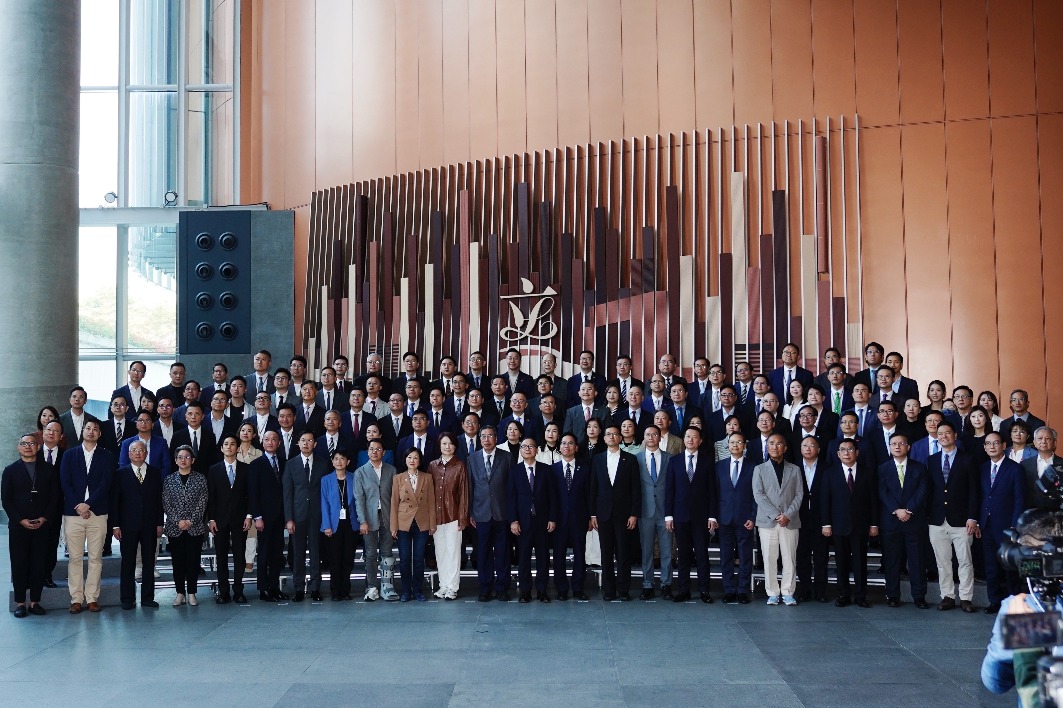
    Hong Kong’s political landscape enters a new chapter as the eighth-term Legislative Council (LegCo) prepares to assume office with a mandate to accelerate the region’s development. Outgoing LegCo President Andrew Leung Kwan-yuen articulated this vision during a transitional press briefing on December 9, 2025, attended by both incumbent legislators and newly elected members.

    The gathering followed Sunday’s electoral proceedings and Monday’s official results announcement, creating a forum for continuity and collaboration between outgoing and incoming representatives. Leung emphasized that the election outcomes demonstrate the successful implementation of the ‘patriots administering Hong Kong’ governance principle, which has established positive momentum for the region’s political development.

    With the new LegCo comprising 50 re-elected veterans and 40 first-time legislators, Leung specifically encouraged experienced members to mentor newcomers during their transition into legislative responsibilities. This knowledge transfer, he suggested, would be crucial for maintaining effective governance and advancing Hong Kong’s reform agenda.

    The eighth-term LegCo is scheduled to commence its four-year legislative term on January 1, 2026, marking the beginning of a new governance cycle for the Hong Kong Special Administrative Region. This transition represents not merely a change of personnel but an opportunity to inject renewed vitality into Hong Kong’s development through collaborative efforts between the legislative body and the HKSAR government.

  • Deadly fire engulfs building killing 8, injuring 4 in Shantou

    Deadly fire engulfs building killing 8, injuring 4 in Shantou

    A devastating fire tore through a residential building in Shantou, Guangdong province on Tuesday evening, resulting in eight fatalities and four injuries. The tragedy unfolded in the Chaonan district along Danfeng Road, where flames engulfed a four-story structure spanning approximately 150 square meters.

    According to local fire and rescue authorities, the blaze ignited at 9:20 PM and was successfully contained by 10:03 PM through coordinated emergency response efforts. First responders promptly transported the injured individuals to nearby medical facilities for urgent treatment, though the condition of the survivors remains undisclosed.

    The incident has triggered an immediate investigation by fire safety experts and local authorities to determine the exact cause of the deadly conflagration. Preliminary assessments suggest the rapid spread of fire through the residential building posed significant challenges for both occupants and rescue teams.

    This tragedy highlights ongoing concerns about fire safety protocols in urban residential structures across China’s rapidly developing cities. The Shantou municipal government has announced plans for enhanced fire safety inspections throughout the district while expressing condolences to the victims’ families.

    The comprehensive investigation will examine building compliance with fire codes, emergency exit accessibility, and potential electrical or structural factors that may have contributed to the disaster’s severity and rapid escalation.

  • China launches new communication technology test satellite

    China launches new communication technology test satellite

    China has successfully deployed the Shiyan 22 satellite into orbit, marking another significant milestone in its space technology program. The launch occurred at 11:08 PM Beijing Time on December 9, 2025, utilizing a Long March 3B carrier rocket from the Xichang Satellite Launch Center in Sichuan province.

    The newly deployed satellite represents China’s continued advancement in communication technology, designed to enhance multiple service domains including satellite communications, high-speed data transmission, and broadcast television services. Beyond these operational functions, the mission will conduct critical technical experiments and validation procedures to further refine China’s satellite capabilities.

    This mission holds particular significance as the 615th flight of China’s Long March rocket series, demonstrating the country’s sustained commitment to space infrastructure development. The successful insertion into predetermined orbit confirms the reliability of China’s launch vehicle technology and space deployment protocols.

    The development strengthens China’s position in the global space technology landscape, potentially enhancing digital connectivity and communication services across various sectors. This achievement reflects ongoing efforts to expand technological capabilities through space-based assets, contributing to both civilian and potential strategic applications in telecommunications infrastructure.

  • Crackdown urged on graft that affects ordinary people

    Crackdown urged on graft that affects ordinary people

    China’s Supreme People’s Court and Supreme People’s Procuratorate have launched a renewed offensive against corruption that directly impacts citizens’ daily lives, emphasizing the need to eliminate systemic conditions that enable graft at its source. The judicial authorities have spotlighted five emblematic cases demonstrating how corruption infiltrates essential public service sectors including housing, elderly care, medical insurance, school nutrition programs, and disability rights protection.

    Unlike high-profile ‘tiger’ corruption cases involving senior officials, these cases target ‘flies’—lower-ranking functionaries whose proximity to ordinary citizens enables them to cause disproportionate harm. The initiative underscores how positions of modest authority can be exploited to undermine public trust and divert resources from critical social programs.

    One particularly egregious case involved a former housing official in Hunan province sentenced to 11.5 years imprisonment for embezzling nearly 10 million yuan ($1.41 million) from property maintenance funds over a decade-long scheme. The official, surnamed Zhou, manipulated his oversight of county maintenance funds by directing payments through personal QR codes, issuing fraudulent receipts, and withholding legitimate payments—affecting approximately 3,000 households and nearly 10,000 residents. Zhou additionally misappropriated 1.72 million yuan to settle personal loans, with investigations revealing he orchestrated a sham divorce to conceal assets and evade recovery of illicit gains.

    Beyond individual punishment, judicial authorities have implemented systemic reforms through targeted rectification recommendations to address management loopholes in fund supervision, property service systems, and oversight mechanisms. The Supreme People’s Court emphasized that housing represents a fundamental livelihood issue, with property maintenance funds serving as crucial financial safeguards for homeowners. Their illegal misappropriation constitutes a severe violation of citizens’ legitimate rights and interests.

    The judicial authorities are promoting the strategic use of judicial recommendations to identify regulatory blind spots and supervision gaps across government agencies and industries, signaling a comprehensive approach to corruption prevention that combines punitive measures with institutional reform.

  • New tech aids safe air transport of lithium batteries

    New tech aids safe air transport of lithium batteries

    China has achieved a technological breakthrough that enables the safe aerial transportation of lithium batteries, addressing a long-standing aviation safety challenge while creating new opportunities for global trade. The innovative system successfully completed real-world testing with the transportation of a 250-kilogram power lithium battery from Ezhou Huahu International Airport to Shenzhen, completing the journey in just two hours—an 80% efficiency improvement over traditional ground transportation.

    The comprehensive safety solution, developed through a national research initiative under China’s 14th Five-Year Plan, employs a multi-layered protection approach. At its core is a specialized protective casing constructed from advanced materials that provide thermal insulation, flame retardancy, pressure reduction, toxin mitigation, and fire suppression capabilities. According to research leads from Chongqing Jiaotong University, the containment system demonstrated exceptional performance during rigorous testing, preventing flame escape and maintaining surface temperatures below 100°C during battery combustion events.

    Complementing the physical protection is an intelligent monitoring system that tracks twelve critical parameters in real-time, including temperature, pressure, and gas levels within the protective equipment. Utilizing AI-driven early warning algorithms, the system can detect subtle abnormalities such as minor gas leaks with remarkable precision. Third-party verification confirms the system’s average response time of 5.38 seconds and an accuracy rate exceeding 96%, providing unprecedented safety assurance.

    This advancement comes at a crucial time as China’s lithium battery industry continues its rapid expansion, with total output value surpassing 1.2 trillion yuan ($169.7 billion) in 2024, representing a 24% year-on-year increase. The technology promises to unlock significant economic potential by enabling efficient air transport of lithium batteries, with capacity ranging from 5 to 30 metric tons per flight depending on aircraft specifications.

    Industry experts highlight the particular advantage for international markets, where meeting delivery timelines is critical. Currently, over 90% of lithium batteries are transported by land or sea, with only 2-3% utilizing air transport due to safety concerns. This technological breakthrough is poised to transform this landscape, supporting Chinese companies in expanding their global market presence while maintaining the highest safety standards.

  • The Group of Friends of Global Governance established at the UN

    The Group of Friends of Global Governance established at the UN

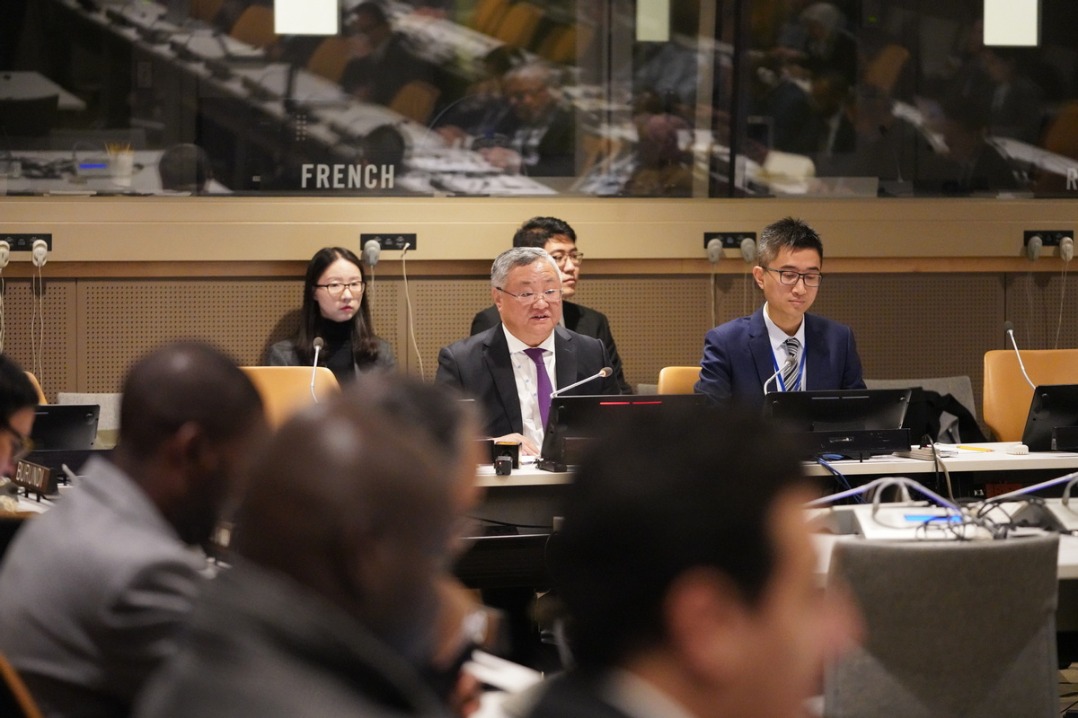
    In a significant move to strengthen multilateral cooperation, the Group of Friends of Global Governance was formally established at United Nations Headquarters in New York on December 9, 2025. The initiative brings together 43 founding member countries including Cuba, Iran, Kenya, Kazakhstan, Morocco, and Malaysia, representing a collective effort to address growing challenges in international governance.

    Chinese Ambassador Fu Cong, the nation’s permanent representative to the UN, announced that the group operates under the guidance of the Global Governance Initiative (GGI) proposed by Chinese President Xi Jinping. This marks the fourth major global initiative launched by President Xi, following previous frameworks focused on development, security, and civilization.

    Ambassador Fu emphasized the timely nature of this collaboration, noting that multilateralism and the UN’s role face unprecedented strain amid what he described as ‘a new period of turbulence.’ The initiative has already garnered support from more than 140 countries and international organizations since its introduction in September 2025.

    The Chinese diplomat framed the establishment within the context of the UN’s 80th anniversary, reminding attendees of the organization’s founding principles following the devastation of two world wars. He outlined five core principles anchoring the GGI: sovereign equality, international rule of law, multilateralism, a people-centered approach, and emphasis on tangible actions.

    Fu stressed the critical importance of preserving historical accuracy regarding World War II outcomes, warning against attempts to ‘whitewash aggression, distort history, or revive militarism.’ He called for strengthened commitment to the UN Charter’s foundational principles and emphasized the inseparable connection between security and development, particularly for developing nations seeking to bridge economic divides and achieve sustainable stability.

  • Global leaders seek unified front on climate, pollution

    Global leaders seek unified front on climate, pollution

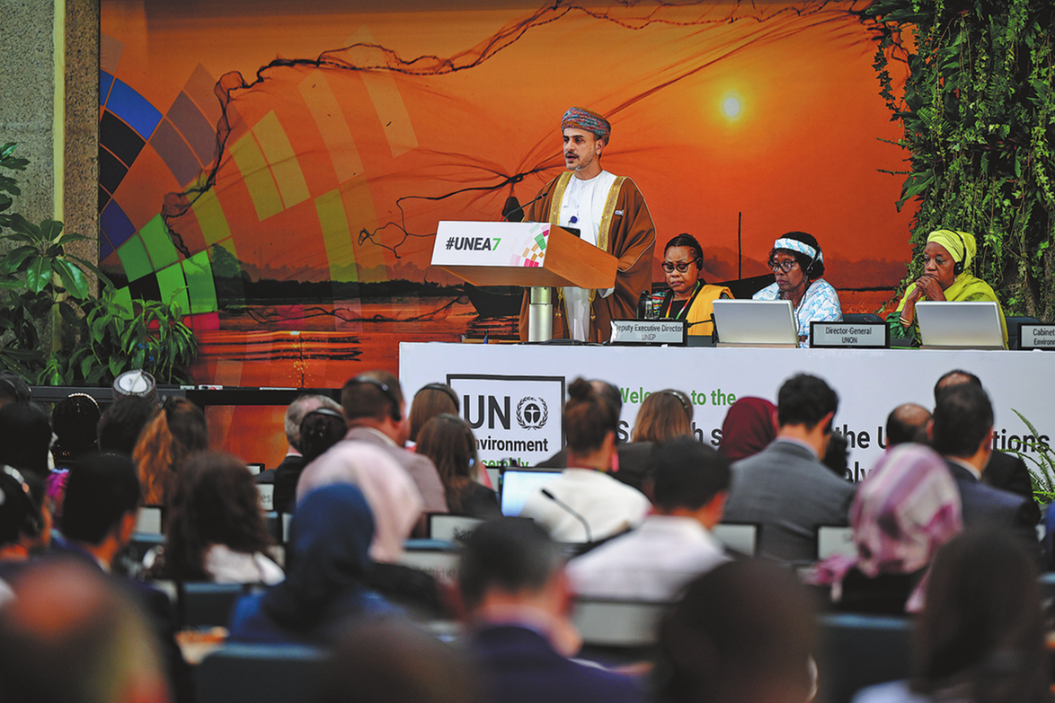
    NAIROBI — International environmental leaders have converged at the seventh UN Environment Assembly (UNEA-7) in Kenya with a reinforced commitment to multilateral cooperation as the primary mechanism for addressing the planet’s escalating ecological crises. The assembly, gathering environment ministers, scientists, and civil society representatives, emphasized that only through legally binding global commitments and coordinated action can tangible progress be achieved against interconnected threats including climate change, biodiversity loss, and pollution.

    UN Environment Programme Executive Director Inger Andersen opened the weeklong session by highlighting that multilateral environmental agreements recognize the borderless nature of environmental threats. “These challenges—from rising temperatures and ocean degradation to plastic pollution—do not respect national boundaries,” Andersen stated, stressing the need for improved coordination and implementation of existing agreements.

    The assembly leadership, including President Abdullah Bin Ali Al-Amri of Oman’s Environment Authority, characterized the meeting as occurring at a decisive historical moment. “Communities worldwide continue to endure the intertwined impacts of climate change, biodiversity loss, and pollution—challenges testing not only our economies but the very trust in our collective will,” Al-Amri noted, emphasizing that success would depend on trust, transparency, and inclusiveness in negotiations.

    Scientific warnings presented at the assembly underscored the urgency of action. Andersen revealed that global temperature increases will likely exceed the critical 1.5°C threshold within the next decade, bringing escalating consequences with each fractional degree increase. Simultaneously, ecosystems continue disappearing while toxins increasingly pollute air, water, and land resources worldwide.

    Martin Krause, Director of UNEP’s Climate Change Division, called for dramatically accelerated emission reductions alongside increased investment in climate adaptation. “Partnerships across governments, private sector, academia and civil society are now crucial for translating high-level commitments into climate-resilient infrastructure and livelihoods,” Krause asserted during side events.

    The assembly also spotlighted growing threats from sand and dust storms, which affect billions globally while carrying significant environmental and economic consequences. Jumaan Al-Qahtani of the World Meteorological Organization’s Dust Storm Regional Center described these phenomena as both cross-border challenges and potential ecological contributors when mineral dust fertilizes nutrient-poor ecosystems.

    Delegates are negotiating 15 draft resolutions addressing diverse issues from glacier preservation and controlling massive seaweed blooms to reducing artificial intelligence’s environmental footprint. Although not legally binding themselves, these resolutions historically help establish common ground and pave the way for precedent-setting international agreements.

  • Japan assesses damage from 7.5 magnitude quake

    Japan assesses damage from 7.5 magnitude quake

    Japanese authorities are conducting comprehensive damage assessments following a significant 7.5 magnitude earthquake that struck the Pacific coastal region on Tuesday evening. The seismic event, which occurred approximately 80 kilometers off the coast of Aomori Prefecture at 11:15 pm local time, triggered tsunami advisories and caused multiple injuries throughout northern Japan.

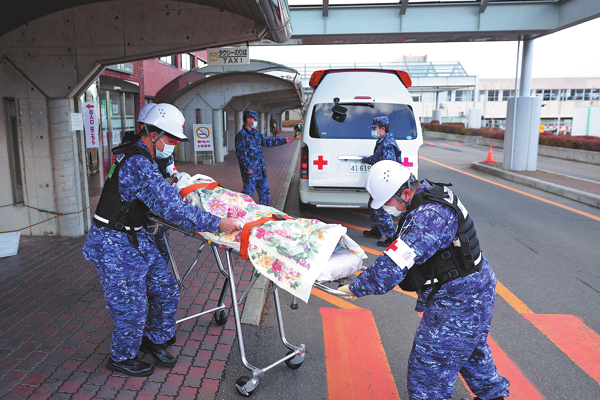
    According to the Fire and Disaster Management Agency, at least 34 individuals sustained injuries, with one person reported in serious condition. Most injuries resulted from falling objects during the intense tremors. The quake’s impact was particularly visible in Mutsu, Aomori Prefecture, where Self-Defense Force personnel assisted in evacuating hospital patients after ruptured sprinkler systems flooded upper floors.

    The Japan Meteorological Agency recorded tsunami waves reaching 70 centimeters at Kuji port in Iwate Prefecture, with several other coastal communities experiencing waves up to 50 centimeters. The tsunami advisory was lifted by 6:30 am Tuesday, though officials cautioned about potential aftershocks in the coming days.

    Infrastructure damage included approximately 800 households experiencing temporary power outages, though Tohoku Electric Power Company reported most electricity had been restored by Tuesday morning. Transportation networks faced significant disruptions with suspended Shinkansen bullet trains and local rail services, while approximately 200 passengers were stranded overnight at New Chitose Airport in Hokkaido due to ceiling damage in terminal buildings.

    Defense Minister Shinjiro Koizumi confirmed the mobilization of 18 military helicopters for damage assessment operations, with about 480 residents taking shelter at Hachinohe Air Base. The Nuclear Regulation Authority reported minimal safety concerns at nuclear facilities, noting only 450 liters of water spilled from a spent fuel cooling area at the Rokkasho fuel reprocessing plant, with all systems maintaining normal operational levels.

    Prime Minister Sanae Takaichi established an emergency task force, emphasizing the government’s commitment to prioritizing human safety and comprehensive response measures. Meteorological officials warned of increased seismic risks along Japan’s northeastern coast, noting slightly elevated possibilities of larger magnitude earthquakes in the region.

  • Draft rules seek to safeguard network data security

    Draft rules seek to safeguard network data security

    China’s Cyberspace Administration has unveiled comprehensive draft regulations establishing a systematic framework for network data security risk assessments. The proposed measures, announced on December 7, 2025, aim to strengthen the lawful and effective utilization of data while addressing evolving cybersecurity challenges.

    The draft defines data security risk assessment as a comprehensive process involving identification, analysis, and evaluation of risks associated with data and data-processing activities. Under the new framework, processors handling ‘important data’ would be required to conduct mandatory annual security assessments. The regulations stipulate that immediate targeted assessments must be performed whenever significant changes occur that could adversely impact overall data security.

    For processors of ‘general data,’ the administration encourages voluntary risk assessments at minimum three-year intervals. Organizations may conduct these evaluations internally or engage certified third-party institutions. However, assessment agencies detecting major security risks must promptly notify both the data processor and provincial-level cyberspace authorities in accordance with regulatory requirements.

    The draft specifies circumstances requiring mandatory third-party assessments, including: when data-processing activities present relatively high security risks; following security incidents resulting in leakage or theft of important data or large-scale personal information; and when operations potentially threaten national security or public interest.

    Data processors face specific obligations during assessments, including providing assessors with access to necessary data facilities, systems, and operational logs. Companies must address identified vulnerabilities and submit rectification reports within 15 working days after assessment completion. Regulatory authorities retain power to order corrections when data-processing activities endanger national security or public interest, with non-compliant entities potentially facing suspension of important data processing operations.

    Wang Zhicheng, an official from the Office of the Central Cyberspace Affairs Commission, characterized the measures as establishing a ‘full life cycle and multi-element evaluation system’ designed to address emerging security challenges posed by artificial intelligence, big data, and blockchain technologies. The framework embeds risk assessment throughout the entire data life cycle—from collection and storage to processing, transmission, and deletion—while evaluating multiple dimensions including technological protections, management implementation, personnel responsibilities, and institutional mechanisms.

    The Cyberspace Administration has opened the draft for public consultation until January 5, 2026, seeking stakeholder feedback before final implementation.