博客

  • Pope decries the rise of AI-directed warfare, saying it leads to a spiral of annihilation

    Pope decries the rise of AI-directed warfare, saying it leads to a spiral of annihilation

    On a historic Thursday visit to Rome’s La Sapienza University, the largest institution of higher education in Europe, Pope Leo XIV delivered a stark warning to the global community: unregulated investments in artificial intelligence and cutting-edge military weaponry are pushing the world toward a dangerous “spiral of annihilation.” The appearance marked a pivotal moment for the Vatican, coming 16 years after Pope Benedict XVI canceled a planned visit to the 14th-century campus amid widespread protests from faculty and students, a controversy that left a long shadow over Vatican-university relations.

    Unlike the fraught planned visit in 2008, Pope Leo was met with a warm welcome from the La Sapienza community, highlighted by a special greeting for a group of recently arrived Palestinian students from Gaza. These young scholars entered Italy this week via a humanitarian corridor organized by the Italian government in partnership with Catholic organizations, an initiative that has brought hundreds of Gazans to Italy for higher education and critical medical care since the Israel-Hamas war began in October 2023.

    During his time on campus, Pope Leo met with several of the newly arrived Gaza students twice: once during an informal greeting at the university’s chapel, and again after his keynote address in the institution’s main lecture hall. La Sapienza, founded by Pope Boniface VIII in 1303, is one of the oldest continuously operating universities in the world, adding historic weight to the pope’s address focused on global conflict and ethical progress.

    In his speech, Pope Leo called out the dramatic surge in global military spending this year, with a specific note on exponential increases across Europe. He argued that this growth in military budgets has come directly at the expense of underfunded public education and healthcare systems, enriching a small cohort of elite stakeholders who show little regard for collective global well-being.

    The pontiff extended his critique to the rapid development of artificial intelligence, urging the creation of stricter, more transparent monitoring frameworks for AI innovation across both military and civilian sectors. He stressed that AI must never be allowed to remove human accountability for life-or-death choices, nor should it be allowed to worsen the already devastating human cost of ongoing global conflicts.

    “What is happening in Ukraine, in Gaza and the Palestinian territories, in Lebanon, and in Iran illustrates the inhuman evolution of the relationship between war and new technologies in a spiral of annihilation,” Pope Leo told the assembled audience. He pushed back against this trend, arguing that education and academic research must chart a different course centered on the inherent value of human life—“the lives of peoples who cry out for peace and justice.”

    Addressing ongoing conflicts, Pope Leo explicitly repeated his call for immediate ceasefires and negotiated peace in both the Middle East and Ukraine, two conflicts that have dominated global headlines and displaced millions of people over the past several years. This address aligns with Pope Leo’s long-stated position that AI regulation is one of the most critical existential challenges facing humanity, particularly when it comes to its unregulated use in warfare and daily life. Vatican observers confirmed he plans to expand on these themes in his first encyclical, a major papal teaching document set for release in the coming weeks.

    For 19-year-old Nada Rahim Jouda, one of the Gaza students who met the pope just two days after arriving in Italy, the visit marked a surreal moment in a life upended by war. Jouda, who will study business science at La Sapienza, described Rome as “like heaven for me,” contrasting the city’s lush, calm landscape with the constant instability and destruction of Gaza, where “everything is gray and troubles everywhere and miserable people in the streets.”

    Even as she begins her new life, Jouda carries the weight of the family she left behind. Her mother is recovering from leukemia and was unable to access consistent cancer treatment or check-ups amid the war, which forced her entire family to flee their home four times. Her two younger sisters, ages 13 and 17, remain in Gaza with her mother. “They all rely on me. I’m the only hope that they have,” Jouda said.

    This Associated Press religion coverage is produced through a collaboration between AP and The Conversation US, with funding from Lilly Endowment Inc. The AP retains sole editorial responsibility for all content.


  • BBC at the scene of Russian strikes in Kyiv

    BBC at the scene of Russian strikes in Kyiv

    Since the full-scale Russian invasion of Ukraine began, the capital Kyiv has faced repeated threats of air attacks, but a new wave of strikes stands out as one of the most intense assaults the city has seen in the entire conflict. According to on-the-ground reporting from the BBC, multiple civilian apartment blocks were directly hit in the latest offensive, bringing immediate danger to residential neighborhoods that are home to thousands of ordinary Ukrainians. The attack comes amid a prolonged period of heightened tensions across Ukraine, with Russian forces continuing to target infrastructure and populated areas in a campaign that has disrupted daily life for millions. BBC correspondents present in Kyiv in the aftermath of the strikes documented the extent of the damage, with visible impacts to residential buildings that serve as primary homes for local families. This assault marks a significant escalation in air activity directed at the Ukrainian capital, reinforcing the ongoing volatility of the conflict that has gripped Eastern Europe for more than two years. Local residents have been forced to seek shelter amid the attack, with emergency services responding quickly to the incident to assess damage, rescue trapped civilians, and address the aftermath of the strikes.

  • Former Nigerian minister sentenced to 75 years in rare corruption verdict

    Former Nigerian minister sentenced to 75 years in rare corruption verdict

    In a landmark conviction that has sent shockwaves through Nigeria’s political landscape, former Nigerian Power Minister Saleh Mamman has been handed a 75-year prison sentence for laundering 33.8 billion naira (equivalent to roughly $24.7 million), marking one of the rare high-profile convictions of corrupt senior officials in the West African nation.

    The 68-year-old ex-minister, who led Nigeria’s power sector from 2015 to 2021 under former President Muhammadu Buhari’s administration, was found guilty last week on 12 separate corruption charges. Prosecutors proved that Mamman used privately owned front companies to siphon and launder public funds allocated for government-backed power infrastructure projects.

    In an unusual turn of proceedings, the Abuja High Court handed down the sentence on Wednesday in absentia. Nigeria’s lead anti-graft agency, the Economic and Financial Crimes Commission (EFCC), confirmed that Mamman has gone missing, and has been untraceable since the guilty verdict was issued. Just days after his conviction, the court issued a formal arrest warrant for the former minister on Monday. Mamman has not issued any public response to the charges or conviction.

    What makes the case even more remarkable is the timing: just weeks before his sentencing, Mamman officially announced his intention to run for governor of Taraba State in Nigeria’s 2027 general election, running on the ticket of the country’s ruling All Progressives Congress (APC). He made the announcement in a social media post, writing that he had picked up his Expression of Interest and Nomination Forms “with a deep sense of responsibility and unwavering commitment” to serve the state.

    Buhari, whose administration campaigned on a promise to crack down on endemic public sector corruption, ultimately removed Mamman from his cabinet in a 2021 reshuffle following what the presidency described as an “independent and critical self-review” of government performance.

    Along with the prison sentence, the high court ordered Mamman to repay 22 billion naira ($16 million) of the laundered funds to the Nigerian government. His conviction is part of a broader ongoing anti-corruption crackdown by the EFCC targeting former senior government officials. The agency is currently pursuing investigations into other high-profile figures, including former Justice Minister Abubakar Malami and former Humanitarian Affairs Minister Sadiya Umar Farouq, who was recently declared a wanted person by the EFCC. Both officials have denied all allegations against them.

    The verdict has also reignited long-simmering public anger over Nigeria’s ongoing national electricity crisis, a problem Mamman was tasked with solving during his tenure as power minister. Despite being one of Africa’s largest energy producers, Nigeria suffers from chronic, nationwide power shortages that bring frequent, extended blackouts to residential and commercial areas across the country. Millions of households and businesses are forced to rely on expensive private fuel-powered generators, and soaring global fuel prices have left countless Nigerians unable to afford the cost of backup power, deepening economic hardship across the country.

  • France allows asymptomatic passengers off new cruise ship struck by stomach bug outbreak

    France allows asymptomatic passengers off new cruise ship struck by stomach bug outbreak

    BORDEAUX, France – A public health incident that kept more than 1,700 passengers and crew confined to a British cruise ship off the French Atlantic coast has entered a new phase, with local authorities allowing all unaffected guests to leave the vessel Wednesday evening, after confirming the outbreak stems from the highly contagious stomach bug norovirus.

    The Ambition, operated by UK-based Ambassador Cruise Line, had been mid-voyage on a 14-night itinerary departing from Belfast and Liverpool, with planned stops across northern Spain and coastal France, when widespread gastrointestinal symptoms were reported among people on board. The ship docked in Bordeaux on Tuesday evening, and French public health officials immediately issued a full lockdown order, requiring all passengers and crew to stay on board to contain the spread of the pathogen.

    Within a day, officials adjusted the policy, clearing guests who showed no signs of illness to disembark. Photos and on-scene observations captured one passenger exiting the ship with arms raised in a gesture of relief and celebration. As of Thursday, officials had not released an exact count of how many people took advantage of the permission to leave.

    Testing conducted at Bordeaux University Hospital confirmed norovirus as the source of the outbreak, ruling out any connection to the recent deadly hantavirus outbreak on a Dutch vessel that had put European public health agencies on high alert in recent weeks. Local health officials added that no severe cases of illness have been recorded so far, and passengers experiencing symptoms are receiving ongoing care from the cruise ship’s in-house medical team.

    It remains unclear whether the Ambition will resume its scheduled journey, and if so, when operations will restart.

    The outbreak aligns with broader patterns of norovirus spread on cruise ships documented by global health authorities. The U.S. Centers for Disease Control and Prevention, which tracks gastrointestinal illness outbreaks on cruise vessels calling at both U.S. and international ports, recorded 23 separate outbreaks on cruise ships last year. The vast majority of these outbreaks, including one caused by a newly identified strain, were linked to norovirus, a pathogen known for spreading quickly in enclosed communal settings such as cruise liners.

    Ambassador Cruise Line, the operator of the Ambition, is a UK-based company founded in 2021 that focuses on serving travelers over the age of 50.

  • Stars flying into Cannes in private jets ‘obscene’, say ex-pilots

    Stars flying into Cannes in private jets ‘obscene’, say ex-pilots

    As the iconic Cannes Film Festival approaches, climate campaigners and former aviation professionals are shining a harsh spotlight on the luxury private jet travel habit of Hollywood’s biggest names, calling their excessive carbon and fuel use a deeply unethical indulgence amid a mounting global energy crisis.

    Last year’s festival alone saw 750 private jet flights carry A-list stars and industry executives to the French Riviera, according to new data compiled by Brussels-based environmental nonprofit Transport and Environment (T&E). That volume of travel burned through a staggering 2 million liters of jet kerosene — a footprint equal to the fuel consumption of 14,000 commercial passengers flying the route between Paris and Athens, T&E’s aviation lead Jerome du Boucher told AFP in an interview this week.

    Anthony Viaux, a former Air France pilot and one of the dozens of aviation professionals backing the campaign, argued that the wasteful consumption by the rich and famous is far more than just out of touch. “The rich and famous burning through scarce fuel to get to a film festival isn’t just tone deaf, it’s obscene,” Viaux said. With the ongoing conflict in the Middle East pushing global fuel markets into chaos and many nations facing acute fuel shortages, the global community can no longer justify reserving massive volumes of scarce fuel for elite luxury travel, campaigners say.

    At present, EU regulations leave two-thirds of all private jet flights exempt from carbon taxes under the bloc’s Emissions Trading Scheme (ETS), a loophole T&E traces back to EU policymakers’ fear of retaliatory action from the former U.S. Trump administration if private aviation were added to the scheme. This creates a stark double standard: ordinary commercial passengers flying within the EU are required to pay these carbon levies, while the world’s wealthiest elite escape the cost entirely.

    The call for reform has even won support from wealthy advocates for change. Julia Davies, an investor and co-founder of Patriotic Millionaires UK, pointed out that private aviation is a luxury accessible only to a tiny sliver of the global population, yet that same elite group avoids the fuel and carbon taxes that ordinary working people pay every day when they commute to work.

    Campaigners are pointing to a small but high-profile example to prove change is possible: last year, Chilean-American star Pedro Pascal — who gained global fame for his lead role in *The Last of Us* and *Narcos* — traveled to Cannes on a commercial economy flight, defying the unwritten rule that A-listers arrive via private transport. Former private jet pilot Katie Thompson argues there is no reason every other celebrity cannot follow Pascal’s lead, or opt for low-carbon train travel for short European routes to the Riviera.

    The current global fuel crunch, driven by months of heightened tension around the Strait of Hormuz following U.S.-Israeli strikes on Iran, has created widespread disruption across European aviation already this year. France alone has canceled more than 500 flights in recent months, and up to 20 million passengers across Germany are expected to face scheduling disruptions and shortages during the peak summer holiday travel period, du Boucher noted. Against this backdrop, campaigners say the crisis presents a rare opening to force long-overdue reform of private aviation regulations.

    T&E is currently lobbying European national governments to enact a full ban on private jet travel, arguing that scarce kerosene reserves should be reserved for essential travel rather than elite luxury. The group is also calling for EU policymakers to close the existing ETS loophole, requiring all private jet flights and international routes into the bloc to pay full carbon taxes, regardless of external political pressure. “EU policymakers shouldn’t let Trump’s administration dictate the rule,” Viaux said.

    T&E data shows that even a simple shift from private to commercial travel for all Cannes attendees would put the festival 40 percent of the way to meeting its 2030 carbon emissions reduction target, a meaningful step forward for an event that has pledged to cut its climate impact. AFP has reached out to the Cannes Film Festival organizing committee for comment on the campaign’s demands, and no response has been issued as of yet.

  • Swapping Love Island for Eurovision: Antigoni’s pride at representing Cyprus

    Swapping Love Island for Eurovision: Antigoni’s pride at representing Cyprus

    The Eurovision Song Contest has increasingly become a stage where familiar faces from across the entertainment world make surprise appearances, with small participating nation San Marino leading the trend in recent years — from a fleeting cameo by 80s pop icon Boy George at this year’s contest to a high-profile guest spot from American rapper Flo Rida that helped the country secure its place in the 2021 grand final. This year, however, it is fans of hit British reality series *Love Island* that are in for a surprise: 2022 series eight contestant Antigoni Buxton is set to take the stage in the contest’s second semi-final, representing Cyprus with her upbeat dance-pop entry *Jalla*.

    For many viewers who only know Buxton from her time as a bombshell on the reality dating show, her leap to Eurovision may come as a shock — but the London-born singer-songwriter says that transition is anything but out of the blue. In an interview with BBC Newsbeat, Buxton explained that singing has been her lifelong passion, long before her *Love Island* appearance. “I’ve been wanting to be a singer, that has been my dream since I was as young as I can remember,” she said. “And I had an obsession with Eurovision ever since I saw Helena Paparizou win for Greece back in 2005.” Buxton frames her 2022 reality TV stint as a happy accident that opened unexpected doors: “If anything doing Love Island was random. It was a great moment because it gave me the chance to introduce myself to a lot of people and now I’m on that path I always wanted to be on.”

    Though raised in the British capital, Buxton has deep Greek-Cypriot roots, and she has woven her cultural heritage into every layer of her Eurovision entry. She spent six to eight weeks every summer on the Mediterranean island growing up, and says she has always felt a strong connection to her Cypriot identity, making representing the country a point of immense pride. *Jalla* blends modern pop production with traditional Greek instrumentation, and draws direct inspiration from Tsifteteli, the beloved Greek belly dance style. The track’s title itself holds special local meaning: it is unique Cypriot-Greek slang that roughly translates to “more” or “again”, a detail Buxton says she is excited to share with a global audience. “Sharing my roots is something I do across all my music, and I am really proud to be able to share that specific part of Cypriot culture here,” she added.

    The music video for *Jalla* leans even further into Buxton’s cultural and entertainment connections, featuring cameos from her own mother and grandparents, as well as iconic UK-based Cypriot dance duo Stavros Flatley. The father-son pair rose to fame after their memorable 2009 run on *Britain’s Got Talent*, and Buxton says they are one of the most famous Cypriot acts to break through in the UK. She reached out directly to Demi, the duo’s lead performer, who jumped at the chance to join the project with open enthusiasm.

    Unlike her experience on reality competition television, Buutton says she has found the Eurovision community to be overwhelmingly warm and supportive, a sharp contrast to the critical culture that often surrounds reality TV appearances. “That’s the thing about Eurovision, it’s almost the opposite of some things I’ve done in the public eye in the past where people want to judge and give bad comments,” she explained. “People still do, but it’s a very loving community. It’s a really warm, happy, loving, supportive community. Everyone sees that it’s a big opportunity to learn about culture, to have fun. So I feel overwhelmed with joy and with gratitude.”

    This year marks the 42nd time Cyprus has competed in the Eurovision Song Contest — a record for the most participation by any country without ever claiming the top prize. After failing to qualify for the 2025 grand final, the country is pulling out all the stops for Buxton’s performance in this year’s host city Vienna. Her live staging takes the track’s lyric about dancing on tables literally, featuring a giant prop table that dancers emerge from underneath, and builds to a explosive climax packed with extensive pyrotechnics. But despite the high stakes for her country, 30-year-old Buxton says she is not solely focused on taking home the win. “In terms of my career and in terms of success, the focus is just doing my very best,” she said. “If I can leave there and feel like I did myself proud, Cyprus is proud of me, my family and my team, that is a win in itself. But I also feel like I have an opportunity to make history for my country and it would just mean so much to the people of Cyprus.”

  • Underwater memorial to wrecked slave ship draws pilgrims seeking to connect with their roots

    Underwater memorial to wrecked slave ship draws pilgrims seeking to connect with their roots

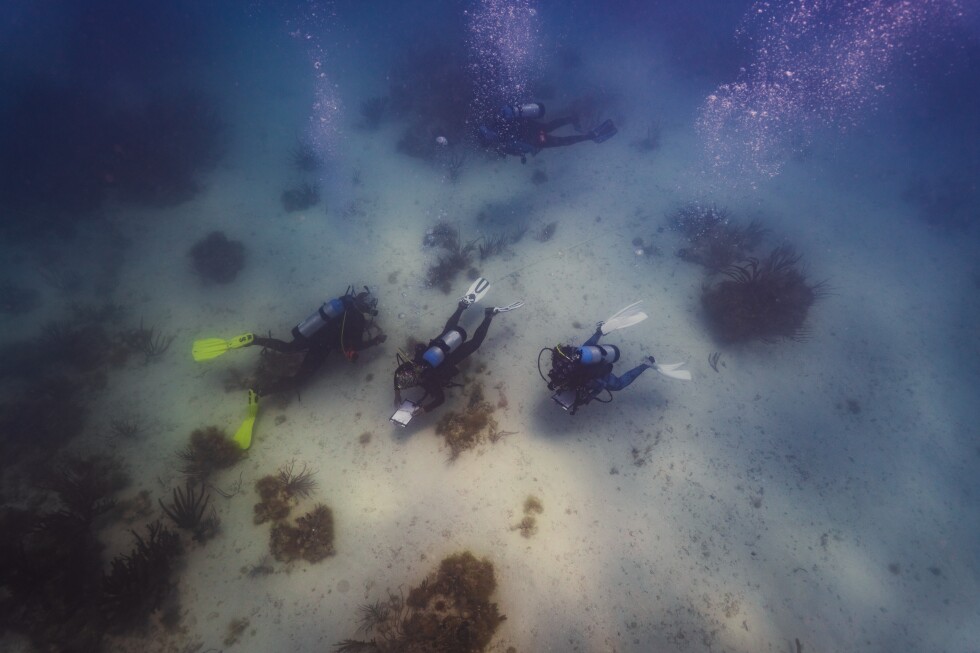
    Off the sun-dappled coast of Key West, Florida, Ruthie Browning slipped into the glassy Atlantic waters in early May, expecting nothing more than a quiet moment of respect at a sunken memorial. She had joined a cohort of Black divers and community advocates on a journey to a sacred maritime site: the final resting place of the Henrietta Marie, a British slave ship that sank 326 years ago, at the height of the brutal trans-Atlantic slave trade.

    The vessel’s tragic story is etched into the seafloor: after delivering 200 kidnapped West African people into chattel slavery in Jamaica, the ship set sail for Britain in 1700, only to be swallowed by a storm at New Ground Reef, where the Atlantic merges with the Gulf of Mexico. Today, a six-meter-deep concrete marker anchors the site, a permanent tribute to the lives stolen and forever altered by the trans-Atlantic slave trade. Browning arrived ready to observe, honor, and depart—but the moment she reached the marker, an unexpected wave of emotion overtook her.

    Staring at the memorial, now a thriving micro-reef draped in soft corals and sponges, tears flooded her eyes. As she quieted her mind to listen, she felt a gentle, unmistakeable connection to the ancestors whose stories the site holds: “My daughter, we’re so glad you’re here.” Overwhelmed by gratitude, she lingered at the marker, which bears the inscription: “Henrietta Marie. In memory and recognition of the courage, pain and suffering on enslaved African people. Speak her name and gently touch the souls of our ancestors.” “Without their stamina, their spirit and survival, I wouldn’t be here today. None of us would be here today,” Browning reflected after her dive.

    This pilgrimage was years in the making. The group’s 2023 attempt to reach the site was foiled by dangerously choppy waters, which group members framed as a sign the timing was not right. “The ancestors were not smiling down on us then,” said Jay Haigler, a master diving instructor with Underwater Adventure Seekers, the world’s oldest Black scuba diving club. “This year was different.”

    Michael Cottman, an author of two books on the Henrietta Marie and a member of the National Association of Black Scuba Divers that installed the memorial in 1992, noted that this journey was never supposed to be simple. The site carries what he calls “spiritual turbulence”: “Even if it wasn’t carrying enslaved people, it embodies the oppression of our people.” After annual pilgrimages in the 1990s lapsed, the 2024 trip was revived by an underwater oral history project led by Stanford University anthropologist Ayana Omilade Flewellen, who serves on the board of Diving With a Purpose, a Black-led nonprofit dedicated to documenting and preserving slave shipwreck sites.

    For Flewellen, the submerged interviews conducted during the pilgrimage became a deeply personal spiritual practice. “I felt a kind of tenderness in my heart,” she said. Processing the traumatic history of death and suffering that defines the site has long been a challenge, she explained: “It’s hard to attach your life with this history. The only way I could do that was turn toward what the divers were experiencing on this pilgrimage. That’s where it all bloomed and blossomed.”

    Beyond the underwater memorial, the pilgrimage also included a land-based ritual at Higgs Beach, where 297 African refugees who were rescued from three illegal slave ships in 1860 are buried. After the U.S. Navy intercepted the ships *Wildfire*, *William* and *Bogota*, the government housed more than 1,400 surviving refugees in a coastal compound, but hundreds died from the devastating health effects of their inhumane confinement on the crossing, explained Corey Malcom, lead historian at the Florida Keys History Center.

    Forgotten for nearly 150 years, the burial ground was rediscovered by researchers using ground-penetrating radar, and in 2010 a mass grave holding 100 additional bodies was found at a nearby community dog park, which has since been fenced off to protect the site. During this year’s pilgrimage, the group gathered at the cemetery to hold a traditional libation ceremony, an ancient Afro-Caribbean spiritual practice. One by one, members poured white rum—believed to act as a messenger between the living and ancestral worlds—onto the sand, tearfully honoring the lives lost. “To honor your ancestors and the road they’ve traveled is very, very important because we’re all connected,” said Addeliar Guy, a group elder and lifelong diver.

    For many participants, the most striking revelation of the pilgrimage was that the Henrietta Marie site is not merely a place of death and grief—it is a place of living history. Joel Johnson, president and CEO of the National Marine Sanctuary Foundation, trained for weeks to complete his first open-water dive at the site. He was surprised by the vibrant life that now surrounds the memorial: colorful fish dart through swaying corals, and seashells dot the sandy seafloor. Protecting these marine habitats, he said, is inextricably linked to protecting the history they hold. “This was not a place of death, but a place of life,” Johnson explained. “I didn’t feel like I was grieving for my ancestors. I felt like I was in the stream of history, recognizing that I’m a part of that. It made me happy.”

    Michael Philip Davenport, president of Underwater Adventure Seekers, left the site inspired to create new art depicting ancestors emerging from the memorial. “Their spirituality is still in that space,” he said. “I was feeling their lives and their tragedy.”

    For Dr. Melody Garrett, an anesthesiologist who has worked with Diving With a Purpose to locate another slave shipwreck, the Guerrero, this pilgrimage is more urgent now than ever. She pointed to recent political efforts to erase references to slavery and Black history from U.S. national parks and federal cultural institutions, including moves during the Trump administration that labeled teachings on slavery as divisive “anti-American propaganda.” As the United States prepares to mark its 250th founding anniversary, Garrett said the site reinforces a fundamental truth about American identity: “Black people have been here since before this country’s inception, longer than many other people have. This is our country.”

    Fragments of the Henrietta Marie’s wooden hull still rest beneath the sand at the wreck site. Discovered in 1972 by treasure hunter Mel Fisher, the wreck was fully excavated in 1983, yielding hundreds of intact artifacts. Out of an estimated 35,000 ships that transported more than 12 million enslaved African people across the Atlantic, only a handful have ever been located—most were destroyed intentionally to cover up evidence of the illicit trade. Today, the Henrietta Marie’s artifacts fill an entire floor of Key West’s Mel Fisher Maritime Museum, including more than 80 sets of iron shackles, many sized for children.

    When Kory Lamberts, who runs a nonprofit working to expand equitable access to aquatic recreation, first visited the exhibit, the wooden display planks creaked under his feet, and the gravity of the history hit him instantly. “It was visceral,” he said. “It took me to a place. It also tells me that these were young people — children. These are baby shackles. There’s no sugarcoating it. The truth really hits you.” After his dive, Lamberts brought back fish caught near the Henrietta Marie site—fish he believes carry the ancestral DNA of those who died there. The group ate the fish for dinner the night after their dives, a quiet sacrament of connection. “I don’t practice a faith, but isn’t this what people are doing every Sunday at church?” he asked. “I wasn’t just bonded with this site through the experience of being there, but at this molecular level with a full circle moment of connection with myself and my history.”

    This coverage of religious and cultural practice is supported by the Associated Press through a partnership with The Conversation US, with funding from Lilly Endowment Inc. The AP holds sole responsibility for this content.

  • Latvian PM resigns after row over stray Ukrainian drones

    Latvian PM resigns after row over stray Ukrainian drones

    A sudden political upheaval has shaken the Baltic nation of Latvia, where Prime Minister Evika Silina has formally stepped down after her ruling four-party coalition collapsed earlier this week, triggered by a controversy over stray Ukrainian drones bound for Russia that entered Latvian airspace.

    The chain of events that ended Silina’s premiership began on May 7, when three unmanned aerial vehicles crossed into Latvia’s eastern territory. This marked the second unintended drone incursion recorded in the country since the start of 2026. Both Latvian and Ukrainian officials have confirmed the drones were originally launched by Ukrainian forces targeting Russian positions, but signal jamming interference knocked them off course, leading them to stray across the border.

    Of the three errant drones, one crashed onto undamaged ground, a second hit an unoccupied oil storage facility near the eastern Latvian town of Rezekne, and the third transited Latvian airspace before exiting. No casualties or injuries were reported in the incidents, but public anger quickly grew over what local residents described as a delayed and inadequate official response. Residents told reporters that Latvia’s emergency cell broadcast alert system was not activated until a full hour after the first crash near Rezekne, leaving local communities unaware of potential risk.

    Last week, Silina moved to take decisive action: she dismissed Defence Minister Andris Spruds over his handling of the incursion, criticizing his response as insufficient and naming an immediate replacement for the post. In response, Spruds’ party, the Progressives, withdrew all its legislative and governing support from Silina’s ruling coalition, effectively collapsing the government just five months ahead of the scheduled October 2026 general election.

    Speaking to reporters on Thursday, Silina hit back at what she described as political posturing from her former coalition partners. “Seeing a strong candidate for the post of defence minister… political windbags have chosen a crisis,” she said, adding: “I am resigning but I am not giving up.” Silina also justified her dismissal of Spruds by pointing to broader performance issues across Latvia’s defence sector. Noting that Latvia currently allocates 5% of its gross domestic product to national defence — one of the highest shares among NATO members — she argued that this level of investment demands far greater accountability and tangible results for the Latvian public.

    First appointed prime minister in September 2023, Silina led a centrist four-party coalition that maintained unwavering support for Ukraine in its war against Russian invasion. Like its Baltic neighbors Estonia and Lithuania, Latvia has grown increasingly concerned about potential Russian territorial aggression since Moscow launched its full-scale invasion of Ukraine in 2022. In response, the country has sharply expanded its defence spending and procurement, and reintroduced compulsory military service in 2023, just one year after the full-scale invasion began.

    Latvian President Edgars Rinkevics has announced he will make a formal decision on the fastest possible pathway to forming a new caretaker government on May 15, as the country prepares for its upcoming general election this autumn.

  • Malaysia slams Norway for revoking export license for a naval missile system

    Malaysia slams Norway for revoking export license for a naval missile system

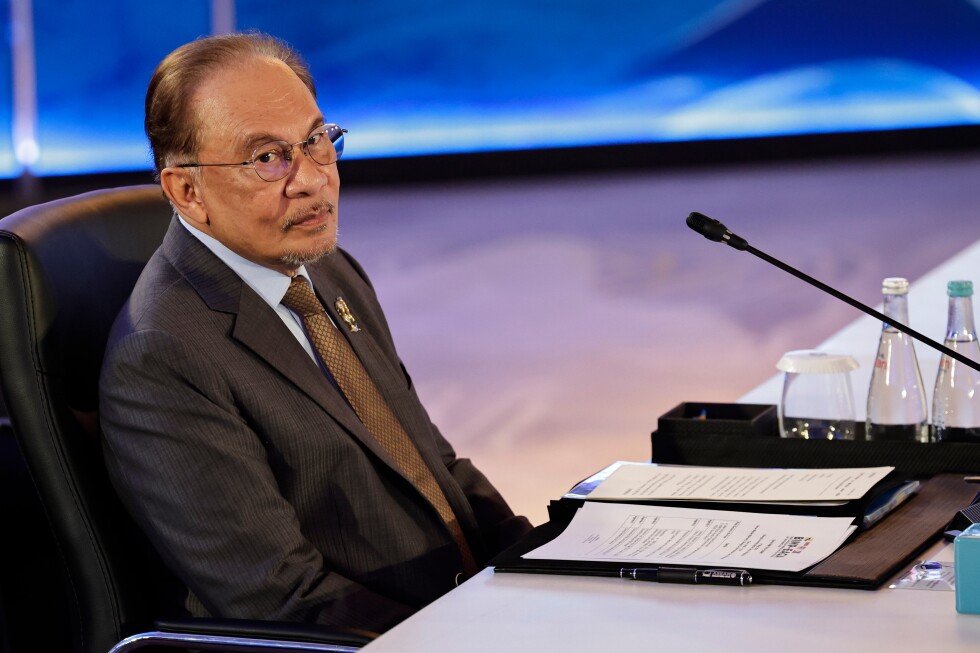
    In a sharp rebuke that has highlighted growing friction over international defense contracts, Malaysian Prime Minister Anwar Ibrahim has publicly condemned Norway’s decision to revoke an export license for a key naval missile system earmarked for the Royal Malaysian Navy, warning the unilateral move risks eroding long-term trust in European defense contractors. The dispute centers on the Naval Strike Missile (NSM) system and related launcher components, which were contracted to equip Malaysia’s upcoming fleet of littoral combat ships as a core part of the Southeast Asian nation’s ongoing military modernization drive.

    Speaking Thursday, Anwar confirmed he conveyed Malaysia’s “vehement objection” to the cancellation directly during a phone conversation with Norwegian Prime Minister Jonas Gahr Støre. In an official statement released after the call, the Malaysian leader emphasized that Kuala Lumpur has met every contractual obligation for the deal, which was first signed in 2018, with unwavering consistency and good faith. “Malaysia has honored every obligation under this contract since 2018: scrupulously, faithfully and without equivocation,” Anwar said. “Norway, it appears, has not felt compelled to extend us the same courtesy and demonstration of good faith.”

    Per Malaysia’s national news agency Bernama, Kongsberg Defense & Aerospace AS, the Norwegian manufacturer of the NSM anti-ship missile system, has distanced itself from the policy move, stating that all export licensing decisions fall exclusively under the jurisdiction of the Norwegian government. As of Thursday, Oslo has not issued any public statement addressing the license revocation or Anwar’s criticisms.

    Malaysian Defense Minister Mohamed Khaled Nordin revealed to local media outlets that the Malaysian government had already completed payments for nearly 95% of the total contract value before Norwegian authorities blocked the shipment in March. Without the NSM systems, Malaysia’s littoral combat ship modernization program faces significant delays, which Anwar says will undermine the navy’s operational readiness and carry unforeseen consequences for the regional military balance.

    The Malaysian prime minister stressed that signed international defense contracts are binding, formal agreements, not disposable arrangements to be changed at random. “Signed contracts are solemn instruments. They are not confetti to be scattered in so capricious a manner,” Anwar said. “If European defense suppliers reserve the right to renege with impunity, their value as strategic partners flies out the window.”

    In response to the cancellation, Khaled confirmed that Malaysian officials are currently reviewing all available legal pathways, including potential claims for financial compensation from the Norwegian side, to resolve the breach of contract.

  • Don’t use GDP to judge China’s strength – look at this instead

    Don’t use GDP to judge China’s strength – look at this instead

    As U.S. President Donald Trump prepares to touch down in Beijing on May 14 for a high-stakes bilateral summit with Chinese President Xi Jinping, Chinese officials are ready to lead with one key economic figure to showcase the country’s perceived resilience: an official 5% GDP growth target and performance figure for 2025. But while the 5% target is a stated policy goal, analysts argue that a far more telling indicator of China’s actual economic health lies in an unpublicized metric that reveals deep structural inefficiencies: the Incremental Capital Output Ratio, or ICOR.

    ICOR measures how much new investment is required to generate one additional unit of economic output. In a healthy, efficient economy, this ratio remains low, as capital flows to productive, high-return projects. When capital is misallocated — flowing into unneeded infrastructure, unprofitable projects, and overcapacity that cannot be absorbed by domestic demand — the ratio climbs, and in China, it has been rising sharply for decades.

    Calculated as gross capital formation as a share of GDP divided by real GDP growth, ICOR is not an official Chinese data point, but it can be derived from public data released by China’s National Bureau of Statistics. During China’s high-growth era between 2000 and 2007, ICOR held steady at around 3.9, meaning 3.9 percentage points of GDP in investment was required to generate 1 percentage point of GDP growth. For comparison, during their own rapid growth periods, South Korea and Taiwan posted far lower ICORs of 3.2 and 2.7 respectively, indicating that even at its economic peak, China’s investment efficiency lagged behind its regional peers.

    China’s investment productivity began a steady decline after the 2008 global financial crisis, when Beijing rolled out a massive large-scale stimulus package to offset falling export demand. Between 2008 and 2019, China’s ICOR climbed from roughly 4.5 to 7.2, nearly doubling the pre-crisis baseline. Economists attribute this shift to the exhaustion of China’s easy growth drivers: the most productive coastal manufacturing expansion, cross-regional infrastructure buildout, and rural-to-urban labor migration had largely run their course by the 2010s, leaving less high-return opportunities for new investment.

    The upward trajectory of ICOR has only accelerated since 2020. Using China’s official GDP figures, the country’s current annual ICOR stands at approximately 8.5, with a five-year rolling average approaching 9. When adjusted using more conservative, independent growth estimates from the Rhodium Group, a U.S.-based independent research firm that pegs China’s 2025 actual growth between 2.5% and 3%, the implied ICOR jumps to between 14 and 17. Even the most favorable interpretation of official Chinese data confirms a clear trend: the Chinese economy is rapidly losing investment efficiency, fueled by a flood of subsidized credit directed to politically prioritized projects rather than commercially viable opportunities.

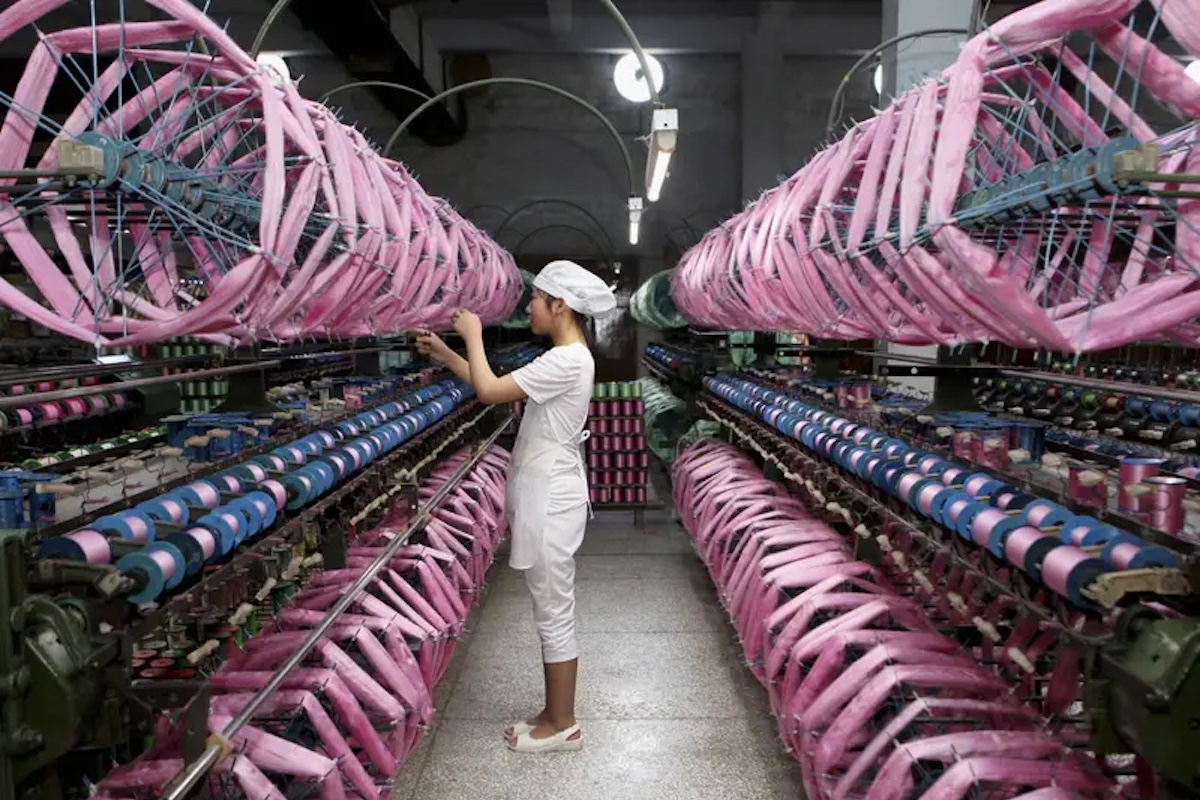
    Beijing has built a reputation for consistently hitting its pre-set GDP growth targets, so much so that even senior Chinese officials have publicly questioned the legitimacy of the official numbers. Rather than treating GDP as a natural economic output, Chinese authorities treat the target as a non-negotiable policy goal, achieved through directed credit allocation to state-linked entities. State-owned enterprises, local government financing vehicles, and politically connected real estate developers access below-market-rate borrowing that does not reflect underlying project risk, and pour capital into ventures that would fail basic commercial return tests. The end result is a growing pile of excess production and unused capacity that Chinese consumers do not want, created solely to hit arbitrary growth metrics.

    Unable to absorb this surplus domestically, Beijing redirects it to global markets, selling goods below production cost and effectively exporting the losses from its domestic capital misallocation to trading partners around the world. This dynamic has major implications for the agenda of the upcoming Trump-Xi summit, challenging the conventional narrative that frames U.S.-China economic relations as a competition between a declining U.S. and a dynamically rising China.

    Over the past two decades, the U.S. has maintained a relatively stable ICOR, reflecting an economy where investment and output grow in rough, sustainable proportion. By contrast, China’s economy now requires exponentially more investment to generate every additional yuan of GDP, a structural weakness that undermines claims of inherent Chinese economic strength. China is now structurally dependent on continuous credit expansion and steady export revenues to service its growing debt load and maintain domestic political stability. This means that U.S. trade policy tools such as targeted tariffs can apply direct pressure to the core mechanisms Beijing relies on to manage domestic order, particularly the export revenues that keep its debt system functioning.

    That does not mean unilateral U.S. trade action is the most effective strategy, the analysis argues. Instead of walling the U.S. off from global trade alone, Washington should pursue coordinated action with like-minded allies to address the root of the problem: Beijing’s subsidized overcapacity model. Every major global economy is already coping with a flood of underpriced Chinese exported surplus, so a coordinated multilateral framework that targets subsidized overproduction at its source will create far more sustainable leverage than unilateral tariffs, which risk isolating the U.S. from the global partners it needs to enact meaningful change.

    None of this data suggests China is on the brink of imminent economic collapse. China’s governing system has already demonstrated a striking ability to manage gradual deterioration: rolling over bad debt, extending repayment timelines, and pushing underlying imbalances into the future rather than addressing them. But managed gradual decline is not the same as economic strength, and Beijing has so far shown no willingness to tackle the core structural imbalances driving falling investment efficiency on its own. While Beijing will continue to tout its 5% official growth figure as proof of economic resilience ahead of the summit, the real metric to watch is the one Chinese officials will not discuss: the rising hidden cost of generating every unit of that growth. This analysis comes from Daniel Swift, a senior research analyst for economics, finance and trade at the Center on Economic and Financial Power at the Foundation for Defense of Democracies, and a retired U.S. diplomat.