博客

  • First it was K-pop, now it’s K-food. Here’s how to bring Korean cooking into your kitchen

    First it was K-pop, now it’s K-food. Here’s how to bring Korean cooking into your kitchen

    In a London apartment filled with the pungent aroma of fermentation, Korean-American chef Judy Joo guides a group of food writers through the ancient art of kimchi-making. The scene represents more than just a cooking class—it symbolizes Korean cuisine’s remarkable journey into the British mainstream.

    Participants don plastic gloves to massage vibrant red paste into cabbage wedges, learning techniques passed down through generations like culinary heirlooms. The session, connected to Ocado’s new Korean food aisle, reflects a broader cultural shift occurring across the United Kingdom.

    Korean food’s arrival in Britain has been both gradual and deliberate. Unlike other Asian cuisines that initially faced cultural confusion—often mistaken for variations of Chinese food—Korean gastronomy has carved its own distinct identity. The transformation began accelerating after South Korea’s 2009 “Global Hansik” campaign, which invested government resources in international restaurant promotion and chef training.

    The current Korean culinary wave rides alongside the broader Hallyu cultural movement. Netflix’s popular competition show “Culinary Class Wars” returns for its second season after dominating global non-English charts, while food-centered dramas showcase innovative fusion dishes to international audiences.

    Supermarket metrics confirm the trend: Waitrose reports a 60% year-on-year increase in “Korean BBQ” searches and a 70% sales surge for gochujang paste. Kimchi ranks among the retailer’s fastest-growing international products.

    Nutritionist Emer Lowry explains the scientific appeal: “Fermented foods like kimchi have entered mainstream consciousness not just for their complex flavors, but for demonstrated benefits including improved digestion and healthier gut microbiomes.”

    Social media analytics reveal deepening engagement. According to food giant CJ’s Bibigo division, UK TikTok posts mentioning Korean food have surged from under 10,000 in 2023 to over 17,000 in 2025, indicating organic, curiosity-driven interest.

    In North London’s Cálong restaurant, Chef Joo Won represents the next evolution: adapting traditional Korean techniques to British ingredients. His culinary philosophy embraces thoughtful adaptation rather than rigid authenticity. “If an ingredient doesn’t suit Korean seasoning,” he notes, “there’s no need to force gochujang onto it.”

    Beyond restaurants, grassroots movements flourish. Yoonsun Chang’s LoKoLi supper clubs offer intimate experiences centered on jeong (Korean hospitality) and inyeon (meaningful connections formed at the table). Her guests increasingly seek the domestic aspects of Korean culture—table settings, everyday dishes, and their stories—rather than just popular music and dramas.

    The cultural impact becomes evident in unexpected places. Chang observes that pubs and restaurants now use authentic kimchi instead of generic pickles in their “kimchi burgers,” indicating genuine integration rather than superficial appropriation.

    For British YouTubers Armand and Max, exposure to Korean food through the “Korean Englishman” channel fundamentally changed their eating habits. “The flavor profiles were completely different from anything we’d experienced,” Max recalls. “Fermented cabbage, kimchi—we’d never had anything like it.”

    Back in Judy Joo’s kitchen, as cabbages transform into future fermented delicacies, participants leave with more than just jars of kimchi—they carry pieces of a cultural tradition that has found a new home in British culinary landscape. While Korean food hasn’t replaced traditional British takeaways, it has undoubtedly secured its place in the nation’s diverse gastronomic identity.

  • ‘A nightmare’ – The battle over Warner Bros is turning Hollywood upside down

    ‘A nightmare’ – The battle over Warner Bros is turning Hollywood upside down

    Hollywood’s creative community characterizes the impending sale of Warner Bros as nothing short of catastrophic, with industry professionals bracing for substantial job losses and fundamental structural changes. The historic studio, responsible for cinematic landmarks from Casablanca to the Harry Potter franchise, now finds itself at the center of a fierce bidding war between streaming giant Netflix and Paramount Skydance.

    The potential acquisition represents the latest seismic shift in an industry still reeling from pandemic-era disruptions and the 2023 labor strikes. Warner’s decline has triggered widespread concern throughout Hollywood, where many view the situation as choosing between two problematic outcomes: domination by a tech company accused of undermining theatrical exhibition (Netflix) or control by billionaires with perceived political affiliations (Paramount).

    Financial dimensions of the competing offers reveal the stakes involved. Netflix seeks to acquire Warner’s most valuable assets—the 102-year-old studio, HBO, and its extensive content library—while leaving legacy television networks like CNN and TNT Sports for separate acquisition. Conversely, Paramount Skydance’s $108 billion hostile takeover bid includes backing from Saudi Arabia, Abu Dhabi, Qatar, and a fund established by Jared Kushner, raising concerns about potential censorship and government influence.

    Industry criticism has increasingly focused on Warner Bros Discovery CEO David Zaslav, who received $51.9 million in compensation last year while the company lost over $11 billion and its stock value declined nearly 7%. Multiple industry professionals compared his leadership style to the fictional Gordon Gekko character from Wall Street, accusing him of prioritizing shareholder returns over institutional legacy.

    The company defended Zaslav’s tenure, noting through communications head Robert Gibbs that under his leadership, Warner has “regained its leadership position with a unique slate of films,” relaunched the DC Universe with a coherent ten-year plan, and achieved global profitability for its streaming service.

    Beyond the corporate maneuvering, the human impact continues to mount. Interviews with dozens of industry professionals reveal an workforce grappling with existential uncertainty. One actor, now homeless with his family, described waking up daily “feeling like I’ve failed in every direction,” while still expressing preference for Netflix ownership over foreign investment.

    The industry’s fundamental contradictions remain unresolved. Netflix has attempted to calm concerns by pledging to maintain theatrical releases, yet many exhibitors remain skeptical given the company’s streaming-first history. As one producer noted, “At least with Paramount, we know movies will make it to the big screen. They didn’t kill movie theatres.”

    Amid the uncertainty, some find hope in Netflix’s restoration of Hollywood’s historic Egyptian Theatre, viewing it as a gesture of commitment to cinematic tradition. Meanwhile, on Warner’s backlot, tourism continues unabated, and those still employed maintain business-as-usual attitudes, with one veteran producer noting they’ve “gone through seven mergers” and believe quality content will ultimately find its market regardless of corporate ownership.

  • I’m Muslim but I mark Shabbat’: How an Indian man is keeping a Jewish legacy alive

    I’m Muslim but I mark Shabbat’: How an Indian man is keeping a Jewish legacy alive

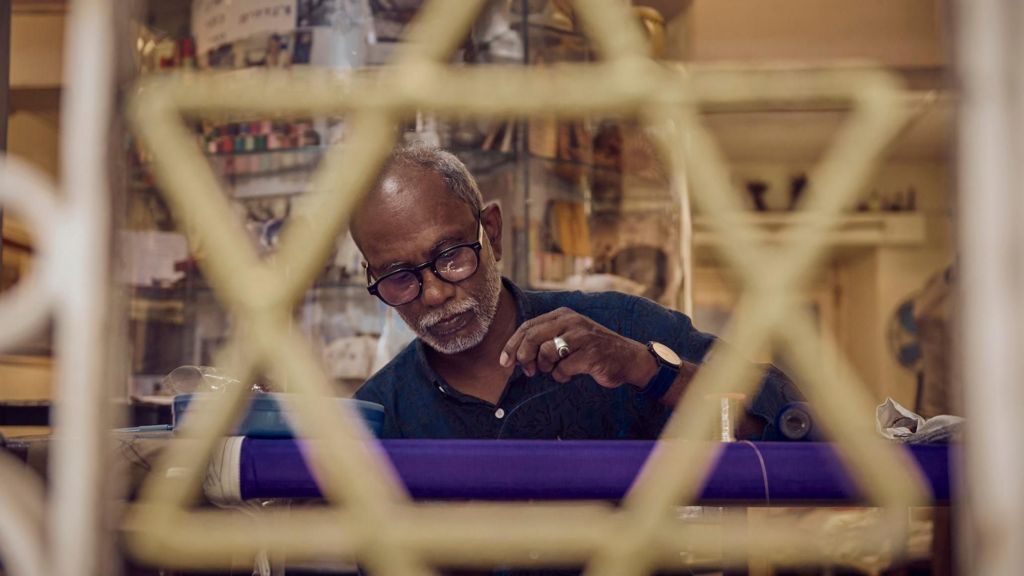
    In the heart of Kochi’s historic Jew Town, where cobbled lanes echo with centuries of multicultural heritage, Thaha Ibrahim maintains an extraordinary cultural legacy. The 55-year-old Muslim embroidery artisan now operates what remains as the final Jewish embroidery shop in this southern Indian city—once known as the Queen of the Arabian Sea for its significance as a spice trade hub.

    His establishment still bears the sign ‘Sarah Cohen’s Home,’ honoring the Jewish woman who became his mentor and surrogate mother. Their unconventional friendship defied religious and economic boundaries, spanning nearly four decades until Sarah’s death in 2019 at age 96. Thaha first began assisting in the shop in 2000, eventually taking full ownership according to Sarah’s final wishes.

    The shop’s origins trace back to the early 1980s when Thaha, then a teenage school dropout selling postcards to tourists, encountered the Cohens by chance. Initially met with skepticism by Sarah, their relationship transformed when Thaha demonstrated natural talent for embroidery—a skill likely inherited from his tailor father. Under Sarah’s guidance, he mastered creating traditional Jewish items including kippahs (skullcaps), challah covers, and menorahs.

    Jew Town itself tells a story of vanishing heritage. Once home to 2,500 Jews in the 18th century, the community has dwindled to a single remaining Jewish resident today. Jewish settlement in Kerala dates back 2,000 years during King Solomon’s reign, with later waves of Sephardic Jews arriving in 1492 fleeing Spanish persecution. These communities collectively became known as Cochin Jews, living under the protection of local rulers in what was historically a multicultural trading center.

    The exodus accelerated after Israel’s establishment in 1948, with most families seeking better economic opportunities or marriage prospects abroad. Scholar Anna Zacharias notes that religious persecution was never a factor in multicultural Kochi, where Jews maintained their identity while integrating through speaking Malayalam and participating in local culture.

    Thaha honors his promise to preserve Sarah’s legacy with profound respect for Jewish traditions. He closes the shop on Shabbat, lights the traditional Friday evening lamp despite being a practicing Muslim, and regularly visits Sarah’s grave at the Jewish cemetery. ‘To me, it’s not about religion but about humanity,’ he reflects—a testament to intercultural bonds that endure beyond religious divisions.

  • London police will not probe former Prince Andrew over Giuffre allegation

    London police will not probe former Prince Andrew over Giuffre allegation

    The Metropolitan Police Service has formally concluded its assessment into allegations against the Duke of York, Andrew Mountbatten-Windsor, announcing it will pursue no criminal investigation regarding claims he utilized royal protection officers to discredit his accuser. This decision marks another significant development in the long-running saga involving the British royal family and the Jeffrey Epstein scandal.

    Commander Ella Marriott, a senior Metropolitan Police official, stated that a comprehensive review of available evidence failed to establish grounds for misconduct or criminal proceedings. The assessment specifically addressed allegations that emerged in the posthumously published memoir of Virginia Giuffre, which detailed claims that Andrew directed his taxpayer-funded security detail to investigate her for a potential smear campaign in 2011.

    Despite this closure, the legal challenges for the former prince may not be entirely over. Commander Marriott noted that the force remains open to reviewing any new evidence that might emerge from ongoing court document unsealing proceedings in the United States. This statement leaves a conditional avenue for future investigation should substantial information come to light.

    The police decision follows King Charles III’s historic October move to strip his brother of royal titles and military affiliations, effectively removing him from official royal duties. The monarch additionally revoked Andrew’s residence privileges at the royal estate in Windsor, signaling the firmest institutional response to the controversy to date.

    Giuffre’s memoir, published following her tragic death in April at age 41, contained detailed accounts of alleged sexual encounters with Andrew, including instances she claimed occurred while she was a minor. These allegations initially sparked widespread public condemnation and intensified scrutiny of Andrew’s association with convicted sex offender Jeffrey Epstein.

    The Metropolitan Police’s announcement represents the latest chapter in a story that continues to unfold through American legal channels, where additional court documents related to the Epstein case remain pending release.

  • The Mask, Pulp Fiction star Peter Greene passes away at 60

    The Mask, Pulp Fiction star Peter Greene passes away at 60

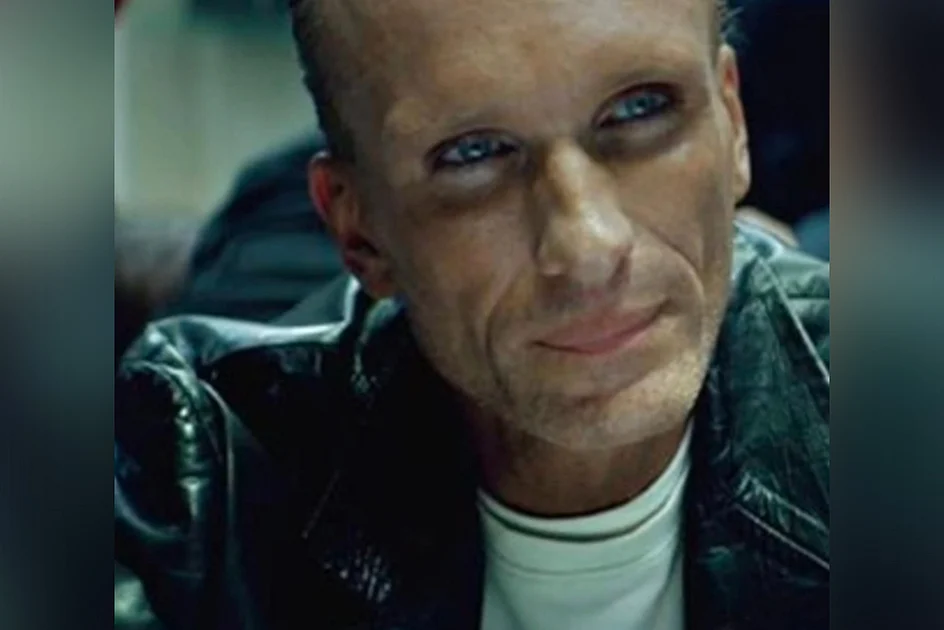
    Peter Greene, the acclaimed character actor celebrated for his compelling performances in cinematic classics including ‘Pulp Fiction’ and ‘The Mask’, has died at the age of 60. His passing was confirmed on Friday, December 12th, after he was discovered deceased in his Lower East Side apartment in New York City.

    Greene’s manager, Gregg Edwards, formally verified the tragic news in an official statement. The specific circumstances and cause of his death have not been publicly disclosed at this time.

    The New Jersey-born performer launched his on-screen career with a 1990 guest spot on NBC’s crime series ‘Hardball’. His journey into feature films commenced two years later with a role in ‘Laws of Gravity’, sharing the screen with Edie Falco.

    Greene’s breakthrough arrived in the mid-1990s with a series of iconic performances. He memorably portrayed the sinister antagonist Dorian Tyrell opposite Jim Carrey in the 1994 blockbuster ‘The Mask’. That same year, he delivered a powerful performance as Zed in Quentin Tarantino’s groundbreaking film ‘Pulp Fiction’.

    His extensive filmography includes significant roles in ‘Clean Shaven’ (1993), ‘The Usual Suspects’ (1995), ‘Kiss & Tell’ (1997), ‘Blue Streak’ (1999), and the critically acclaimed drama ‘Training Day’ (2001) where he acted alongside Denzel Washington and Ethan Hawke.

    Beyond his film work, Greene established a substantial television presence with recurring roles in ‘The Black Donnellys’, ‘Life on Mars’, and ‘Chicago P.D.’. His most recent appearances included the John Wick prequel series ‘The Continental’ in 2023 and an episode of ‘Dope Thief’ earlier this year.

    Peter Greene is survived by his sister and brother. The entertainment industry mourns the loss of a distinctive talent whose contributions to film and television left an indelible mark on popular culture.

  • DNA, IP addresses: What US may ask visitors to submit, who will be affected

    DNA, IP addresses: What US may ask visitors to submit, who will be affected

    The United States Department of Homeland Security has unveiled a comprehensive overhaul of its Electronic System for Travel Authorization (ESTA) that would fundamentally transform entry procedures for visitors from visa-waiver countries. These proposed changes, currently open for public commentary, represent the most significant update to US travel screening protocols in recent years.

    While initial media attention focused on the mandatory disclosure of social media histories from the past five years—previously an optional field—this requirement constitutes merely one component of a far more extensive transformation. The proposed modifications would mandate the collection of unprecedented categories of personal data, including IP addresses, photographic metadata, and even biometric identifiers such as facial recognition, fingerprints, iris patterns, and DNA.

    The overhaul extends to practical application processes as well. The ESTA website would be decommissioned for new applications, making the mobile application the exclusive channel for submissions. Additionally, Romania faces removal from the Visa Waiver Program, thereby excluding its citizens from ESTA eligibility.

    Travelers from the 42 participating countries—including major US allies like the United Kingdom, Australia, Japan, and most European nations—would be required to provide:
    – Telephone numbers used over the past five years
    – Email addresses maintained throughout the previous decade
    – Comprehensive family member information (names, birth details, addresses, and contact numbers)
    – Business contact information
    – The extensive biometric data mentioned above

    These proposed measures aim to enhance security screening capabilities but raise substantial questions regarding privacy implications and the balance between national security and individual rights. The changes remain subject to public feedback before potential implementation, marking a pivotal moment in the evolution of international travel security protocols.

  • Israeli military confirms killing of top Hamas commander Raad Saad in Gaza City drone strike

    Israeli military confirms killing of top Hamas commander Raad Saad in Gaza City drone strike

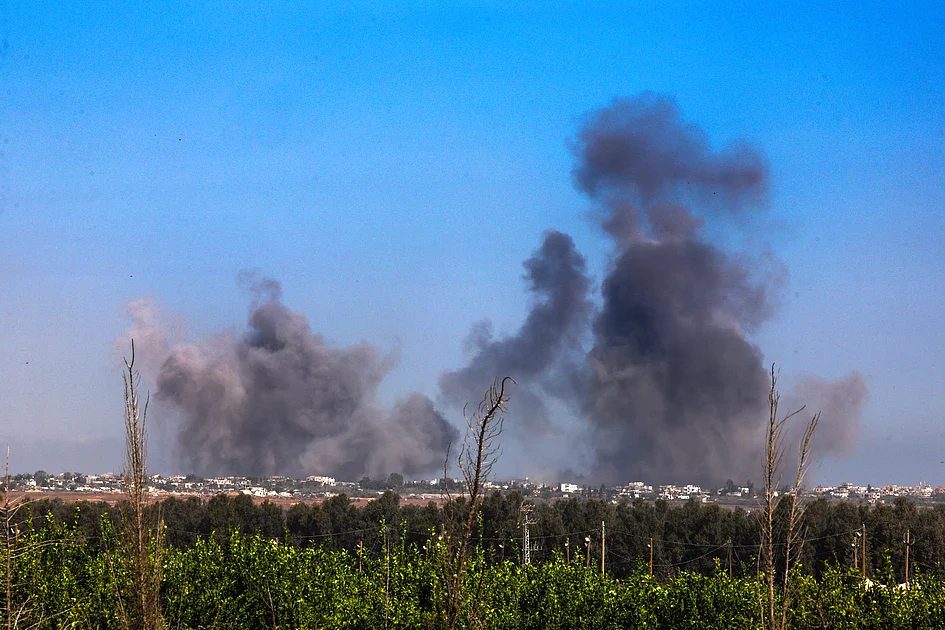
    A targeted Israeli drone strike in western Gaza City on Saturday resulted in the death of Raad Saad, a high-ranking Hamas military commander. The Israeli military confirmed the operation, stating it was coordinated with the Shin Bet intelligence agency and targeted what they identified as Hamas’s production headquarters.

    According to Israeli media, the strike hit Saad’s vehicle near al-Nabulsi square, killing him and three others. Conflicting casualty reports emerged, with Gaza’s health ministry reporting four fatalities and at least 25 wounded, while Al Jazeera Arabic placed the death toll at five.

    The Israeli military described Saad as “one of the last senior veterans remaining in the Gaza Strip” who had held numerous leadership positions and was closely associated with Marwan Issa, deputy head of Hamas’s military wing. An Israeli defense official identified him as head of Hamas’s weapons manufacturing operations, with Reuters sources indicating he was second only to the group’s current military chief, Izz al-Din al-Haddad.

    Prime Minister Benjamin Netanyahu’s office stated the operation was ordered in response to a recent explosion that injured Israeli soldiers in Gaza. They characterized the strike as targeting Hamas’s efforts to “restore its capabilities and strengthen itself” in recent weeks.

    Hamas condemned the attack as “a blatant violation” of the October ceasefire agreement, accusing Israel of “deliberately seeking to undermine and sabotage the agreement through its escalating and continuous violations” in a Telegram post. The group did not confirm whether Saad was specifically targeted.

    In a significant diplomatic development, Axios reported that Israel had not provided advance warning of the strike to the United States government.

  • UAE: Burj Khalifa turns red as Liwa International Festival 2026 begins in Al Dhafra

    UAE: Burj Khalifa turns red as Liwa International Festival 2026 begins in Al Dhafra

    The Liwa International Festival 2026 commenced with extraordinary fanfare as Dubai’s iconic Burj Khalifa was illuminated in vibrant red lights, signaling the start of the UAE’s premier winter carnival. This spectacular visual tribute on Friday evening marked the opening of the month-long festival running through January 3, 2026, in the Liwa area of Abu Dhabi’s Al Dhafra Region.

    The inauguration ceremony witnessed the presence of esteemed dignitaries including Sheikh Hamdan bin Zayed Al Nahyan, Ruler’s Representative in Al Dhafra Region, and Sheikh Hazza bin Zayed Al Nahyan, Ruler’s Representative in Al Ain Region. The royal delegation conducted an extensive tour of the festival grounds, receiving detailed briefings about the diverse sporting tournaments, heritage exhibitions, and entertainment attractions comprising this year’s edition.

    Liwa Village serves as the cultural epicenter of the festival, offering an immersive program blending traditional art forms, heritage experiences, and family-oriented activities. The opening ceremony featured an innovative multimedia spectacle combining synchronized sound, advanced lighting systems, laser projections, and drone formations, culminating in a breathtaking fireworks display that illuminated the Liwa desert sky. The UAE’s official aerobatic team, Al Fursan, delivered a special performance that added aerial drama to the celebrations.

    Organized by the Department of Culture and Tourism – Abu Dhabi (DCT Abu Dhabi) under the patronage of Sheikh Hamdan bin Zayed Al Nahyan, the festival represents a collaborative effort involving Liwa Sports Club, Al Dhafra Municipality, Abu Dhabi Police, and several other government entities.

    The 2026 edition presents an exceptionally diverse program featuring motorsports competitions including speed races, dune driving challenges, freestyle demonstrations, sand racing, and UTV circuit races. Traditional sports enthusiasts can enjoy falconry championships, sand wrestling, and boxing matches, while adventure seekers can participate in the inaugural Extreme Mud Fest driving challenge.

    Additional attractions include daily light shows, drone flight demonstrations, hot air balloon experiences, and weekend fireworks displays. The festival transforms into a premier New Year’s Eve destination with a special concert followed by fireworks and the Moreeb Dune Car Championship commencing on December 31st.

    Liwa Village continues its celebration of Emirati heritage through traditional marketplaces, creative workshops, and family zones featuring water karting, carnival games, zip lines, and authentic culinary experiences. The festival solidifies Al Dhafra Region’s position as a leading destination for cultural tourism while attracting international audiences passionate about desert adventures, traditional sports, and speed racing.

  • ‘We’re not afraid’: Life goes on for Indigenous Colombians despite volcano eruption risk

    ‘We’re not afraid’: Life goes on for Indigenous Colombians despite volcano eruption risk

    PUROCÉ, Colombia — Against the backdrop of an increasingly active Puracé volcano, local residents demonstrate a remarkable coexistence with the geological giant that defines their existence. Oliverio Quira, a 65-year-old indigenous farmer, continues his daily routine of tending cattle mere miles from the crater despite official warnings of potential eruption.

    Colombian geological authorities elevated alert levels on November 29th following significant seismic activity and ash emissions reaching 900 meters (approximately 3,000 feet) into the atmosphere. The 4,640-meter (15,200-foot) stratovolcano, one of Colombia’s most active with at least 51 documented eruptions since 1400, last experienced major activity in 1977.

    For the Coconuco Indigenous people who inhabit the Puracé Indigenous Reserve, the volcano represents far more than geological phenomena. “The volcano is our master; we have no reason to fear it,” explained Alfredo Manquillo, deputy governor of the reserve. “We respect it and perform rituals in its name.”

    These spiritual practices include offerings of corn, sweet plants, and guarapo—a traditional alcoholic beverage—to appease the mountain they consider both sacred entity and territorial protector. Community elders interpret the current activity as the volcano’s message requesting greater environmental stewardship, referencing past sulfur extraction and current tourism pressures.

    While emergency preparations advance, with authorities planning evacuation protocols for approximately 800 peripheral residents, many indigenous community members express reluctance to abandon their homes and livelihoods. Reinaldo Pizo, 75, who witnessed the 1977 eruption as a child, stated he would only evacuate if poisonous gases emerged, echoing sentiments shared by neighbors concerned about abandoning livestock and agricultural assets.

    Local officials acknowledge infrastructure challenges for potential mass evacuations, with Mayor Humberto Molano Hoyos coordinating temporary shelter arrangements. Community leaders emphasize the need for comprehensive emergency support including water storage, food supplies, and livestock protection measures to ensure viable evacuation compliance.

  • Senior Hamas commander Raed Saed killed in Gaza strike, Israeli media say

    Senior Hamas commander Raed Saed killed in Gaza strike, Israeli media say

    Israeli forces conducted a targeted military operation in Gaza City on Saturday, resulting in the death of senior Hamas commander Raed Saed, according to multiple Israeli media reports. The strike targeted a vehicle transporting Saed, who Israeli defense officials identified as one of the principal architects of the October 7, 2023 attacks against Israel.

    The operation represents the highest-profile assassination of a Hamas leader since the implementation of a ceasefire agreement in October. Gaza health authorities confirmed the strike resulted in four fatalities, though Israeli military officials initially declined to provide specific details about the target.

    Saed held multiple critical positions within Hamas’ military structure, serving as both the head of the organization’s weapon manufacturing division and the second-in-command of its armed wing, reporting directly to Izz eldeen Al-Hadad. Previously, he commanded Hamas’ Gaza City battalion, considered one of the group’s most substantial and well-equipped military formations.

    The ongoing conflict between Israel and Hamas originated with the October 7, 2023 attacks, during which Hamas-led militants killed approximately 1,200 Israeli civilians and seized 251 hostages. Israel’s subsequent military response has resulted in over 70,700 Palestinian casualties according to Gaza health officials, though Israel maintains its operations specifically target Hamas militants and infrastructure.

    While the October ceasefire has facilitated the return of hundreds of thousands of Palestinians to Gaza City and enabled increased humanitarian aid delivery, violence has persisted. Palestinian health authorities report at least 386 fatalities from Israeli strikes since the truce began, while Israel confirms three soldier deaths and numerous operations against militants during the same period.