博客

  • Anti-immigrant rhetoric and policies intensify across Europe

    Anti-immigrant rhetoric and policies intensify across Europe

    Across Europe, a dramatic surge in ethnonationalist sentiment is transforming political discourse and policy. Recent months have witnessed mass demonstrations in London featuring chants of “send them home,” while prominent British politicians have openly criticized the visibility of non-white faces in media and advocated for deporting long-term residents born abroad.

    This overt demonization of immigrants and those with immigrant heritage has gained momentum as migration dominates political agendas and right-wing parties achieve unprecedented popularity. Parties advocating mass deportations and framing immigration as a threat to national identity—including Britain’s Reform UK, Germany’s Alternative for Germany (AfD), and France’s National Rally—now lead or feature prominently in opinion polls across the continent.

    The phenomenon appears emboldened by international influences, particularly former U.S. President Donald Trump’s characterization of Somali immigrants as “garbage” and his administration’s national security strategy portraying European nations facing “civilizational erasure” due to immigration.

    Experts identify multiple drivers behind this trend: economic stagnation following the 2008 financial crisis, the rise of charismatic nationalist leaders, and social media algorithms that amplify divisive content. According to Bobby Duffy, Director of the Policy Unit at King’s College London, these factors have created “a frightening increase in the sense of national division and decline” that pushes societies toward political extremes.

    The consequences are tangible. UK government statistics show over 115,000 recorded hate crimes in England and Wales through March 2025, representing a 2% year-over-year increase. Violent incidents, including anti-immigrant and anti-Muslim attacks, have erupted following tragic events exacerbated by online misinformation.

    Mainstream political parties increasingly adopt hardened immigration stances, with Britain’s Labour government announcing policies to restrict permanent settlement rights and several European nations seeking to weaken legal protections for migrants. Human rights advocates warn that appeasement strategies only fuel more extreme demands, creating a dangerous cycle of escalating rhetoric and policy.

    Despite condemnation of racist conspiracy theories like the “great replacement” narrative, centrist politicians face criticism for occasionally adopting far-right terminology. As Kieran Connell, lecturer in British history at Queen’s University Belfast, observes: “What were once dismissed as being at the far extreme end of far-right politics has now become a central part of the political debate.”


  • Landslide win for Kast gives Chile its most right-wing president in decades

    Landslide win for Kast gives Chile its most right-wing president in decades

    SANTIAGO, Chile — In a seismic political realignment, Chile has elected ultra-conservative former legislator José Antonio Kast as president, marking the nation’s most significant rightward turn since its return to democracy 35 years ago. Kast secured a decisive 58.2% victory in Sunday’s runoff election, defeating center-left governing coalition candidate Jeannette Jara, who garnered 41.8% of votes.

    The election outcome represents a profound response to mounting public concerns over crime, immigration, and economic stagnation in one of Latin America’s traditionally stable nations. Kast’s campaign successfully channeled widespread anxiety about public safety, promising stringent measures against organized crime and pledging to deport hundreds of thousands of undocumented immigrants.

    In his victory address, Kast emphasized restoring order: ‘Chile needs order—in the streets, in the state, in the priorities that have been lost.’ Notably, he demonstrated unexpected moderation by chastising supporters who booed his opponent, demanding respect for the defeated candidate.

    Kast’s triumph aligns with a broader regional trend that has seen right-wing leaders gain power across Latin America, from Argentina’s Javier Milei to Bolivia’s conservative shift. The Trump administration promptly congratulated Kast, with U.S. Secretary of State Marco Rubio expressing confidence in strengthened bilateral cooperation on security and economic priorities.

    The election exposed deep ideological divisions between the candidates. Jara, a lifelong Communist Party member and former labor minister, represented continuity with President Gabriel Boric’s social welfare policies. Kast, by contrast, embodies moral conservatism with opposition to same-sex marriage and abortion, drawing comparisons to Brazil’s incarcerated former leader Jair Bolsonaro.

    Kast now faces the challenge of implementing his ambitious agenda without a congressional majority. His proposals include constructing maximum-security prisons inspired by El Salvador’s Nayib Bukele, building extensive border barriers, and implementing $6 billion in spending cuts while maintaining social benefits—a plan economists question for its feasibility.

    Political analyst Patricio Navia notes that Kast’s success will depend on his ability to moderate radical instincts: ‘If he governs as a moderate right-wing president, he’ll find support. But can Kast control his radical instincts? That’s the big question.’

    The president-elect will assume office on March 11, 2026, ending the center-left’s governance and opening a new chapter in Chile’s political history.

  • After centuries of conflict, Chile’s Indigenous Mapuches fear a far-right political turn

    After centuries of conflict, Chile’s Indigenous Mapuches fear a far-right political turn

    Chile’s largest Indigenous community, the Mapuche people, confronts escalating anxieties as the nation approaches a pivotal presidential election this Sunday. Historically resilient against successive conquerors—from the Inca Empire to Spanish colonizers and later the Chilean state—the Mapuche now fear a potential resurgence of state violence under a far-right administration.

    With approximately 12% of Chile’s 19 million population identifying as Mapuche, community leaders express profound concern over the electoral momentum of ultra-conservative candidate José Antonio Kast. His platform promises mass deportations of undocumented immigrants and enhanced military powers for crime suppression, directly impacting Indigenous territories.

    The political landscape shifted notably during Chile’s 2019 social uprising when mainstream protesters adopted the Mapuche flag, symbolizing solidarity with their centuries-old struggle for land rights. Although left-wing President Gabriel Boric initially pledged constitutional reforms and troop withdrawals from Mapuche lands, his administration ultimately redeployed military forces and extended emergency measures following armed clashes.

    Central to the conflict is the Araucanía region, where ancestral territories were systematically transferred to forestry corporations during Augusto Pinochet’s dictatorship. Despite post-1990 democratic reforms enabling land restitution, Mapuche communities continue experiencing marginalization and poverty. The current electoral campaign has notably avoided substantive discussion of Indigenous rights, focusing instead on crime and migration concerns.

    Kast’s recent rally in Temuco—considered the cultural capital of Mapuche territory—featured rhetoric characterizing Indigenous militants as ‘cowards’ and ‘terrorists,’ promising to ‘eradicate terrorism’ using all state resources. This language evokes traumatic memories of dictatorship-era persecutions, including documented cases of fabricated evidence against Mapuche activists by police intelligence units.

    For Mapuche language teacher Angelina Cayuqueo, the election represents an existential threat, potentially reversing decades of fragile progress in Indigenous land reclamation. As Chile stands at a constitutional crossroads, the Mapuche people await an outcome that could either deepen their historical trauma or open pathways to meaningful reconciliation.

  • Three US personnel killed in Islamic State attack on convoy in central Syria

    Three US personnel killed in Islamic State attack on convoy in central Syria

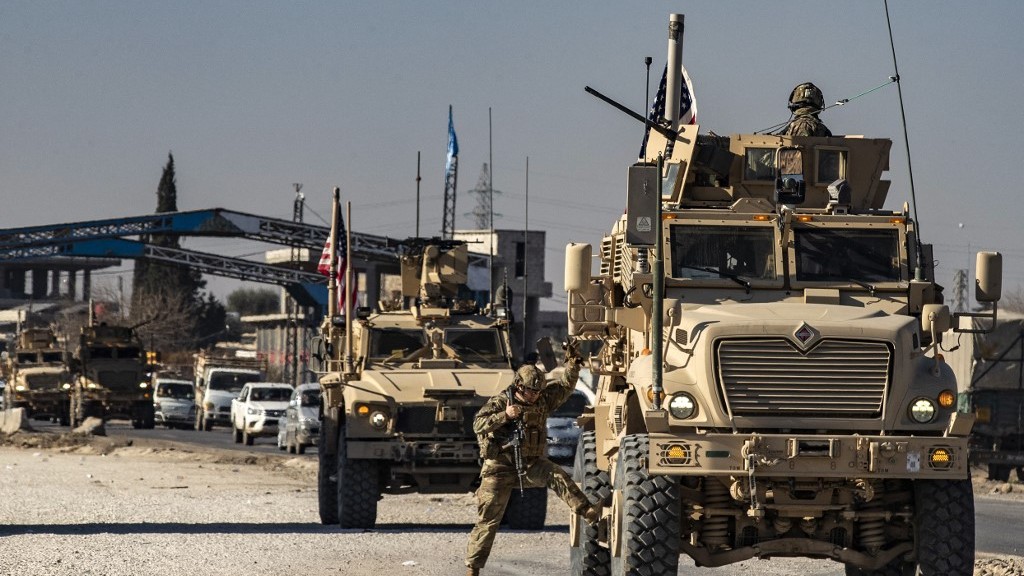
    A deadly assault on a joint U.S.-Syrian military convoy in central Syria has resulted in significant casualties, marking a severe escalation in regional security concerns. According to U.S. Central Command, three American personnel—two army soldiers and one civilian interpreter—were killed when a lone gunman opened fire during a ‘key leader engagement’ operation in the town of Palmyra on Saturday. Three additional U.S. service members sustained injuries in the attack.

    The suspected Islamic State attacker was subsequently neutralized by accompanying ‘partner forces,’ as confirmed by U.S. Secretary of Defence Pete Hegseth via social media. While IS has not formally claimed responsibility for the assault, preliminary assessments from senior U.S. officials indicate the armed group as the probable perpetrator. The incident occurred in an area beyond Syrian government control, highlighting the persistent volatility in the region.

    Syrian state media SANA, citing security sources, reported that two Syrian service members were wounded in the exchange and were evacuated by U.S. helicopters to the Al-Tanf base near the Iraqi border. The U.S. military has announced it will withhold the identities of the deceased until 24 hours after next-of-kin notifications are completed.

    Tom Barrack, U.S. Ambassador to Turkey and special envoy to Syria, condemned the attack, stating: ‘We mourn the loss of three brave U.S. service members and civilian personnel and wish a speedy recovery to the Syrian troops wounded in the attack. We remain committed to defeating terrorism with our Syrian partners.’

    This violence occurs weeks after Syria and the U.S.-led coalition announced enhanced political cooperation against IS, coinciding with Syrian President Ahmed al-Sharaa’s White House visit. U.S.-led forces have intensified counter-IS operations in recent months, frequently collaborating with Syrian security forces who reported arresting over 70 suspected IS affiliates nationwide last month. The United States maintains several hundred troops in northeastern Syria as part of ongoing counterterrorism efforts.

  • Abu Dhabi Marathon draws 37,000 participants, winners bag over Dh1 million in prizes

    Abu Dhabi Marathon draws 37,000 participants, winners bag over Dh1 million in prizes

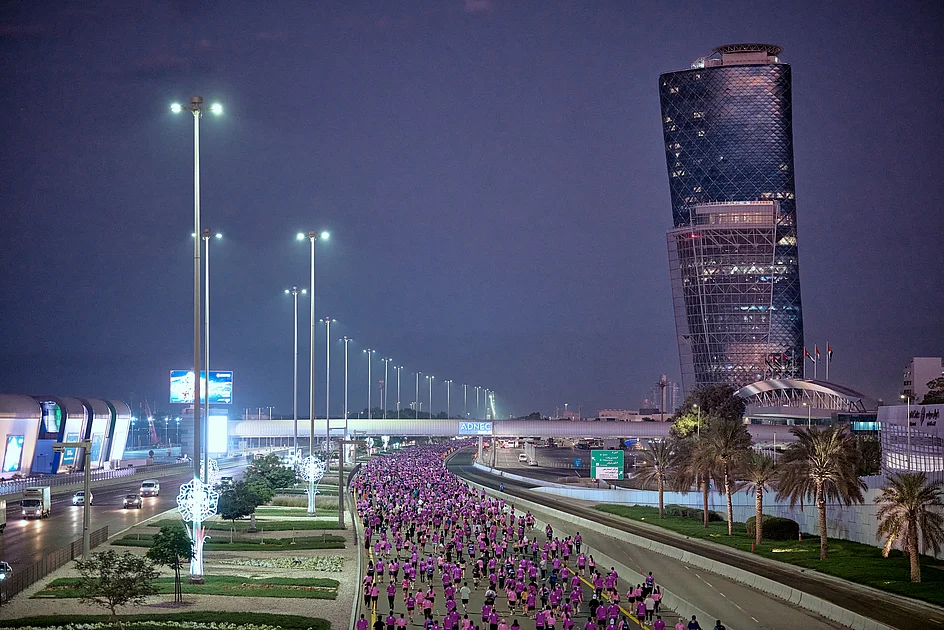
    The seventh annual Abu Dhabi Marathon concluded with remarkable success, attracting a record-breaking 37,000 participants from across the globe. Organized by the Abu Dhabi Sports Council and sponsored by ADNOC, the event solidified its status as a premier international sporting spectacle.

    The competition commenced at 5:45 AM from Zayed Sports City, featuring multiple race categories including the full marathon, relay marathon, 10km, 5km, 2.5km races, and a dedicated category for People of Determination. The extensive participation demonstrated the event’s growing popularity and inclusive nature.

    Elite athletes delivered exceptional performances in the marathon’s premier category. Turkish runner Kaan Kigen Özbilen triumphed in the men’s division with an impressive time of 2:07:27. The women’s category saw Kenya’s Catherine Reline Amanangole secure her second consecutive victory, clocking in at 2:21:17. France’s Laurent Lepolite dominated the wheelchair category with a finishing time of 1:59:00.

    The scenic race route showcased Abu Dhabi’s architectural marvels, guiding participants past iconic landmarks including Qasr Al Hosn, Sheikh Zayed Grand Mosque, Wahat Al Karama, ADNOC Headquarters, and the striking Capital Gate.

    With a total prize pool exceeding $300,000 (Dh1.1 million), the event offered substantial financial rewards. Both elite marathon champions received $50,000 (Dh183,625) each, while wheelchair category winners were awarded $3,150 (Dh11,568). Additional prizes were distributed across various placement categories and race distances.

    Aref Hamad Al Awani, General Secretary of the Abu Dhabi Sports Council, emphasized the marathon’s significance in promoting healthy lifestyles and enhancing Abu Dhabi’s global reputation as a destination for major sporting events. He extended gratitude to ADNOC, event partners, and volunteers for their crucial support.

    The organizing committee has already announced the date for the next edition, scheduling the eighth Abu Dhabi Marathon for December 12, 2026.

  • High-end car sales sink in China as its economy slows, taking a toll on European automakers

    High-end car sales sink in China as its economy slows, taking a toll on European automakers

    A significant transformation is underway in China’s automotive sector as consumer preferences increasingly favor affordable domestic vehicles over premium European imports. This shift presents substantial challenges for established luxury automakers including Porsche, Aston Martin, Mercedes-Benz, and BMW that have traditionally dominated the high-end segment of the world’s largest car market.

    Multiple economic factors are driving this market realignment. China’s prolonged property downturn has diminished consumer appetite for major discretionary purchases, while cultural shifts have made affluent buyers more discreet about displaying wealth. According to Paul Gong, Head of China Automotive Industry Research at UBS, these trends have created a more price-sensitive consumer base.

    The Chinese government’s trade-in subsidy program, offering approximately 20,000 yuan ($2,830) for electric and plug-in hybrid vehicle purchases, has further accelerated this transition. Consumers are increasingly selecting entry-level vehicles where this discount represents a more significant percentage of the total price—a category predominantly filled by Chinese manufacturers.

    S&P Global Ratings’ China Autos Director Claire Yuan confirms that slowing economic growth has directly impacted premium vehicle demand. Market data reveals that premium car sales (typically priced above 300,000 yuan or $42,400) have declined from 15% market share in 2023 to 13% through the first three quarters of 2025, reversing years of expansion.

    Chinese manufacturers, particularly electric vehicle leader BYD, have capitalized on this shift through aggressive technological innovation and competitive pricing strategies. These domestic brands have demonstrated remarkable competitiveness even in premium segments, with their overall market share reaching nearly 70% of passenger car sales in the first eleven months of this year.

    The impact on European manufacturers has been substantial: Mercedes-Benz reported a 27% year-on-year sales decline in China during the July-September quarter, while BMW and Mini sales dropped 11.2% through September 2025. Ferrari experienced a 13% shipment decrease to Greater China, its only declining market globally.

    The secondary market reflects similar pressures, with luxury vehicles experiencing significant depreciation. A Beijing Porsche dealership reported a 2024 Panamera model with minimal mileage selling for approximately 950,000 yuan ($134,300)—a substantial discount from its original 1.4 million yuan ($198,454) price tag. Dealers across premium brands report similar valuation declines amid what Mercedes-Benz CEO Ola Källenius describes as ‘hyper-competition’ in the Chinese market.

    Despite record monthly production exceeding 3.5 million units in November, domestic auto sales have contracted by 4% year-on-year as regional subsidy programs expire. This combination of economic pressure, competitive domestic alternatives, and changing consumer behavior has fundamentally altered China’s automotive landscape, creating an increasingly challenging environment for foreign luxury brands.

  • South Sudanese community fights to save land from relentless flooding worsened by climate change

    South Sudanese community fights to save land from relentless flooding worsened by climate change

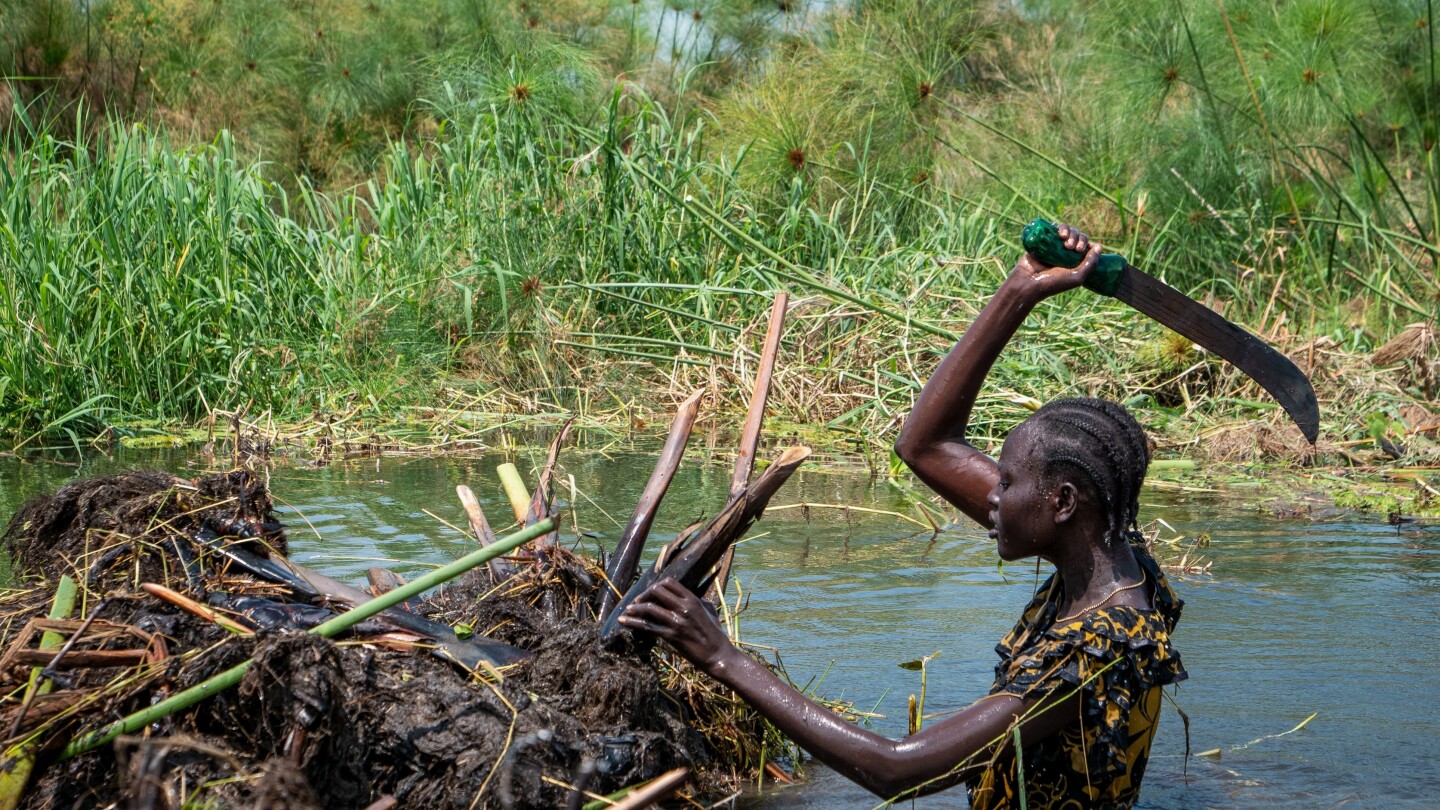
    In the vast swamplands along the Nile River in South Sudan, the Akuak community demonstrates extraordinary resilience against catastrophic flooding through generations-old adaptation techniques. For approximately 2,000 residents of this aquatic region, daily survival involves the meticulous construction and maintenance of human-made islands using papyrus plants, grass, and clay mud—a centuries-old method now challenged by intensifying climate conditions.

    Ayen Deng Duot, a mother of six, exemplifies this relentless struggle as she stands waist-deep in water, wielding a machete to harvest papyrus roots. Each piece contributes to expanding the spongy, layered foundation that keeps her family’s home above water. “We must do this work every day so water does not chase us away,” Duot explains. “We have no choice; we need to protect our homes because we have nowhere else to go.”

    The Akuak people, part of the Dinka ethnic group, have inhabited this watery landscape for countless generations. Their existence revolves around canoes rather than roads, with traditional grass-thatched tukuls dotting the artificial atolls. According to Chief Makech Kuol Kuany, the community abandoned cattle herding in the late 1980s due to rising water levels, transitioning entirely to fishing—a shift that significantly reduced their economic resilience.

    South Sudan currently experiences its sixth consecutive year of catastrophic flooding, with over 375,000 people displaced nationwide according to UN estimates. The Norwegian Foreign Policy Institute confirms in a March 2025 report that seasonal flooding has become increasingly severe and unpredictable, with historical dry periods no longer providing relief. Researchers note that consecutive record-breaking floods have permanently altered the region’s geography.

    The physical labor required to maintain these islands is immense. Fisherman Anyeth Manyang, 45, describes the process: “I learned this work from childhood with my father and mother. It’s very tiresome work because we do it with our bare hands—cutting grass and papyrus, gathering mud. At night, one’s body will be in pain.”

    Beyond housing, the flooding has devastated community infrastructure. The region’s first school, established in 2018, closed within two years due to inundation. Eighteen-year-old Philip Jok Thon gestures toward a rusted, unreadable signpost: “We need our school back because we want to study. We want to learn about the world.”

    Despite the hardships, the Akuak remain committed to their ancestral land. “This is the land of our ancestors,” states fisherman Matuor Mabior Ajith. “We have been living here for thousands of generations, so we have learned how to resist the water. We will never abandon our land.”

    The community’s determination persists even as options diminish. While some consider relocation to urban centers like Bor—25 kilometers and five hours of rowing away—most recognize the challenges of urban transition. Duot expresses concerns about city life for her children: “If our children go there, they may become child laborers or gang members. It’s better for them to stay here, and for us to work hard for them, until we die here.”

    As climate change intensifies, the Akuak’s traditional knowledge represents both an extraordinary adaptation story and a warning about the limits of indigenous resilience in facing unprecedented environmental challenges.

  • Two American troops, interpreter killed in Syria in ambush attack

    Two American troops, interpreter killed in Syria in ambush attack

    In a devastating attack in central Syria on Saturday, two American military personnel and a local interpreter were killed by a lone ISIS gunman. The ambush occurred during a joint US-Syrian patrol operation near the historic city of Palmyra, marking the first such incident since the recent political upheaval in Syria.

    US Central Command (CENTCOM) confirmed the fatalities through an official statement on social media platform X, revealing that three additional troops sustained injuries during the engagement. According to Pentagon spokesman Sean Parnell, the soldiers were participating in ‘key leader engagement’ activities supporting counter-terrorism initiatives when the attack unfolded.

    The assailant, identified as an alleged Islamic State operative, was subsequently ‘engaged and killed’ by partner forces according to CENTCOM. US Defense Secretary Pete Hegseth characterized the perpetrator as ‘the savage who perpetrated this attack’ in his own social media response.

    The complex operational environment was highlighted by a Pentagon official speaking anonymously, who noted the attack occurred in ‘an area where the Syrian President does not have control.’ Syrian state media SANA initially reported multiple casualties among both US and Syrian service members, citing security sources who described the operation as a ‘joint field tour’ in territory formerly controlled by Islamic State militants.

    According to the Syrian Observatory for Human Rights, the meeting represented part of broader American efforts to ‘strengthen its presence and foothold in the Syrian desert.’ Anonymous military sources indicated the shooting occurred during direct negotiations between Syrian and American officers at a Syrian base in Palmyra, with witnesses reporting gunfire originating from within the military installation.

    Medical evacuation helicopters promptly transported the wounded to the US-operated Al-Tanf base in southern Syria. The timing is particularly significant following last month’s diplomatic milestone that saw Damascus formally join the US-led global coalition against ISIS during President Ahmed al-Sharaa’s visit to Washington.

    US forces maintain strategic deployments across northeastern Kurdish-controlled regions and at the Al-Tanf garrison near the Jordanian border, continuing their counter-terrorism mission despite the evolving security landscape.

  • He was an Uber driver in the US. Now he’s scared of jihadists after deportation to Somalia

    He was an Uber driver in the US. Now he’s scared of jihadists after deportation to Somalia

    Mahad Mohamud, a 36-year-old Somali immigrant known online as ‘Garyaqaan’ (The Judge), is navigating a difficult readjustment to life in Mogadishu after being deported from Minneapolis just as winter settled across Minnesota. The TikTok personality with nearly half-million followers finds himself back in Somalia’s heat and chaos after U.S. Immigration and Customs Enforcement (ICE) agents apprehended him earlier this year.

    Mohamud’s case represents complex intersections of social media influence, immigration policy, and personal security concerns. His popular TikTok account, part of Somalia’s lucrative ‘roasting’ subculture where he defended his clan’s interests, brought both fame and danger. While his followers celebrated his content, Islamist militant group al-Shabab issued death threats against him for his pro-government stance—threats that formed part of his asylum claim.

    The deportation process began when rival TikTokers allegedly leaked his address to immigration authorities. ICE detained Mohamud based on two allegations: illegal entry into the United States and involvement in the kidnapping of French officials in Mogadishu. Though the FBI cleared him of the kidnapping charges after questioning, his asylum case was ultimately denied, leading to six months of detention and eventual deportation.

    Mohamud’s journey to America began over a decade ago with stops in South Africa, where he survived xenophobic violence, and Brazil before crossing the Mexican border without documentation. After being arrested at the border, he was released with a work permit pending his asylum case resolution. In Minneapolis, he built a new life working as an Uber driver while growing his TikTok presence, which provided steady income through viewer gifts during live streams.

    His deportation involved multiple transfers between detention facilities before finally being placed in a restraining jacket for the multi-leg flight to Somalia via Costa Rica, Senegal, and Kenya. Though reunited with his three children after a decade apart, Mohamud fears for his safety due to ongoing al-Shabab threats and maintains heightened security precautions.

    His case occurs amid heightened immigration tensions. President Trump recently announced plans to end temporary protection status that prevents deportations while home countries remain unsafe, specifically mentioning Somali immigrants. This policy shift has created anxiety within Minneapolis’s large Somali community (approximately 80,000 residents), where videos show ICE agents conducting door-to-door operations in areas like Little Mogadishu.

    The BBC documented several young Somali men now living in hiding, missing work and meals while fearing detection. One anonymous deportee described returning to Somalia with nothing after spending $20,000 to reach the U.S., now contemplating migration again despite the risks. With no official deportation figures available, these individual stories highlight the human impact of changing immigration policies.

  • UAE Lottery: Three players bag Dh100,000 each; check out winning numbers

    UAE Lottery: Three players bag Dh100,000 each; check out winning numbers

    The UAE Lottery has concluded its 28th Lucky Day draw, marking the continuation of its newly implemented weekly Saturday schedule. Three fortunate participants each secured Dh100,000 prizes through the Lucky Chance segment of the popular lottery program.

    The winning numbers for the December 13th draw were officially released as 13, 23, 21, 16, 8, and 5, with the Lucky Month number designated as 5. The three grand prize winners in the Lucky Chance category were identified by their unique identification codes: DE8150622, CC5326319, and BB2657706.

    This draw represents a significant transition in the UAE Lottery’s operational framework. The organization recently implemented substantial modifications to its prize structure and scheduling format during its first anniversary celebration. The updated system now features a consolidated weekly draw every Saturday with revised prize allocations, including a Dh30 million grand prize and Dh5 million secondary prize.

    The November 29th draw historically concluded the original format after 26 consecutive draws, distributing over Dh147 million in total prizes throughout its initial cycle. The previous system produced more than 100,000 winners and created five millionaires who each claimed Dh1 million prizes during the program’s inaugural year.

    Lottery officials confirmed that 180 participants have already successfully claimed prizes through the Lucky Chance identification system to date. The transition to weekly draws aims to create more frequent winning opportunities for participants while maintaining the lottery’s commitment to substantial prize distributions.