博客

  • Actions urged for ceasefire in border clashes

    Actions urged for ceasefire in border clashes

    The escalating military conflict along the Thailand-Cambodia border has entered a critical phase, with diplomatic efforts intensifying to halt hostilities that have resulted in significant civilian casualties and displacement.

    Artillery exchanges continued through Monday night into Tuesday morning, with Cambodian authorities reporting sustained attacks against Military Regions 4 and 5, particularly impacting Preah Vihear, Oddar Meanchey, Pursat, and Banteay Meanchey provinces. The human cost has been substantial, with Cambodian officials confirming 15 civilian fatalities and 76 injuries since the conflict reignited on December 7. The fighting has displaced approximately 126,508 families, equivalent to over 422,000 individuals.

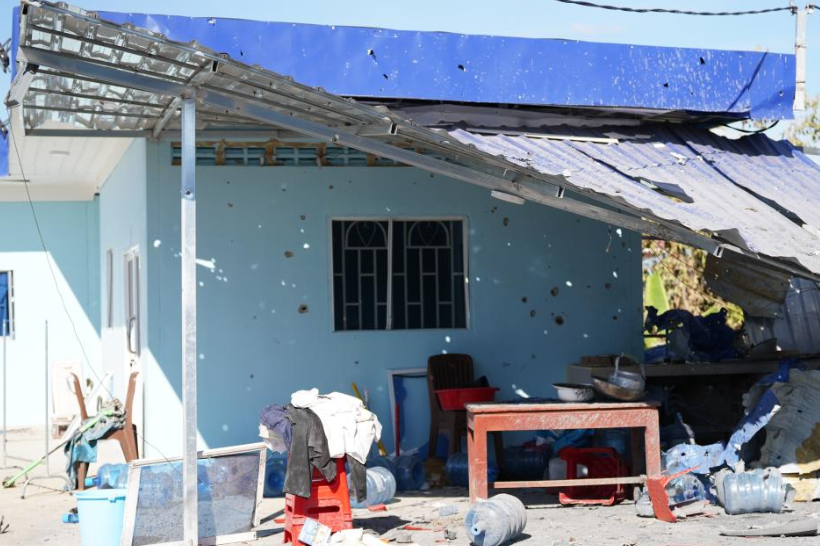
    Education has been severely disrupted, with 1,039 schools across six provinces forced to close, affecting nearly 10,000 teachers and over 242,000 students. In a particularly alarming incident, Thai artillery shells reportedly struck a primary school in Banteay Meanchey Province’s O’Beichoan commune, destroying buildings and food stalls within the school compound.

    Diplomatic channels have activated at multiple levels. Cambodian UN representative Keo Chhea addressed the UN Peacebuilding Commission in New York, emphasizing that peaceful resolution requires mutual trust and respect, while noting that dialogue becomes impossible when one nation “rejects dialogue, turns to the use of military force and ignores peace mechanisms.”

    Thailand’s Foreign Ministry, through deputy spokeswoman Maratee Nalita Andamo, maintained that ceasefire implementation “must be demonstrated through concrete actions” while reaffirming Thailand’s commitment to international law. “Thailand has no intention of escalating the situation. Our focus is on protecting national sovereignty, reducing potential threats and ensuring freedom of navigation,” she stated.

    China has emerged as a key diplomatic voice, with Foreign Ministry spokesman Guo Jiakun expressing profound sadness over casualties and offering heartfelt sympathies. Beijing emphasized that the immediate priorities remain ensuring ceasefire, ending hostilities, and protecting civilians. China supports direct bilateral dialogue and ASEAN-led mediation efforts within the regional framework.

    Meanwhile, Thailand’s National Security Council approved stricter maritime measures to prevent fuel and strategic supplies from reaching Cambodia, following discoveries of abnormally high fuel exports through the Chong Mek border checkpoint. Defense Minister Nattaphon Narkphanit characterized these measures as nonviolent, expressing confidence in a near-term resolution.

  • Old, polluted mining site thrives in a green avatar

    Old, polluted mining site thrives in a green avatar

    The Xikuangshan mining region in China’s Hunan province has undergone a remarkable ecological transformation, turning from a severely polluted industrial wasteland into a thriving green landscape that now attracts international visitors and academic researchers alike.

    For generations, this area in Lengshuijiang county was known as the ‘World Antimony Capital,’ having produced approximately one-third of China’s total antimony output and a quarter of global production over the past century. The industrial legacy came at tremendous environmental cost, with decades of intensive underground mining causing severe vegetation deterioration, air and water pollution, and ground subsidence that forced many residents to relocate.

    Eighty-three-year-old Xie Guoxiu, whose family has lived in the core mining area for generations, recalls the toxic conditions that once dominated the landscape. ‘We couldn’t grow vegetables in the yard and had to buy produce from distant urban areas,’ she remembered. ‘The pollution drove many neighbors away.’

    The turnaround began in 2006 when the Lengshuijiang city government launched a comprehensive environmental campaign. Early efforts focused on relocating residents from subsidence-affected areas, dredging polluted rivers, and building alternative water supply systems. The project gained significant momentum in 2013 when it was included in Hunan province’s ‘No. 1 Project’—a key initiative for comprehensive pollution treatment along the Xiangjiang River.

    Between 2018 and 2021, authorities invested over 300 million yuan ($42.6 million) in ecosystem restoration, successfully reviving 187 hectares of forest and 160 hectares of farmland. Today, abandoned mining sites have been replaced by photovoltaic power stations and wind farms, while once-denuded hills now feature lush forests, grasslands, and productive farmland.

    The area’s dramatic transformation has earned international recognition, including being showcased at the UN Convention on Biological Diversity (COP15) in 2021 as one of China’s typical ecological restoration cases. Earlier this year, Xikuangshan was selected as one of 20 exemplary cases under the UN Decade on Ecosystem Restoration, a global initiative jointly led by the UN Environment Programme and the Food and Agriculture Organization.

    The restored area now serves as a geological fieldwork base for students and researchers from numerous higher education institutions. According to Yi Shengxing, chief engineer at the Lengshuijiang Natural Resources Bureau, the project has evolved beyond pollution treatment to create a sustainable development model combining ecology, culture, and tourism.

    The success in Xikuangshan reflects broader progress across Hunan province, where officials have restored 9,298 hectares of historical mining sites—far exceeding the 14th Five-Year Plan target of 6,000 hectares. The region’s revival demonstrates how former industrial centers can successfully transition toward environmentally sustainable and economically viable futures.

  • China’s modernization plan lauded

    China’s modernization plan lauded

    African scholars and policy experts are applauding China’s newly unveiled 15th Five-Year Plan (2026-2030) as a strategic framework that aligns with Africa’s developmental aspirations. The economic blueprint, approved during the fourth plenary session of the 20th Communist Party of China Central Committee in October, emphasizes high-standard opening-up, technological self-reliance, and green transformation—principles that resonate deeply with Africa’s industrialization goals.

    Melha Rout Biel, founder of South Sudan’s Institute for Strategic and Policy Studies, characterized the plan as “a road map that reaffirms China’s commitment to working closely with the Global South.” He noted that China’s focus on high-quality engagement challenges African nations to elevate their production standards and modernize industries to participate effectively in this partnership.

    The evolution from infrastructure-focused cooperation to value-added collaboration marks a significant shift in China-Africa relations. Amina Toure, a Cambridge University researcher specializing in Africa-China relations, observed that the plan’s language signals a transition toward “regulated, sustainability-oriented, and higher-value cooperation” that could benefit Africa if integrated with national industrial strategies.

    Professor Carlos Lopes of the University of Cape Town highlighted that Africa’s priority has shifted from infrastructure quantity to value retention within the continent. He described China’s emphasis on “high-standard opening-up” as a “good and necessary evolution” that responds to Africa’s longstanding developmental needs, particularly regarding regional value chains and AfCFTA implementation.

    International relations scholar Cavince Adhere noted that China’s consistent long-term planning provides stability amid global geopolitical uncertainties. The success of this partnership, he suggested, will depend on African governments’ ability to adapt China’s development model to their specific national contexts and populations.

  • Cluster of ancient stone city sites found in Yulin

    Cluster of ancient stone city sites found in Yulin

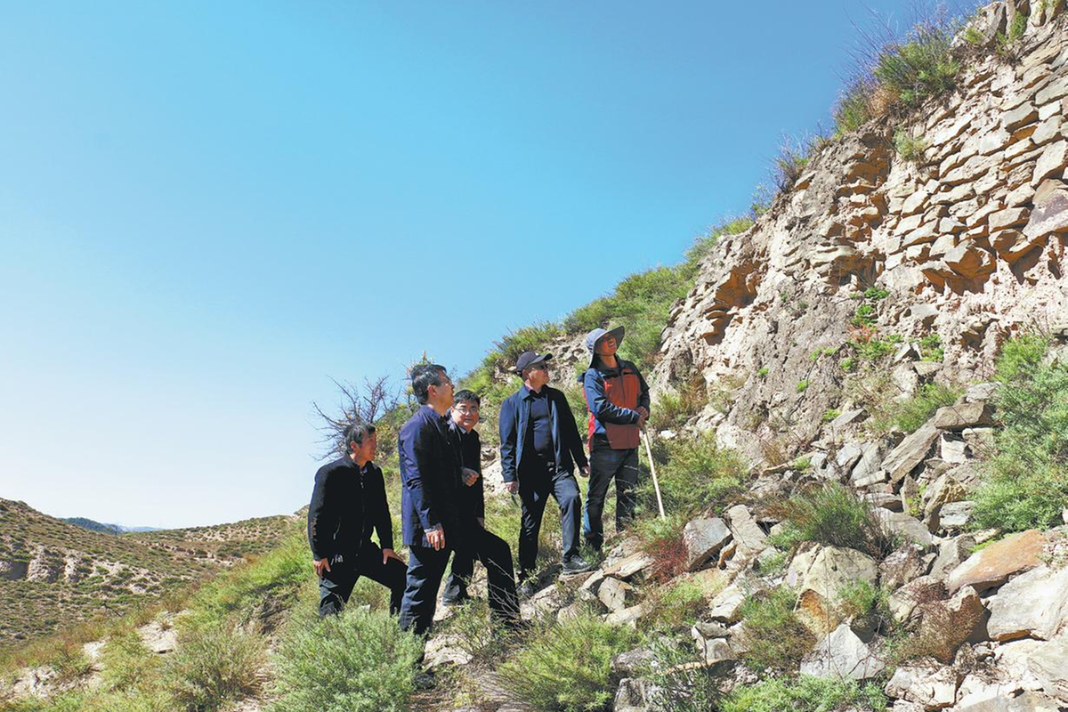
    Archaeologists have made a groundbreaking discovery in Northwest China’s Shaanxi province, unearthing a vast network of 573 ancient stone cities that date back approximately 4,800 to 3,800 years. This extraordinary find, resulting from six years of intensive survey work in the Yulin region, fundamentally reshapes our understanding of early Chinese civilization patterns and challenges long-held historical paradigms.

    The newly discovered urban centers, constructed between 2800 BC and 1000 BC, represent the largest and most sophisticated prehistoric stone city complex ever identified in northern China. According to Ma Mingzhi, associate researcher of Yulin’s cultural relics and archaeological survey team, these findings dramatically surpass previous records—before this survey, fewer than 200 prehistoric city sites had been documented nationwide, with only several dozen being stone constructions.

    The architectural sophistication reveals a clearly stratified society with hierarchical urban planning principles. Higher-status inhabitants occupied central zones with more complex defensive walls, while outer areas housed those of relatively lower status. These settlements, strategically positioned along riverbanks, served multiple functions including military defense, residential settlement, and religious ritual. The Shimao site features particularly remarkable stone carvings depicting divine faces, dragons, and snakes, alongside noble burial grounds and structures believed to be ancestral temples.

    This discovery effectively dismantles the traditional ‘Central Plains-centric theory’ of Chinese civilization development, demonstrating that northern Shaanxi served as a crucial cultural hub during the early Xia Dynasty (c. 21st-16th century BC). The scale of urbanization—with over 600 stone cities now identified across Shaanxi, Inner Mongolia, Shanxi, and Hebei provinces—corroborates ancient literary references to an ‘era of ten thousand states’ that historians previously considered potentially fictional.

    Professor Han Jianye from Renmin University of China notes that the construction timeline coincides with the legendary Yellow Emperor era, suggesting the region served as both a cultural core and a defensive prototype for what would eventually become the Great Wall. The sites demonstrate clear evolutionary progression, with settlements expanding in scale, spatial layouts growing more complex, and construction techniques advancing significantly over centuries of continuous use.

    Future research will focus on environmental support systems, handicraft production, regional economic development, and genetic analysis of population movements. These investigations promise to illuminate the material foundations that sustained this remarkable urban network and its interactions with contemporary ethnic groups, potentially rewriting our understanding of state formation processes in ancient East Asia.

  • Chinese family bonds withstand test of time

    Chinese family bonds withstand test of time

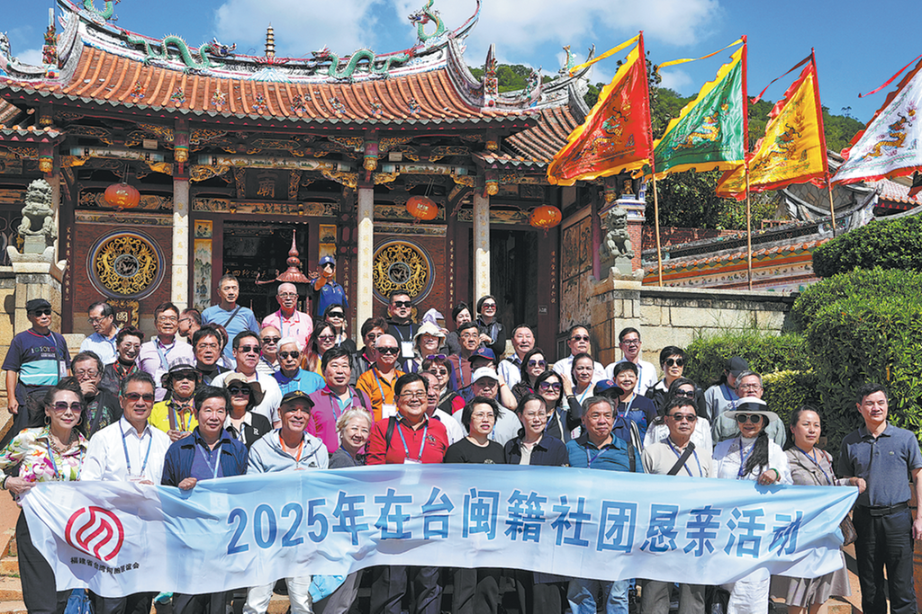
    The enduring strength of ancestral ties continues to bridge the Taiwan Strait, as generations of mainland descendants maintain profound connections to their familial origins. This cultural phenomenon demonstrates how blood relationships and shared heritage transcend political divisions and historical circumstances.

    Chen Chien-hsing, a 68-year-old Taiwan resident, embodies this timeless connection. As the son of a Kuomintang soldier who relocated to Taiwan in 1949, Chen has made multiple pilgrimages to his father’s hometown in Fuzhou, Fujian province. What began as a quest to understand his lineage has evolved into a profound personal identification with mainland China. “Chinese people inherently value family heritage and lineage,” Chen reflects. “This emotional bond naturally persists across generations.”

    Chen’s experience mirrors that of countless Taiwan residents, approximately 80% of whom trace their ancestry to Fujian province. The journey between Jinmen and Xiamen regularly carries passengers seeking to reconnect with their roots or visit relatives. Despite periods of separation, these cross-Strait connections remain fortified by shared dialects, culinary traditions, and folk beliefs, including the worship of maritime deities.

    The emotional weight of these connections becomes particularly poignant among aging veterans. Chen recounts the story of 97-year-old Huang Wei, who lost contact with his Guizhou family for nearly eight decades. Despite extensive efforts to facilitate a reunion, Huang’s deteriorating health prevented his final journey home—a fate shared by many elderly veterans who clung to hopes of returning to their birthplace.

    Genealogical records have proven instrumental in preserving these familial bonds. Lin Ming-cong, president of an association for relatives of Taiwan compatriots who resisted Japanese occupation, represents the prestigious Wufeng Lin family that migrated from Fujian during the Qing Dynasty. His ancestral home in Pinghe county, now a cultural heritage site, maintains meticulously preserved genealogical documents that have enabled family reunifications despite decades of separation.

    “Although the Strait temporarily divided families, clan exchanges continued and records were meticulously maintained,” Lin notes. His first meeting with mainland relatives felt instantly familiar: “We became deeply connected within minutes, despite never having met before.”

    These cultural and familial connections continue to shape identity across generations. Chen, now in his sixties, remains committed to fulfilling his father’s final wish to have his ashes returned to their ancestral home—a testament to the unbroken bloodline that continues to define cross-Strait relationships.

  • Manhunt continues days after deadly shooting at Brown University

    Manhunt continues days after deadly shooting at Brown University

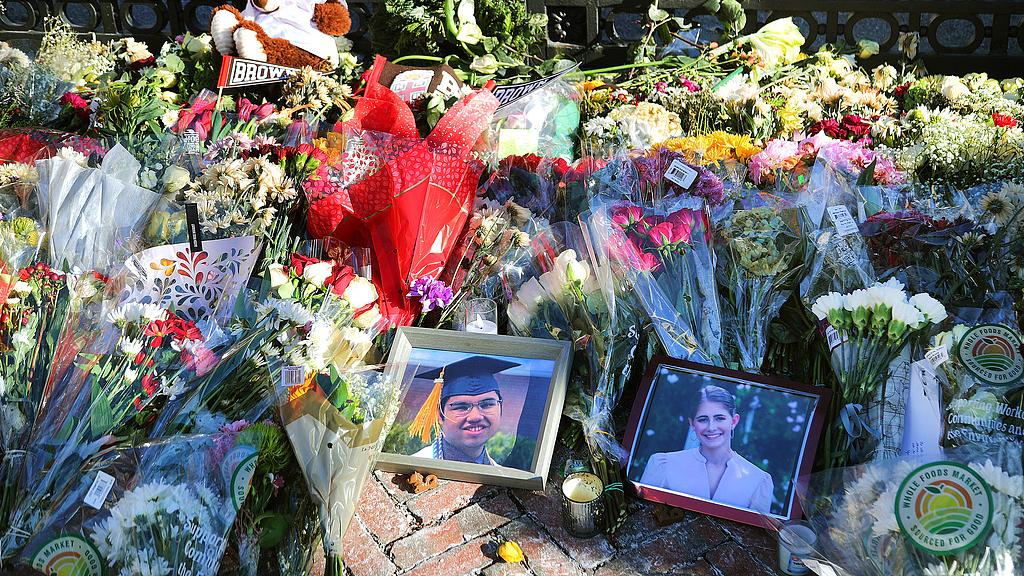
    PROVIDENCE, R.I. – Law enforcement authorities continue their intensive search for a gunman responsible for a deadly campus shooting at Brown University that resulted in two fatalities and nine injuries, now entering its fourth day without a confirmed suspect in custody.

    The tragic incident occurred during final examination period at the Barus and Holley engineering building, which was densely populated with students preparing for exams and the approaching Christmas break. According to eyewitness accounts, the shooting triggered an immediate campus-wide lockdown protocol, with students and faculty sheltering in place for several hours while police secured the area.

    University administration confirmed the identities of the deceased as Mukhammad Aziz Umurzokov, an incoming freshman from Uzbekistan, and Ella Cook, an Alabama native and sophomore who served as vice-president of the university’s Republican club. A memorial vigil was held on campus to honor the victims, even as the institution canceled remaining in-person classes and examinations for the semester.

    Despite initial detention of a person of interest on Sunday, Providence Police Department subsequently released the individual without charges, acknowledging that investigative leads remain limited. This development has compounded frustrations within the campus community, where many expected quicker resolution given Rhode Island’s status as one of America’s states with lowest violent crime rates, according to FBI Crime Data Explorer statistics.

    The Gun Violence Archive has documented this incident as the 393rd mass shooting nationwide in 2025, placing renewed attention on firearm violence in educational environments. While university officials have stated there is no ongoing threat to campus safety, many students report persistent unease and concerns about security measures.

    Graduate student Zico, who was present in the engineering building during the shooting, described sheltering beneath a desk while awaiting police assistance. “Beyond the immediate fear, what lingers is profound frustration,” he noted. “The perpetrator remains at large days later, with apparently minimal investigative progress.”

    Another student, Bella Wang, recounted barricading herself in a third-floor classroom for nearly six hours after realizing the shooting was occurring in adjacent facilities. “The surreal nature of violence invading our academic environment remains difficult to process,” Wang stated. “Educational institutions should represent safety, but that fundamental trust has been profoundly shaken.”

    As the campus partially reopens ahead of holiday break, university administrators face mounting pressure to enhance security protocols while addressing broader concerns about gun violence prevention in academic settings.

  • Shock as popular South African DJ shot dead in Johannesburg

    Shock as popular South African DJ shot dead in Johannesburg

    South Africa’s entertainment industry and broader society are reeling from the brazen daylight assassination of renowned media personality Warrick ‘DJ Warras’ Stock. The 40-year-old radio presenter, television host, and podcaster was executed in central Johannesburg on Tuesday afternoon, a brutal incident that has intensified national conversations about the country’s severe crime epidemic.

    According to official statements from the South African Police Service (SAPS), the attack occurred as Stock was departing from Zambesi House near the Carlton Centre precinct. Three unidentified assailants approached the media figure after he had parked his vehicle. CCTV footage obtained by investigators depicts one suspect—described as wearing dreadlocks and what appeared to be a security uniform—opening fire on Stock before all three fled the scene on foot.

    Police Chief Fred Kekana provided disturbing details of the final moments, noting that the victim attempted to escape after being shot but collapsed across the street. Notably, investigators confirmed Stock was carrying an unused firearm at the time of the attack, and no items were stolen from his person, complicating initial assumptions about robbery as a potential motive. Forensic teams have collected key evidence including spent cartridges from the crime scene.

    Beyond his celebrity status as host of the popular reality show ‘Ngicel’ iVisa’ on Mzansi Magic, Stock maintained a diverse professional portfolio that included private security services, VIP protection operations, property management, and assistance with building evictions—a dimension that authorities are examining as they develop investigative leads.

    The murder has triggered an extraordinary outpouring of grief and condemnation across South Africa’s social and political landscape. Sports, Arts and Culture Minister Gayton McKenzie praised Stock’s fearless commentary, noting he ‘spoke his truth without fear or favour.’ Opposition leader Mmusi Maimane of the Build One party characterized the killing as ‘a shock for all South Africans,’ reflecting the profound impact of this violence.

    This tragedy occurs against a grim statistical backdrop: South Africa maintains one of the world’s highest homicide rates, with approximately 63 lives lost to violent crime each day according to recent police data. The brazen nature of Stock’s murder in a public space has amplified calls for urgent action to address the country’s entrenched security challenges.

  • Minecraft challenge breathes new life into rich cultural past

    Minecraft challenge breathes new life into rich cultural past

    In an extraordinary fusion of gaming technology and cultural preservation, Minecraft enthusiasts across China are undertaking ambitious digital reconstruction projects that are captivating millions online. This innovative movement represents a groundbreaking approach to historical education and national memory.

    Twenty-four-year-old Qiu Zekai, operating under the online alias Qiuxiaoniuer, has emerged as a prominent figure in this digital renaissance. He dedicated two intensive months to meticulously recreating sections of the destroyed Yuanmingyuan, also known as the Old Summer Palace. His virtual restoration specifically focuses on the Xiyang Lou (Western-style mansions) and the magnificent Dashuifa (Great Fountains), achieving an architectural accuracy that has resonated deeply with viewers.

    The historical significance of this project stems from the palace’s tragic destruction by Anglo-French forces during the Second Opium War (1856-1860), an event that represents what Chinese historians refer to as the ‘century of humiliation.’ Among the countless treasures looted during this period were the twelve zodiac bronze animal heads that once adorned the palace’s water clock fountain. Qiu’s digital masterpiece symbolically reunites these scattered artifacts in their virtual original setting, creating what online communities have celebrated as a ‘cyber reunion’ of cultural heritage.

    The response to Qiu’s creation has been overwhelming, with his serene fly-through video accumulating millions of views across social media platforms. His Douyin following surged by 200,000 subscribers following the project’s release, bringing his total audience to 3.4 million engaged followers. Comment sections overflow with emotional responses praising this ‘patriotic romance of the young generation’ and appreciating the unique connection between historical awareness and contemporary digital culture.

    Parallel to Qiu’s achievement, another digital architect named Xia Caiquan has gained recognition for his breathtaking Minecraft reconstruction of Dunhuang’s Buddhist heavenly palace. These projects collectively demonstrate how sandbox gaming environments are evolving into platforms for cultural expression, historical education, and technological innovation.

    Beyond their visual appeal, these virtual reconstructions serve as interactive historical archives, allowing new generations to experience and understand cultural heritage that physical circumstances might otherwise keep inaccessible. This movement represents a significant shift in how digital natives engage with history, transforming passive learning into active creation and ensuring that important cultural narratives continue to evolve within contemporary technological contexts.

  • What to know about a Philippines region with militant history visited by Bondi Beach suspects

    What to know about a Philippines region with militant history visited by Bondi Beach suspects

    MANILA, Philippines — A joint Australian-Filipino investigation is scrutinizing a November 2023 trip to Mindanao by the father and son accused of perpetrating Sydney’s Bondi Beach massacre that left 15 dead. Australian authorities confirmed the attackers were inspired by the Islamic State group, citing seized evidence including IS flags from their vehicle.

    The Philippine Bureau of Immigration records show the suspects entered the country on November 1 and departed November 28, with Davao City in southern Mindanao as their final destination. Despite this travel history, Philippine National Security Adviser Eduardo Ano stated Wednesday that no evidence has emerged indicating the suspects received militant training during their stay. “There is no indicator or any information that they underwent training in Mindanao,” Ano told The Associated Press.

    This investigation revisits Mindanao’s complex history with Islamic militancy. Centuries of colonial rule and settlement transformed Muslims into a minority in the resource-rich region, sparking decades of intermittent conflict that claimed approximately 150,000 lives since the 1970s. The area once attracted foreign extremists including Umar Patek, the Indonesian Jemaah Islamiyah operative convicted for the 2002 Bali bombings that killed 202 people.

    Significant transformations occurred through peace processes: the 1996 accord allowed rebels to reintegrate into communities, while the 2014 agreement established broader Muslim autonomy in the Bangsamoro region, turning former rebel commanders into administrators and guardians against IS influence. Despite these developments, violent offshoots emerged including the U.S.-blacklisted Abu Sayyaf group, known for kidnappings, beheadings, and bombings before being largely neutralized by military operations.

    According to confidential Philippine security assessments viewed by AP, no foreign militant presence has been detected since 2023 following the neutralization of remaining groups. Sidney Jones, a prominent Southeast Asia security analyst, questioned why modern extremists would seek training in Mindanao given current conditions: “The level of violence in Mindanao is high, but for the last three years, it’s almost all been linked to elections, clan feuds, or other sources. If I were a would-be ISIS fighter, the Philippines would not have been my top destination.”

  • Trump administration expands list of countries subject to entry restrictions

    Trump administration expands list of countries subject to entry restrictions

    In a significant escalation of its immigration policy, the Trump administration has substantially widened the scope of countries facing entry restrictions into the United States. President Donald Trump formalized this expansion through a presidential proclamation on Tuesday, December 16, 2025, set to take effect on January 1, 2026.

    The White House justified the move as a necessary measure to bolster national security, targeting nations identified as having “demonstrated, persistent, and severe deficiencies” in their screening, vetting, and information-sharing protocols. This policy overhaul represents the most substantial revision since the initial travel restrictions were implemented in June 2025, which affected 19 countries through full or partial bans.

    The updated framework introduces sweeping changes. Five additional nations—Burkina Faso, Mali, Niger, South Sudan, and Syria—now face comprehensive entry restrictions. Furthermore, the administration has imposed full bans on all individuals holding travel documents issued by the Palestinian Authority.

    Notably, two countries previously under partial restrictions, Laos and Sierra Leone, have been elevated to the full restrictions list. Concurrently, partial entry limitations have been extended to citizens from 15 new countries: Angola, Antigua and Barbuda, Benin, Cote d’Ivoire, Dominica, Gabon, The Gambia, Malawi, Mauritania, Nigeria, Senegal, Tanzania, Tonga, Zambia, and Zimbabwe.

    The administration maintains partial restrictions on four nations from the original list: Burundi, Cuba, Togo, and Venezuela. While Turkmenistan sees a relaxation for nonimmigrant visas, its suspension on immigrant visas remains in force.

    This policy expansion occurs against a backdrop of heightened security concerns. The White House cited a recent Thanksgiving week shooting incident in Washington DC, involving a 29-year-old Afghan asylum recipient, as illustrative of the threats prompting these enhanced measures. These actions align with parallel initiatives by U.S. Citizenship and Immigration Services (USCIS), which last month initiated renewed reviews of green card holders from 19 designated “countries of concern.”

    President Trump had previously signaled this policy direction through social media, advocating for the permanent suspension of immigration from what he termed “Third World countries.” The State Department has concurrently announced a suspension of visa issuances to holders of Afghan passports.

    Media analysis suggests the administration has strategically utilized politically sensitive moments to advance its immigration agenda. The initial travel ban in June was announced shortly after an attack in Boulder, Colorado, perpetrated by an Egyptian national who had entered on a visa.