博客

  • Lebanon likely to announce full disarmament of south ‘in coming weeks’

    Lebanon likely to announce full disarmament of south ‘in coming weeks’

    Lebanon is poised to declare the complete disarmament of Hezbollah in its southern territories within weeks, marking a pivotal development in its security landscape. This announcement comes as the Lebanese Armed Forces (LAF) prepare to extend their disarmament operations to northern regions, targeting remaining weapon caches belonging to the group.

    The disarmament process south of the Litani River has progressed significantly under the framework of a 2024 ceasefire agreement with Israel. Ed Gabriel of the American Task Force on Lebanon confirmed these advancements following recent consultations with US and Arab officials, noting that military planning is now shifting toward northern operations.

    This potential declaration arrives during a period of profound transformation for Lebanon, recently characterized by a senior US official as a ‘failed state.’ The nation continues to engage in US-brokered direct talks with Israel while simultaneously enduring cross-border strikes from its southern neighbor.

    The disarmament process has unfolded against a complex geopolitical backdrop. Hezbollah’s military capabilities were substantially degraded following Israel’s invasion and targeted assassination of longtime leader Hassan Nasrallah, compounded by the collapse of the Assad government in Syria which severed critical Iranian supply lines.

    While Hezbollah maintains its right to bear arms against Israeli threats, the group has provided tacit consent to LAF operations in southern territories. However, significant arsenals remain in southern Beirut and the Bekaa Valley according to Western and Arab diplomatic sources.

    International verification remains crucial, with Lebanon previously expressing willingness to accept US or French troops to validate disarmament claims. This validation is particularly significant as Beirut seeks to unlock promised reconstruction funds from Gulf states, contingent upon demonstrated progress in weapons dismantlement.

    The political landscape has shifted notably, with US-favored leadership in Beirut and increasing tensions with Tehran reflected in Lebanon’s rejection of recent Iranian diplomatic overtures.
  • Unstable weather in UAE: Sharjah ready to deal with rainfall, authority says

    Unstable weather in UAE: Sharjah ready to deal with rainfall, authority says

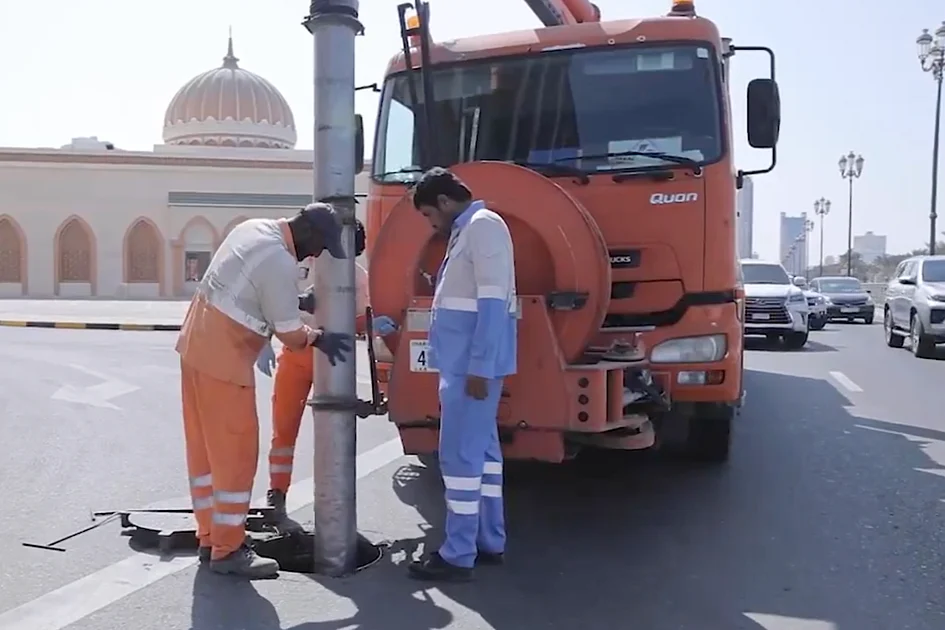
    Sharjah City Municipality has activated full-scale emergency protocols as the United Arab Emirates braces for intensified rainfall and unstable weather patterns expected through December 19th, 2025. The authority has mobilized specialized response teams equipped with advanced machinery and a diversified vehicle fleet to address potential flooding and weather-related incidents.

    The comprehensive preparedness strategy forms part of operational plans designed to ensure public safety during extreme weather conditions. Municipal crews have conducted preemptive drainage cleaning operations to prevent water accumulation and implemented emergency measures to maintain infrastructure functionality.

    Meteorological reports indicate the UAE will experience heavy precipitation, thunderstorms, and potent winds reaching velocities of 60 km/h from southeastern to northwestern directions on Thursday, with turbulent conditions persisting through Friday. The weather system—a low-pressure area that has delivered substantial rainfall across the region throughout the past week—may cause reduced visibility and challenging travel conditions.

    The municipality’s proactive approach emphasizes community protection and individual safety as weather intensities increase. This response aligns with broader national preparations, including Dubai’s announcement of remote work arrangements for government employees on December 19th to minimize mobility during peak weather activity.

  • Unreliable data mask just how bad the air quality crisis is in India

    Unreliable data mask just how bad the air quality crisis is in India

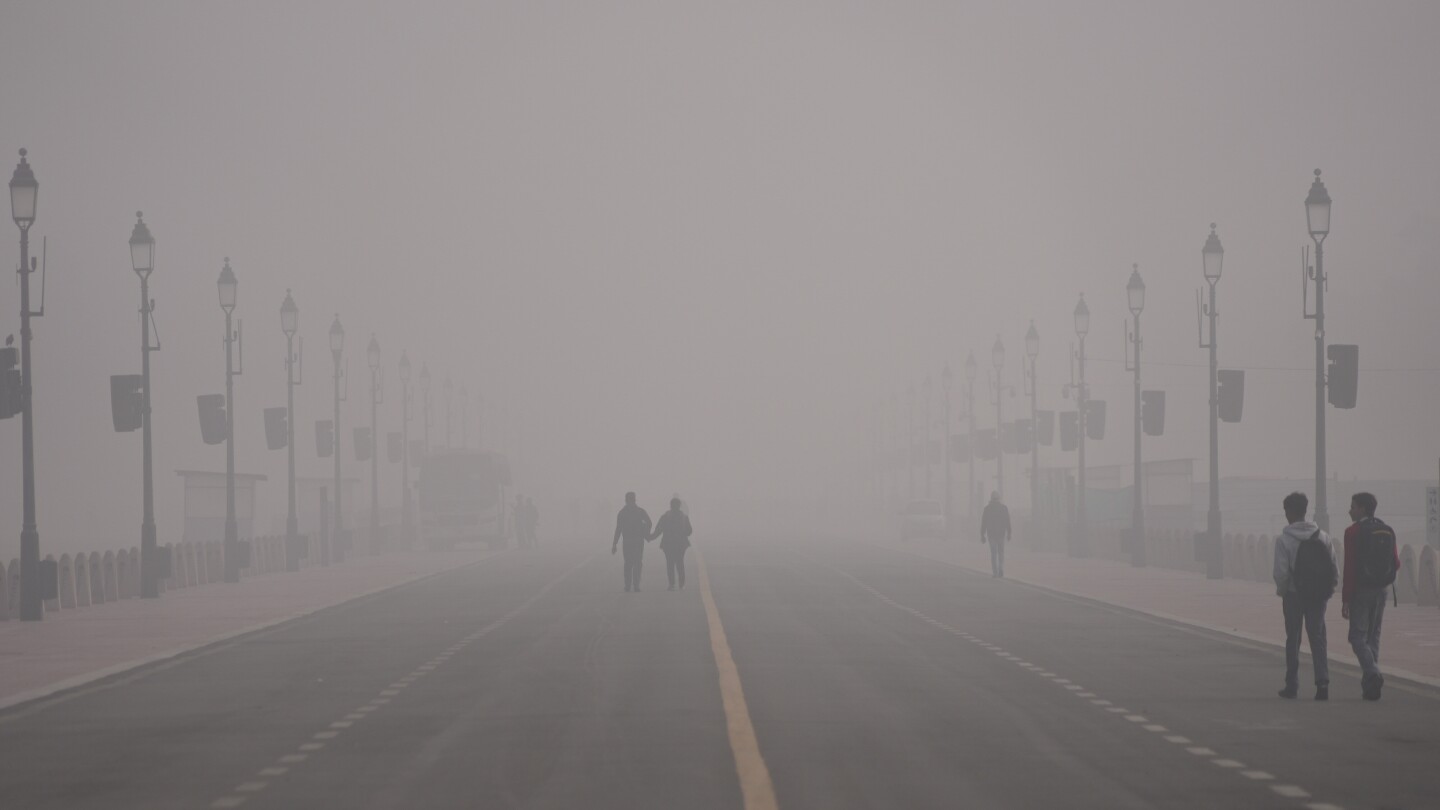
    New Delhi faces mounting public frustration as senior Indian officials make controversial statements about the capital’s severe air pollution crisis, with residents accusing policymakers of downplaying the environmental emergency.

    Environment Minister Bhupender Yadav recently told Parliament that New Delhi had experienced 200 days of good air quality this year—a claim immediately challenged by pollution experts and opposition leaders who noted the minister excluded the city’s worst pollution months from his calculation.

    The controversy intensified when Delhi Chief Minister Rekha Gupta compared the Air Quality Index to temperature readings, suggesting water spraying could effectively address pollution. Her remarks drew public ridicule, with crowds at subsequent events chanting AQI in protest of the city’s hazardous air conditions.

    Gupta had previously endorsed a controversial cloud seeding program despite lacking scientific evidence for its effectiveness, further eroding public confidence in governmental responses to the pollution crisis.

    Environmental analysts highlight that India employs less stringent air quality measurement standards than countries like the United States and the World Health Organization, resulting in moderate readings that often mask dangerously high pollution levels. This discrepancy undermines public trust while most residents remain unaware of pollution’s full health implications.

    Although India’s National Clean Air Program has allocated millions toward pollution reduction since 2019, with particular focus on dust control measures, critics note inadequate addressing of primary pollution sources including industrial emissions, vehicle exhaust, agricultural burning, and household fuel use. A 2024 Centre for Science and Environment report revealed that 64% of program funds targeted dust reduction, while less than 1% addressed industrial air pollution.

    The human cost remains staggering: a Lancet medical journal study linked long-term exposure to India’s polluted air with 1.5 million additional annual deaths. Despite this, junior health minister Prataprao Jadhav recently claimed no conclusive data establishes direct correlation between air pollution and mortality.

    Public health advocates note the absence of systematic mechanisms to count pollution-related deaths, while medical experts emphasize particularly severe impacts on vulnerable populations including pregnant women, elderly citizens, and children, with exposure linked to preterm births, miscarriages, and lifelong health consequences.

    Recent street protests in New Delhi signal growing public anger, with residents demanding immediate government action. Environmental activist Vimlendu Jha accused authorities of prioritizing image management over pollution control, noting that political leaders have normalized dangerously high pollution levels.

    As auto rickshaw driver Satish Sharma reported reducing work hours due to deteriorating health from pollution, he joined countless residents calling for genuine governmental action before more people abandon India’s increasingly unbreathable capital.

  • India-South Africa 4th T20 International abandoned due to fog

    India-South Africa 4th T20 International abandoned due to fog

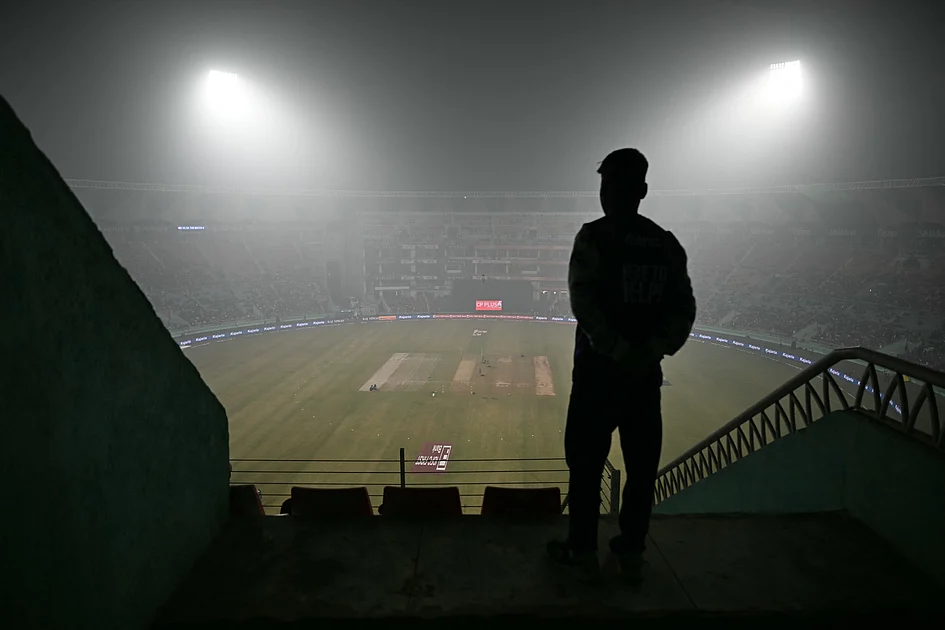
    The highly anticipated fourth T20 International between cricket powerhouses India and South Africa was officially abandoned Wednesday evening due to unsafe playing conditions caused by persistent dense fog in Lucknow. Despite multiple pitch inspections at Ekana Stadium, match officials determined that visibility remained insufficient for play to commence.

    The scheduled toss at 6:30 PM local time was repeatedly postponed as umpires conducted assessments amid deteriorating conditions. After three hours of evaluation, the match was formally called off at 9:30 PM, leaving disappointed spectators to exit the venue without witnessing any action.

    India, current T20 world champions, maintain their 2-1 series advantage heading into Friday’s decisive fifth match in Ahmedabad. This bilateral series serves as crucial preparation for both teams ahead of the 2026 T20 World Cup, jointly hosted by India and Sri Lanka commencing February 2026.

    Environmental concerns emerged as a subplot when Indian all-rounder Hardik Pandya was photographed wearing a protective mask, sparking online discussions about northern India’s pollution challenges. IQAir monitoring data revealed PM 2.5 microparticle levels reached 78 micrograms per cubic meter in parts of Lucknow—exceeding WHO safety recommendations by more than fivefold.

    This incident highlights a recurring pattern of atmospheric challenges in northern India during winter months, where temperature inversions trap pollutants from agricultural burning, industrial emissions, and vehicular exhaust. The abandonment underscores how environmental factors increasingly influence international sporting events in the region.

  • Pulitzer Prize-winning correspondent Peter Arnett, who reported from Vietnam and Gulf War, has died

    Pulitzer Prize-winning correspondent Peter Arnett, who reported from Vietnam and Gulf War, has died

    Pioneering war correspondent Peter Arnett, whose fearless frontline reporting shaped global understanding of modern conflicts from Vietnam to Iraq, has passed away at age 91. The Pulitzer Prize-winning journalist died Wednesday in Newport Beach, California, surrounded by family and friends after recently entering hospice care for prostate cancer.

    Arnett’s extraordinary career spanned five decades of conflict journalism, earning him international recognition for his uncompromising battlefield coverage. He first gained prominence during the Vietnam War while reporting for The Associated Press, where his courageous reporting from the front lines earned him the 1966 Pulitzer Prize for International Reporting.

    The New Zealand-born correspondent achieved household recognition during the 1991 Gulf War when he delivered historic live broadcasts from Baghdad as Coalition missiles struck the Iraqi capital. While most Western journalists had evacuated, Arnett remained at his hotel, providing calm, real-time descriptions of the bombardment through cellular phone connections to CNN’s global audience.

    His proximity to danger became legendary. During Vietnam combat operations in 1966, Arnett narrowly escaped death when a North Vietnamese sniper’s bullets tore through a map held by a battalion commander standing inches from him. These experiences informed his survival philosophy, learning never to stand near medics or radio operators who represented prime enemy targets.

    Beyond Vietnam and Iraq, Arnett secured exclusive interviews with both Saddam Hussein and Osama bin Laden while maintaining controversial relationships with various conflict parties. His 1995 memoir, ‘Live From the Battlefield,’ documented his 35 years reporting from global war zones.

    Despite professional controversies that included dismissals from major networks, Arnett’s commitment to frontline journalism never wavered. Following his retirement from active reporting in 2014, he settled in Southern California with his wife Nina Nguyen after teaching journalism at China’s Shantou University.

    Arnett’s legacy extends beyond his groundbreaking reporting to the preservation of historical records. Defying orders to destroy documents during Saigon’s fall in 1975, he preserved the Associated Press bureau’s papers, which now reside in the organization’s official archives.

  • Gulf nations push to the front of global sustainability race as ESG becomes economic engine

    Gulf nations push to the front of global sustainability race as ESG becomes economic engine

    The Gulf Cooperation Council (GCC) nations, particularly the United Arab Emirates, are undergoing a remarkable transformation from hydrocarbon-dependent economies to global sustainability pioneers. This strategic pivot positions Environmental, Social, and Governance (ESG) principles as central drivers of economic diversification and long-term growth rather than mere corporate social responsibility initiatives.

    This paradigm shift finds its most concrete expression in the UAE’s groundbreaking Federal Decree-Law No. 11 of 2024, which became effective in May 2025. This legislation establishes the world’s first legally enforceable ESG compliance framework, mandating that all entities across sectors and free zones measure, report, and reduce greenhouse gas emissions by May 30, 2026. Non-compliant organizations face substantial penalties ranging from Dh50,000 to Dh2 million, signaling a decisive transition from voluntary commitments to mandatory accountability.

    The regulatory framework requires businesses to maintain comprehensive annual emissions inventories, preserve GHG data for five years, and develop detailed decarbonization plans aligned with the national Net Zero 2050 strategy. This approach transcends environmental regulation, representing a comprehensive economic vision projected to generate 200,000 new jobs in clean energy sectors and contribute 3% to national GDP.

    According to the PROI Worldwide’s Global ESG Report 2025, this transformation extends across the Gulf region, with national development frameworks such as Saudi Vision 2030 and Qatar National Vision 2030 integrating sustainability objectives into their core economic planning. Unlike the politically charged ESG debates occurring in Western nations, GCC policymakers approach sustainability as a practical economic transformation tool rather than an ideological battleground.

    The regulatory evolution is fundamentally altering corporate communication strategies, with companies increasingly emphasizing tangible outcomes through terminology such as ‘sustainability,’ ‘resilience,’ and ‘nationalization’ rather than acronyms like ESG or DEI. Organizations including Spinneys, Ecolab, and EQUATE Petrochemicals are embedding sustainability KPIs into executive performance metrics and aligning local initiatives with global climate frameworks.

    As mandatory reporting requirements take effect, businesses must advance beyond narrative-driven sustainability reporting to provide verified, evidence-based progress updates, third-party validated data, and demonstrable emission reduction achievements. Media outlets across the region are expected to intensify scrutiny of corporate compliance as the 2026 deadline approaches.

    Marianna Wisden, Associate Partner at Mojo Communications Consultancy, notes: ‘Sustainability in the region is driven by outcomes that genuinely matter to people. It shapes how companies create jobs, build skills and support a future that relies on a broader base than oil alone. The frameworks are in place and businesses are getting on with the work.’

    The Gulf’s sustainability transformation establishes not merely regional standards but provides an implementable model for emerging economies worldwide, demonstrating how environmental responsibility and economic growth can be strategically aligned for long-term prosperity.

  • ‘Maybe she’s an angel now’ says aunt of 10-year-old Bondi victim

    ‘Maybe she’s an angel now’ says aunt of 10-year-old Bondi victim

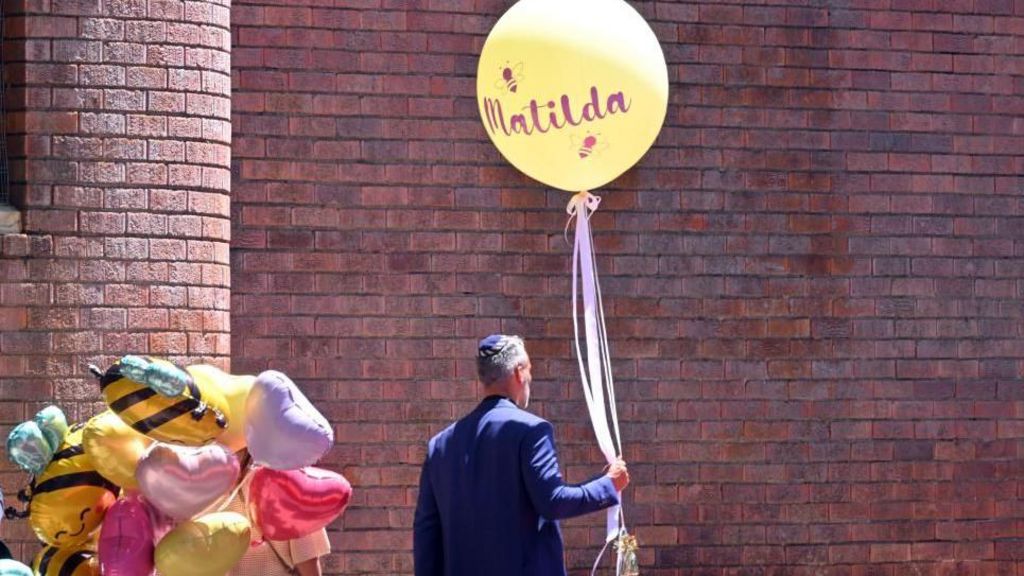
    The family of Matilda, the youngest victim of the Bondi Beach shooting, has made a heartfelt plea for compassion and unity during her emotional funeral service on Thursday. The 10-year-old was among 15 individuals fatally shot when two assailants opened fire at a Hanukkah celebration in Sydney on Sunday.

    Lina Chernykh, Matilda’s aunt, shared with the BBC that her niece embodied joy and consistently spread love wherever she went. While acknowledging the Jewish community’s legitimate demands for stronger action against antisemitism, Chernykh emphasized that the most appropriate tribute to Matilda would be to channel grief into positive energy rather than anger.

    “Transform your anger into spreading happiness, love, and preserving the memory of my dear niece,” Chernykh urged mourners. “Perhaps she has become an angel who might transmit positive energy to our world.”

    The tragedy has sparked intense scrutiny regarding Australia’s approach to addressing rising antisemitism, with community leaders suggesting the incident resulted from inadequate measures against hate crimes. This attack represents Australia’s deadliest mass shooting since the 1996 Port Arthur massacre that claimed 35 lives.

    Chernykh described the profound devastation experienced by Matilda’s immediate family, noting that her parents’ faces show little hope of future happiness. The victim’s younger sister, who was inseparable from Matilda, remains shattered and confused by the loss, having “no more tears to cry.”

    At a floral memorial service earlier this week, Matilda’s mother Valentyna revealed the family had immigrated from Ukraine over a decade ago seeking safety. “I never imagined I would lose my daughter here… This is truly a nightmare,” she told attendees.

    Chernykh recounted receiving the tragic news while gardening at her Gold Coast home, initially assuming the call concerned her elderly father’s health. The concept of a child being shot in Australia seemed so incomprehensible that she questioned whether she had misheard due to poor reception.

    Australian authorities have classified the incident as terrorism, with Prime Minister Anthony Albanese indicating connections to Islamic State ideology. The alleged perpetrators—50-year-old Sajid Akram, who was killed at the scene, and his 24-year-old son Naveed—face 59 combined charges including 15 counts of murder and terrorist acts.

    In response to the tragedy, the Australian government announced on Thursday enhanced legislative measures to combat hate crimes, including provisions to deny or revoke visas based on antisemitic behavior.

  • ‘A little fairytale’ – Lyon overtakes McGrath in Test wicket-taker list

    ‘A little fairytale’ – Lyon overtakes McGrath in Test wicket-taker list

    In a historic moment during the third Ashes Test in Adelaide, Australian off-spinner Nathan Lyon has eclipsed bowling legend Glenn McGrath to claim sixth position on the all-time Test wicket-taking list. The 38-year-old cricketer needed just two dismissals at the commencement of the match to surpass McGrath’s monumental tally of 563 wickets.

    Lyon achieved this extraordinary milestone with remarkable efficiency during his opening over. With his third delivery, he trapped England’s Ollie Pope with a catch at mid-wicket, drawing level with McGrath’s record. Mere moments later, Lyon delivered what commentators described as a ‘gem of a ball’ that clean-bowled Ben Duckett, securing his 564th Test scalp and cementing his place in cricketing history.

    This achievement positions Lyon as Australia’s second-most prolific Test bowler behind the late Shane Warne (708 wickets) and establishes him as the highest active wicket-taker in international Test cricket. Among spin bowlers globally, Lyon now ranks fourth, trailing only Muttiah Muralitharan (800), Warne, and Anil Kumble (619). Notably, only two pace bowlers—England’s James Anderson (704) and Stuart Broad (604)—remain ahead of Lyon in the overall standings.

    The moment carried particular significance as Lyon returned to Australia’s lineup after being omitted from the day-night Test in Brisbane, an exclusion he described as making him feel ‘absolutely filthy.’ The Adelaide Oval holds special meaning for Lyon, who previously worked as a groundsman at the venue. He characterized the achievement as a ‘fairytale’ moment, recalling his Test debut at the same ground against England in 2010.

    Glenn McGrath himself praised Lyon’s accomplishment during BBC Test Match Special commentary, stating: ‘What a bowler. Nathan Lyon deserves to get that. He has been brilliant for Australia. He will go down as one of the greatest Australia spin bowlers behind Shane Warne.’ McGrath specifically highlighted Lyon’s mastery of off-spin bowling, noting his deep understanding of the craft.

    In recognition of his contributions, the South Australia Cricket Association unveiled a commemorative plaque honoring Lyon on their ‘Avenue of Honour’ preceding the match. Lyon has taken 65 wickets at the Adelaide Oval—more than any other bowler in the venue’s history.

    The milestone sparked conversation about the value of spin bowling in Test cricket, particularly as England has opted not to field a specialist spinner throughout the current Ashes series. Lyon emphasized the crucial role of spin variation, noting: ‘I think the variation in Test cricket, understanding that Test cricket goes for five days, and there’s a lot of opportunity for pitches to wear and spinners to be able to produce their craft.’ He added that spinning deliveries attract significant viewer engagement, particularly during matches in spin-friendly conditions like those in India.

  • Silver soars past $66 an ounce, will it hit $70 soon?

    Silver soars past $66 an ounce, will it hit $70 soon?

    Silver prices shattered historical records on Wednesday, catapulting beyond $66 per ounce as a convergence of monetary, structural, and physical market forces created unprecedented momentum in precious metals trading. The white metal’s remarkable ascent—more than doubling in value throughout 2025—represents one of the most dramatic revaluations in modern commodity history.

    The rally accelerated following weaker-than-anticipated U.S. employment data, which signaled a cooling labor market and strengthened expectations for additional interest rate cuts in 2026. Spot silver reached $66.52 per ounce during the session before settling at $66.30 by 9:25 PM UAE time, marking a 4% single-day increase according to Reuters data.

    Market analysts identify three primary drivers behind silver’s extraordinary performance: critically constrained physical supplies, price-inelastic industrial demand, and policy-driven market dislocations. Ole Hansen, Head of Commodity Strategy at Saxo Bank, observed that silver has fundamentally resolved its long-standing identity crisis by simultaneously functioning as both a monetary metal and industrial commodity while facing severe supply limitations.

    The rally originated from gold’s momentum earlier in the year, with the gold-silver ratio reaching above 105 in April—an extreme valuation gap that attracted both speculative and long-term investors. Once technical resistance levels collapsed beginning in August, momentum buying accelerated dramatically, transforming relative value opportunities into outright price discovery.

    Beyond technical factors, broader macroeconomic conditions have strongly favored hard assets amid eroding confidence in fiat currencies. Persistent inflation pressures, expanding fiscal deficits, and debt sustainability concerns have driven robust central bank gold purchasing, with silver benefiting as a higher-beta, more accessible alternative.

    India has emerged as a crucial source of incremental demand, driven primarily by retail investment and jewelry consumption rather than seasonal factors alone. Simultaneously, silver-backed ETFs have absorbed approximately 130 million ounces this year, increasing total holdings by 18% to roughly 844 million ounces—overwhelmingly led by retail participation while institutions predominantly favored gold.

    Vijay Valecha, CIO at Century Financial, noted that physical markets remain extremely tight, with London lease rates elevated near 6%, Shanghai inventories at decade lows, and backwardation signaling immediate scarcity. Industrial demand linked to solar energy, electrification initiatives, data centers, and AI infrastructure continues to accelerate, reinforcing silver’s dual role in both financial and industrial applications.

    Despite the powerful bullish momentum, analysts caution that the rally shows signs of overheating. Momentum indicators reside firmly in overbought territory, and historical patterns suggest such aggressive moves typically precede sharp, short-term corrections. Nevertheless, near-term extensions toward $70-75 per ounce remain plausible given persistent physical tightness and gold’s underlying strength. While volatility will likely continue, the fundamental case for silver’s structural bull market remains intact for now.

  • Dubai’s commercial property market heading for major reset

    Dubai’s commercial property market heading for major reset

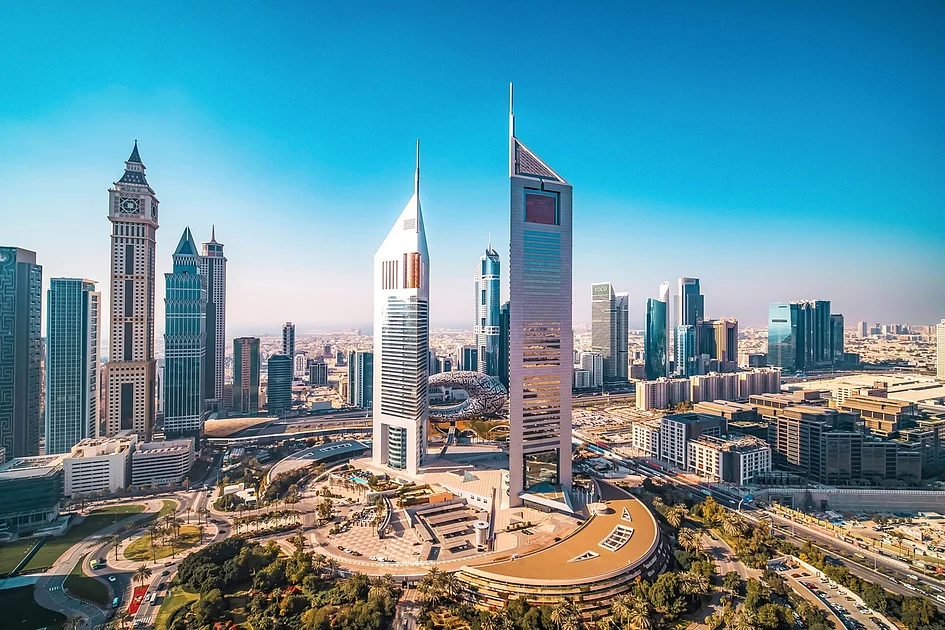
    Dubai’s commercial property landscape is undergoing a fundamental structural transformation that will culminate in a distinct two-tier market system by 2028, according to real estate experts. This market reset will see premium next-generation Grade A office spaces commanding substantial price premiums while older commercial buildings face increasing competitive pressures.

    The transformation comes despite impressive short-term performance metrics. Commercial real estate transactions have demonstrated remarkable growth throughout the current year, with sales value surging by 77.9 percent to reach AED 15.5 billion during the first eleven months, while transaction volume increased by 35.1 percent to 5,364 deals compared to the same period last year.

    According to Firs Al Msaddi, CEO of fäm Properties, the commercial sector has lagged significantly behind Dubai’s residential market in architectural innovation and quality standards for over fifteen years. “Since 2008, Dubai has not witnessed a genuine new generation of office developments,” Al Msaddi noted. “The residential segment underwent comprehensive transformation with new design languages, architectural standards, and construction codes, while the commercial sector awaited its reset moment.”

    The market shift will accelerate as the first wave of next-generation Grade A office buildings begins delivery in 2028. This influx of modern, efficient, and architecturally relevant office spaces will provide tenants with superior alternatives, fundamentally reshaping market dynamics and pricing structures across Dubai’s commercial landscape.

    Al Msaddi cited Vision Tower in Business Bay as a precursor to this trend, noting its consistent market outperformance due to its appeal to established corporate tenants. The building’s minimum half-floor requirement naturally filters for serious companies, demonstrating the substantial latent demand for genuine Grade A office space in Dubai.

    The emerging two-tier system will see commercial properties repricing according to quality benchmarks, creating distinct market segments with varying valuation models and tenant profiles.