博客

  • Maldon’s Zimbabwe striker Bonne set for Salah Afcon tie

    Maldon’s Zimbabwe striker Bonne set for Salah Afcon tie

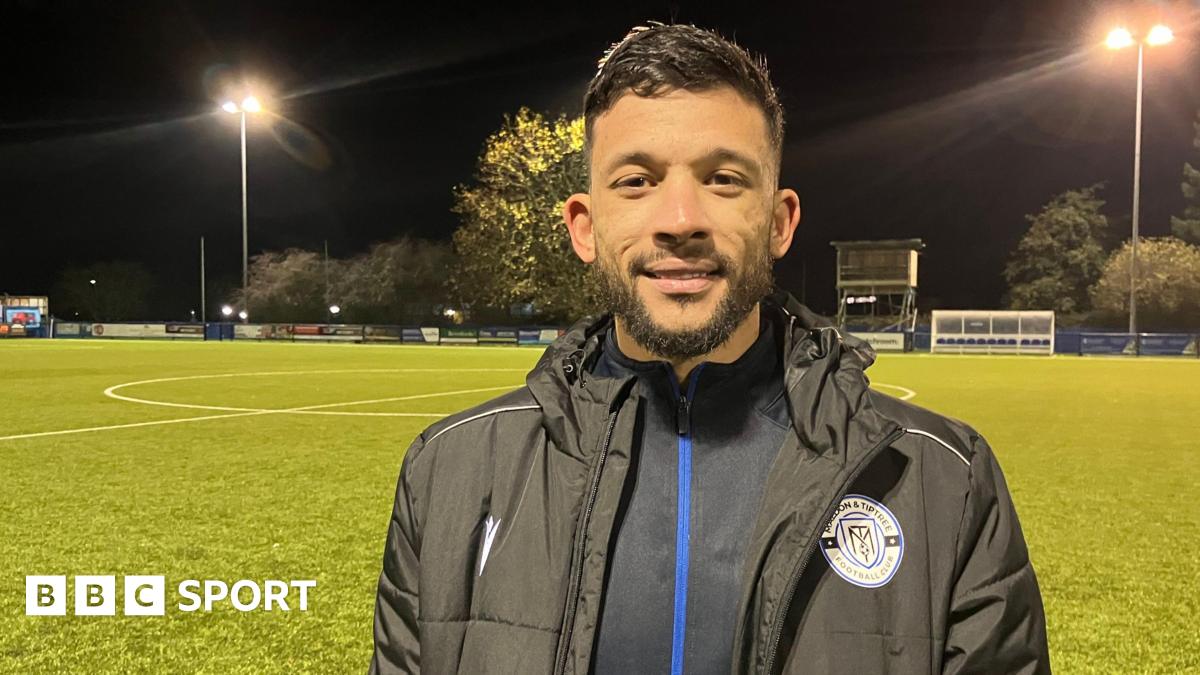
    In a remarkable footballing odyssey, Macauley Bonne is poised to bridge an extraordinary competitive divide as he prepares to represent Zimbabwe at the Africa Cup of Nations while playing his club football for eighth-tier English side Maldon & Tiptree. The 30-year-old striker, whose career has spanned Championship clubs including Charlton Athletic and Queens Park Rangers, now finds himself potentially sharing the pitch with global superstars like Mohamed Salah and Omar Marmoush.

    The emotional significance of this call-up resonates deeply with Bonne, who made his goalscoring debut for Zimbabwe eleven years ago but has accumulated just four additional caps since. His selection comes under new head coach Mario Marinica, who took charge of The Warriors in November following the team’s reinstatement after a FIFA-imposed ban for governmental interference. That suspension caused Zimbabwe to miss the previous AFCON tournament, where Ivory Coast ultimately triumphed in 2024.

    Bonne’s journey to international competition contrasts starkly with his most recent domestic appearance—a substitute appearance before 152 spectators in Maldon & Tiptree’s 1-0 victory against Redbridge in the Isthmian League North Division. The striker believes his unprecedented path from non-league football to international tournament may represent a footballing first. ‘I don’t think it’s ever been done, has it?’ Bonne mused, suggesting his story deserves cinematic treatment.

    The Zimbabwean squad features several England-based players including Wolves midfielder Tawanda Chirewa and Plymouth Argyle defender Brendan Galloway. Drawn in a challenging group alongside seven-time champions Egypt, South Africa, and Angola, Zimbabwe faces a difficult opening match against Egypt’s star-studded lineup.

    Bonne acknowledges the personal sacrifices involved—being away from family during Christmas—but maintains fierce determination to capitalize on this long-awaited opportunity after previous setbacks including passport issues, COVID restrictions, and selection disappointments. While not expecting immediate inclusion in the starting lineup, the striker aims to contribute meaningful minutes and potentially find the net in what he describes as a ‘now or never’ moment for his international career.

  • Asian shares advance, yen slips after AI stocks push higher on Wall Street

    Asian shares advance, yen slips after AI stocks push higher on Wall Street

    Asian equities opened the trading week with robust gains, propelled by a powerful rebound in artificial intelligence stocks that originated on Wall Street. This surge created a ripple effect across Pacific markets, with Japan’s Nikkei 225 index leading the charge with a substantial 1.9% advance to 50,455.07 points.

    The semiconductor sector emerged as the primary catalyst for this upward momentum. Tokyo Electron, a major chip manufacturing equipment producer, witnessed an impressive 6.7% climb, while Advantest, specializing in chip testing technology, recorded a 4.7% gain. This performance mirrored the recovery pattern established by U.S. tech giants, particularly Nvidia, which had surged 3.9% in the previous trading session.

    In a significant monetary policy development, the Bank of Japan’s decision to elevate its key interest rate to a three-decade high produced unexpected currency effects. Contrary to conventional economic theory, the yen weakened substantially against the dollar, trading at 157.32 yen per dollar. This depreciation prompted intervention warnings from Japan’s top foreign exchange official, Atsushi Mimura, who indicated readiness to address excessive currency fluctuations.

    Chinese markets demonstrated moderate positivity, with the Shanghai Composite advancing 0.7% to 3,915.84 and Hong Kong’s Hang Seng index rising 0.2% to 25,751.93. The People’s Bank of China maintained stability by keeping its benchmark loan prime rates unchanged.

    Regional performances varied, with South Korea’s Kospi gaining 1.8%, Taiwan’s Taiex rising 1.6% (boosted by TSMC’s 2.1% increase), and Australia’s S&P/ASX 200 climbing 0.9%. Market analysts attributed this constructive bias to the combination of Wall Street’s solid rebound and persistent bullish sentiment regarding year-end market trajectories.

    Meanwhile, underlying economic concerns persisted beneath the market optimism. The University of Michigan’s consumer sentiment survey revealed only marginal improvement from November levels, remaining significantly below year-ago readings. Persistent inflation pressures, a cooling job market, and weakening retail sales continue to challenge economic momentum, compounded by ongoing trade tensions between the United States and key international partners.

  • Alleged Bondi gunmen threw ‘tennis ball bomb’, new documents allege

    Alleged Bondi gunmen threw ‘tennis ball bomb’, new documents allege

    Newly unsealed court documents have exposed the meticulous preparation and extremist motivations behind the deadly terrorist attack at a Hanukkah celebration on Bondi Beach. The alleged perpetrators, 24-year-old Naveed Akram and his father Sajid Akram, who was killed during the incident, reportedly recorded a video manifesto in October featuring Islamic State group imagery and detailed explanations of their intent.

    Police evidence indicates the attackers employed four undetonated explosive devices during their assault on December 14, including an improvised ‘tennis ball bomb.’ Surveillance footage captured the pair conducting reconnaissance missions at the beach two days prior to the attack, with additional CCTV showing them transporting ‘long and bulky items wrapped in blankets’ from their rented accommodation in Campsie hours before the violence unfolded.

    According to investigative reports, these concealed items included three firearms, multiple homemade explosive devices, and two Islamic State flags. The attackers allegedly positioned these flags on their vehicle’s interior windows before proceeding to a footbridge where they initiated their assault. Despite throwing three pipe bombs and the tennis ball device during their approach, none of the explosives detonated, though authorities confirmed they were functionally viable.

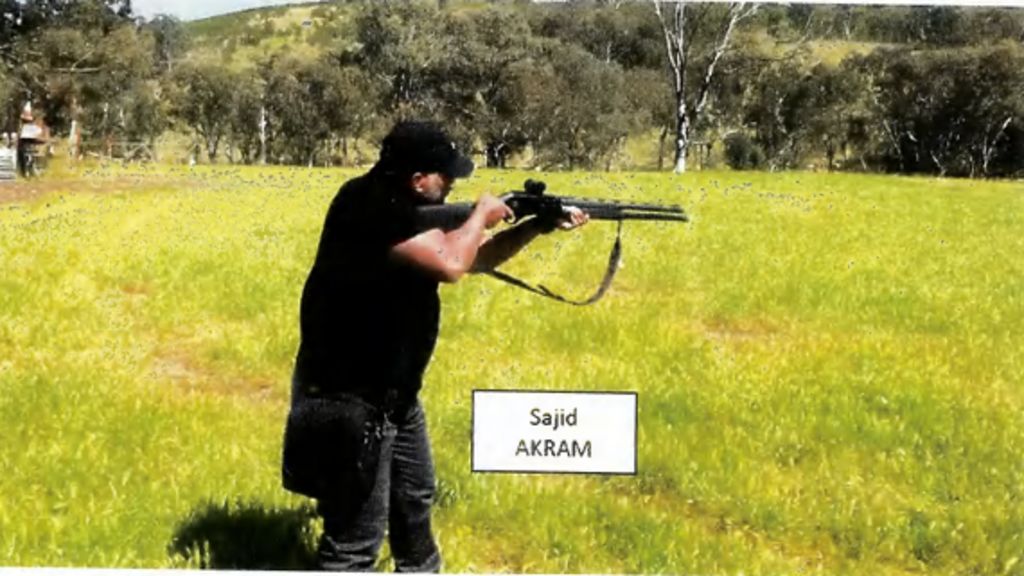
    Digital evidence recovered from Naveed Akram’s mobile device contained footage showing both individuals engaged in tactical firearms training in rural New South Wales, further demonstrating their extensive preparation. The accused, currently hospitalized with abdominal gunshot wounds inflicted by responding officers, faces fifteen murder charges among numerous other offenses. A temporary suppression order protecting survivor identities was partially lifted Monday following media petitions, though most names remain redacted from public documents.

  • Ukraine is leveraging its powerful – and cheap – new drone killers for air defense

    Ukraine is leveraging its powerful – and cheap – new drone killers for air defense

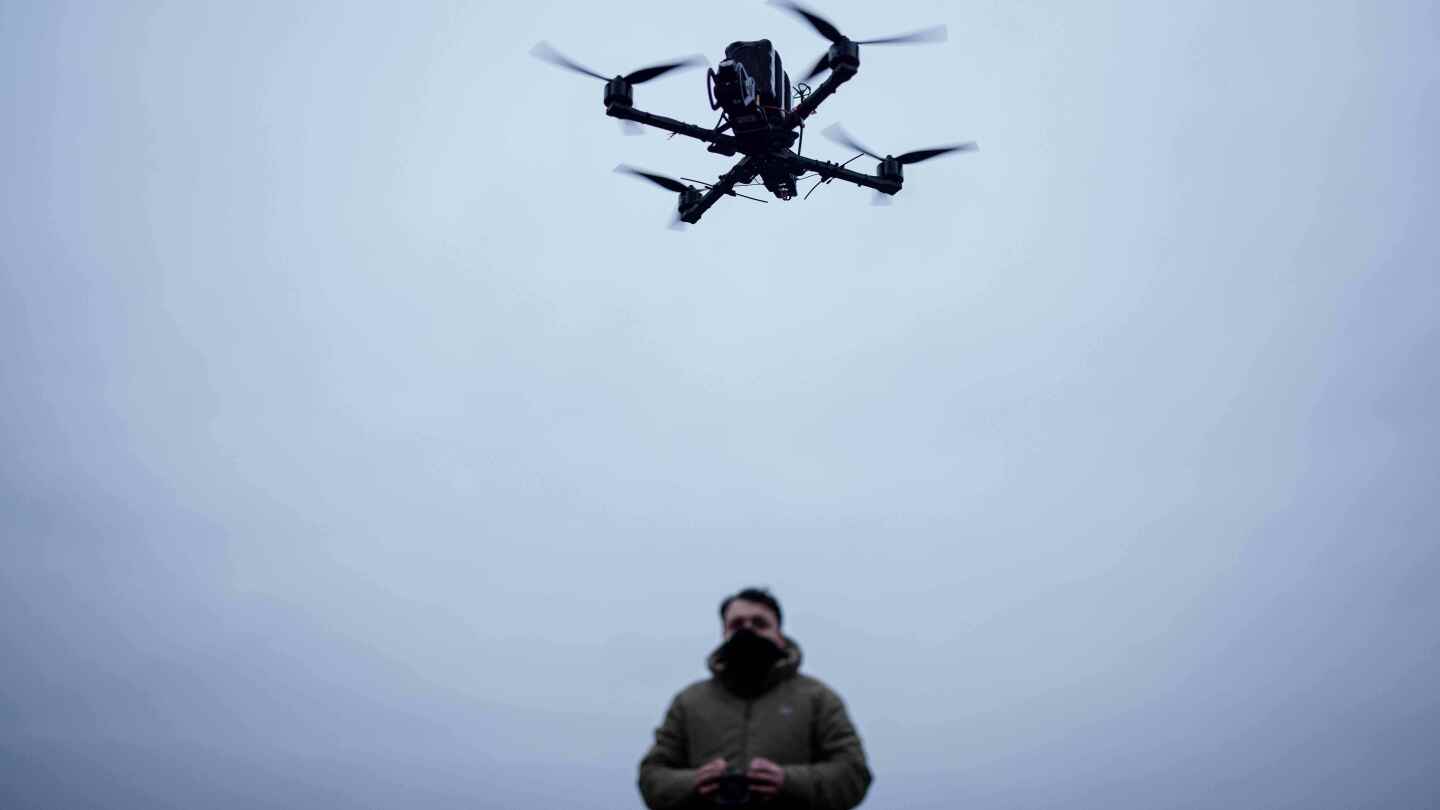
    On the frozen Ukrainian terrain, elite drone-hunting teams deploy cutting-edge technology against Russia’s evolving aerial threats. Under the crackling ice, specialists assemble sophisticated monitoring equipment and prepare a revolutionary domestic weapon system—the Sting interceptor, resembling a flying thermos—that represents Ukraine’s innovative response to nightly attacks on urban centers and critical infrastructure.

    This tactical evolution stems from military necessity: Ukrainian defense strategists have completely rewritten air defense doctrine by developing affordable drone-killing solutions costing as little as $1,000 per unit. According to a commander identified only by the call sign “Loi” under Ukrainian military protocol, these interceptors effectively counter Russia’s increasingly sophisticated suicide drones that now operate at higher altitudes with enhanced speed. “Every destroyed target is something that did not hit our homes, our families, our power plants,” Loi stated, emphasizing their continuous operational readiness: “The enemy does not sleep, and neither do we.”

    The rapid development cycle—from prototype to mass production within months during 2025—demonstrates Ukraine’s remarkable adaptive capabilities. Startup companies like Wild Hornets (producing the Sting model) and General Cherry (developing the Bullet interceptor) have pioneered these systems that can surge in speed before colliding with enemy drones. These are operated by pilots monitoring screens or using first-person-view goggles, creating a new paradigm in aerial warfare.

    Economic considerations prove fundamental to this strategy. Andrii Lavrenovych of General Cherry’s strategic council revealed that the destroyed Russian drones cost between $10,000 and $300,000, meaning Ukraine inflicts substantial economic damage with each successful interception. Russia primarily employs Iranian-designed Shahed suicide drones with numerous variants featuring jammers, cameras, and turbojet engines, creating an ongoing innovation race between the two nations. “In some areas they are one step ahead. In others, we invent an innovative solution, and they suffer from it,” Lavrenovych noted.

    Defense analyst Federico Borsari from the Center for European Policy Analysis in Washington confirmed these interceptors’ strategic value: “Cheap interceptor drones have become so important, and so quickly, that we can consider them a cornerstone of modern counter-unmanned aerial systems. They realign the cost and scale equation of air defense.” However, Borsari cautioned against viewing them as standalone solutions, emphasizing their dependence on sensors, rapid command systems, and skilled operators within a layered defense framework that includes multimillion-dollar missiles and traditional antiaircraft weapons.

    The conflict has accelerated drone production scaling on both sides, with NATO and Ukrainian defense planners anticipating continued escalation through 2026. This urgency has propelled European initiatives to establish a comprehensive “drone wall” along eastern borders—a networked system designed to detect, track, and intercept drones over two years, potentially incorporating Ukrainian-style interceptors as central components.

    Future developments include expanded coproduction agreements between Ukrainian drone manufacturers and Western firms, merging battle-tested designs and valuable combat data with Western production capabilities and funding. This collaboration will increase output while integrating Ukraine into NATO-member supply chains. Lavrenovych also predicts increased automation: “Our mobile groups shouldn’t have to approach the front line, where they become targets. Drones must become fully autonomous robots with artificial intelligence—as scary as that may sound—to help our soldiers survive.”

  • US and Ukraine call Miami talks productive despite no breakthrough

    US and Ukraine call Miami talks productive despite no breakthrough

    High-level diplomatic negotiations between United States, Ukrainian, and Russian representatives concluded in Miami with participants characterizing the discussions as “productive and constructive,” though significant obstacles to ending the nearly four-year conflict remain unresolved.

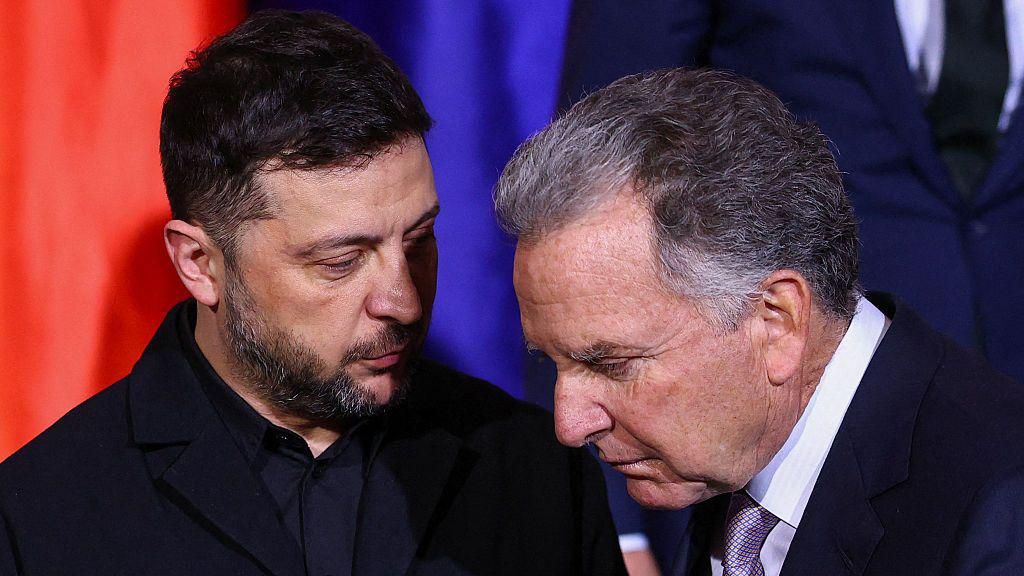
    Special Envoy Steve Witkoff, appointed by former President Donald Trump, and Ukrainian lead negotiator Rustem Umerov issued a joint statement following three days of intensive meetings with European allies. The discussions centered on aligning positions regarding a comprehensive 20-point peace framework, multilateral security guarantees, a specific US security assurance package for Ukraine, and an economic recovery plan aimed at ensuring long-term stability.

    Concurrently, separate negotiations occurred between American officials and Russian envoy Kirill Dmitriev in southern Florida. Witkoff confirmed these parallel discussions with Russian representatives, including Trump’s son-in-law Jared Kushner, were similarly constructive, noting that “Russia remains fully committed to achieving peace in Ukraine.”

    The Miami meetings represent the latest development in intensified diplomatic efforts triggered by the recent leak of a 28-point US peace proposal that initially alarmed Ukrainian and European officials due to perceived concessions favoring Russia. Despite the positive rhetoric, fundamental disagreements persist, particularly regarding Moscow’s insistence on retaining control of captured Ukrainian territories.

    This diplomatic activity unfolds against a backdrop of continued military operations. Russian authorities reported Ukrainian drone attacks damaging two vessels and port infrastructure in the Krasnodar region, resulting in significant fires though without crew casualties.

    Meanwhile, US intelligence assessments, corroborated by six sources familiar with the matter, indicate Russian President Vladimir Putin maintains ambitions to control all of Ukraine and potentially reclaim former Soviet territories in Europe. This contrasts with Putin’s recent BBC interview statements suggesting Russia seeks peaceful relations if treated with “respect and recognition of our interests.”

  • South East Asian bloc to seek end to Thailand-Cambodia fighting

    South East Asian bloc to seek end to Thailand-Cambodia fighting

    Southeast Asian diplomats are gathering in Kuala Lumpur for urgent negotiations on Monday aimed at de-escalating violent border clashes between Thailand and Cambodia that have resulted in significant casualties and mass displacement. The emergency meeting marks the first direct dialogue between the conflicting nations since hostilities resumed on December 8th, with both countries mutually accusing each other of initiating the renewed combat.

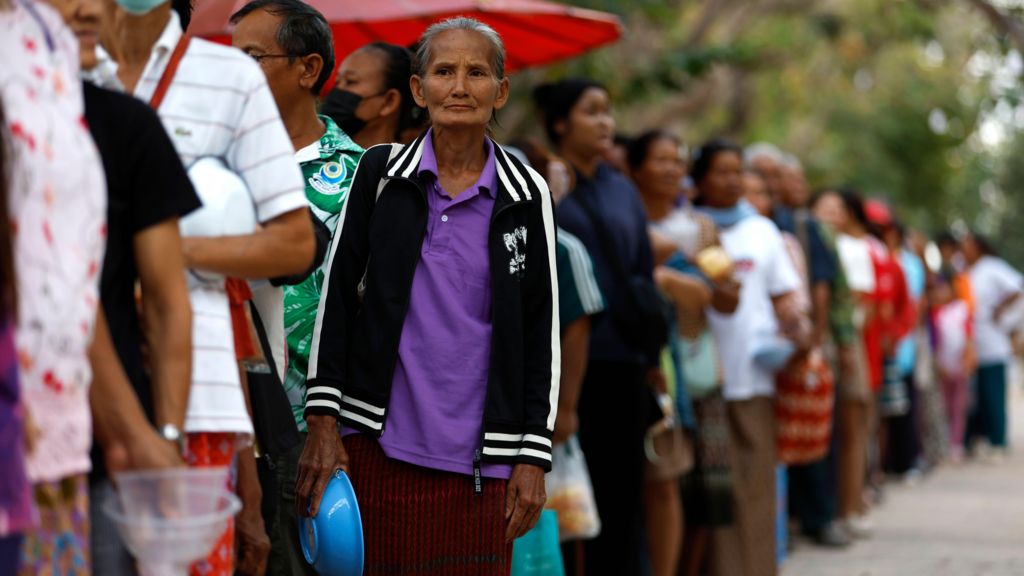
    The border conflict, with historical roots tracing back over a century to the French colonial demarcation of Indochina, has recently intensified through artillery exchanges across the 800-kilometer frontier and Thai airstrikes targeting Cambodian positions. Current estimates indicate at least 41 fatalities and approximately 900,000 displaced persons from both nations, creating a severe humanitarian crisis.

    Malaysian Prime Minister Anwar Ibrahim, who previously mediated the July ceasefire alongside U.S. President Donald Trump, expressed cautious optimism regarding the diplomatic initiative. “Our duty is to present the facts, but more importantly, to press upon them that it is imperative for them to secure peace,” Ibrahim stated last week.

    Cambodia has articulated its commitment to restoring “peace, stability and good neighbourly relations” through peaceful resolution mechanisms. Conversely, Thailand has established preconditions for substantive negotiations, demanding Cambodia first declare a ceasefire and demonstrate “genuine and sustained” cessation of hostilities.

    The international community has intensified diplomatic engagement, with both United States and Chinese officials actively mediating. U.S. Secretary of State Marco Rubio held discussions with Thai counterparts, expressing hope for a new ceasefire agreement within days. Simultaneously, China’s Special Envoy for Asian Affairs Deng Xijun visited Phnom Penh, reaffirming Beijing’s commitment to facilitating constructive dialogue between the neighboring nations.

  • Southeast Asian ministers meet in Malaysia to address Thailand-Cambodia border conflict

    Southeast Asian ministers meet in Malaysia to address Thailand-Cambodia border conflict

    KUALA LUMPUR – Southeast Asian diplomats convened for an emergency meeting Monday as regional tensions reached critical levels following renewed military confrontations between Thailand and Cambodia. The Association of Southeast Asian Nations (ASEAN) facilitated the high-stakes dialogue in Malaysia’s capital, marking the second intervention this year to address violent border clashes between the member states.

    The recent hostilities have effectively nullified a U.S.-brokered ceasefire agreement originally negotiated during the July conflict and formalized at October’s regional summit attended by President Donald Trump. The previous truce, achieved under significant American diplomatic pressure including threatened trade sanctions, mandated weapon withdrawals and demining operations along the disputed frontier.

    International concern continues to mount as combat operations intensify. The U.S. State Department issued an official statement urging immediate cessation of hostilities, removal of heavy artillery, and full implementation of the Kuala Lumpur Peace Accords. The document specifically referenced mechanisms for humanitarian demining and border dispute resolution.

    Thai Foreign Minister Sihasak Phuangketkeow confirmed his country’s commitment to constructive engagement, noting recent communications with U.S. Secretary of State Marco Rubio regarding Thailand’s proposed ceasefire roadmap. Cambodian officials similarly expressed dedication to peaceful resolution through diplomatic channels.

    The current conflict ignited December 8th following a border skirmish that injured two Thai personnel. Military engagements have since expanded to include Thai F-16 airstrikes and Cambodian BM-21 rocket barrages capable of launching 40 projectiles simultaneously. Official reports indicate dozens of combat fatalities and over 500,000 displaced civilians.

    A particularly contentious issue involves alleged landmine deployments along the border. Thailand has accused Cambodia of laying new anti-personnel mines, resulting in serious injuries to Thai marines. Cambodian authorities maintain that any explosions result from remnants of their decades-long civil war. Thailand has announced formal protests to Cambodia and the Ottawa Convention chair regarding these allegations.

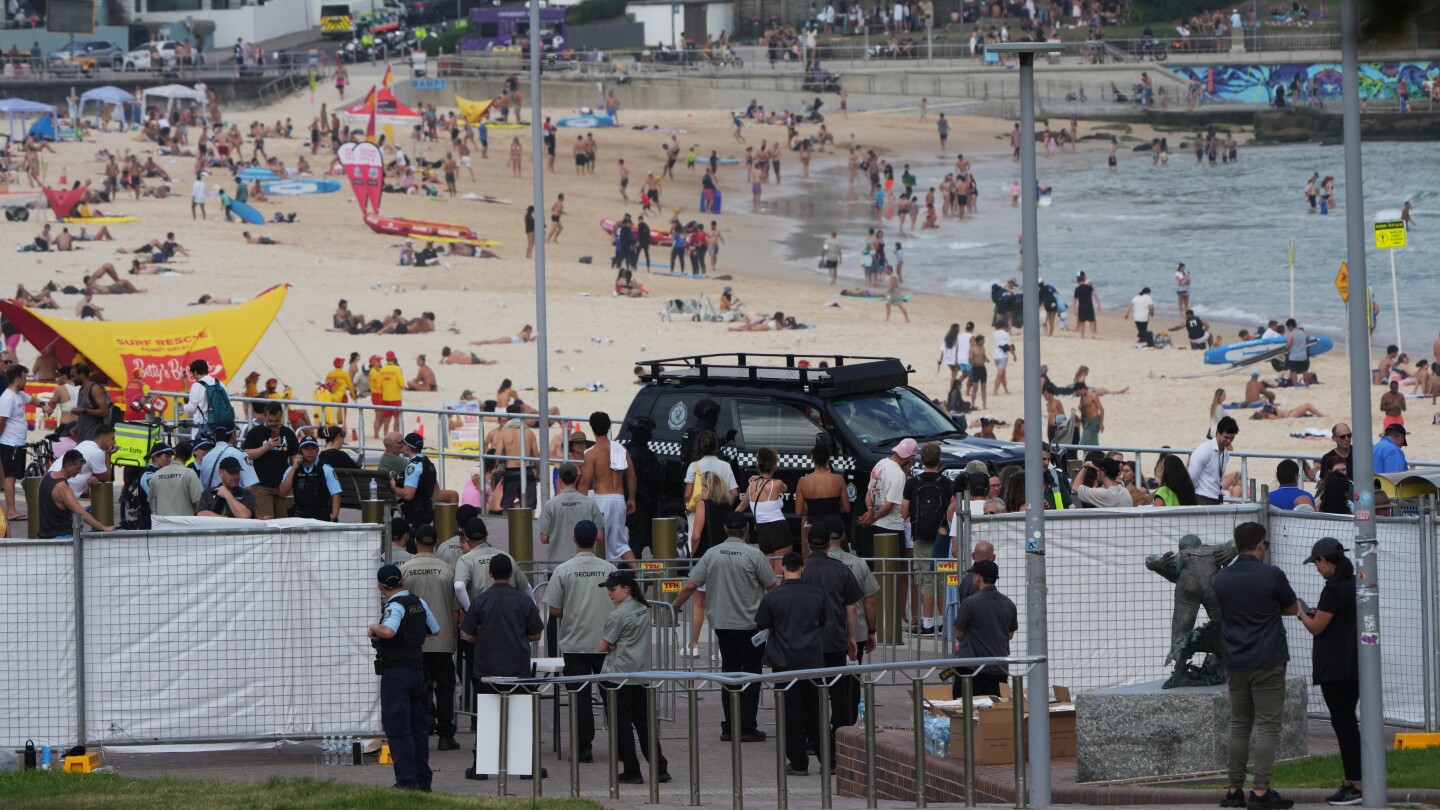
  • Police allege suspected gunman in Bondi Beach shooting trained with father, Australian media reports

    Police allege suspected gunman in Bondi Beach shooting trained with father, Australian media reports

    MELBOURNE, Australia — Newly revealed police documents indicate the suspect in Sydney’s Bondi Beach massacre that left 15 dead had undergone coordinated firearms training with his father and recorded a video outlining their purported justification for the attack, according to Australian Broadcasting Corp. reports.

    The disturbing details emerged Monday following Naveed Akram’s video court appearance from a Sydney medical facility. The 24-year-old suspect and his 50-year-old father, Sajid Akram, allegedly prepared for their December 14 assault through tactical exercises conducted in New South Wales outside metropolitan Sydney.

    Court documents reveal the attackers employed four improvised explosive devices during their targeting of a Jewish gathering at Bondi Beach. Fortunately, none of the devices detonated, preventing further casualties. The failed explosive attempt preceded the shooting rampage that would claim numerous lives.

    Law enforcement confronted the perpetrators during the attack, resulting in Sajid Akram’s death at the scene and his son sustaining injuries. The younger Akram now faces extensive legal consequences with 59 criminal charges leveled against him, including 15 counts of murder and a terrorism-related charge.

    The New South Wales court media unit has not yet released the official statement of facts to the public, but the ABC report provides the first comprehensive look at the planning and motivations behind one of Australia’s deadliest attacks in recent years.

  • Dubai: Meet Matthew Hayden’s daughter who is making a mark in cricket

    Dubai: Meet Matthew Hayden’s daughter who is making a mark in cricket

    In the bustling media dining hall of Dubai International Stadium, Grace Hayden maintains intense focus while simultaneously engaging in an interview and tracking every delivery bowled in the ILT20 match between Dubai Capitals and Desert Vipers. The 23-year-old Australian cricket presenter, daughter of legendary Test opener Matthew Hayden, is carving her own distinctive path in the world of sports broadcasting.

    During an exclusive conversation with Khaleej Times, Grace reflected on her unique childhood growing up in cricket’s iconic stadiums, which served as her playgrounds. She revealed how her perception of her father evolved from simply ‘Dad’ to understanding his superstar status in international cricket. “I knew Dad played cricket, but I didn’t comprehend the extent of his stardom,” she confessed. “He was always just Dad to me, even when he spent eleven months annually traveling the world.”

    Grace credits her mother, Kallie Hayden, as the family’s foundational rock who maintained family cohesion during Matthew’s extensive absences. She describes her parents’ relationship as “the greatest partnership” that extended beyond cricket into their family dynamics.

    The young broadcaster’s journey into sports presentation began with modeling, which helped develop her camera presence, followed by an audition with Channel Seven in Australia. She initially worked in horse racing before transitioning to cricket coverage with Star Sports in India during IPL tournaments and World Cups.

    Grace acknowledges her father’s brutally honest feedback on her broadcasting performances. “He is brutal,” she admits. “But his harsh critiques ultimately improve my performance. They always work in my favor.”

    Among her most memorable broadcasting experiences, Grace highlights the Indian Premier League as the pinnacle of T20 cricket, particularly describing the electrifying atmosphere at Chennai’s Chepauk Stadium when MS Dhoni comes to bat. She’s currently covering the ILT20 in the UAE, praising the tournament’s organization, the blend of established stars and emerging talents from associate nations, and the convenience of traveling between Emirates venues.

    Addressing the perception of glamour in sports presenting, Grace emphasizes the substantial behind-the-scenes work required. “People consider it glamorous, but honestly, it isn’t,” she states. “Success demands extensive research, knowing player statistics, asking insightful questions, and constant preparation.”

    As part of a growing cohort of female presenters with cricket family connections—including Mayanti Langer, Sanjana Ganesan, and Laura McGoldrick—Grace acknowledges the pressure that comes with her famous surname. “There’s always expectation because everyone watched your father excel,” she notes. “But I’ve learned to absorb that pressure competitively—if told I cannot achieve something, I’m determined to prove otherwise.”

    Regarding media attention, particularly after her Dubai Desert Safari pictures garnered headlines in Australia and India, Grace maintains a balanced perspective. “Media attention can be flattering but also volatile,” she observes. “You can be elevated one moment and criticized the next. At 23, I consider it a privilege to travel globally, work in a sport I love, and share my experiences with an engaged community.”

  • ‘The water came from nowhere’: Settlements, hotels and farms flooded in Kenya’s Rift Valley

    ‘The water came from nowhere’: Settlements, hotels and farms flooded in Kenya’s Rift Valley

    NAIVASHA, Kenya — Dickson Ngome’s agricultural livelihood has been literally swallowed by water. When he first leased his 1.5-acre farm near Lake Naivasha in 2008, the shoreline stood approximately 2 kilometers away. Today, his property lies completely submerged beneath the expanding waters of Kenya’s Rift Valley lake system.

    The dramatic transformation occurred with startling speed. After early rains began in September and continued relentlessly for months, Ngome and his family awoke one October morning to find their home and farmland inundated with approximately a foot of water. “It seemed as if the lake was far from our homes,” recounted Rose Wafula, Ngome’s wife. “And then one night we were shocked to find our houses flooded. The water came from nowhere.”

    This personal tragedy reflects a broader regional crisis. Lake Naivasha’s expansion has displaced approximately 5,000 residents this year alone, part of a concerning pattern affecting multiple Rift Valley lakes including Baringo, Nakuru, and Turkana. According to scientific analysis, these water bodies have been experiencing steady increases over the past 15 years, with some reaching their highest recorded levels.

    Simon Onywere, an environmental planning expert at Kenyatta University, confirms the unprecedented scale: “The lakes have risen almost beyond the highest level they have ever reached.” Research published in the Journal of Hydrology documents that East African lake areas expanded by 71,822 square kilometers between 2011 and 2023, resulting in the displacement of over 75,000 households across the Rift Valley region by 2021.

    The economic repercussions are substantial. Lake Naivasha’s surrounding horticulture industry, which generates over $1 billion annually and supplies 40% of the EU’s rose market, has suffered significant losses with three-quarters of some flower farms now underwater.

    Scientific consensus points to climate change as a primary driver. Richard Muita, acting assistant director of the Kenya Meteorological Department, explains: “The Kenya Meteorological Department found that the water level rises are associated with rainfall patterns and temperature changes.” Additional factors include sedimentation from agricultural runoff, which compounds the problem by reducing lake capacity.

    Complicating the situation are historical land management issues. The Ngome family’s community of Kihoto sits on riparian land that legally cannot be privately owned. Silas Wanjala of the Lake Naivasha Riparian Association traces this problem to “a mess established by the government” in the late 1960s when temporary agricultural leases were improperly converted into permanent settlements.

    Local authorities are responding to the immediate humanitarian crisis. “We are tackling this as an emergency,” stated Joyce Ncece, chief officer for disaster management in Nakuru County. “The county government has provided trucks to help families relocate. We have been helping to pay rent for those who lack the finances.”

    Meanwhile, scientists advocate for long-term strategies including climate change mitigation, improved forecasting, and nature-based solutions incorporating indigenous knowledge. For displaced families like the Ngomes, currently sheltering in an abandoned school, the future remains uncertain as Lake Naivasha continues its relentless expansion with no signs of reversal.