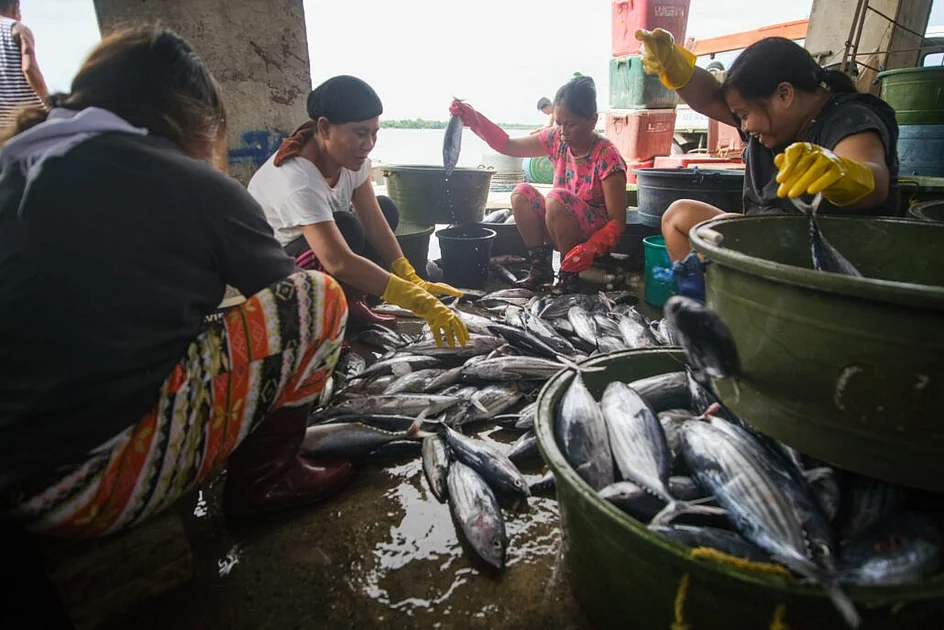
A startling new assessment by international marine conservation organization Oceana has exposed a severe fisheries collapse in the Philippines, revealing annual losses exceeding 45 million kilograms of fish—a volume equivalent to discarding a fully loaded jumbo jet’s worth of seafood from national waters daily. The comprehensive study, titled ‘The Philippine Fisheries Assessment, A Glimpse of RA 10654’s 10-Year Implementation,’ attributes this catastrophic 13-year decline to systemic governance failures and inadequate law enforcement.
The archipelago nation, possessing the world’s fifth-longest coastline spanning 36,289 kilometers across 7,000 islands, now confronts a mounting food security emergency. Fisheries production has plummeted from 2.6 million metric tons in 2010 to just 1.9 million metric tons in 2023, with 88% of fish stocks classified as overfished and depleted according to government assessments.
Oceana Vice President Von Hernandez presented these findings at the University of the Philippines in Manila, warning that the crisis is driving generational poverty in coastal communities where seafood serves as the primary protein source. The report indicates that over 353,000 fisherfolk families fell below the poverty line in 2023, with approximately 93,000 households unable to afford basic nutritional requirements.
The study identifies multiple contributing factors: weak implementation of the Fisheries Code, commercial fishing encroachment into protected municipal waters detected through satellite monitoring of 270,165 night lights, and the alarming aging of the fishing workforce—now averaging 49-52 years—as younger generations abandon the industry due to meager monthly incomes ranging from ₱2,500 to ₱7,000 (US$45-125).
Additionally, activist coalition Pamalakaya cites China’s maritime incursions since 2013 as exacerbating the crisis, reporting an 80% income reduction among Filipino fishermen operating near the West Philippine Sea. Oceana has urgently called upon President Ferdinand Marcos Jr. to investigate responsible officials and reverse this dangerous trajectory threatening both national food sovereignty and marine biodiversity.