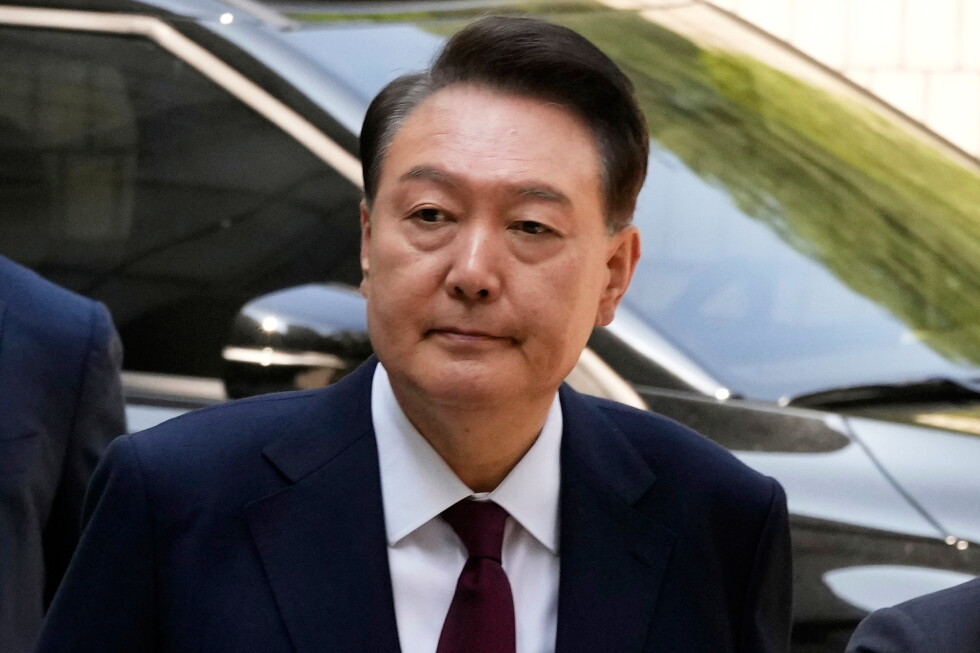
South Korea’s former president Yoon Suk Yeol, who was removed from office earlier this year following an abortive martial law declaration, has received a 30-year prison sentence alongside his ex-defense chief Kim Yong Hyun over a scheme to inflame cross-border tensions for domestic political gain. The Seoul Central District Court delivered the verdict Friday, finding the pair guilty of orchestrating a 2024 drone operation over Pyongyang that prosecutors say Yoon ordered to escalate hostilities with North Korea and create a pretext for his authoritarian power grab.
The full written text of the court’s ruling has not been released to the public as of Friday. This conviction comes on the heels of an earlier life sentence handed down by the same court for Yoon’s conviction on rebellion charges tied to his short-lived imposition of martial law in December 2024. That initial verdict, which saw prosecutors push for the death penalty, is already the subject of appeals from both Yoon’s legal team and prosecution services.
The charges stem from three separate drone incursions over Pyongyang in October 2024, which North Korea publicly accused South Korea of launching to scatter anti-regime propaganda leaflets. At the time, then-Defense Minister Kim issued an unclear initial denial before the Defense Ministry adopted a position of neither confirming nor denying the allegations. The incident sent inter-Korean relations spiraling, though it did not escalate into open military conflict between the two neighbors.
Special prosecutor Cho Eun-suk, who led the investigation into the plot, had requested a 30-year sentence for Yoon and 25 years for Kim, who was described as a close confidant of the ousted president that helped plan and deploy forces for the December martial law declaration. Prosecutors argued the drone operation was a deliberate gambit to manufacture a crisis on the Korean Peninsula, clearing the way for Yoon to oust political opponents and consolidate sole control of the South Korean government.
Yoon’s legal team has harshly condemned the latest verdict, defending the drone flights as a proportional response to a wave of trash-laden balloons North Korea sent across the inter-Korean border earlier in 2024. The defense team has argued that the guilty verdict ultimately undermines South Korea’s national security interests, though they have not yet announced whether they will launch an appeal of the new sentencing.
Yoon’s controversial martial law declaration unfolded in the late hours of December 3, 2024, when the sitting president delivered a national televised address labeling opposition liberal lawmakers as “anti-state” forces sympathetic to Pyongyang. Yoon justified the extraordinary measure by pointing to a series of political grievances, most notably the opposition-controlled legislature’s successful impeachments of senior administration officials and cuts to his government’s proposed budget.
The emergency order lasted only six hours before opposition lawmakers were able to break through a military and police blockade at the National Assembly building and pass a unanimous vote to invalidate martial law. The result forced Yoon’s own Cabinet to reverse the declaration hours later. Yoon was immediately suspended from office, impeached by the legislature, and formally removed from power by the Constitutional Court in the months that followed. He was taken into custody in July 2025, and multiple criminal trials related to the December 2024 crisis remain ongoing.