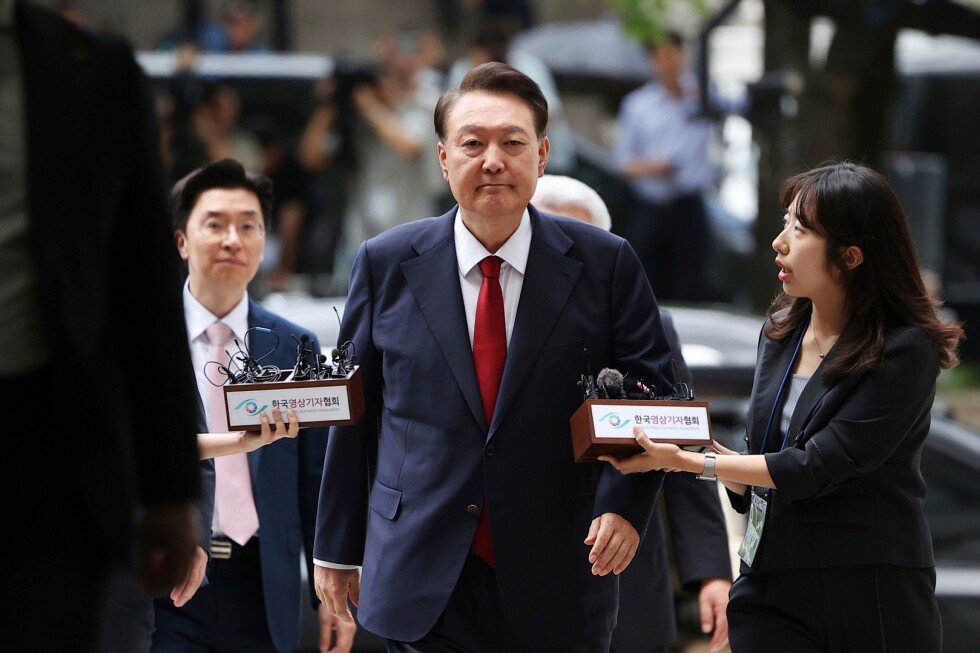
SEOUL — Imprisoned former South Korean President Yoon Suk Yeol has formally appealed his life imprisonment conviction for rebellion stemming from his controversial imposition of martial law in December 2024. His legal representatives announced the appeal on Tuesday, challenging what they characterize as judicial errors and misinterpretations of law in last week’s ruling by the Seoul Central District Court.
The conservative ex-leader, who currently faces eight separate criminal trials related to his attempted power consolidation, maintained defiant rhetoric following his conviction. He denounced the court’s decision as fundamentally illogical and politically motivated, asserting that his actions were executed exclusively for national security interests. Through his attorneys, Yoon accused the presiding judge of exhibiting overt bias against him.
Yoon’s brief martial law declaration on December 3, 2024, lasted approximately six hours before legislators breached military and police barricades at the National Assembly to overturn the measure. This episode triggered South Korea’s most severe political crisis in decades, causing governmental paralysis, diplomatic disruptions, and significant financial market volatility.
The former president was suspended from office on December 14, 2024, following impeachment by the liberal-controlled legislature, with the Constitutional Court formally removing him from power in April 2025. His subsequent July re-arrest initiated multiple judicial proceedings, with the rebellion charge carrying the most severe penalties.
Prosecutors had originally sought capital punishment, arguing Yoon’s actions represented an unprecedented threat to South Korea’s democratic institutions. The court determined he had orchestrated an unlawful attempt to seize legislative control, arrest political opponents, and establish prolonged authoritarian rule.
The case will now advance to a specialized panel at Seoul High Court, established under December legislation specifically addressing cases involving rebellion, treason, and foreign subversion. This marks the first life sentence for a former South Korean president since military dictator Chun Doo-hwan’s 1996 conviction, later commuted to life imprisonment.