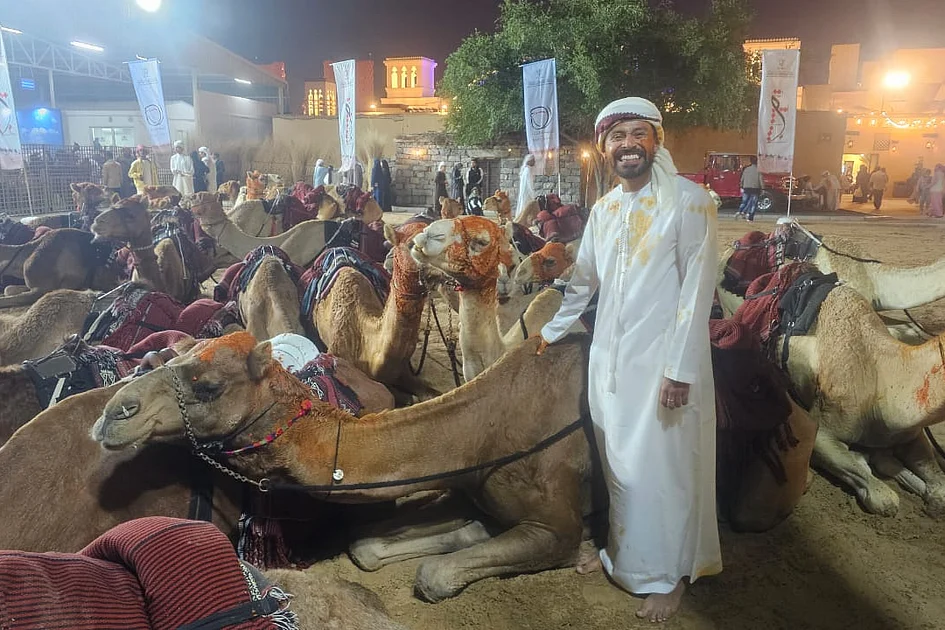
A team of 33 determined trekkers has triumphantly completed an extraordinary 1,000-kilometer camel expedition across the United Arab Emirates, overcoming severe weather conditions that tested their physical and mental endurance. The three-week journey, among the longest camel treks ever recorded in the region, culminated in Dubai despite confronting torrential rains and powerful desert winds that disrupted their campsites.
During the final leg of their arduous adventure, participants faced unprecedented challenges as heavy precipitation transformed arid landscapes into flooded terrain. Sleeping bags became saturated, tents were destabilized by gale-force winds, and some shelter structures were completely blown away. Huo Xiaozhe, a seven-year veteran of the annual trek from China’s Henan province, described the conditions as the most demanding she had encountered. ‘Our tents and sleeping bags were completely drenched. One night, we remained awake throughout, conversing until morning instead of attempting to sleep,’ she recounted.
Remarkably, the camels demonstrated exceptional adaptability throughout the meteorological turmoil. According to multiple participants, the animals maintained composure despite the tempestuous conditions. ‘The camels were undisturbed the entire time. They managed the rainfall more effectively than humans,’ Huo observed. David, a Colombian expatriate and experienced rider, noted the species’ innate desert survival capabilities: ‘They seal their nostrils to prevent sand intrusion, and their eyes possess natural protective mechanisms. My camel remained tranquil even during the most intense storm periods.’
The expedition showcased diverse Emirati landscapes, traversing from northwestern coastal regions with pristine white sands and azure waters to deep desert territories near Saudi and Omani borders, including the formidable Empty Quarter. Dr. Rachel Stratton, another participant, expressed astonishment at the geographical variety: ‘Each day presented distinctly different scenery. For a single nation to contain such landscape diversity is genuinely remarkable.’
Organizational improvements were particularly evident compared to previous years, according to David Berney, a Spanish expatriate residing in the UAE who participated in earlier treks. ‘Four years ago, we were still developing management protocols for such expeditions. Current operations are significantly more streamlined and professionally coordinated,’ he noted. The 2025 route was intentionally extended to approximately double previous distances, deliberately testing the endurance limits of both human participants and their camel companions.
Despite the hardships, all trekkers expressed profound satisfaction upon completion, with many already anticipating future editions. The journey not only demonstrated human resilience and camel capabilities but also revealed rarely witnessed aspects of the UAE’s protected desert wilderness areas that remain inaccessible to most visitors.